
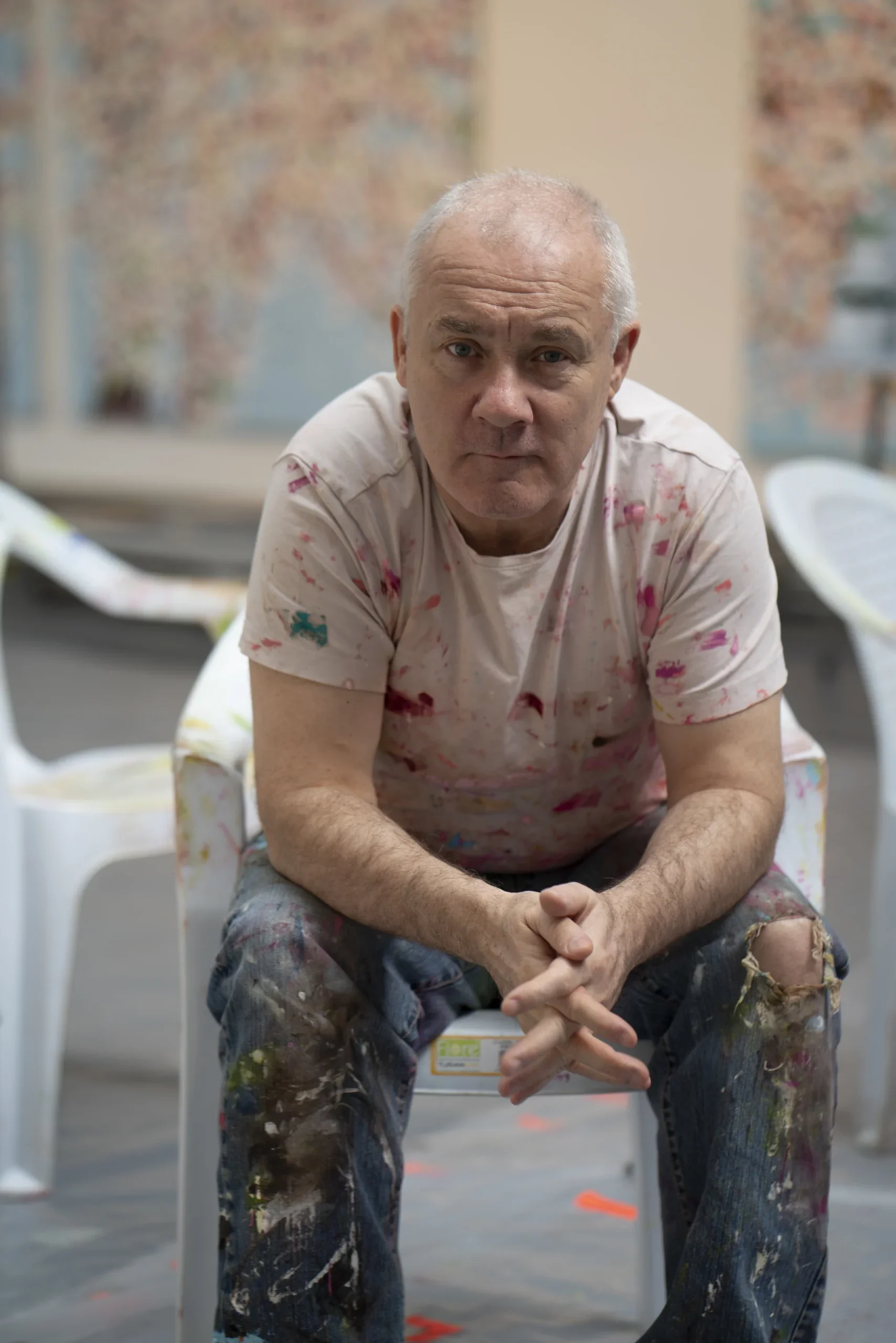
Even with more than 90 solo exhibitions to his name, Damien Hirst is completely comfortable with the idea that art should get out of the gallery. “I personally love breaking boundaries. […] I love aesthetics but never at the expense of function. And I love art that you can wear or use; I hate it when I make a surfboard and people hang it on the wall rather than ride the waves,” he says.
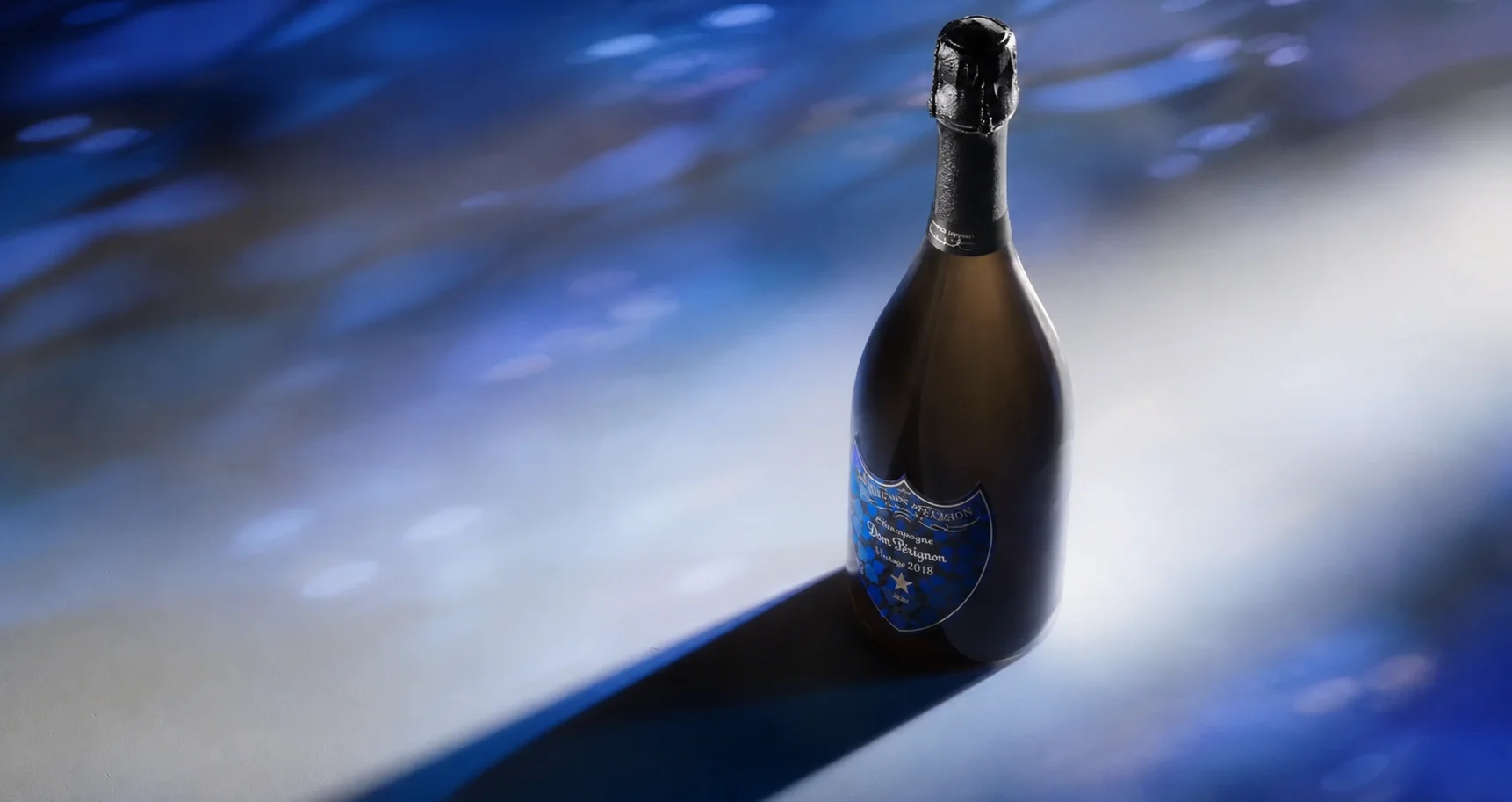
Over the course of his career, he has repeatedly taken everyday objects and given them a second life. The same is at play in his latest collaboration with Dom Pérignon, where he has reimagined two of the house’s bottles with his signature kaleidoscope designs.
“I saw a lot of parallels [between my series and Dom Perignon], not only in the shape of the butterfly wings, which I took from Victorian tea trays, but also in how they’re put together,” he says. “A Dom Pérignon vintage is always an assemblage, a blend, of grapes, just like the Kaleidoscope Paintings are an assemblage of found objects in butterfly wings. So, we’ve created two versions in that style.”
The Rosé Vintage 2010 ($475) comes in pink and purple, while the Vintage 2018 ($305) takes on a deeper blue and violet palette, with the packaging also featuring the statement butterfly motif. “We felt that both deserved the Damien Hirst treatment,” Jacques Giraco, managing director of Dom Pérignon tells Elite Traveler. “Dom Pérignon Vintage 2018 has depth, minerality, fruit, and salinity, while Dom Pérignon Rosé Vintage 2010 has a different intensity and density, driven by Pinot Noir. Hirst’s Kaleidoscope motif unites the two, while color distinguishes them.”
Hirst played with the Dom Pérignon shield itself, but “rather than treating the shield as a fixed element or placing his artwork around it, [he] multiplied and repeated it, making one of the maison’s most recognizable symbols part of his own creative language,” says Giraco.

The brand has championed collaborations with artists for many years as a way of pushing the visual identity of the house into new territory, and Hirst is the latest name to join an already impressive lineup. “I was excited to join such an amazing list of artists associated with [the brand]: Warhol, Lynch, Koons, Basquiat, Murakami,” Hirst says.
The name alone, though, isn’t the reason these collaborations happen. “We look for artists whose vision has some genuine common ground with Dom Pérignon,” explains Giraco. “There needs to be a reason for the two creative worlds to come together. From there, we offer them a canvas […] and give them the freedom to interpret [the shield] through their own language.”
That exchange is also part of what gives a limited edition bottle its appeal with collectors. “Collaborations like this can make art more democratic, allowing an artist’s creative language to reach people in new and unexpected ways,” says Giraco. “In that sense, the limited edition becomes more than an object to collect. It becomes a way of transmitting a piece of culture and creating a connection between different creative worlds.”