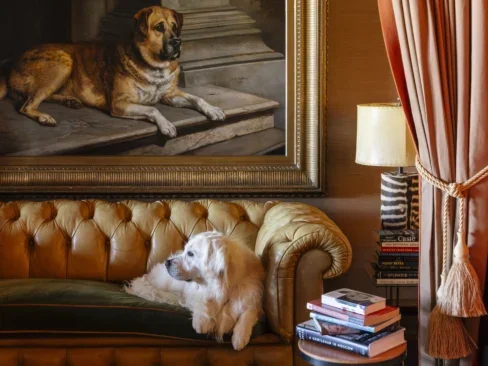

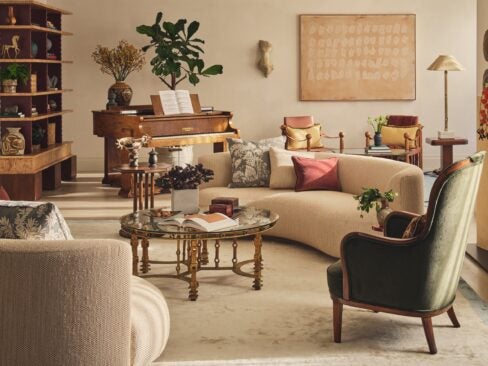


Most homes in Finland have a sauna. Across the pond in America, the tradition is gaining a heat of its own.
As more health-conscious Americans embrace the Finnish way of wellness, the appeal of having a sauna at home has never been bigger. And for those with the space – and the budget – to install one, a custom design offers the ultimate expression of the experience.
“A genuinely bespoke sauna should be entirely individual,” says sauna designer Erin Hickman of Finnmark Saunas, which has designed saunas for Shangri-La hotels, London’s The Beaumont, and Tottenham Hotspur F.C. “The starting point is never an existing model or a predetermined collection. It is the client, the architecture, and the opportunity presented by the space.”
Related article: Wild Swimming and Sauna Culture Is Finally Catching on in America
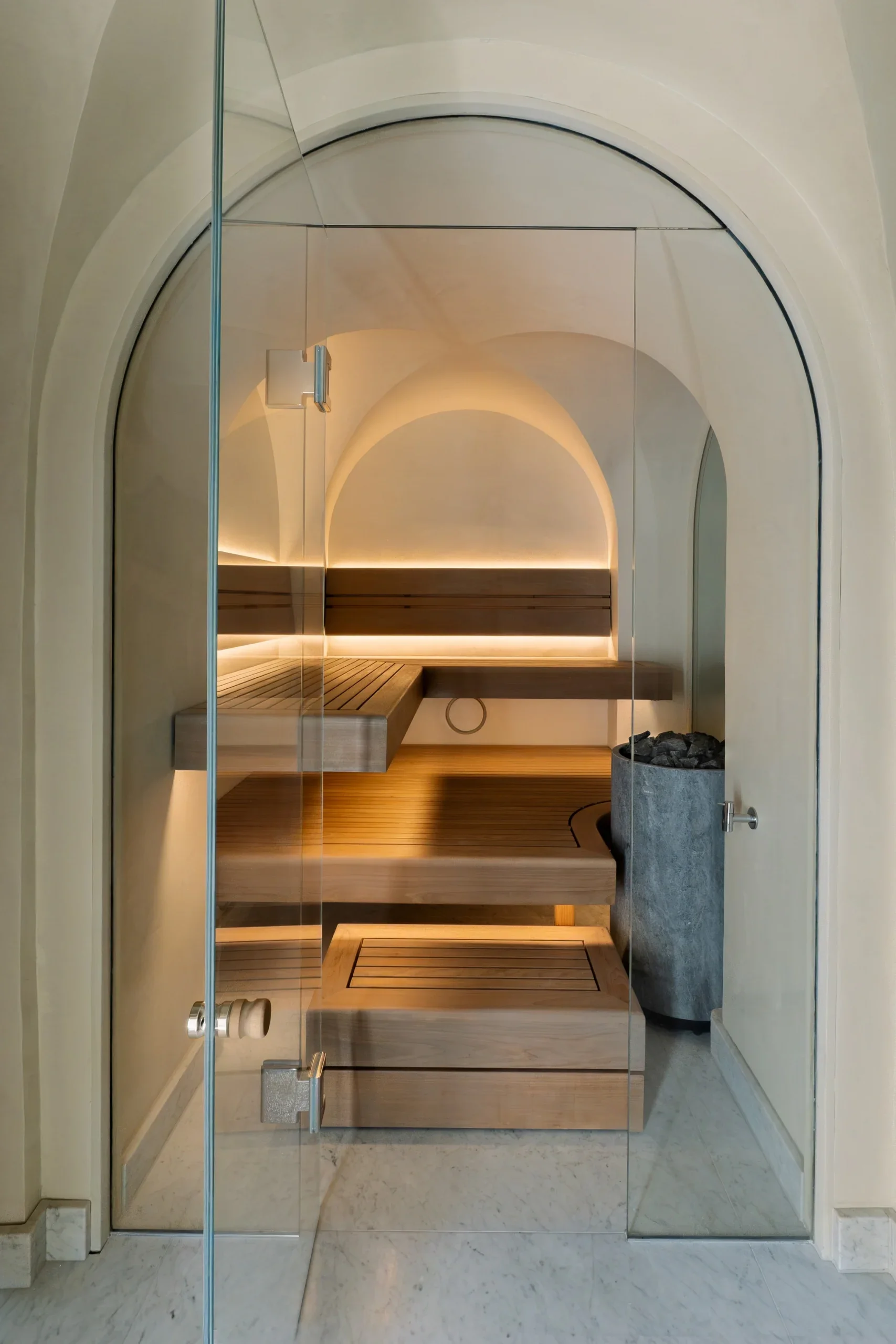
That could mean fitting a sauna into a particularly tricky or tight space, creating an entirely new structure, or specifying materials that make the room as much a design statement as a wellness amenity. German-based sauna specialist KLAFS, which has built more than 250,000 saunas over nearly a century, has designed bespoke installations around everything from existing columns to sloping ceilings, with every element – from the dimensions and bench layout to the lighting – tailored to the property.
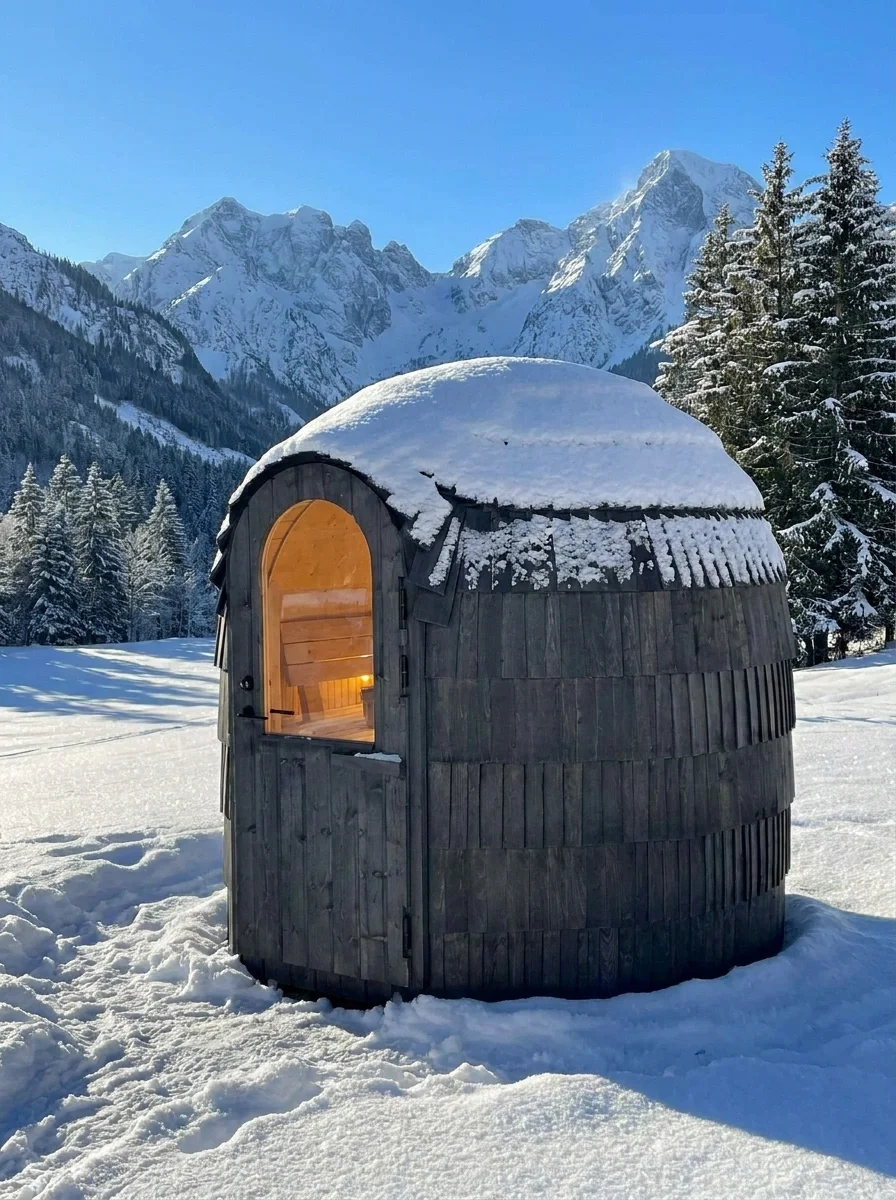
Estonian sauna maker Iglucraft’s approach is entirely different: its distinctive outdoor saunas are inspired by the country’s sauna tradition but wrapped in an architectural, sculptural form which takes inspiration from (you may have guessed it) the shape of igloos. The company has shipped its designs around the world, with clientele including David and Victoria Beckham (who reportedly have two), Gordon Ramsay, and Matthew McConaughey and his wife, Camila Alves McConaughey.
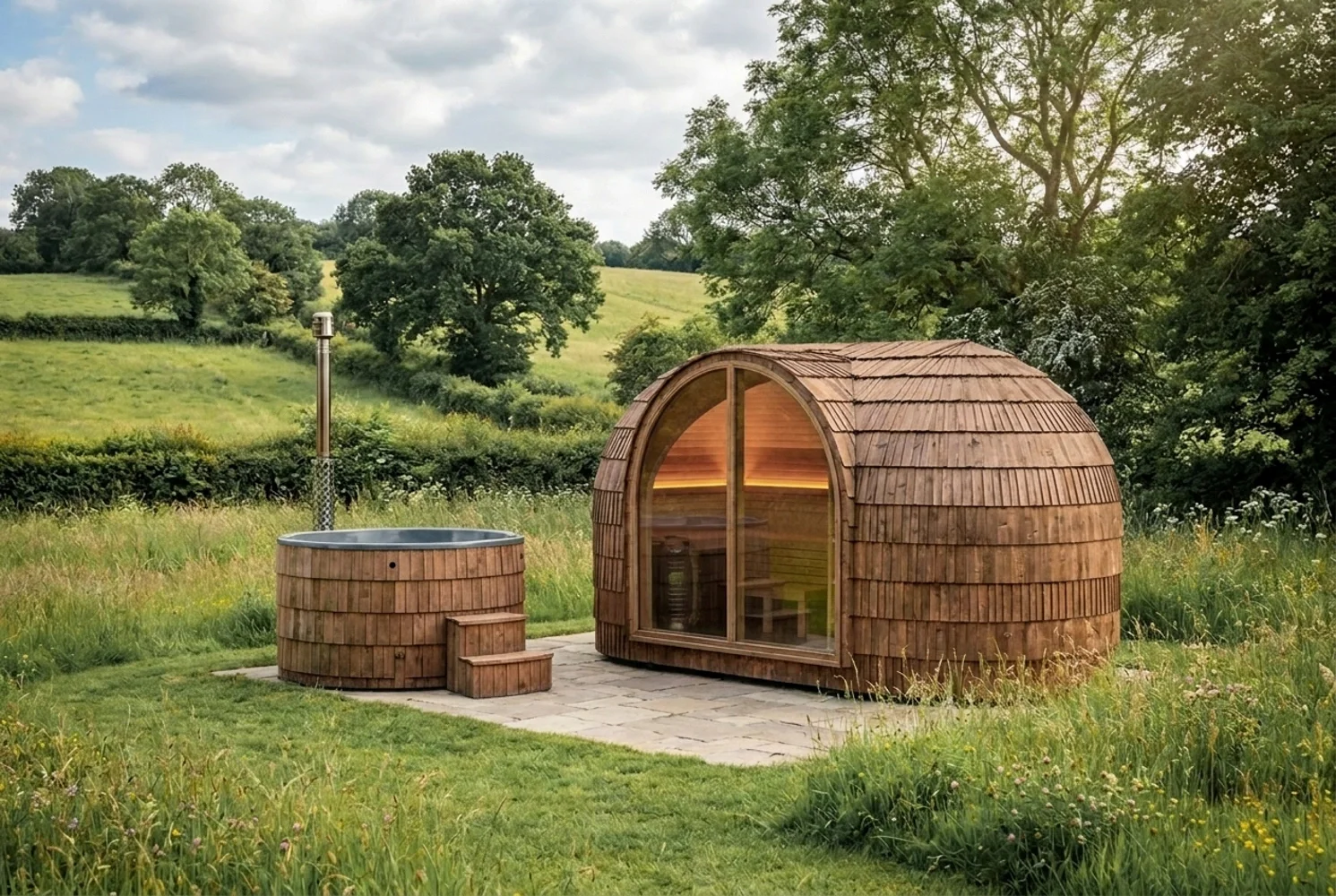
Its igloos are offered in various sizes, and while the distinctive external shell remains largely unchanged, there is considerably more flexibility to customize the inside. Clients can alter the layout and configuration, adding washrooms, welcome lounges, and, in some cases, even a bar. Windows can be resized, while interior and exterior colors, flooring, wall finishes, and the type of heater can all be specified to suit the property and its owner.
Related article: Scenic Saunas Around the World With A View
The location of where you want to place your sauna – and what you want to see when looking out – will have a significant bearing on its design. Iglucraft can create panoramic saunas designed to contrast between the heat inside and whatever is happening outside. “You have room to lay down on the sauna benches and room to breathe [while] enjoying [watching] a snowstorm,” Rasmus Tipp, the brand’s marketing director, tells Elite Traveler.
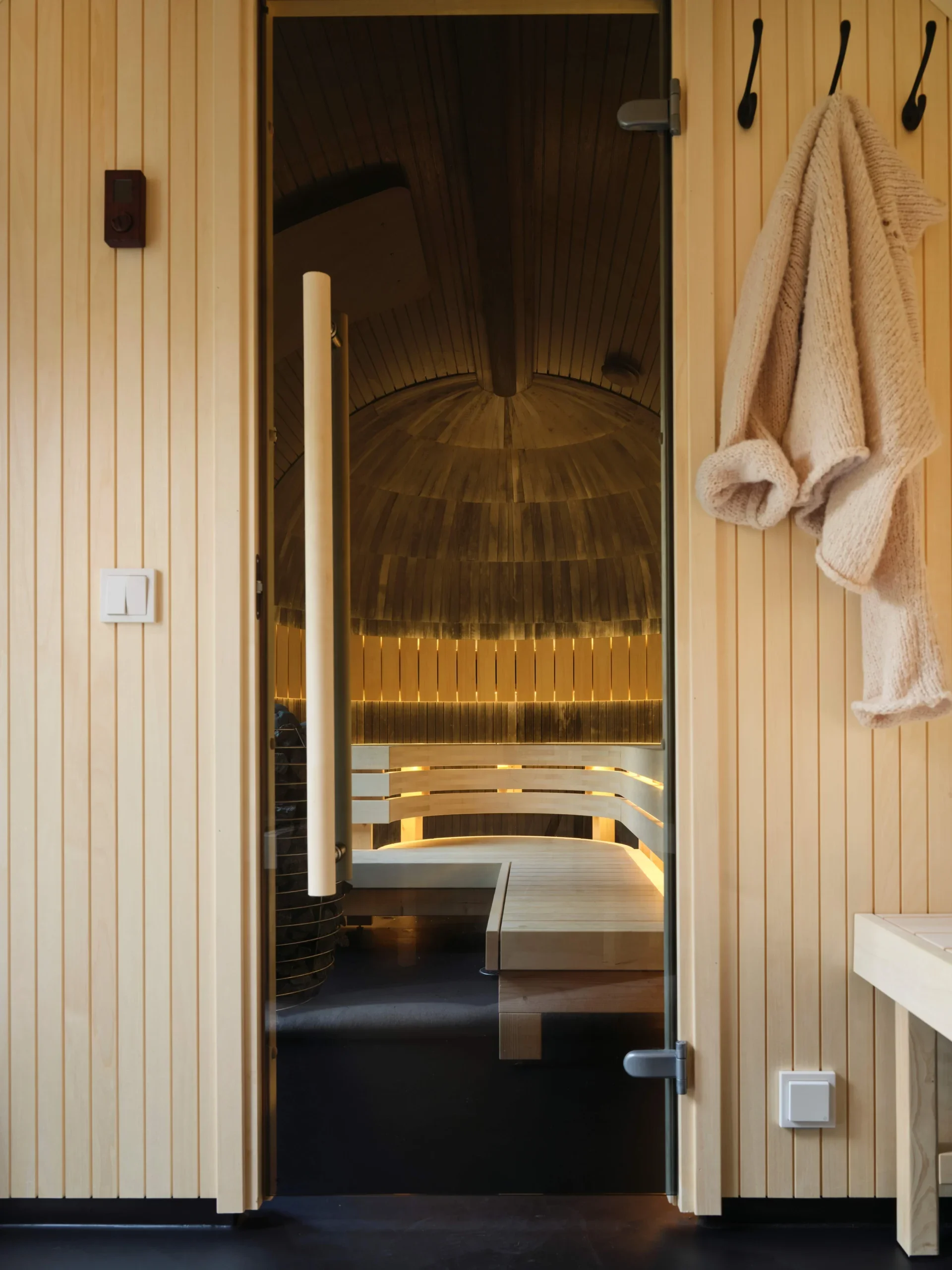
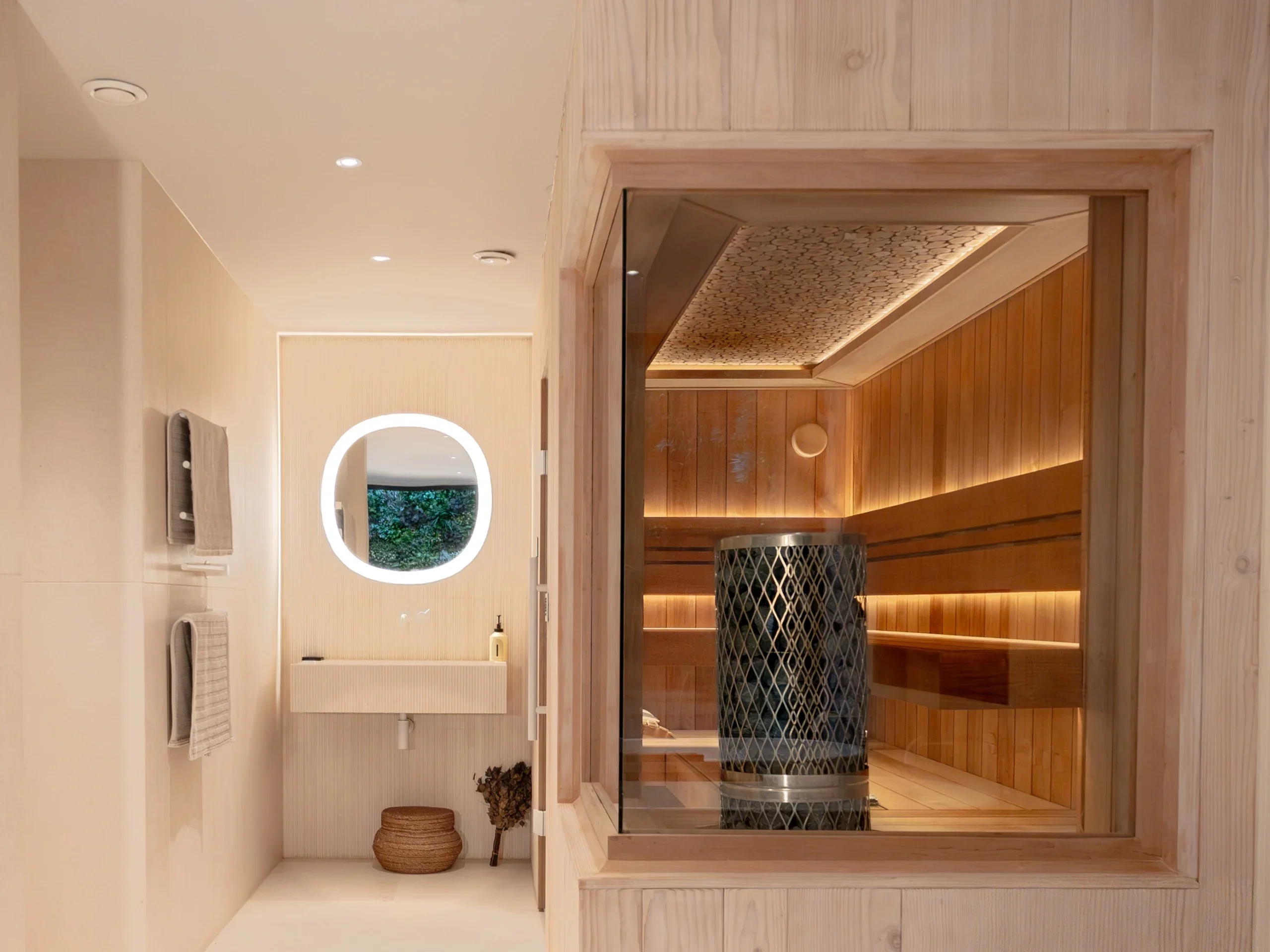
Then there are the materials to consider. Timber remains fundamental, but a bespoke sauna needn’t be an exercise in Scandinavian minimalism. Finnmark works with natural stone, specialist timberwork, curved glass, and sculptural forms, using techniques such as steam bending, heat bending, and CNC machining to create details that wouldn’t be possible in a standard model.
One recent Finnmark client arrived with a single tile she had found in Morocco, which became the inspiration for the wider spa environment. Finnmark took that reference and turned it into a sauna complete with curved architectural elements and an illuminated feature. Iglucraft, too, has encountered uncommon requests, with one client wanting the entire interior walls made from pink salt stones. It could be done, but the company had to reinforce the floor to support the additional weight.
“We are always willing to meet the customer and build the sauna that they dream of,” Tipp explains. “But, of course, there are some red lines.” For example, the company won’t build traditional smoke saunas, despite having the technical ability to do so. While traditional and still popular in Estonia, wood-burning saunas have no chimney and require a particular heating process that can take almost 12 hours; without the appropriate expertise, the fire risk is simply too high.
Related article: How New York’s Luxury Bathhouse Boom Has Gone From Shvitz to Chic
On that note, safety is hardly the sexiest part of designing a sauna, but it is rather important. “We would always recommend investing in the fundamentals first,” says Hickman. “High-quality timber, generous bench proportions, carefully considered ventilation, and the correct heater and stone capacity will have a greater impact on the experience than technology alone.”
While some of the appeal of saunas in recent years has been their simplicity – a retreat from the increasingly digital-focused world around us – technology can still have its place. Intelligent controls and remote heating can be incorporated, allowing some electric heaters to be switched on from a mobile app before arriving home. But the best systems are designed to disappear into the experience. “In a beautifully designed sauna, much of the engineering should go unnoticed,” says Hickman.