



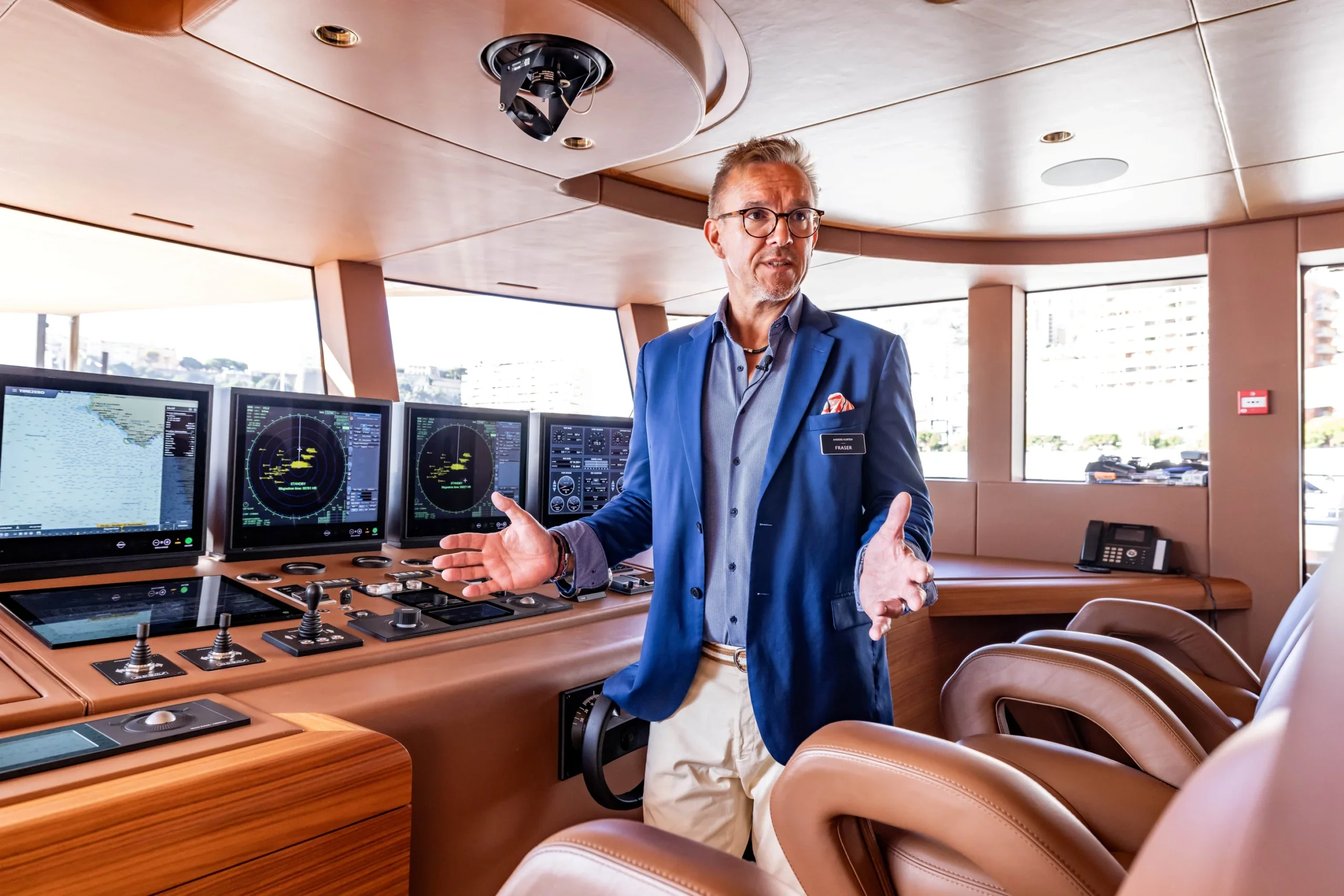
For Anders Kurtén, the future of yachting isn’t so much about inventing the next great superyacht than working out what to do with the thousands already in the water.
That’s the crux of our conversation with the Fraser Yachts CEO at the Monaco Yacht Show when we turn the topic to sustainability. “Even if all the two hundred yachts delivered every year were hydrogen or methanol or full electric, that wouldn’t help us towards the transition to net zero fast enough.” That’s mainly because of the size of the superyacht market, which spans 7,000-8,000 yachts.
It’s an insightful perspective from someone who sees pretty much every side of the marine industry. Fraser Yachts, founded in 1947 and now part of the MarineMax group, operates from 19 offices (its biggest is Monaco) with 230 employees. Its business stretches from yacht sales and charter to yacht management, charter management, and crew placement, with around 140 yachts in its managed fleet.
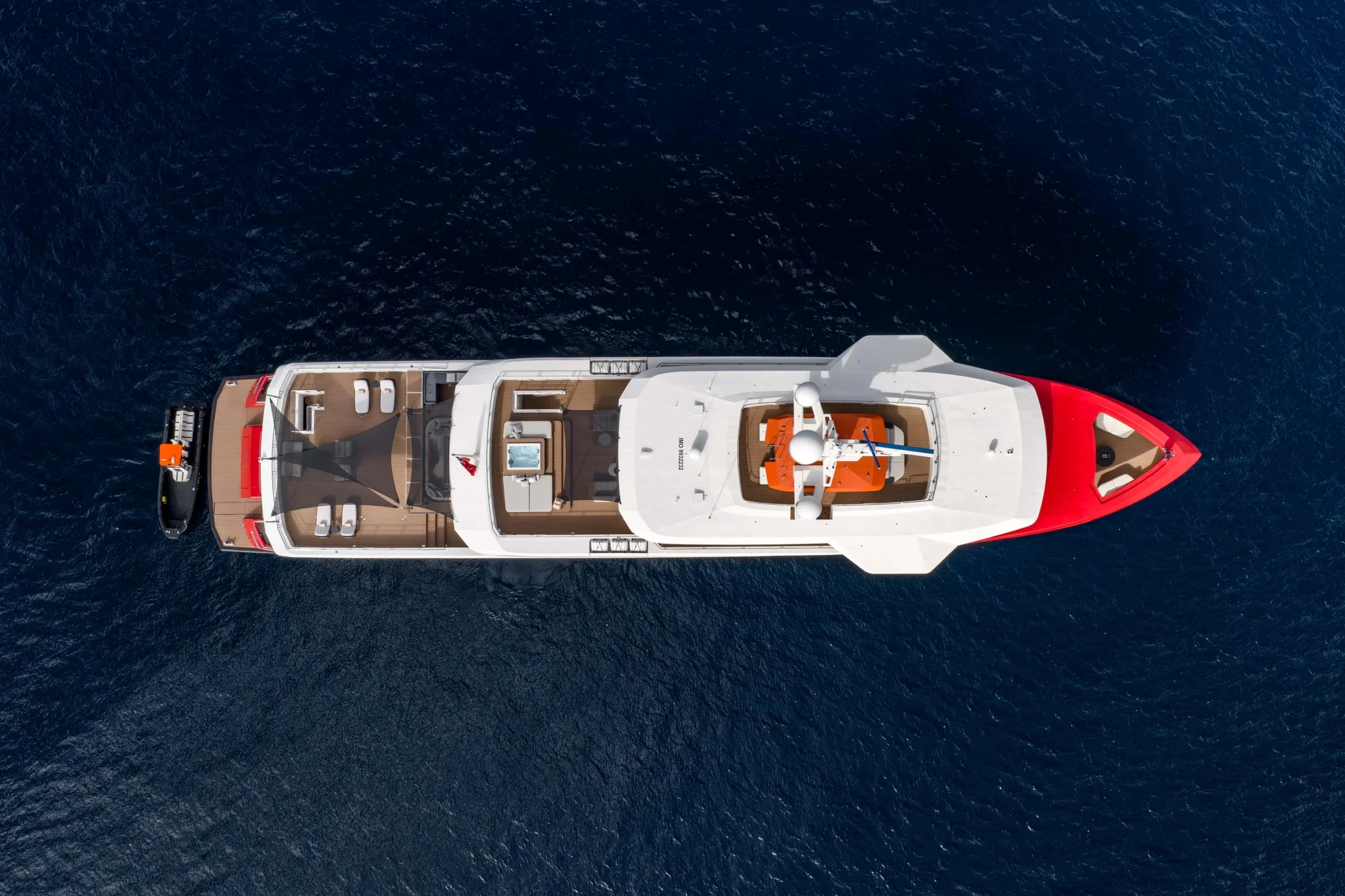
Kurtén has been thinking about sustainability since 2014 – way before he joined Fraser Yachts – when he was involved in building a prototype six-meter fully electric powerboat. He’s since landed upon what amounts to a four-point plan to tackle the wider issue within the industry.
Related article: The Largest, Most Expensive, and Exciting Debuts We Saw at the Monaco Yacht Show 2026
First, yacht owners or charterers should “switch from traditional diesel to a synthetic fuel called HVO. You’re going to slash 80 to 90 percent of all your emissions except particle emissions,” he says. Then, “drop your cruising speed by a knot or a knot and a half. No matter how you power your propulsion system, you’re going to have less emissions and it’s going to have a negligible impact on the actual experience.”
Since yachts can spend more than half their time in port, Kurtén’s third point involves choosing marinas with green shore power. The fourth is about educating the people operating the boats and continuing his “traveling preacher-man work by educating captains and crew about circular and sustainable practices on board.”
When Kurtén took over Fraser Yachts, his priority wasn’t to reinvent a company that was already successful, but to build on what worked. “I think one of the blessings of being allowed to take the helm of a company that is established, is not about creating a revolution, it’s about evolution,” he says. And his approach seems to be working, with a good business year equating to around “50 sales transactions” involving yachts of 30 meters or more against a global market of roughly “430 brokerage transactions” at that size.
Before Covid, Kurtén estimates that first-time buyers and charterers accounted for around 10 percent of the market. “During the pandemic we had a spike,” he says, one which he attributes to the privacy appeal that comes with having a yacht. While some of those newcomers have since left the market, the proportion of first-timers remains higher than it was before the pandemic. But those new customers bring new expectations.
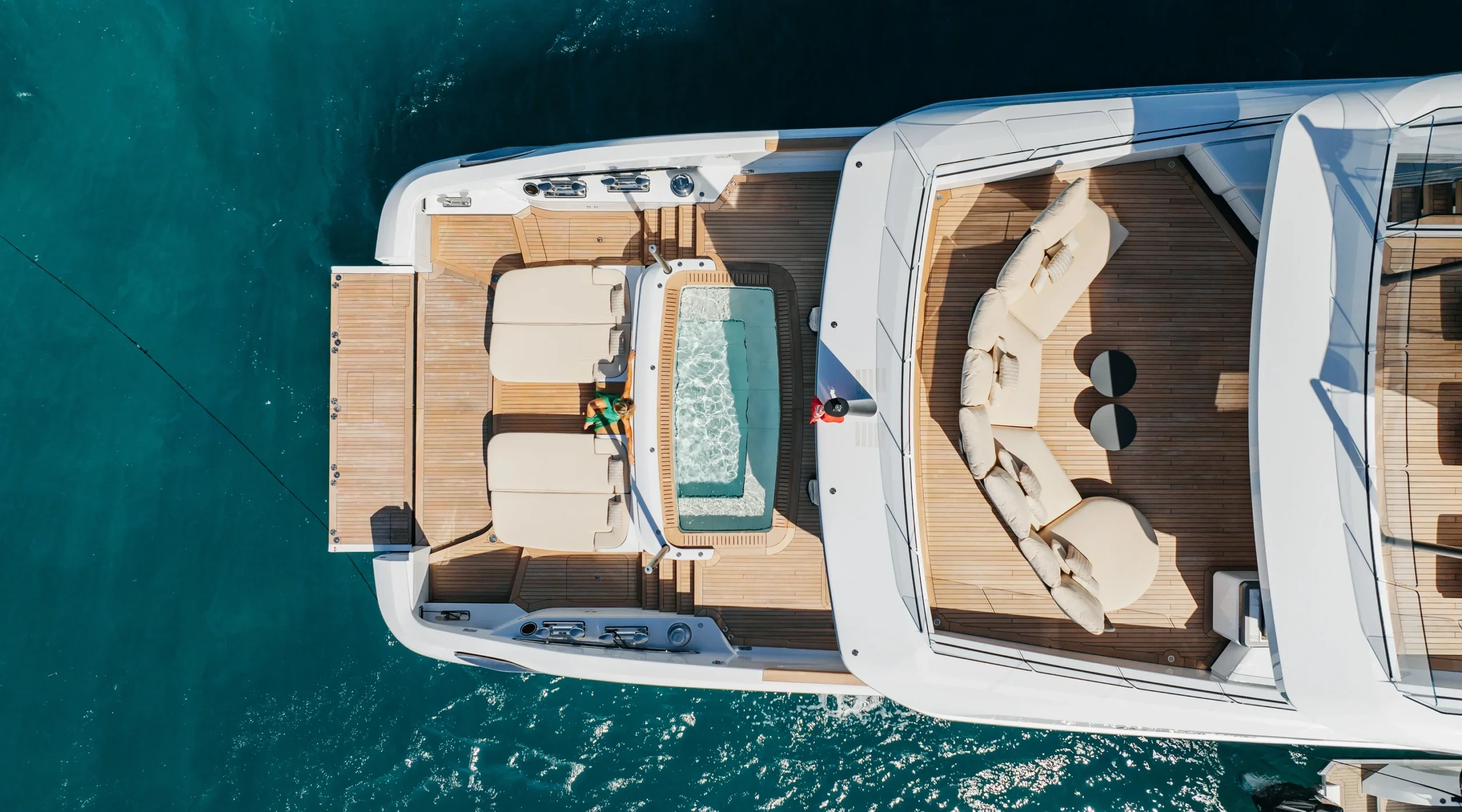
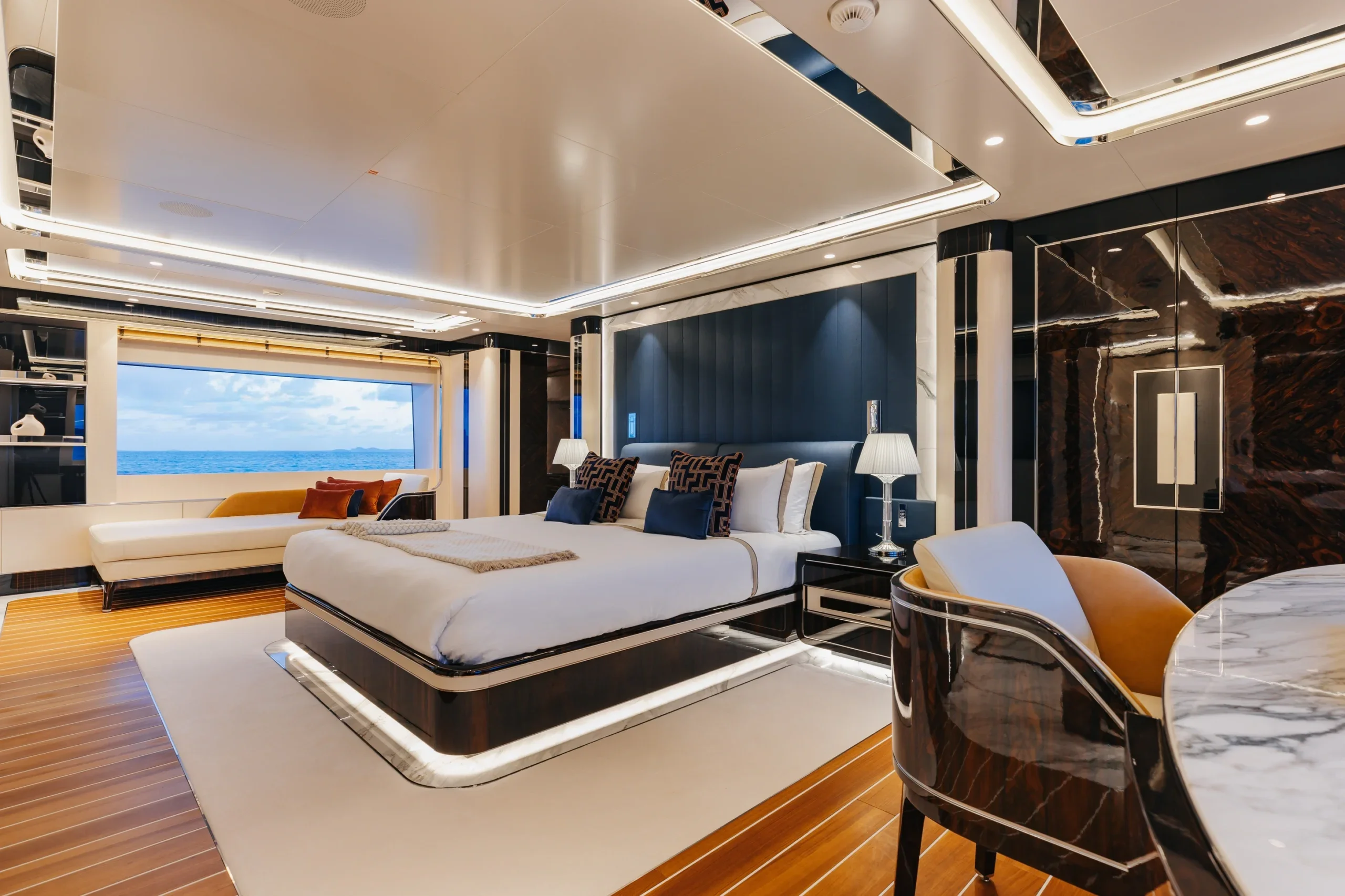
The superyacht of today is expected to function as an extension of life on shore rather than as a separate world entered only for vacations. “I would almost make a sweeping generalization and say that most people today, as opposed to 15 years ago, expect to be able to take their onshore lifestyle seamlessly on board,” Kurtén says. “The variety of activities offered [and] the sort of skillsets of the crew required outside of the marine realm have skyrocketed. Demands go way beyond taking the boat safely to a destination.” The yacht itself has had to evolve accordingly: “There’s much more square feet of open deck that you can use as you will. And the interior spaces blend more with them.”
Over the last 15 years or so, the average age of charterers has dropped significantly as a new generation of wealth enters the market that hasn’t “grown through yachting through [their] grandfathers.” These clients want different things to their parents or grandparents. For one, they’re not looking to switch off completely when on the water and advances in tech means that “WFH – working from yacht,” as Kurtén puts it, is easy. Across Fraser Yachts’ fleet, satellite connectivity via the Starlink Maritime Business service “makes it possible for you to work in a meaningful way from your boat. We have clients and people we know in the industry who do that for significant periods of time,” he says.
Yet for all the talk of changing demographics, technology, and how the industry is shifting – from who is buying yachts to how they’re being designed for the modern world – Kurtén’s top-line objective is pretty simple: “It’s really about [leaving the company] in a better place than it was when you took the helm.”