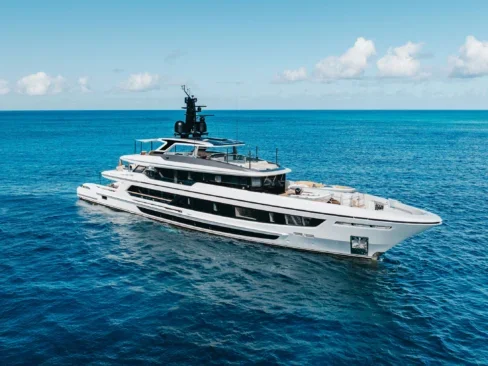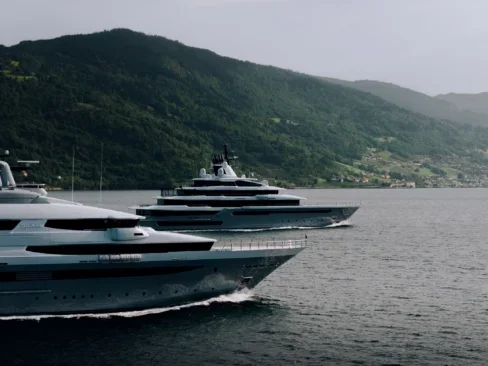



Though Monaco Yacht Show 2026 is now behind us, superyachts remain the conversation of the week, with lingering headlines of groundbreaking new technology and, of course, extremely big boats. But these monster vessels’ appeal goes beyond their size and spectacle.
“Superyachts cross over into so many areas – design, interiors, real estate, hospitality, and travel,” says Peter Martin, writer and design author of Superyacht: Inside the World’s Most Incredible Superyachts. “They’re the ultimate iteration of all those things.” And as those worlds evolve, so too does the idea of what a superyacht should be.
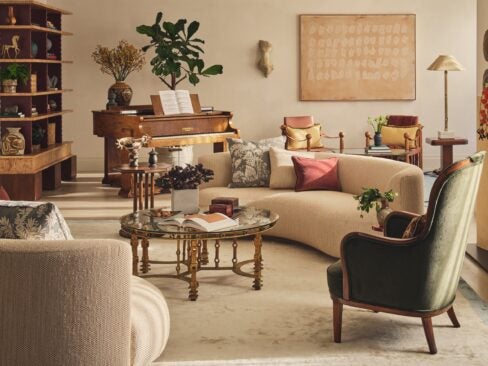
For decades, superyacht luxury has had a recognizable visual language: polished woods, marble, stainless steel, and large, formal salons. But recently, there is a shift towards interiors that are “more residential and relaxed,” with less interest in conventional expressions of marine luxury. “Recent interiors don’t immediately announce themselves as yacht interiors,” Martin says. “They could be a beautiful apartment or house – until you look through the window and realize you’re at sea.”
Related article: The High-End Water Toys Every Superyacht Needs

That change is visible in everything from furniture to the way rooms are used. Salons are becoming less formal, with residential-scale furniture and personal collections, including libraries and art. Materials are changing, too, with timber, stone, linen, and wool replacing some of the harder, more overtly luxurious finishes, alongside warmer, more layered lighting.
According to Martin, this shift to a more residential style of design is largely being driven by a new generation of younger owners, who are spending considerably more time on board. “A decade ago, your classic yacht owner and commissioner would live on it for two weeks a year – going around the Mediterranean and hosting people,” he says. “Now, there’s a new generation of yacht owners who are a lot younger, who made their money in tech or crypto, and they tend to be living on their boats more.”
“Interiors are becoming less about broadcasting wealth and more about creating personal environments,” Martin says. “There will always be a space for dramatic and beautiful large superyachts like AHPO and Kismet – both masterpieces of design and trailblazers in so many ways, but they no longer represent the sole ideal,” says Martin of the shift. “Many designers I interviewed agreed that we have probably passed peak-massive superyachts. […] Some of the most interesting yachts in the book were already moving away from that. They felt more like portraits of their owners.”
Related article: Guide to Luxury Sailing Competitions Around the World

And as yacht design becomes more personal, Martin predicts another trend on the rise: deeper collaborations with the designers and brands that already shape how people live. In fact, he says, boundaries between disciplines are already collapsing, resulting in more cross-collaboration. “The same designers now work across yachts, residences, hotels, private jets, and furniture.”
He points to Liaigre as a clear example. “Guillaume Rolland’s approach to a Sanlorenzo yacht isn’t fundamentally different to Liaigre’s approach to residential or furniture design: [it relies on the] sound architectural principles of flow and logic.”
In terms of a vessel leading the way, Martin credits Giorgio Armani’s yacht, a collaboration between Admiral and Armani, just before Giorgio Armani’s death. The significance, he says, is that Armani’s involvement extends well beyond the interior. “It isn’t a conventional superyacht into which an Armani/Casa interior has been inserted. Armani’s involvement included the architecture of the yacht itself.”

The result is a yacht with a recognizable design language running from its silhouette through to its furniture and materials. This uniqueness is found in the strong personality of the exterior – large, architectural volumes juxtaposed with softer curves – and in the extraordinary expanses of full-height glazing in the interior.
“The satin-finished aluminum and polished steel hull is glamorous in a way quite different to most other superyachts,” says Martin, adding, “There was a genuine attempt to create something quite unusual.”
Martin predicts we will see more collaborations of this kind, particularly with fashion houses, furniture brands, and hospitality designers that “already have a fully developed approach to lifestyle.” But the most successful will, like Armani, go deeper than simply slapping a brand name on a boat. “The interesting question will be how you translate the essence of a brand into an entirely different environment without it becoming a floating showroom.”

The other major force shaping the next generation of superyachts is sustainability. Crucially, Martin says, it is moving beyond an engineering consideration and into the design process itself. “It’s becoming one of the key drivers of design, rather than just an engineering add-on,” he says. “Everyone from the designers to the stonemasons onwards, they’re all thinking about this.”
That means looking more closely at where materials come from, as well as how they perform. Reclaimed and waste materials, rapidly renewable natural materials, low-VOC finishes, and greater scrutiny of timber, stone, and textiles are becoming part of the conversation.
Martin points to Winch Design as a trailblazer in this sector. “What’s impressive is that sustainability isn’t being treated as a single material choice or technological add-on. They have an in-house sustainable materials specialist and are trying to integrate those considerations throughout the design process,” he says.
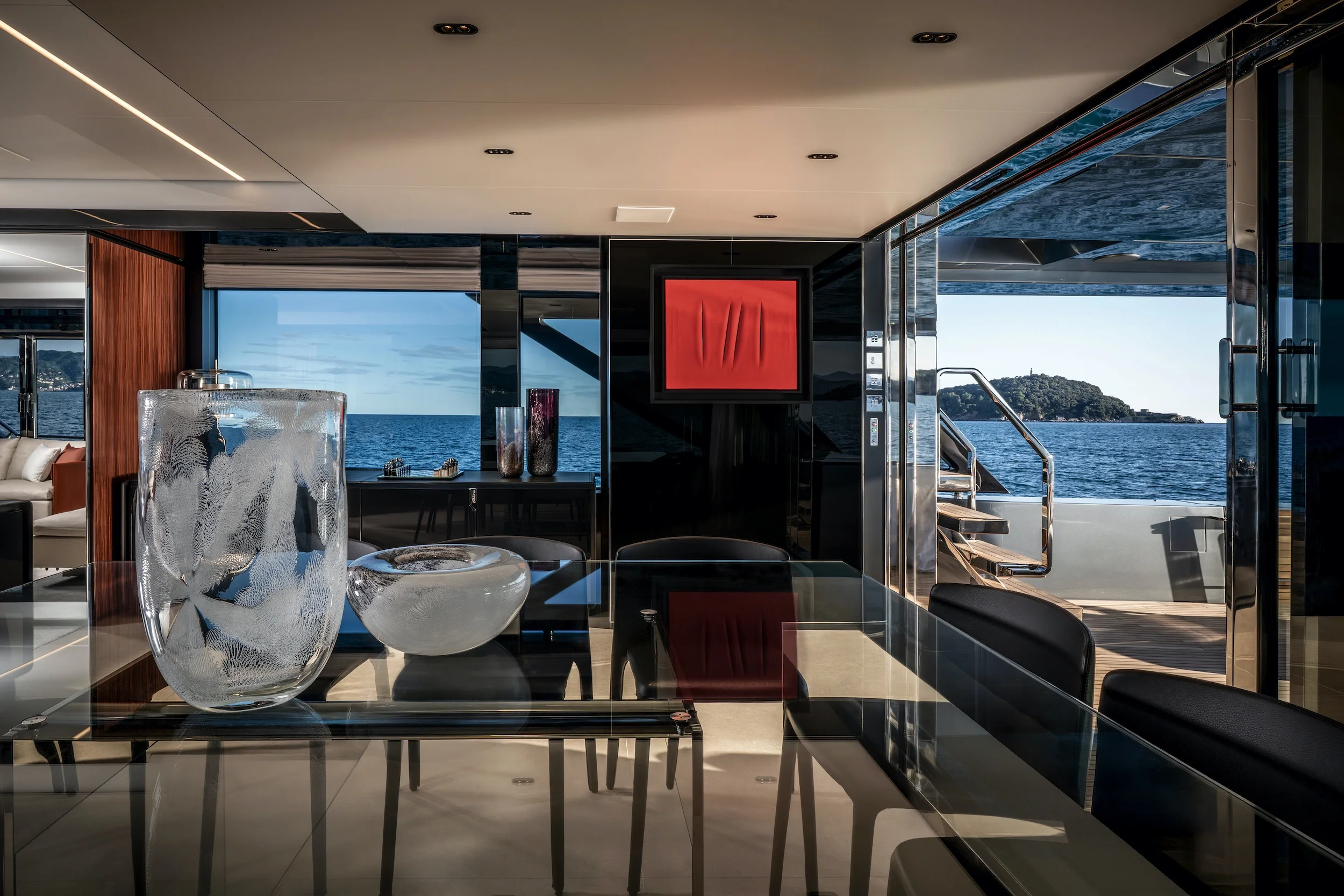
Their boat Nasiba is a strong example. The yacht incorporates eggshell finishes, cork, woven grasses, natural clay plaster, wool dyed with natural pigments, and timber that had already fallen.
Importantly, he says, none of this should feel like a compromise. “Some of the most experimental materials are also the most beautiful,” he says. “Importantly, the result doesn’t look like a tick-box exercise in sustainability. It looks tactile and highly crafted.”
Perhaps the most significant part of the superyacht design story is what happens after the yacht leaves the shipyard. The impact of these developments extends well beyond the world of superyachts. “Superyachts are interesting because there are very few environments in which designers have that combination of budget, craftsmanship. and technical possibility,” Martin says. “They become laboratories in which ideas can be pushed unusually far.”
“It’s important to remember that what happens in very rarefied superyachts then becomes a technological breakthrough that can be transferred to all sorts of boats,” says Martin, noting that some innovations can eventually be rolled out to cargo ships.
The same is true on land. Returning to the idea of the superyacht as a floating home, Martin says its influence can eventually be seen in residential design. “They’re aesthetic trailblazers – what happens in a superyacht has a habit of appearing in a residence a few years later.”