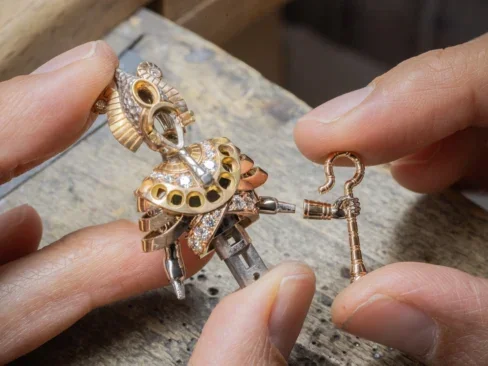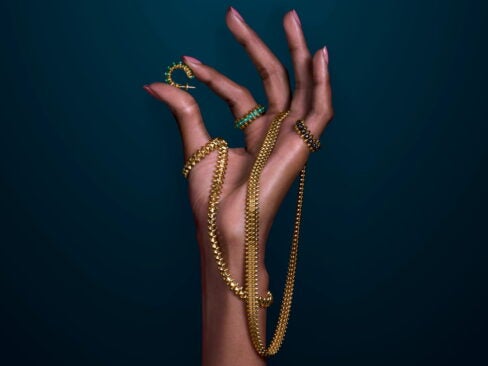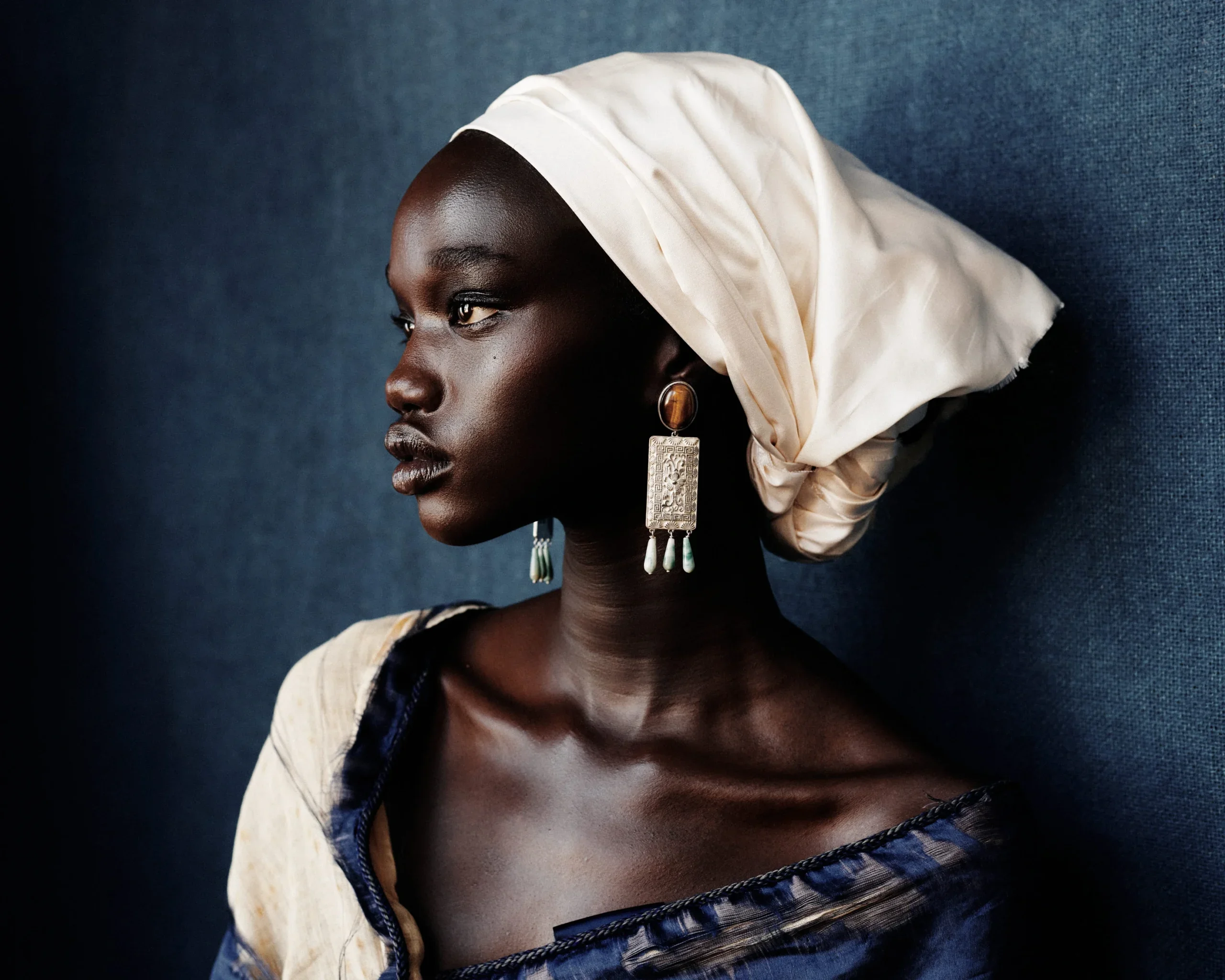
We’re no stranger to seeing dazzling high jewelry creations, dripping in diamonds and other precious stones, waltz down the red carpet.
But art jewelry – defined by historian Toni Greenbaum as “jewels that possess embodied meaning” – is another matter.
Kendall Jenner walked the red carpet at the Venice International Film Festival wearing an ultra-rare pair of 1955 Alexander Calder earrings. They weren’t loaned just for the event; the story goes that she bought them from the Louisa Guinness Gallery in Mayfair, which specializes in art jewelry both antique and contemporary, from Pablo Picasso to Grayson Perry.
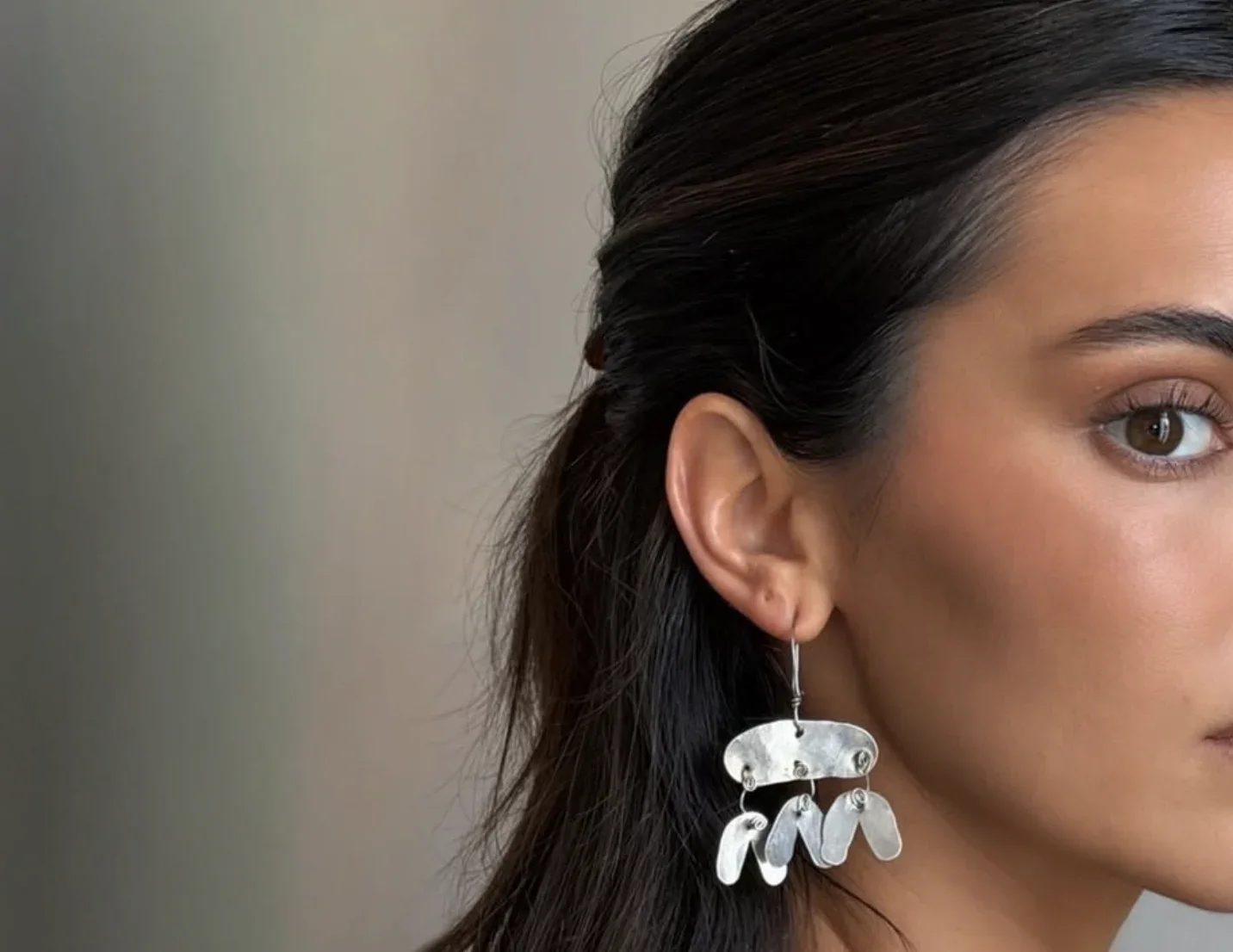
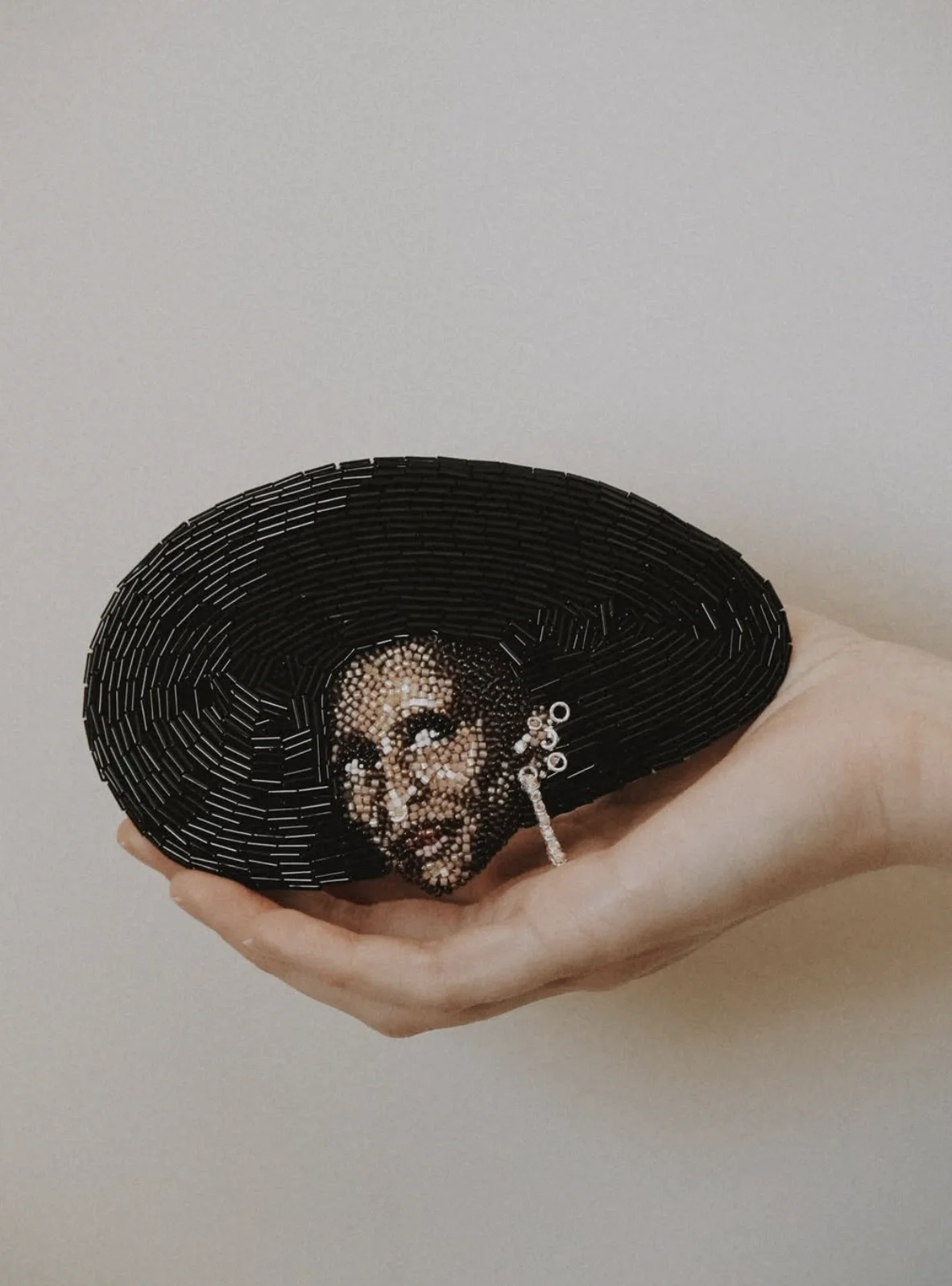
Jenner’s red-carpet Calder earrings weren’t the only art jewelry pieces to appear on the red carpet this year. At the 2026 Golden Globes, Wicked director Jon M Chu wore hyperrealistic brooches featuring Ariana Grande and Cynthia Erivo, designed by Italian embroiderers Nerdbead. Then, at the Met Gala in May, Hailey Bieber embraced historical art jewelry by pairing her 24-ct gold Saint Laurent moulded corset with sculptural pieces by Suzannah Belperron, a pioneering early 20th-century jewelry artist. It was a fitting choice for the event’s ‘Fashion is Art’ dress code.
These appearances are the vanguard of art jewelery’s slow-bubbling transition from niche sector to a dominant mainstream movement. It’s part of a wider trend of rejecting both minimalistic quiet luxury and shouty, recognizable brand logos in favor of products that embody self-expression and human creativity.
“People are increasingly looking for individuality and authenticity,” says curator Elisabetta Cipriani, who features contemporary jewelry artists in her Mayfair gallery. “They want objects that have meaning, tell a story and reflect their personalities rather than simply demonstrate wealth.”
The shift has been a long time coming. When Cipriani first opened her London base in 2009, she “spent years explaining that these objects should be considered works of art rather than simply jewelry,” she says.
“Today, the conversation has changed considerably. I see interest coming not only from traditional jewelry lovers but increasingly from contemporary art collectors, younger buyers, and people who appreciate design and craftsmanship.”
Related article: Should You Ever Wear Ancient Artifacts as Jewelry?

What sets art jewelry apart is that it’s about so much more than just the value of its gemstones or metal setting. For instance, Jenner’s Calder earrings are made from hammered silver and steel wire, two materials that are not traditionally used in high or even fine jewelry.
“The fundamental difference is the intention behind its creation,” explains Cipriani. “Traditional fine jewelry is often valued for its precious materials, gemstones, craftsmanship, and the reputation of the jewelry house. With wearable art, the starting point is the artist’s vision.”
It’s a philosophy shared by art jeweler Lois Lo. “For me, art jewelry means being able to question concepts and techniques beyond the traditional understanding of what jewelry is,” she says.
Lo won at the Goldsmiths’ Fair Awards 2026 and at the Preziosa Young Prize 2026 for works that include her ‘Greenhouse Ring,’ which showcased her innovative, avant-garde technique of carving the gemstones themselves for the metal to lock into. “My starting point is challenging the relationship between the stone and the setting. Rather than hiding the setting behind the stone, I carve channels into gemstones so fine wires pass through them, allowing both parts to shine,” she explains.
She also believes there is “no hierarchy in materials, only in how a designer uses them according to their characteristics. I’m open to using non-precious metals like stainless steel and mild steel in combination with other metals and semi-precious gemstones.”
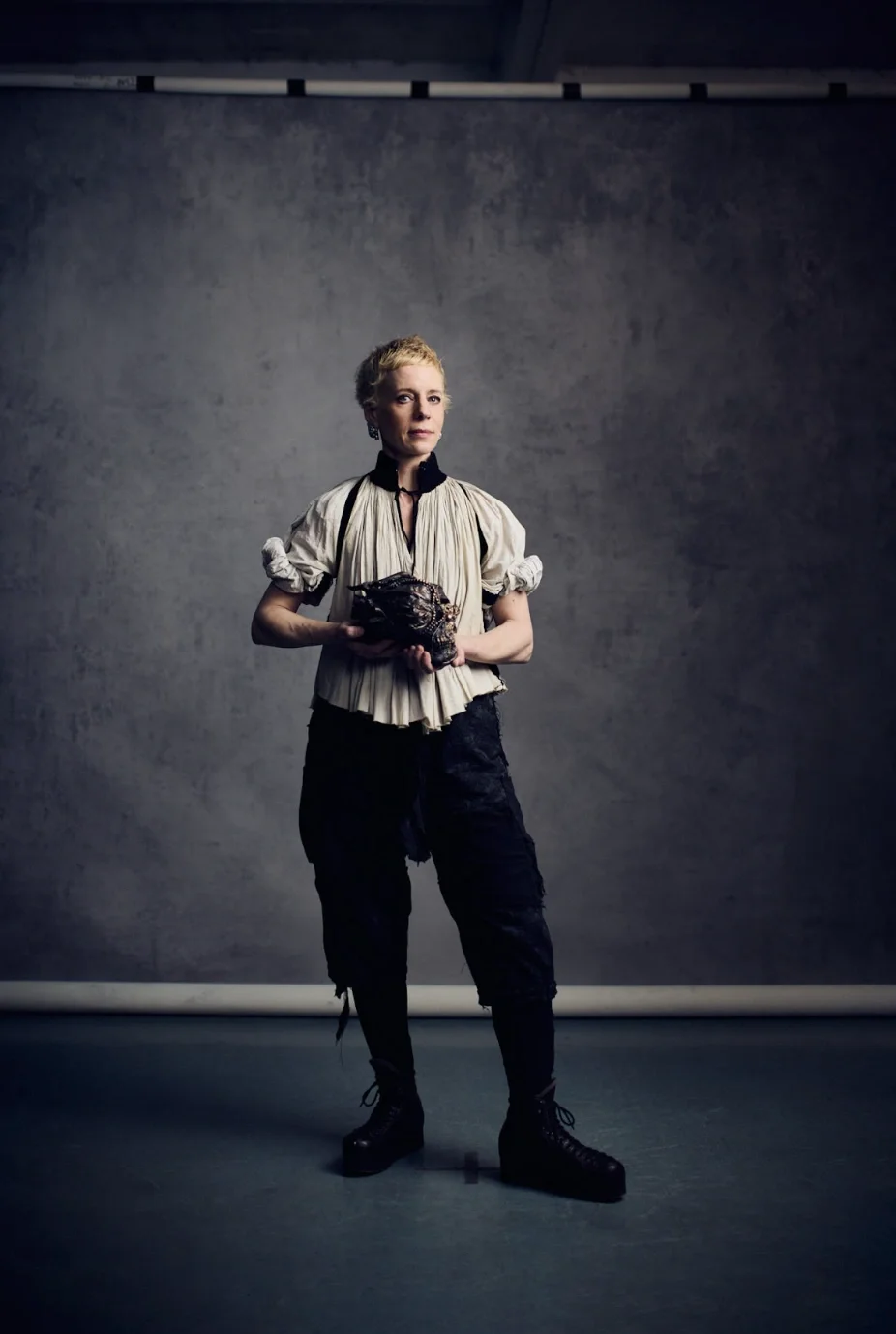
Although a visual artist, jeweler, and educator, Katrin Spranger is a trained artisan, having studied blacksmithing, silversmithing, and jewelry making when she was a student in Germany and Sweden; she also prefers to create with unusual materials and designs. “If something is crafted very well, it may look beautiful,” she says. “But sometimes I feel like there’s a little bit of soul missing.”
For her Master’s thesis, she created pieces made from solidified crude oil, which then melted when in contact with body heat. Her latest work is a series of necklaces made from shards of smashed mirror. The concept is one she explores across other mediums like sculpture and performance art, where she transforms things that are ordinarily avoided into objects of curiosity and fascination. “I love to work with materials that are rejected.” she says. “Ones that make you feel repelled and and attracted at the same time.”
However, Spranger does wish that the craftsmanship of jewelry making was appreciated a little more by the art world. In recent years she’s been trying to “get more of a foot into the fine art world” but noticed resistance and “a bit of hierarchy” between art and jewelry. She was invited to exhibit at the Venice Biennale two years ago by Homo Faber, which supports and promotes creative artisans, and ended up in a space next to a fine artist called Claire Morgan. “For me it just made so much sense because it was very thematic. I’d love to see this more, as well as the appreciation of craft as an art form.”
For Lo, meaning actually comes from the creative process of making. “Every piece involves carving into the stone itself, which is slow and risky, and each choice is about how light, structure and material work together,” she says. “I’m drawn to baguette-cut stones for their geometry, and to architects like Tadao Ando, who design for the whole atmosphere of a space rather than a single object. I try to approach a piece of jewelry in the same way: the setting, the stone, and the wearer all become part of one structure.”
Related article: Who to Call When Your Diamonds Need a Facelift

Despite the material craft at the heart of her work, Lo also “hopes people feel they are wearing a piece of art: a concept and a passion that an artist has made by hand. To me, my work is where quality meets curiosity. I’d love wearers to appreciate the precision and care in each piece, but also to want to look closer and discover how it holds together.”
Although there may still be some snobbishness from the art world around craft-based art forms, jewelry is undeniably increasingly visible at its annual headline events. PAD London, which took place in October at Berkeley Square in Mayfair, featured jewelry exhibitors including Buccellati, Fernando Jorge, Hemmerle, and Elie Top. Meanwhile, at Frieze Masters, the open-air sculpture exhibition in Regent’s Park, De Beers unveiled an installation celebrating the beauty of natural diamonds.
It speaks to the rise in interest in collecting more generally, whether across art, antiques or jewelry. The movement is led by a new generation of younger collectors who, in a world of AI slop and mass-produced luxury, see one-off creations as the new status symbols.
Gen Z spent more on fine art than any other generation surveyed in 2025, according to The Art Basel and UBS Survey of Global Collecting 2026, with uniqueness and rarity ranking as what was considered the most important aspects of ownership. And both young and old are not just collecting art, the survey found that it accounts for only a third of High Net Worth collectors’ total expenditure, leaving plenty of room for other categories like art jewelry to benefit.
So how can you start your own art jewelry collection? Sprager suggests looking at graduate shows at places like Central St Martins, the Royal Academy of Art, or indeed at K2 Academy of Contemporary Jewellery, which she co-founded in London in 2017. If you’re interested in both the idea and the craft behind a piece of art, there’s also annual competitions like Goldsmiths’ Craft & Design Council Awards, which spotlight the work of innovative jewelry artists and craftspeople like Lo. Other luxury brands that excel in creating art jewelry are Juju Vera and Fernando Jorge.

Cipriani’s advice is to buy what you “genuinely love and would enjoy wearing. Never buy a piece simply because you believe it may increase in value. Take time to understand the artist, their practice and how the jewelry relates to their wider body of work.”
And a bottomless bank account is not necessarily required. “Some extraordinary artists have created jewelry in silver, bronze, or other materials that can provide an accessible entry point into collecting,” she says, citing people like Giorgio Vigna, Giampaolo Babetto, Sophia Vari, or some of the younger artists working today.
“Above all, I would say that collecting should be an emotional journey. I always tell my clients that a great piece of wearable art should give you the same pleasure as a painting or sculpture, with the extraordinary privilege that you can actually wear it.”