


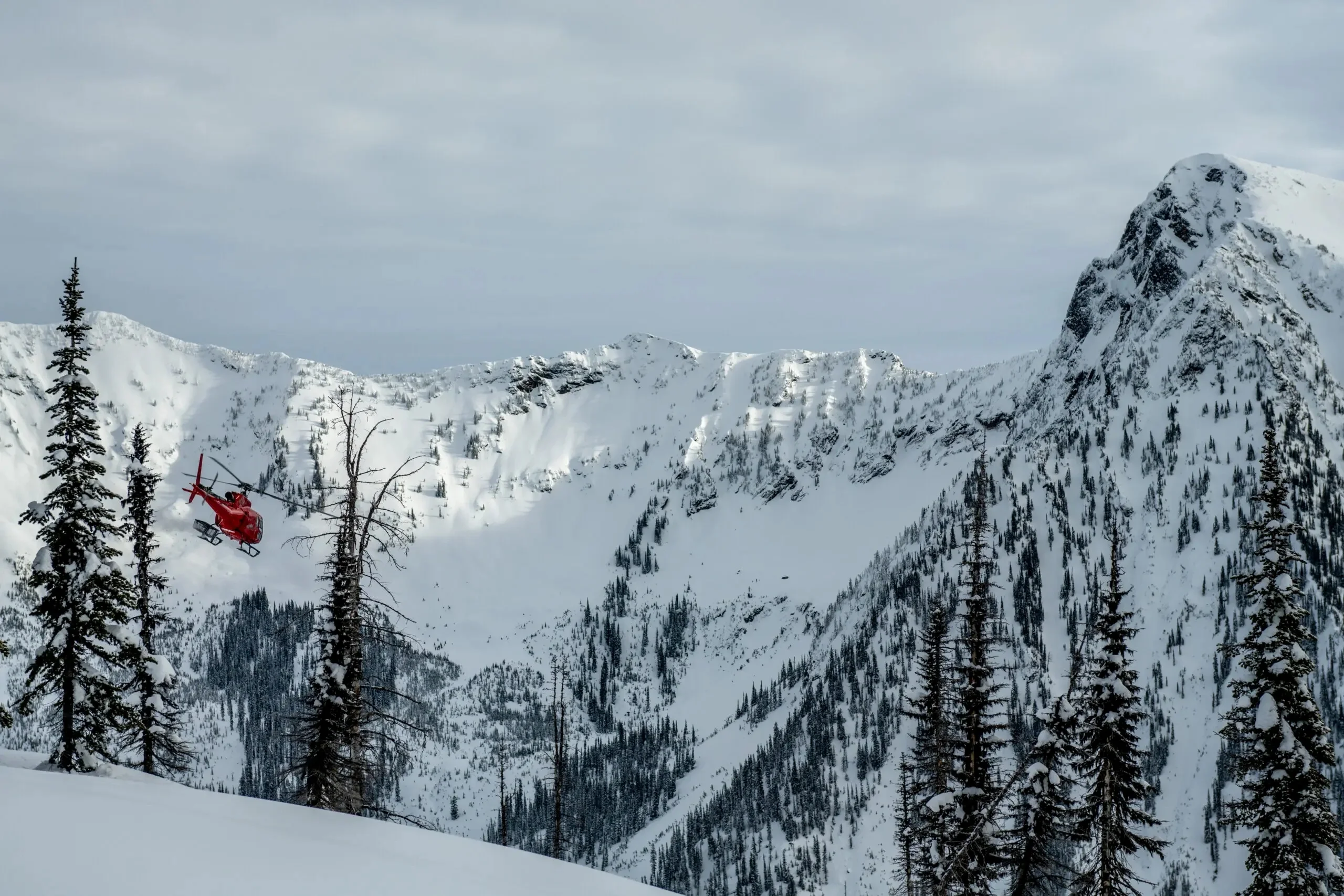
Heli-skiing is the ultimate exercise in going off-piste.
Ditch joining the morning queue at the lifts and hop aboard a helicopter heading straight into the backcountry, where untouched powder, vast mountain ranges, and even glaciers provide a very different backdrop from even the most exclusive ski resort.
But the best destination depends on what you want from the experience. Mike Hattrup, director of skiing at Eleven Experience, puts it simply: “It depends on your group and what each skier wants from the trip.”
Related article: The Best Ski Resorts to Reach by Private Jet
The experts’ advice for heli-skiing
Where can I go heli-skiing?
British Columbia is the undisputed heavyweight of heli-skiing, with the province estimated to account for up to 90 percent of the world’s heli-skiing activity. Elsewhere, the rules vary considerably.
Heli-skiing is prohibited in France, and even though skiers can travel across the border to access permitted terrain in Italy or Switzerland, operations are still limited to designated landing and pick-up sites. Austria allows heli-skiing only in Lech Zürs, but skiers must be accompanied by a state-certified guide, and flights are prohibited on weekends and public holidays.
What level of experience do you need for heli-skiing?
Most heli-skiing programmes are designed for strong intermediate skiers and above who are comfortable on ungroomed terrain. Hattrup advises guests to be confident skiing among trees, although choosing somewhere with open alpine bowls can offer a gentler option when visibility permits.

When is the best time of year to go heli-skiing?
The ideal window varies by destination. British Columbia and much of the continental US typically offer their strongest conditions in late winter, while Alaska’s season can extend into spring. Chile provides a Southern Hemisphere alternative, with its heli-skiing season generally running from July to September.
What happens if the weather is too bad for heli-skiing?
Helicopters cannot fly in unsuitable weather, so it is worth checking an operator’s typical fly rate before booking. Choosing a destination with lift-served skiing provides a useful alternative on grounded days, although no operator can guarantee ideal conditions throughout a trip.
The best destinations for heli-skiing
Revelstoke, British Columbia, Canada
Revelstoke claims to be the birthplace of heli-skiing, and with its extensive backcountry terrain and functioning ski resort, it’s easy to see why. Hattrup says Eleven’s heli terrain receives an annual average of 700 inches of snow, with a reported 90 percent fly rate. “You’re there to ski powder,” he says.
The experience suits strong intermediates and above, particularly those confident skiing through trees. “For advanced skiers, it’s 700 inches of snow a year in our heli terrain and your own helicopter and crew,” Hattrup adds.
When the weather grounds the helicopters, Revelstoke Mountain Resort provides a useful alternative. For accommodation, Eleven offers a lodge-based experience, while the town itself has a wider choice of hotels and restaurants.

Central Coast Mountains, British Columbia, Canada
British Columbia is heli-skiing capital of the world, but its Central Coast Mountains offer something different from the better-known resorts. “The Central Coast Mountains sit between maritime and continental snow climates,” explains Michael Williams of Great Bear Heli-Skiing. “Moisture arriving from the Pacific meets cold air from the Chilcotin Plateau, bringing abundant snowfall while preserving the quality of the snow.” Great Bear operates across almost 2,500 square miles of terrain, with a maximum of just 12 guests at a time.
That scale allows guides to seek out the best conditions, whether skiing high alpine bowls, naturally spaced trees or slopes above the fjords. “For me, it’s a day that takes you from skiing an alpine bowl into naturally spaced trees in the morning, then skiing down a high mountain slope towards the ocean waters of the Dean Channel in the afternoon,” says Williams.
February and March are prime months, although the operator reports that recent seasons have offered skiable conditions into late April and May. Guests can expect a full day on the mountain, followed by a cedar hot tub, sauna, massage and dinner at the lodge. The standard programme suits skiers comfortable on black runs with some powder experience; a private option offers three guests their own helicopter and two guides.
Tordrillo Mountains, Alaska, US
Alaska is the choice for skiers seeking vast, dramatic terrain. Around the Tordrillo Mountains, west of Anchorage, glaciers, steep alpine faces and expansive wilderness provide a different proposition from the tree skiing of British Columbia. The trade-off is weather and access: flexibility is essential, and an itinerary should allow for grounded days.
Tordrillo Mountain Lodge offers guided heli-skiing with accommodation arranged around the mountain experience. Its remote setting makes it particularly suited to travellers who want to devote several days to skiing rather than split their time between the slopes and a resort town.

Valle Nevado, Chile
When the Northern Hemisphere season winds down, Valle Nevado is just gearing up to start its snow-filled season in the Andes. Its dedicated heli-ski operation advertises 125,000 hectares of terrain, with descents of up to 1,500 metres of vertical, depending on conditions.
The resort offers shared-day programmes and private weeks, with specialist mountain guides and avalanche safety equipment included. Accommodation at the resort puts guests close to the helicopter base, making it practical to combine lift-served skiing with backcountry days. The operator also offers refunds under specified conditions when weather prevents flying.
Troll Peninsula, Iceland
On Iceland’s Troll Peninsula, mountains rise sharply above the Arctic Ocean, creating the possibility of skiing from high ridgelines towards the shoreline, along with alternative days spent hiking the volcanic landscapes and soaking in the geothermal pools.
For a luxury base, Deplar Farm, where “the service is incredibly personalized, and everything is right there, from amazing food and geothermal experiences to outdoor adventures,” says Grace Bunker, Europe travel specialist at Scott Dunn. “It is also fantastic later in the season for heli-skiing.”

Lech Zürs, Austria
Lech Zürs is Austria’s only destination permitting heli-skiing, with guided descents from designated landing sites at Mehlsack and Schneetäli. Flights depend on suitable weather and avalanche conditions and do not operate on weekends or public holidays.
The restrictions make it an addition to a traditional Alpine holiday rather than a destination for unrestricted helicopter access. The wider Arlberg area offers extensive lift-served and off-piste skiing, alongside the excellent dining and hospitality for which Lech is known.
Hotel Arlberg Lech provides a central base with spa facilities. For travellers who want a rare helicopter-accessed descent without giving up the comforts of a classic ski resort, it is a compelling European option.
Verbier, Switzerland
Verbier combines demanding off-piste terrain with one of the Alps’ most established social scenes. Its position within the Four Valleys provides extensive lift-served skiing, while designated helicopter-accessed descents can be arranged through specialist operators when conditions and local rules permit.
Bramble Ski by Le Collectionist manages a collection of luxury chalets in Verbier, with private spas, heated pools, in-house chefs and concierge services. That makes the resort particularly appealing for groups who want to combine mountain days with long lunches and evenings out.

The Tarentaise Valley, France
For some skiers, the ideal trip is not a week spent chasing powder exclusively. “In the Tarentaise Valley in France, it’s about variety, with seven resorts and the chance to mix heli, ski touring, and off-piste,” describes Hattrup.
While France restricts heli-skiing, the proximity of Tarentaise Valley to Italy opens up another option: “You can take the lift up from La Rosière, ski down into La Thuile in Italy, have a cappuccino, then get picked up by the helicopter and ski all day with an Italian lunch. At the end of the day, you’re dropped at the border and ski back to the chalets in France.”
That flexibility suits families and multi-generational groups, particularly when abilities and appetites for challenging terrain differ. Not only that, but with “seven resorts at different elevations and closing dates, you can ski deeper into April and enjoy corn snow and warm spring skiing.” Not to mention the many on-mountain restaurants and lively resort towns make it ideal for those who prefer, as Hattrup puts it, “a ‘short ski, long lunch’ day.”


