


Oktoberfest is not, at first glance, the most obvious addition to an Elite Traveler travel itinerary. There are enormous beer halls, litre-sized steins, brass bands, fairground rides, and several million people descending on Munich for 16 days of eating, drinking, and dancing on tables.
The Wiesn, as locals call it, is one of those rare occasions where money can only get you so far. This is a festival built around communal tables and Bavarian tradition, rather than velvet ropes and VIP lounges.
“The Wiesn isn’t a luxury destination,” says Carolin Grove, PR director at Hotel Vier Jahreszeiten Kempinski München and Kempinski Hotel Berchtesgaden. “The whole point is that everyone celebrates together here.”
Rather than attempting to sanitise Oktoberfest into something it isn’t, the trick is to make the experience around it as seamless as possible – with a well-chosen hotel, a guaranteed table, a private car, and a little expert planning. We’ve asked Munich’s luxury travel insiders to share how to do exactly that.

What and when is Oktoberfest 2026?
Held on Munich’s public square, Theresienwiese, Oktoberfest is the world’s largest folk festival, bringing together beer tents, traditional Bavarian food, live music, and centuries-old customs. Despite its name, it largely takes place in September. This year, the festival runs from September 19 to October 4, 2026.
The experts’ guide to experiencing Oktoberfest in luxury
Where to stay during Oktoberfest 2026
Where do you go to sleep off the previous day’s steins? For Livia Angelini, Europe travel specialist at Scott Dunn, three Munich hotels stand out.
“Hotel Vier Jahreszeiten Kempinski is one of Munich’s most iconic luxury hotels,” she says, pointing to its position on Maximilianstrasse, within easy reach of the Old Town, Residenz, Marienplatz, Hofbräuhaus, and the city’s best shopping.

For a more contemporary stay, Angelini recommends Rosewood Munich, housed in two restored historic buildings in the heart of the Old Town. Its residential feel, spa, and dining offerings make it particularly well suited to travelers who want to combine Oktoberfest with some serious downtime.
The Charles Hotel, Rocco Forte, meanwhile, provides a quieter base overlooking the Old Botanical Garden. Angelini highlights its unusually generous guest rooms and a substantial spa – always appreciated but particularly useful when the itinerary involves several late nights.
Where to eat during Oktoberfest
There is, naturally, no shortage of food at Oktoberfest itself. But Munich’s culinary scene is worth exploring beyond the festival grounds. For traditional Bavarian food with a slightly more polished setting, Lena Speckmeyer, head concierge at The Charles Hotel, recommends Spatenhaus an der Oper, directly opposite the opera house, where the ground floor has a traditional Wirtshaus feel, and the upper floor takes a more refined approach to regional cooking.
For something more relaxed, Andechser am Dom is a classic Munich Wirtshaus in the heart of the city, serving traditional Bavarian dishes and beer from the Andechs monastery brewery in a lively, convivial setting. Speckmeyer also recommends Weinhaus Neuner, a historic restaurant with wood-panelled dining rooms and a stronger focus on wine, alongside Haxengrill for a more straightforward Bavarian feast.

Grove similarly recommends Hofbräuhaus and Augustiner am Platzl for the classic Munich beer-hall experience, while Victoria Asbach, clienteling manager at Rosewood Munich, points to Xaver’s and Papa Benz for modern interpretations of Bavarian cooking.
For something more firmly rooted in the Wiesn itself, Asbach recommends Zur Bratwurst and Käfer’s Wiesn-Schänke. “The Käfer tent is certainly the most upscale – but it’s not authentic and not as much fun!” Grove says.
What to eat and drink at Oktoberfest
Whichever table you choose, there are a few Bavarian staples worth ordering. Angelini recommends starting with weißwurst, a pale veal-and-pork sausage traditionally served with sweet mustard and a soft pretzel. It is perhaps the most quintessential and traditionally eaten before noon, making it an excellent excuse for a late breakfast after an evening at the Wiesn.

Käsespätzle is Bavaria’s answer to macaroni cheese: small, soft egg noodles layered with melted cheese and topped with crisp onions. Wiener schnitzel needs little introduction, while kaiserschmarrn is a sweeter option, a fluffy, torn pancake served in pieces, traditionally served with fruit compote.
And then there is the beer. “Every visitor should try a good Munich beer at least once,” says Grove, who singles out Augustiner as a local favorite. For something stronger, try Williams pear schnapps served with a slice of fresh pear, or follow Grove’s lead with apricot, plum, or hazelnut flavor.

How to make Oktoberfest luxurious
There is no discreet VIP village at Oktoberfest, nor do the experts see much point in attempting to recreate one. For them, luxury comes down to preparation. “The most important thing is to have a table reservation so you’re let into the tent right away,” says Grove. “Otherwise, you sometimes won’t have a chance to get in at all.”
Speckmeyer agrees, recommending that guests secure a reserved table well in advance, particularly for evening sessions and weekends. She also suggests visiting during the week and arriving around lunchtime for a more manageable experience. For those who want to avoid the crush altogether, private transportation can take care of the less glamorous logistics.
While there are no official “VIP tables” at Oktoberfest, Speckmeyer says clients often prefer tents including Käfer Wiesn-Schänke, Kuffler’s Weinzelt, and Schützen-Festzelt for their more refined atmosphere.

At Rosewood Munich, Asbach and the team can arrange an all-inclusive experience, with a hostess welcoming guests at the hotel, accompanying them to the tent, and helping them settle in before a three-course meal with drinks. Mandarin Oriental, Munich similarly offers festival access, with personalized assistance and transportation by vintage bus incorporated into its Oktoberfest package.
The important thing, however, is not to over-engineer the day. As Speckmeyer puts it, some of the best experiences come from leaving room for a leisurely wander through the festival grounds and the occasional spontaneous discovery.
For those looking for a quieter, more traditional version of the festival altogether, the Oide Wiesn occupies the southern section of the Theresienwiese. With historic rides, traditional music, and three beer tents, it offers a more nostalgic (and perhaps approachable) interpretation of the Wiesn.
What to do beyond the festival
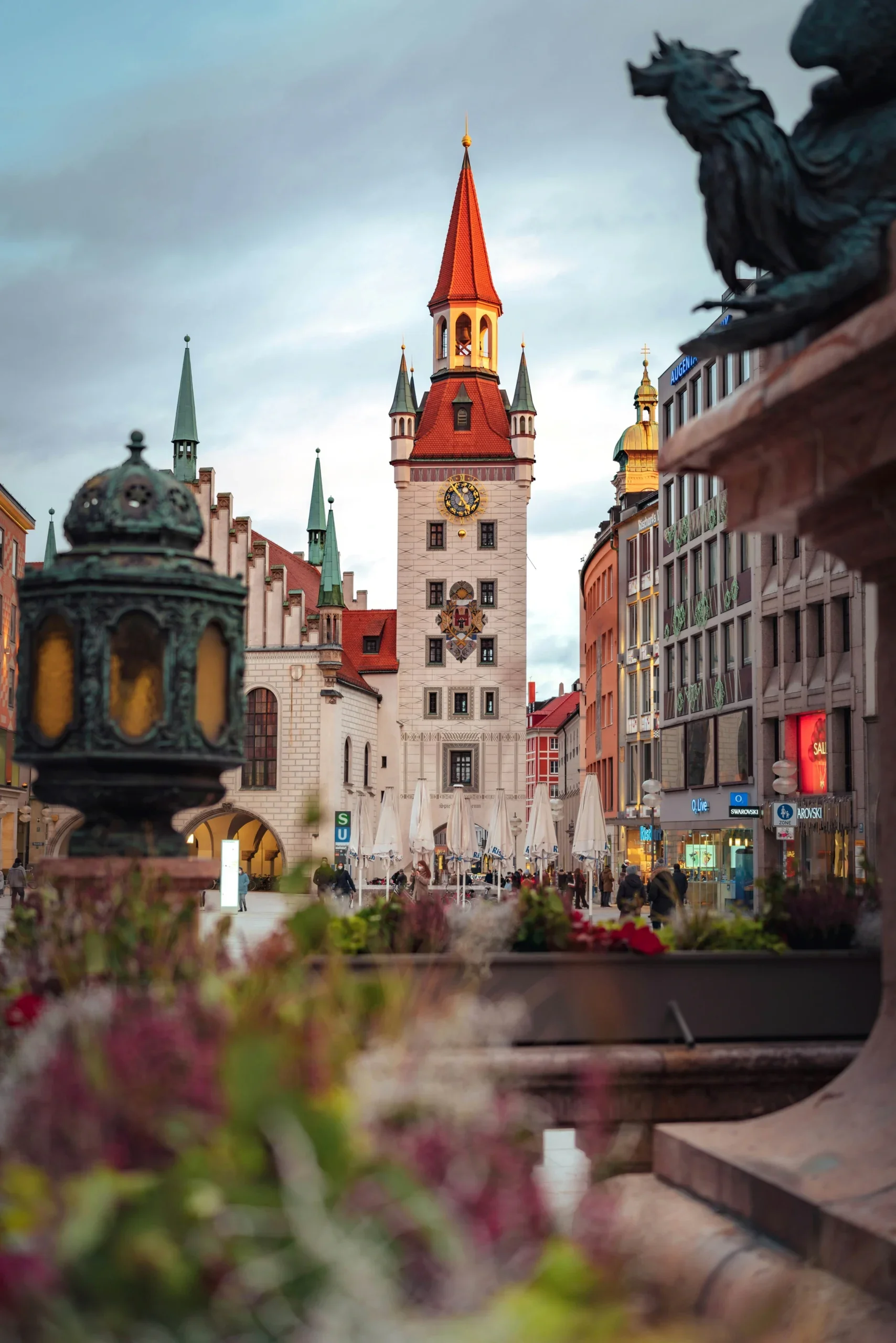
It would be a shame to fly to Munich only to spend the entire trip inside a beer tent. Speckmeyer recommends exploring the historic center, including Marienplatz and the Residenz, while Angelini suggests Nymphenburg Palace and the BMW Museum for car enthusiasts.

Speckmeyer recommends exploring the lakes around Munich for a little change of pace, including Tegernsee, Starnberger See, and Ammersee. Grove similarly suggests Lake Tegernsee, while Asbach highlights the English Garden, the city’s museums, and the surrounding countryside.
For something more hands-on, Speckmeyer points guests to try a traditional Tracht experience or a private hat-making session with Bavarian manufacturer Fatzke.
If you’re looking to escape a little further afield, Rosewood’s private guides can arrange a day trip to Salzburg, following in the footsteps of Mozart and exploring locations associated with The Sound of Music. Alternatively, bookend the Oktoberfest visit with a privately guided trip to Neuschwanstein or Linderhof Palace. “These are wonderful ways to complement the energy of the Wiesn with a little culture, history, and beautiful Bavarian scenery,” Asbach says.
