





Once upon a time, a hotel with unreliable Wi-Fi was a (big) problem; now it’s a selling point.
These days, you’d be hard-pressed to book a hotel without expecting fast, free Wi-Fi. In fact, listing it as an amenity feels almost redundant – like advertising that the room has electricity. Thankfully, we also seem to be past the era of hotels charging a premium just so you could send a WhatsApp or download the latest episode of The Gentlemen.
But the problem with all that is, for all our insistence on staying connected, a growing number of us are actively trying to do the opposite. A 2026 Pew Research Center survey found that 53 percent of US adults think they spend too much time on their smartphones, while 45 percent had tried to cut back in the previous year. Among 18- to 49-year-olds, that figure rises to 58 percent. Meanwhile, 44 percent of all age groups feel that they are online almost constantly.

After years of working from laptops, communicating by Slack, scrolling through TikTok, and being contactable at all hours of the day, the digital detox is not particularly new or unbroken ground. What is interesting, however, is the ways that it has moved from private monasteries and silent retreats into luxury travel. But when we have become very good at optimizing our sleep, our steps, and our supplements, the next step is trying to optimize the amount of time we spend looking at nothing at all.
It’s a habit seen in research by the booking platform Goboony, which reported nearly two in five (38.8%) now actively seek out places with no phone signal or Wi-Fi, treating a dead zone as a feature rather than a compromise. Jake Stone at Goboony says “[People are now asking] how long they can stay somewhere with nothing – no hook-up, no Wi-Fi, no bars on the phone.”
That sentiment is echoed by Hector Hughes, the co-founder of UK digital detox retreat Unplugged, a collection of humble but comfortable cabins across the UK and increasingly in Europe. When guests check into the often isolated and remote lodges, Unplugged asks them to lock their phones away for at least 72 hours, stripping the experience back to nature, books, and board games, with only a Nokia “brick” cell phone provided for emergencies.

The very idea for the business came after burnout led him to a silent retreat in the Himalayas. “It was only stepping away from it all, and cutting it all away, that I for the first time found some peace,” he says.
The irony was that building a business around helping people switch off eventually saw Hughes spending more time online than ever. When his own health began to suffer, he tried to optimize almost everything – his sleep, diet, and routine, alongside peptide and ozone therapies. “All the ‘optimizing’ was just adding more strain to my already overloaded system,” he says.
His conclusion is rather less Instagrammable than most wellness advice. “Unplugged was born around a belief in stripping away the things making us unwell rather than adding increasingly more to ‘fix’ ourselves.” Or, as he puts it more bluntly: “The whole ‘optimization’ space is built on not being enough.”


Mexico’s all-inclusive Grand Velas Riviera Maya takes a slightly gentler and white-gloved hand to help guests turn off their devices. An assigned Reset Concierge takes guests’ phones, tablets, and other devices and stores them in a dual-key lockbox. In return, there are jungle walks, stargazing, board games, and a Polaroid memory walk.
At Villa Stéphanie, the wellness retreat attached to Brenners Park-Hotel & Spa in Baden-Baden, the solution comes at the touch of a button beside the bed, which cuts off all the electricity and Wi-Fi in the room.
There is no additional package or program to buy into at Jamaica Inn in Ocho Rios. There are no clocks, TVs, or radios in any of the rooms, explained the Morrow sisters, Olivia Morrow and Eloise Morrow, who represent the fourth generation of family leadership at the historic hotel. Even the spa does without music, leaving guests, as the hotel describes, with little more than ‘the sounds of the Caribbean Sea below’.
There is also a weekly Sunday Switch Off, which the hotel says is ‘a Wi-Fi-free hour after lunch designed to encourage guests to do nothing – whether that means reading, napping or swapping stories at Teddy’s Beach Bar.’ And for those who need a little more structure to their idleness, the hotel has a schedule of complimentary diversions and distractions, from rosé and croquet to turtle talks, garden tours, and non-motorized watersports.

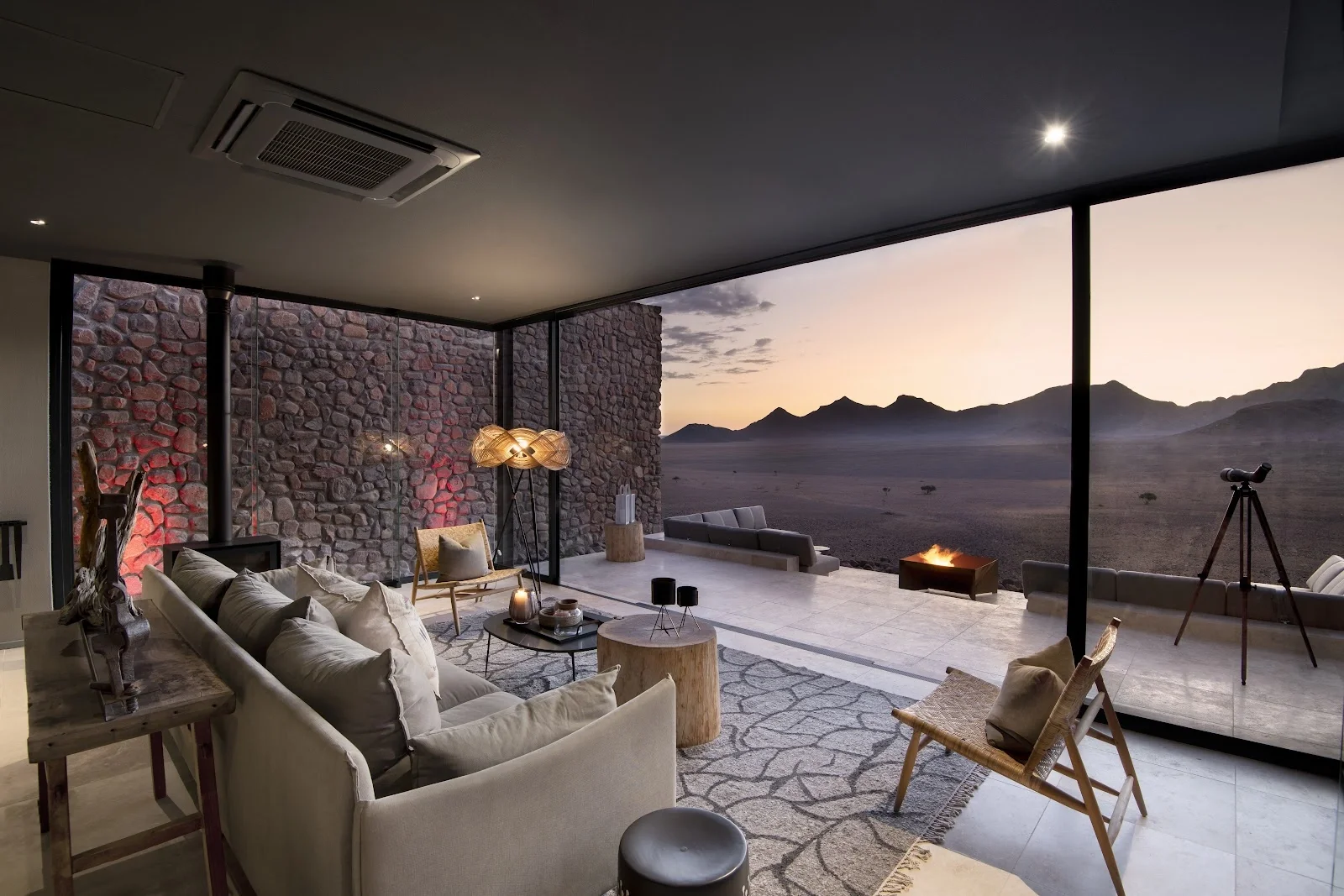
Safari lodges have somewhat of an advantage here. Their remote locations naturally temper our expectations of hyper-fast connectivity, while the surroundings offer a fairly compelling reason not to stare at a screen. At Singita Ebony Lodge, Wi-Fi is available, but the remote setting makes it slow and intermittent; &Beyond takes a more deliberate approach, keeping Wi-Fi out of shared guest areas at many of its lodges to encourage guests to focus on their surroundings.
(In fact, when I asked our own deputy editor Kim Ayling whether the absence of TVs or consistent WiFi connection impacted her stay, she said she “never even noticed there was none – and that’s coming from someone who loves nothing more than watching a huge hotel-room TV.” She reiterated that the hotel’s design and incomparable location likely contributed to her overlooking this typically must-have in-room amenity: “each suite has enormous floor-to-ceiling, wall-to-wall windows that look over the nearby watering hole, which attracts a whole cast of wildlife and the drama they bring is better than any film or TV show.”)
That feels like the more interesting version of a digital detox (and much more approachable than monks or powering up the old brick cell phone). There’s no need to necessarily confiscate your phone (we’re not in school after all), but making the outside world sufficiently compelling that you forget to pick it up.