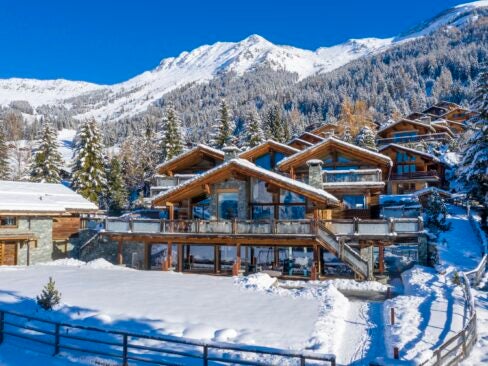
If a region has its very own portmanteau to describe the snow, you can rest assured the skiing conditions will be outstanding.
‘Japow’ (Japan and powder snow) is so-named because of the light and deep snow that falls across the mountains during the winter months.
As one of the world’s most popular places to ski outside of Europe, Japan has plenty to tempt those looking for something a little different from the usual Alpine escape.

Why Japan is ideal for skiing
Cold winds from Siberia pick up moisture as they pass over the Sea of Japan, and when this moisture-heavy air hits Japan’s high mountain ranges, it rises, cools quickly, and dumps huge amounts of snow onto the region.
The moisture content is as low as four percent and the freezing temperatures keep the snow crystals light and dry – this combination makes for wonderfully fluffy, cloud-like snow instead of wet, heavy slush. There’s a big volume of the stuff as well – some areas get hundreds of inches of snowfall.
The culture is all its own, too – slope-side lunches consist of miso-based ramen, donburi, and motsu-ni (a slow-cooked pork offal stew) and sore muscles are soothed in traditional onsens.

Where to ski in Japan
There are over 500 ski resorts in Japan and accessibility is excellent thanks to the high-speed bullet train; one from Tokyo takes you right to the resorts in under 30 minutes.
Hokkaido
Hokkaido is the most popular ski area in Japan thanks to its dry, deep powder – the island routinely gets over 60 ft of snow. Within it, the town of Niseko tops the list, with four interlinked resorts on a single mountain (Grand Hirafu, Hanazono, Niseko Village, and Annupuri), varied terrain, and backcountry access.
There’s also ample opportunities for night skiing, especially in Grand Hirafu – lots of floodlit slopes means skiing runs late into the evenings. Niseko is livelier than its more traditional counterparts, so there’s a vibrant culinary scene and cool bars for those who enjoy après ski.
One hotspot is Bar Gyu+, where you enter through a vintage refrigerator door surrounded by ice and land into a dimly lit jazz bar; it specializes in Japanese whisky. Hertzz, a converted ski shop that is now a sleek music venue with resident vinyl DJs, is another.

What to book in Hokkaido: Powder Byrne has recently celebrated 35 years of crafting ski itineraries in Japan, and has a ski tour running from January to March 2027. The ten-day trip moves through Hokkaido between mountain bases from Niseko to Tomamu, with a specialist guide in tow.
It’s worth noting that heli skiing is rare in Japan due to strict regulations but there are a few operators that can arrange it – Hokkaido Backcountry Club operates on Shiribetsu-Dake, near Niseko and Rusutsu, with shared trips and private charters. Its six-run day is intended for advanced and expert skiers confident in steep powder and trees. Flying depends on weather and snow conditions, so allow some flexibility in the itinerary.
Ski specialist Leo Trippi reccommends Kiroro in Hokkaido for a more relaxed stay focused on skiing. Its terrain extends across the Asari and Nagamine peaks, and it can be combined with visits to Otaru for seafood, glassmaking, and its historic canal district. Opt for Yu Kiroro for its ski-in/ski-out apartments, ski valet, and onsens. Leo Trippi has a 16-day itinerary, crafted with its sister company, Explorations Company, that combines skiing in Japan with a broader journey through Japan, covering Kioro, Niseko, Tokyo, Kanazawa, Kyoto, Nara, and Osaka.
Related article: The Best Ski Resorts to Reach by Private Jet
Nagano
Nagano, on the main island of Honshu, bears the nickname ‘Roof of Japan’ as its home to 15 of the country’s 23 mountains that rise around 10,000 ft. It can be reached in under 30 minutes from Tokyo via the bullet train and is home to 80 resorts.
The city hosted the 1988 Winter Olympics, and the alpine skiing speed and combined events (downhill and super-G) were held at Hakuba Happo-One Snow Resort – the Olympic course remains open for intermediate and advanced skiers to take on.

Shiga Kogen in Nagano is the country’s largest interconnected ski area with 18 zones and some 70 lifts on a single pass. Nozawa Onsen Snow Resort is on the northwest slope of Mount Kenashi and pairs some 50km of runs with a centuries-old traditional Japanese village – there are 13 Edo-style hot springs (soto-yu) that are maintained by local neighborhoods. The village also hosts the famed Dosojin Fire Festival every January 15.
Not to be overlooked is Tohoku in northern Honshu – it’s not as well-known as other resorts and tends to attract more experienced skiers and snowboarders, meaning there’s usually far less crowds and a more authentic Japanese experience.
What to book in Nagano: Powder Byrne’s ‘ski safari’ travels through the lesser-known region, visiting traditional onsen and taking in the scenery including the ‘Snow Monster’ trees – named for how the wind and freezing temperatures sculpt the trees into surreal shapes.
If you’re a non-skier but still adventerous, the Unfogettable Travel Company can arrange snowshoeing at the top of the Yatsugatake Mountains. You’ll head up the Kita-Yatsugatake ropeway to just over 6,560 ft, then hike to the peak of Mt Shimagare and back. It takes around four-and-a-half hours, and on a clear day, offers enchanting views over the Japanese Alps.
When is ski season in Japan?
Japan’s ski season generally runs from mid-December to April; northern regions (like Hokkaido) open as early as late November (Hokkaido’s first dusting of snow for 2026 came in early October). The early season, from late November to December, has the advantage of quieter slopes. The snow coverage can be varied, though, as it’s before the heavy winter dumps.
Peak season is January to February as that’s when the coveted ‘Japow’ is at its best – there’s consistent, deep, and dry powder conditions across northern Japan and the mountains. The late season runs from March to April. The weather is milder and the days are sunnier, plus there’s fewer crowds so a better option for newer skiers – but the powder conditions are less predictable.
April is best to see the towering 65-ft snow walls of the Tateyama Kurobe Alpine Route (a 90-km sightseeing route through the Northern Japan Alps, connecting the Toyama Prefecture with the Nagano Prefecture).