


What price peace of mind? Or, looking at it from the other direction, at what cost knowledge? This was the second of two thoughts that struck me as a genial surgeon told me that the lesion in my hip showing up on an MRI scan was kinda cancer – because it was an abnormal cell growth and that, he said, characterizes most of them – but was unlikely to be cancerous. The first was, Sorry, what?
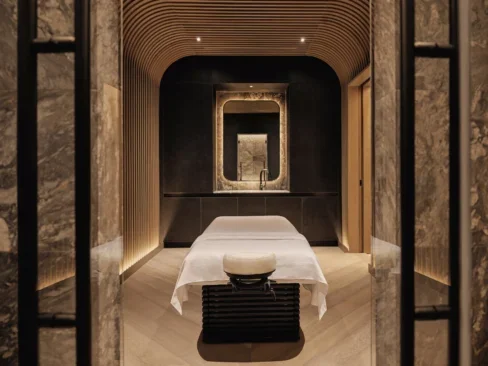
Fair to say this was not what I’d been expecting when, a few days earlier, I arrived at the sort of minimal, inoffensive reception area that could belong to an insurance firm or a mid-level hotel group, but was in fact part of Preventicum, a discreet medical facility in the City of London that offers some of the most comprehensive executive health assessments available.
Over the course of a single day you are scanned, screened, and surveyed for myriad conditions and complications such as heart disease, stroke, and much else – ‘the world’s most advanced health assessment with pioneering heart and brain analysis,’ according to its website – and get your results before you walk out the door. For the high-performing, health-optimizing individual, that’s a day well spent.
And it’s quite a day: an immersive, exhaustive, and at times exhausting experience executed with a high level of calm and competent professionalism. The six-plus hours of tests include comprehensive blood work, ultrasound (including, for men like me on the Optimal+ agenda, testicular examinations and scans of your prostate), mole check, audiometry, hours of MRI – including brain – and an exercise echocardiogram and VO2 max test.
Related article: What Are Stem Cell Beauty Treatments – and Do They Actually Work?

My father emerges for the first time while I’m giving blood. I remember watching a rerun of an old sitcom with him as a kid, where the misanthropic lead character is told he needs to donate a pint of blood. “A pint?” he protests. “Have you gone raving mad? That’s very nearly an armful.” Dad and I used to quote that sketch to each other all the time.
My early consultation is with Dr Kartik Modha, who has that useful ability to blend friendly enthusiasm with professional detachment. “Why are you here?” he asks. And it’s back to Dad again. I’m here because my father died of various cancers a year ago. It was a drawn-out and destructive experience and, as is the way, deeply damaging not just to him but to those around him.
My wife and I were living in New York but moved home to London to be with him and my mother, who had an ongoing lung condition. She went first, unexpectedly; he faded more gradually, painfully, wretchedly. I’m here, too, because I don’t want my son, aged eight, to have to give up any part of his life in order to care for his parents.
I want the greatest health for the longest time, without draconian, punitive protocols. I’ve quit meat but not martinis. My question to Dr Modha is: “How do I live better so I don’t die badly?”
Related article: The 10-Hour ‘Non-Diet’ That Improves Sleep, Energy, and Metabolism

Of course he, and Preventicum, can only help us so far. There is a level of chance to our futures that medical science is not close to predicting, much less eradicating. Know thyself, said Socrates. Would he have signed up for a full-body scan and all the trimmings?
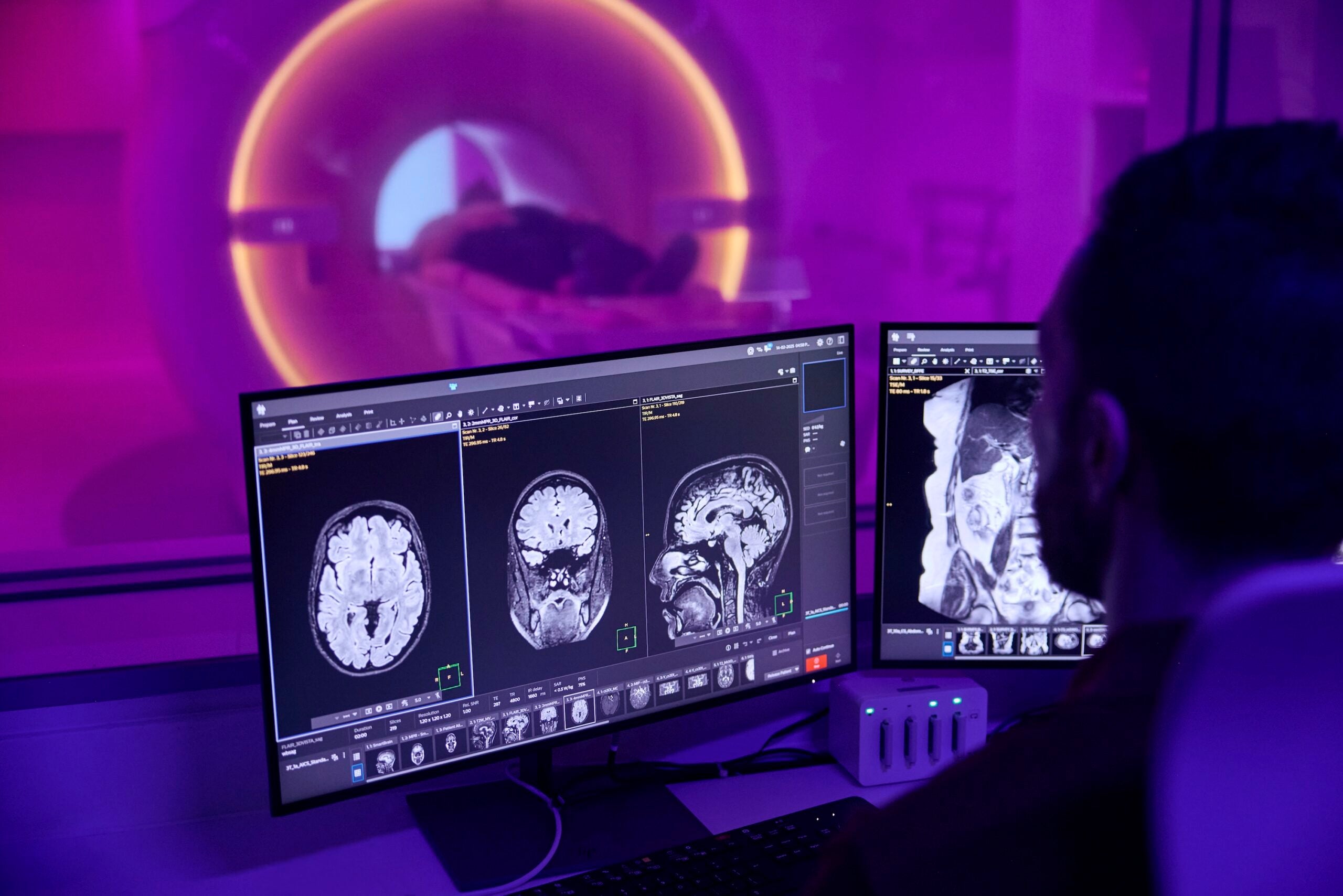
The actual assessments are relatively straightforward. I’ve had six surgeries over the years and have lost count of the numerous MRIs and other scans I’ve endured. These are different: rather than the usual ineffective soft rock piped into the machine via weak headphones that entirely fail to drown out the pneumatic drill of the machine, Preventicum’s MRI scanner offers wide-screen Netflix. Advised to pick something calming, as one of the scans is to be of my heart while holding my breath, I work my way through two David Attenborough documentaries during the hours I’m stuck in the tube.
Entertaining in a different fashion is the way my brain scans are visualized via virtual reality headset, where a hologram of my most complex organ is projected in front of me and I’m able to spin it around with a finger. Is there much point? Even the consultant radiologist who deciphers the findings says it doesn’t add much, but such bells and whistles are increasingly part of the furniture of these luxury packages.
Related article: How To Train Your Brain For Optimal Longevity

Better is the VO2 max test. Traditionally this involves wearing an oxygen mask and running on a treadmill almost to the point of collapse. I’ve done this before and it’s not high on a list of activities I’m keen to repeat. Here, though, I’m able to hike on a treadmill to reach 90 percent of my max heart rate before immediately taking an ECG reading to achieve more or less the same result.
So, after the tests, the reveal. All is largely well. My lipid profile, lung function, body composition metrics, and functional capacity are good. I grind my teeth at night and need more vitamin D. My sleep is a disaster, but I’ve known that for years. But there are two areas that require further assessment, outside the jurisdiction of Preventicum.
I’ve been having occasional pains in my chest and fluttering heartbeats over the past few years and while ECG tests have found nothing of note, nobody has been able to provide an explanation. During my exercise test and VO2 max, frequent ectopic (extra) heartbeats are recorded which, while not necessarily a problem – they’re fairly common, brought on by factors such as stress, alcohol, and poor sleep – warrant extra attention. An appointment is made with a cardiologist, and tests are still ongoing. But nobody seems too concerned so far, so neither am I. Much.
And then the lesion, which is where we came in. A different independent specialist gives me the cancer-not-cancer news, and then, after more scans, confirms it to be a benign bone cyst with no aggressive features. No idea what it’s doing there, but, as it aches, we’ll do another scan in six months to check it hasn’t changed. “Nothing to worry about,” he tells me.
So there we are. Can you put a price on peace of mind? Well, Preventicum’s Optimal+ assessment costs £12,500 (about $16,900), but whether knowledge brings you peace is really up to you.