

When I walked into my room at the Hotel du Cap-Eden-Roc last year, there was so much to impress: the view, of course, but also the fresh roses on the desk and the chic box of deluxe matches left next to the ashtray. What caught my eye the most, though, was a beautifully designed card: HOUSE RULES, it read across the top, to preserve an aura of magnificent glamour and discreet hospitality. The rundown was brisk and clear: no photography at the pool, for example, and disrespectful behavior towards guests or staff will not be tolerated. Our guests are greatly part of this timeless elegance, it continued.
Bravo to legendary GM Philippe Perd and his team for this effort, which simply states what most of us already know. Yet it’s a little depressing that such stationery is needed: money may not be able to buy class, but it traditionally denoted a modicum of decorum. That’s no longer true. Often, I’ve found the worst part of staying at a world-famous hotel is my fellow guests. The design, service, food, and more might be unimpeachable – the people I wanted to 86 were the ones berating the staff for something inconsequential by the pool. And when I asked a few general managers at the best hotels for the worst behavior they’d witnessed, the stories fell into three clear buckets: sex, money, and ego.
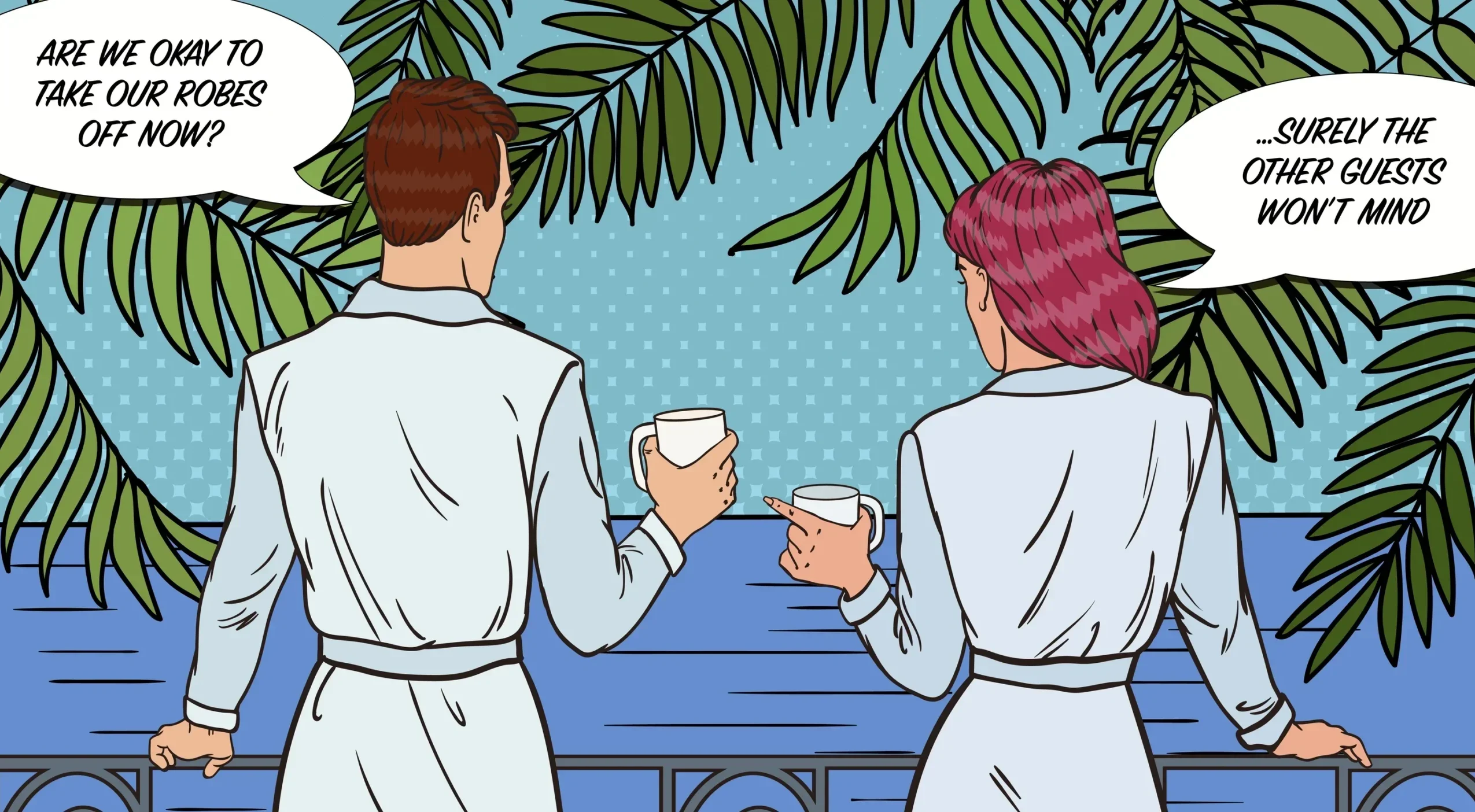
First, sex. Two couples checked into an expansive, expensive villa at a singular five-star resort in Mexico, albeit with plans they didn’t share with the hotel. The quartet forgot to request Do Not Disturb for their stay, so a room attendant inadvertently stumbled into the S&M orgy they were hosting, fleshed out with a few locally hired sex workers. The couples didn’t apologize, though, and quickly grab some robes. Instead, they demanded to see the GM, and complained they’d been press-ganged by a local cartel into the sex game; they planned to sue the hotel for breach of security, they added, having let those scantily clad strangers onto the property who then went on to scare them into the sex game. The couples even filed a police report to that end, and demanded a refund for their entire stay. Thankfully, the manager held firm against their elaborate but embarrassed story; they checked out, as planned, a few days later.
Related article: Are Private Members’ Clubs Losing Their Cool?
That was more straightforward than the situation another GM faced at an exclusive Maldives resort. A wealthy Eastern European arrived, solo, for a brief stay in its finest villa; within days, he summoned the manager to ask if he could take up temporary residence, ideally for around eight months. His wife would be joining him soon, he added and could the resort’s manager plan a weekly briefing to touch base on what they needed? At the first week’s confab, they were dressed normally; the next time, the couple was in their robes. By the third week, both wore nothing at all, shrugging that they preferred to spend their lives completely nude. The manager quickly canvassed for a dedicated butler and room attendant to service that clothing-optional villa who’d be comfortable with these wealthy nudists. The bigger issue, though, was that this villa was close to the seaplane touchdown for check-ins. The couple became fond of standing, stark naked, by their private pool and waving in greeting to the families on arrival – well, at least until they were asked to stay inside if they heard an engine. Nonetheless, they booked again for the following year: they came for just four months, but packed as lightly as before.
The second big issue is money. Sure, loyalty programs have unlocked access to five-star resorts as coupon redemptions, catapulting those who spend months on the road sleeping in motels into the option of cashing in their points for a luxury stay. GMs report that those guests don’t just make sandwiches for lunch from the breakfast buffet but haggle on the costs of everything with gusto. They don’t compare, though, with the American who was staying at a chic, high-end resort on the Riviera Maya; he was spending upwards of $40,000 a week for one of its best rooms. Lolling drunk in the pool, he started corralling his fellow guests into a would-be class action lawsuit against the hotel, explaining he planned to sue for negligence. Would others like to join his efforts? His bugbear was simple: he’d slipped on a wet floor, banging his knee. The hotel quickly called its on-demand doctor, who told him it was a simple sprain. Nonetheless, that guest tried to cajole the medic into prescribing the essentials – a raft of pills, from valium to codeine. When the doctor refused, the malingering guest dispatched a staffer in the in-house car to the local grocery store, demanding they fill the trunk with cheap white wine and buy a cooler in which to keep it back at his room.

Ego is the friction point. True VIPs are rarely problematic – take the world-famous aging rockstar who is easy to please, as long as everything in his room is printed in large font. It was probably a mistake for one member of staff to ask if he had his reading glasses. Those same VIPs will treat checkout times as suggestions, not instructions – one reason, doubtless, that hotels like the Chancery Rosewood in London have abolished them entirely. The toughest challenges are posed by those surrounding them, including their travel specialists. Take the agent who told a hotel that the butler was never to interact directly with the guests he was servicing. Instead, those guests would Whatsapp that agent – seven time zones away – with their needs, demands which would then be passed on. He couldn’t even serve breakfast until word came from afar that the guests were awake.
True luxury hotels have been inundated, and irritated, by influencer culture, whether wealthy guests who consider themselves part-time tastemakers, or full-time Instagrammers influencing the experience for anyone around them. One of the owners of a family run hotel in southern Italy told me the biggest red flag she’d learned to monitor: anyone arriving for a lunch booking with an inexplicably large bag — which invariably contained a series of outfits, which the guest would change into after finishing a brief, minimal meal, frolicking through the property’s public areas for an hours-long shoot intended to suggest they’d been an overnight guest, queen of the palace.
In any of these situations, they’re always defused by deft handling by a GM plus no-nonsense approach from the owner – indeed, one friend who worked closely with Morgans founder Ian Schrager and Chateau Marmont operator André Balazs praised them both for unstinting support for staff in moments like these. Problems are only insurmountable when the issue isn’t the guest, but that same owner themselves. Take the entrepreneur who toyed with hospitality after making his fortune in collectibles; he also, unfortunately, lived above one of the five-star properties operated for him by one of the foremost luxury brands. He never quite relinquished control, though. Once or twice every single week, the GM would arrive at work and walk into the lobby: she’d be startled to find the furniture had been completely rearranged overnight, by that same owner, convinced his approach was better than the corporate standard. “It’s my fucking hotel,” he shrugged whenever she asked him, politely, to stop. Perhaps it’s time to write up a list of rules for hotel ownership, too.