
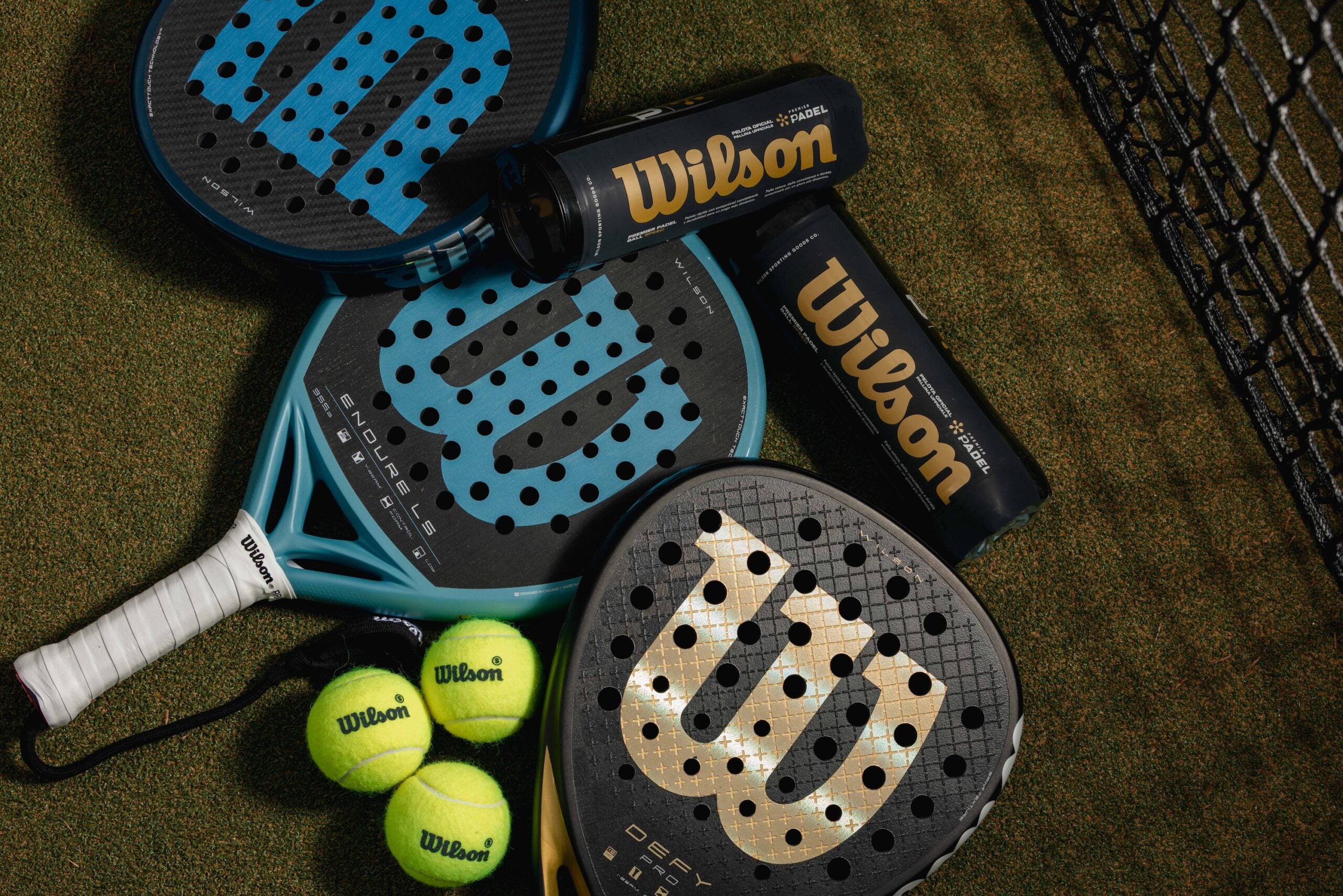
It would be difficult not to notice the rise of padel. What was once a relatively niche sport, played mainly in Spain and Latin America, now seems to be everywhere: luxury hotels are building permanent courts, fashion brands are hosting padel pop-ups, and private members’ clubs are making space for matches.
It’s estimated there are now more than 30 million recreational padel players worldwide. According to the LTA, in Britain alone, participation has surged from just 15,000 players in 2019 to more than 860,000 in 2025, making it one of the country’s fastest-growing sports.
“Thirty-one million people in the UK are now aware of padel – that’s 50 percent of the population,” says Charlie Grave, who, with TTB-Sport, founded the Hurlingham Club’s star-studded Alfred Dunhill Padel Classic, adding that there is talk of padel becoming an Olympic sport come 2032.
Grave has noticed the shift firsthand. Now in its third year, at the first padel classic, he speaks of a limited knowledge of the sport. “I was talking to people, and they were going, ‘I’ve heard of padel, isn’t that on water?’ I was having to explain it to everyone.”
All teams were amateurs, and we managed to pull together 15 celebrities, mostly cricketers,” he recounted. “This year, we had 16 teams instead of 12, and everybody’s playing at a high standard. It’s gone ballistic.”
Celebrities and athletes have definitely helped fuel the boom and raise the profile of the sport. “It’s every ex-athlete’s favourite sport, every actor, every millionaire. It’s for everybody. Grandma, grandson, mom, and dad,” says Peter Worton, founder of Padel Up, an independent padel club in LA. Prince William and Catherine, Princess of Wales, have both been spotted playing. David Beckham and Eva Longoria are also fans, alongside grand-slam champion Andy Murray, who has reportedly invested in UK padel operator Game4Padel. “That’s why padel is the fastest growing sport in the world,” adds Worton.
And while social padel is on the rise, 2026 also marks a major milestone for professional padel in the UK, with the arrival of Premier Padel P1, a professional tournament which will bring some of the sport’s biggest names to the capital. “This is a huge opportunity to showcase the sport at the highest level, inspire new audiences, and give fans the chance to experience world-class professional padel in Britain,” says Tom Murray, LTA head of padel.
For those keen to pick up a racket and give it a go, courts around the world are being built at remarkable speed. “There’s a padel court being built every 60 minutes,” says Grave. “People play it once and immediately want to go back.”
So, if you’re eager to try, but are concerned you may be late to the trend, fear not – we’ve spoken to the world’s top padel entrepreneurs to find out everything you need to know about padel, the racket sport everyone suddenly seems to be playing.
See more: The Best Padel, Tennis, and Pickleball Accessories to Buy This Summer
How do you pronounce ‘padel’?
The most divisive topic when it comes to padel is not how it’s played, but how the sport is communicated, due to two different pronunciations floating around, depending on who you speak to. James Turner, CEO of luxury travel agency 360 Private Travel, advocates for ‘pah-DEL,’ with emphasis on the second syllable, while Chris Moore, founder and president of Privé Padel, a global travel membership for padel players, and Pablo Carro, COO and co-founder of Playtomic, an app for racket sports players and clubs, suggest the sport is pronounced with an emphasis on the first.
Worton is a little more flexible, “Tomato, tomato. It has Mexican origins, and as such, it is to be pronounced ‘pah-del.’ Granted, though, most of us don’t have a Spanish accent.”
The consensus seems to be that an ‘it’s up to you’ approach will do.
What is padel?
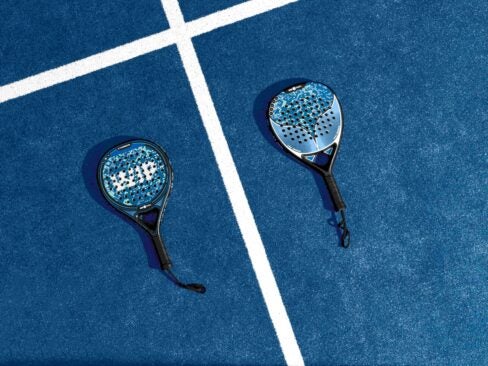
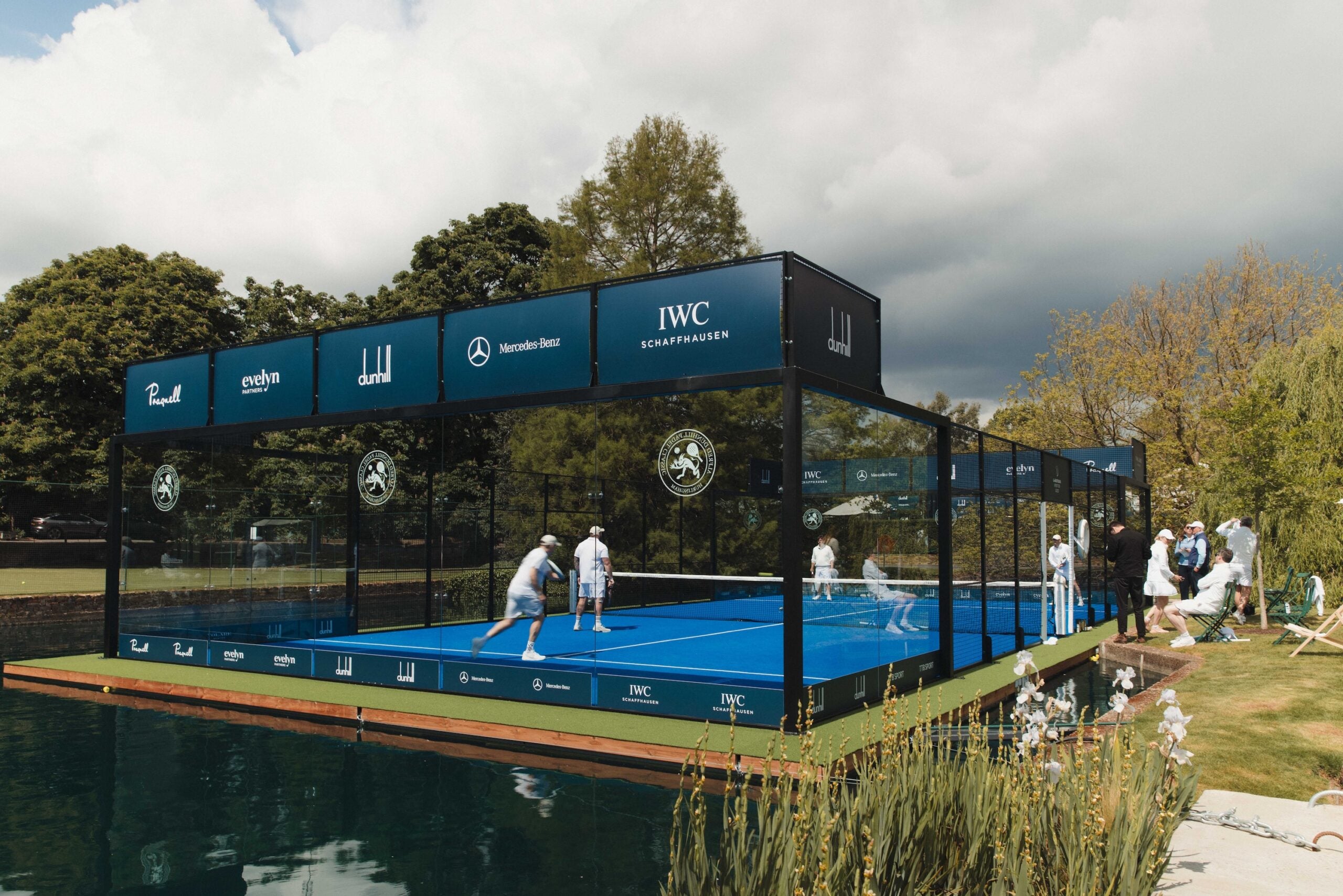
“Padel is a racket sport that blends elements of tennis and squash,” says Moore. The sport is played in doubles with a solid, stringless racket and a low-compression ball on an enclosed glass-and-mesh court, measuring roughly a third of the size of a tennis court.
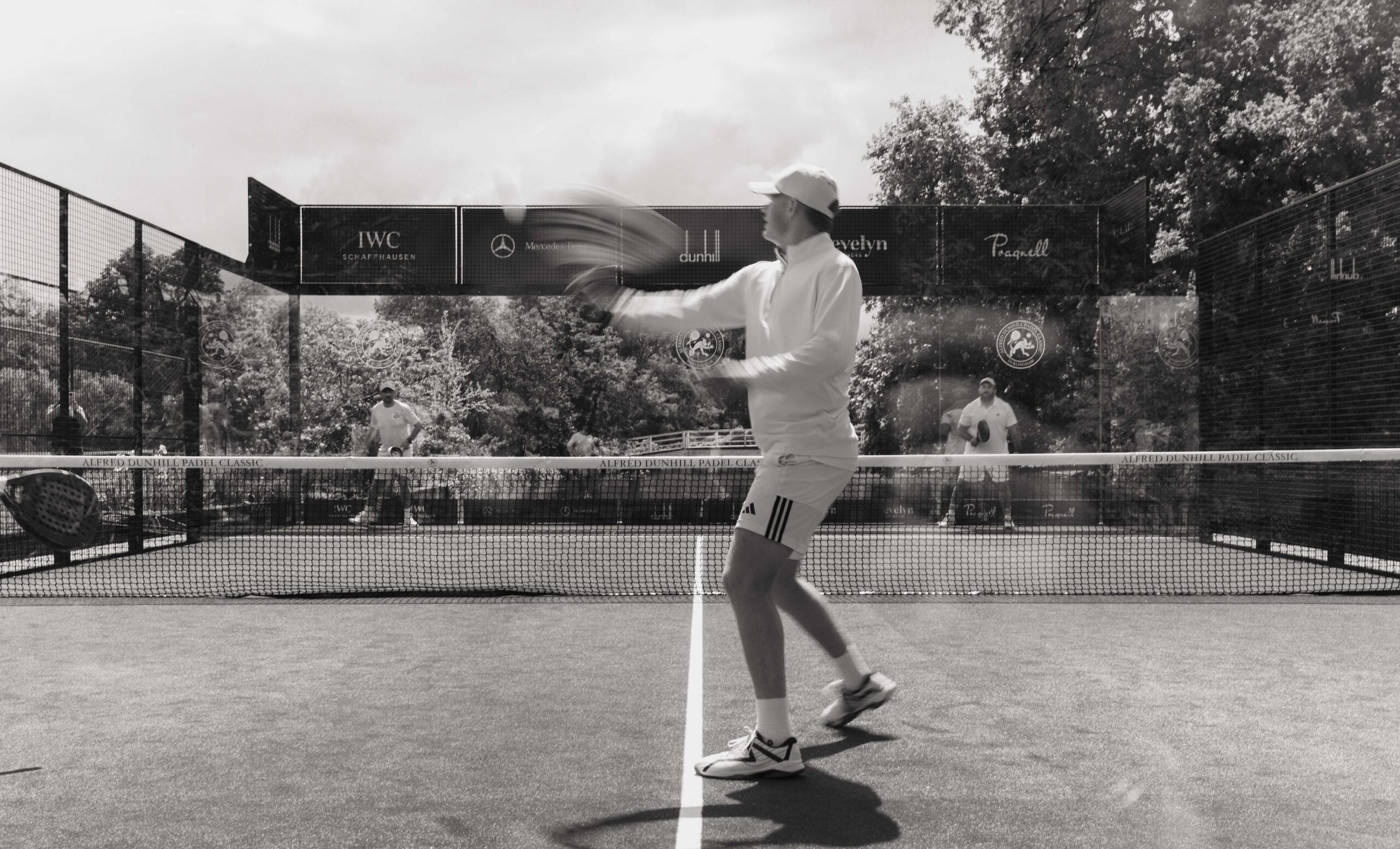
“Padel is just like mini doubles tennis,” says Worton, “until the ball hits the wall,” he adds. “You get one bounce on the ground, and then the ball can bounce off the walls. Your job is to return the ball over the net.”
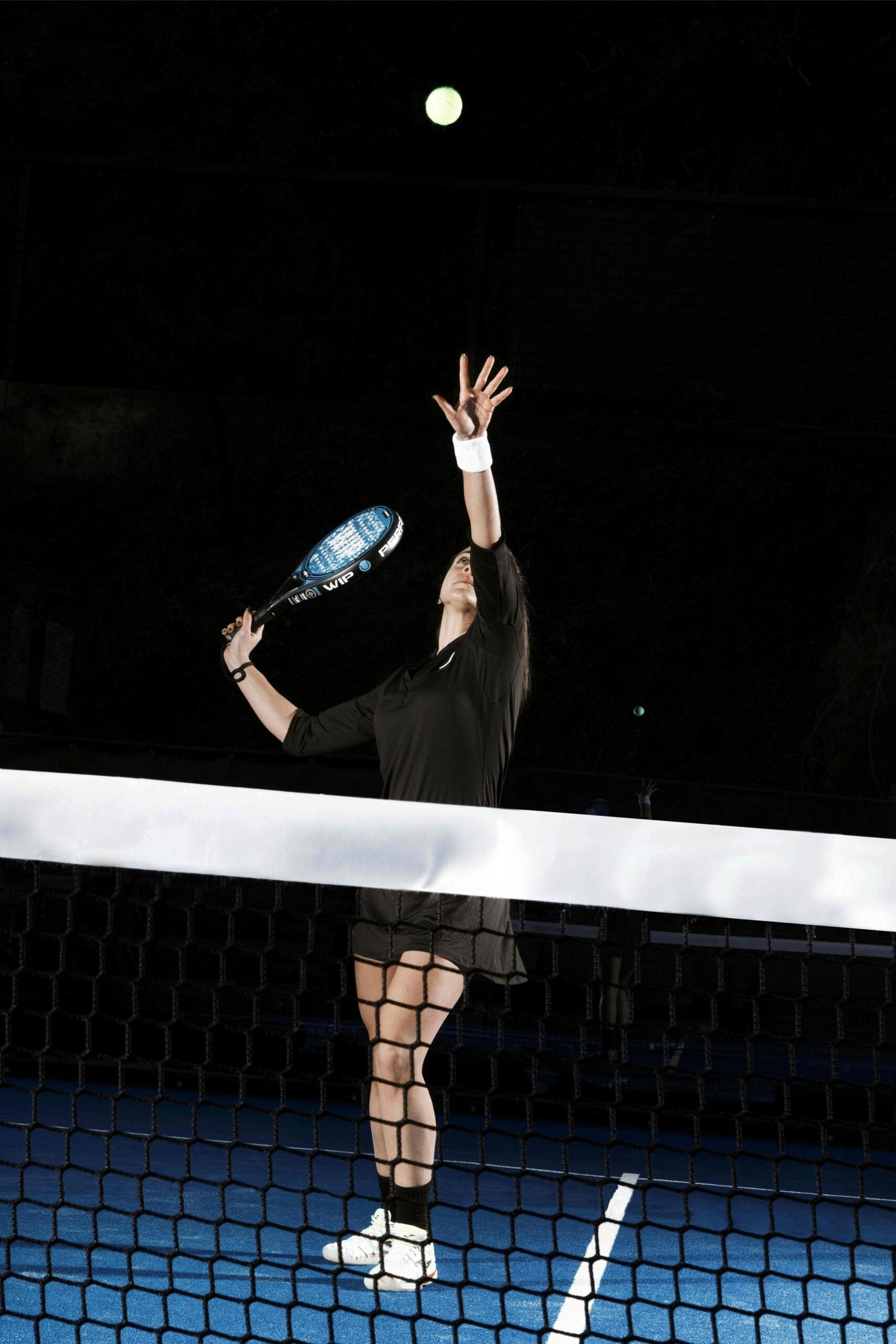
Carro adds, “The serve is underarm, the scoring follows tennis, but the learning curve is much gentler. Most people can have a genuine, enjoyable game within their very first session.”
How is padel different from other racket sports?
The walls, for a start. While for those that haven’t played, this may not seem like a major shift away from other racket sports, experts credit them with the sport’s exponential rise.
“They completely change the dynamic of the game and are what make it so fun and addictive,” says Moore. “The ball stays alive off the glass, which creates longer rallies, more creativity, and points that feel incredibly fast-paced and unpredictable.”
Turner credits the walls with the sudden popularity over other racket sports: “In tennis, a ball that hits the back fence is out. In padel, it’s an opportunity. That changes the entire pace and strategy of the game.”
It’s this fast pace that is building excitement among new players and spectators alike. “There’s constant movement, recovery shots, and exciting exchanges happening. It gives the game an energy and rhythm that feels very different from tennis or pickleball,” says Moore. And just in terms of practicality, the enclosed court means you’re not chasing balls constantly.
There is also the ease of the game: “It’s much more engaging, much more inclusive, which really siphons down to the fact that it’s a lot easier to play,” says Grave.
“You’re able to sustain rallies quickly, the court is smaller, and physical strength matters less than timing and positioning,” says Moore. “It removes a lot of the frustration that beginners often feel in other sports.”
Grave affirms this. “Tennis is very technical. Golf is very male and very daunting. You can turn up to a paddle court, and you’ve never played before, and within half an hour you’re having rallies.”
Another small difference, the serving technique, also changes the game. “The underarm serve removes one of the biggest barriers in tennis, where serving alone can take months to feel comfortable,” adds Turner. “People who’ve never picked up a racket in their life usually have fun within a single session.”
This is, perhaps, what has made it such a popular social sport, and we recommend newcomers come into their first game with a relaxed attitude, ready for a little fun. “The atmosphere around padel is usually very relaxed and community-oriented. It’s one of the few sports where people are genuinely talking, laughing, and connecting throughout the experience,” says Moore.
“It’s always four people, always doubles, always on a compact court where you can hear each other and actually talk between points. There’s a natural camaraderie built into the format,” says Turner.
“It’s also easy to mix abilities, which means families and groups of friends who aren’t all at the same level can still have a genuinely good game,” he adds.
See also: Game, Set, Paradise: The World’s Most Breathtaking Tennis Courts
Where did padel come from?
The game has been traced back to the 1960s in Mexico, where the sport was seemingly born from one man’s practical needs. Enrique Corcuera allegedly built the first-ever padel court at his home in Acapulco, building a small court due to the simple fact “he couldn’t quite fit a tennis court in his garden,” says Grave. “Then he realised he didn’t want to keep going and fetching the ball, so he built walls around it. And there was born padel,” he says.
From there, padel spread to Spain and Argentina, becoming popular over the last 40 years, and has since “exploded globally”, says Moore, “especially across Europe, the Middle East, and now the United States.” Grave credits Italy, France, and Sweden as some of the most recent European hot spots, adding “The UK and Germany are probably the last two big cabs on the rank.”
Related Story

Looking to the future, Carro suggests it will be no time before the sport is commonplace in the US, although acknowledging that it is already popular in areas like Miami. “It has all the ingredients – a strong sports culture, millions of tennis and pickleball players, and an appetite for new social experiences,” but also notes, “We’re still at the very beginning of that journey here.” Watch this space.