
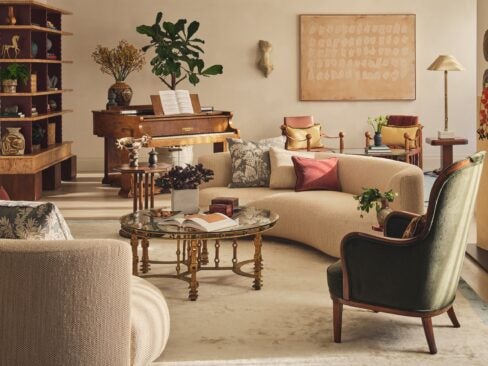

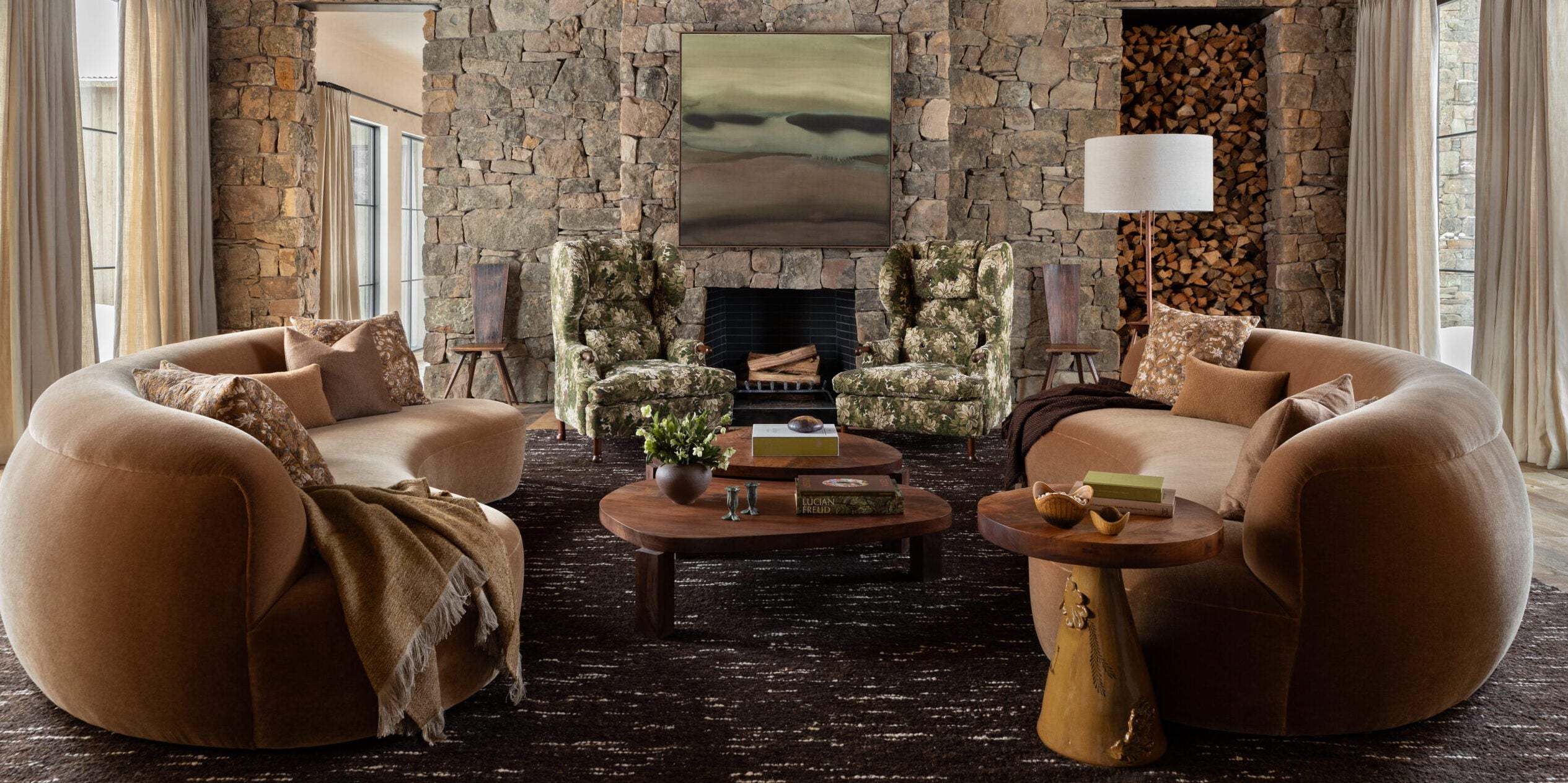
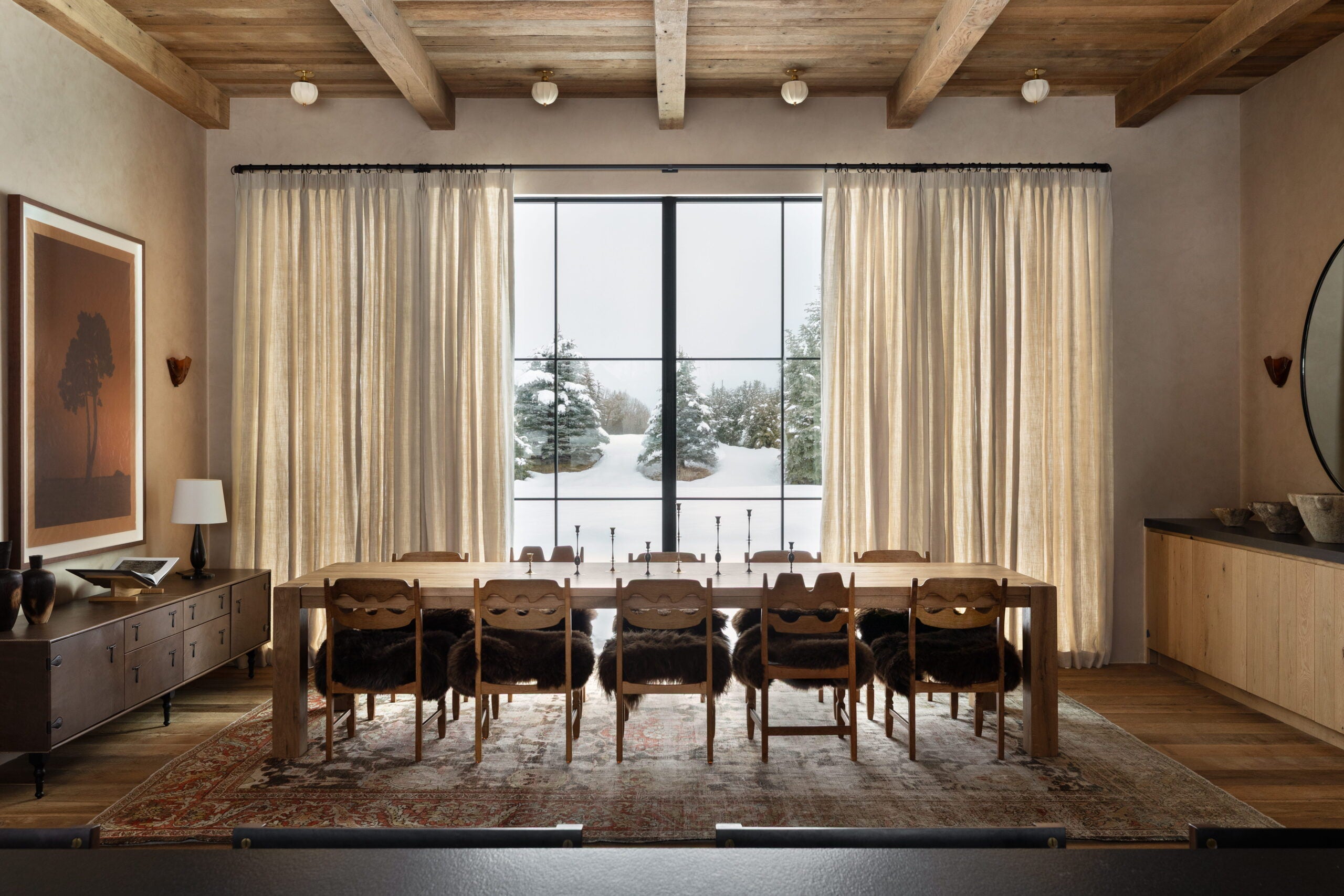
With Yellowstone still riding high in the cultural imagination – and its expanding universe continuing to romanticize the American frontier with the recent releases of Marshalls and Dutton Ranch – the Western aesthetic is remaining in focus, playing out on screen while shaping interiors from Jackson Hole to the Smoky Mountains. But today’s take on cowboy chic is less rhinestone rodeo, more restrained refinement: a considered interplay of saddle-worn leather, time-softened timber, and textiles that speak in low, earthy tones.
Far from the novelty of antlers and lasso loops, contemporary Western interiors favor craft over clichés, drawing on the enduring appeal of materials shaped by landscape, labor, and time. “There’s a real admiration for the craftsmanship and practical artistry, for objects and spaces that were built out of necessity and a genuine connection to the landscape,” says Tom Cox of HÁM Interiors, a family-run architecture, interior design, and build practice with teams in the UK and US. It’s a sensibility that underpins both HÁM’s interiors and its sister venture, Studio HÁM. “Ralph Lauren understood this better than anyone: that rugged Americana isn’t about nostalgia, it’s about values: quality, authenticity, a life lived outdoors.”
If cowboy chic has a calling card, it lies in its material palette. For Sierra Fox of Studio Mountain, a full-service interior design firm with projects spanning California to Montana, the key is to move beyond surface-level references. “I focus on materiality and atmosphere rather than obvious motifs,” the designer explains. “Reclaimed woods, hewn stone, blackened steel, leather, shearling, handmade textiles – materials that feel grounded in the natural landscape.”
Rather than applying these as decorative gestures, Fox recommends integrating them architecturally. “Using these materials structurally helps a home feel timeless and immersive,” she says. “It avoids that sense of a space being newly constructed or disjointed from its surroundings.” The result, in projects such as her High Meadows home in the sawtooth mountains of Idaho’s Sun Valley, is an interior language rooted in texture; “rough-hewn surfaces, visible grain, matte finishes, handcrafted details give spaces warmth and depth.” She adds that “there’s also often a subtle industrial quality to the design language, which feels connected to the history of the American West through its mining, ranching, and utility-driven roots.”
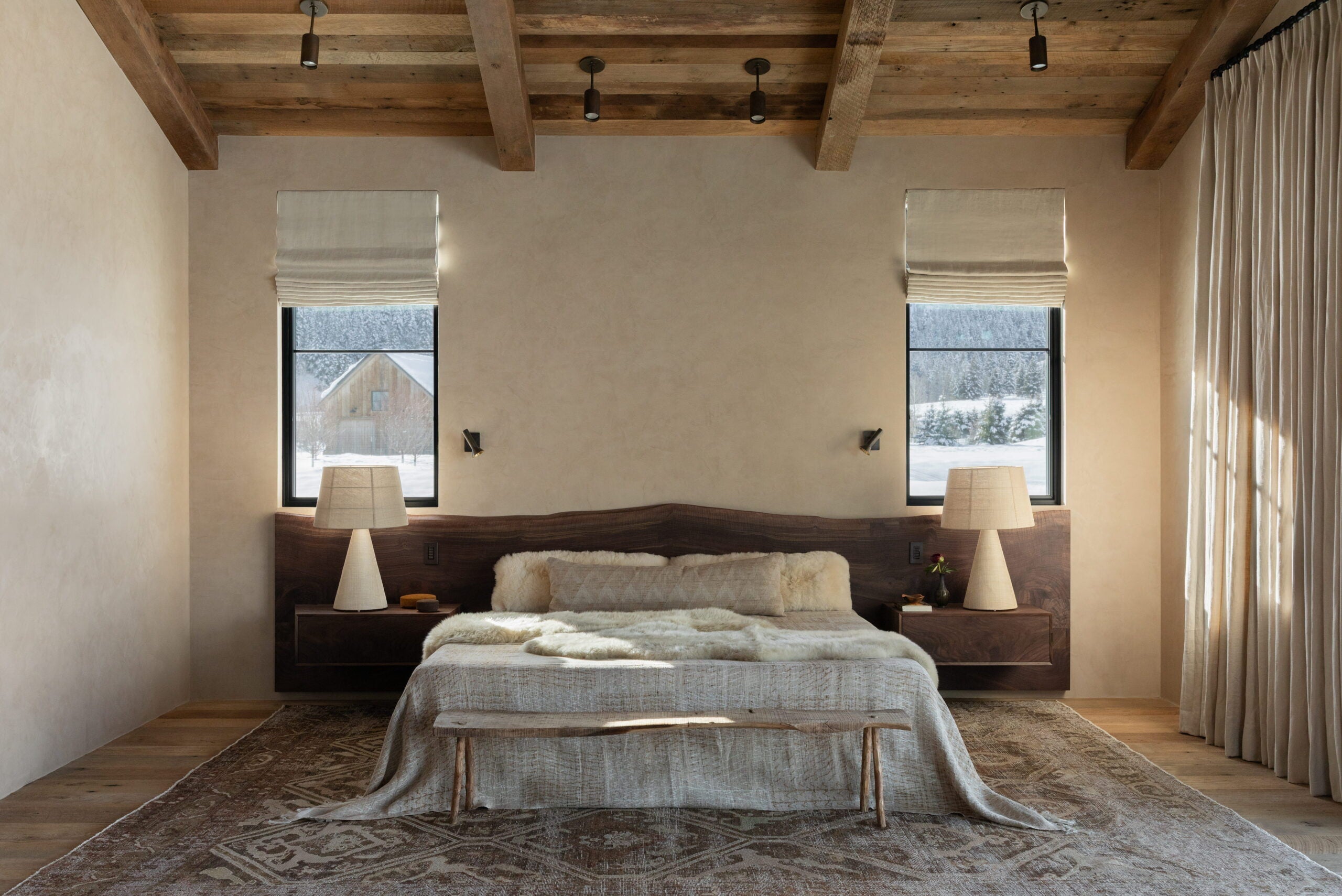
At Cataloochee Ranch in the Smokies, Samantha Feuer of Norris Studio takes a similarly grounded approach. “The goal is to incorporate subtle Western influences through authenticity rather than novelty,” she says. Rough-sawn wood introduces texture, while “clean, modern silhouettes maintain a refined balance.” Painted unfinished wood wall treatments lend “a fresh yet rural quality,” while stone fireplaces anchor the interiors in place. Crucially, the ranch’s cabins and lodges bring together vintage furnishings and artworks with contemporary pieces. “Spaces should feel curated, collected, and genuine – never overly themed or literal,” Feuer notes.
The modern Western interior is, at its core, an exercise in restraint – one that pares back the clichés while holding onto the character. That balance is particularly evident at Caldera House, where Commune Design approached the boutique hotel and alpine club’s brief with a deliberate sidestep away from rustic tropes. “There were to be no antlers anywhere,” says co-founder Roman Alonso. Rather than overt references, the Western influence reveals itself in the details. “Nailheads, short fringe on chairs, plaid and check fabrics,” Alonso notes. “We also abstracted Native American motifs and used them on rugs.” The palette, meanwhile, is “100 percent inspired by the place,” drawing directly from the tones of Jackson Hole’s landscape to bring the outdoors in.
For designer Lauren Carlucci, whose studio is based between New York and Wyoming, that same idea of subtlety is key. “The focus should be on the underlying qualities of Western design rather than its obvious motifs,” she says. “Not the novelty of antlers and cowboy iconography, but the honesty of materials and a feeling of rugged refinement.” Her connection to Wyoming – where her father relocated in 2017 – has deeply shaped her approach. “What continues to draw me back is the profound sense of scale: vast skies, weathered timber structures, sun-faded sagebrush, and the rich patina that comes from materials shaped by time and use.”
See also: Equestrian Escapes That Let You Travel With Your Four-Legged Friend
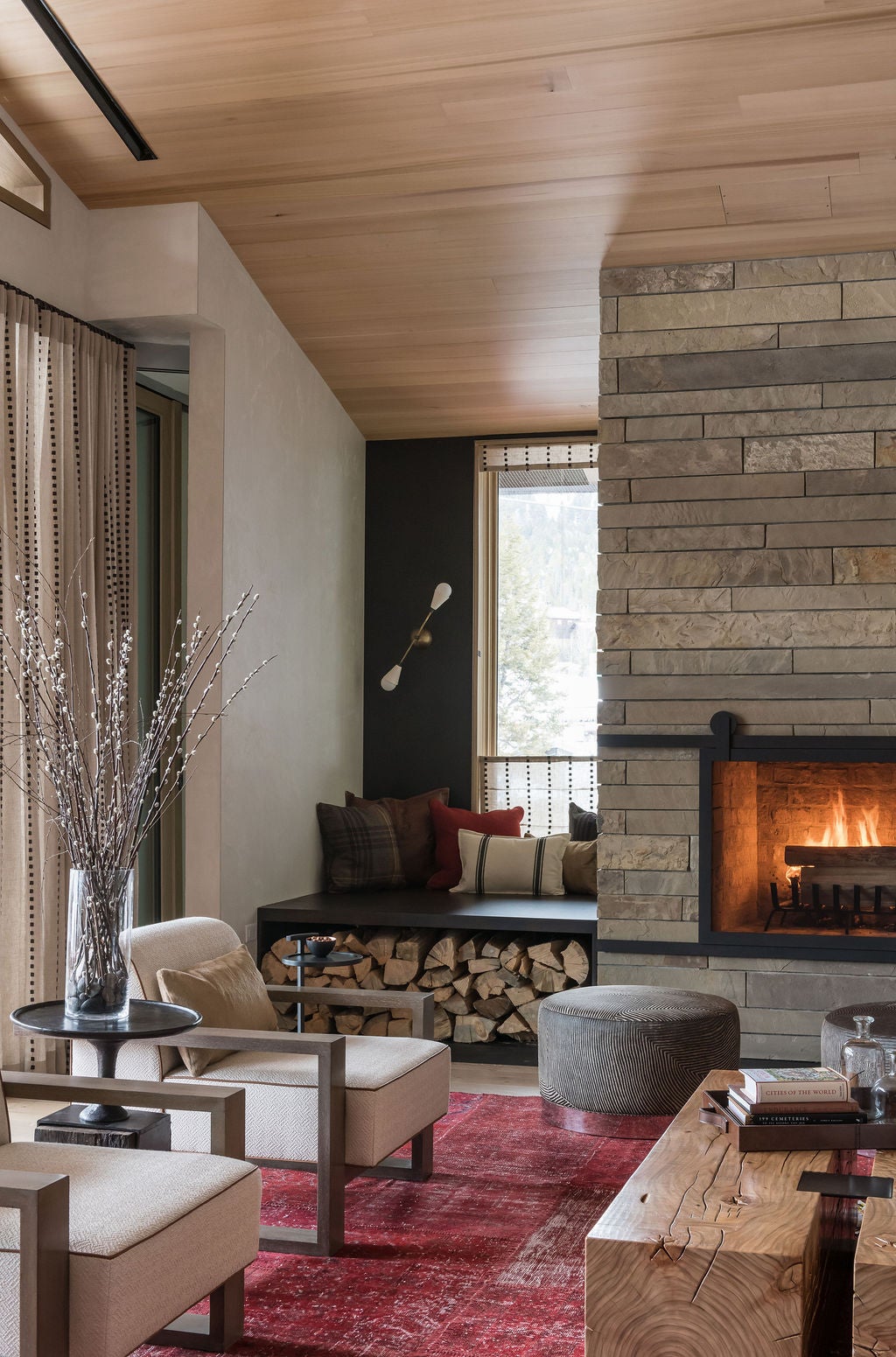
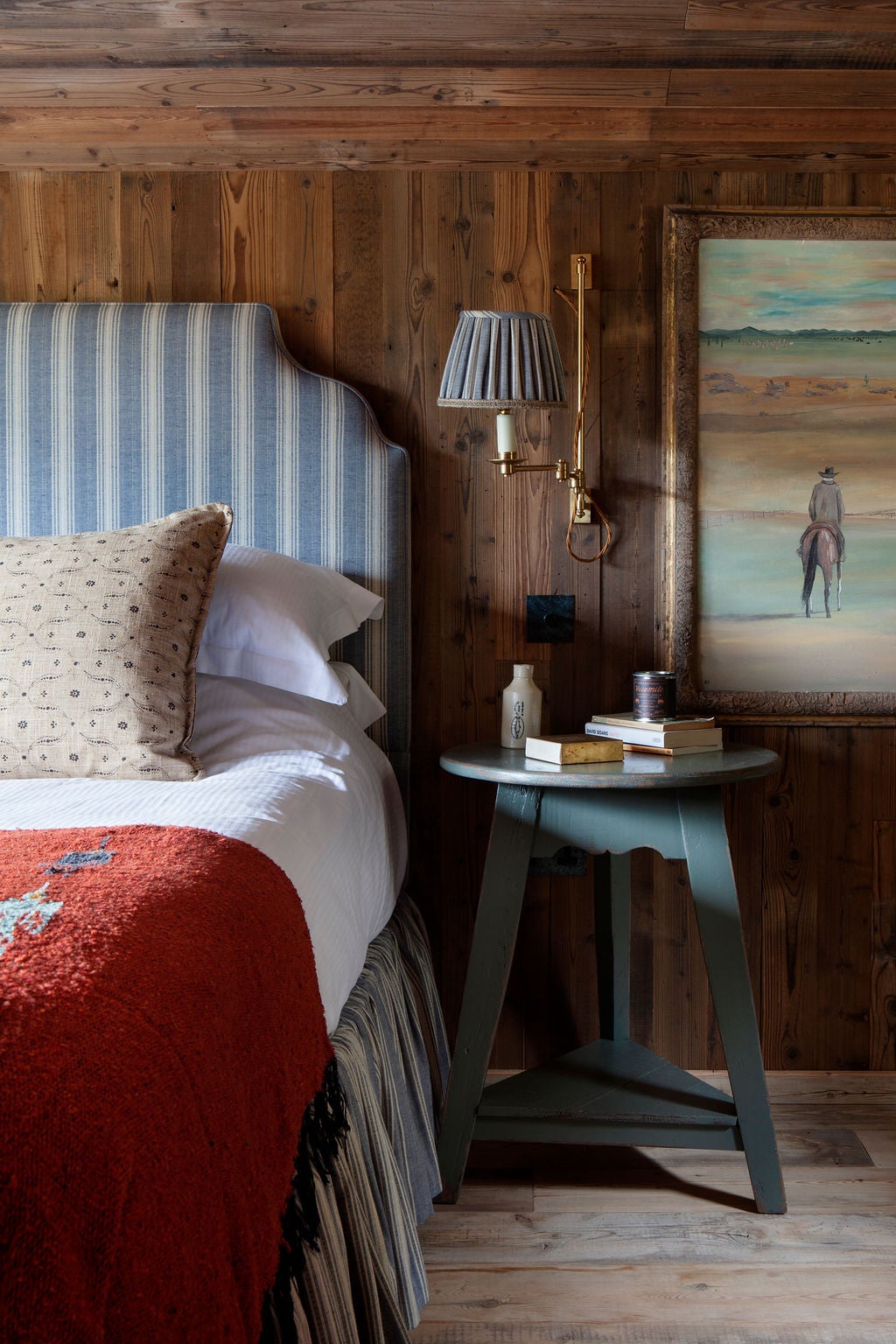
That sensibility filters into her interiors through tactile choices: “worn leather, handwoven textiles, natural stone, unlacquered brass, wood with visible grain and character.” In a recent East Hampton project, the reference is almost subliminal. “I upholstered dining chairs in a reinterpretation of a paisley print, the pattern used on bandanas worn by cowboys to wipe away sweat and filter out dust when working the land,” she explains. “The connection is subtle rather than literal, but it lends a feeling of warmth and relaxed elegance tied to the American West.”
Color in contemporary Western interiors is less about contrast, more about continuity with that sun-bleached, wind-worn lifestyle. “For me, it’s a palette rooted in the landscape,” says Carlucci. Opt for “tobacco browns, camel, ochre, rust, sage, dusty blue, chalky whites – tones that create warmth and depth without feeling heavy.”
Cox echoes this instinct. “I always come back to the same earthy palette: rich browns, warm reds, greens, those dusty blues.” But it is the layering of texture that truly brings the scheme to life. “Mix rough with smooth, layer textiles – that’s what gives a room warmth. It should feel collected, not decorated.” That sense of tactility is central to the HÁM aesthetic. “The Cabin collection really sums up the approach,” Cox adds. “It’s not about creating a look, it’s about building a world, a sense of escapism.”
Designed by Cox and his sister Kate, and brought to life by artisans, Studio HÁM pieces are intended to feel singular and storied – from hand-painted whiskey benches inspired by an antique table made from whiskey crates discovered during Cox’s adventures, to original artworks depicting galloping horses, roaming buffalo, and salmon in a bespoke, dark wood rope frame. “Alongside that we bring in antiques and objects with their own history, pieces that feel like they belong together without being too deliberate. When it comes together, it should feel like somewhere lived-in, not overly designed.”
Cowboy Chic Inspo
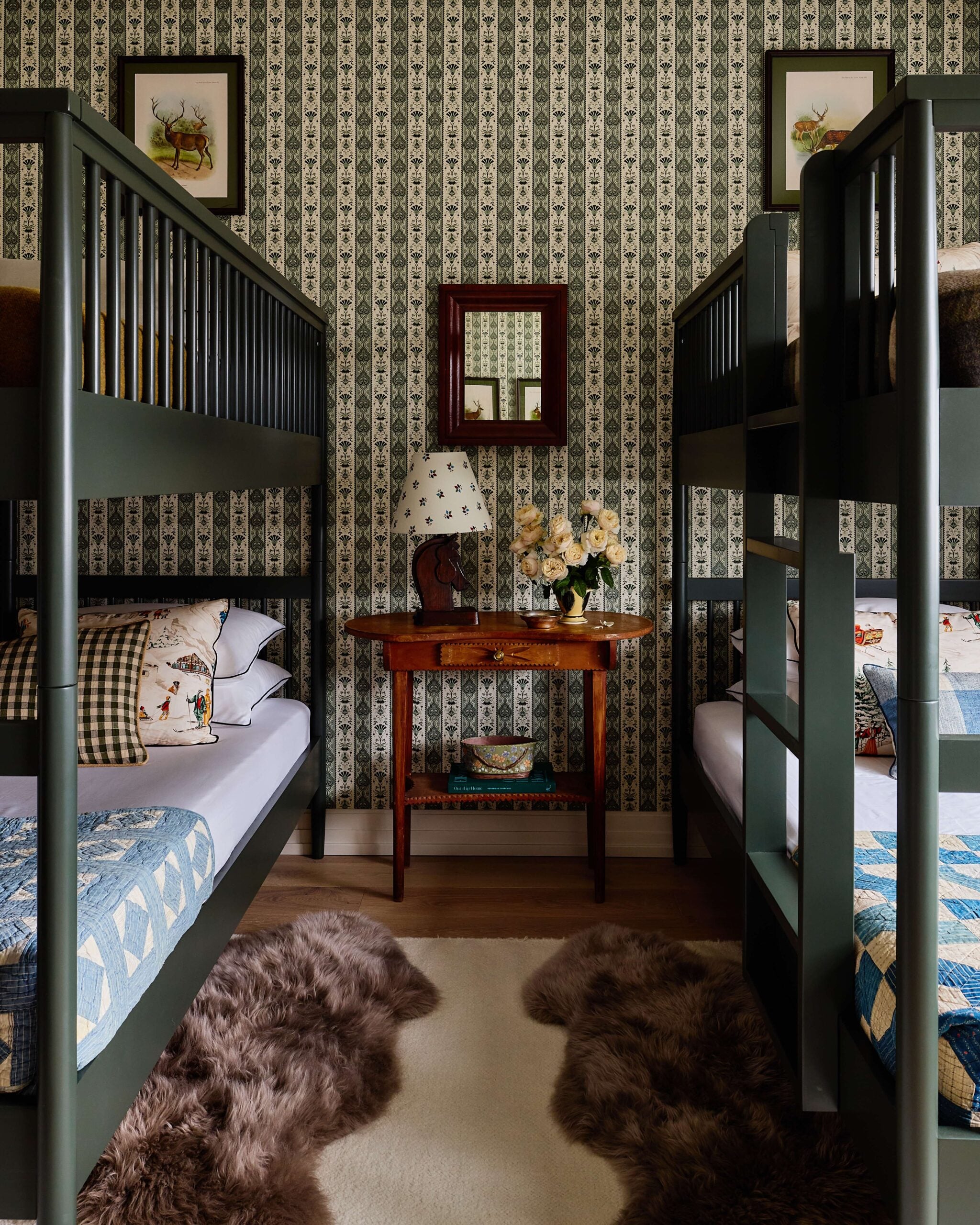
Don't rely on stereotypical motifs, advise interior designers.
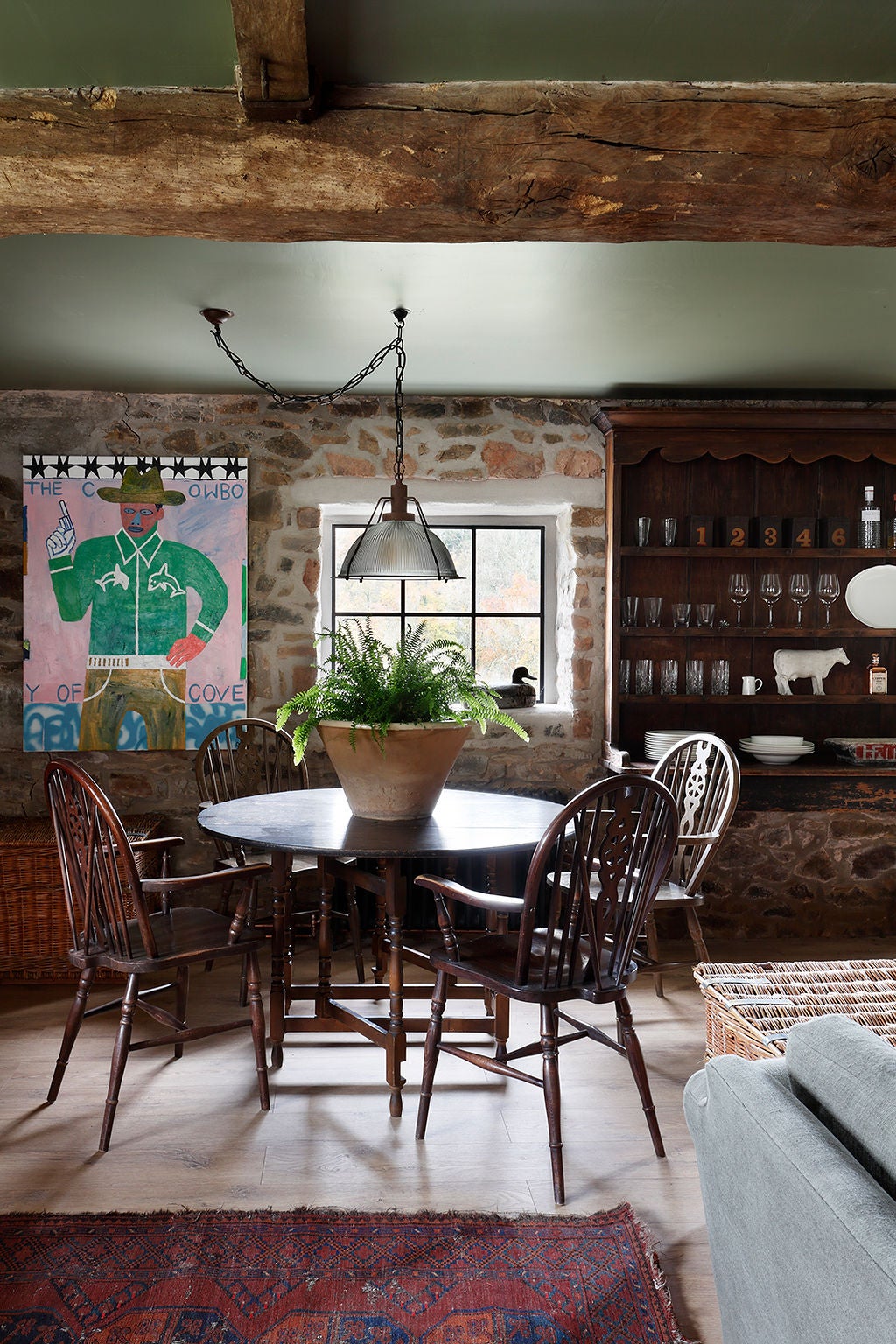
Experts recommend mixing neutral colors and textures.
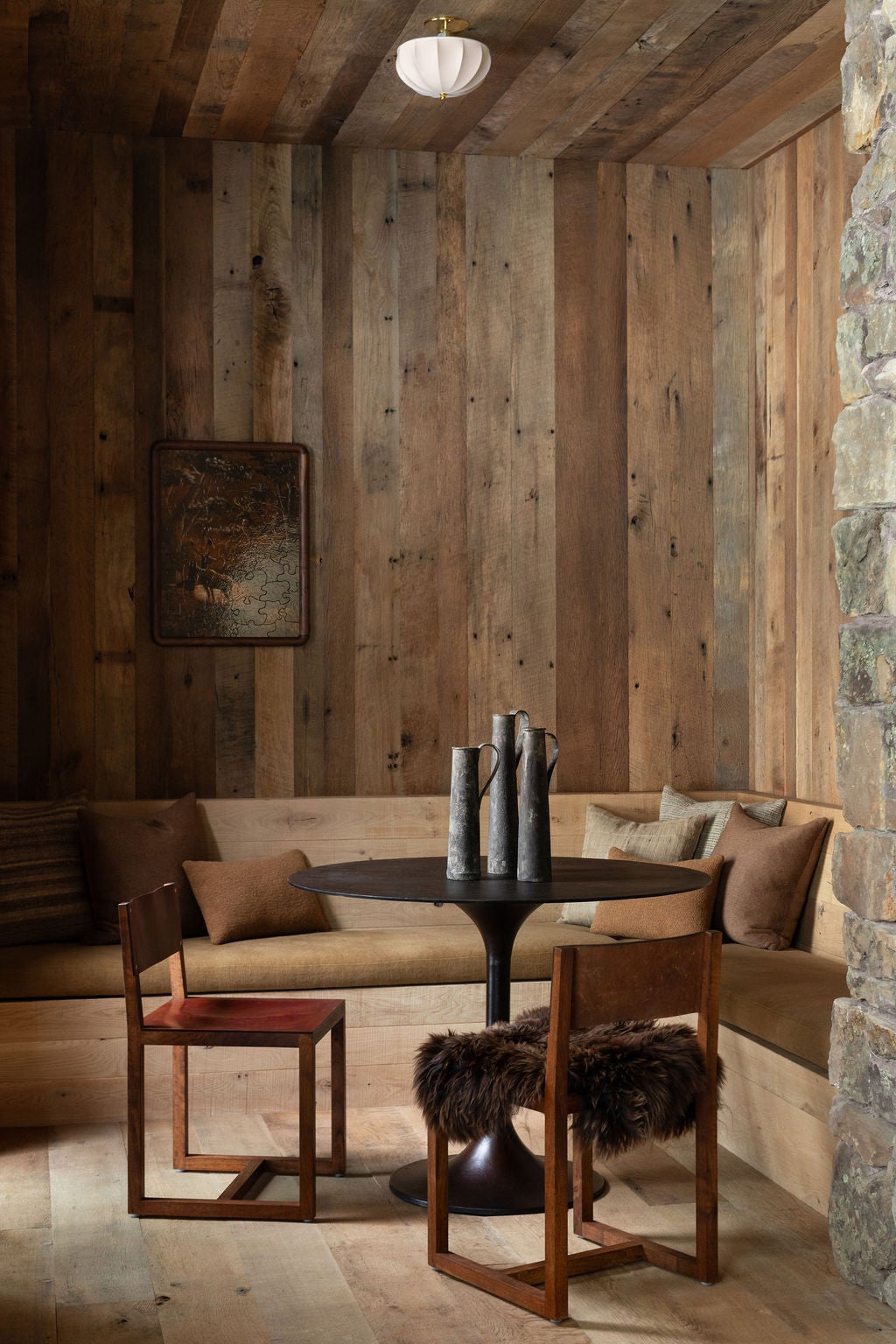
In order to make it contemporary, Western interior should be exercised in restraint.
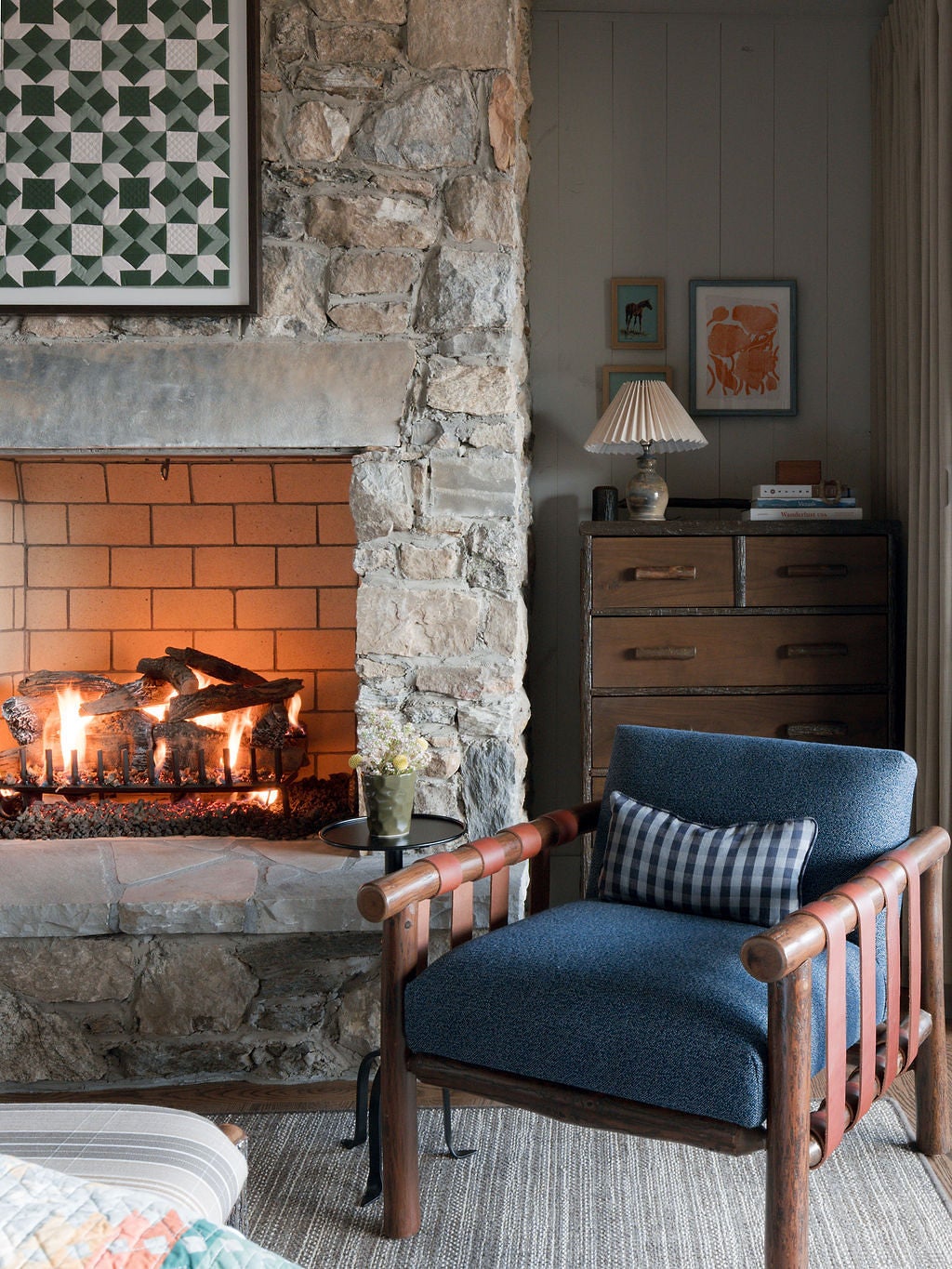
Look for authentic furniture or artwork to bring cowboy chic to life.
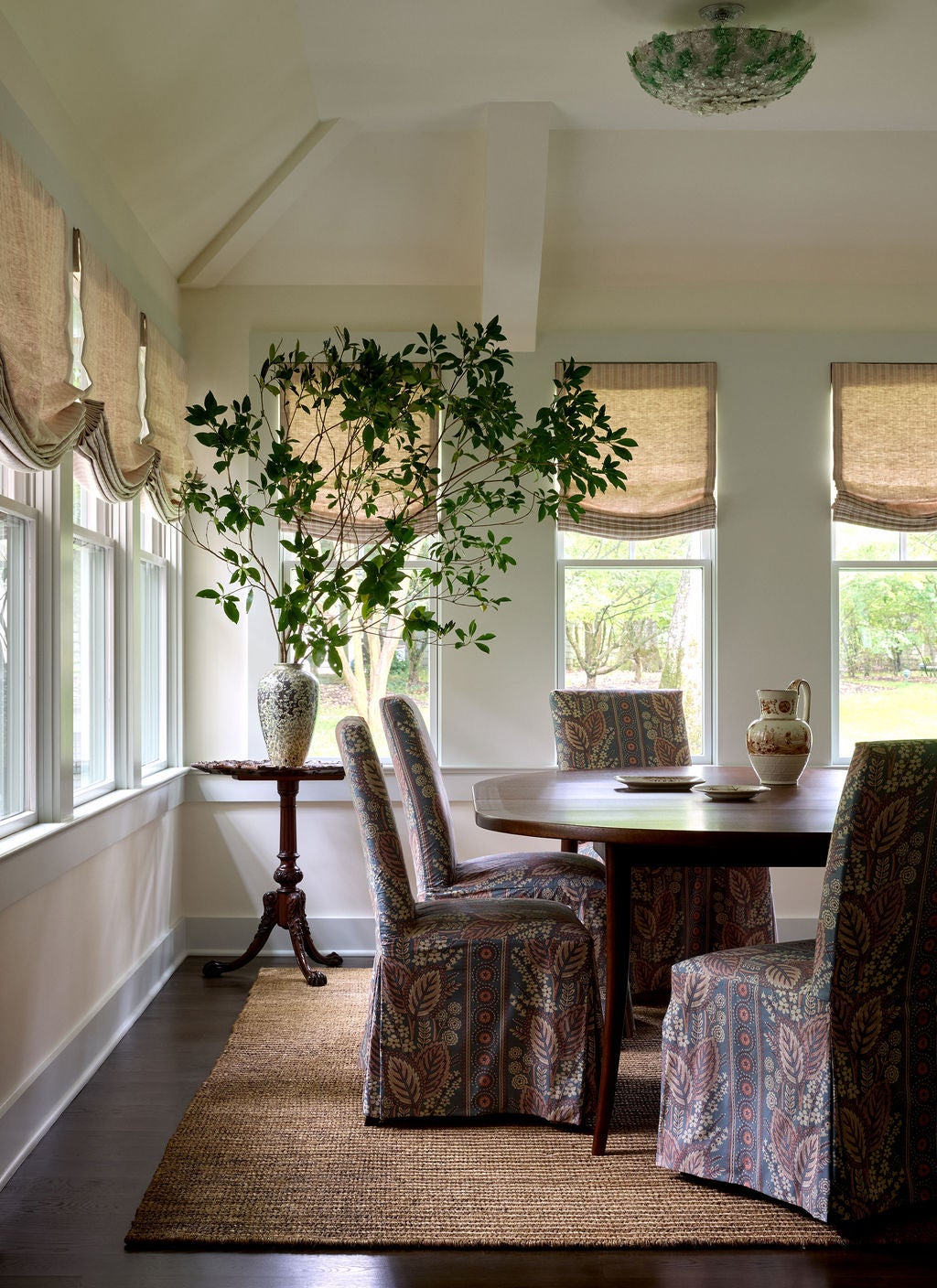
Worn in fabrics and furniture can help achieve the cowboy aesthetic.
Letting the landscape lead is at the heart of it all. From the mountaintop setting at Cataloochee Ranch, Feuer begins every project by looking outward. “We always start by considering what’s visible through the windows,” she says. “Interior and exterior palettes should feel cohesive, so the experience flows naturally from outside to in.” Suites in the recently added Quilt Top and Horseback lodges capture this balance, “feeling fresh and elevated while subtly referencing Western design through materials, textures and thoughtfully collected pieces.”
For Fox, that connection is equally instinctive. Having grown up in Idaho, she approaches Western design “through a material lens rather than relying on stereotypical motifs.” The aim is to create spaces that feel “sturdy and deeply connected to their surroundings,” rooted in the ruggedness and warmth of the landscape itself.
If cowboy interiors once conjured images of rough-and-ready ranch houses, today they speak a more nuanced language – one of craftsmanship, authenticity and sense of place. It’s less about staging the Wild West, more about distilling its essence: the materials, the patina, and the enduring appeal of life lived close to the land.