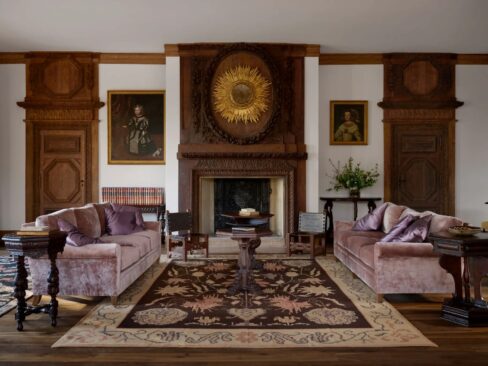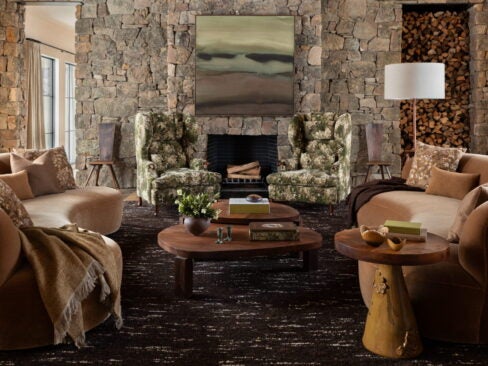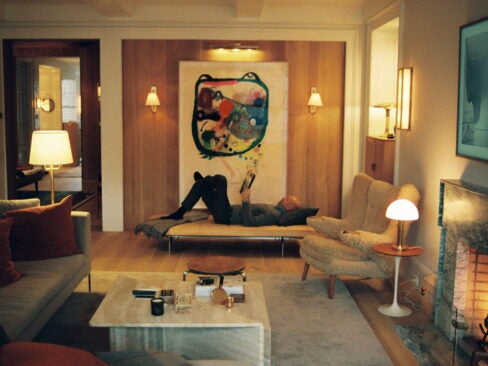

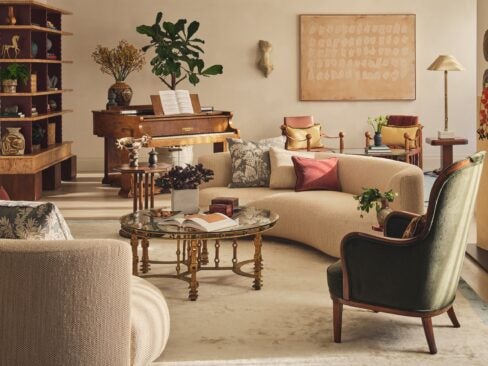

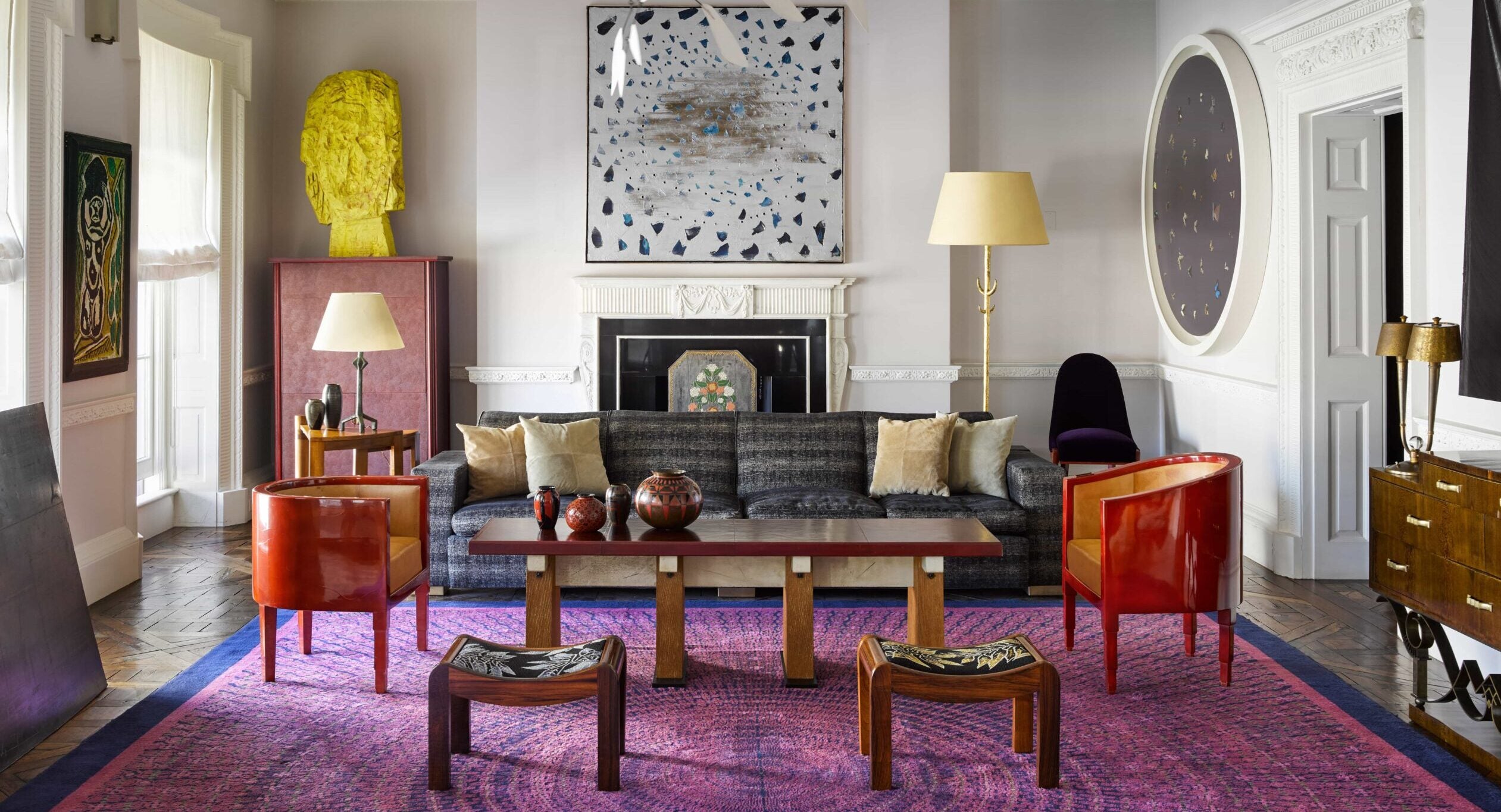

Jean and Terry de Gunzburg started out as many collectors do – acquiring pieces that they loved. In their case, the couple gravitated toward 20th-century French design from names like Claude Lalanne, Jean Royere, Jean-Michel Frank, and many others. Years later, their curation hit the auction block – and, in April, the 107 lots therein sold for $96m. What started as a passion project for the renowned creative director and her husband, a molecular cell biologist, had suddenly become the most valuable design collection ever sold in the US.
It’s a significant moment, though not an entirely surprising one for those who have had their pulse on the secondary design market. “I was in the room during the first half of the sale. I was bidding for a few clients,” says Ashlee Harrison, founder of Thirty8East and the curatorial director of Design Miami’s Los Angeles edition. “People were paying a premium because they wanted a piece of this history, and to have that provenance and story.”
A prime example of Harrison’s theory is de Gunzburg’s collection of 15 Lalanne mirrors, which sold for a staggering $33.5m – the highest price ever for a work of design at auction, and a new record for the sought-after artist. Lalanne originally designed the botanical bronze mirrors for Yves Saint Laurent himself, and spent over 10 years crafting them. They lived much of their life in the fashion designer’s Paris apartment, where they lined the walls of the salon and played host to visitors like Andy Warhol, Liza Minnelli, and others.

It’s moments and furnishings like these that have caused a broader audience to lean in, and start to pay attention to the so-called collectible design world. However, unlike many other collecting categories – be it cars, watches, or Pokemon cards – furniture is something that people actually live with and use on a daily basis. It’s more than just a buy-it-and-forget-it investment piece that will spend much of its life in a warehouse – it’s part of your home. “It’s about passion, understanding, and the desire to live with good design,” says design historian and educator Daniella Ohad.
However, knowing where to start and what qualifies as “good design” is another matter. For many, it begins with an art collection. “People are starting to understand that if they collect art but they live with ordinary furniture, then you don’t get that same experience in your home,” says Ohad. A prime example comes from architect Lee Mindel, founder of Galerie56. “We had a dining room many years ago that had a whole row of Matisse cutouts in it,” he says. “We were able to locate Charlotte Perriand’s original dining table from Brazil, which was the shape of the cutouts.” Mindel then dropped a pair of Max Ingrand pendant lights from the ceiling, and made a custom rug with a design consisting of concentric circles, as if the light were shining on the table. All of these curves and nuances further harkened back to the owner’s Matisse works.


This blend of design elements from around the world is something that curators always consider when piecing together collections. “I think of myself as a storyteller,” Harrison adds. “I love creating these connections between objects, art, and design.” For a client’s St Barth’s home, she pulled Brazilian midcentury works that felt reminiscent of the tropical environment, along with French antiques, and a few pieces from contemporary designers. These Brazilian pieces from names like Zanine Caldas and Hugo Franca are in high demand nowadays, Ohad notes. Their return on investment is driven by rarity, and the fact that it’s impossible to make similar pieces today – in the 1960s, these designers were working with jacaranda wood, which is now illegal to harvest.
However, while design dialogues and investment values are important, ultimately, the furniture you collect has to be something you love. Harrison’s early meetings with clients are dictated by their visceral reactions to what they like, and what they don’t. From there she can bring together furniture that’s well made, authentic, and that will suit their lifestyle. “I’ve lived with collectible design since I was 25, and I’m so happy with the pieces I have,” says Ohad. “Every piece is pristine to me, and to my taste. I don’t want to part from anything – ever.”