

When you think of a wine cellar, the first thing that likely comes to mind is a secluded underground bunker lined with weathered stone walls and dark wood shelves. However, in recent years, many homeowners have taken a different approach. “When we started, everything was old-school, cave-like, and in a basement,” says Jamie Dunjey, the president of cellar manufacturer Heritage Vine. “As we’ve progressed, it’s become more about creating an experience.”
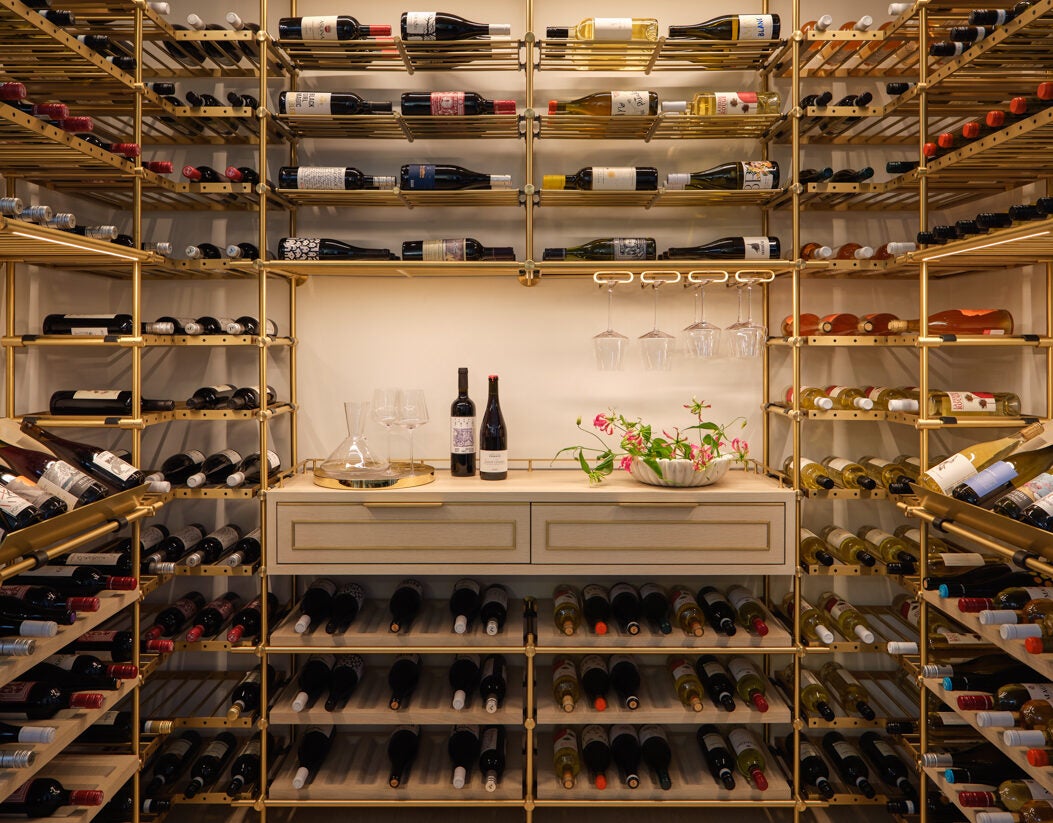
That experience can be customized to suit your specific entertaining needs, and often isn’t relegated to a subterranean refuge. Amuneal, a custom fabrication company, has worked on a slew of bespoke, front-and-center wine storage solutions in living rooms and dining rooms. Often, these spaces cater to a client’s hobbies and interests – there’s wine, of course, but a temperature-controlled wine room is also the perfect place to add a humidor for your cigar collection. “It really becomes very personal. It’s sort of autobiographical,” says Adam Kamens, the brand’s CEO. “Whatever someone is passionate about or interested in, almost regardless of the size of the space, we can find a way to integrate it in.”
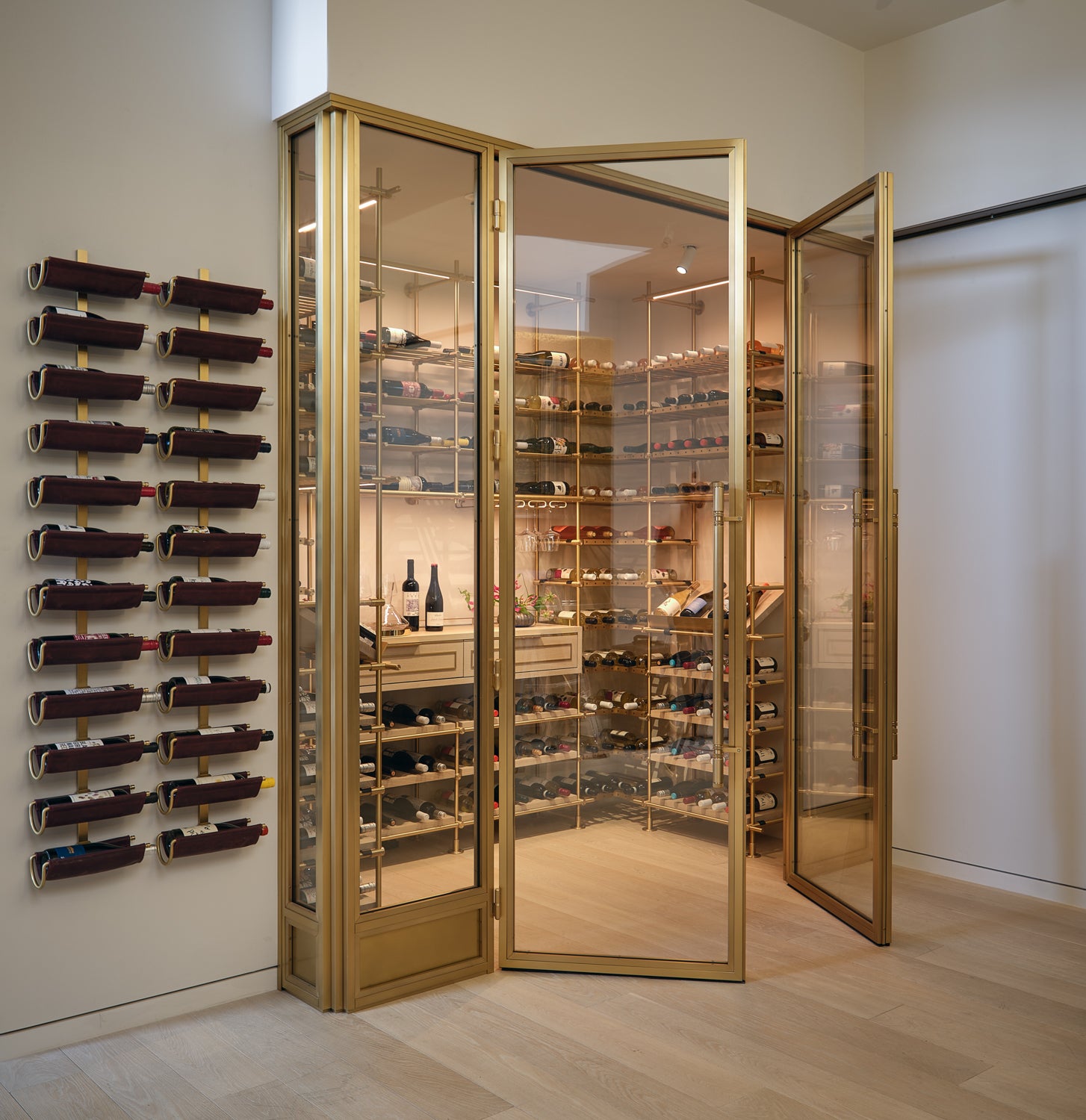
For example, many of these spaces aren’t just shelves upon shelves – they’re entire rooms kitted out with a sommelier station for decanting wines, as well as space for the client’s whiskey or tequila collection. “We’ve done them before where there’s a turntable inside, and a whole set of albums,” he says. “So guests can pick the music, pick the wine, and it becomes interactive.” If you don’t have the space for a dedicated wine room – for example, if it’s a New York condo where space is at a premium – then Amuneal can create a storage solution that’s built into the wall itself. They can also be designed as wine-filled glass partitions, so you can see through one room and into the other.
See also: Do You Need an AI Wine Cellar?
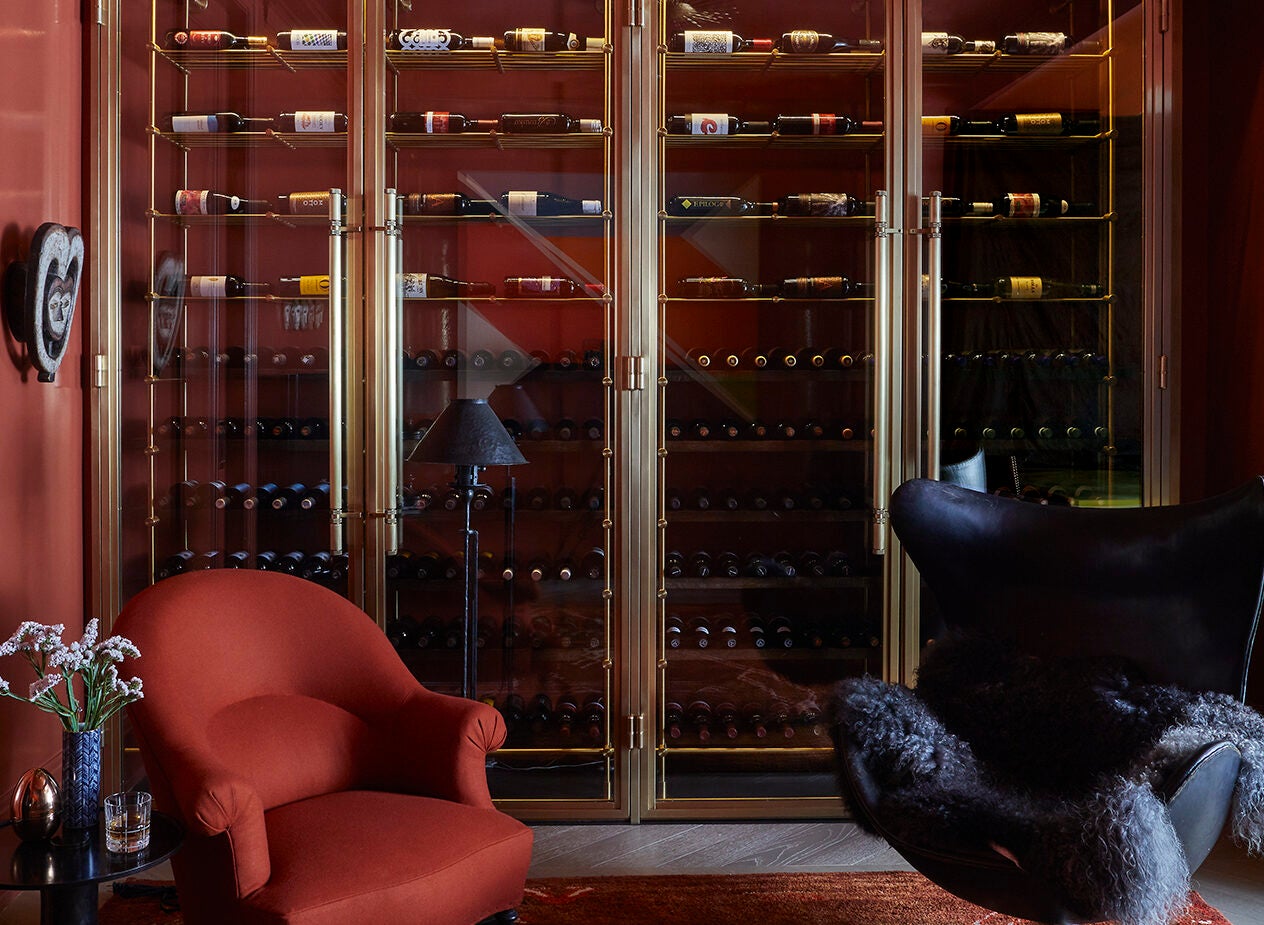
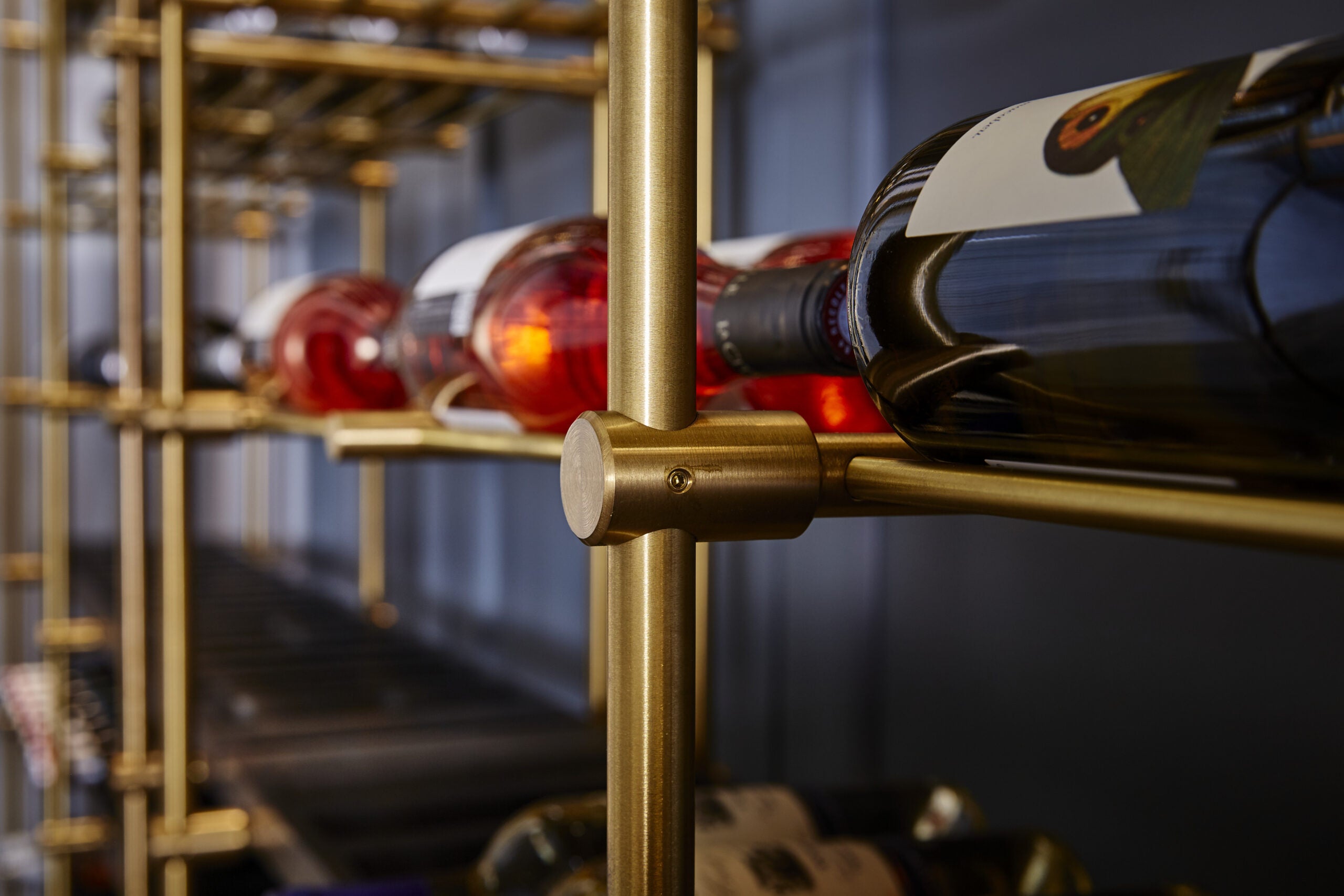
Finding the right place for your collection, then, is key. For example, at the Park Elm Residences in Los Angeles, many of the homes have elegant wine shelving placed centrally, in the living area. It was a conscious decision by the project’s interior designer, Ryan Saghian, who had noticed a burgeoning interest in high-end, on-display wine storage among his clients. Originally, these units had coat closets – given the nature of Los Angeles weather, a space to store wine seemed a more apt use of the square footage. The doors remain, now lined with brass and with glass panels so that all guests and passersby can take stock of the owner’s bottles.
Jordana Yechiel, the director of residential design for Park Elm’s developer, the Reuben Brothers, says it’s another way to display a luxury buyer’s collection – just like you would a prized painting or a coveted automobile. “It’s an art piece. It has that depth the moment you walk in,” she says. “It’s natural that you’d want to put your wine or Macallan collection up there and show it off.” At Park Elm, the building is seemingly designed around the wine collector experience. In addition to the beautifully lit, in-unit, temperature-controlled wine storage, residents also have access to additional wine lockers downstairs. The nearby Wally’s Wine & Spirits at Century Plaza will even help residents curate their collections – and, most importantly, replenish any bottles that may have run dry.
Regardless of whether or not you have a dedicated wine concierge, another primary consideration for your storage is, of course, temperature. “Without temperature control, you don’t really have a wine cellar,” says Dunjey. “How do you refrigerate this? Can you refrigerate it? There are a lot of variables.” This can be a challenge in smaller spaces and high rises, but climate control varies from city to city too. One of Dunjey’s recent projects in Miami required extra care due to the humid weather. “You have to watch how you engineer those,” he says. “Or it will turn your wine cellar into a water feature.” Similarly, equipment in hot, arid climates will have to work much harder to keep the bottles cool. Heritage Vine and other specialists can help guide you through these logistical hurdles, but it’s important to have them top-of-mind when choosing a space – and even a city – for your prized bottles.
See also: After Orange Wine, What Is Gen Z Drinking Next?
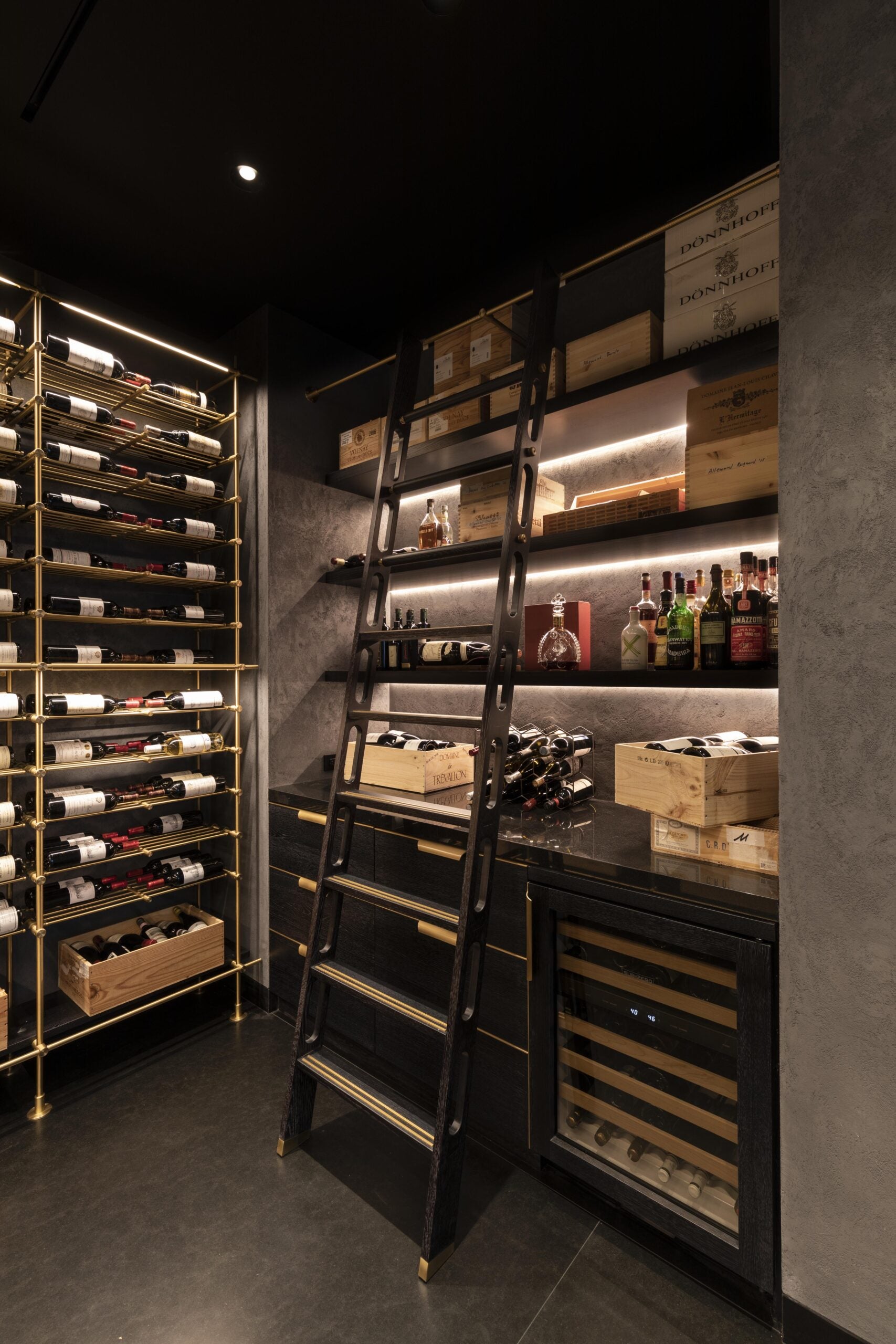
Many appliance brands have rolled out their own dedicated wine refrigerators to meet the demand, which similarly put the bottles on full display – and within arm’s reach. Gaggenau’s new Vario Cooling Series includes a wine column, which is equipped with the brand’s Sommelier Sensor. It will automatically bring your wine to the right temperature, and will alert you via an app when the bottles are ready to pour. True Caliber recently leveled up its wine offerings with a 36’’ dual zone column; Smeg rolled out a new under-counter wine cooler for easy access to your favorite bottles, even in small spaces.
Of course, the most dedicated collectors will want more than just one bit of storage in a living room or dining room. They’ll doubtless have off-site cellars where bottles will age for years, all carefully catalogued and meticulously curated. The recent spate of new wine shelves, cabinets, and cellars indicates a move toward a different kind of hosting and entertaining. Your guests can pick the very best bottles from your collection, and admire them just like they would the painting on your wall or the vintage chair in your entryway. “It’s a big shift really,” says Dunjey. “It’s become a destination, rather than just being hidden away in the basement.”