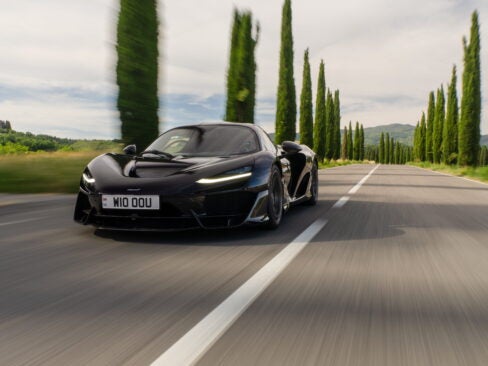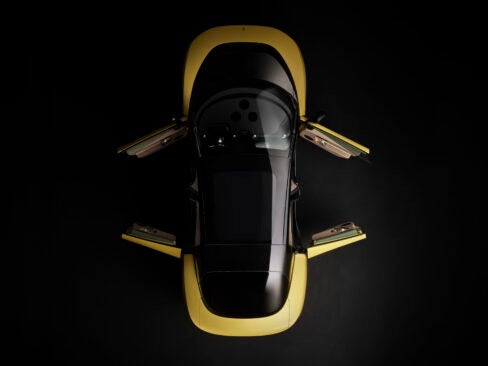


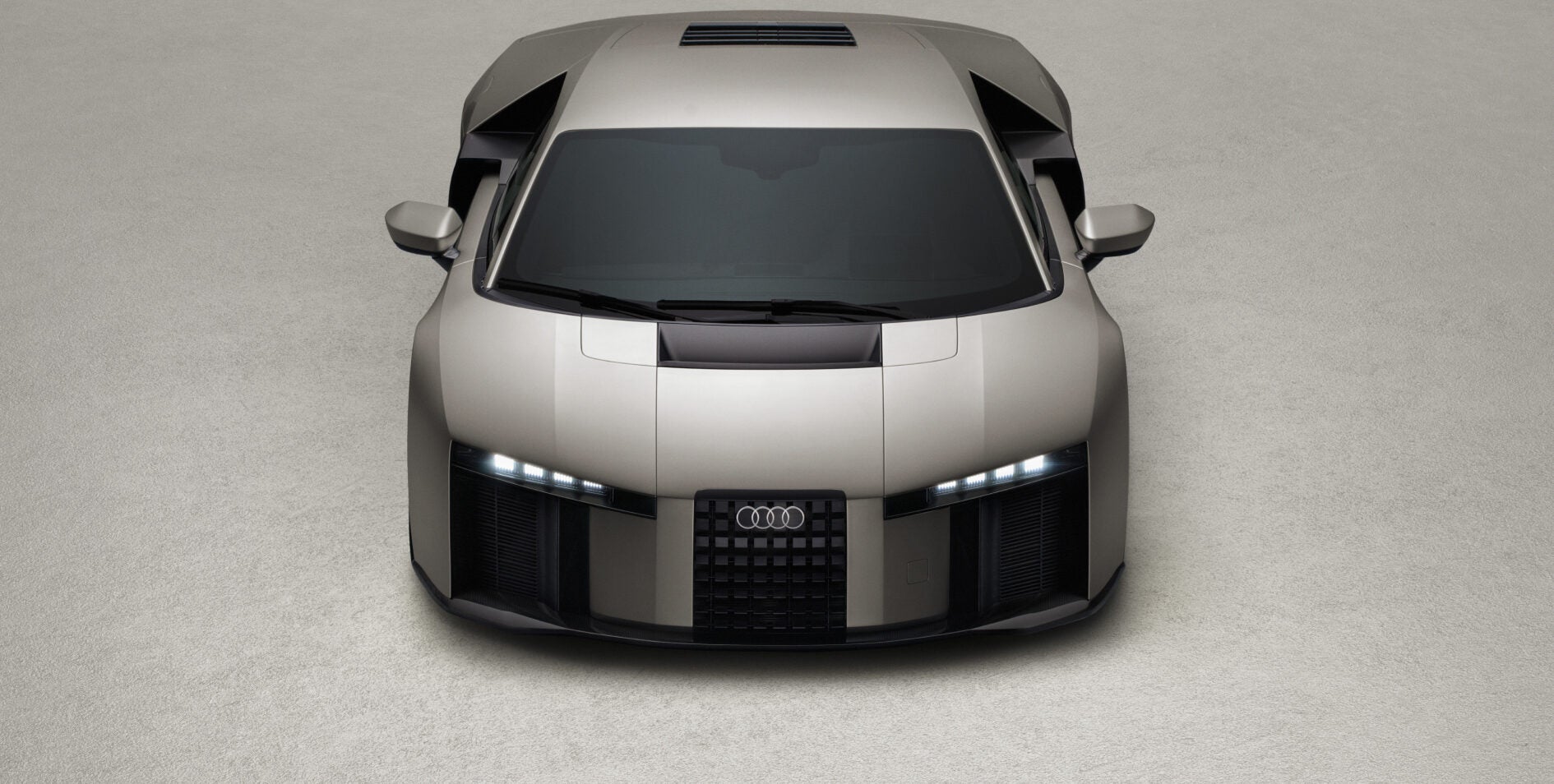
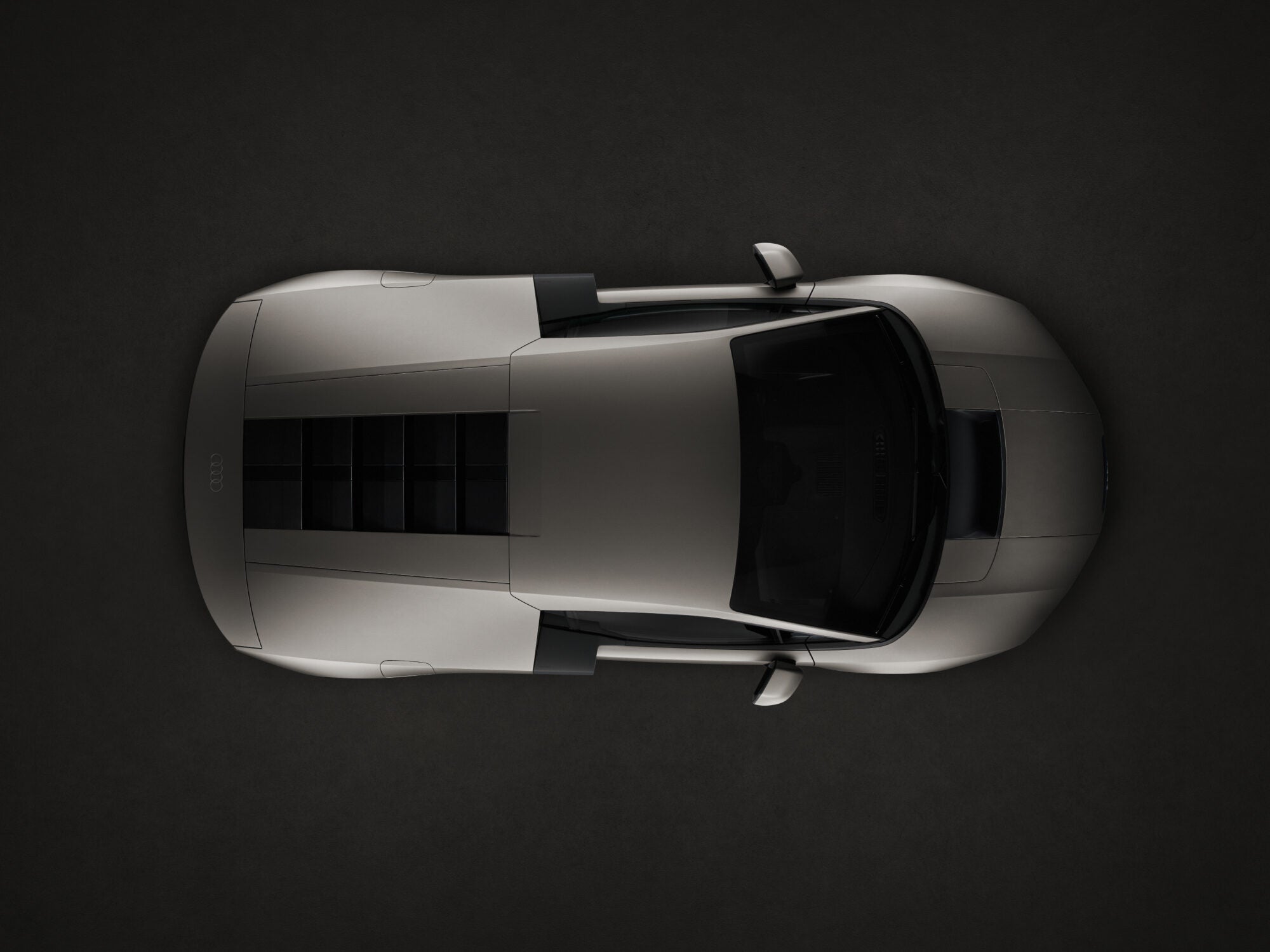
Audi has just revealed its Nuvolari supercar at an event on the fringes of the Monaco Grand Prix, its first European race as a Formula 1 constructor. It’s quite the celebratory gift to itself: a $700,000 mid-engined two-seater which is the fastest and most powerful Audi ever, with a top speed in excess of 218mph and 1001 horsepower from a plug-in hybrid drivetrain combining a V8 engine and three electric motors.
The fact that Audi has kept its new supercar a secret is almost as impressive as the car itself. A radical, all-new model with stellar performance which takes Audi back into a market it left when the R8 was killed off two years ago would usually have been telegraphed well in advance, and ‘scooped’ in testing by the motoring press. But Audi wanted this one to stay a surprise: the small team which developed it in record time all had to sign non-disclosure agreements. Elite Traveler was granted an early preview of the car – but also had to sign the same NDAs and cover phone cameras.
Despite the secrecy, a few of Audi’s best customers already have seen – and ordered – the Nuvolari. Only 499 will be made, and while some build slots remain available, you’ll need to be quick if you want one. “We gave a lot of thought to how many we would make,” Audi CEO Gernot Dollner told me before introducing the new car at the Hotel Eden Roc in Antibes. “Buyers in this space value exclusivity and strong residual value. So, we’ve been very conservative with the number we’ll build.”
See also: Rolls-Royce Spectre Series II Raises the Bar for Luxury EVs Amid Ferrari Luce Criticism
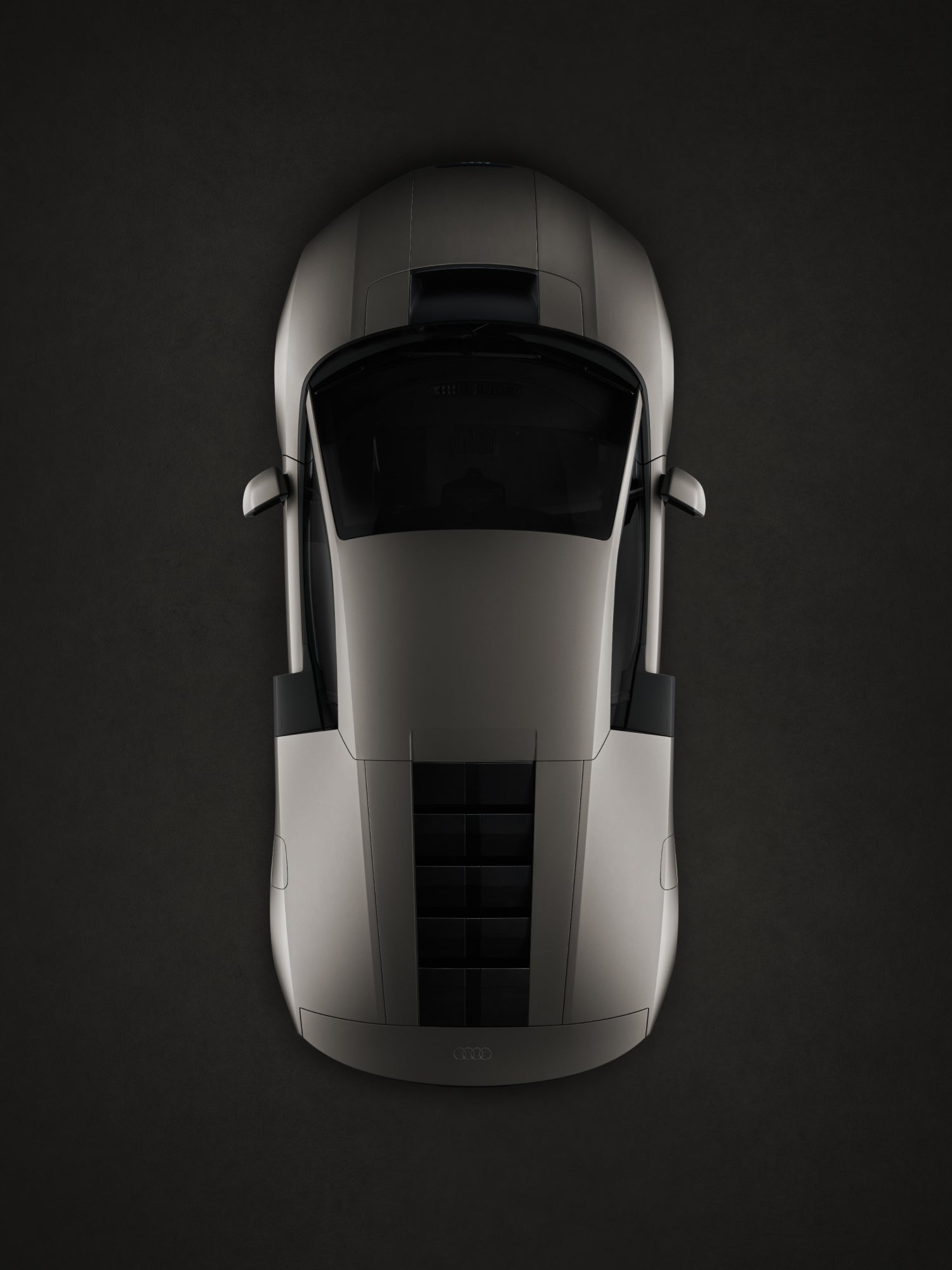
The fact that the Nuvolari is heavily based on the Lamborghini Temerario helped keep the project under wraps and on time. The early test cars were disguised as Lambos and the powertrain was adopted almost unchanged. That’s not a bad thing when there’s a twin-turbo 4.0-litre V8 capable of revving to 10,000rpm at its heart. In the Nuvolari, a larger battery, slightly lower weight, and more sophisticated energy management and stability controls systems deliver more power, performance and – importantly – driveability than the Temerario. Despite all that, this is still an Audi and ought to be a car you can cruise in (you can even do ten miles or so on EV power alone).
The Nuvolari is also the first production car to reflect the ‘radical simplicity’ design philosophy being pioneered by chief creative officer Massimo Frascella. The new look was first seen on the Concept C two-seat electric roadster shown last September. That concept car will become a successor to the genuinely iconic Audi TT. But the production version won’t be revealed until summer next year. The Nuvolari is here now, with first customer deliveries taking place early in 2027.
Seen in the carbon fiber, Frascella’s work is original, striking, and covetable. The Nuvolari is a restrained, monolithic, architectural riposte to the visual hyperactivity of some other hypercars. “There is no decoration,” Frascella tells me. “Everything on this car has to have a purpose.” The standout feature is probably the black contrast panel in the door, which gives the Nuvolari a point of visual distinction without being ornamentation. It serves a purpose, channeling air more efficiently back over the car and into engine bay, whilst hiding the door handle. It’s also cool to look through the air channel as the door opens, and it seems to reference the similar contrast panel in the much-loved R8, which was launched 20 years ago. But Dollner discourages comparisons with the R8: at this price point and with such limited numbers, he wants us to see the Nuvolari as a much more special car.
See also: What Does the Ferrari Luce Backlash Mean for the Future of Electric Supercars?
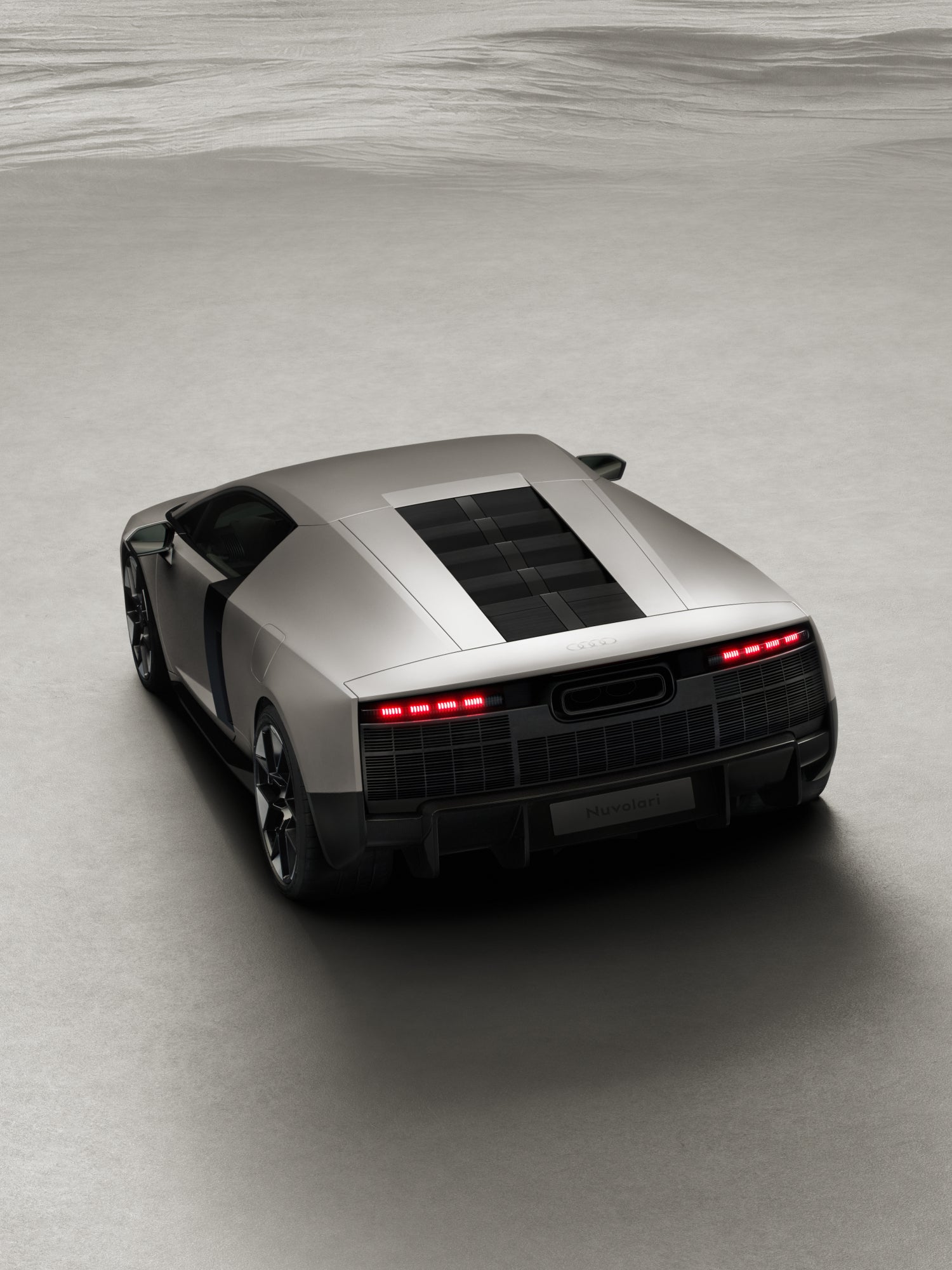
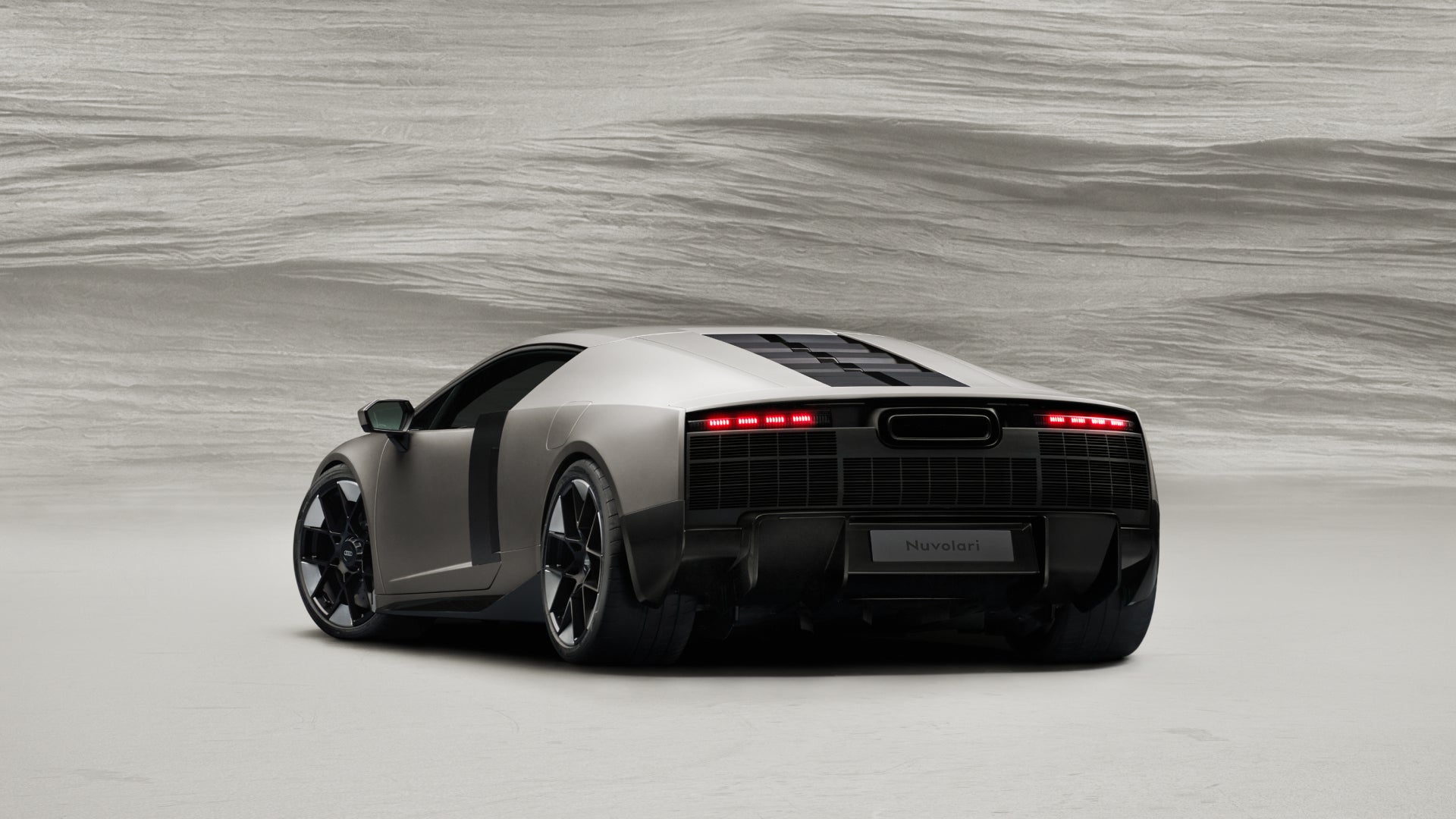
Audi’s chief technical officer Rouven Mohr, formerly of Lamborghini, shows me how Audi plans to justify that view. “Everything is what it seems to be,” he says, tapping his fingers on the grilles. “If it looks like carbon fiber or solid metal, it is.” The entire body is carbon fiber, unlike the Temerario, and if you want it bare and exposed rather than covered by the ‘titanium’ paint which best shows Massimo’s lines, you can order it that way. The black rear elevation is gloriously functional: a huge single piece of aluminium studded with vents, strip lights, and a fat single rear exhaust pipe. The Audi rings have been set into the rear wing, but had to lie flush to avoid disrupting the airflow, so they’ve been milled from aluminium and recessed perfectly into the carbon fiber.
Same with the interior, which has a pleasing ‘80s vibe with its dark sand suede upholstery, and slabby, rectilinear lines. “Audi is known for its interior quality,” says Mohr. “This will be the highest quality interior we’ve ever made.”
The new car’s name references Tazio Nuvolari, the Italian racing driver who saw success in the 1930s with Auto Union, one of the German marques which would later combine to form modern Audi. With a powertrain from Lamborghini and visuals from a Tuscan designer, Italy is once again helping the Germans to look good and go fast. And together they’re proving that the combustion-engined supercar is very far from finished.