


This year, Cape Verde has become one of this year’s most talked-about destinations. After making its World Cup debut, despite being one of the smallest countries ever to qualify for the tournament, the team, ranked 67th, quickly took over the hearts, and headlines, of international media as they held their own against giants like Spain and Uruguay, and looked set on causing one of the biggest upsets the tournament has ever seen.
The team’s success culminated in pushing Argentina to extra time in the knockout stages. Sadly, the nation’s soccer dream was not to be, and Cape Verde’s run ended just short of a penalty shootout – but not before putting the country in front of a global audience.
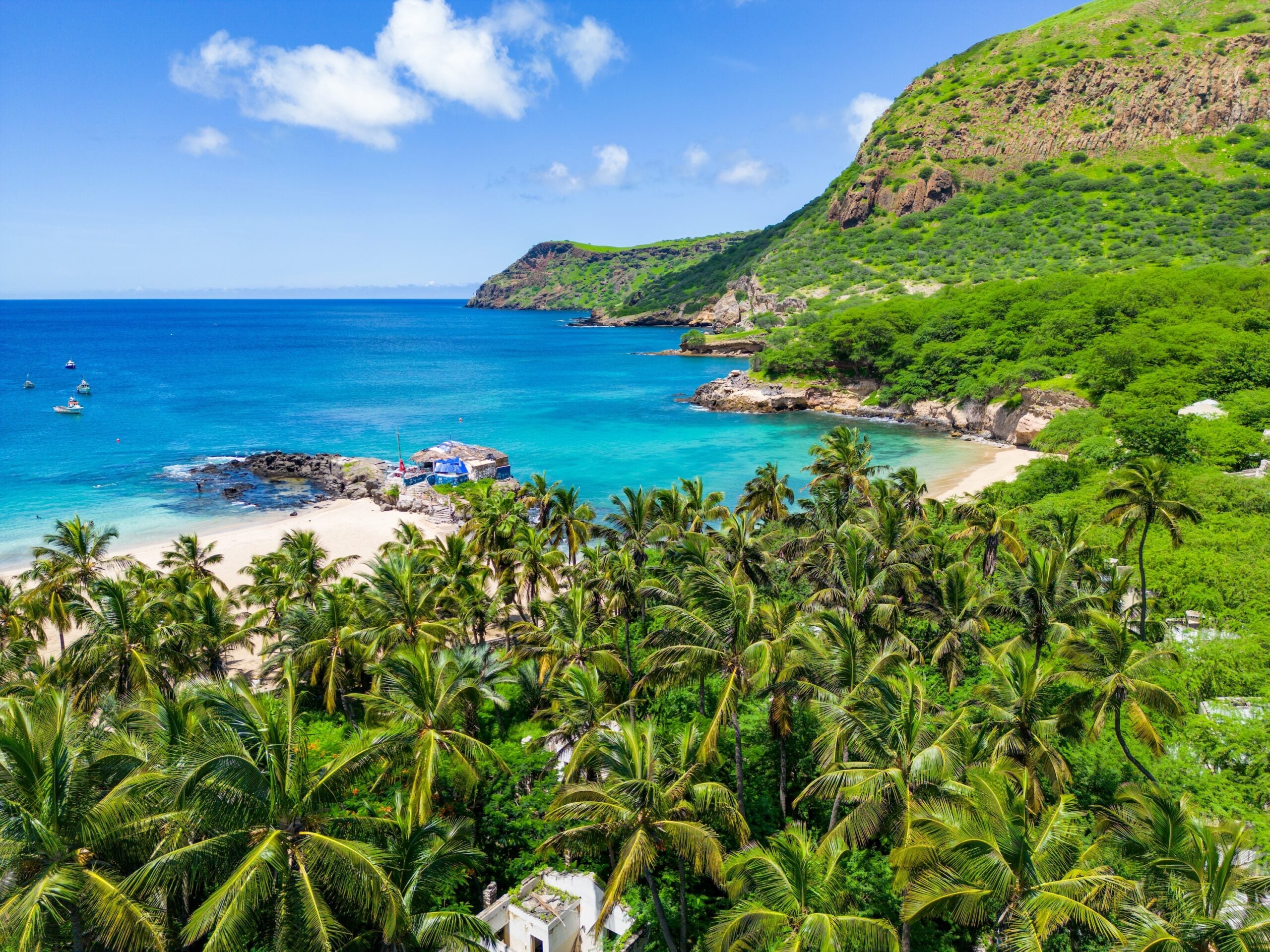
For many viewers, the team’s success prompted the same basic question: where exactly is Cape Verde? Head to Google, and you’ll be met with clear turquoise water, endless stretches of empty white sand, and dramatic volcanic landscapes. So why hasn’t it entered the luxury travel conversation in the same way as Mauritius, the Seychelles, or even parts of Morocco?
From its location and landscape to the islands best suited to an upscale stay, here’s what to know about Cape Verde – and whether it deserves a place on your travel radar.
Where is Cape Verde?
Cape Verde, also known in English by its Portuguese name Cabo Verde and officially as the Republic of Cabo Verde, is an Atlantic archipelago of ten volcanic islands, located around 350 miles off the coast of West Africa.
It’s among the 54 African countries but not on the mainland, so some maps even omit it. Humans couldn’t find it until the mid-15th century, and Portugal colonized it from 1462 to 1975. Portuguese is the official language, but the majority of the population speaks Kabuverdianu, a Portuguese-based Creole.
While nine out of ten islands are inhabited, Cabo Verde has more nationals abroad, between 1.5 to 2 million, mostly in the Netherlands, Portugal, Senegal, and the United States, than at home, where the population sits around 500,00.
Should you visit Cape Verde?
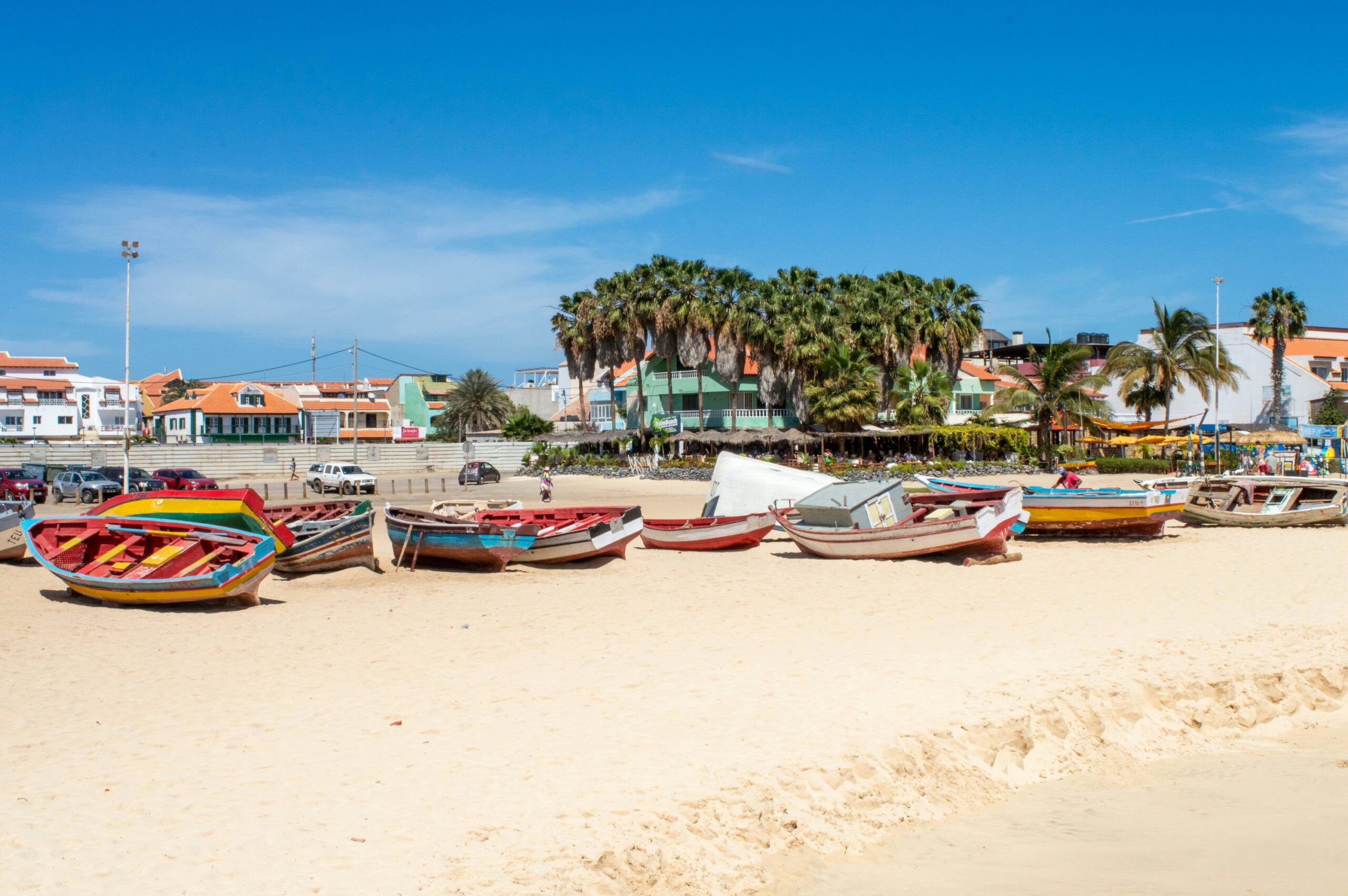
If you’re looking for a winter sun destination with long beaches, warm water, and a reliably breezy climate, Cape Verde is worth considering. The Atlantic archipelago has long been popular with European travelers, particularly for windsurfing, kitesurfing, and diving, with Sal and Boa Vista drawing most of the beach-focused crowd.
For those interested in wildlife, Boa Vista’s Ervatão Beach is one of the world’s most significant loggerhead turtle nesting sites, and the waters around the islands also attract humpback whales in late winter and spring.
The best time to visit depends on what you want from the trip. For turtle nesting season, plan around July to September; for whale sightings, March and April are generally the strongest months.
If you are coming purely for sunshine and sea, Cape Verde is a relatively easy warm-weather option from Europe, with direct flights from London and Manchester taking around six hours. For US travelers, the journey is slightly less straightforward, as there are no direct flights, so most itineraries route through Lisbon. We recommend staying for a couple of days in Portugal to make the trip worth it.
Where to Stay in Cape Verde
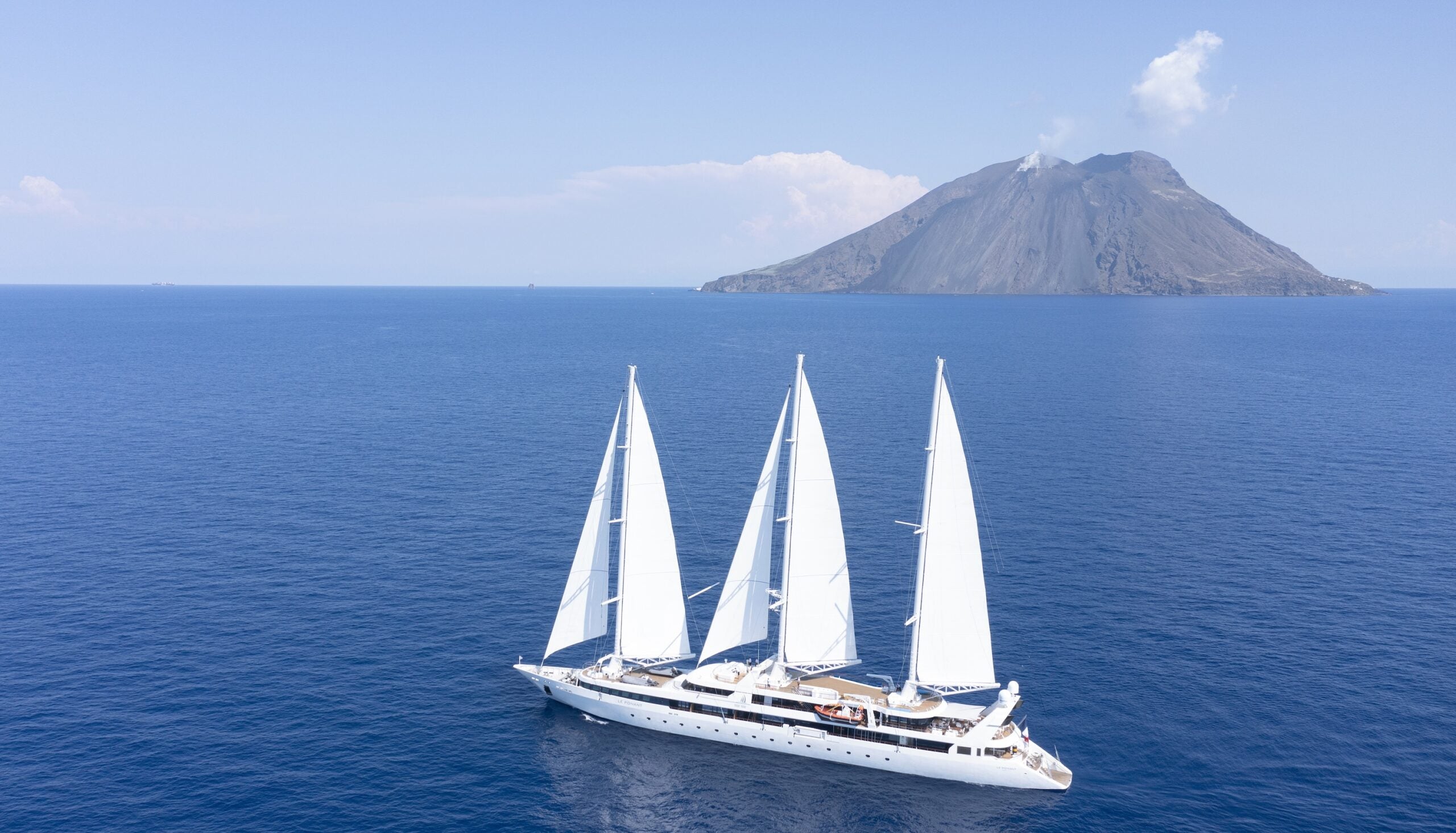
Cape Verde is not short on resort hotels, particularly on Sal and Boa Vista, but genuinely high-end options remain relatively limited. If you want to see more than one island, without compromising too much on comfort, the better option is to do it by boat.
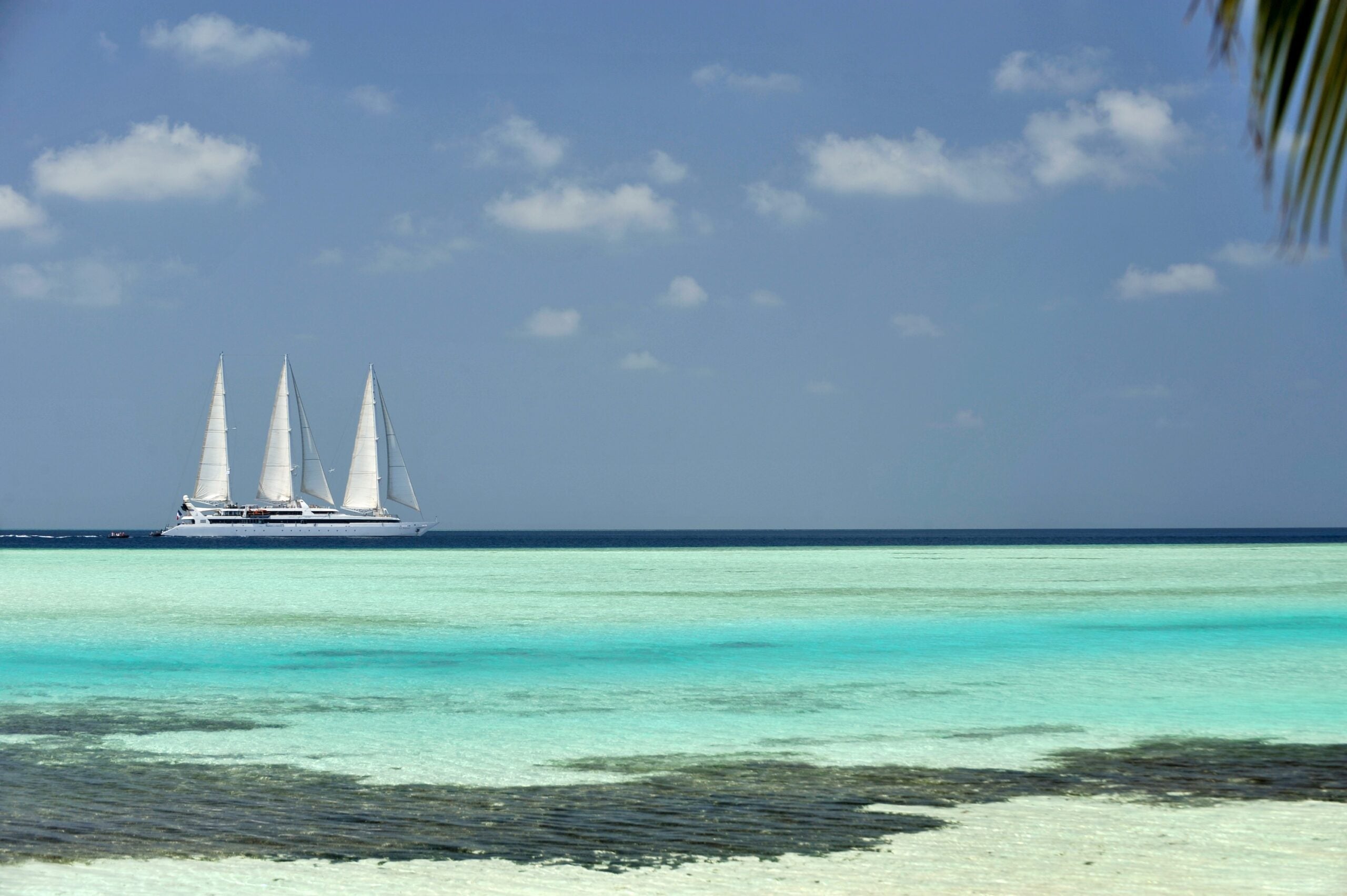
One of the most polished ways to do that is aboard Le Ponant, the first sailing yacht in the Relais & Châteaux portfolio, which offers an eight-day itinerary through the islands. Rather than limiting yourself to a single resort base, the route makes a persuasive case for seeing Cape Verde as a whole.
The journey starts in Mindelo on São Vicente, often considered the cultural center of the archipelago, before moving on to São Nicolau, Boa Vista, Praia on Santiago, Maio, and Fogo.

The route gives a much broader sense of Cape Verde than a resort stay could. In Mindelo, guests can experience bars playing morna and sip local grog, a Cape Verdean sugarcane spirit; on São Nicolau, there’s mountain trail treks and stunning green landscapes; on Boa Vista, the beaches, dunes, and marine life the country is best known for; and on Fogo, a look at the island’s volcanic interior, including the slopes of Pico do Fogo and its surrounding lava fields.
Le Ponant itself is small, with just 32 guests on board, so it feels closer to a private yacht than a cruise ship. Cabins are spread across three decks, and there is a spa, saltwater pool, and the usual watersports equipment (including glass-bottom kayaks and snorkeling and diving equipment) for swimming stops along the way. While it is not the only way to do Cape Verde, if your priority is seeing the islands properly – rather than spending a week at one resort –it is the most compelling.