

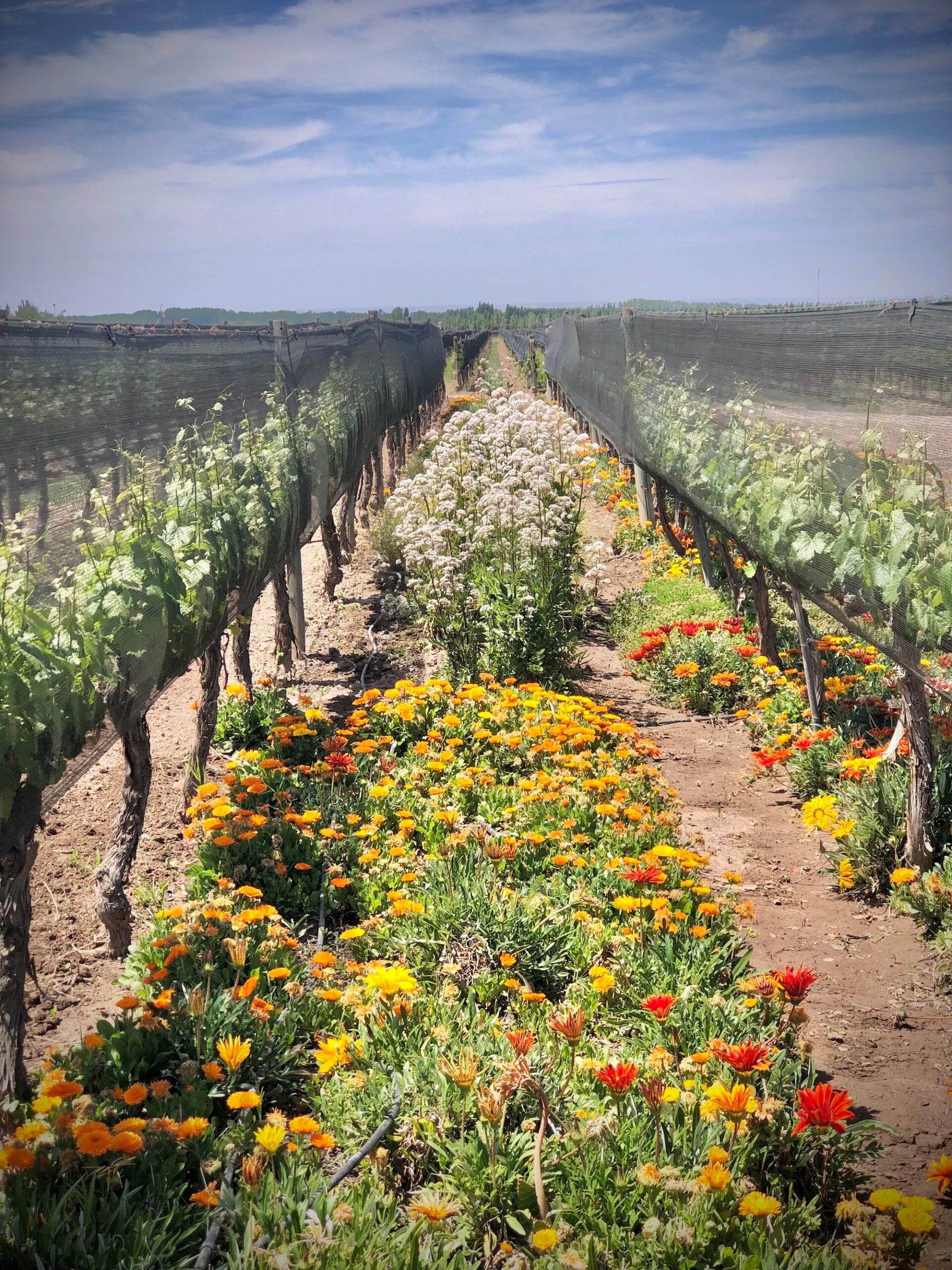
"We’d like you to walk along the rows in silence,” our host says. We’re looking at a line of vineyard terraces cut into the sparse sandy soil, nearly 4,000 ft up in the precordillera of the Andes. These are the dramatic foothills of the improbably vast cordillera proper, which rises behind us, the world’s highest mountain range outside Asia.
The ground is baking in the white light of an early summer sun. The scent of wildflowers – especially the pungent whiff of wild rocket – is everywhere. There’s little sound beyond birdsong and the drowsy hum of insects.
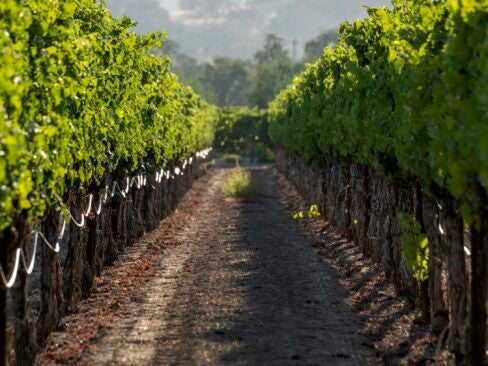
This is the Agua de la Jarilla vineyard in Gualtallary, which forms a small part of numerous holdings of the Zuccardi family, one of the most renowned producers in Mendoza. Mendoza is Argentina’s most important wine region. Vineyards here (which produce 75 percent of the country’s wine) are planted up to 6,600 ft above sea level.
“Before we came, this was desert,” Zuccardi Valle de Uco winery says the agronomist Martín di Stefano. “And it will return to desert after we’re gone.” Those who work the land have a respect bordering on reverence for their environment (it was di Stefano who had enjoined us to silence).
The Andes are an unignorable presence; at first sight, you might think you’re looking at a cloudbank. Then you see snow-clad peaks above the clouds, and gasp. In recent years, Mendoza has developed into an exciting prospect for the adventurous, epicurean traveler.
“What makes Mendoza exceptional is its range,” says Amanda Barnes, author of the seminal South America Wine Guide. “Wine is the anchor, but over the last decade the region has matured into a destination that caters for every travel style, from intimate, hands-on encounters with artisanal producers, to Michelin-starred fine dining in architectural landmark wineries that now rank among the most iconic in the world.”
One of the province’s many advantages is that it’s relatively contained. The main wine regions – from north to south: Maipú, Luján de Cuyo, Agrelo, Tupungato, Gualtallary, Uco Valley – are easily accessible from Mendoza city, and you’ll find they’re also the starting points for many treks. The Agua de la Jarilla terraces, etched into the hillside, are emblematic of humanity’s presence in this remote part of the world.
At Zuccardi, the land dictates how the vineyards are planted. Rows of vines climb the contours and detour around trees and mastodon-sized rocks. Compared to many, it looks haphazard, but it has an organic logic. The one terraced vineyard is like a well-ordered garden in the untamed landscape. It’s Zuccardi’s gesture to the savage beauty of the land, as if to say: this is what we can make of it.
See more: These Wineries Around the World are Rethinking Sustainability
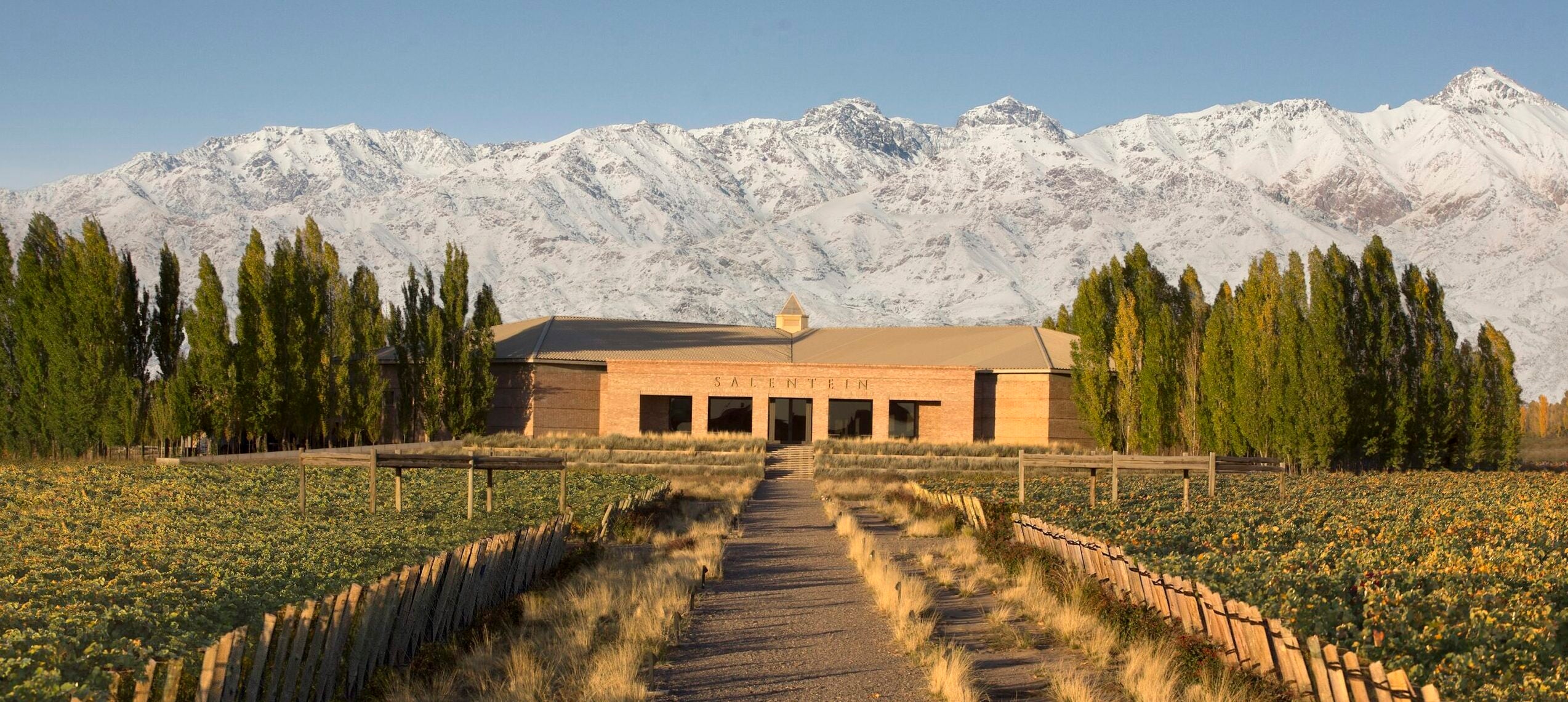
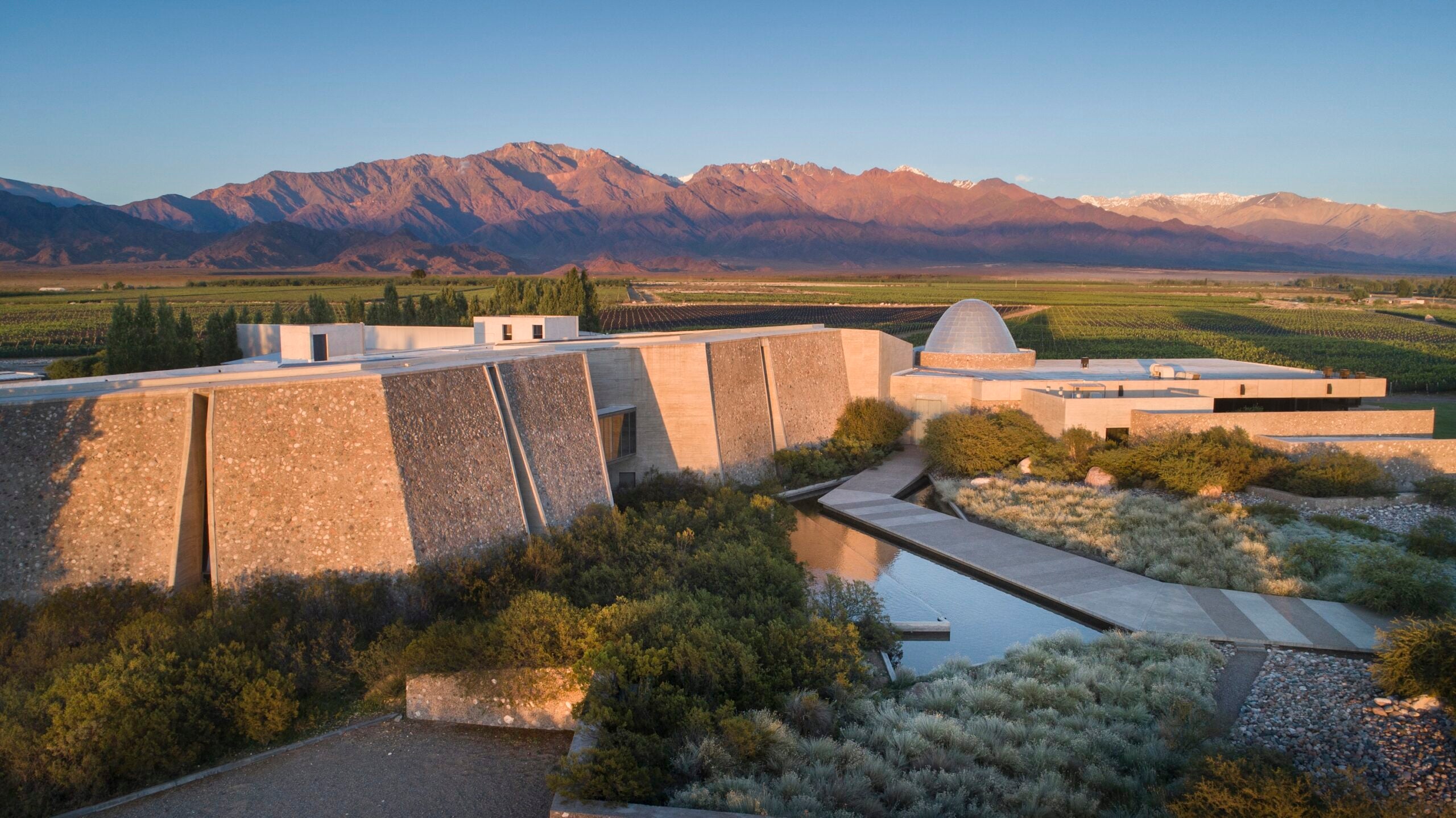
Twenty years ago, only a handful of wineries were open to visitors. Now there are about 1,000, many with restaurants and accommodation. Bodegas Salentein’s Killka in the Uco Valley, for example, is a winery, art gallery, and restaurant, with a lodge for visitors located nearby.
Killka is a discreet though massive construction rendered in bare concrete. The cavernous barrel hall, 29-ft underground, is like a set from Fritz Lang’s Metropolis. The restaurant is airy and bustling and the gallery has an important collection of work by Argentine artists.
Architects seem captivated by the possibilities of Mendoza, which is dotted with extraordinary builds – the wineries vie with each other to see which can best represent, or complement, the mountainous backdrop. While Zuccardi’s Piedra Infinita winery in the Uco Valley, which opened in 2016, has a modernist cathedral-like grandeur, Bemberg in Gualtallary has geometric curves which – like those inexplicable prehistoric markings in the desert – can only be fully appreciated from the air.
Many are inspired by the long-extinct civilizations of South America. You approach Bodega Catena Zapata down a long, dusty road through the vineyards. With the great white bulk of the Andes as a backdrop, it looks small – but as you get nearer you see its scale.
Nicolás Catena’s winery (built in 2001, exactly 100 years after Catena Zapata was founded) was inspired by Mayan temples. It’s a dramatic building with a marble-floored atrium and asymmetric columns. Vertiginous stairways twist to the top of the pyramid and a terrace that looks out over the vineyards.
See more: Inside Chile’s Golden Valley Estate Crowned the World’s Best Vineyard
Laura Catena, who gave up her practice as an ER doctor to run the business, has an eccentric streak. Her tasting tours might include lying on the lawn for a meditation session, before an ‘astrological’ wine tasting, with snippets of Celtic mysticism and wines matched to your star sign. But don’t be deceived by the quirkiness — Catena makes some of Argentina’s most exalted wines, from luscious Malbecs to the electric White Stones and White Bones Chardonnays from the sun-drenched Adrianna Vineyard, 5,000 ft above sea level.
At Chakana, it says ‘Viticulture for the future’ on the wall of the biodynamic storehouse. The philosophy here is both ancient and modern; its flagship cuvée is called Ayni, a Quechua word that roughly translates as reciprocity or cooperation – you can only take from the land if you give back. This is the central concept of modern sustainable farming.
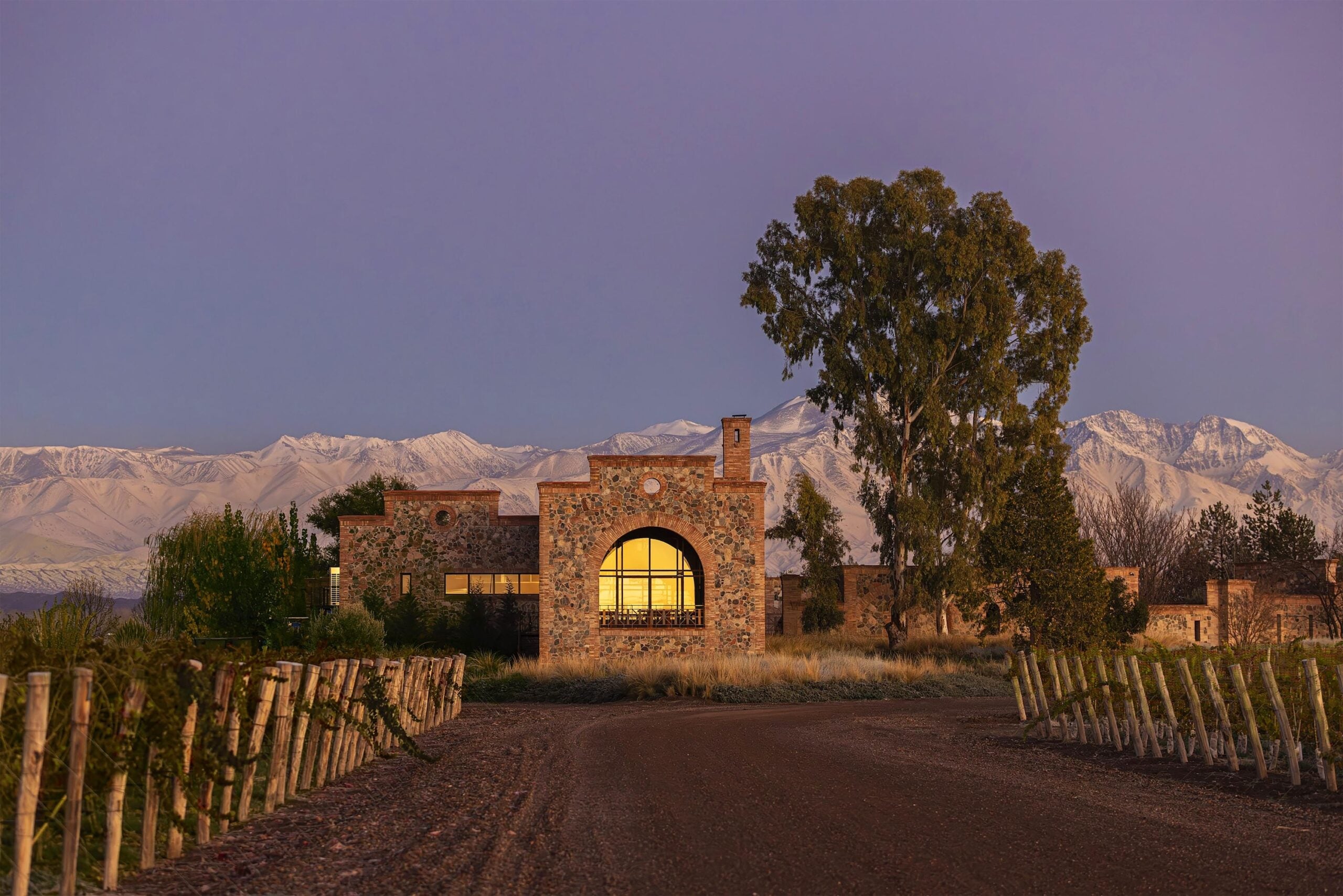
Chakana is fully biodynamic, its herbal preparations housed in a cool concrete bunker, a bucket of cows’ horns in the corner ready for the arcane process of making the compost known as ‘biodynamic tea.’ Like Agua de la Jarilla, Chakana is like an improbable sight in this arid land. The winery is surrounded by weeping willows and lush bougainvillea; visitors taste and eat in the stripped-down luxury of an outside dining room in the middle of the vineyard.
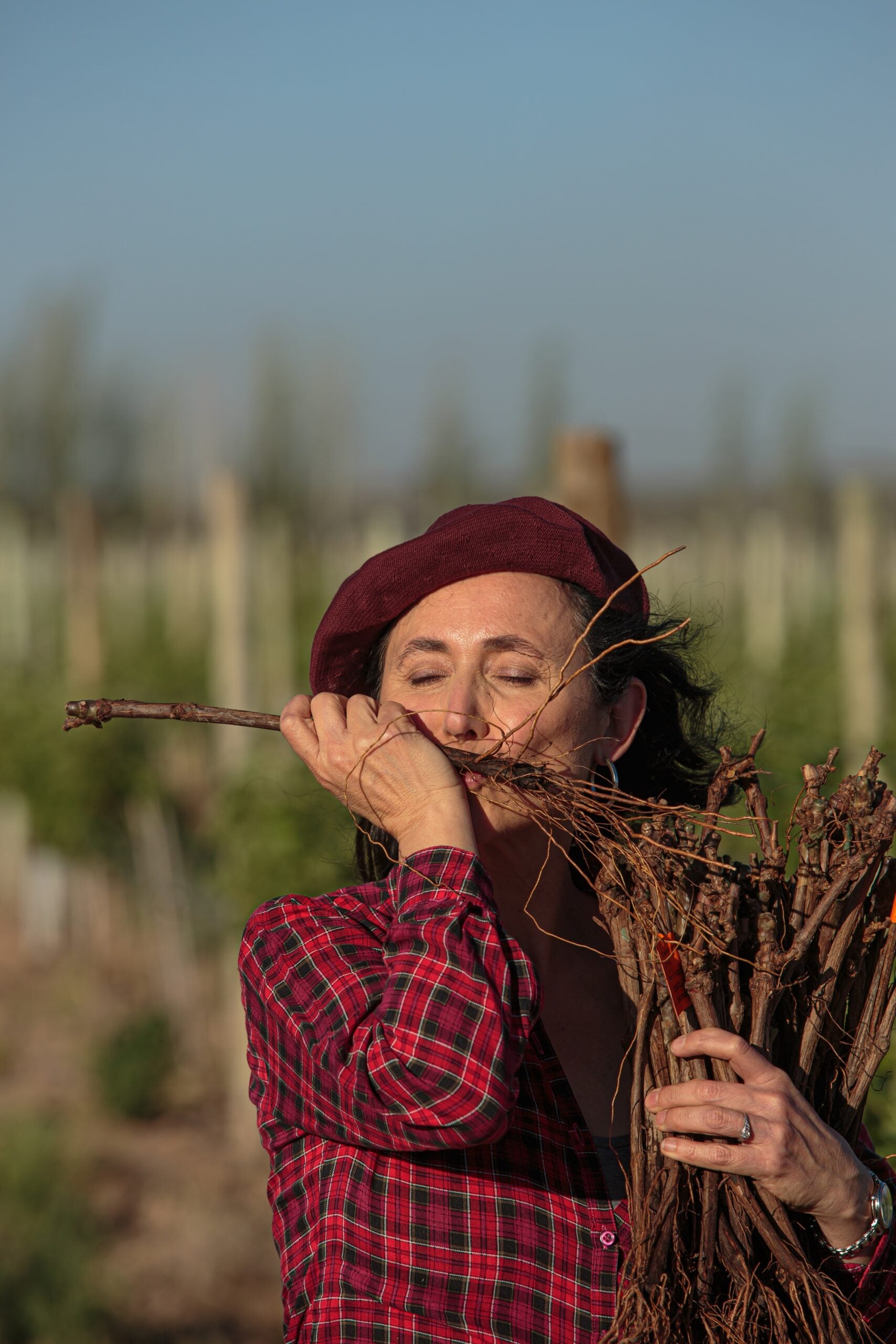
“We’re going for a leaner, more modern style,” Chakana’s dreadlocked winemaker Leo Devia says. He’s a master of restraint in Malbec, but the showstopper is the Torrontés, aged six months on skins to give superb texture while losing none of its beguiling honeysuckle, melon and clementine aromas.
Food in Mendoza has also undergone a revolution in the past decade or so. “It used to be just parrilla and Italian but we now have a reputation as a foodie destination,” says Alejandro Sejanovich, co-founder of Mil Suelos. Parrilla (grill) – the classic Argentine method of slow-cooking beef, lamb, or goat over an open fire – is ubiquitous and delicious, but Michelin-starred restaurants like Azafrán and Brindillas in Mendoza city celebrate the diversity of Argentine food.
You can have a steak, but there’s also seafood, aguachile (ceviche), cachapas (savory pancakes), and humita (corn cake). At La Morada Lodge in the Uco Valley, a rustic resort run by Irish chef Edward Holloway and top sommelier Andrés Rosberg, the menu at Hornero restaurant includes roasted eggplant, trout carpaccio, paella, escargots gratin with Genovese pesto, and a fivecheese tortellini – all of it cooked over an open fire.
Wood-fired cooking is the default for Mendoza chefs, and its spiritual home is Francis Mallmann’s Siete Fuegos (‘seven fires’) restaurant at The Vines resort in Tunuyán. But if Mendoza has discovered sophistication in its cuisine (the region is currently home to five Michelin-starred restaurants), for many travelers the lure of this desert province is its wildness.
You could, for example, forgo the refined Mallmann experience in favor of an asado (the traditional Argentine barbecue) in the high cordillera after trekking there on horseback. La Morada is just one of many lodges and hotels that offer a range of adventure packages, from riding horses into the cordillera to mountain-bike tours of the vineyards.
While other regions tame their peaks with cable cars and funiculars, a Mendocino would shrink from such disrespect. You can drive from Mendoza to Santiago de Chile in about seven hours, a journey that is impressive enough (I won’t forget the sight of a recently-wrecked truck, belly-up, its wheels still turning) but to appreciate the scale and implacable grandeur of the Andes, there is no better way than on the back of a horse.
One tour operator, Vintura, specializes in adventurous wine packages. Mendoza’s appeal, says the company’s founder Véronica Mausbach, is the fact that it’s not yet a fixture on the tourism trail. “So you can get an authentic, local experience. Visitors are often surprised to be treated like guests, not tourists.”
Mausbach organizes trips that include rafting and sailing on the Potrerillos Dam, or horseback riding in the high Andes with a slap-up picnic, naturally with meat grilled over an open fire. All her trips have winery visits built in — they’re an intrinsic part of most Mendoza experiences — but if you’re after something more energetic, Gaucho Argentino runs five-day high expeditions up to the Chilean border, sleeping in ranches along the way.
Many wineries also offer accommodation, like Salentein’s Posada lodge, which has cool, spacious rooms; an excellent, unpretentious restaurant; and a swimming pool from which you can survey the mountains. For undisguised luxury, The Vines is a resort as well as Mallmann’s headquarters, surrounded by 1,500 acres of vineyard with breathtaking views. The mountains are everchanging; in the evening, when the sun sinks towards the cordillera, the peaks become shades of purple, pink, and gray.
Hotel architecture here is as inventive and confident as winery design. At Casa de Uco in the Uco Valley, each suite is a self-contained, two-story white box sitting in the vines. They should look outrageously inappropriate but somehow complement the mountains behind. Then there’s the madly luxurious Entre Cielos, with its distinct air of the 1970s, the rooms all orange, purple, and warm brown, with wood-framed armchairs and glass tables.
Back on the Agua de la Jarilla terraces, I’m struck by the other-worldliness of Mendoza. It’s the combination of altitude, with that fierce white sun giving everything a sharp focus, and the vastness of the landscape. Even the most audacious buildings are dwarfed by the mountains. To be in this wilderness is to realize how insignificant we are, and you can get an inkling of what it must have been like for the early pioneers, driving their wagons under those forbidding peaks. It’s a fleeting feeling (there’s a luxury lodge to go back to, after all) but it’s no less intense.
Wineries to visit
Zuccardi, Paraje Altamira, Uco Valley
Three-generation winery now run by the modest but very confident Sebastián Zuccardi. They are in love with concrete here (even down to the chairs), using 200 sculptural concrete amphorae in the chai (cellar). Discover wines of tremendous poise made in a brutalist cathedral of… concrete.
Salentein, Tunuyán, Uco Valley
The winery has splendid architecture, an art gallery and sculpture garden, a guest lodge, and two restaurants. It also produces a huge range of wines, from Chardonnay, Pinot Noir, and Syrah to mighty, perfumed Malbecs.
Chakana, Luján de Cuyo
Modern winery founded on the ancient principles of respect for the land. Expect simple but impeccable al fresco hospitality and really excellent wines, including vibrant expressions of Torrontés.
Mil Suelos, Maipú
A few miles south of Mendoza city, Mendoza veterans Alejandro Sejanovich and Jeff Mausbach (both worked at the renowned Catena) are dedicated to finding the ultimate expression of Argentina’s terroirs; they also specialize in impeccable wood-fired cuisine in their excellent restaurant.
Finca La Anita, Agrelo, Luján de Cuyo
One of Mendoza’s oldest vineyards, a 1947 plot of Syrah, is part of this fine, comfortable estate in Agrelo. A visit and tasting can include an asado in the garden – don’t miss the piercing Sauvignon Blanc and the really superb Syrah, with its aromas of bergamot and orange zest.
Bemberg, Gualtallary
A magnificent futuristic winery at 4,265 ft in Gualtallary, owned by the Bemberg brewing dynasty and overseen by star winemaker Daniel Pi. He draws on the vast vineyard holdings of the Bemberg family (they own Grupo Peñaflor, one of the world’s 10 biggest wine producers) to craft microterroir wines from a dozen different regions.
Bianchi, Tunuyán, Uco Valley
Located in Los Chacayes in the Uco Valley, close to La Morada and The Vines resort, this is a modern outpost of a century-old winery. Winemaker Silvio Alberti has 750 amphorae, which he is gradually increasing in his aging regime, including delicious, aromatic Torrontés and bold, modern Malbecs.