

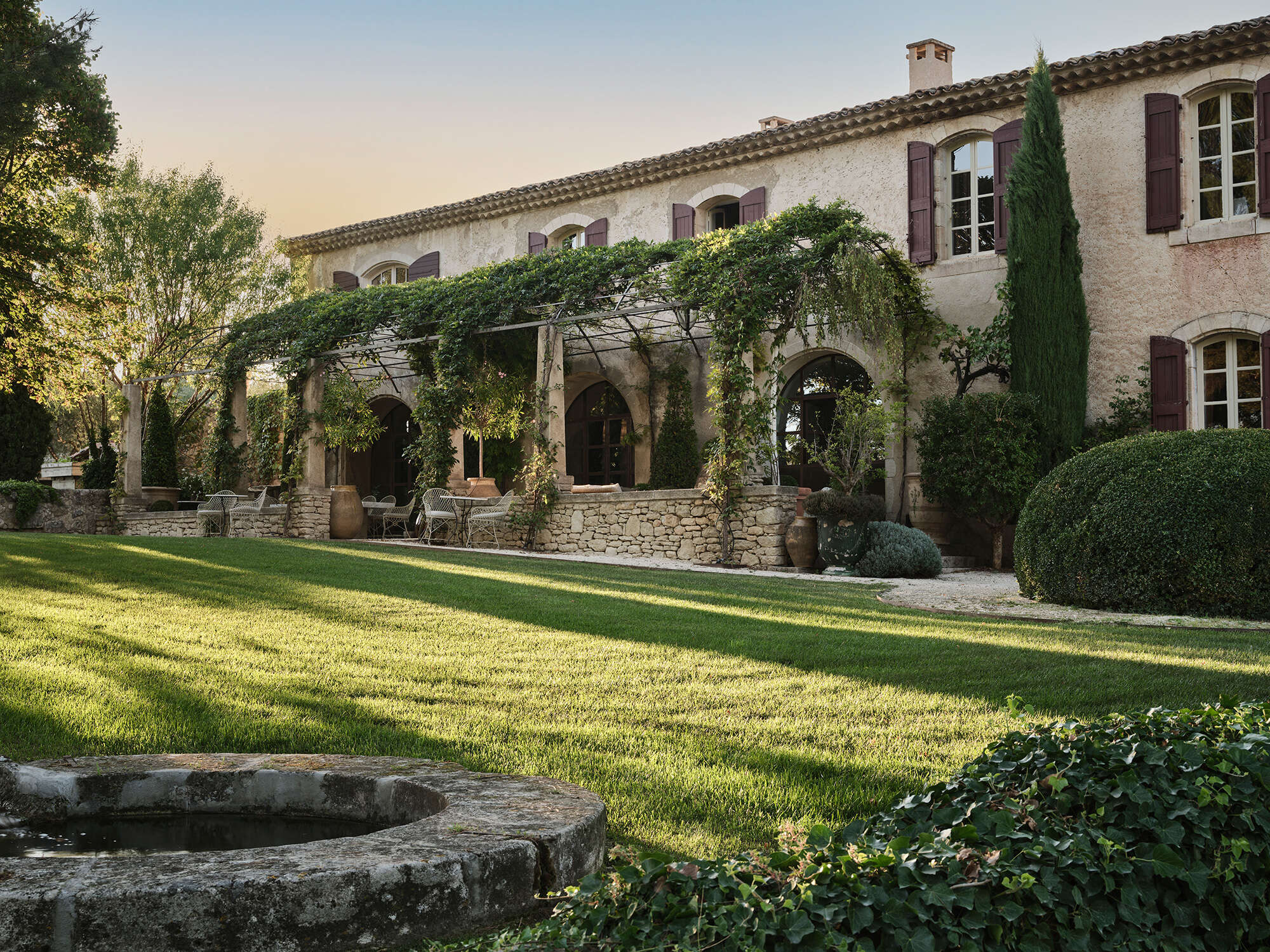
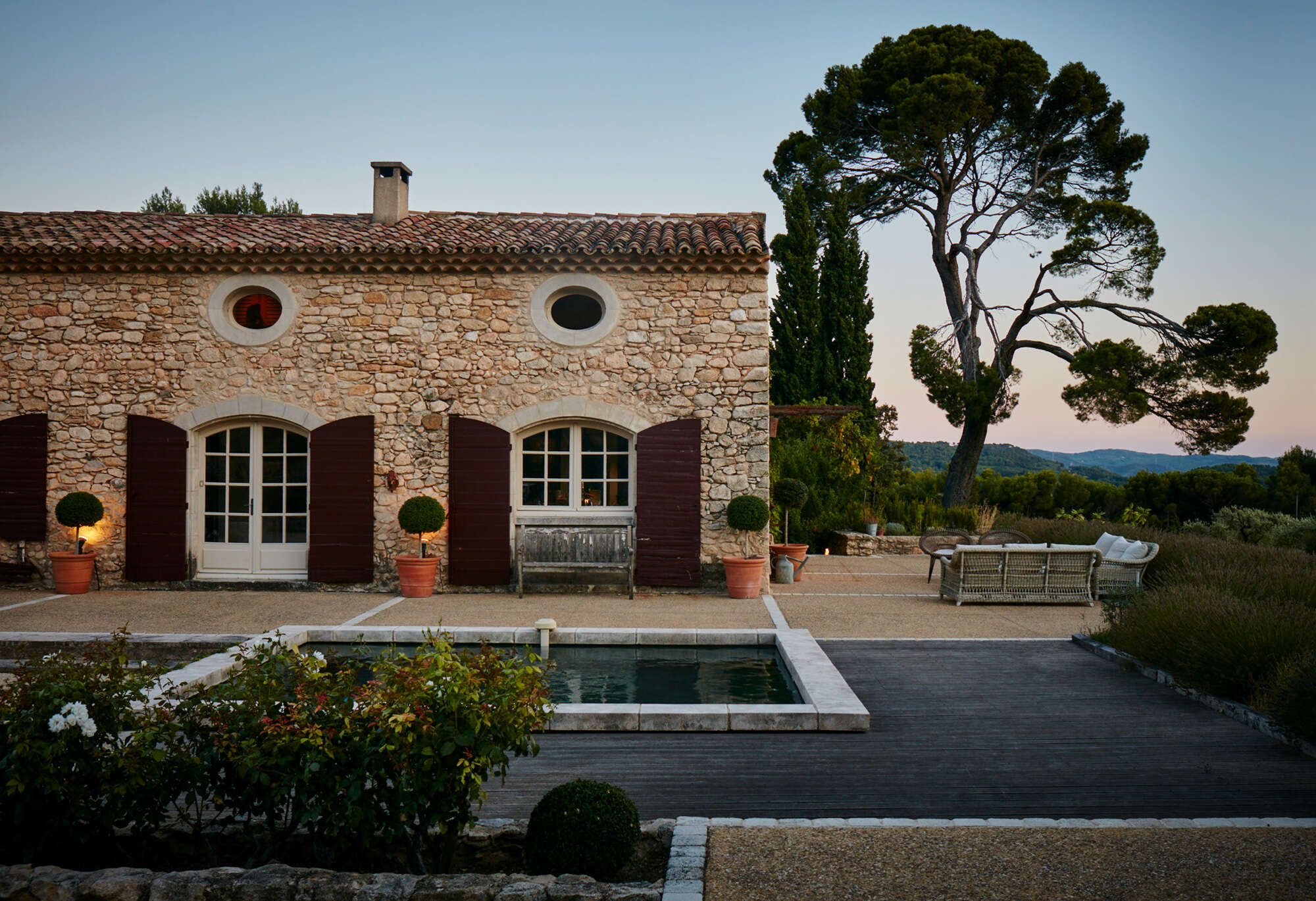
Owning a chateau in the French countryside certainly sounds dreamy – you might picture perfectly manicured lawns, stately fountains, and evenings spent enjoying fresh wine from the property vineyard. It’s a fantasy that can become a reality, but not without undertaking many different renovation projects, and making a few compromises. “A realtor told me this: Every chateau is going to have a problem that cannot be fixed,” says interior designer Timothy Corrigan. “You just have to figure out whether you can live with that problem.”
Corrigan knows a thing or two about chateau restoration. He’s owned and renovated three himself – he’s working on the fourth now – as well as many others for his clients. It’s a love affair that began in the ‘90s, when he purchased a manor house in the Normandy countryside, and was subsequently hired to transform a 15th-century monastery into a private home. Afterward, he was hooked, and bought his own chateau. While converting a monastery into a home is no small feat, renovating a chateau to accommodate modern-day wants and needs comes with its own unique challenges.
It’s a process that starts when you first view a property, and are weighing whether or not it’s worthy of investment. “Look to see the condition of the roof,” says Corrigan. “It’s the single most expensive part of your renovation, particularly if it’s a slate roof. In my last chateau, the roofs alone cost €5.5m (approx. $4.8m). It was more than the price of the chateau.” Kitchens and bathrooms will most likely need to be renovated, and if the property hasn’t been restored in the last 10 years, then the plumbing and electricity will probably need to be redone too.
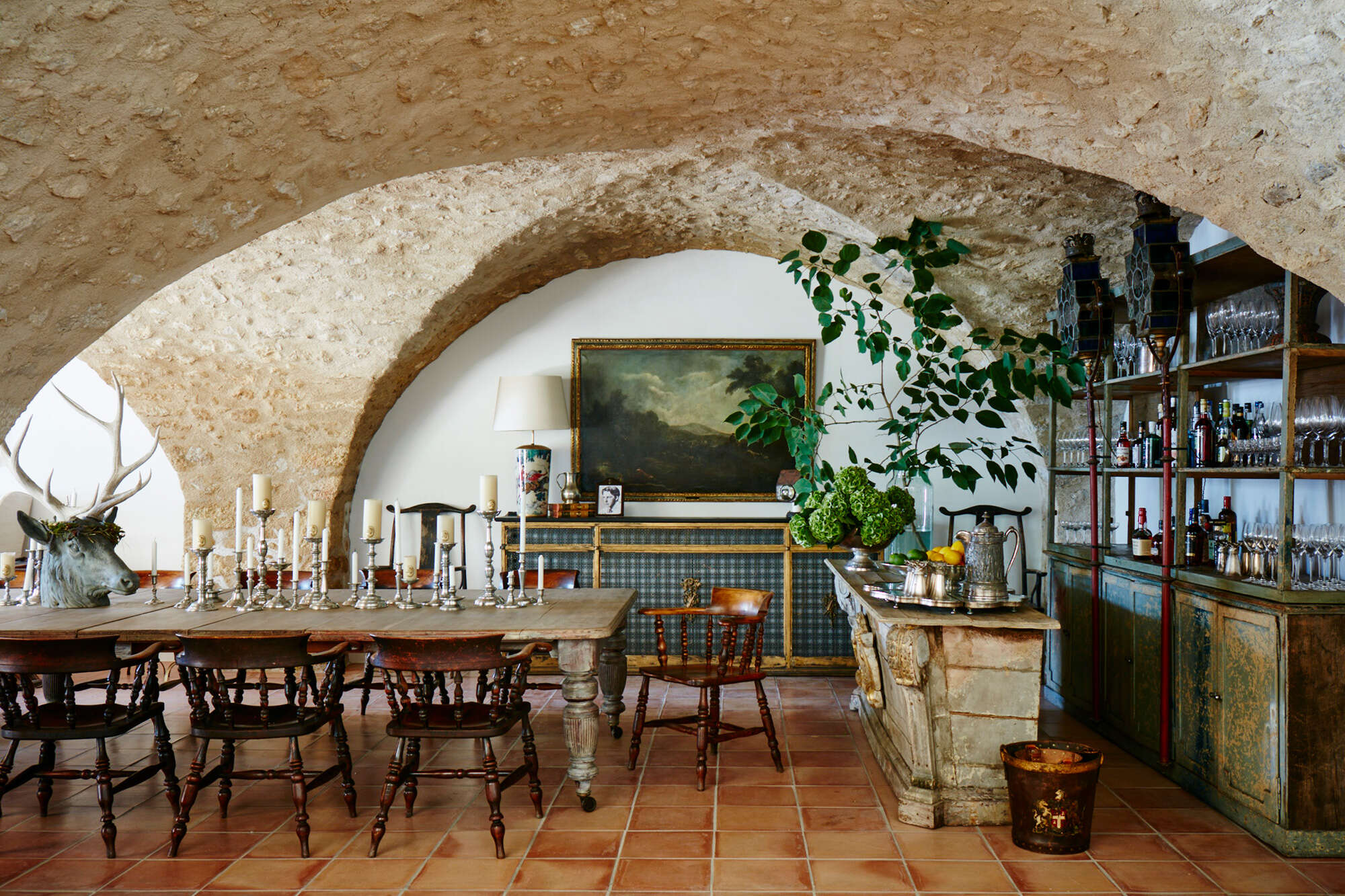
It’s not just a financial investment, however – it’s also a matter of time. “Unlike in America, France doesn’t have a general contractor system in place,” says Corrigan. It’s a lesson that many new chateau owners have to learn the hard way. So when Jeffrey Zeidman and Oscar Rinaldi first acquired their property – a 90-acre, Renaissance-era chateau in the Loire Valley – they didn’t expect the local artisans to take so long to return their calls. “You’ll get a quote, but that quote will come in six months, and maybe they’ll get to the work in 12 months,” says Zeidman.
The couple’s renovation process has taken eight years, and it’s far from over. They’ve carefully pieced together all the outbuildings on the property, which now function as rentals. That revenue stream helps to fund future renovations; primarily the main building, which is currently in the works. They even sold their London residence, so they’re all-in on their new home: Chateau de Belébat. “Our friends think this is wild and crazy, but we’ve befriended people who do the same thing,” says Rinaldi.
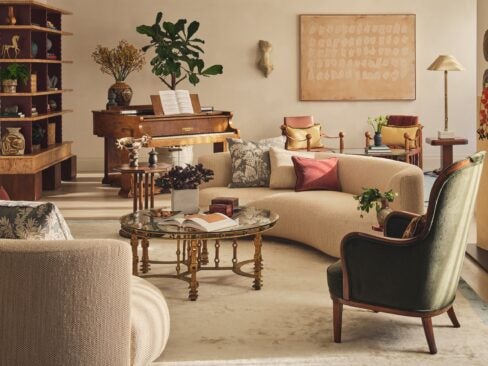
Similarly, in the south of France, interior designer Ken Fulk has been collaborating with his clients on Domaine de la Cavalière for about a decade. Every season, he and his team deliver a new piece of the 17th-century chateau; all of the interior design decisions remain faithful to when it was originally built. “We’ve committed ourselves to making it look as if it’s always been there,” he says. “You can’t tell what has been done and what hasn’t.” Still, some modern-day amenities have been added, including a swimming pool, a tennis court, and even a hammam.
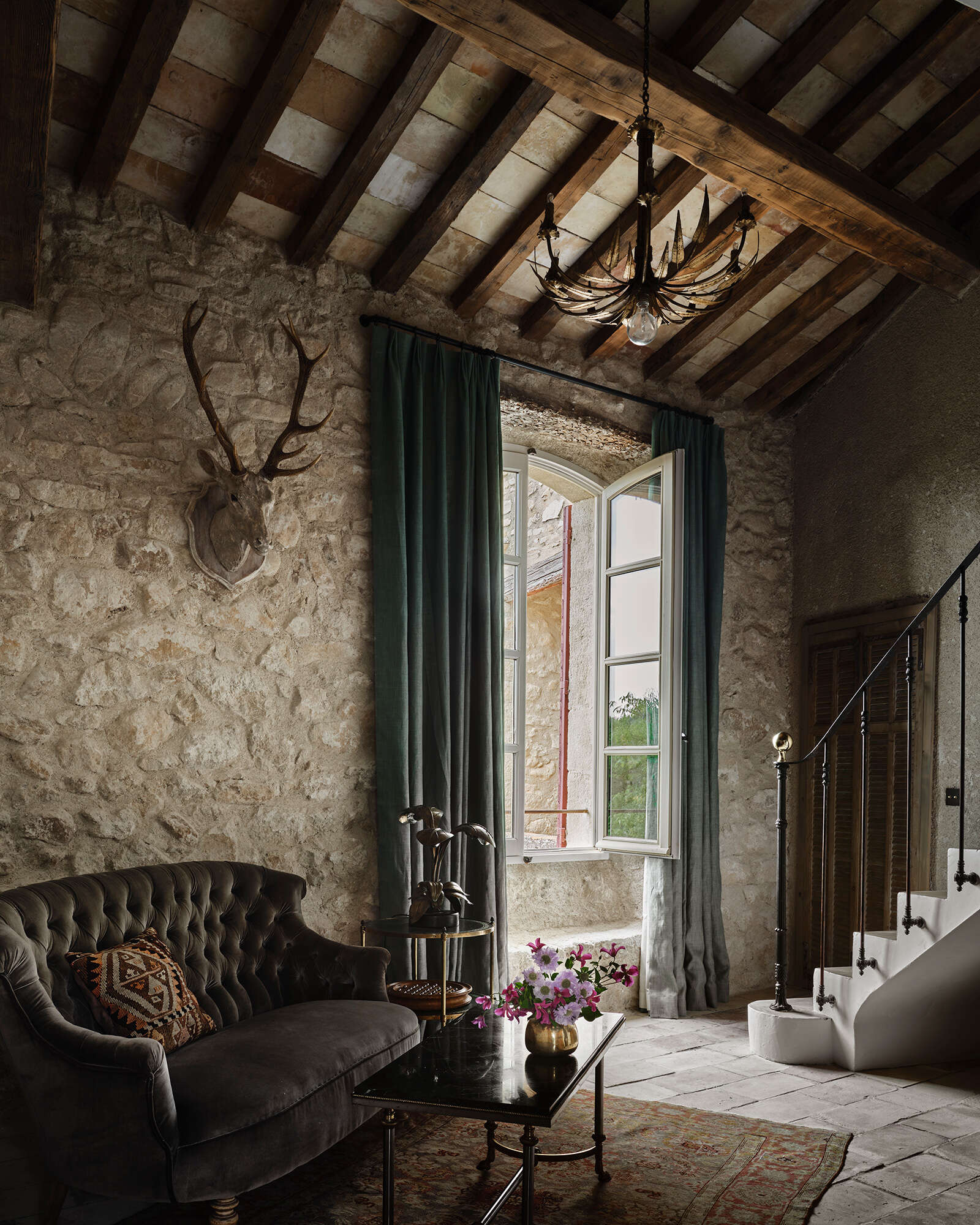
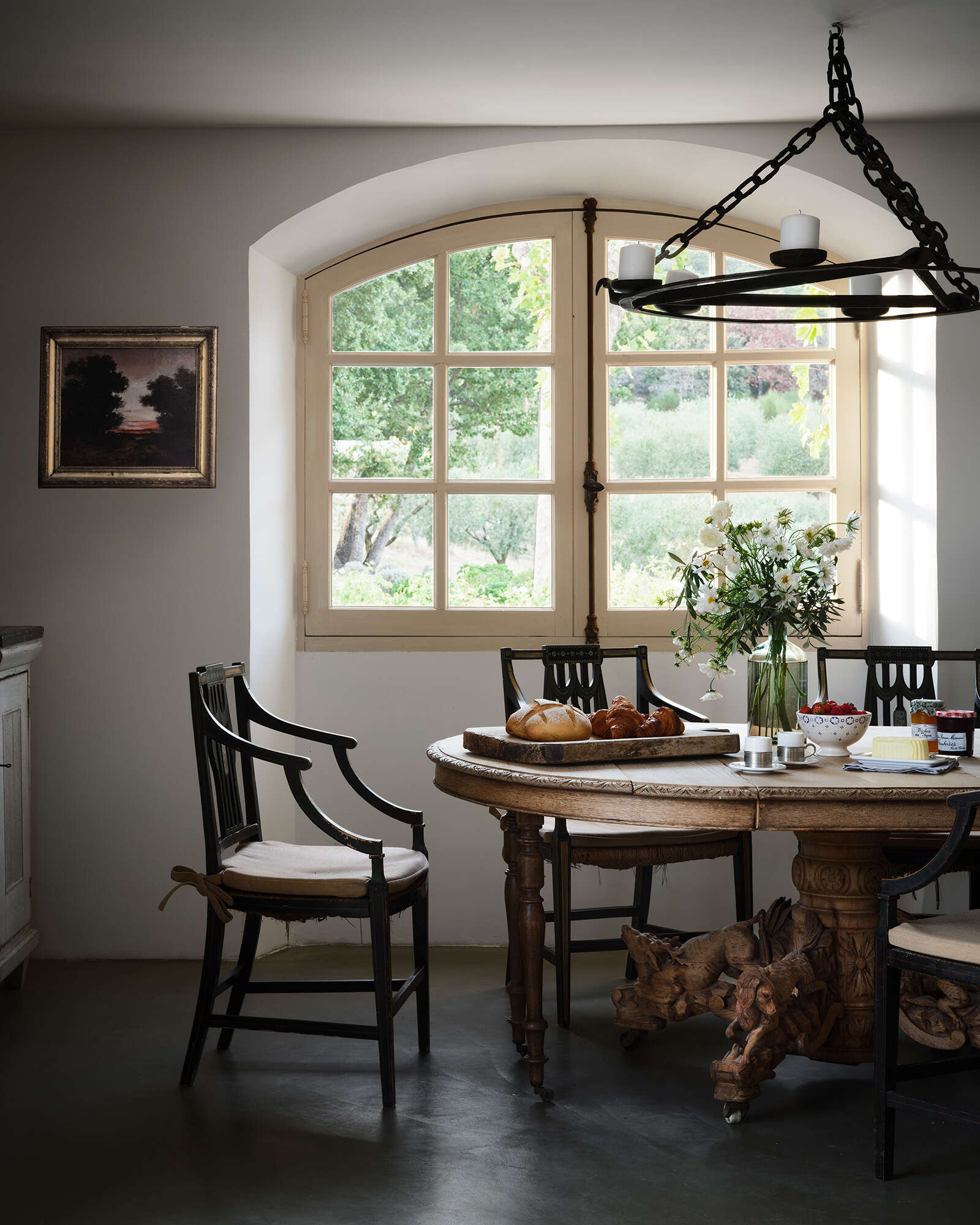
If you purchase a chateau that’s listed as a historic monument, then that degree of reverence and accuracy becomes non-negotiable. Ultimately, this will limit the changes you can make, as any renovation will have to meet very specific technical and aesthetic requirements. Corrigan’s last chateau project was a historic monument, and he needed to replace the windows, which sounded simple enough – until it wasn’t. “The mullions were an eighth of an inch larger than what had been there before,” he says. “They wouldn’t let me install them, and I had to eat close to $100,00 for the windows. No one could see it, but that’s just how strict they are.” Authorities will weigh in on the color of the paint, and even the trees on the property grounds – you’ll select from a list of varieties that were growing in France when the chateau was originally built.
Despite its inherent challenges, the reward is a one-of-a-kind, sprawling residence that’s all your own. “It’s a life-transforming experience. It’s not like buying a house,” says Corrigan. “You’re actually becoming a part of the history of this place… and the culture, and the community.” For Zeidman and Rinaldi, it’s a personal project, as their chateau isn’t just a vacation rental for guests – it’s also a family home where they raise their three young children. “This is their whole universe,” says Rinaldi. “Whatever they do when they grow up and wherever they end up, they’ll have this as a story they can tell about themselves, and be proud of.”