
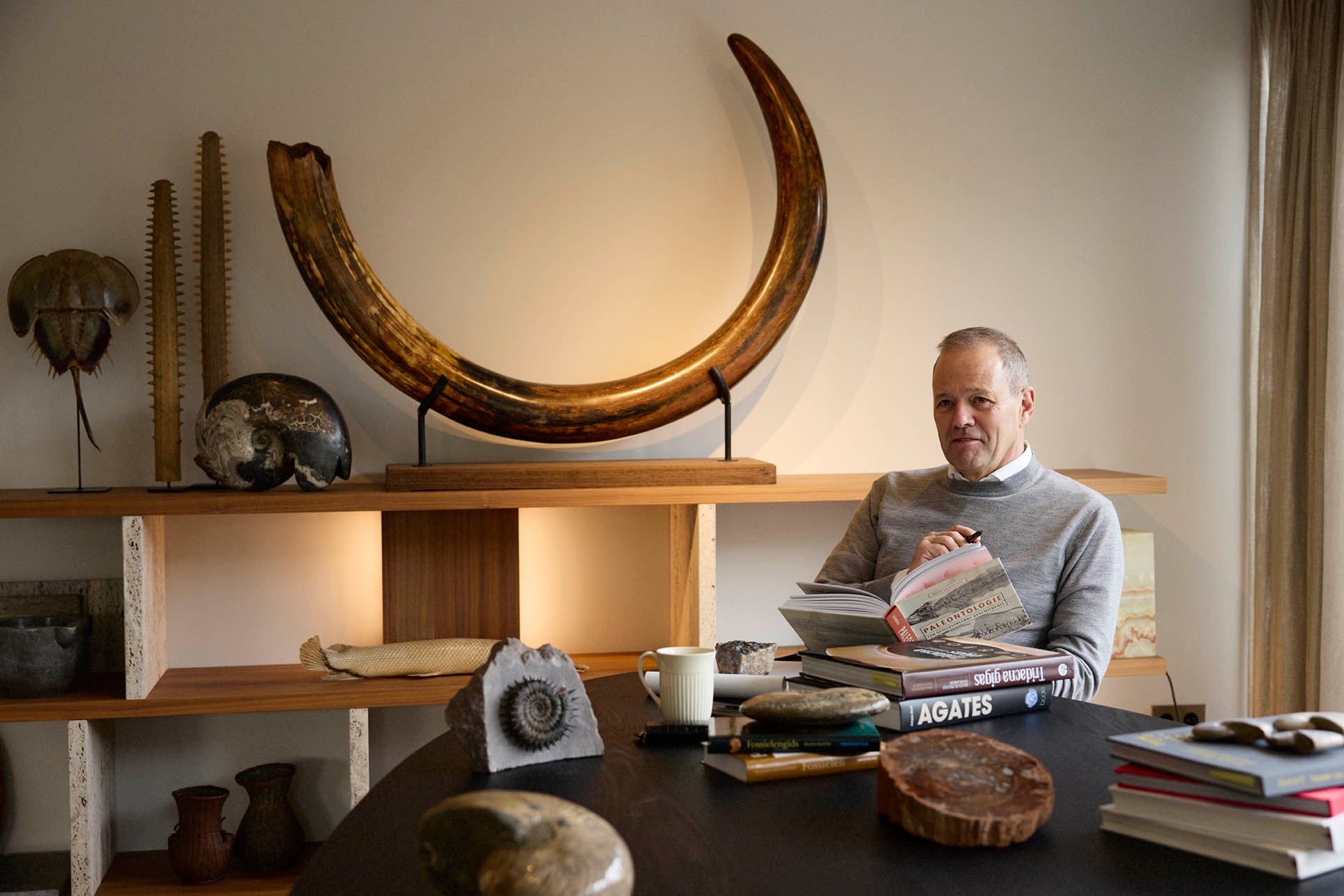
Ron Janssen can still recall the spot on the side of the Maas river where he found a few teeth in the mud as a child — now 62, he often returns there when the tide is low, hoping to find something more. Back then, he picked up the teeth, assuming they were from cows or horses in nearby fields. “I later found out they went back 10,000 years — they were from boars and other animals that were alive then,” he says. That find sparked a passion for fossils that the Dutch businessman now indulges with more splashy acquisitions, like his latest, a spectacular ichthyosaur or prehistoric dolphin.
It was Janssen’s grandfather who sparked a curiosity for curios, a man whose attic and barn were stuffed with unfamiliar, exotic-looking objects. So he started picking up whatever caught his eye during walks along his local river, stashing the shells, stones, and bones in ever greater numbers of shoe boxes. Soon, Janssen spotted some of those finds in vitrines when he visited museums with dinosaur collections. “I picked up literally anything,” he says, pausing, “But I had a good eye for things.”
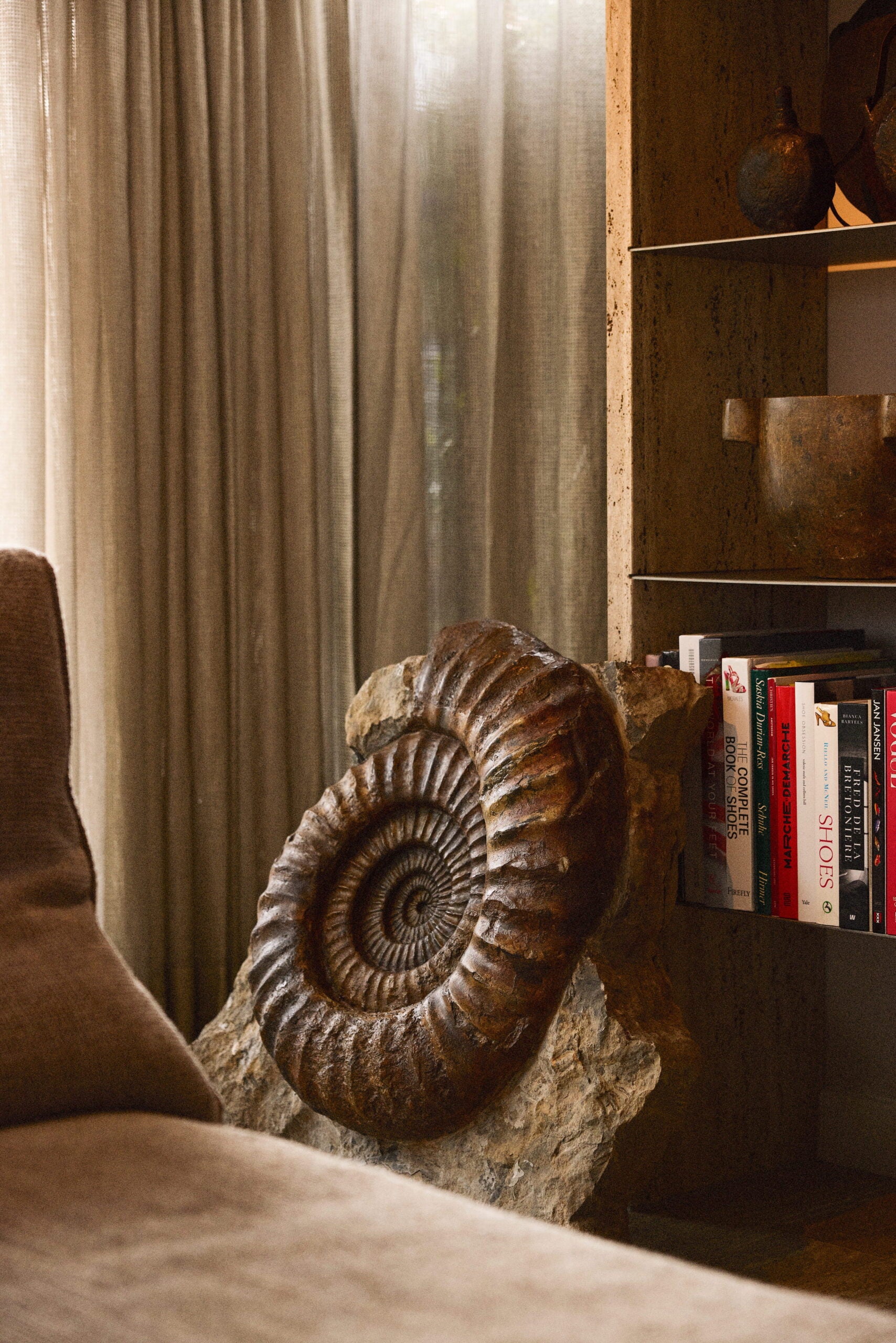
He only turned that childhood passion into an adult hobby five or six years ago. “It was a time to spoil myself,” he says of finally indulging in a major investment — in this case, a very different tusk from those he’d found in the mud. He spent five figures on a mammoth tooth with Dutch specialist dealer Roy Masin. It wasn’t the story of the animal that transfixed him, but the object itself. “I immediately fell in love with the shape, the texture, the patina of it. For me, it’s as good as a painting.”
From there, he quickly became an avid, if picky, acquirer of such ancient treasures. Janssen doesn’t rely on a certain period — Jurassic or similar — to steer his buying, but rather on gut and instinct. “I don’t need much, but I need good things,” he says, noting that he first started casting around for an ichthyosaur after a visit to London’s Natural History Museum, where a corridor of similar fossils left him dazzled.
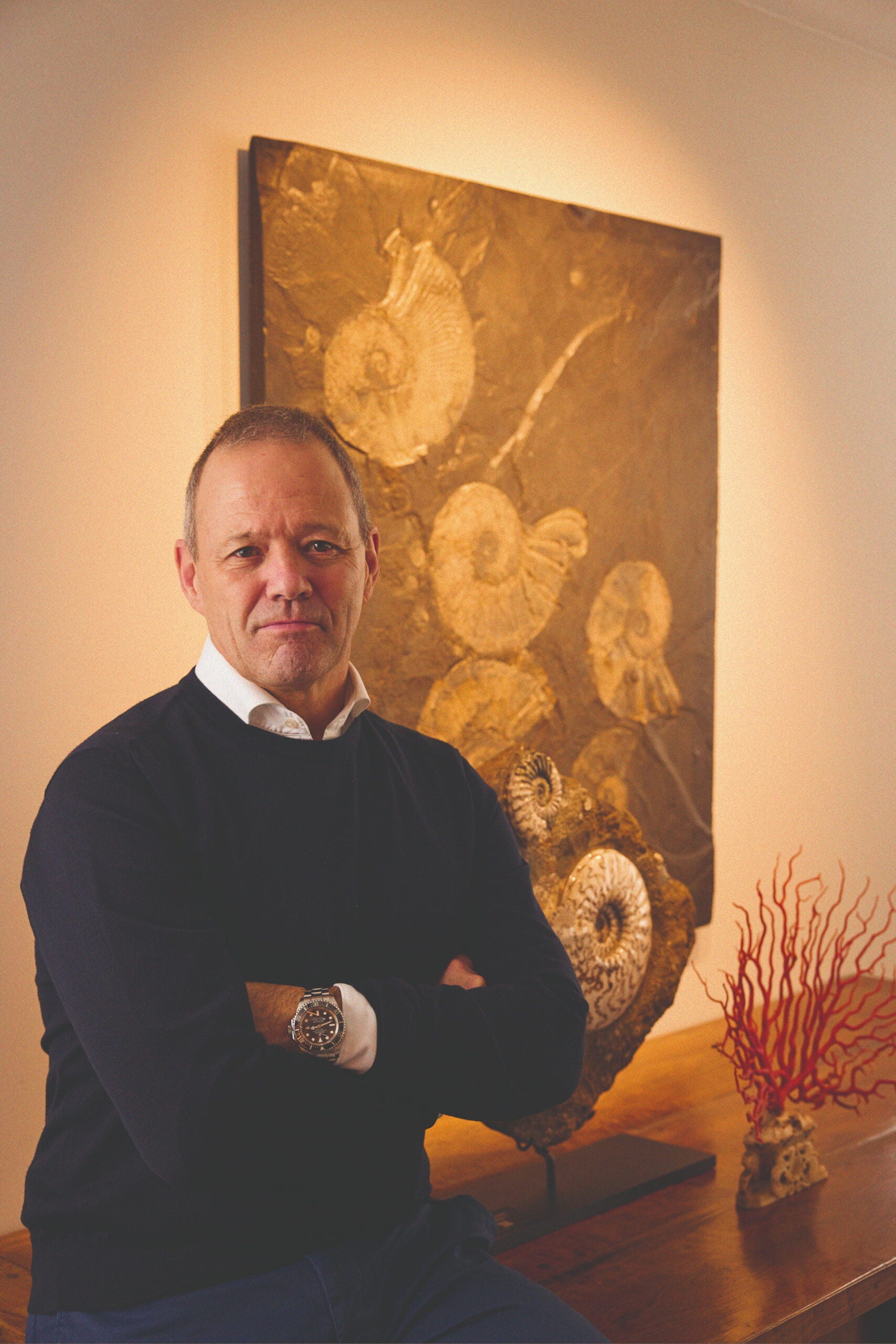
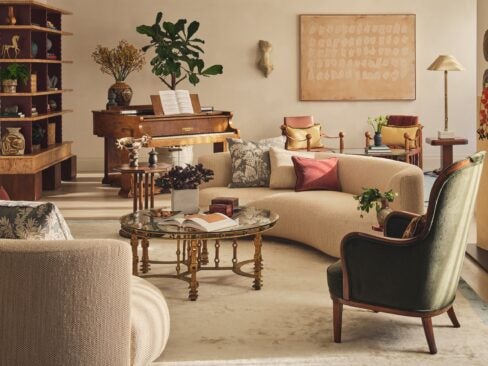
It took him two or three years to find the right piece, and he considered where and how to install it at one of his two homes before resolving to buy it. Another proud part of his collection: a large, white ammonite — rare both in its color and size. “To be honest, my home is a museum. I live between my collections,” he says, while promising that his partner doesn’t object to such a designation. “It’s a world she didn’t know before, but it also interests her.”
Janssen’s collecting urge isn’t limited to fossils. He wants his homes to resemble a Renaissance-era wunderkammer or ‘cabinet of curiosities’ showcasing the natural world — think taxidermy or Vienna Bronzes. He also never considers deacquisition, so the resale value of a piece rarely troubles him. “In my basement, I have quite a lot of boxes, and sometimes I open one again and I’m in love with what I find when I haven’t seen it for a year or two.”
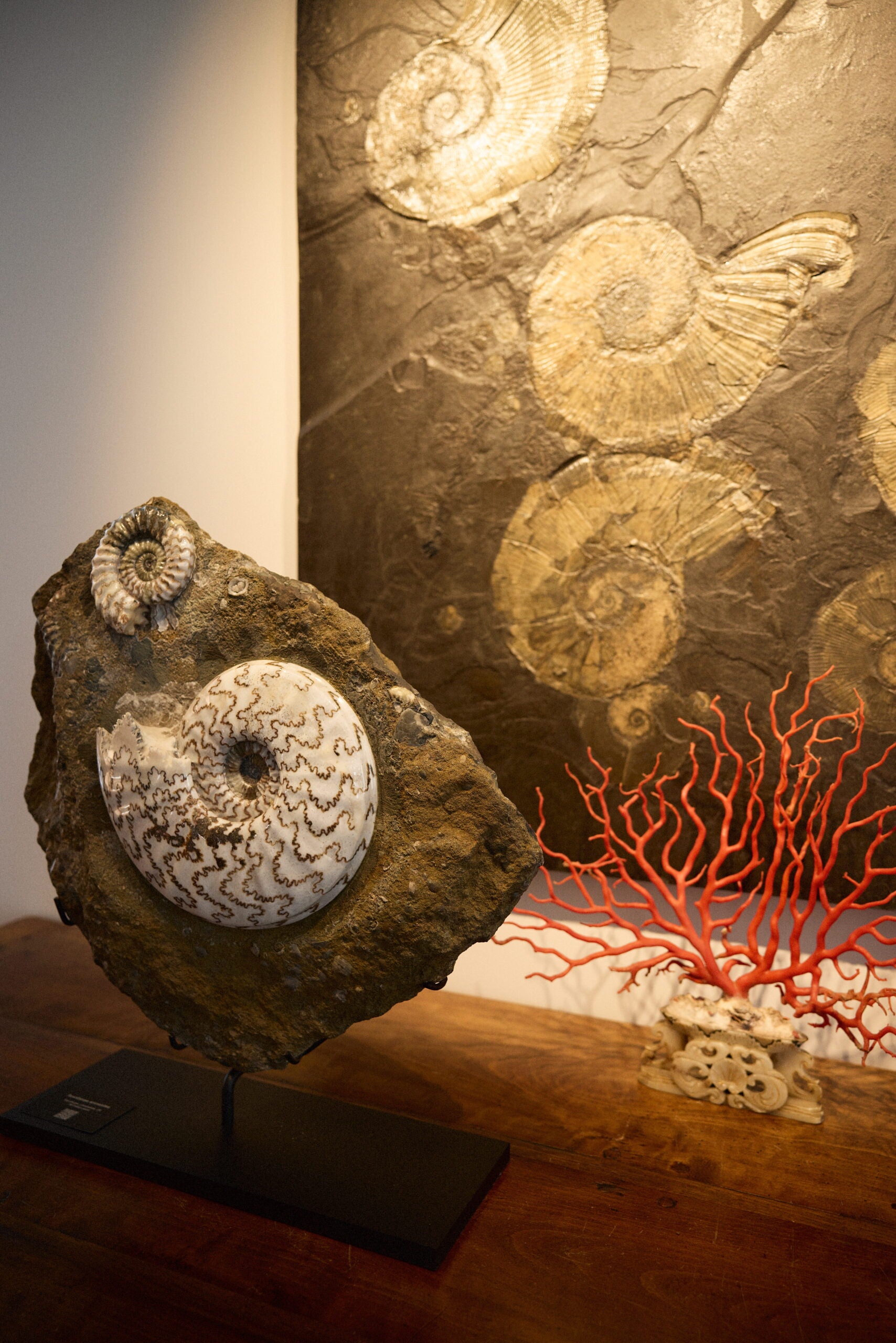
The dinosaur collecting world is small, he notes, with barely a dozen core proponents in The Netherlands at most, but he loves meeting other enthusiasts. At one fair in Amsterdam, for example, he spent the day combing the aisles for potential purchases. He ended up seated next to a museum director at a fair dinner that night, and was delighted to discover a fellow dino-lover with his own private collection, whose taste mapped almost exactly onto Janssen’s. “We compared the pictures we’d taken at the fair, and they were the same,” he says.

While he isn’t eyeing a specific next acquisition among the prehistoric treasures on sale, it’s always the same: he’ll assume he’s not in the market for anything new until that gut reaction strikes while he’s strolling the aisles of a fair in Paris, London, or Amsterdam. “If I wake up the next day and it’s still on my mind? When it’s lingering, that’s when it starts to get dangerous.”