
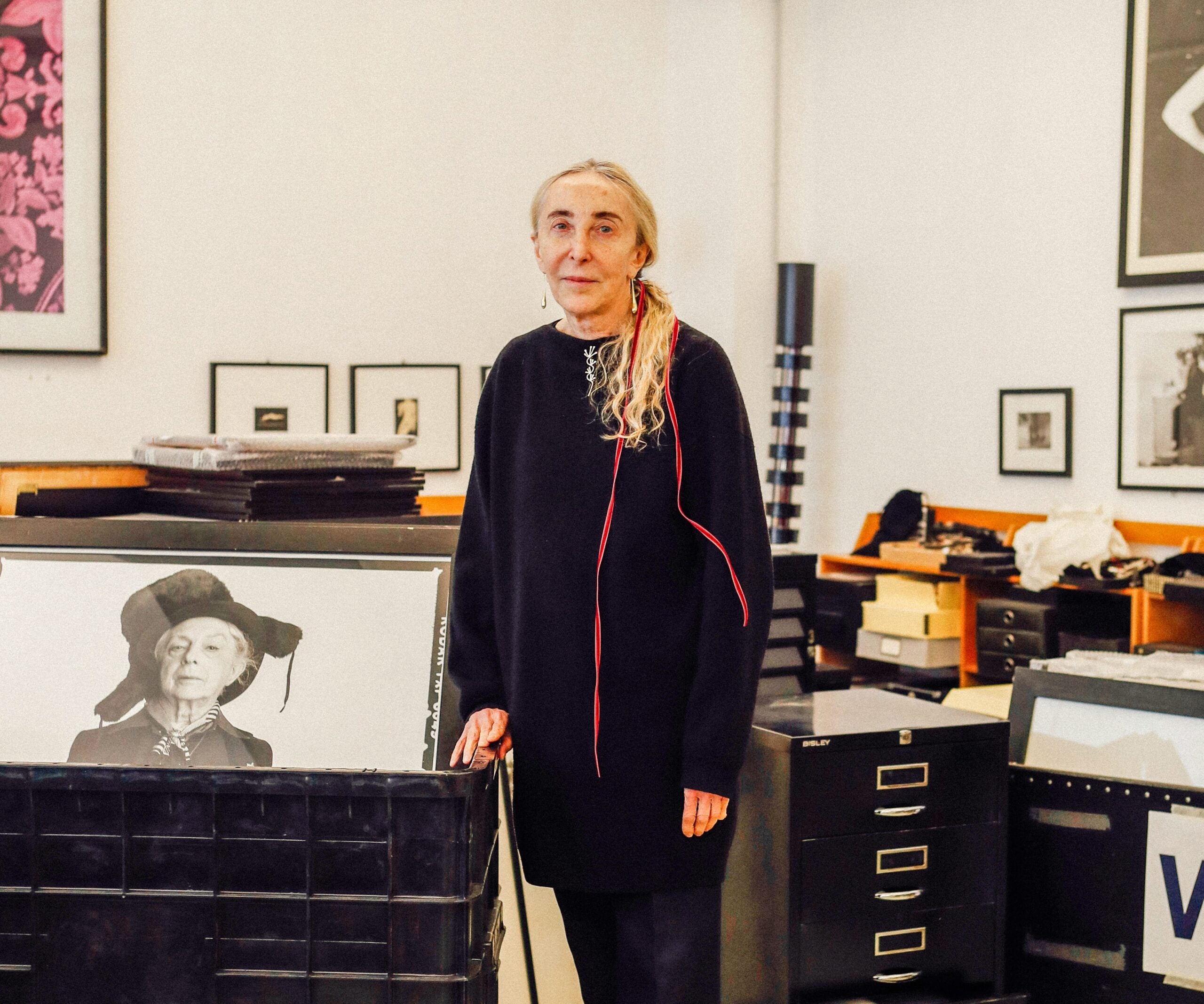
People can spend a lifetime building a great collection. Carla Sozzani – style icon, editor, curator, and retailer – has managed to create two, in fine fashion and photography.
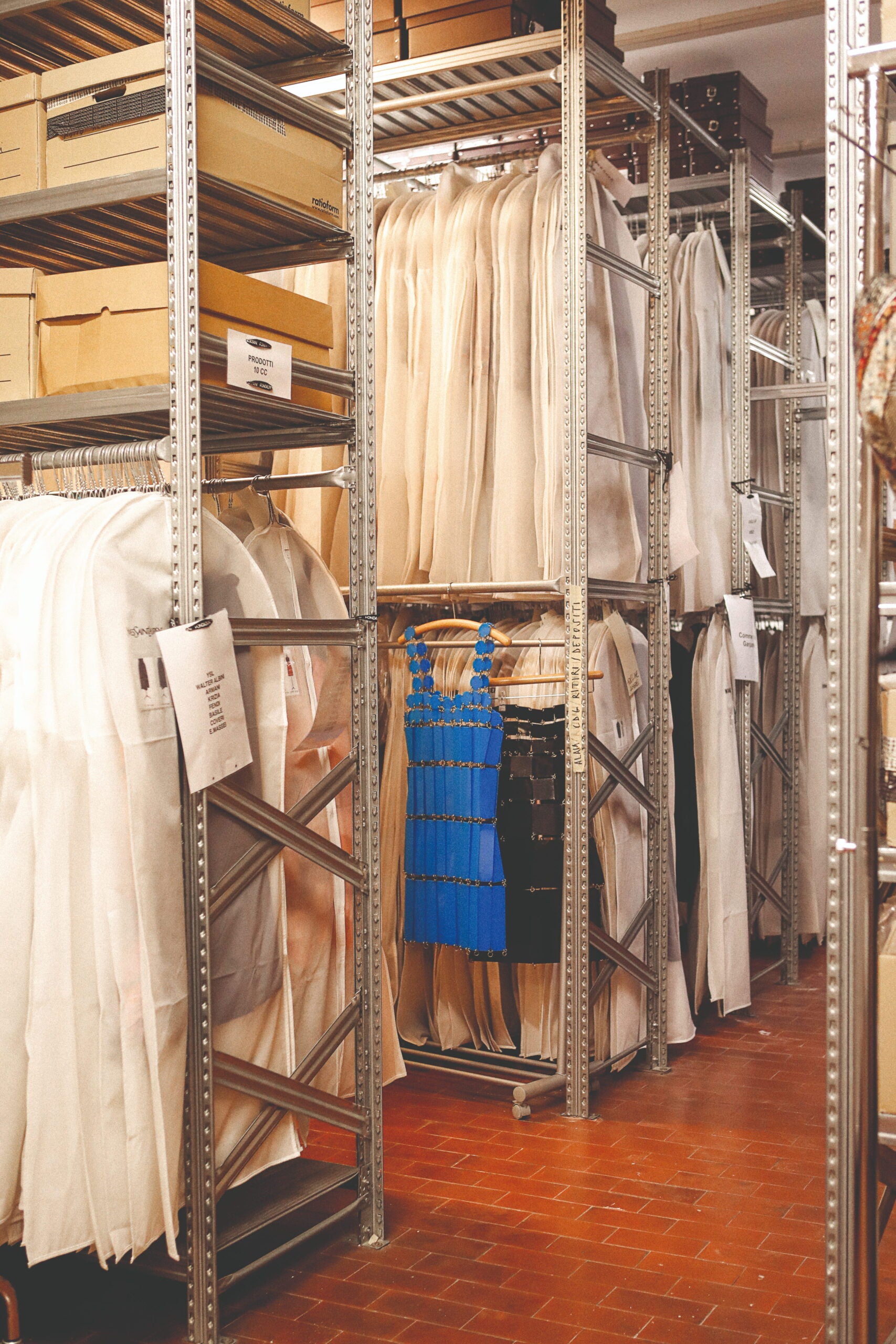
After a career editing magazines and styling with a who’s who of photography greats, she founded one of Italy’s most influential fashion and design boutiques, 10 Corso Como, before creating her own gallery and then art foundation. Along the way, Sozzani amassed more than 600 works of photography and some 6,000 garments.
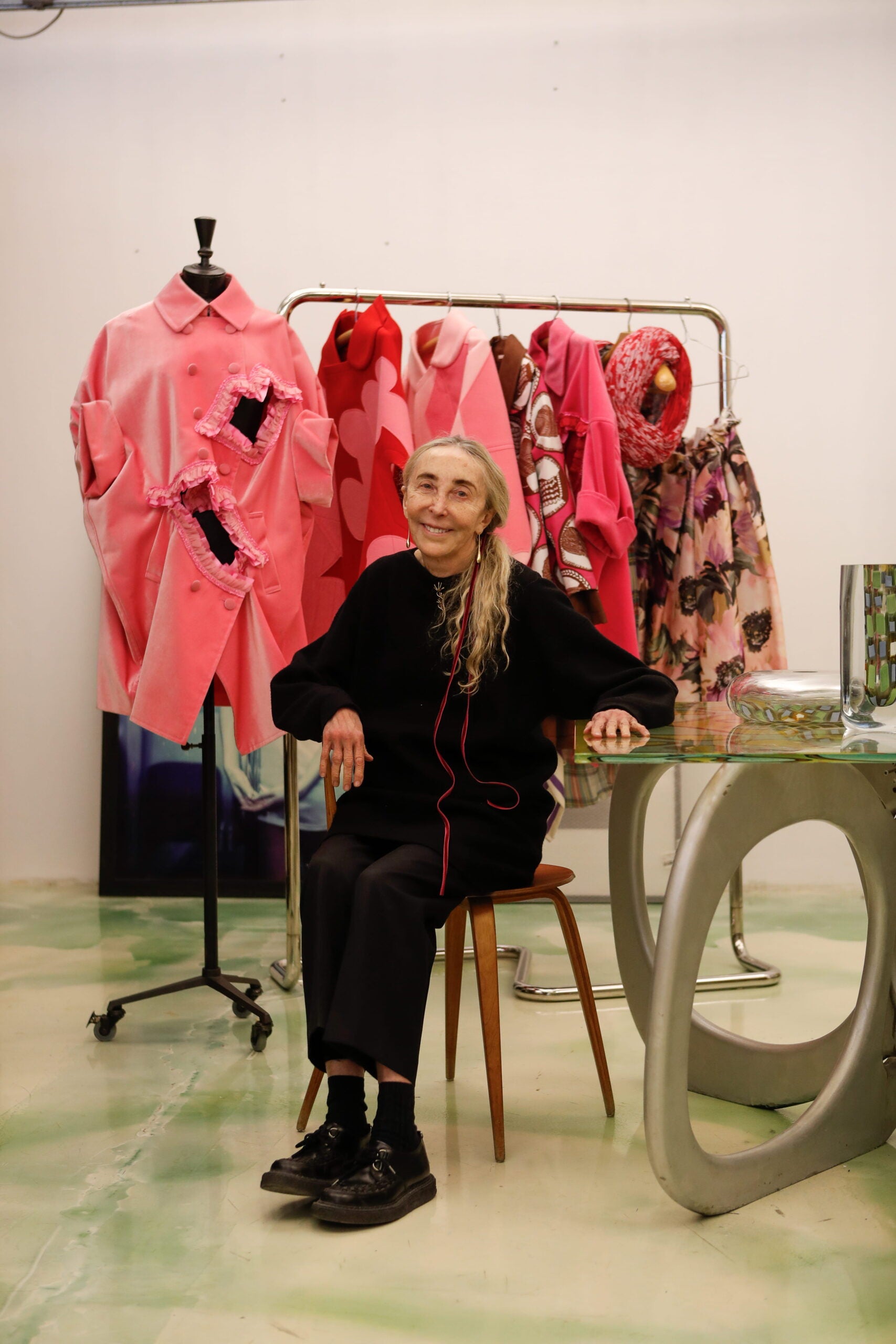
“I never set out to be a collector. I was passionate and I started keeping, keeping, and keeping. Then, after 50 years, I realized it had become a collection!” she laughs over coffee in the Alaïa Foundation in Paris, where the exhibition Azzedine Alaïa and Christian Dior, Two Masters of Haute Couture is being held (she edited the catalogue and donated some of her own pieces to the show).
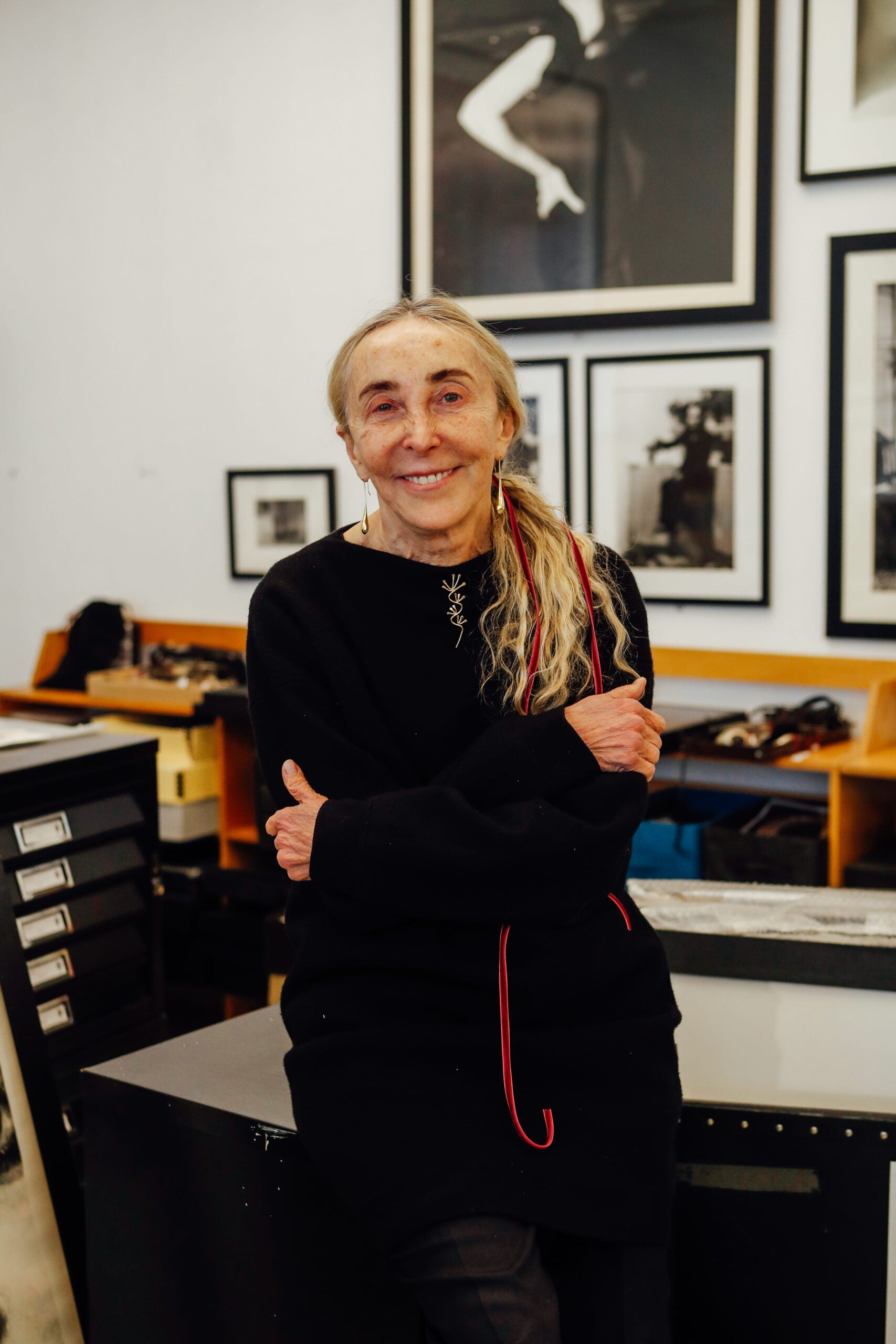
Sozzani is not 100 percent sure exactly how many looks she owns — a colleague is currently undertaking that laborious task, notating each garment. “Creating an archive is so expensive. No wonder only governments or huge brands can afford it,” she says of her Fondazione, which is located somewhat ironically near Milan’s Monumentale cemetery.
Her oldest iconic pieces are by Yves Saint Laurent, from his “golden period from 1967 to 1973,” including a dress from his scandalous 1971 collection inspired by WWII Parisian prostitutes, which provoked outrage at the time.
“I remember going to my sister Franca’s wedding with one of Yves’ ‘Scandal’ looks. It was considered freedom for us. We felt we were wearing revolutionary clothes,” she recalls.
Sozzani is what’s called fashion aristocracy. Sister Franca Sozzani made Vogue Italia, where she was editor in chief from 1988 until her death in 2016, the most influential fashion magazine of the past half century. Daughter Sara Sozzani Maino is one of the most famous fashion talent spotters in Europe.
See also: Carolina Castiglioni: Collecting, Style, and Her Favorite Hand Cream
Though the heart of Sozzani’s collection is based on a half-dozen avant-garde designers who staged their shows in Paris: Azzedine Alaïa, Comme des Garçons, Martin Margiela, Yohji Yamamoto, Kenzo, and Jean Paul Gaultier. Two great Italians feature heavily, too – Romeo Gigli and Walter Albini.
“Walter was the Saint Laurent of Italy,” she says. “He invented the first deconstructed jacket, truly genderless style, and even the paramilitary jump suit when he riffed on the Red Brigades in a collection entitled Guerriglia Urbana. But in purple, not green or khaki.”
In 1970s and ’80s Milan, Sozzani styled for Vogue Italia and edited Elle, working with photographers such as Paolo Roversi, Steven Meisel, Bruce Weber, Peter Lindbergh, and Sarah Moon.
Her next step was to open her own Galleria in 1990, in a former Renault garage, with an exhibition by the portrait photographer Louise Dahl-Wolfe. She was determined to begin with a statement by a woman. “Louise quit taking photos when an art director started getting too much power. One insisted he had to look through her viewfinder at a shoot. I loved her independence,” she snorts.
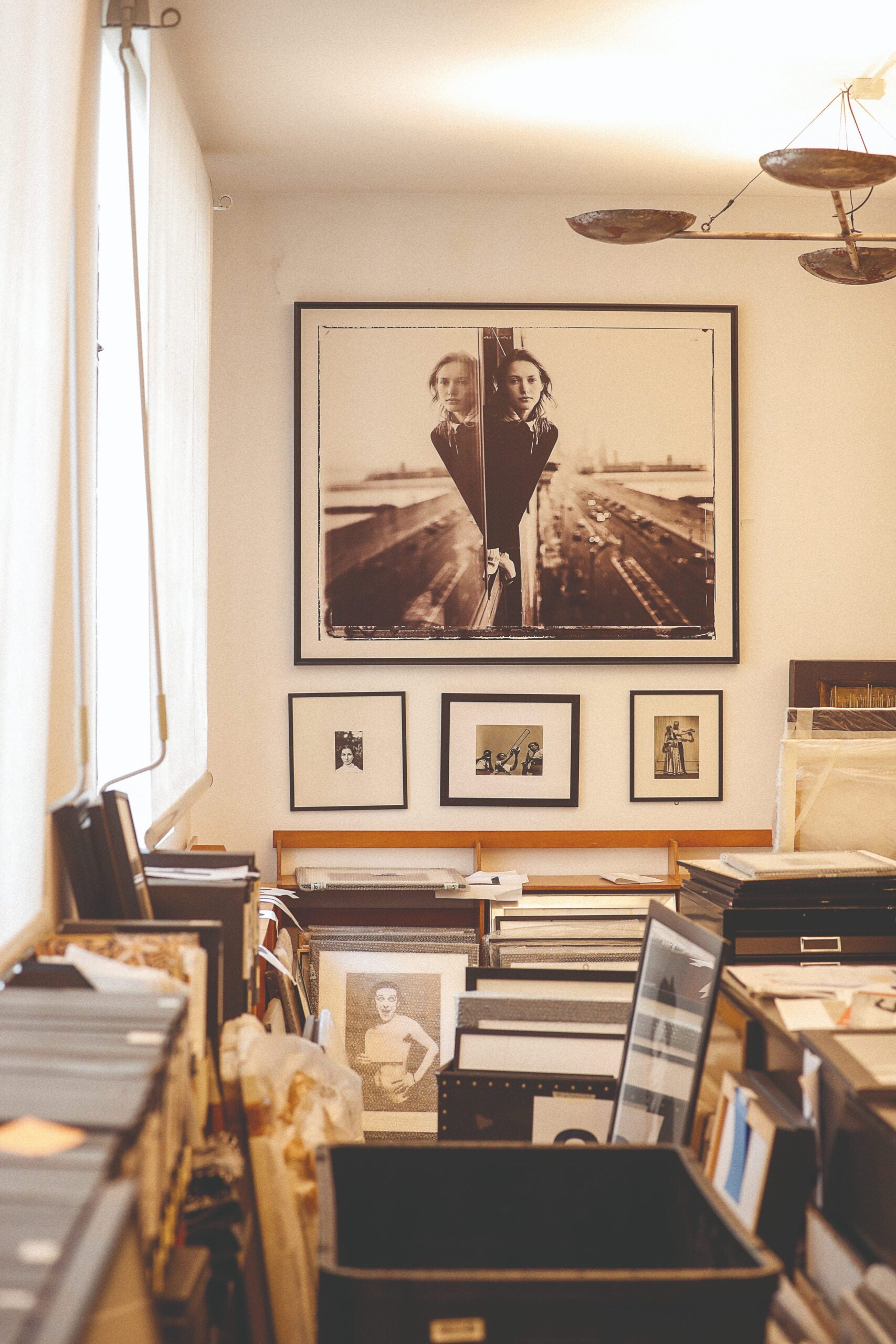
Eventually Sozzani’s collection of photo ‘memories’ led to an exhibition first shown in the Alaïa Foundation, before traveling to shows in Switzerland, the Helmut Newton Foundation in Berlin, Villa Pignatelli in Naples, and the Center of Modern and Contemporary Art, La Spezia. In fact her immense fashion wardrobe will soon get its own exhibition, as Savannah College of Art and Design has asked her to stage a show in the famed fashion college in Atlanta, Georgia.
See also: Why the Next Great Collectibles May Be Fashion, Fossils, and Fractional Shares
The gallery morphed into 10 Corso Como, the first ‘concept store,’ which included a fashion boutique café, restaurant, and super-insider hotel. Subsequent outposts opened in Tokyo, Seoul, Shanghai, Beijing, and New York, before Sozzani exited in 2020 to focus on her foundation and, finally, catalogue her vast fashion archive, which includes more than 600 looks by both Azzedine Alaïa and Rei Kawakubo of Comme des Garçons.
“Azzedine’s shapes and forms were like sculpture,” she says with passion. “For him knitwear and stretch fabric was like clay, which with craftsmanship, creativity, and respect for women made him incredibly important. His women were beautiful, sensual, and never vulgar. I remember one show in 1987 when every single editor in the front row wore the same little black Alaïa dress. I have one of those too, of course,” she says. Alaïa was famously complicated, never staging runway collections during fashion week and becoming infamous for his feuds with the likes of Hervé Léger and Karl Lagerfeld. “Azzedine would still be mad with Karl if they were both alive today,” Sozzani giggles.
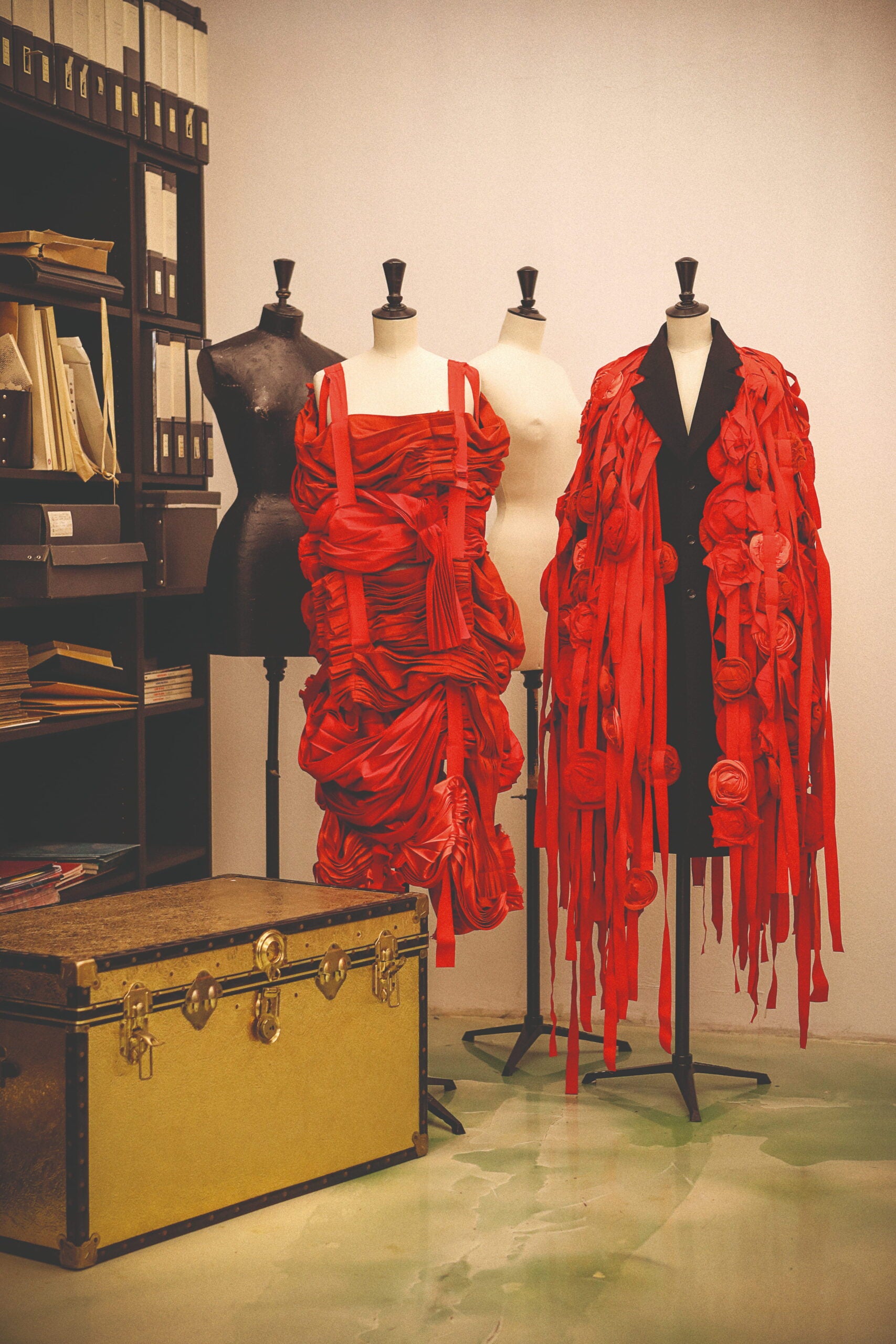
She discovered Kawakubo in 1981, when fashion was dominated by the power shoulder silhouette of Montana and Mugler. “It was wow! WOW!” she exclaims. “Kawakubo understood that a woman didn’t need to be aesthetically strong to be strong, which I think is fantastic. Yet at the same time, her clothes are feminine, romantic, and soft. I bought so much for Corso Como and still buy a few looks every season.”
A slim, blonde, bird-like figure, Sozzani seems to live in sensually shaped coats, primarily in black and frequently by Yamamoto – for whom she made the 20th anniversary book Talking to Myself.
Related Story
Another alliance was her 1980s partnership with Romeo Gigli, who once made most of one collection on her sister Franca, winning a 20-minute standing ovation in Paris. She was also close to the notoriously secretive Martin Margiela and became one of his biggest clients. “[He] gifted me the most beautiful dress made of men’s shirt collars” for her gallery’s 2008 retrospective on the Belgian designer.
Today, she has 700 pieces by Gigli, and 400 by Yamamoto and Margiela. “Owning a store is like editing a magazine. You need to address yourself to someone who shares your own values. You cannot try to please everybody,” she says. “I didn’t.”