
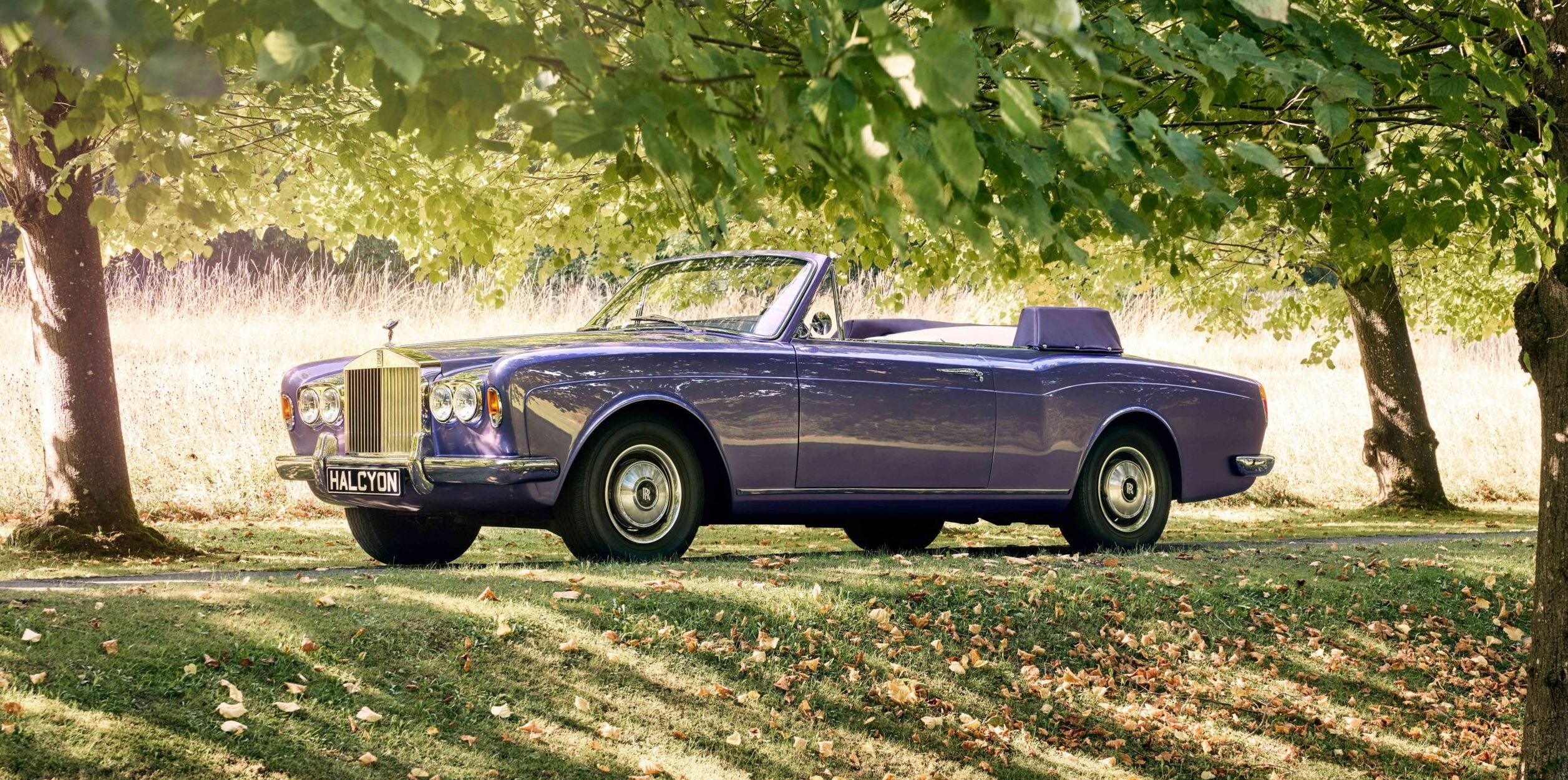
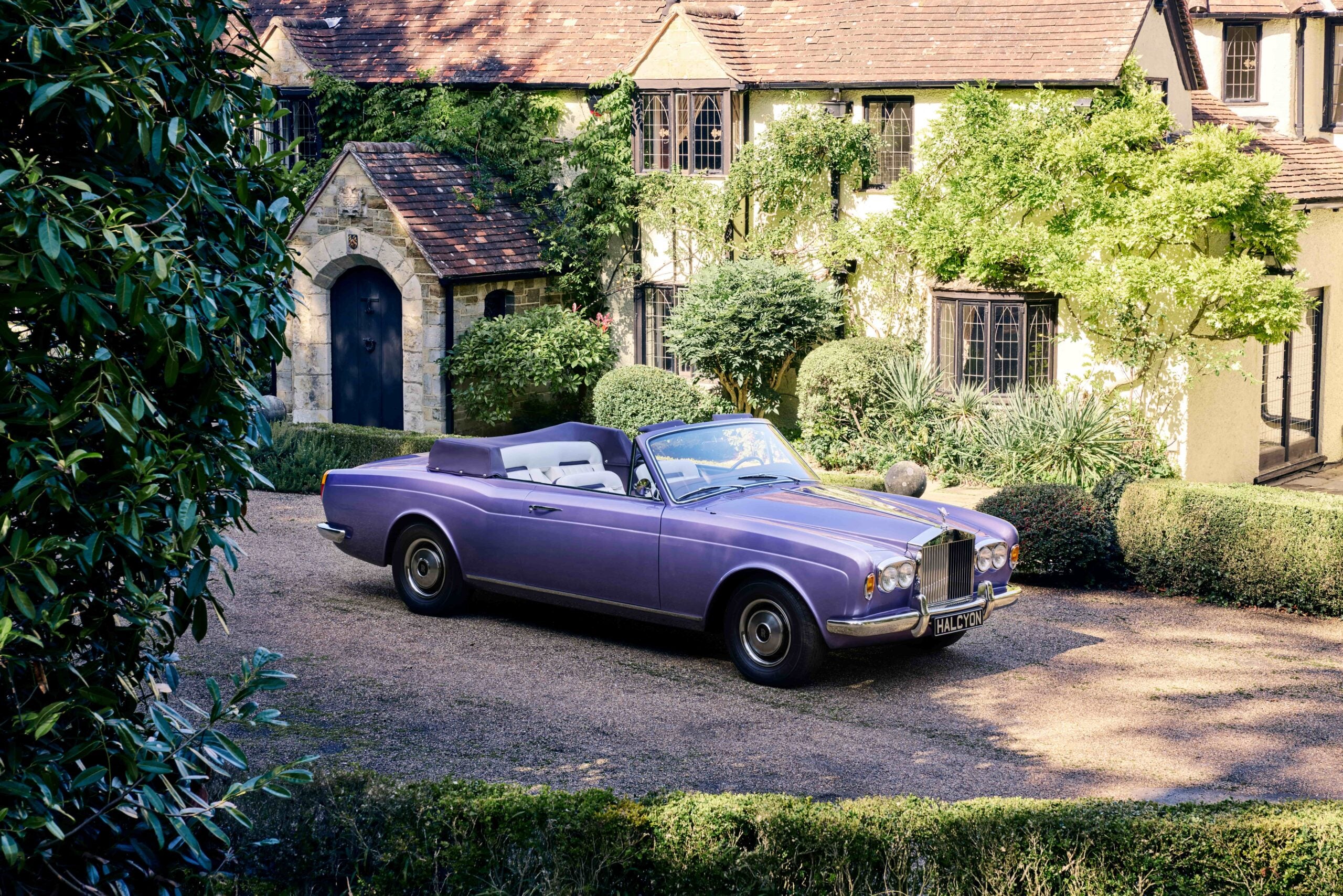
The Rolls-Royce Corniche was well-named. Few cars are better suited to wafting from Nice to Monaco along one of the three roads which share the car’s name, and hug that dramatic coastline at different heights, looking down on the stunning azure bays around Villefranche and Eze.
The 1965 Rolls-Royce Shadow saloon on which the two-door Corniche was based was one of the marque’s best and most successful cars — and it’s rightly enjoying something of a moment with collectors and the Instagram car crowd. The fixed-head Corniche coupe version which arrived in 1971 was the purest expression of the Shadow’s subtle, handsome, perfectly proportioned styling. But it was the more flamboyant Corniche convertible which got all the attention and most of the sales. If you made it — and I mean really made it — in the ’70s or ’80s you bought one, just like Paul McCartney and Frank Sinatra and Elton John did. It was a superyacht for the road and the ultimate automotive discretionary purchase: so popular with the elite that it stayed in production until 1995, 15 years after the Shadow on which it was based was replaced.
The Corniche’s cachet has plainly not diminished much, but the 60-year-old engineering which underpins it is starting to feel its age, with weak brakes, vague steering and a general sense of reliable unreliability. The ancient V8 engines which powered them were always intended to be near-silent rather than sporty, so what I’m sitting in today — this electric ‘restomod’ reboot by Halcyon — seems appropriate, offering the modern equivalent of the effortless performance Rolls aimed for and addressing all the problems of a car of this age. And of course you get exactly the Corniche you always wanted, with each car a unique collaboration between the owner and Halcyon’s Design Director Patrick McCallion.
See also: How I Learned to Become a Racing Driver in a Single Day
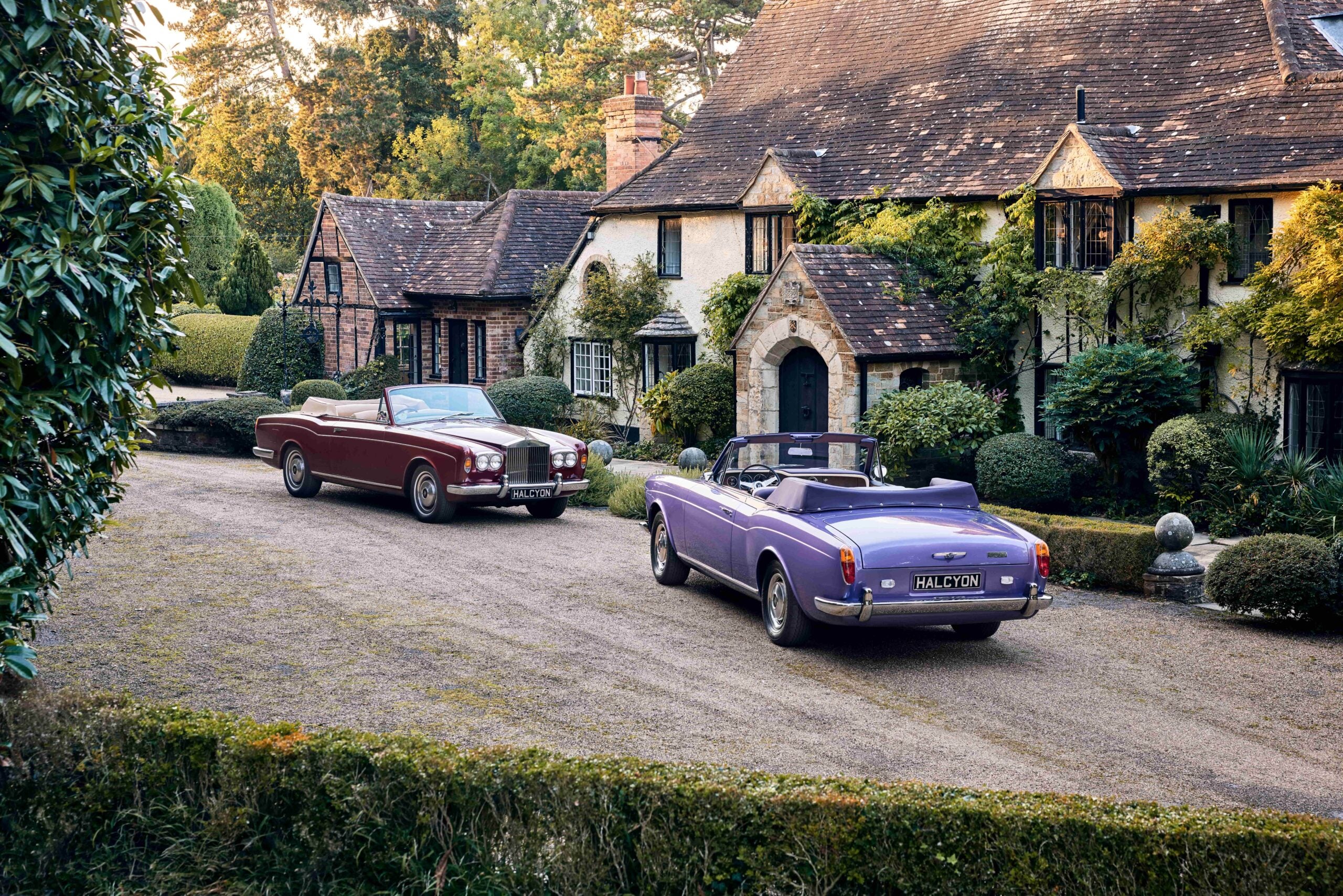
The project was launched late last year and Elite Traveller was among the first to test the firm’s development car as it nears completion. But a little background first. Halcyon was founded by three British automotive engineers, the oldest of whom is 30 and was born in the year the original Corniche was finally discontinued. But they’ve already amassed an impressive combined CV, working on projects as diverse as the Dyson electric car, the acclaimed Lunaz series of restomods, and the Miami Formula 1 circuit design. They’re also the youngest members of their growing team, and have recruited experienced staff from F1 and aerospace. Mike Flewitt, former CEO of McLaren Automotive, is an advisor. Halcyon assembles its own battery packs in-house and the electric-drive technology which underpins the car is all its own IP, and is likely to be the most significant part of the business in time. It has already been supplied to Twisted for its electric Land Rover Defender conversions.
Just 60 of the electric conversions will be made, of which 30 will be convertibles, 20 fixed-head coupes, and 10 four-door Shadows. Halcyon has also announced plans for the ‘Great Eight’: a run of cars powered by the original but much uprated V8 engine, in the same numbers and using the same body and chassis refinements developed for the EV.
The donor cars are given a 2,000-hour bare-metal restoration before spending another 3,000 hours in build. The first customer car, a coupe, will be delivered to a Canadian collector with a sense of humor. Having formerly been owned by Julie Andrews, the 4.6-ft-wide ‘Halcyon gallery’ sculptural strip which runs across the dashboard will feature a subtle Sound of Music mountain range, with Mary Poppins umbrellas in the doors. CEO Matthew Pearson reports that most customers are serial collectors with up to 300 cars, but want a classic which they know will start every time. Many have memories of a Corniche owned by their parents, and some are important Rolls-Royce clients who are also among the 100 to be offered places on the Project Nightingale program.
See also: Why Porsche 911 Restomods Are Every Collector’s Dream
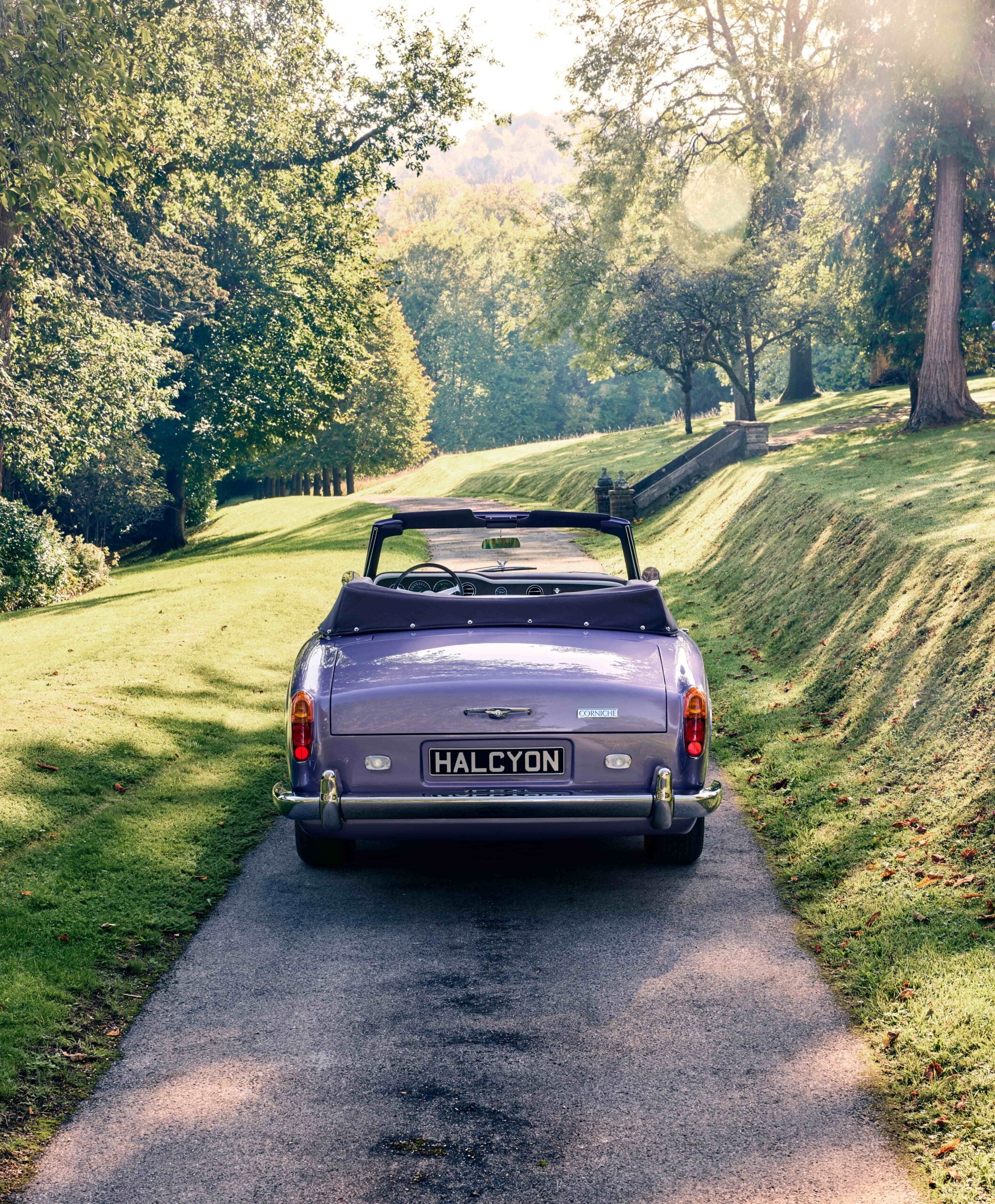
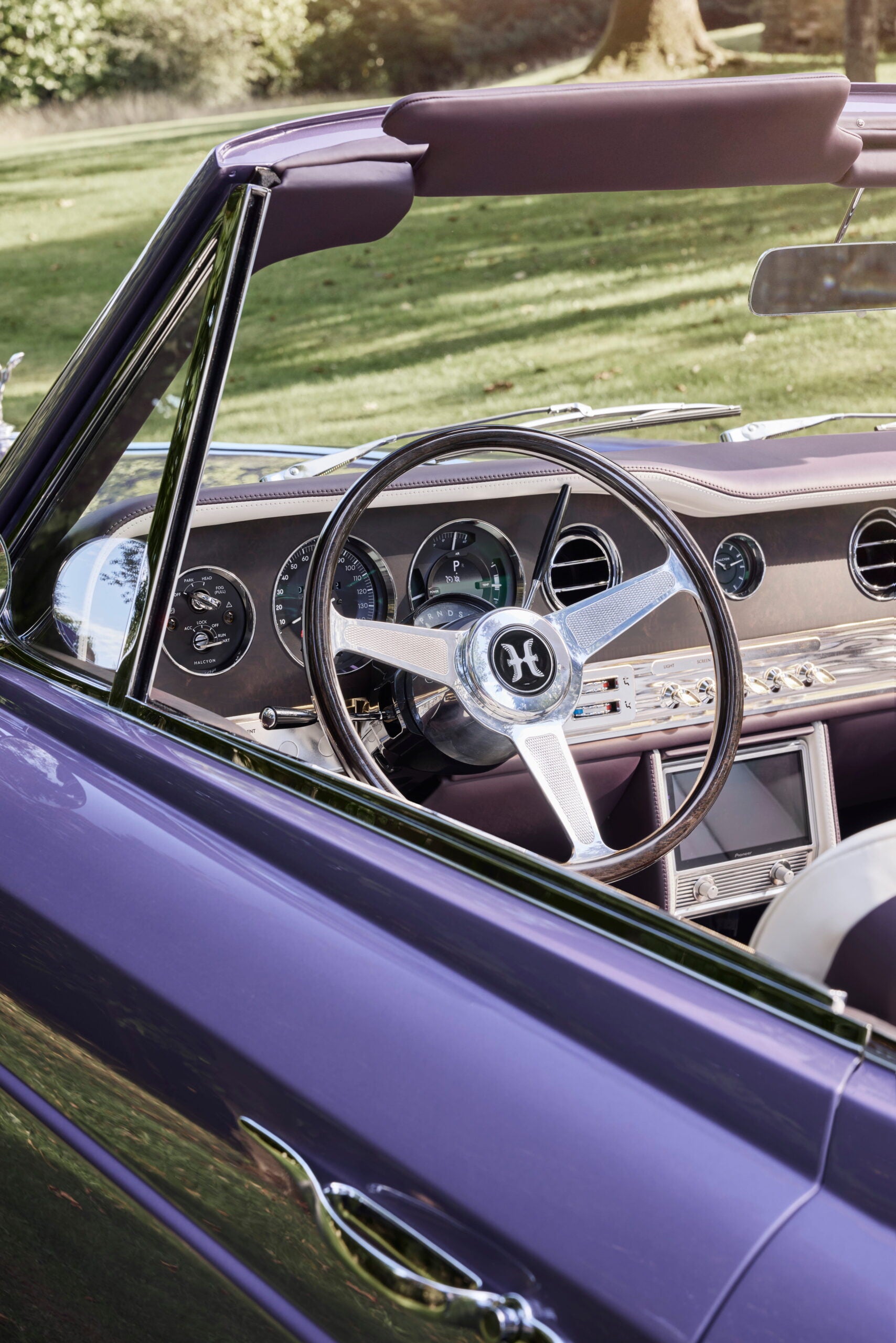
So what have they signed up for? First, the car presents perfectly, as you’d hope for a price tag of at least £420,000 (approx. $568,000) before bespoke options, taxes, and the cost of the donor car. In the cabin, the modern revisions have been made with subtlety and to the highest standards. A leather-clad, quietly motorised cover conceals the touchscreen for Apple CarPlay. The new switchgear is solid and sculptural. The hides are from one of Rolls-Royce’s suppliers, and the gorgeous, thin, flat-spoked steering wheel by MotoLita took seven prototypes to get right. This ‘Highland Heather’ commission is the company’s own and has bespoke touches such as maps of the Corniche roads engraved into the rear seat armrests: you can have whatever you wish.
The car couldn’t be easier or more appropriate to drive. The old gear lever mounted on the steering column remains, but the gear indicator next to it now adds S and T to the usual P-R-N-D options. D for drive is the default setting, but you can also choose S for spirited or T for the more relaxed touring. Each setting alters both the throttle response from the 400-horsepower electric motor (500 is an option) and the firmness of the advanced adaptive suspension. The differences are palpable but this always feels like a Corniche should. Drive will work in almost any situation but ‘touring’ can be used for peak refinement at lower speeds or on poor surfaces, and ‘spirited’ to tame body roll when out on those Corniche roads.
See also: I Took Bentley’s $396,000 Continental GT For A Spin – Here’s What Stood Out
More importantly the steering precision is greatly improved on the original: more immediate and accurate without being overly sharp or sporty. Same goes for the brakes, which now stop reassuringly hard and fast if required. Same with the power delivery too. Despite an 84kWh battery pack which gives a range of up to 300 miles, the Corniche has not gained weight by being electrified, and remains relatively light by modern luxury EV standards. That big motor with its instant power delivery could rocket the Corniche away from standstill, but instead the torque is introduced gently at first before swelling quickly if necessary: no neck-snapping Tesla traffic lights antics here.
Pearson reports that one client is atypical in only having two cars, both modern. But he also has two houses, one at each end of the Corniche, and wants something soulful, stylish, open-top, culturally appropriate but also perfectly reliable to travel between them in. He won’t be disappointed.