

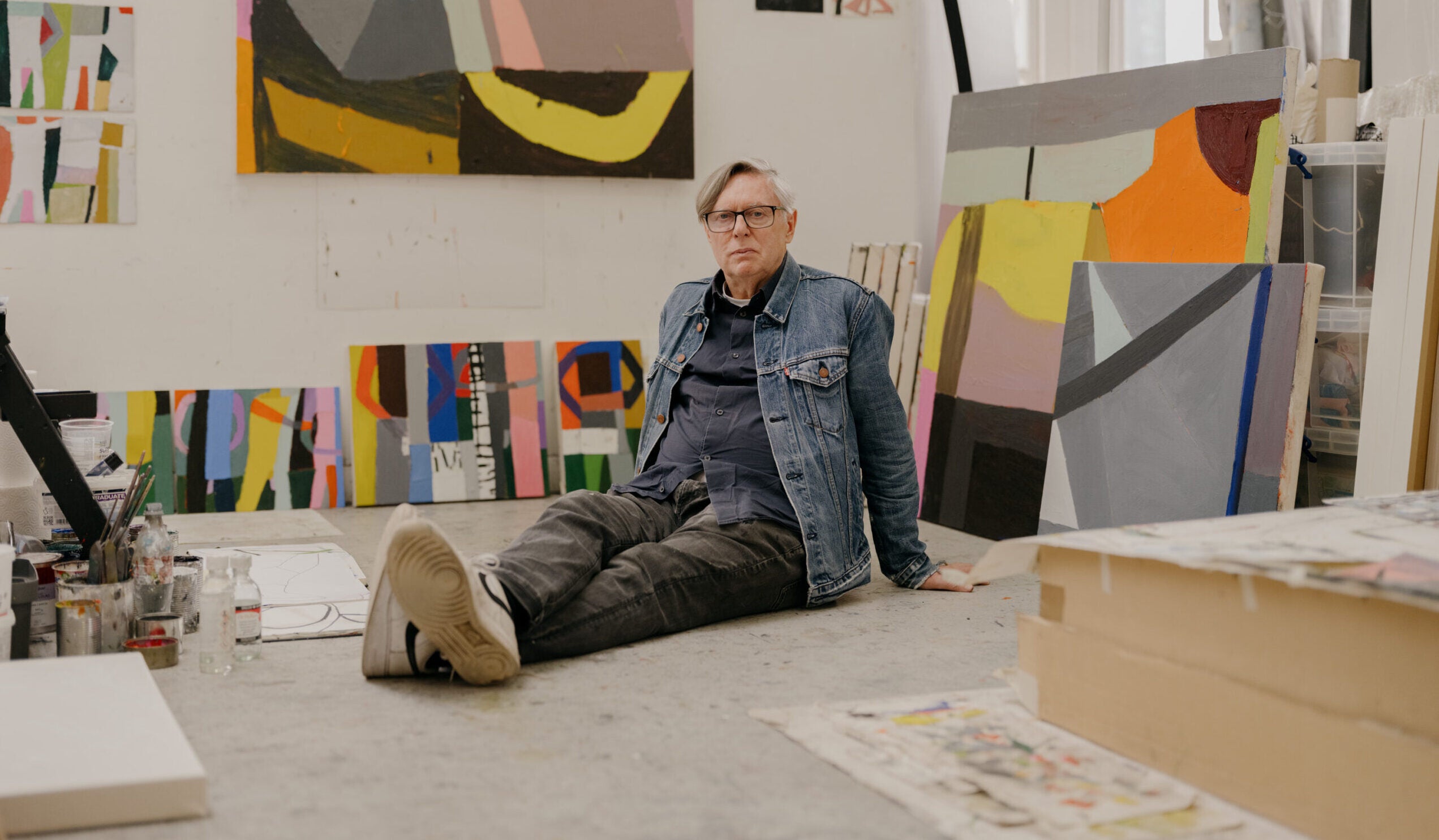
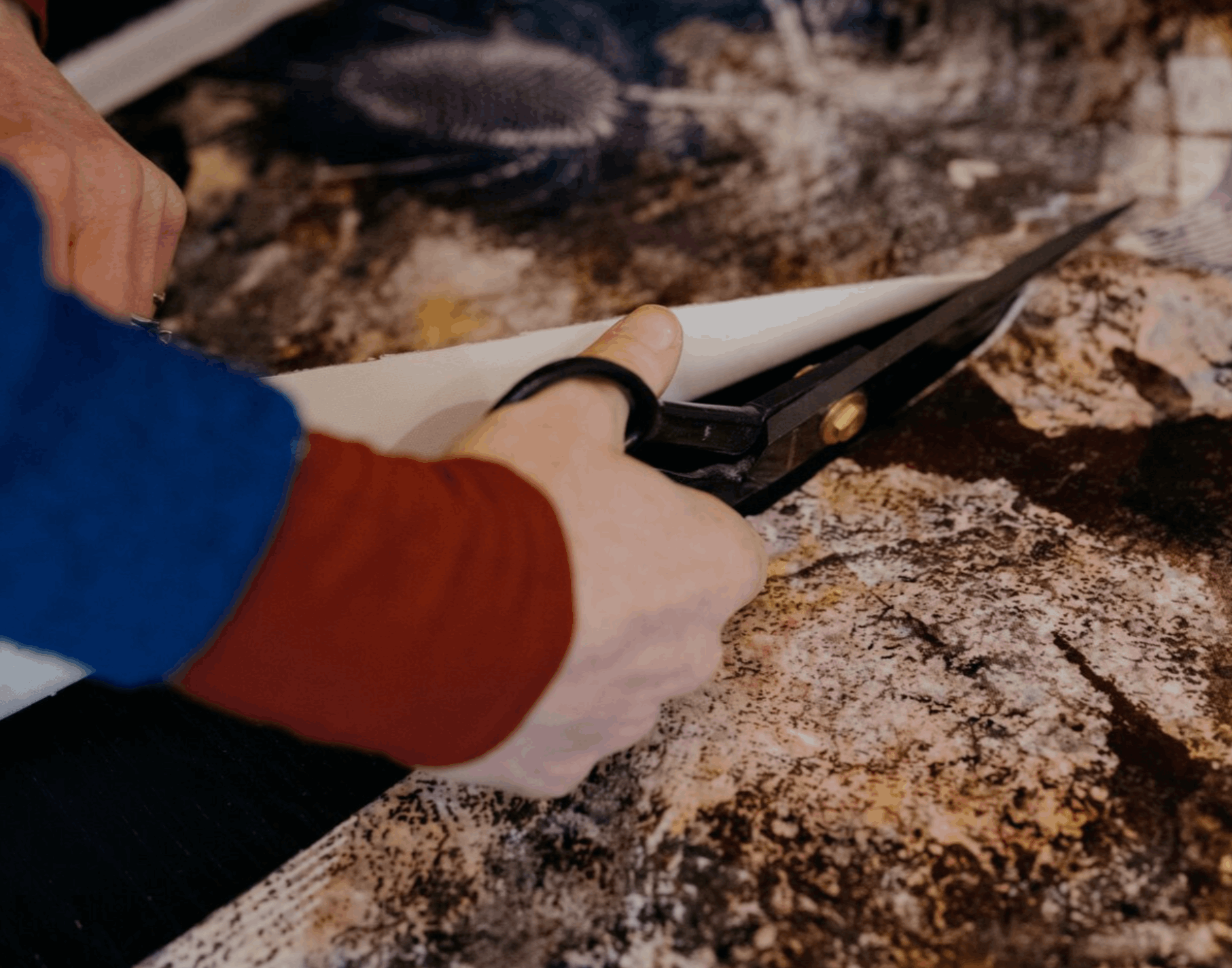
Along with crafting their own super-soft throws, the bustling looms at Johnstons of Elgin in the Scottish Highlands periodically weave out the initial ‘H’ in heavyweight cashmere. Photographs are banned on the factory floor, and you’ll never find them in the on-site store, but if you have an Hermès blanket on your couch, now you know where it’s from. Johnstons is much more than just a go-to resource for global luxury brands, though. Its chic blue and grey ombré throws would add a superb accent to something mid-century modern by Charles and Ray Eames. Ditto Begg x Co, which now makes fabulously contemporary cashmere cushions and blankets under the direction of creative director Vanessa Seward, and is stocked in the most forward-thinking interiors boutique in Edinburgh, Bard. A recent Begg x Co collaboration with Scottish artist Bruce McLean features a dazzling pattern of color inspired by the light in McLean’s garden.
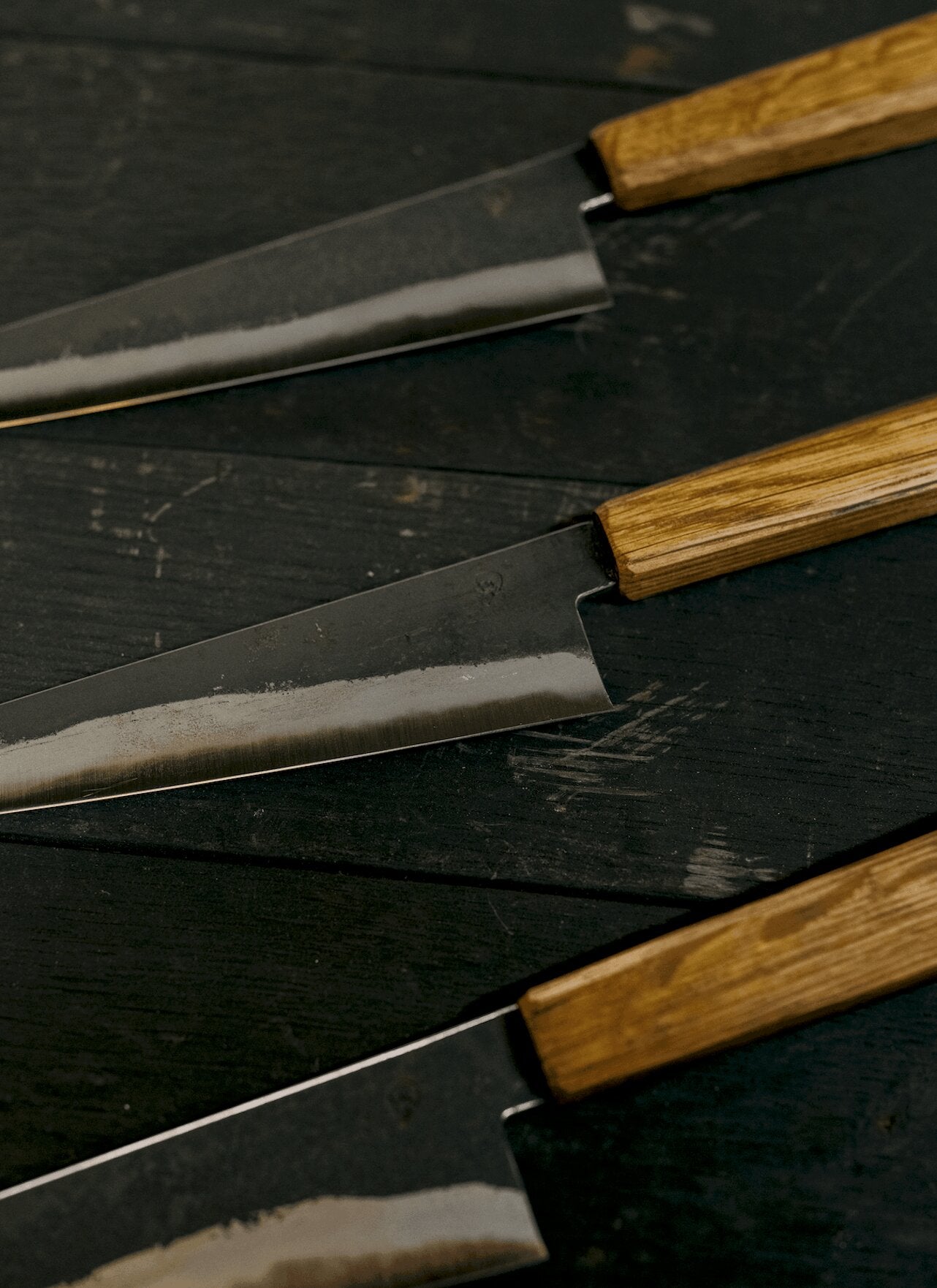
Bard has become a big hit with visitors to the city. “We thought we would have a hard sell,” says James Stevens, who co-founded the boutique with his husband Hugo Macdonald in 2022, “waving the flag for things that don’t look immediately and obviously Scottish, but people have responded amazingly. They understand the integrity of craft.” And it’s that integrity that has made the design in the North of Britain so powerful: there are so many more compelling design narratives in modern Scotland that go way beyond the Princess Diana Memorial Tartan and other assorted nonsense being sold on Edinburgh’s Royal Mile. Take artisan Eve Eunson’s vivid Ghost Rope Baskets, also stocked by Bard. They are a great example of a dynamic new movement in traditional Scottish crafts. “She uses synthetic sea rope that gets washed up on the shores of the Shetland islands,” says Stevens. “Like bladesmith Tim Westley, who makes the Clement Knives we sell using recycled materials for the handles, it points to a resourcefulness here among the rural and island communities. It’s romantic and poetic but also practical — the makers are using materials close to where they are, so they can be less connected to the global supply chain.”
The products at Bard range from simple pieces by Ocean Plastic Pots, designed and made in Glasgow from recycled sea plastic, to Eunson’s extraordinary hand-woven Cubi Chair, an update on the classic Fair Isle Strawback design. Each ash frame is hand-worked using coiled straw with vertical knots painstakingly added, creating a warp and weft structure. The Cubi looks brilliantly modern, but its methodology is ancient, and on the UK Heritage Craft Association’s ‘Red List’ of critically endangered crafts.
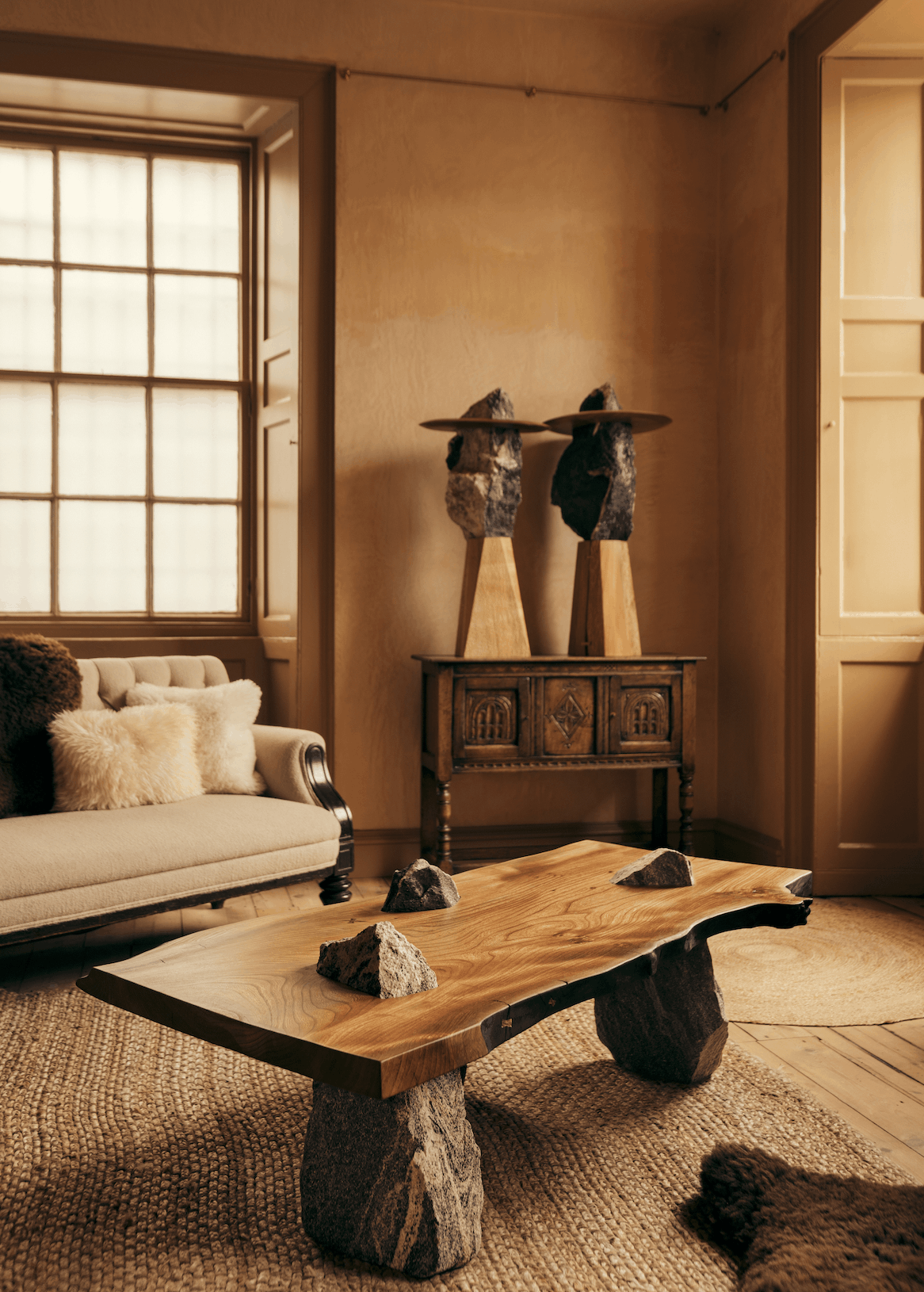
Some of the most rarefied pieces at Bard are by Oliver Spendley, who is as much sculptor as furniture designer. “He studied as a boat builder,” says Stevens. “He had moved to the north coast, to Durness, and was creating pieces with local rock and wooden elements. We saw his Instagram and approached him about creating something that could be a table. He works with local timbers and shards from geological formations that are some of the oldest in Europe. The history is mind-boggling.”
Oliver Spendley literally uses the landscape to build his work, while textile and wallpaper designer Mairi Helena takes photographs of it and manipulates them into repeated motifs. Her wallcoverings look like radiant hand-painted murals. “I was given a camera by my husband as a gift about 10 years ago,” she says. “I fell in love with capturing imagery on the West Coast, of tree silhouettes and boat reflections. I built up a folder of imagery and then, when I wanted new wallpaper for our house, around our fireplace, I layered it to create something. It was an experiment.”
The experiment became a business, which has expanded into a range of paints, with the palette taken from her landscape photographs. “I love blues and other coastal colors, but I am doing more botanical work at the moment with the prints, and I love the blooms that come after rainfall. It’s a celebration of the seasons.” She intends to collaborate at some point with one of her favorite ceramicists, Ella Fletcher, who also works in Edinburgh and takes inspiration from road trips. “I’m inspired by textures in nature,” she says, “from moss on trees to rusty-bottomed boats. I often get told that a mug someone has bought from me has become the only one they reach for in the cupboard each morning. That’s an incredibly satisfying feeling.”
Mairi Helena’s work is part of a movement in Scottish design that began with Timorous Beasties, launched by two graduates from the Glasgow School of Art — Alistair McAuley and Paul Simmons — back in 1990. They took the traditional Scottish thistle and made it look radical and modern in their fabrics and wallpaper. They also became known for their trippy Rorschach botanical prints, unsettling Devil Damasks (with the face of a demon discernible in the pattern), and their Toile De Jouy patterns which look classic at first glance but depict gritty and melodramatic urban street scenes worthy of an Irvine Welsh novel. Timorous Beasties were pioneers of modern Scottish design, and their work is prominent in numerous hotel interiors — including the recently refurbished JA Mar Hall Golf & Spa Resort in Glasgow.
While a lot of Scottish design takes its cue from flora and fauna, it’s being used in unexpected ways. The new Isle of Raasay gin bottle takes its shape from the fossils and rocks around the distillery, a super-modern building on the tiny island a short hop on the ferry from Skye. The swirling ripples on an Isle of Harris gin bottle have made it one of the most desirable objects to add to a contemporary cocktail cabinet. The brand has a cult following among people who enjoy recycling the bottles for all manner of new uses, while last year the distillery released a limited edition of 1,500 Sea Thrift Pink glazed vessels — each hand-thrown by potter Rupert Blamire in a color inspired by the brightly colored armeria maritima that grows around the coastline in summer.
Scottish product design is having a moment. The branding on Cold Town ales is as chic as you’ll find anywhere, while the wrappers on Coco chocolate bars are worthy of framing, featuring graphic designs created in collaboration with Scottish artists including David Mach RA, Ellis O’Connor, and Emer Tumilty. They are the modern chocolate slab equivalent of an Ettore Sottsass lamp. Similarly cool are the minimalist designs wrapped around Bare Bones Chocolate. Many guests to the extraordinary Nordic-chic WildLand properties in the Highlands have become regular customers after discovering bars left in their bedrooms. And the quality and taste of the bean to bar chocolate from Glasgow is on a par with the wrapping designs, printed on material made from recycled coffee cups. A longstanding collaboration with Edinburgh and Glasgow-based Vietnamese restaurant Ka Pao is a bestseller.
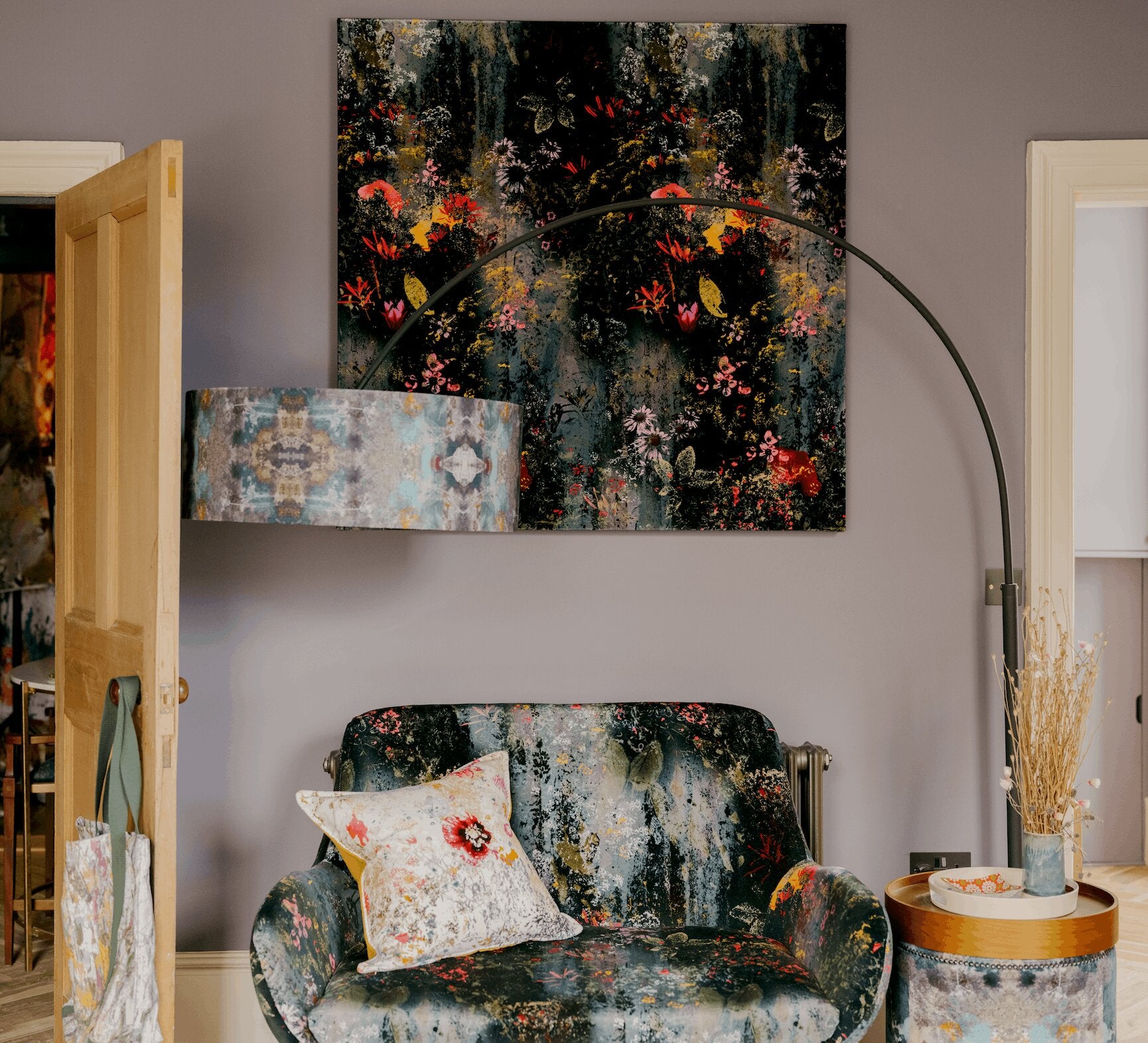
Mairi Helena uses her own photographs to create an array of products inspired by the Scottish landscape. ©Antony Sojka
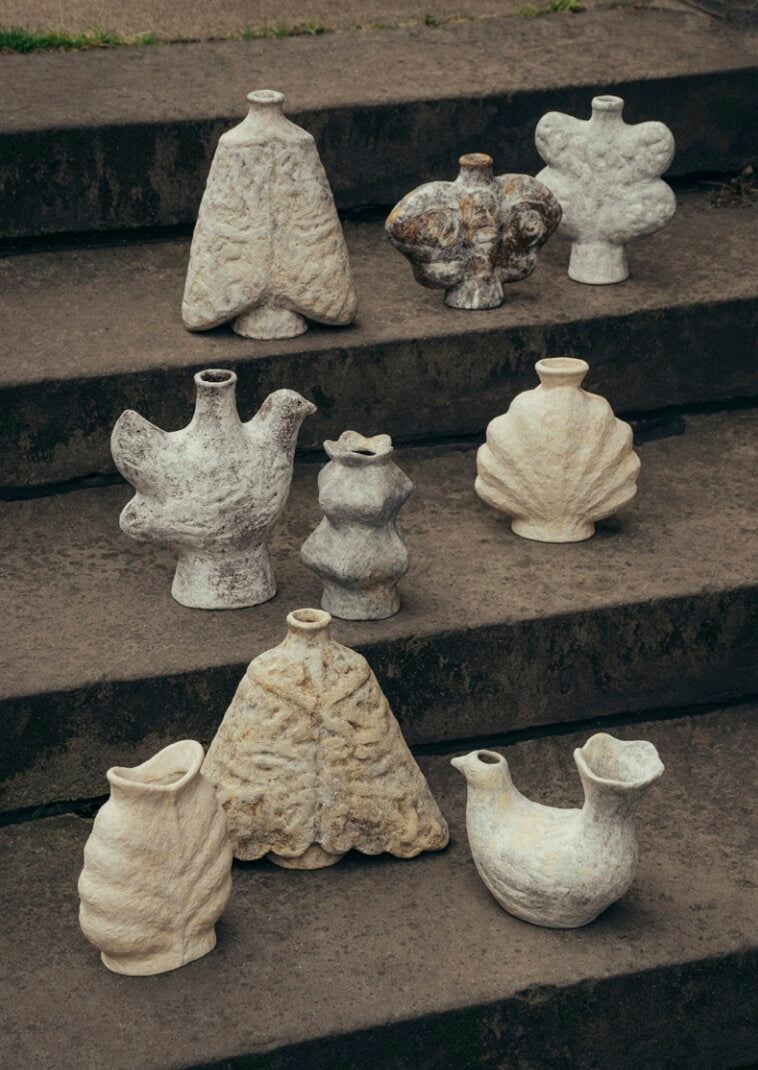
The Garden of Gentle Revolutions by Studio Viv Lee. ©Murray Orr
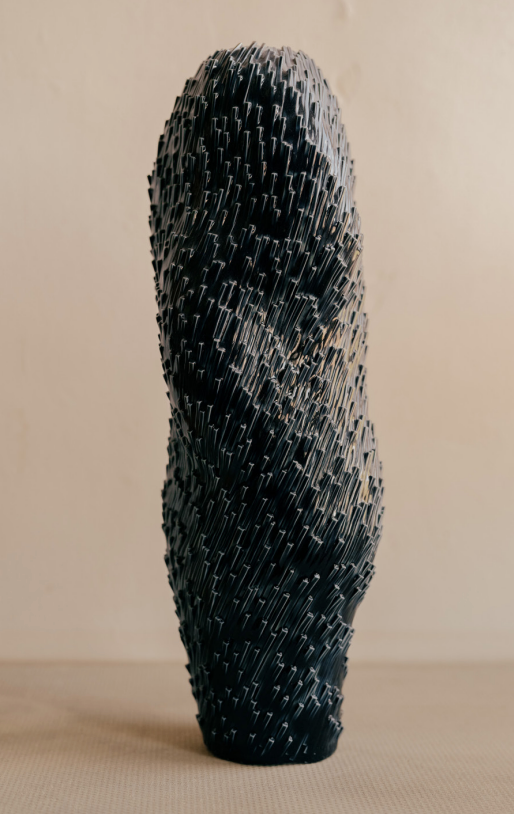
One of Glasgow-based ceramicist Jonathan Wade's sculptures. ©Antony Sojka
If you’re looking for the most distilled graphics in Scotland, you’ll find them in Fraser Taylor’s geometric monochrome lines for his brand Haxton, sold at the V&A Dundee. You’ll also find maximalist gestures in the bed linens designed by Irregular Sleep Pattern, based in Glasgow. Its pajama sets are so cool that they’ve been adopted as shirts and pants by various fashion types, including New York-based style content creators The Idiosyncratic Fashionistas, Jean and Valerie, “influencers of a certain age,” who wear them with their precious archive of Miyake and Norma Kamali. Irregular Sleep Pattern’s pieces are created by the husband-and-wife team of Mil Stricevic and Jolene Crawford. “Our textile concepts frequently start with the subversion of familiar bedroom/sleepwear themes, such as the classic candy stripe and Paisley motifs,” says Stricevic. “We play with scale, proportion and color in the pursuit of prints that fizz with joyful energy. They can create a glorious pop of energy in an otherwise neutral environment.”
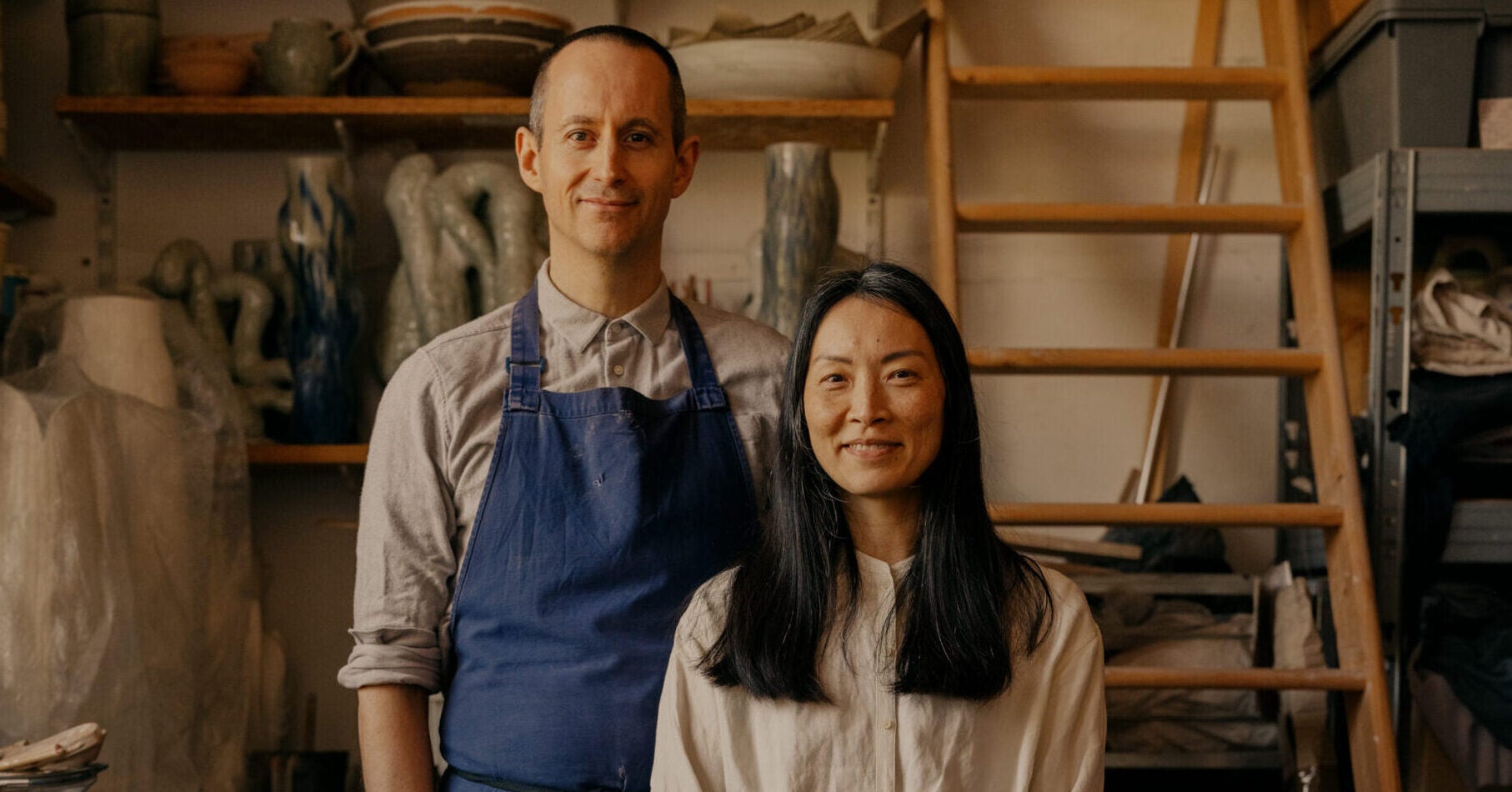
Ceramicists Viv Lee and Jonathan Wade are also married, working out of the same building in Glasgow but in different studios with very different aesthetics. Wade’s work, made for his Ingot Objects brand, is austere. “He trained in Japan,” says James Stevens, who sells work by both of them at Bard. “His homeware has a clear Asian influence. Viv’s work uses local and recycled clays. We work with about 15 different ceramicists, and almost all of them reject industrial clay and want to reflect where they live through their materials.” Lee describes her aesthetic as leaning towards “pared-back, hand-built archetypal forms with a raw, elemental quality that feels both ancient and modern,” while Wade focuses on “simple, clear shapes and utilitarian wares.”
While the cashmere is exquisite, the factories of Begg x Co and Johnstons work on an industrial scale. Many of the designers and artisans in Scotland doing interesting things right now are one-man bands. Most interior design stores in 2026 anywhere in the world will have more scented candles on sale than chairs. You don’t change your furniture every week, but candles are a way to alter the mood in a room in an instant. Reid Aiton began making his Laird scented candles five years as a hobby at his mother’s house in Edinburgh. He still hand-pours everything there, and his mother has become a part of the process, offering advice on new scents. Clients have grown from a few niche hotels to Nest Interiors in Biggar and Author in Angus, as well as online.
“My branding is a modern take on something intrinsically Scottish,” says Aiton. “No thistles or tartans. I use a monochrome palette, amber apothecary glass, vintage photography to illustrate each scent’s story, and a typeface that nods to Scotland in a subtle way.” One of his most popular candles is Advent, with the scent of roasted chestnuts and walnuts, ginger, cinnamon, and clove. It was conceived as a festive edition but sells out year-round and smells like the bakery of your dreams. “In Scotland our winters are hard, and the dark nights arrive early. We don’t wait until Christmas to bring candlelight into the house” And no one should. The new wave of Scottish design is intended for all, all the time, wherever they are.