


Sustainability has become one of luxury travel’s sharpest indicators of quality, not as a moral footnote, but as a signal of care, craft, and long-term thinking.
In wine tourism, that shift is especially visible. The most compelling estates today are no longer defined solely by grand cellars or rare bottles, but by how thoughtfully they farm their land, design their guest experiences, and invite visitors into the rhythms of vineyard life.
From South Africa’s Cape Winelands to the rolling hills of southern England, sustainable wine tourism is being reshaped as something immersive, experience-led, and deeply rooted in place – where environmental responsibility enhances, rather than dilutes, the sense of indulgence.

According to Joe Gargaro, General Manager of Louma Country Hotel, the change marks a decisive break from the past. “Five to ten years ago, sustainability was often limited to buzzwords or isolated practices,” he says. “Today, it is holistic, intentional, and deeply embedded into every aspect of the visitor experience.”
At the heart of this evolution is a shift away from transactional tasting-room visits toward slower, more narrative-driven encounters. “There’s been a real move towards experience-led consumption,” says Ashley Saunders, WSET-certified wine communicator and founder of Palate. “Many wineries are now offering deeper, more holistic experiences that go beyond traditional tours and tastings, with food, accommodation, and immersive on-site experiences playing a much bigger role.”
See also: A Once-in-History American Whiskey Collection Is Heading to Auction
Storytelling has become central. Visitors increasingly want to understand not just what’s in the glass, but the land, people and practices behind it. “Wine tourism feels more thoughtful and curated,” Saunders adds. “Experiences are designed to feel authentic, sustainable, and closely connected to place, really bringing the idea of terroir to life.”
This is reflected at estates such as Babylonstoren in South Africa, where sustainability shapes every layer of the guest journey. Regenerative farming, biodiversity corridors, and seasonal food production are not hidden behind the scenes, but form the foundation of the experience. Guests move through gardens, orchards, and vineyards before tasting wines that are inseparable from the landscape they’ve just explored.

Charl Coetzee, Babylonstoren’s commercial and production director, sees this as the future of the category. “The wine tourism industry is moving towards more meaningful, immersive experiences that prioritise education, storytelling, and a deeper connection to place,” he explains. “Rather than focusing purely on consumption, sustainable wine tourism is increasingly centred on helping guests understand terroir, history, and cultivation.”
Education, crucially, is no longer academic. “The future lies in making wine knowledge accessible and engaging,” Coetzee says, allowing guests to connect with how wine is grown and shaped over time. At Babylonstoren, cellar tours run year-round, following the winemaking process from vineyard to working cellar. During harvest – particularly in the summer months – visitors can witness the cellar at its most active, grounding the experience firmly in seasonality.

See also: Inside the World of Dermot Sugrue, the Winemaker Captivating Critics and Kings
This more intentional approach is reshaping hospitality and visitor engagement across wine regions. Smaller group tours, walking-led vineyard experiences, and longer stays are increasingly favoured over high-volume visits. “These experiences encourage guests to slow down and spend longer on site,” says Saunders. “They reduce environmental impact while improving the overall visitor experience.”
Attention is also turning to how guests arrive. Group transfers, fewer single-night stays, and accommodation designed to sit lightly within the landscape are all part of the sustainability conversation. In the UK, vineyards such as Wraxall in Somerset offer shepherd’s huts set among the vines, allowing guests to remain immersed in the environment without heavy infrastructure.

Food, too, is becoming more locally rooted. At Henner’s Vineyard in Sussex, weekend pop-ups and tasting events are supplied with food and drink sourced within a 30-mile radius, reinforcing a sense of place while reducing food miles. “Sustainability isn’t hidden behind the scenes anymore,” Saunders notes. “It’s becoming part of the story vineyards actively share with guests.”
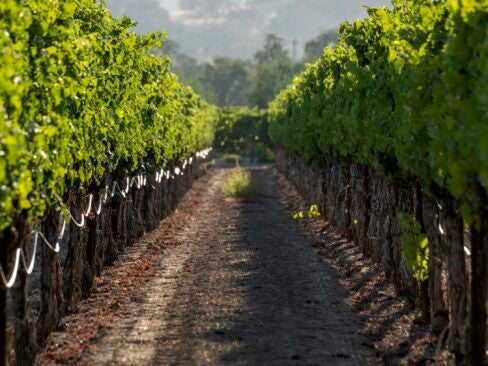
On the agricultural side, regenerative practices are increasingly central to long-term strategy. Cover crops, minimal tillage, and soil biodiversity enhancement are now common, improving resilience while restoring eco-systems. The reintroduction of livestock into vineyards – grazing animals that naturally fertilize soil and reduce reliance on machinery – signals a broader move toward closed-loop systems.
In England and Wales, this momentum is measurable. The Sustainable Wines of Great Britain scheme now represents around 40 percent of under-vine hectarage, highlighting both progress and the opportunity to bring more producers into sustainable practices. Producers such as Woodfine Wine in the Chilterns have built their identity around environmental restoration, an ethos that carries through into the visitor experience itself.
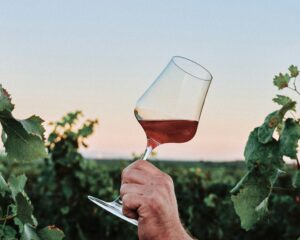
For Gargaro, sustainability’s rise is also about resilience. Tourism provides vineyards with a vital secondary income stream, particularly in regions vulnerable to climate volatility. “The new face of sustainable wine tourism is experiential and values-driven,” he says. “Guests are no longer satisfied with simply tasting wine; they want to understand how it’s made, why the land matters, and how their visit contributes positively to the region.”
What emerges is a model of wine tourism that feels grounded, generous, and future-facing – one where luxury is defined not by excess, but by access to knowledge, landscape, and authenticity. As vineyards continue to align hospitality with the natural rhythms of the land, sustainable wine tourism is no longer a trend to watch, but a standard being set.