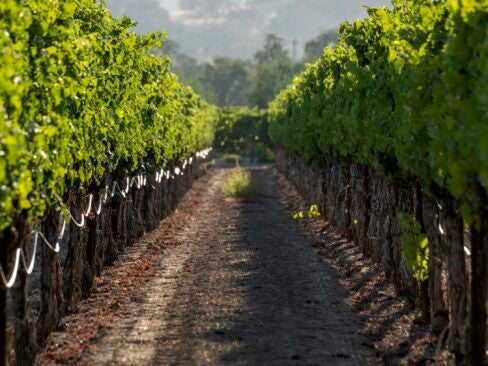


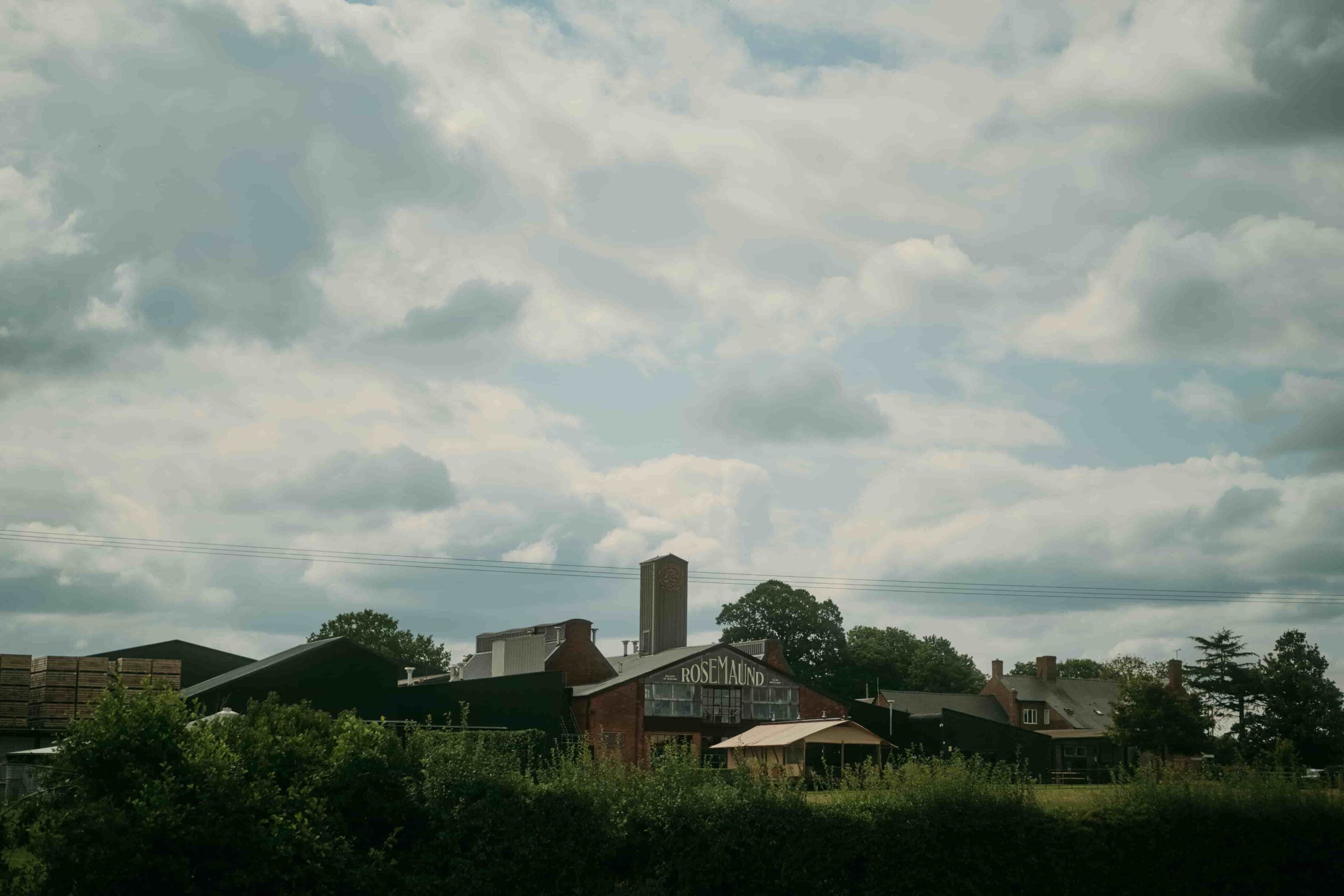
It’s one of the hottest April days since records began and I am looking out over the rolling Herefordshire fields.
“Behind those hills is where the SAS train,” says my host, James Chase, pointing into the distance.
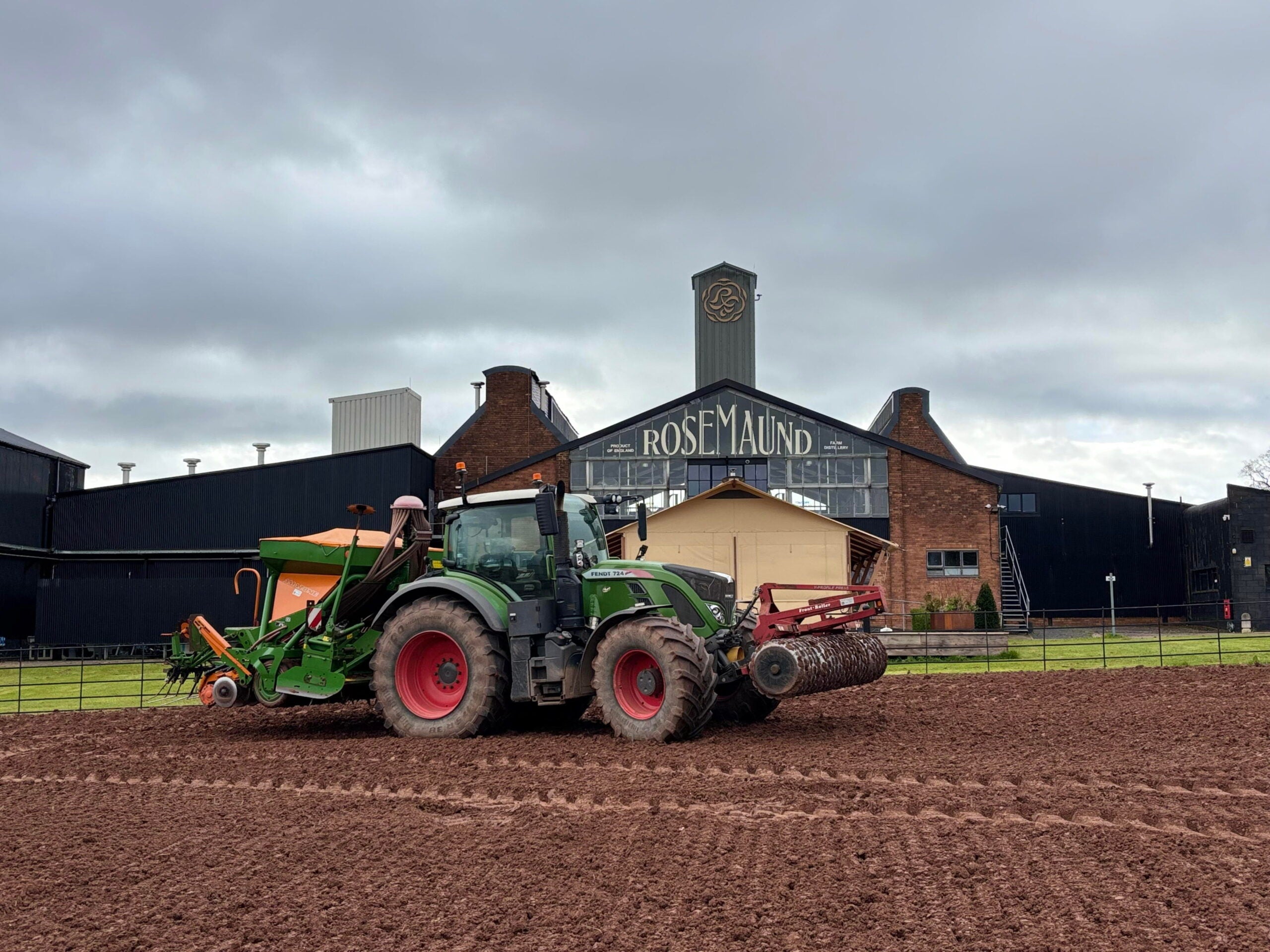
In front of us are freshly sown fields of heritage Marris Otter barley. After a long, wet winter that has replenished the aquifers, this early sunshine bodes well for a strong crop which, come autumn, will be harvested, malted, brewed, distilled, and laid down to become Rosemaund whisky – one of England’s most exclusive single malts.
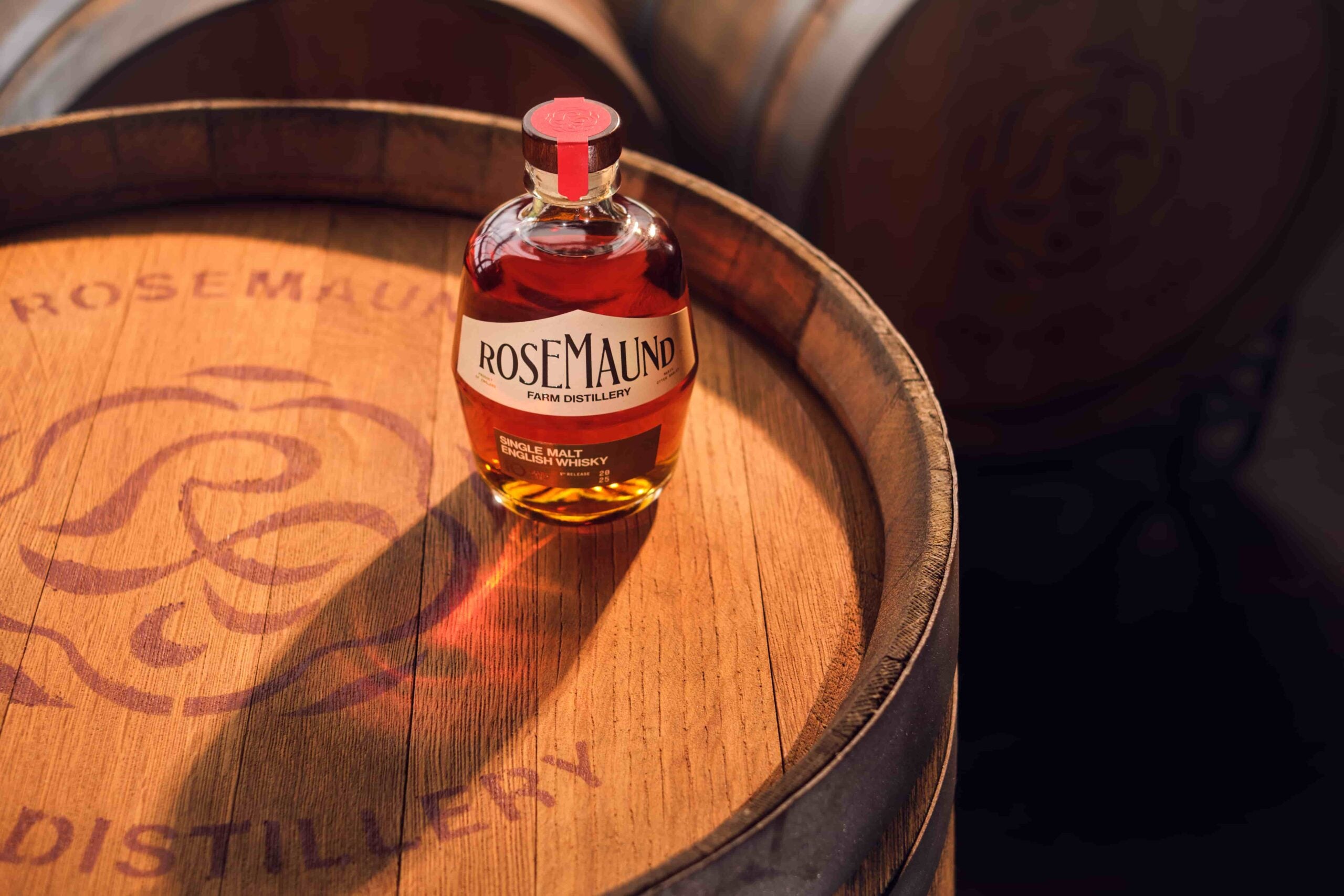
The Chase family has farmed this land for five generations. After diversifying from potatoes into crisps, then into vodka and gin, James, his brother Henry and Henry’s wife Lorna shocked the whisky world in September 2025 by releasing Rosemaund, a 10-year-old spirit that few even knew existed.
Priced from £125 (approx. $169), bottles were allocated by ballot. All 2,700 sold out, and demand for the second release is only building. Helped by backers including Hollywood director Guy Ritchie, what sits behind Rosemaund is not just scarcity or clever marketing. Like a growing number of non-Scottish whisky brands and newer premium players, the focus is shifting away from how something is made, or even for how long it is aged, but towards where it comes from.
In the glass, I find malted biscuit, green apple, meadow flowers, and a lightly spiced finish, with something that feels distinctly orchard-led in its freshness. Call it provenance, or perhaps terroir.
Terroir describes the interaction of soil, microclimate and topography on a crop. In wine, it has been the dominant language for centuries. In whisky, it remains contested. After all, whisky is not simply fermented grape juice. Grain is malted, mashed, fermented, distilled, cut, matured in oak, and often influenced heavily by whatever spirit once occupied the cask it sits in for years. Can the specifics of where barley is grown really survive that process, or is this simply a useful story for younger brands without decades of aged stock?
Mark Reynier has spent much of his career arguing that it does matter. After working in wine, he moved into whisky, acquiring the closed Bruichladdich distillery on Islay in 2000 and rebuilding it around the idea of local production.
See also: The Most Exciting Whisky Right Now Isn’t Scottish – It’s English
He persuaded farmers to grow barley again on the island for the first time in decades, and at early tastings of new make spirit, he says those farmers could taste differences between crops grown just feet apart.
“They started comparing with their neighbors; ‘how come yours is different to mine?’” he recalls. “The farmers rationalized the differences they were exposed to taste organoleptically something they were responsible for. I remember thinking hallelujah.”
Bruichladdich became a cult success, eventually selling to Rémy Cointreau for £58m (approx. $78.4m) in 2012, but Reynier carried on, founding Waterford Distillery in Ireland with the explicit aim of proving terroir in whisky through scientific analysis.
“It was a study with labs in Scotland, Ireland, America – three years, two sites, three varieties of barley. It was bulletproof,” he says. “We were able to demonstrate that there were 2,000 flavor compounds in barley, 60 percent of them influenced by terroir: light intensity, humidity, minerality. We know how it happens and why it happens. No one else had bothered to find out.”
For Reynier, those compounds persist. “The 2,000 flavor compounds you put in a barrel are exactly the same as the 2,000 you bring out,” he says.
Others are less convinced.
Billy Abbott, drinks educator at The Whisky Exchange and a long-time judge at international competitions, is wary of the binary framing.
“My biggest annoyance in the terroir discussion is the obsession with extremes: grain always makes a difference versus it never does,” he says. “Projects like Waterford are geekily comparative rather than necessarily achieving the goal of whisky making, which is creating a tasty drink.”
I ask him whether he can reliably identify grain character in blind tastings. “In general, no.”
See also: The Secret to Great Finnish Whisky? It Starts in a Sauna
Most whisky, he points out, is designed to eliminate variation rather than highlight it. Consistency is the foundation of the category.
“We are trying to mitigate any potential for impact through our own controls,” says Sandy McIntyre, distillery manager at Tamdhu. Over decades working with barley varieties ranging from Optic to Laureate, he has seen little evidence that origin meaningfully alters the final spirit.
“My experience makes me think that the variety and area of growth has little or no impact on distillery character,” he says. For him, differences in grain are something maltsters smooth out, not something distillers amplify.
That tension – between eliminating variation and celebrating it – runs through the entire category.
I travel up to England’s north east coast to see how Spirit of Yorkshire grows, distils and bottles its whisky on a single estate. Standing in high winds that whip across the coast, Jenni Ashwood explains why practical decisions often trump romantic ones.
“There’s a reason crops are bred to be lower,” she says. “It’s really windy up here and it just all falls over.”
For Ashwood, provenance matters, but not necessarily in the way terroir evangelists might frame it. It is about traceability, control, and knowing exactly how something has been grown, harvested, and made.
Others sit somewhere between these positions. Abbott concedes that when distilleries actively try to amplify grain character, differences can emerge.
“If a distillery leans into the flavor of the grain and adjusts their processes to amplify the differences, then it can make a difference,” he says. “Everything contributes to the final flavor.”
Jan Wisniewski, whisky writer and competition judge, agrees that grain influence can come through, but notes that provenance plays a different role entirely.
“In competitions, tasting is blind, so provenance cannot be part of the discussion,” he says. “But outside that, if the whisky is single-farm, that becomes a talking point and part of what validates the price positioning.”
That last point is where the conversation shifts from science to economics. Because whether or not terroir can be consistently tasted, it can certainly be sold.
See also: The Best Whisky in the World Right Now, According to Bartenders
Across the category, smaller producers are leaning into grain, heritage varieties, and single-farm narratives. White Peak has revived Chevallier barley, once dominant in British brewing before being replaced by higher-yield varieties. It is harder to grow and less efficient, which is precisely why it disappeared, but it brings back a depth of character that industrial processes had largely smoothed out. In the glass, that shows up as a richer malt profile, with notes of milk chocolate and warm spice that feel deliberately pushed forward.
Chase sees the same pattern. “This huge boom of craft beers produces big, bold flavors and then that goes into whisky,” he says. “The barley is really important. You put crap in, you get crap out.”
Yet even here, the argument extends beyond the field. Chase points to maturation as another expression of place.
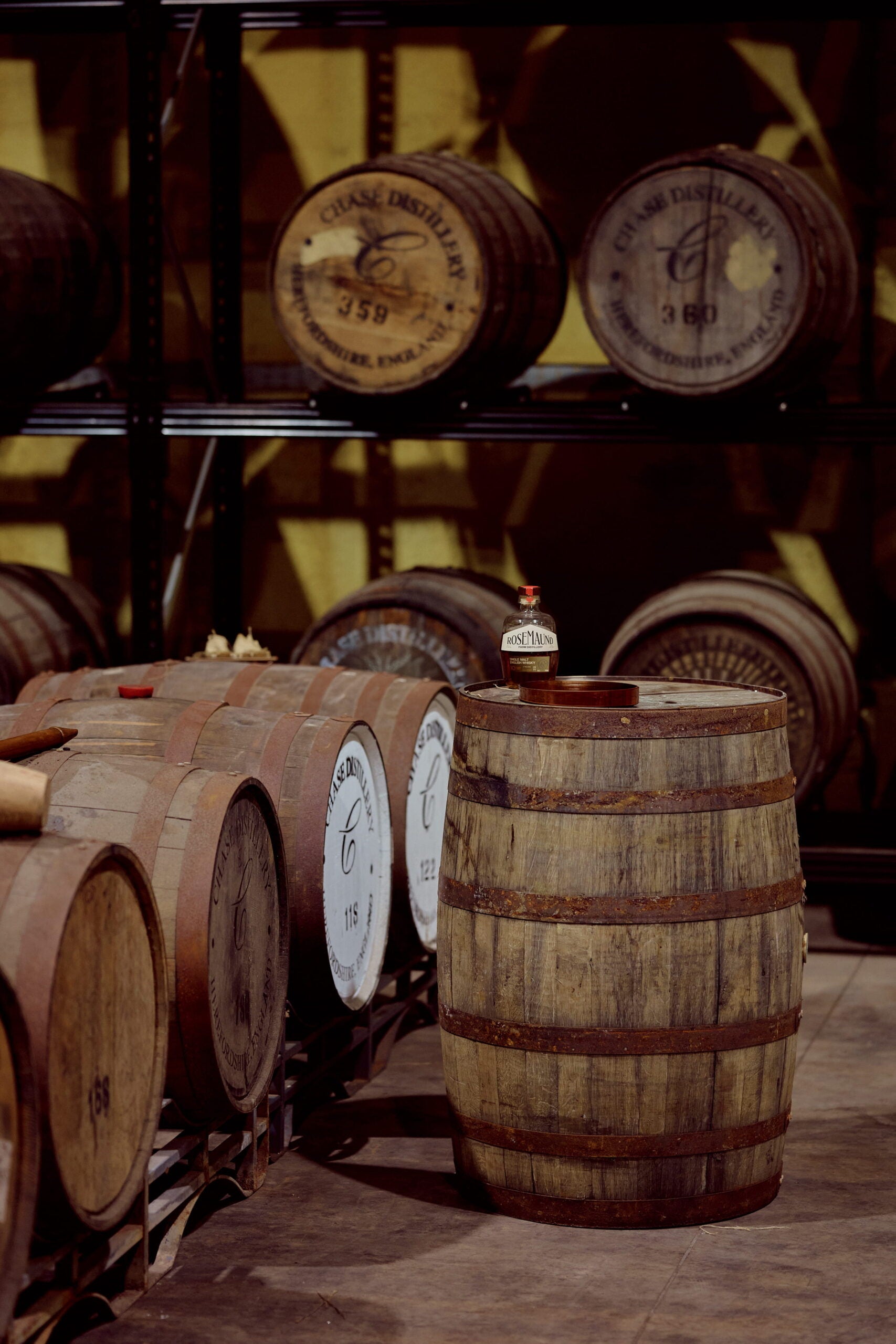
“Wood is incredibly porous and wherever the cask is stored has huge impact,” he says. “Ours are next to an orchard. The flavors brought in on the wind here would be different to a warehouse in Birmingham.”
Again, McIntyre dismisses location effects beyond temperature and evaporation, arguing that coastal influence is negligible. And this is seen most clearly in Kentucky. At Buffalo Trace, the focus is less on geography and more on microclimate within warehouses.
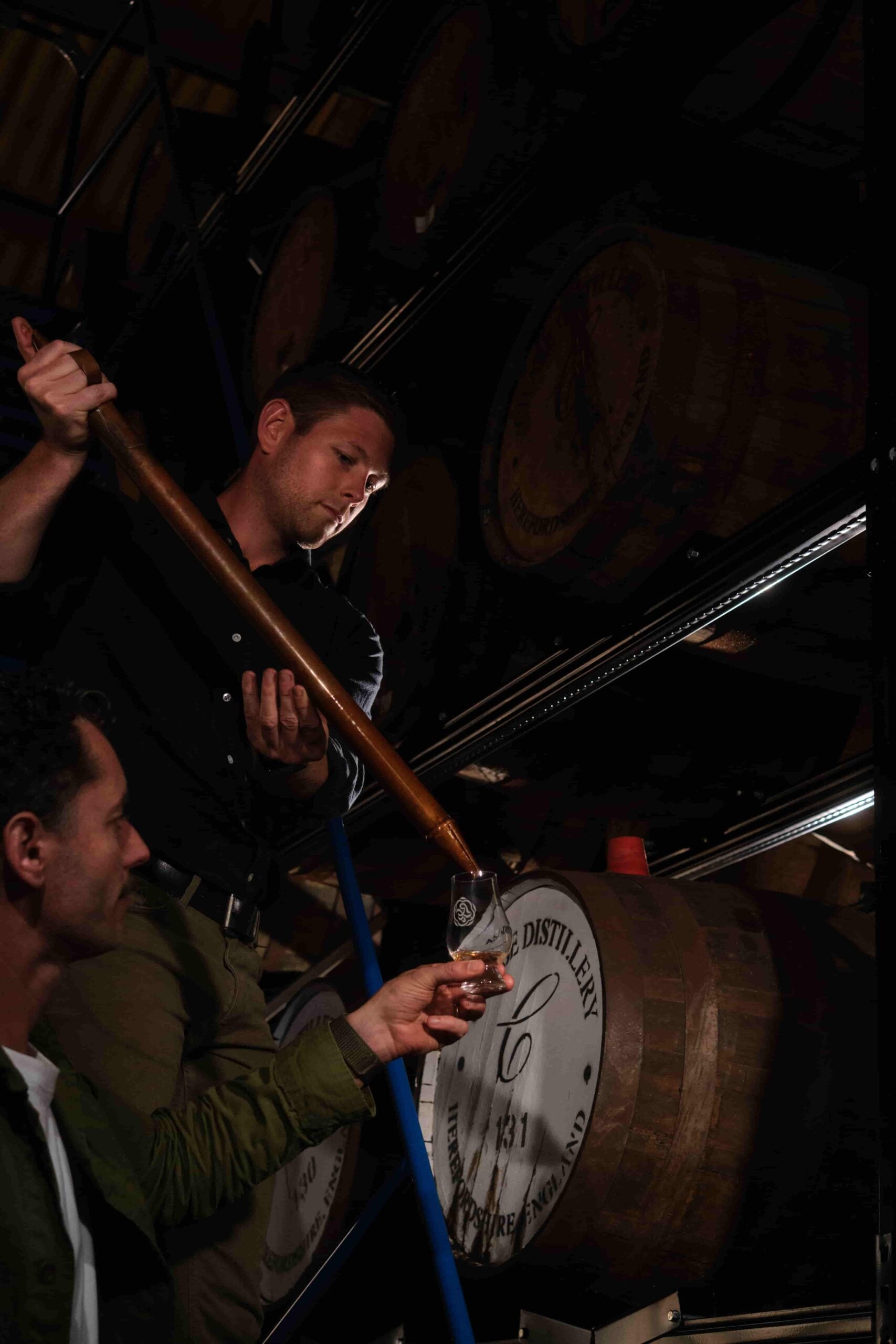
“There might be a temperature difference of 10-15 degrees in the same warehouse,” says Liam Sparks of Sazerac UK. “If we want to age something slowly, it goes low and slow. For colour and flavour, we might place it higher up.”
Elsewhere, producers have turned movement itself into part of the story. Japanese bottler Kaiyō sends casks out to sea to mature, while Never Say Die bourbon crosses the Atlantic to partly age between the US and England. Whether these journeys fundamentally change flavor or simply deepen the narrative is still an open question, but they point to an industry increasingly willing to experiment with place as both process and proposition.
Which leaves whisky in an unusual place. For decades, the industry worked to remove the influence of place. Grain was standardized, processes were controlled, and consistency became the ultimate goal. The result was a category defined by reliability and scale.
Now, a new generation is doing the opposite.
Without the weight of centuries behind them, these producers are building value elsewhere. In single farms, in heritage grains, in the idea that this barley came from this field, grown by these people, under these conditions, and nowhere else.
It is not that whisky has suddenly discovered terroir. It is that it has found a use for it.
And perhaps terroir is not even the right word. In whisky, where production processes are designed to reshape flavor so dramatically, provenance may be the more honest term. It captures not just what might influence flavor, but what consumers increasingly care about: where something comes from, who made it, and how traceable that journey is from field to bottle.
That matters, particularly at the luxury end of the market. These are small-batch, highly collectable spirits, often with clear environmental or agricultural credentials, that offer something the biggest Scotch producers cannot easily replicate: specificity.

Because while Scotland is sitting on what is often described as a $22bn whisky lake slowly aging in warehouses, that scale does not imply scarcity. Age does not automatically mean rarity. For collectors and connoisseurs looking for something distinctive, the appeal is shifting towards bottles that feel finite, knowable, and rooted in a particular place.
Large producers still rely on consistency, and for good reason. Their business depends on it. But for smaller and newer premium players, difference is the product. Provenance offers a way to create scarcity, to justify price, and to stand apart in a crowded market. And increasingly, it is one that drinkers are willing to buy into.