






An aesthetician at a clinic in London examined the red welts on my face and was unimpressed. She told me, in no uncertain terms, that I needed to address my stress levels. Was I drinking enough water? Breathing deeply? Perhaps I should consider “letting go?” What she didn’t know was that six weeks earlier, my mother had died. As I lay there swaddled in fluffy towels and unable to escape, she continued. Had I tried yoga? The implication was clear: if I worked a bit harder, maybe through her handful of anodyne lifestyle hacks, my stress levels – and presumably the grief that had wrapped itself tightly around my bones – would somehow dissolve.
Stress, whatever its cause, is a marker of life doing its thing, rather than a human failing. It is also a complex and highly individual psychoemotional phenomenon with a predictable and alarmingly vast array of physical manifestations – inflammation, fatigue, disrupted sleep, muscular tension, cardiovascular and digestive issues. That it has spawned a booming industrial complex of one-size-fits-all solutions is, at this point, its own kind of affliction. The surge in mindfulness-based therapies and somatic practices is to be applauded, but it would be naïve to mistake them for universal cures.
So when I first heard about Life Reset, a science-led mental health and wellbeing program at Clinique La Prairie in Switzerland, I felt both skeptical and intrigued. I was emerging from one of the most exhausting chapters of my life: two years spent dismantling a childhood home, box by box, memory by memory, had left me hanging by a thread, and a retreat focused on evidence-based interventions sounded as though it might have some substance.
On paper, the program exudes Swiss scrupulousness: blood work, microbiota testing, supplements, movement analysis, consultations with a doctor. But there are some unexpected inclusions that make me recoil: clinical hypnotherapy, a nature immersion, one-to-one meditation sessions, breathwork. As a yoga practitioner of nearly 20 years, and someone who has meditated for almost as long, I dreaded the possibility that I might be met with the same infantilizing advice I had encountered elsewhere.
Life Reset positions itself as a transformational experience, designed to shift ‘exhaustion into strength, confusion into clarity, and stress into resilience,’ to quote the marketing material. It does this by way of a proprietary protocol that optimizes everything from the gut-brain axis to circadian rhythms and cognitive performance. This overhaul happens in four snappy stages – Release, Reset, Reconnect, Renew – and all in the space of a week. What struck me most was the assertion that something as subjective as mental health could not only be measured but quantified as a marker of longevity.

I board the plane to Geneva trying to summon the Zen Buddhist concept of shoshin, the beginner’s mind, knowing that experience, on this occasion, may be my greatest liability. Besides, if I was such a know-it-all, then why couldn’t I shake the feeling of fatigue and burnout? Something had to change, and I knew I had to outsource help.
Founded in 1931 on the shores of Lake Geneva, Clinique La Prairie has hosted everyone from Winston Churchill to Carla Bruni, and is the birthplace of the coveted, caviar-laden La Prairie skincare line (now owned by Beiersdorf). Its founder, surgeon Dr Paul Niehans, was an early pioneer of what staff still refer to as Cellular Therapy (regenerative medicine to you and me), and the clinic includes a fully equipped medical center that serves the local community but which guests can access too.
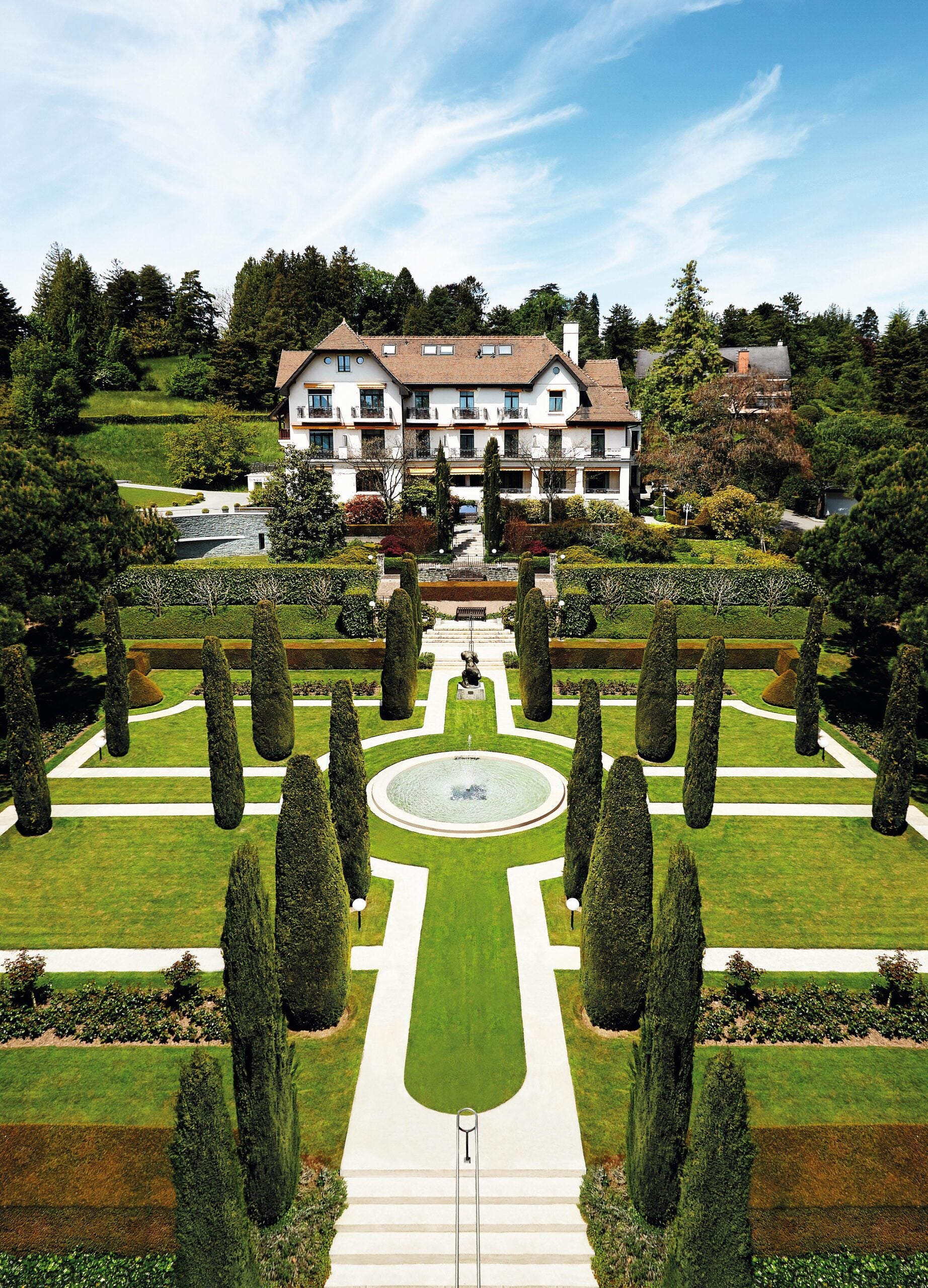
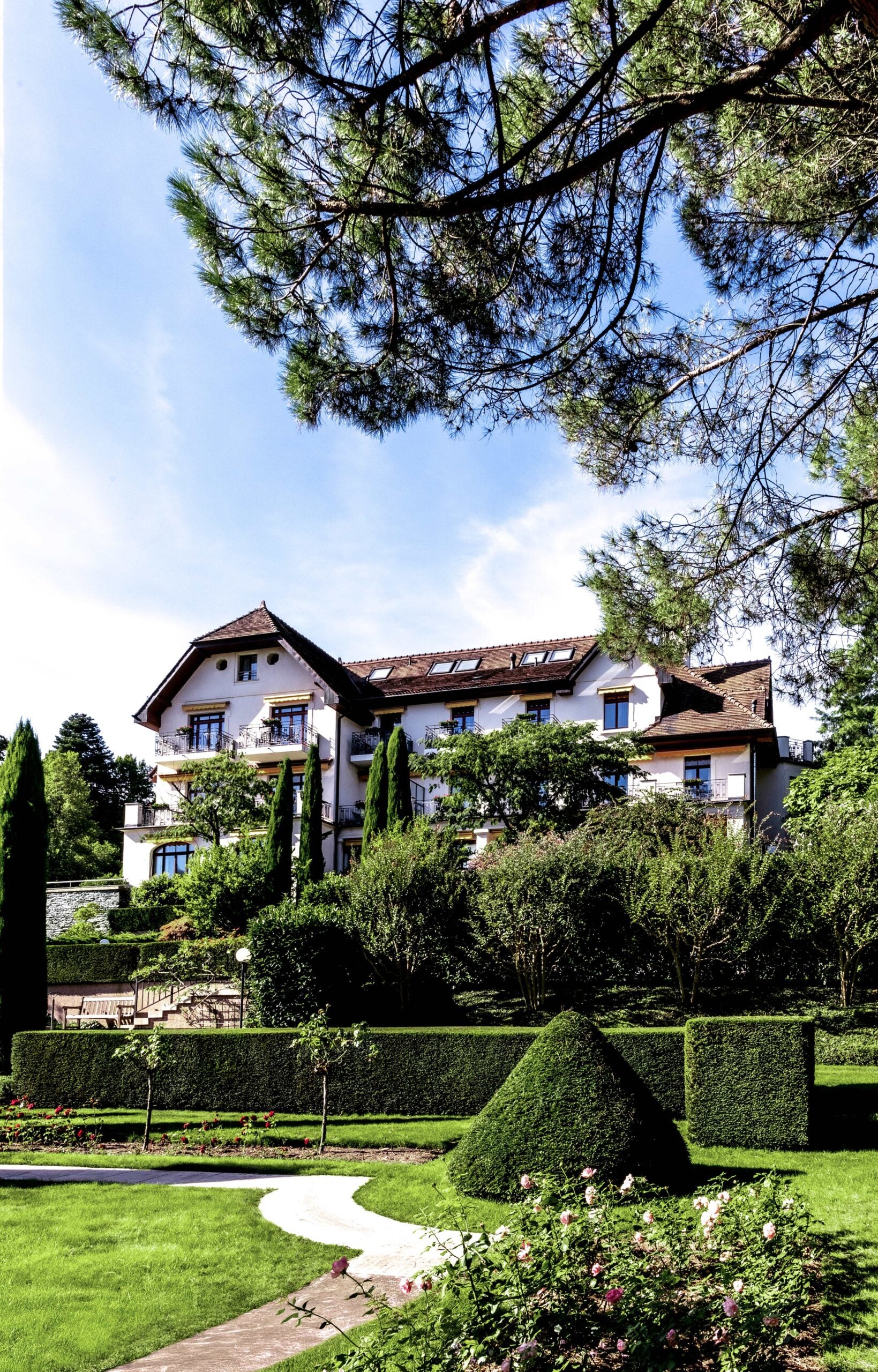
The campus fuses Belle Epoque charm with futurism. Niehans’ turn-of-the-century residence remains, replete with Giorgio Beverly Hills–yellow awnings and a landscaped garden centered around a Rodin sculpture. The main building, the Château, is all early-2000s minimalism: curved walls, sinuous stone, and a liquid, space-age design language that recalls the aesthetic of Zaha Hadid. Video installations by artist Lisa Kohl are scattered around reception and play calming waterscapes on a loop. Beneath the calculated serenity, the whole operation runs with calm precision.
See also: Inside the Art of Getting ‘Snatched’
At 7.30am on Monday morning, an immaculately styled nurse arrives at my door with a minibar of medical paraphernalia, and proceeds to remove an ungodly quantity of blood from my arm. One of the vials will be couriered to a partner-lab in Croatia where my glycans (markers of inflammation) will be analyzed. When the nurse leaves, I go about the less glamorous work of getting a stool sample into a test tube, and head off for a day of diagnostics.
Within a matter of hours, I am acutely aware of my basic metabolic rate (I need 1,732 calories a day to stay upright), visceral fat score, skeletal muscle and body water percentage. Spectrometers scan me for heavy metals and essential minerals while a touch-screen spin on the game Whack-a-Mole measures my hand-eye coordination.
The readings are reassuringly unremarkable as I am young-ish (well, 45) and healthy-ish. If nothing else, they confirm that however frayed I might feel, I am still very much in one piece. Most results are immediate; the bloodwork, however, will not arrive until Friday morning.
My first meeting is with Lynda Heffernan, a clinical hypnotherapist and mental wellbeing coach who, I quickly learn, is the beating heart of Life Reset. She is warm without being overfamiliar, her relaxed demeanor softening the hushed-tone formality of the spa. There is a diagram of the autonomic nervous system on her wall, volumes by Osho, Jon Kabat-Zinn and Brené Brown are piled neatly on the corner of her desk, and she speaks deliberately, with a soft, rhythmical swing that I decide is her hypnotherapist’s pendulum. The rapport is surprisingly quick and organic — like talking to an old friend. I wonder if I’m in some way special or if this happens with every guest.
Life Reset, she explains, is about downregulation, shifting the body from fight or flight to rest and digest. Everything from the menu to the spa treatments and supplements is designed to pacify inflammation, wind down the nervous system, and induce the parasympathetic state. It is not about analysis or diagnosis.

I am comfortable, and share my predicament with the kind of candor – and expletives – that I usually reserve for my inner circle. She offers no feedback, no admonishment. “This isn’t therapy,” she says gently, before diverting her gaze back to her notebook. Lynda is collecting data of a different kind. She is writing at speed, documenting my body language, intonation, and vocabulary. She will use these observations to craft hypnotherapy sessions featuring words and symbols that speak directly to the emotional and intuitive part of my brain, known as the limbic system.
The restaurant is eerily empty that evening. Most guests, I suspect, have decided to dine in their rooms or are on another program and forgoing solids altogether. I take a seat at my assigned table and work through the remaining calories allotted to me. Three expertly constructed courses arrive and I manage them dutifully, aware that my appetite – or lack of it – does not go unnoticed by the hovering waiters. On the one occasion I fail to clean my plate, I find myself offering an explanation to a matronly, faintly affronted member of staff. The chef will be disappointed.
I head to my suite, and collapse onto my bed, the scent of freshly laundered cotton hanging in the air. I feel bloated, possibly due to the vast quantities of water and fiber I am given at every opportunity. I do not sleep. I find myself upright at 4am, wired but tired, an annoying but familiar byproduct of having far too much cortisol racing through my veins.
Rather than wage a futile war with a stack of goose feather pillows, I research the more unusual ingredients listed on the back of the daily supplement I’ve been given. I immediately wish I hadn’t. Cordyceps sinensis, I learn, is a fungus that hijacks the nervous system of an unsuspecting caterpillar, kills it, consumes it from the inside and then, in a theatrically macabre flourish, sprouts from its head. There is no chance I’m getting back to sleep now. Caterpillar fungus, as it is charmingly known, is said to modulate stress, improve oxygen uptake and reduce inflammation. It is also worth its weight in gold.
Melchior Knellwolf, the meditation coach, is far younger than I expect. We click quickly and it’s clear from the outset he has no intention of overhauling a meditation practice that is already firmly embedded in my life; instead, he meets me exactly where I am and works from there.
Our three sessions are relaxed and informal but there is also structure. Melchior poses a question — deliberately pointed and loosely based on my chat with Lynda, but never confrontational — and I track whatever thoughts or sensations surface. I know this territory well and every now and then I come up for air and we have a chat. He gently presents another conundrum, each new question bypassing my overly analytical brain and landing somewhere more visceral. It is like a Buddhist take on ‘Yes, And…,’ the partner exercise favored by improv artists.
The process unfolds with surprising ease and momentum. Our back-and-forth is carving out a deeper emotional truth that lurks behind the stress of the endless admin of death while still in the midst of grief. Petulance reveals itself as resentment, resentment as anger. Before long I am lying on the couch, wrestling with a hardened knot of rage lodged deep in the pit of my stomach. As I grapple with the feeling, my face distorted with fury, a torrent of very unspiritual abuse pouring from my mouth, I become aware of the pristine room, the starched pillowcase in my hand, and the meticulous, buttoned-up operation on the other side of the door – and I laugh at the absurdity of the situation. The heaviness has lifted and the physiological shift is undeniable: my breath slows, my shoulders drop and my core lightens. Electricity is fizzing in my fingertips.
By midweek, I am desperate to escape the hermetically sealed efficiency of the clinic. Life Reset is remarkably dense and there is barely time to absorb one appointment before being ushered into the next. Over the past few days, I have been ferried from high-tech sound baths to body wrap to nutrition and personal training sessions without once stepping outside for air.
For a program so invested in nervous-system recalibration, the inclusion of just one massage feels like a curious economy. Touch remains one of the most reliable routes to downregulation, yet here it’s rationed. I find the pace and programming of Life Reset work against its central goal and I feel slightly mutinous, not at all downregulated and more than ready for time in the pristine mountains, even if it is in the form of a pre-programmed ‘nature immersion.’
See also: What Are Stem Cell Beauty Treatments – and Do They Actually Work?
My excursion partner is a Turkish man in his 60s who has the posture of someone wellaccustomed to signing Very Important Documents. Given that my Turkish is nonexistent, we conduct our small talk via an app en route to Rochers de Naye. He grins like the Cheshire Cat throughout the drive, part schoolboy, part off-duty titan. It is clear that Life Reset is already paying him dividends.
The moment we reach the trailhead, he straps on crampons and bounds uphill with alarming enthusiasm, overtaking me in seconds. Two decades my senior and considerably broader in the beam, he moves like a Labrador released from captivity.
I, on the other hand, am feeling slow and unsteady but not due to lack of energy or athleticism. I have a dim recollection of walking this same mountain decades ago while on a school trip. As we ascend the trail, I imagine my awkward 10-year-old self trudging beside me. He is uninterested in the physicality of the hike and won’t look up from his shoes, the magnificence of the vista passing him by. I have a moment of self-parenting and briefly consider using Google Translate to explain that I may be experiencing a minor existential wobble halfway up a Swiss peak.
Clinique La Prairie
Clinique La Prairie in Switzerland hosts Life Reset, a science-led mental health and wellbeing program.
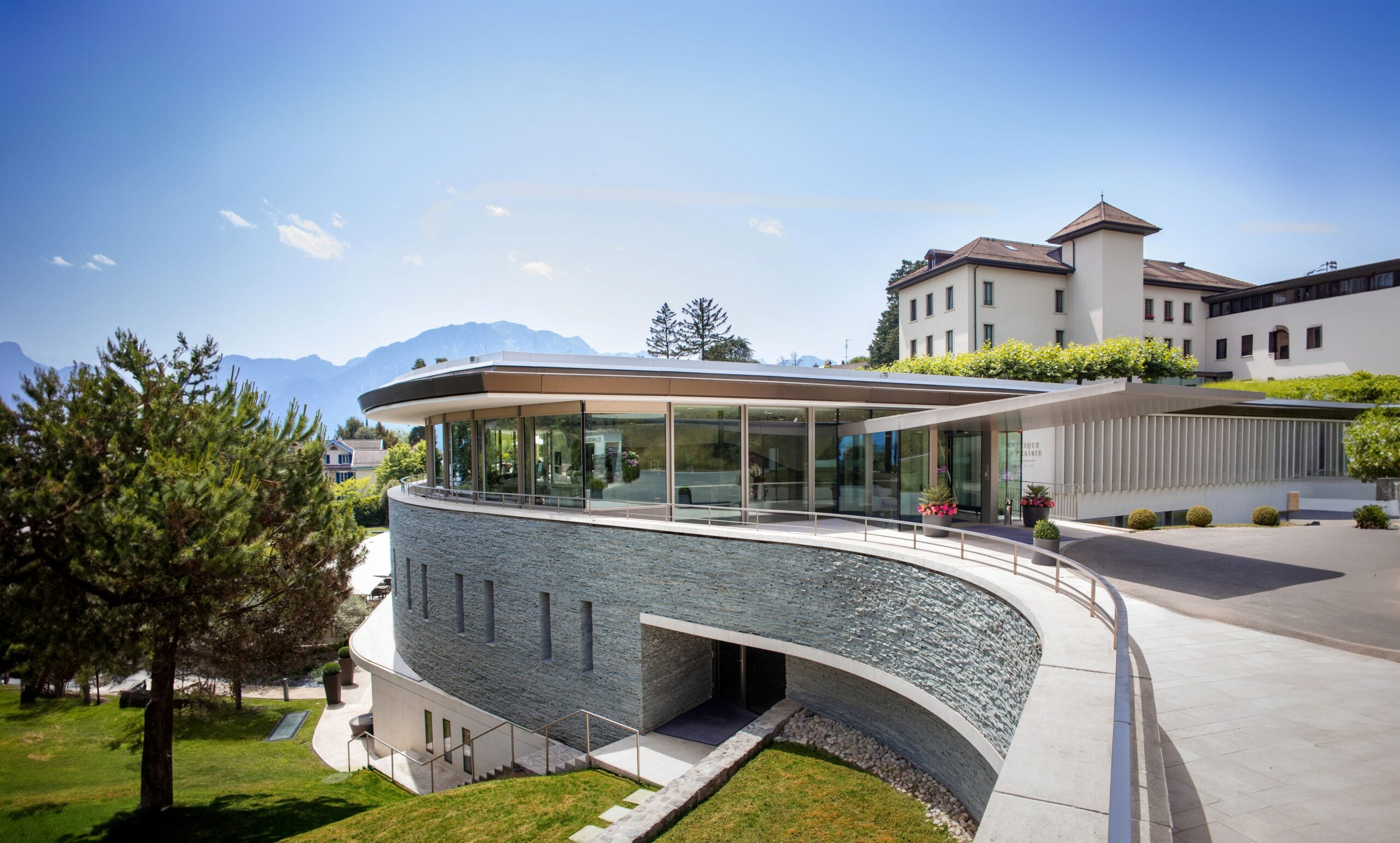
Clinique La Prairie’s lakeside campus was founded in 1931, and blends Belle Epoque with minimalism

Clinique La Prairie's longevity spa offers treatments and supplements designed to wind down the nervous system.
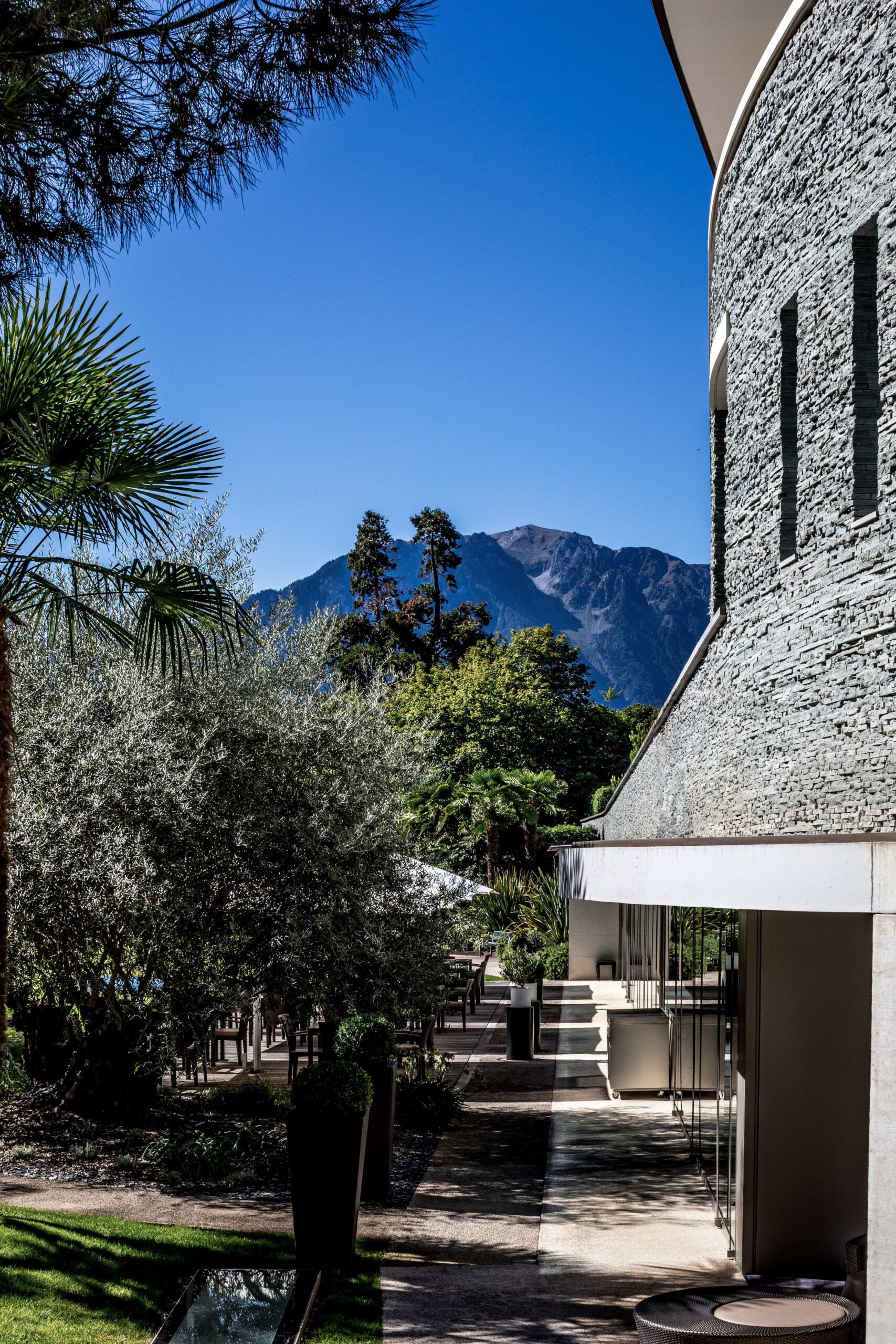
The campus is set on the shores of Lake
Geneva, with the Dents du Midi watching over.
Our guide, Pierre, finds the perfect place to pause and hands us four specially selected essential oils. We inhale them while taking in the sweep of the Swiss-French Alps, then repeat the ritual with our eyes closed. The theory is that scent travels straight to the limbic system – specifically the amygdala (the fire alarm for fear) and hippocampus (contextual memory) – to help modulate physiological responses to stress. It is a charming addition, though I suspect nature is doing most of the neurological heavy lifting.
We resume our hike and when we have gone as high as the trail conditions allow, the jagged drama of the Dents du Midi comes into full, unobstructed view. For a moment, everything else recedes. The oils, Pierre, and my ever-smiling companion fall away, and I find myself transfixed by the mountain’s stillness and stability, the way the Alpine mist dissects its face, so that it exists in two worlds at once. The moment feels unexpectedly personal and powerful.
The next day, the motif of the mountain appears in a guided hypnotherapy session I have with Lynda. By the time the blood results come back, I’ve lost interest in them. Something else has taken precedence.
The doctor tells me that my LDL (low-density lipoprotein) is slightly elevated – a genetic predisposition that comes with being Lebanese – and that I ought to take Vitamin D, which, given that I live in London, feels like a sensible decision. The genetic insights might have been more useful at the outset of the program, not just to tailor the nutrition a touch more but to contextualize the flood of other data points that, at times, felt disparate.
All the diagnostic reports land in my inbox once I’m home. I have carved out three quiet days to process the experience, something the program’s relentless pace never quite allowed. My years of yoga, meditation, and personal development have taught me that breakthroughs can be seductive but fleeting; integration is what allows them to survive contact with real life.
Out of curiosity, I upload the reports into ChatGPT, which dutifully organizes my biomarkers and genetic quirks into something more digestible. Staring at the screen, my mind involuntarily rewinds to a meeting with the clinic’s affable nutritionist, Giorgia Grisotto. At my request, she had put together a meticulously calculated meal plan, only to then, conspiratorially, suggest that I glance at it once before putting it in a drawer to collect dust. That one small and unexpectedly kind exchange spoke volumes. In a data-obsessed and analytics-driven age, we often mistake granular detail for wisdom, when in reality it merely compounds stress.
What I needed, it turns out, was positive reinforcement. A safe container in which I could work through the feelings that my body and brain had decided to put on hold in order to make the past few years manageable.
Two months on, no cracks have appeared. London’s stressors remain, but I am less reactive, steadier, and uncharacteristically optimistic. If Life Reset is designed to boost stress resilience and positive emotion, it has delivered on that promise. Clinique La Prairie prides itself on medical excellence and measurable optimization but the lasting shift came from something less quantifiable: the accumulation of precise, human moments that made change feel possible rather than prescriptive.
Life Reset is a seven-day longevity program available at Clinique La Prairie, Switzerland. From CHF 14’900 ($19,300) .