
Fashion and warfare are not frequent bedfellows. Yet during the closing weeks of the international runway season, two of the most closely watched shows – Balmain and Valentino – shared an unexpected connection to geopolitics. Both are backed by the same Qatari royal investment group.
The royal family’s famed French fashion house Balmain enjoyed the powerful debut of its new creative director Antonin Tron last week in Paris. And just the other night, Italian couture house Valentino brought down the curtains on the 33-day international runway season with a stellar show in Rome.
Both Balmain and Valentino are controlled by Mayhoola, the well-resourced investment vehicle of Qatar’s ruling Al Thani clan, whose financial muscle has propelled the two maisons into the fashion stratosphere of Top 20 global runway brands.
It’s been a determined project which began back in July 2012 when Mayhoola, in a closed-bid, overwhelmed a quartet of rival bidders – LVMH, Kering, and two Italian billionaire clans, the Zegnas, and Diesel jeans empresario Renzo Rosso, by paying $730m for Valentino, almost four times annual revenues. Four years later, Mayhoola forked out $520m for Balmain, then led by the 25-year-old designer star Olivier Rousteing, again for four times annual revenues.
But let’s begin in Rome, where Alessandro Michele, formerly of course of Gucci, staged his show for Valentino inside the Palazzo Barberini. Movie buffs will know it as the location of the final scene in Roman Holiday, when reporter Gregory Peck hands back the paparazzi shots to Princess Ann (Audrey Hepburn) and she breaks protocol by exclaiming that Rome is her favorite city.
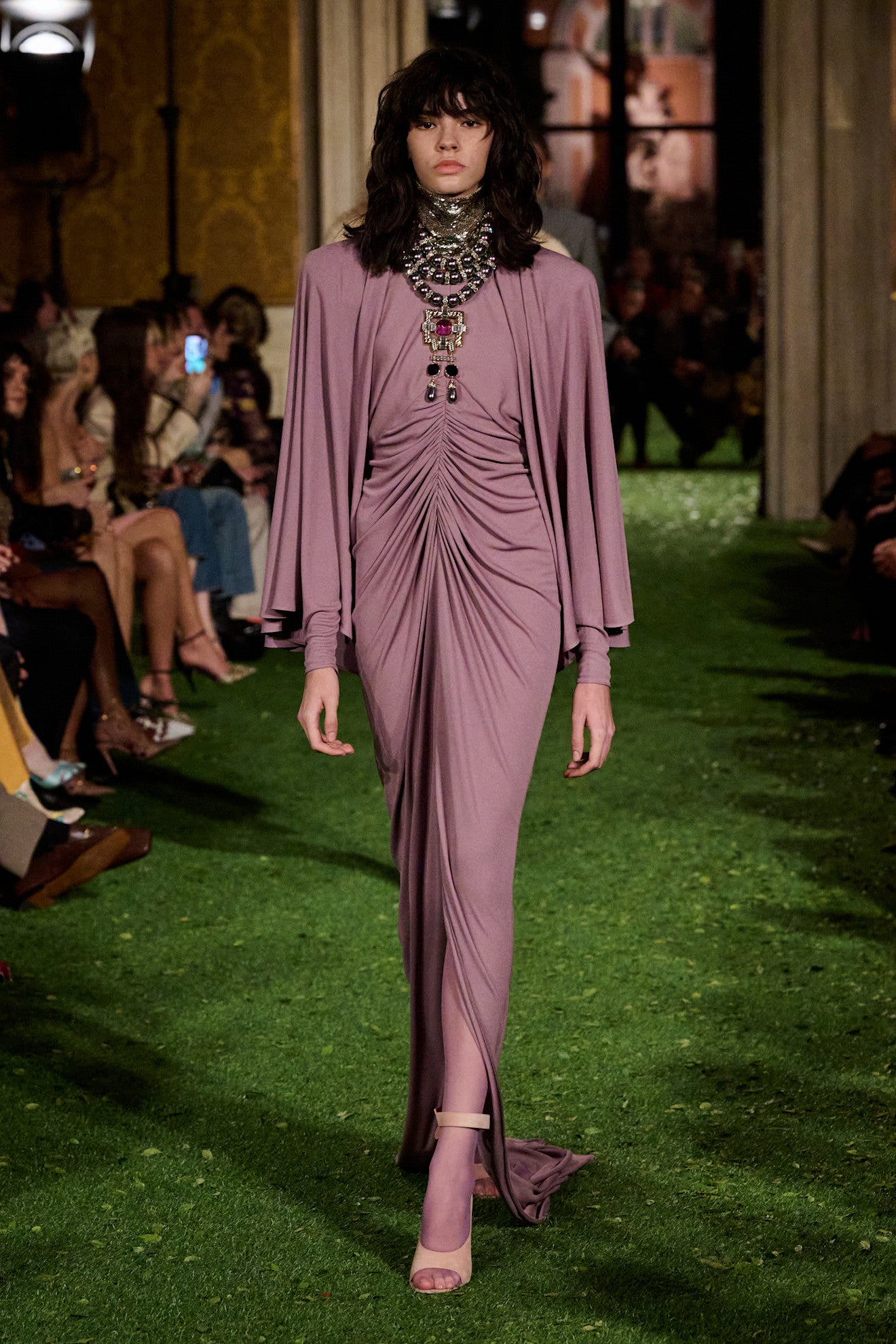
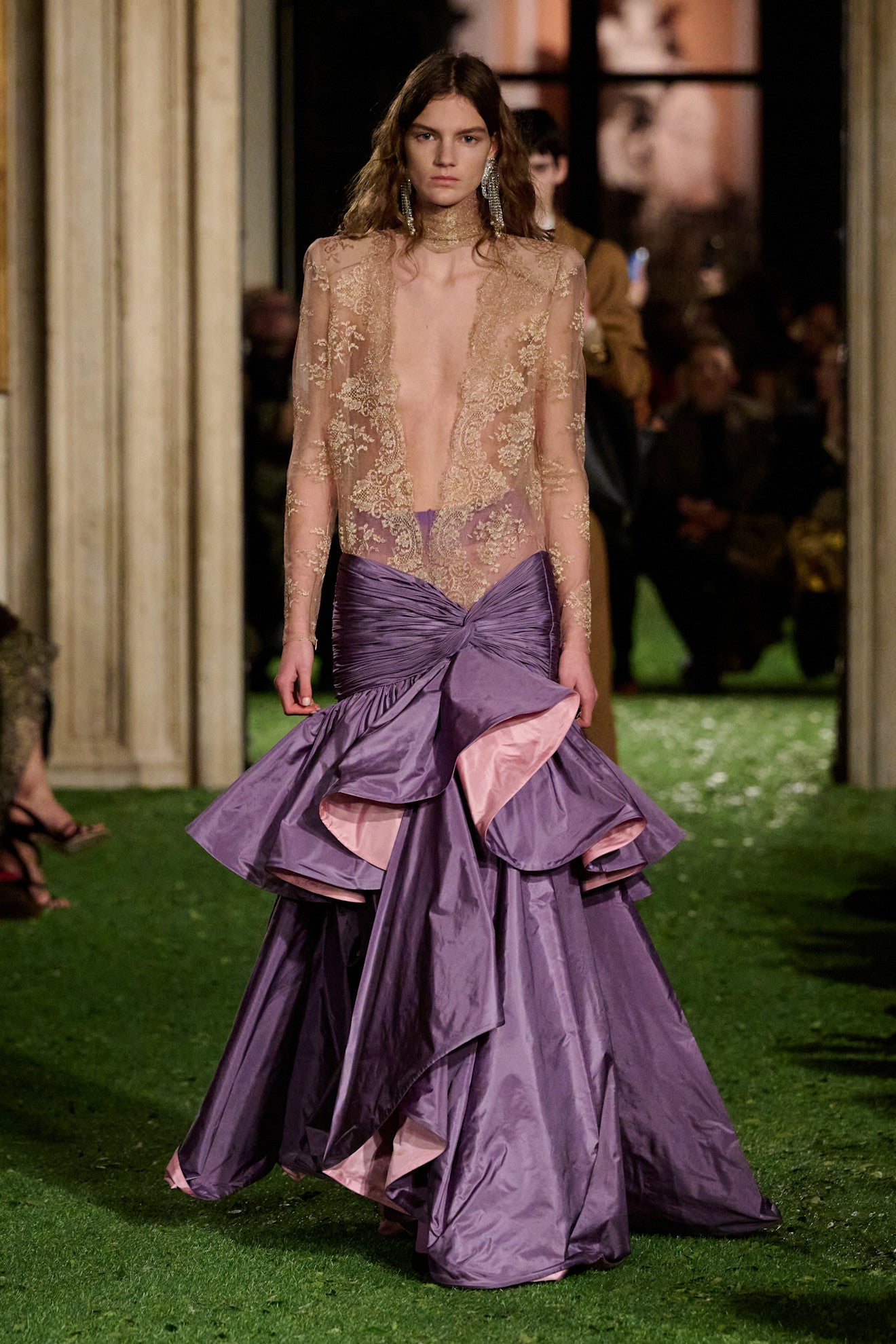
In his collection, Michele harked back to the “hedonistic grandeur” of 1980s Valentino, with mega-wide-shoulder red-silk gowns, lavender columns, or rock-goddesses caramel-leather blousons. Everything was finished with big, baroque pearl necklaces and dense cluster crystal earrings – echoing the Palazzo’s architecture.
In a co-ed show, the eveningwear on guys was trend-setting – Wall Street-banker power suits, but made in battleship gray leather, or military Eisenhower jackets converted into cooper-hued silk dinner jackets.
It played on what French critics have termed the Cursed Poet’s Style, seen in Dior, Yohji Yamamoto or Dries Van Noten. In Valentino’s case its expression was via big coats and oversized jackets, embroidered with dandy straps and belted with exotic leather or satin cummerbunds.
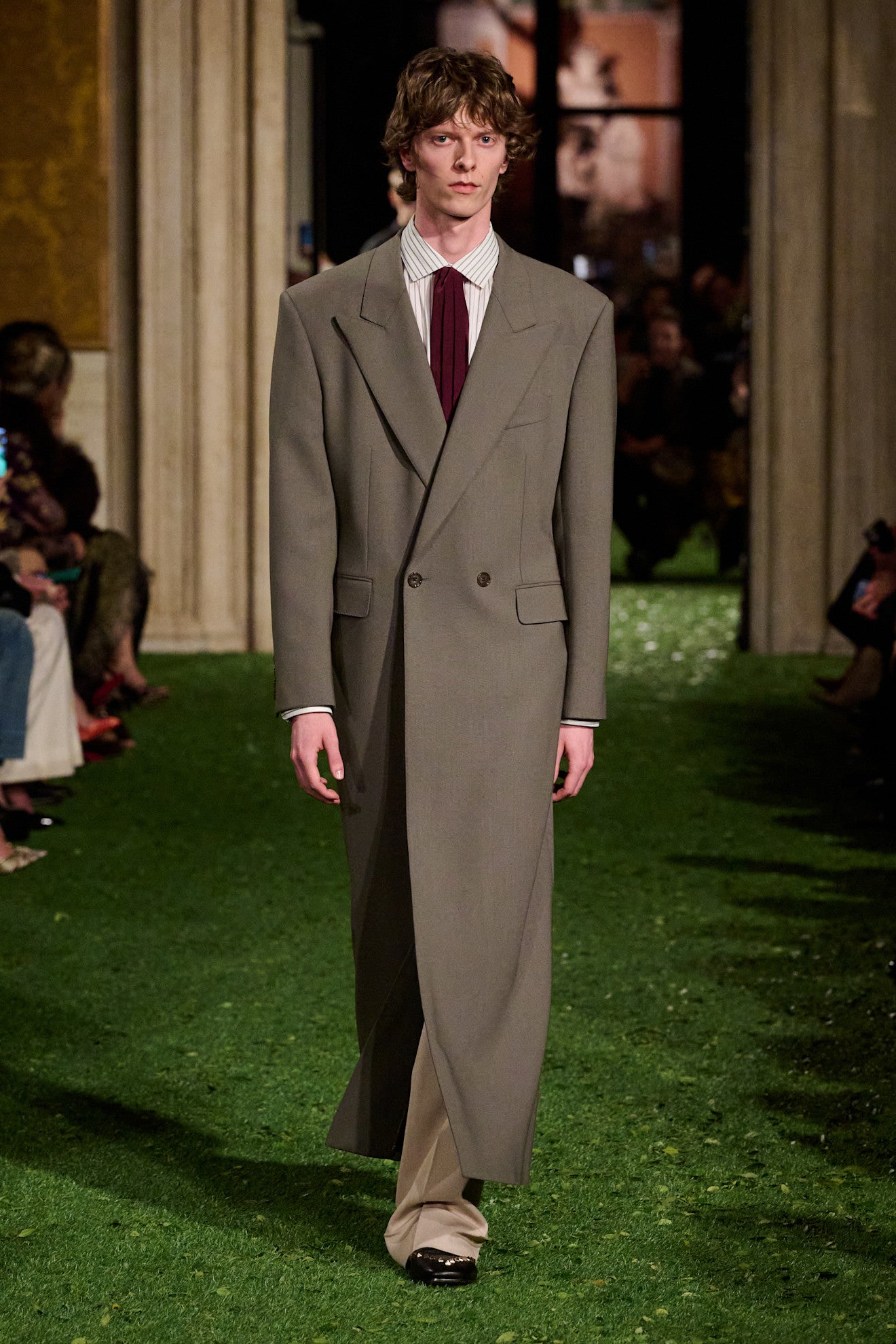
In a season characterized by a reality check at many brands’ womenswear, Alessandro’s artful architectural ideas felt refreshing. His garments constructed the proximal space of the body, just as architecture constructs our physical environment. Though Michele lightened the mood with a enough of a nod to the elaborate knots and pussy-bow blouses which characterized his previous role at Gucci, where over five years he tripled annual sales to more than €10bn (approx $11.4bn), before dramatically running out of steam and being fired.
Escaping a torrential downpour, Gwyneth Paltrow joined multiple Oscar nominee and brand ambassador Colman Domingo in the front-row of the Renaissance palace as the cast marched underneath the famed fresco of the Allegory of Divine Providence and Barberini Power by Pietro Da Cortona.
The palazzo was almost as much the star as what was went down the runway. Nowadays the Gallerie Nazionali di Arte Antica, the building was built by the legendary avaricious Barberini pope, Urban VIII, who commissioned bitter rival architects Francesco Borromini and Gian Lorenzo Bernini on the princely building. During his papacy, the Barberini acquired great wealth, as Urban VIII elevated two nephews and one brother as cardinals, made another brother a duke, and gave a third a whole principality.
“Palazzo Barberini is not an architecture at peace. In Nietzschean terms, the palazzo reveals itself as the site of an unresolved tension between an Apollonian principle, punctuated by measure, clarity and hierarchy, and a Dionysian impulse made of rapture, drift and dissolution of boundaries,” commented the famously highfalutin Michelle in his program.
No wonder Alessandro entitled the show, Interferenze, referencing the clash between house codes and deviation: transparency and opacity.
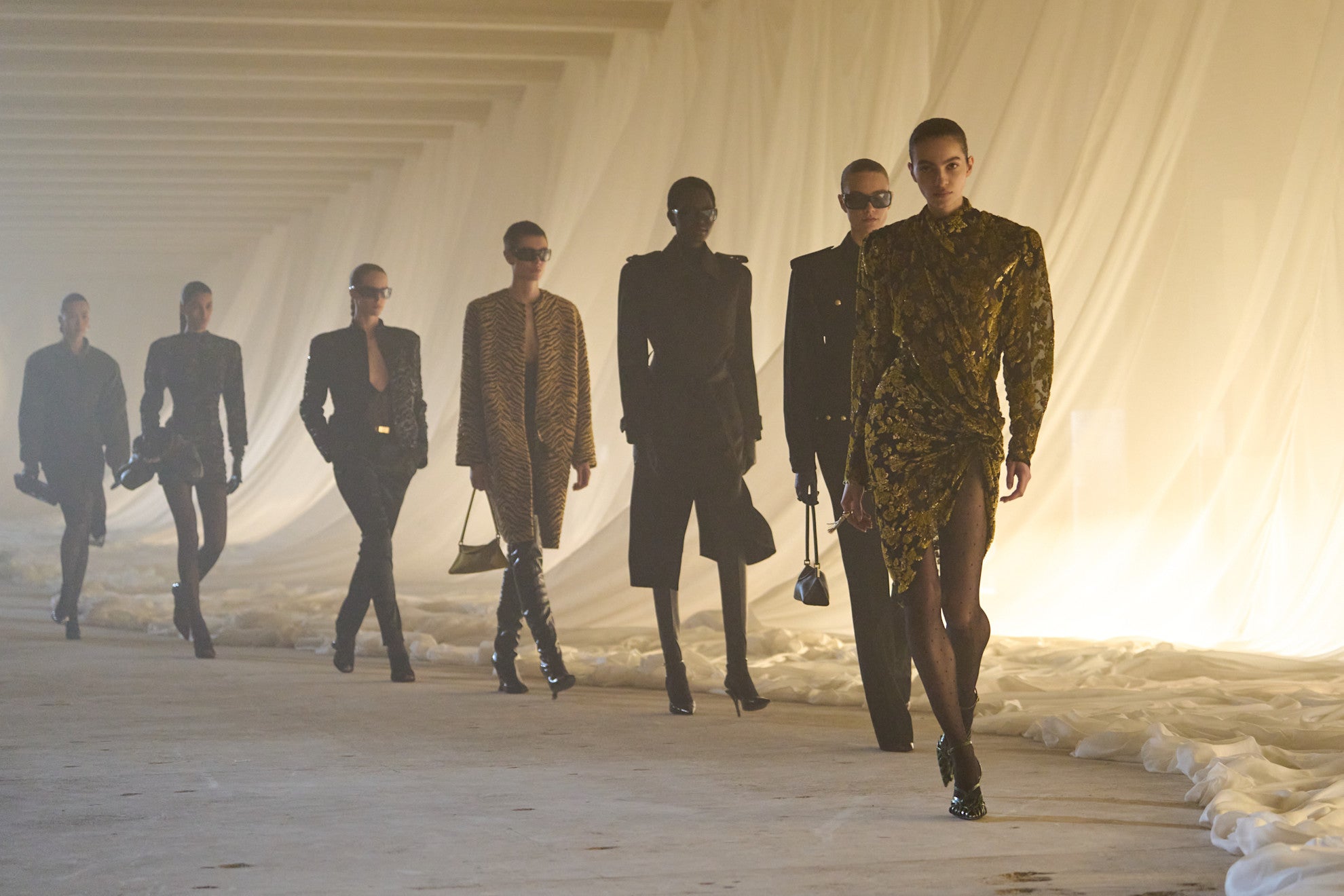
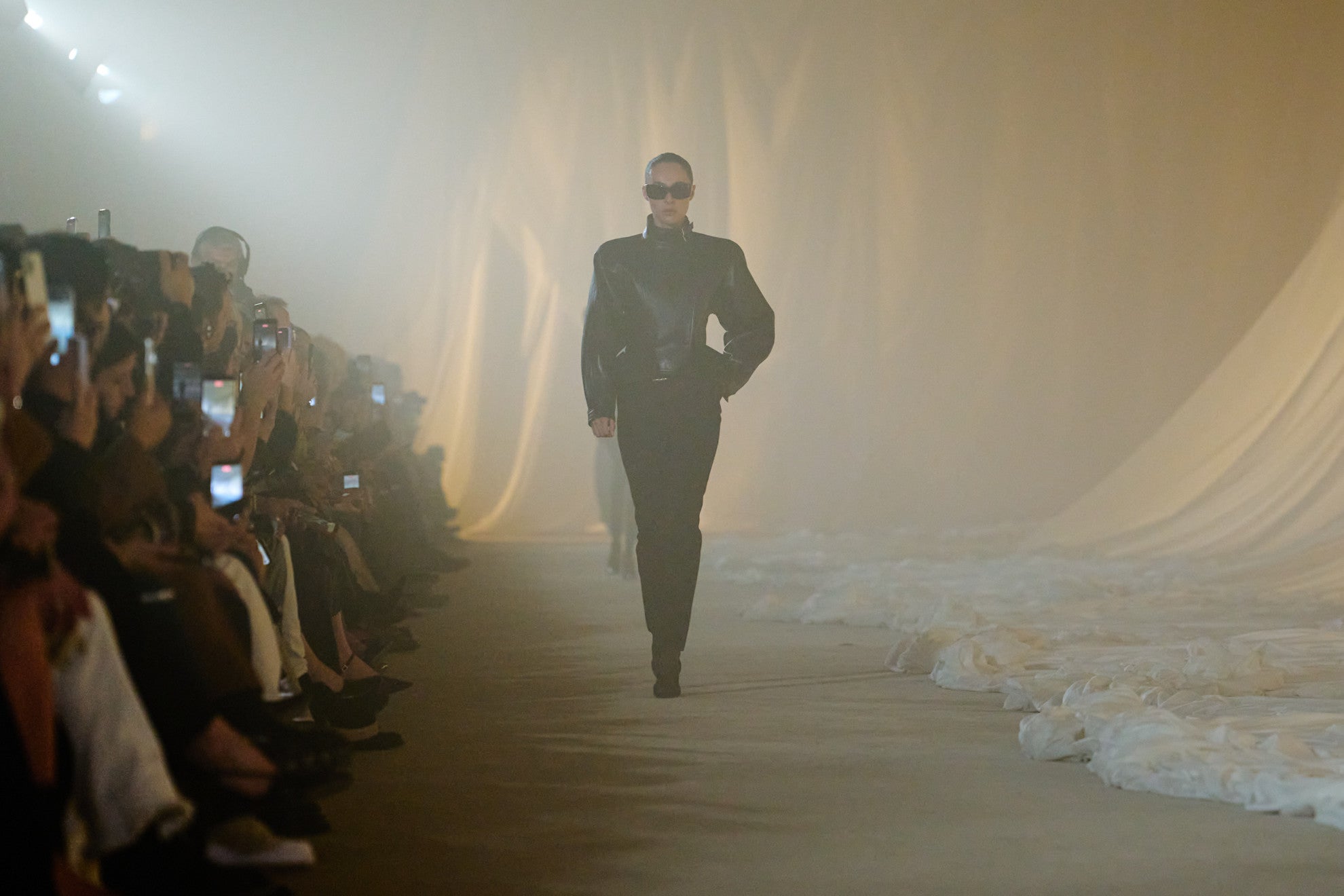
A week or so earlier, in the first of the two Qatari-backed productions, Antonin Tron harked back to Pierre Balmain’s opening of his eponymous couture house in 1945 as Paris emerged from the ruins of WW2. Balmain’s mother even had to sell her wedding ring to finance her son’s first show.
Under this guise came a superb display of nocturnal glamour: laser-cut leather blazers, pants and wicked trenches, chic, and precise. Crisp mannish pant suits with wide shoulders. All very restrained, yet also sensual, tough, and very sexy. Reaching from the ’40s to the ’80s or as Tron put it: “From Film Noir to strong shoulder (David) Lynchian glamour.”

Tron added fantastic cocktail dresses made in what the French call animalier – leopard or zebra golden prints, zig-zag jacquard, and glistening anthracite silk leopard.
“It was really important for me [to create] an emotional connection with the house,” said Tron, noting that images of the founder’s apartment show an haute bourgeois home, with a giant zebra skin in the salon.
Unlike a lot of runway brands that rely on perfumes to survive, Balmain sells a lot of luxury ready-to-wear. The house is now posting annual sales of $350m, albeit on thin profits.
Somehow in synch with the aerial moment, Tron opened with a pilot, inspired by the fact that Pierre Balmain dressed Air France’s first female aviator.
“I got this idea of the pilot from that. I don’t know what she’s driving, a car or a fast plane. But she is quite badass!” enthused 42-year-old Tron, a highly-experienced designer whose career has been a very slow build.
After interning at Vivienne Westwood and Raf Simons he worked for Louis Vuitton, Givenchy and Balenciaga before launching his own line in 2016, where Anna Wintour tweeted about at its first show, igniting sales. Its name: Atlein, meaning an amalgam of Atlantic and allein, German for alone. Now, in charge of a storied Paris house, Tron seems far from unaccompanied.