


Talk about saving the best until last. After a month of shows, after quantities of clothes glimpsed so fleetingly that they had started to blur together like a landscape seen through a train window, a stop, and also the most remarkable of starts.
The debut of Matthieu Blazy at Chanel on Monday night, the first true caesura at the house in over four decades, achieved something remarkable. It gave pause. It created space. And even, momentarily, before the unanimous plaudits began, it evoked silence.
As befitted the galaxy-like mise en scène of the show itself, in the Grand Palais in Paris, the 41-year-old French-Belgian’s clothes – his vision – seemed to change the very atmosphere within the room. Certainly the front row seemed to be breathing different air to usual; it quickly grew heady with the oxygen of it all. By the end not a single attendee was calling him anything less than a genius.

In a season that has seen an unusually large number of high-profile debuts, at brands as diverse as Balenciaga and Gucci, Dior and Versace, almost all of which have divided opinion, the consensus was loud, and also strangely hushed; wonderstruck even.
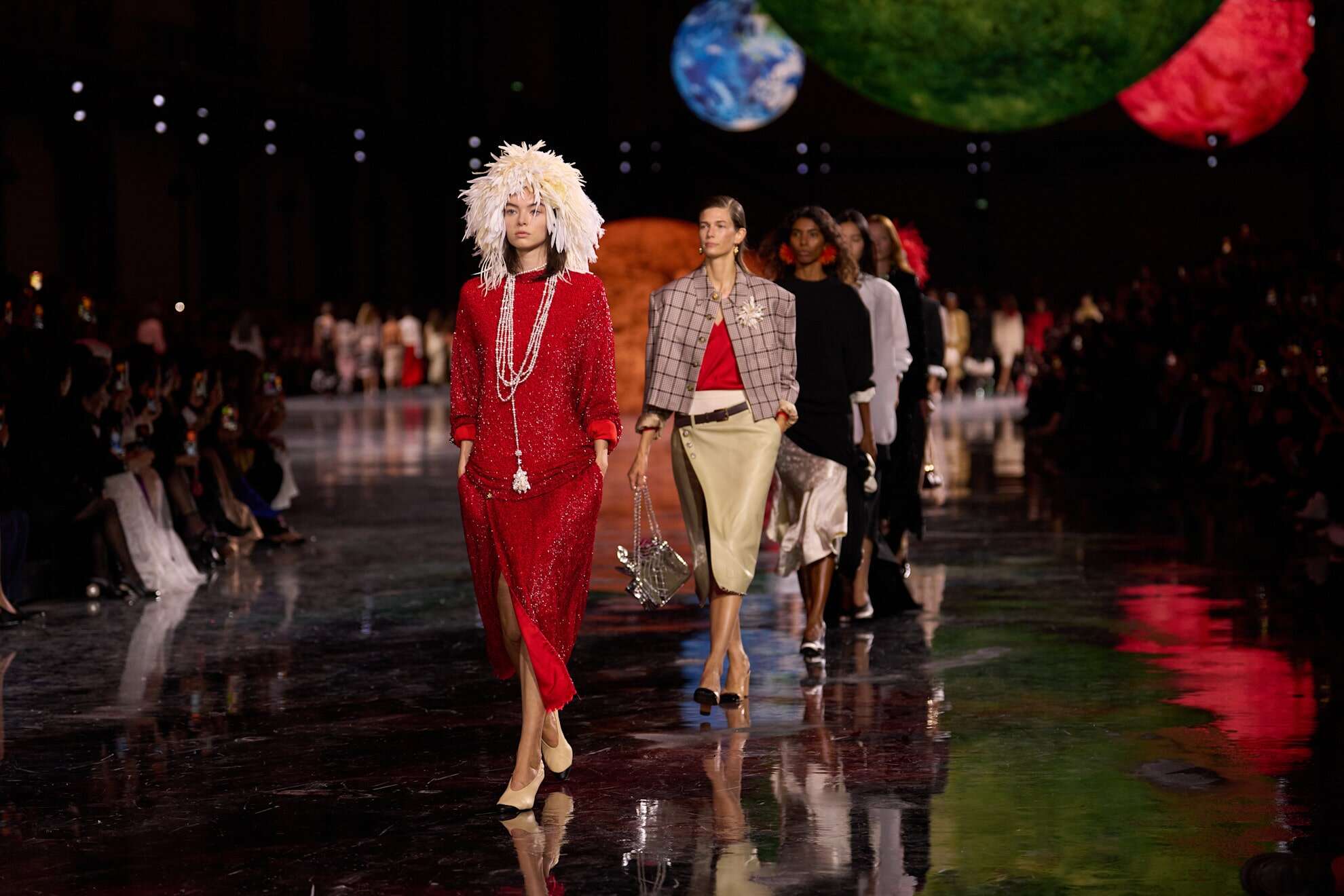
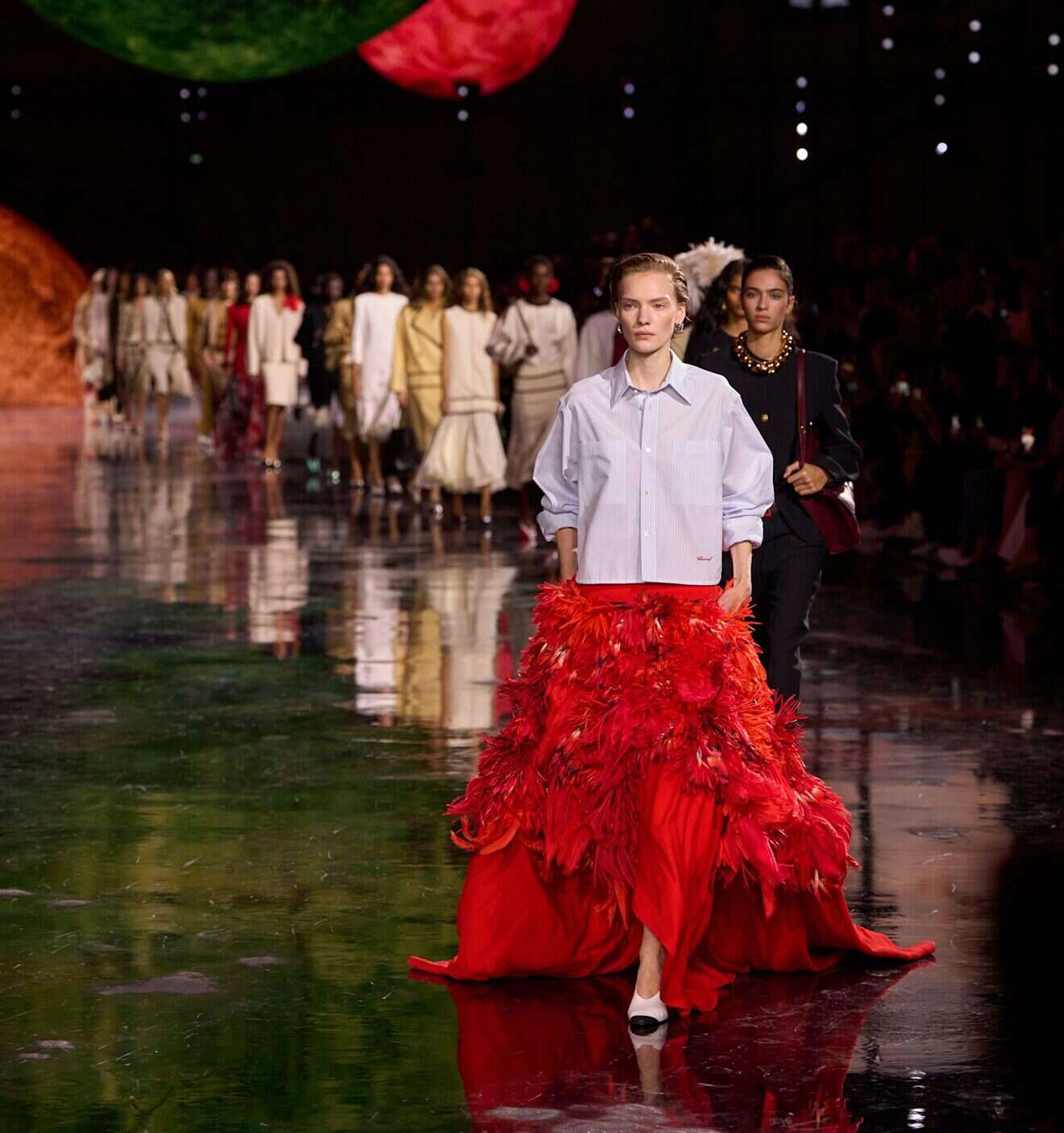
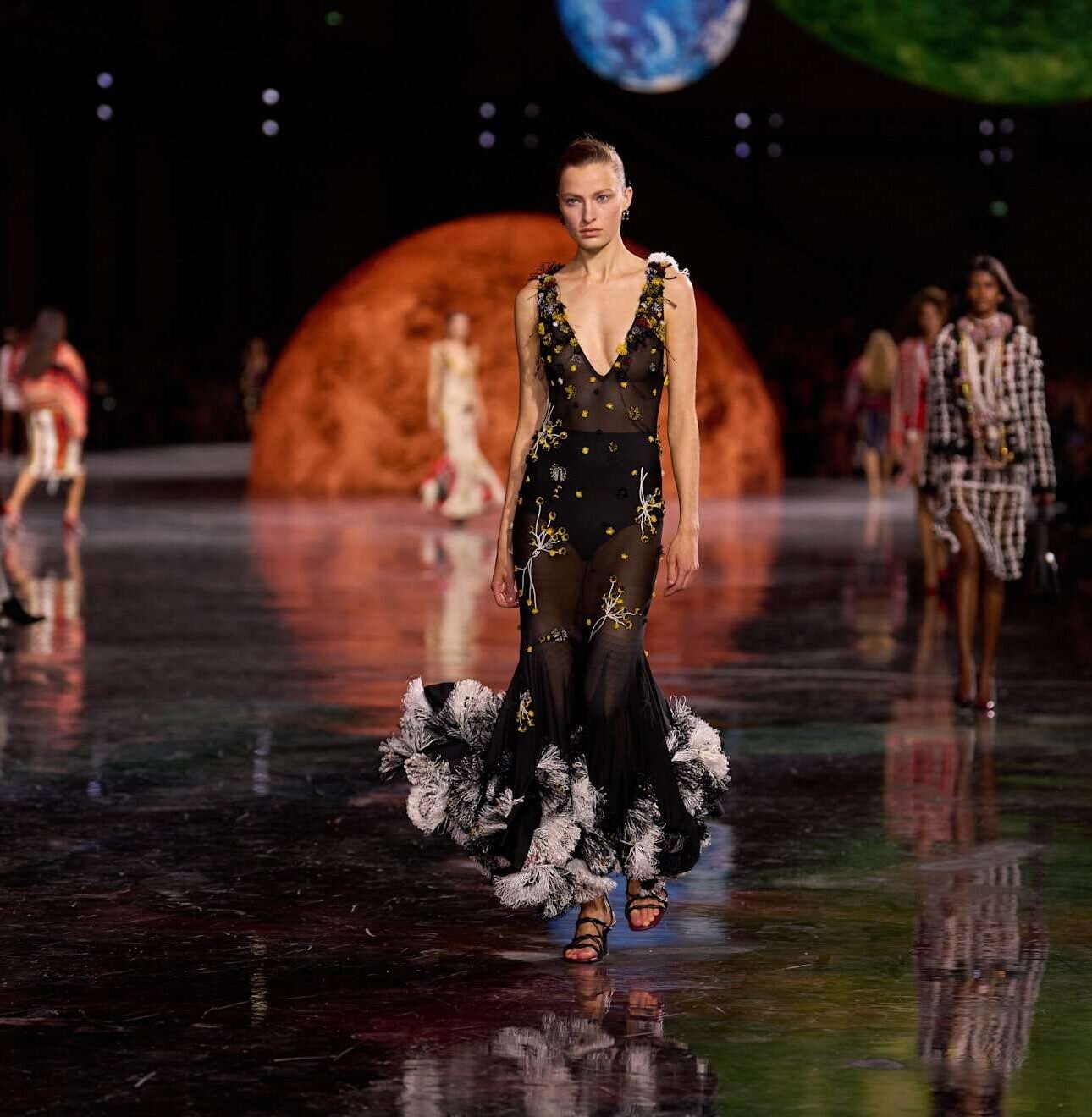
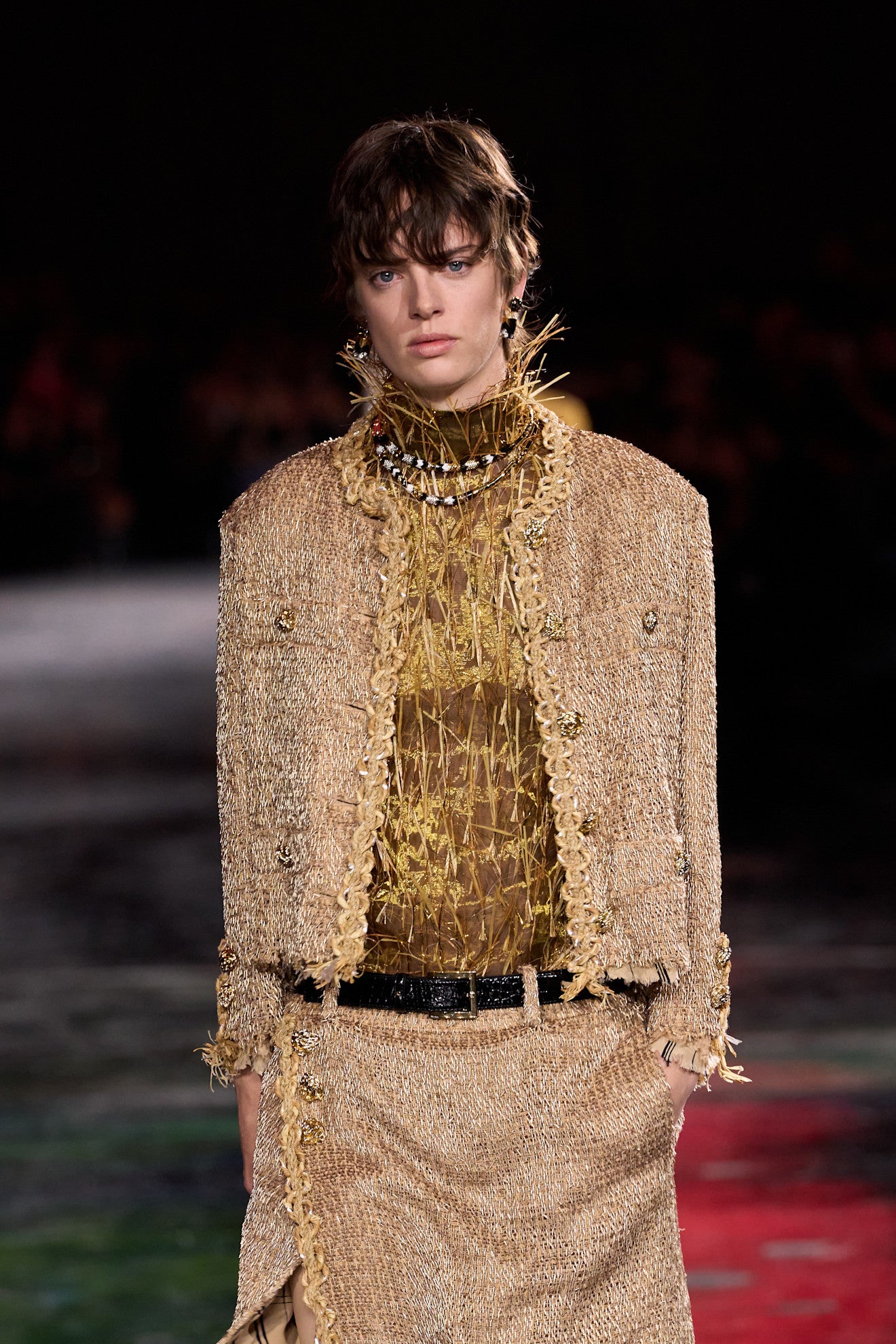
Every outfit of Blazy’s seemed to slow time, from the tweed suiting that returned the original easefulness to perhaps Coco Chanel’s greatest innovation while adding in an extra, singularly 21st century slouch, to the truly traffic-stopping evening skirts, part-flamenco dancer, part-Cinderella.
What’s more, while there was diversity – the pared-back perfection on the one hand of the white shirts co-created with the Parisian house of Charvet (where Coco used to order hers); the delicious intricacy of, say, a black silk dress adorned with a few stray golden ears of wheat – there was coherence, too. This was a world, a new world, of Chanel.
And as befits that world, there were also the most covetable examples in years of those all-important add-ons that are, in truth, when it comes to the brand’s bottom line, anything but add-ons. Like the cool yet chic squished-up rendering of the classic 2.55 bag, which looked as if it might have been found in the substratum of an especially exquisite wardrobe, perhaps that of Coco herself. Or the re-tool of the classic two-tone pump, turned into a higher slipper heel, sexed up by way of its newfound sleekness and extra centimetres, with just the tip of the toe nonchalantly dipped in a different hue.


How to create a catwalk show that squares the peculiar circle which demands it should be both a performance and a capitalist call to arms? How to deliver the theatre required to make it seem like a moment but that also encompass clothes that people want to buy and wear? That’s the question that increasingly gets asked at the biannual fashion month which unfolds in New York, London, Milan and finally Paris, especially with the luxury industry imperilled by the global – and, more particularly, the Chinese – economic slowdown.
You need to present specialness and wearability at one and the same time. Most designers tend to be better at one or the other, which is why there is often a disconnect between what gets presented on the catwalk and the so-called commercial collection. Blazy’s presentation appeared effortlessly, consummately whole, less bifurcated even than it was during his previous, highly successful tenure at Bottega Veneta.
Suddenly the cumbersomeness of the catwalk format, the sense of puzzlement it can prompt, was transformed into something as coherent, as fluid, as one of those tweeds or silks that Blazy had had woven out of 17 new threads developed at his behest. Perhaps the problem has not been the format, after all, but the personnel?
There has been no single figure as influential on the way women dress today than Coco Chanel, who founded her brand in 1912. So many of the building blocks of the modern woman’s wardrobe come from her, be that trousers (verboten before her) or shoulder bags (just one of many ideas she pinched from elsewhere; in this case, from the canvas satchels used by the army); be that the now ubiquitous breton top or (praise be) the jacket that feels like a cardigan.
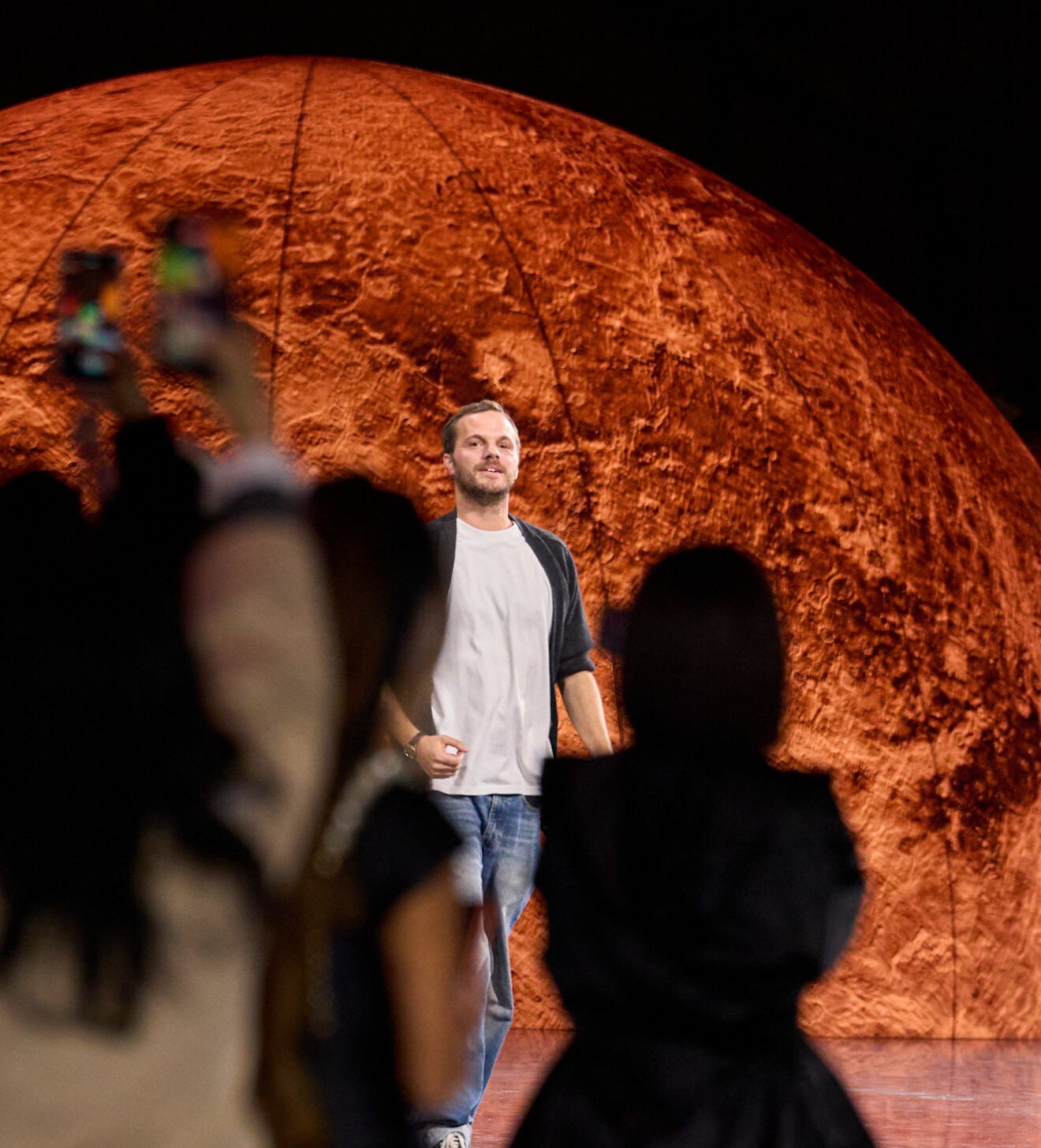
When Blazy spoke of his forays into the Chanel archive he talked about uncovering “a story that was lost.” What he came to realise, he continued, is “that what Karl [Lagerfeld] did was really his own take on Chanel”.
Of course it was. Every designer inevitably reproduces themselves, even if they have been hired to parse the legacy of another. But there’s a deeper truth here. While the German designer was indubitably brilliant, delivering peak Chanelness year after year, seen through the prism of Blazy’s, well, wardrobe, what he did looks more like a kind of playacting. After Lagerfeld’s death in 2019, his former righthand woman, Virginie Viard, had done little more than keep things in a holding pattern.
The deceptive simplicity of so much of what Blazy offered up, in contrast, the inconvertible modernity, called to mind those epoch-shifting clothes of Coco Chanel herself; those chic bombs she set off in the early decades of the last century that would eventually end up enabling nothing less than a sartorial revolution. And with or without that sense of history, what Blazy did was beauteous – and wearable – in its own right.
Chanel is an $18bn business, the world’s second largest luxury fashion brand. Blazy might just make it bigger. He will definitely make it better.