
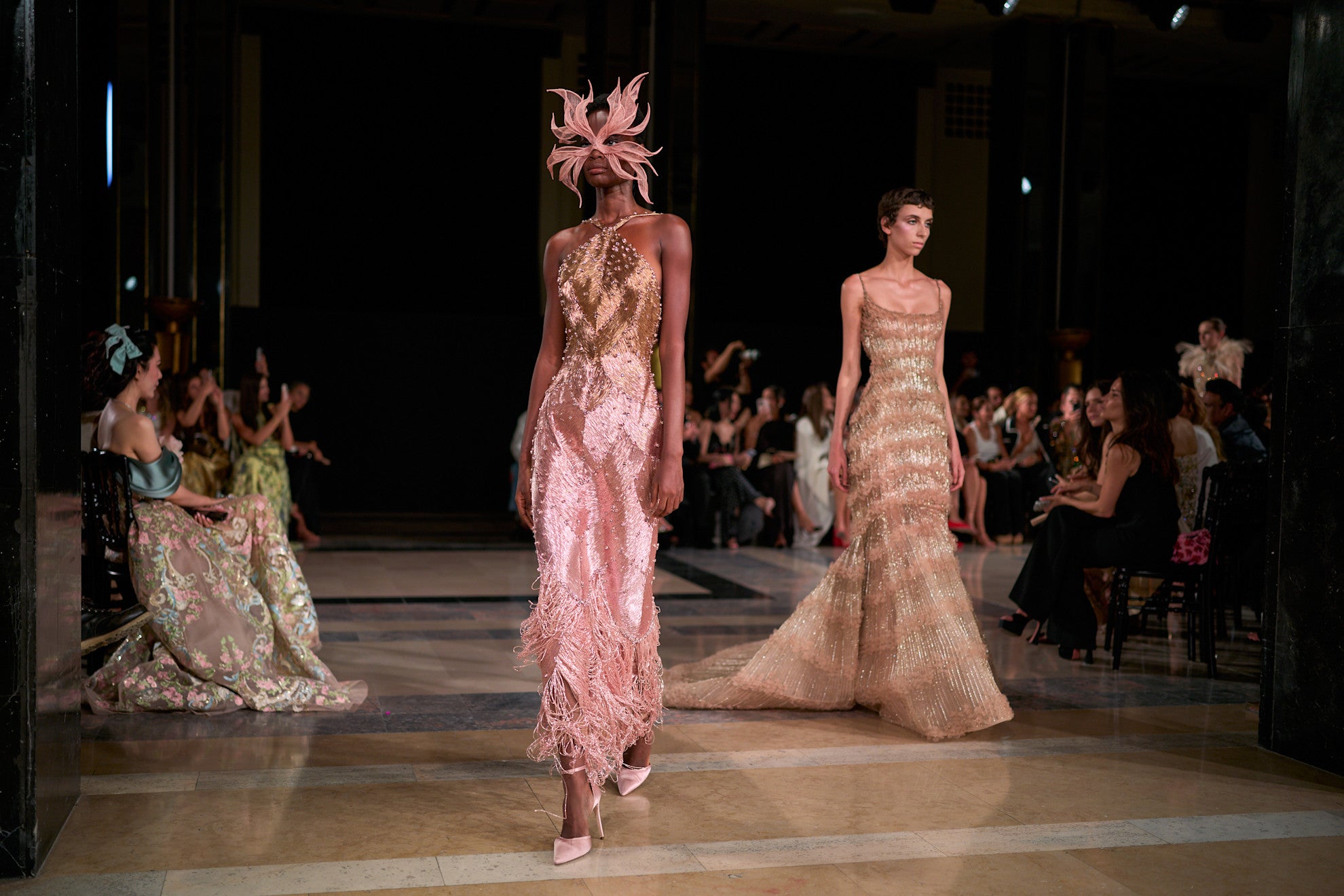
Every six months, Paris Haute Couture Week dreams up a whole new wardrobe for fashion’s top spenders while simultaneously displaying the latest ideas concocted by fashion’s greatest laboratory. This week, with clothes offered for fall/winter 2026/27 couture season, was ferociously more science- and art-driven than style led.
All week a flotilla of limousines ferried clients and movie stars between couture shows and VIC dinner parties staged by marques such as Dior, Schiaparelli, Balenciaga or Chanel. Couture, of course, remains the holy grail of the world’s richest and most filmed women – those in search of something unique and exclusive become, in a sense, privileged guinea pigs of these labels. And the results can be extraordinary.
See also: The Best of Paris Men’s Fashion Week: From Pharrell’s Wave to Dior’s New Masculinity
Dior
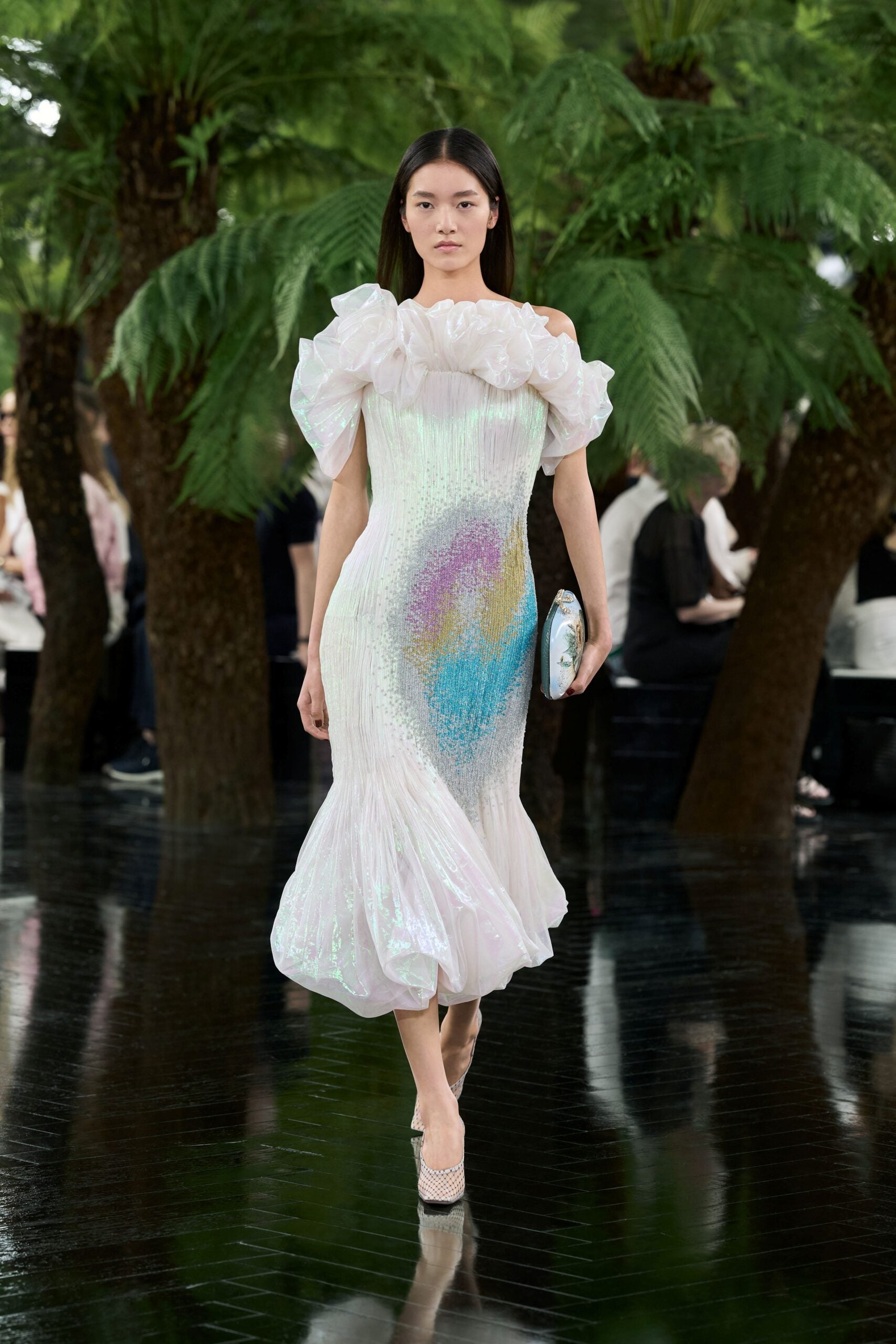
Few couturiers today are as experimental or exciting as Dior’s Jonathan Anderson. His inspiration this season was the American artist Lynda Benglis, who lived between Santa Fe, New Mexico and Ahmedabad, India.
The designer took Benglis’ metallic casting sculpture and use of gold leaf and zinc into remarkable metallic plissé silk fan-shaped dresses, and extended her 1970s gestural abstract sculptures in beeswax or polyurethane into magnificent suits – like a leaf shaped Bar jacket in knitted cashmere over a twisting beehive-like skirt.
An early visit by Benglis to India led to several peacock works that were the inspiration for a beguiling set of huge embroidered fans, attached onto twisting silk columns. Very much a feminist designer, Benglis – feeling underrepresented in the male-dominated art world – famously paid for her own ad pages in Art Forum magazine. These featured a nude portrait of herself posing with a double dildo. Anderson featured a smeared version of that image in several bold looks in this show, staged on the opening Monday of the four-day season.
“We obviously blurred the ad – that would have got us into trouble,” laughed Anderson in a preview with Elite Traveler, before a show where models marched in an open-sided tent decorated with huge ferns built in the garden of the Rodin Museum.
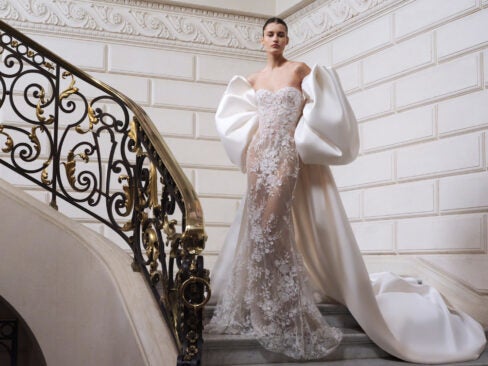
Dior had just dressed Taylor Swift in the most celebrated wedding of the decade, in Madison Square Garden, so it was fitting that the buzziest look was Dior’s bridal ensemble. Especially, as Swift has yet to release a photo of the wedding.
The Northern Irish-born couturier – normally a voluble figure – was demure when asked about Swift’s ensemble: “It’s been an honor to dress her for this special occasion,” he said. But his final outfit in this superb show was a suitably romantic wedding dress embroidered with fabric fern stems and leaves. The lushest of laboratory looks.
Schiaparelli
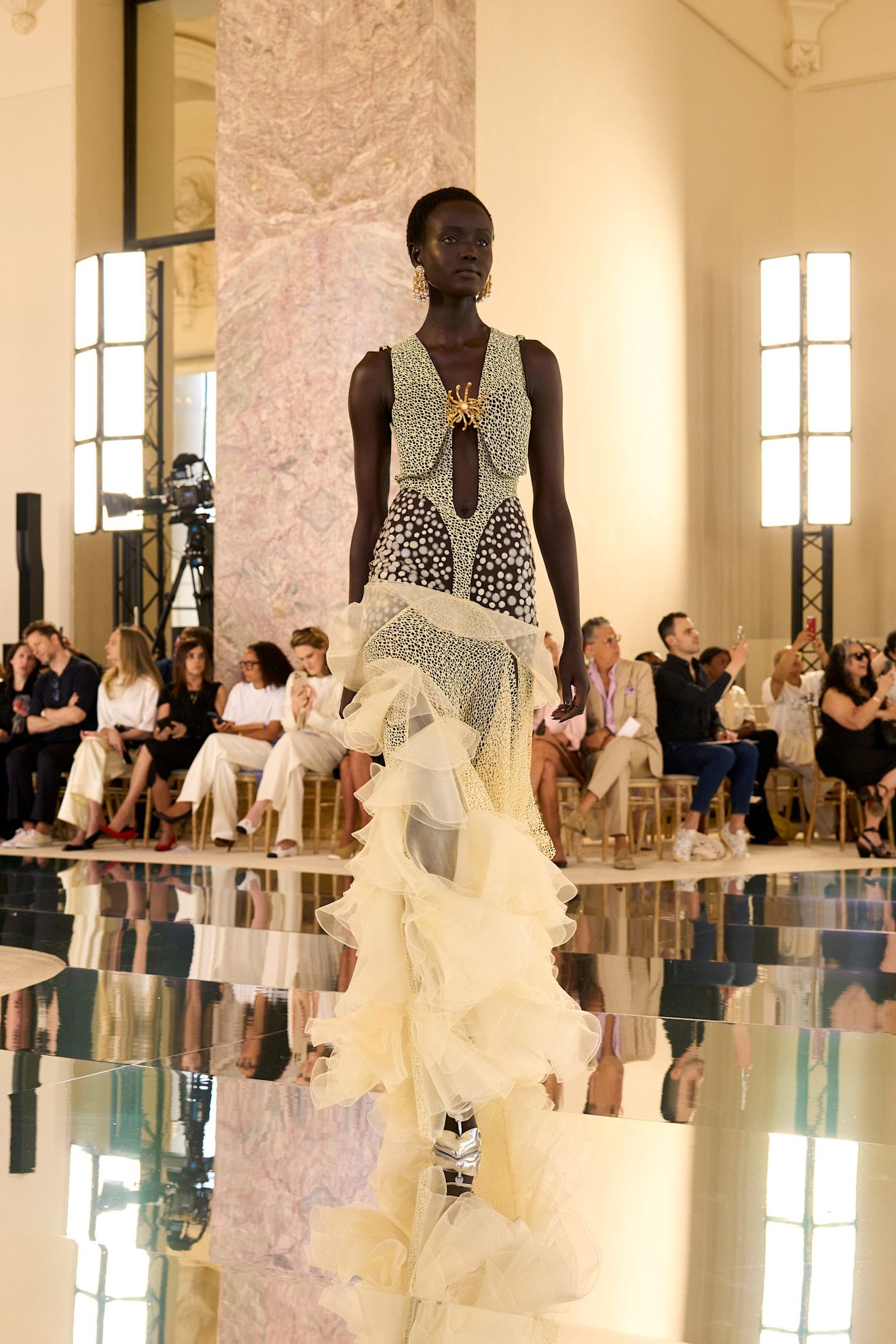
There was synthetic surrealist couture at Schiaparelli. American couturier Daniel Roseberry banished silks, satins, and wool in exchange for latex, silicone, and paint-baked sheets sculpted into a dramatic new boleros and jackets with bravura bows.
Roseberry continually tricked the eye with sculpted bustiers that morphed into clinker-built cocktails or phantasmagorical jumpsuits with tubular tentacles.
Daniel Roseberry is couture’s greatest image maker, renowned for his bowl shapes, suggestive ideas and technical audacity. Bad Bunny who turned up with a custom-made, cream-colored Schiaparelli zoot suit, complemented by a golden knit tie, while most of the rest of the front row was dressed in black with gold touches.
The collection itself was in lobster pink, blush porcelain, sea blues, tangerine and saffron, and even pale mint. The designer was given a standing ovation inside the Petit Palais, and rightly so – Schiaparelli is the most consistently coherent couturier in town this past decade.
Armani Privé
Couture houses compete for the most glistening front-row. Emma Corin wowed in a bird of paradise look at Schiaparelli; Chanel lured Michele Leo; Tilda Swinton wore French coup Catherine Deneuve, formerly a Yves Saint Laurent loyalist; Dior could boast Sabrina Carpenter, Josh O’Connor, and Naomi Watts.
But the classy quotient showed up at Armani Privé, where Cate Blanchett, Rosamund Pyke, Lou Doillon, Laura Harrier, and Cindy Bruna all looked sensational in black velvet tuxedo looks. Dotted among them was fashion’s favorite composer Ludovico Einaudi and dancer Etoile Hugo Marchand.
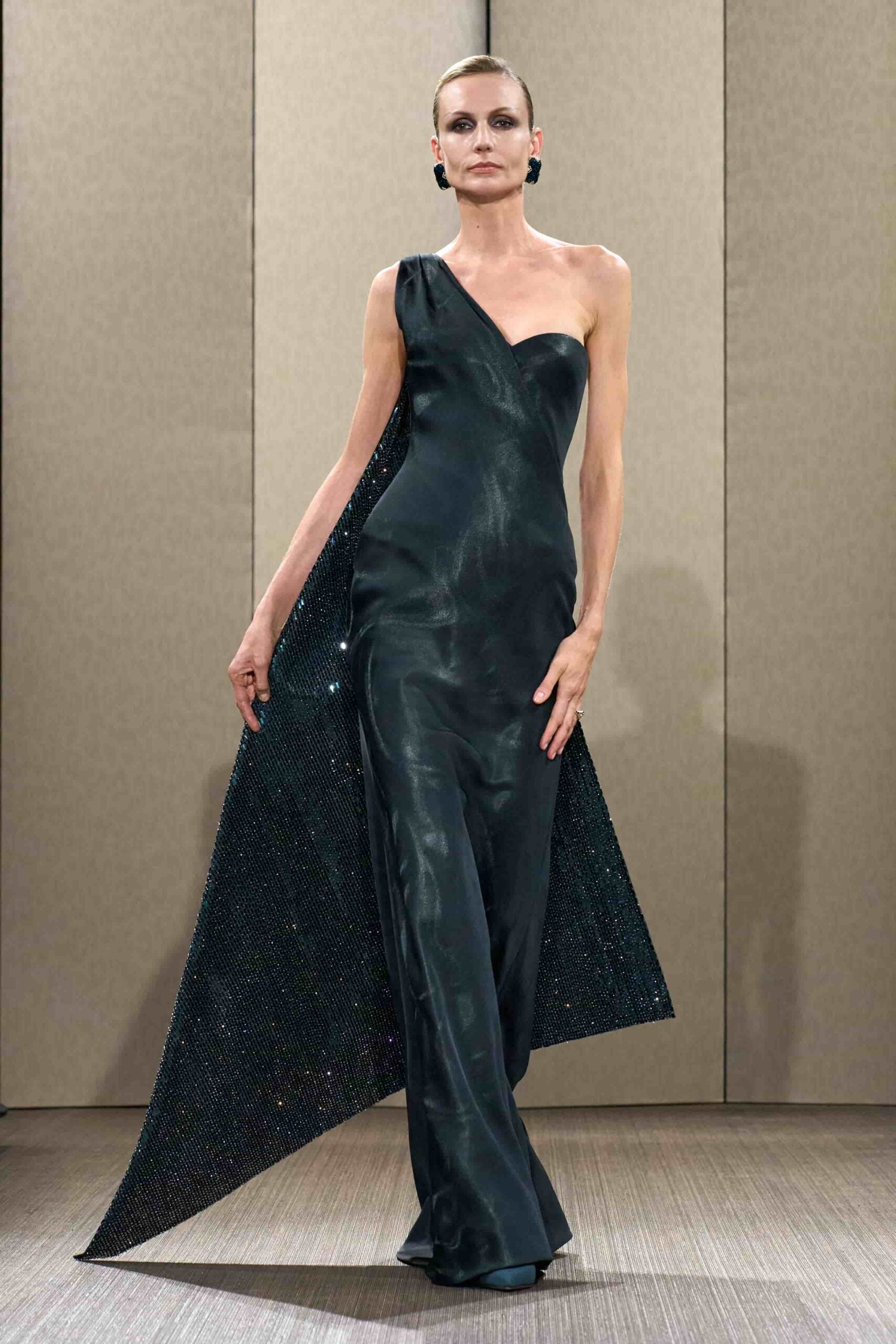
Since Giorgio’s passing last year, Privé has been designed by his niece Silvana Armani. The key here was classicism with experimentation, with a marvellous series of glistening masculine jackets in a dark palette of hunter green, burgundy, burnt amaranth, and scores of blacks. While for evening, a series of alligator pattern sequined columns cried out for an Oscar statuette as an accessory.
“It’s about how choosing an outfit becomes a ritual that reveals a woman’s inner world and a secret facet of her personality,” explained Silvana, who entitled the collection Boudoir.
Theoretically, according to Giorgio’s will, the Armani family are due to sell at least 15 percent of the brand by March 2027, and control within five years, yet Silvana and the house’s menswear designer Leo Dell’Orca – who sat front row – don’t seem in any hurry to depart the stage. And, given the polish and sophisticated brio of these clothes, a stylish future seems assured.
Chanel
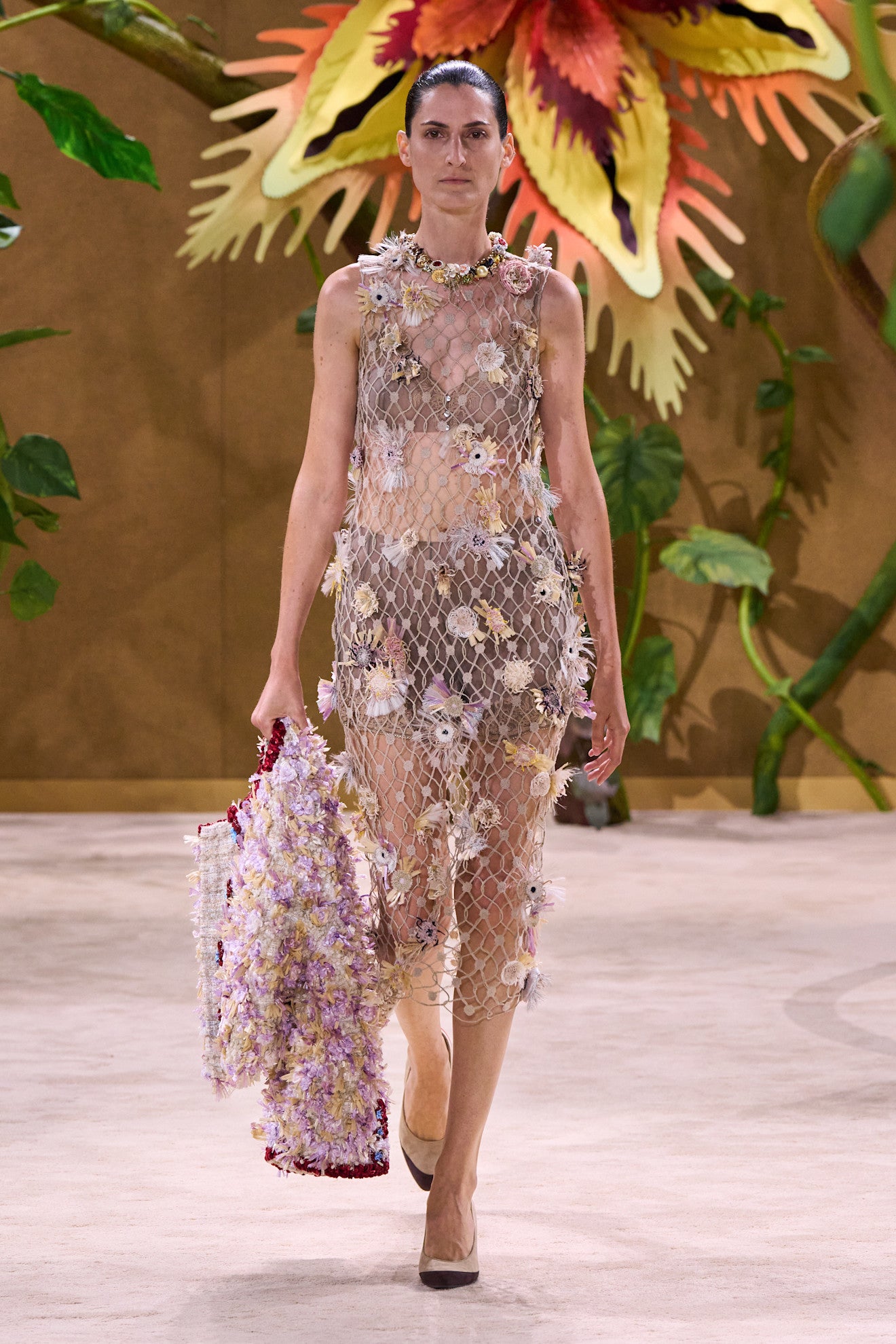
A phantasmagorical, fairy tale from Chanel, served up to an audience perched among a comic book garden of poisoned ivy worthy of Jack and the Beanstalk or The Three Bears. This mood was reflected in the clothes: shaggy bird’s nest redingotes and cloche hats; shoes with vine heels; red pepper-shaped clutches. The classic four-pocket suit was constructed in icy guipure lace or russet or golden tweed, presented alongside mannish three-piece Prince of Wales suits worn with miniskirts, or cocktails made of delicate wisps of chiffon trimmed with gold strings and pearls.
However, the entire mood was juxtaposed by the soundtrack – a housewife bitterly recounting her banal duties, from washing dishes to arranging sweaters. And 35 years after Jean-Paul Goode shot Vanessa Paradis as a bird of paradise for Chanel, the singer performed at Chanel’s post-show after-party.
See also: The Standout Collections, Trends, and Moments From Milan Fashion Week
Balenciaga
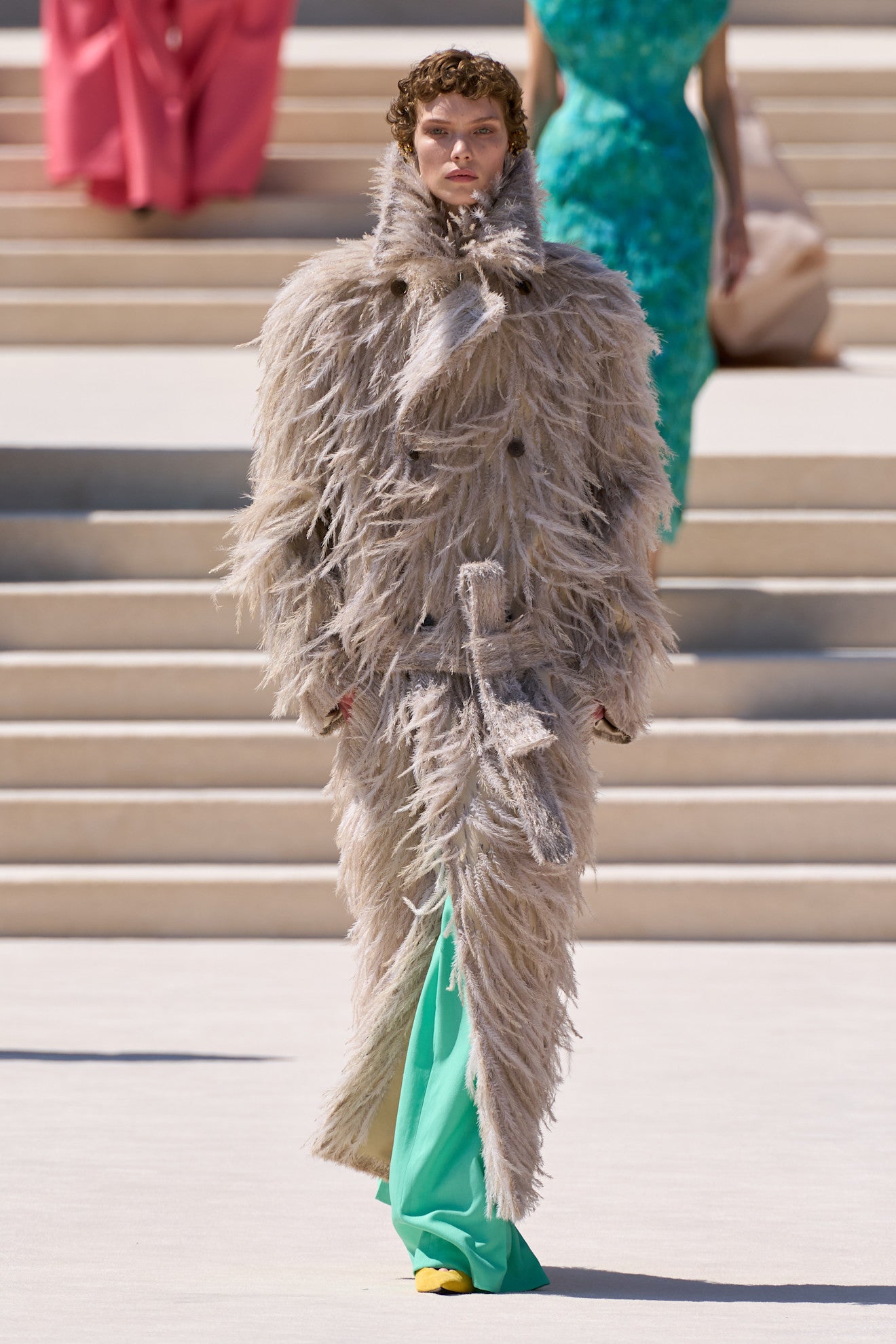
It was a brilliant couture debut at Balenciaga by Pierpaolo Piccioli, in the house’s 55th couture collection since Spain’s Cristobal Balenciaga opened his house in Paris in 1937. There was artful experimentation, where 3D digital scans helped develop moulded leather carapaces, used as architectonic structures under enveloping gowns; and curvaceous silk gazar dresses or bulb-shaped gowns in densely packed fabric flowers.
Balenciaga’s tradition of textile innovation triumphed with Amsilk, an advanced bioengineered, fossil-free material with 2.5 times the tensile strength of steel. It also boasts a rare glimmering sheen, seen in some fab dresses – the mood enhanced by the blinding morning sun in the Cité Université campus.
Couture is “a territory for experimentation and engineering. It can be a prism through which to witness both the current moment, and the identity of Balenciaga,” philosophized Piccioli, who sportingly took his bow with 40 atelier staff – all dressed in lab coats.
Presented to the soundtrack of Anthony and The Johnson hits, it was a moment of grace amid the madding crowd of couture.
Rahul Mishra
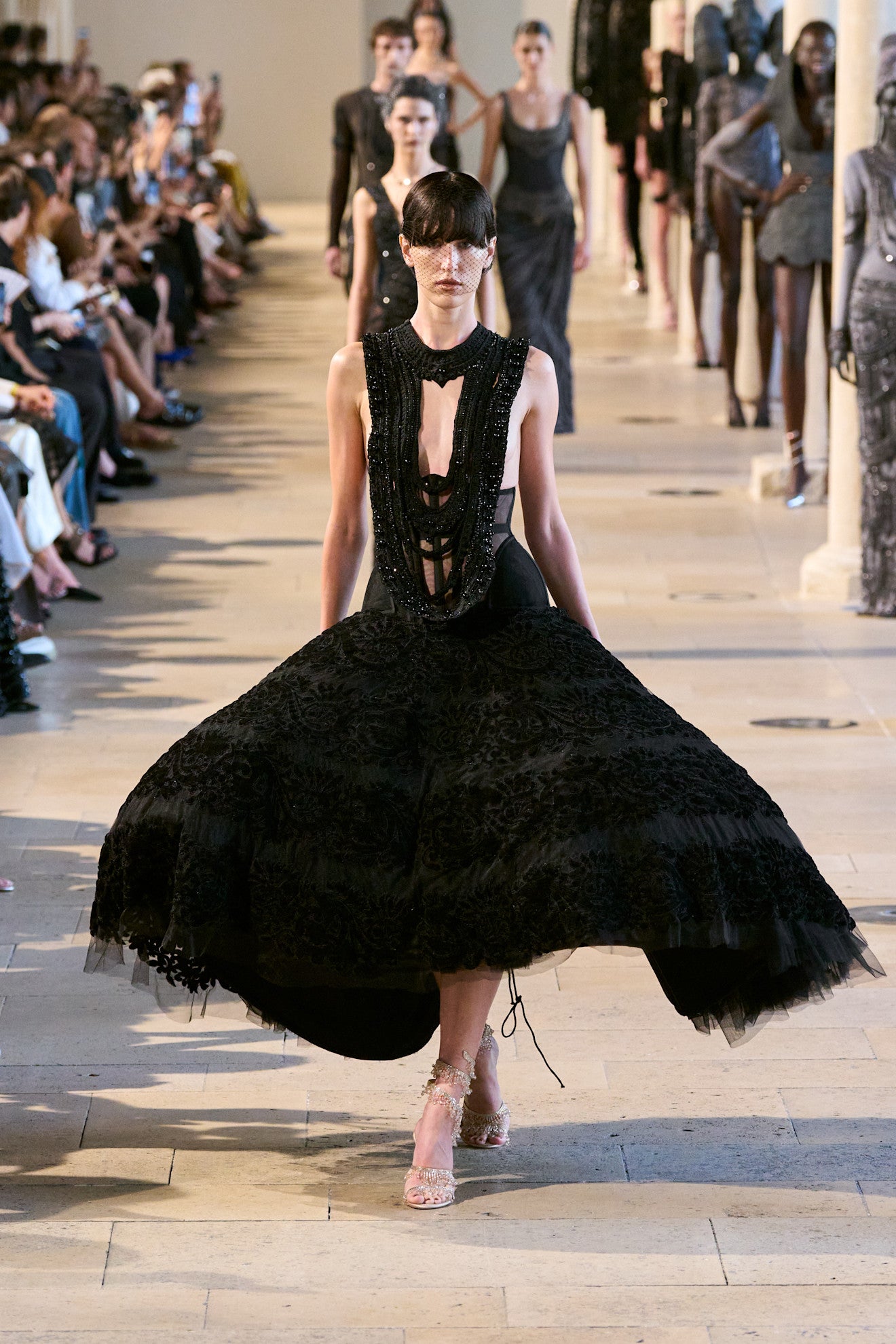
The Delhi-based couturier Rahul Mishra unveiled a truly excellent collection, inspired by the Ajanta cave monuments. These second century BC Buddhist masterpieces led to a fantastic series of gray and black statuesque dresses, where hand embroidery
mimicked the surface of sandstone and the contours suggested basalt. Rahul tapped into the ancient Indian embroidery techniques of Zardozzi or Dabka, applying crystals and bugle beads to create truly unique trompe-l’oeil cocktails.
In places the collection was erratic, not aided by dressing several models in monumental fabric arches, before a finale of body stockings, jumpsuits and bridal gowns dusted in beads and crystals. But it was spectacular. In the front row Cardi B caused a paparazzi feeding frenzy, which was exceeded by a storm of flashing lights for Rahul’s ultimate major domo, Isha Mambani, the daughter of India’s greatest billionaire Mukesh Ambani. Isha’s key role in the Reliance – the Mukesh company that bankrolls Rahul – has led the Times of India to dub her The Fashion Baroness.
Staged inside the medieval College des Bernadins, this was a powerful reminder of India’s special source of inspiration in fashion.
Standing Ground
Fashion loves a debut, and we witnessed a highly accomplished inauguration by Standing Ground by Michael Stewart inside the Irish Embassy. After a quiet decade, this County Clare-born couturier seemingly sprung out of nowhere with a hit capsule collection in 2023 for Fashion East, the most important talent scout display in the industry. He then won a Savoir Faire award in the 2024 LVMH Prize.
Stewart crafts gowns of almost spiritual elegance, long pure mono-color robes finished with hidden beading and tubes. He drapes with aplomb and ruches with precision – creating twisting gowns in rivulets of fabrics in precise hues – Yves Klein blue, sinful crimson or burnt umber.
“I feel very welcomed in Paris and I really appreciate that,” explained the affable red-headed Celtic couturier inside the 18th century mansion off the Champs Elysées.
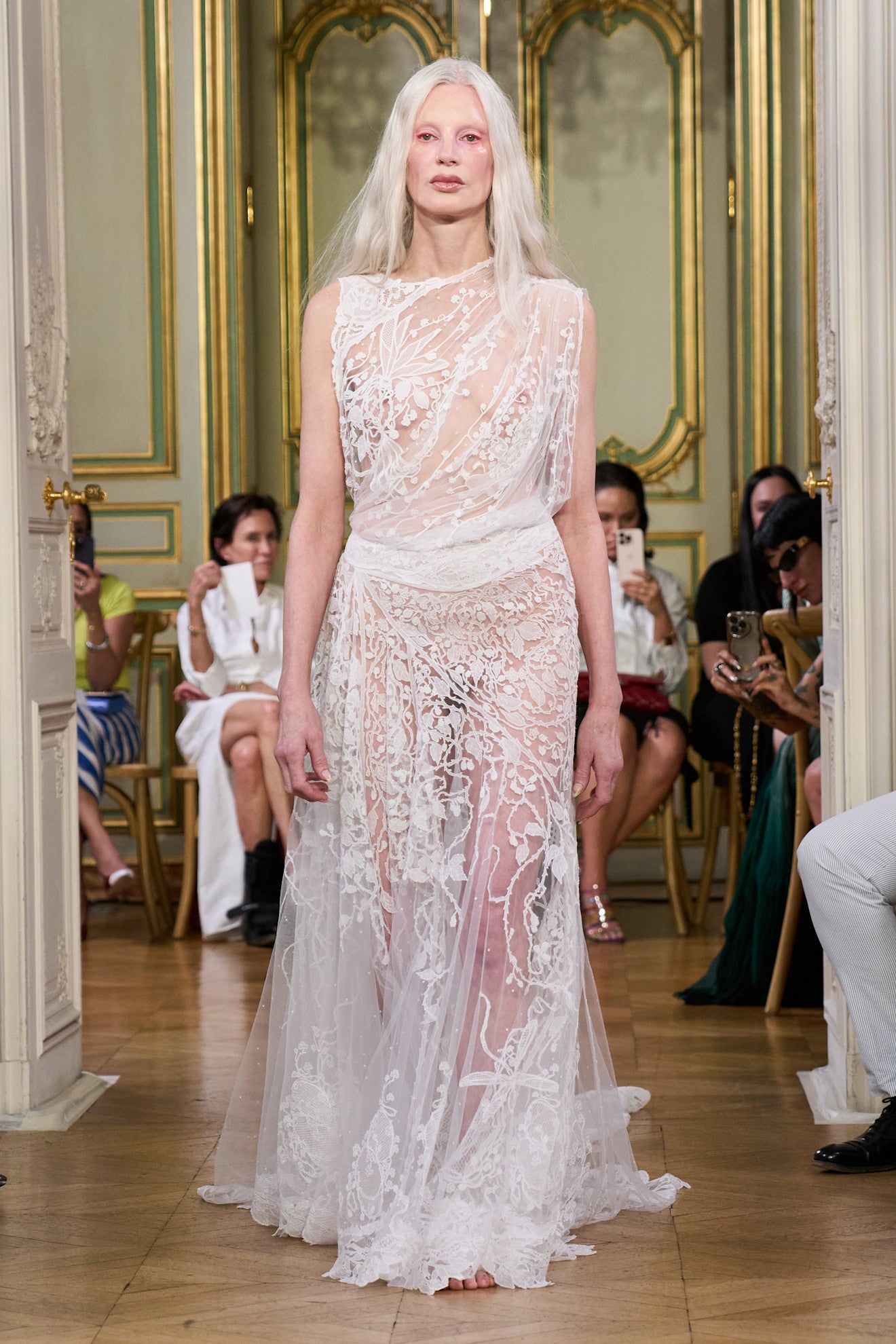
For his Paris debut, he broke new ground with a remarkable wedding dress in abstract handmade Carrickmacross lace. Supported by the Design & Craft Council of Ireland, it took 26 pairs of hands and 4,000 hours to create this experimental bride – unlike any seen before in Paris.
“I wanted to showcase Irish craft and enrich the heritage and skills in Ireland and bring them to a stage that I feel they deserve,” concluded the gentle giant.
Stéphane Rolland
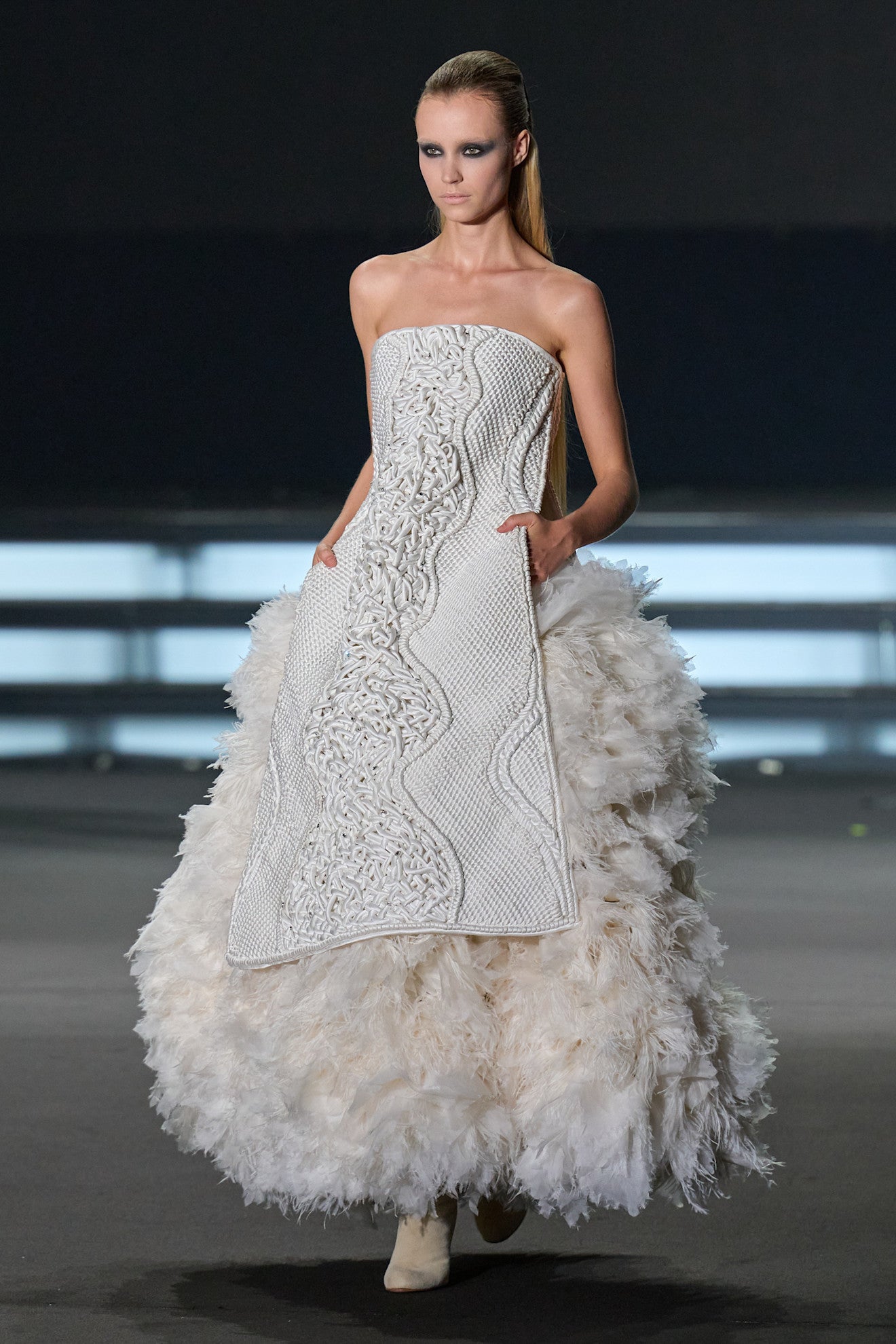
One can always rely on Stéphane Rolland for a memorable show. On Tuesday he presented a homage to beautiful Dalida, the Egyptian-born Italo-French singer, who captivated France until her death in 1987. Staged inside the Olympia theater – where Dalida’s career first launched – the cast marched out before a massive video of her interpretation of lost love, Avec Le Temps.
Like the opening clip, the entire collection was in black and white – 90 percent the latter – in a sustained display of classy French glamor by Rolland, France’s last great Indie
couturier. Working with silk gazar, satin macramé or pleated crepe he sent out Zouave trouser jumpsuits; bustier dresses finished with ostrich feathers; and an exquisite long scarf dress, its arms and shoulders embroidered in onyx and gold silicone. Not so much experimentation but elegant refinement.
Iris Van Herpen
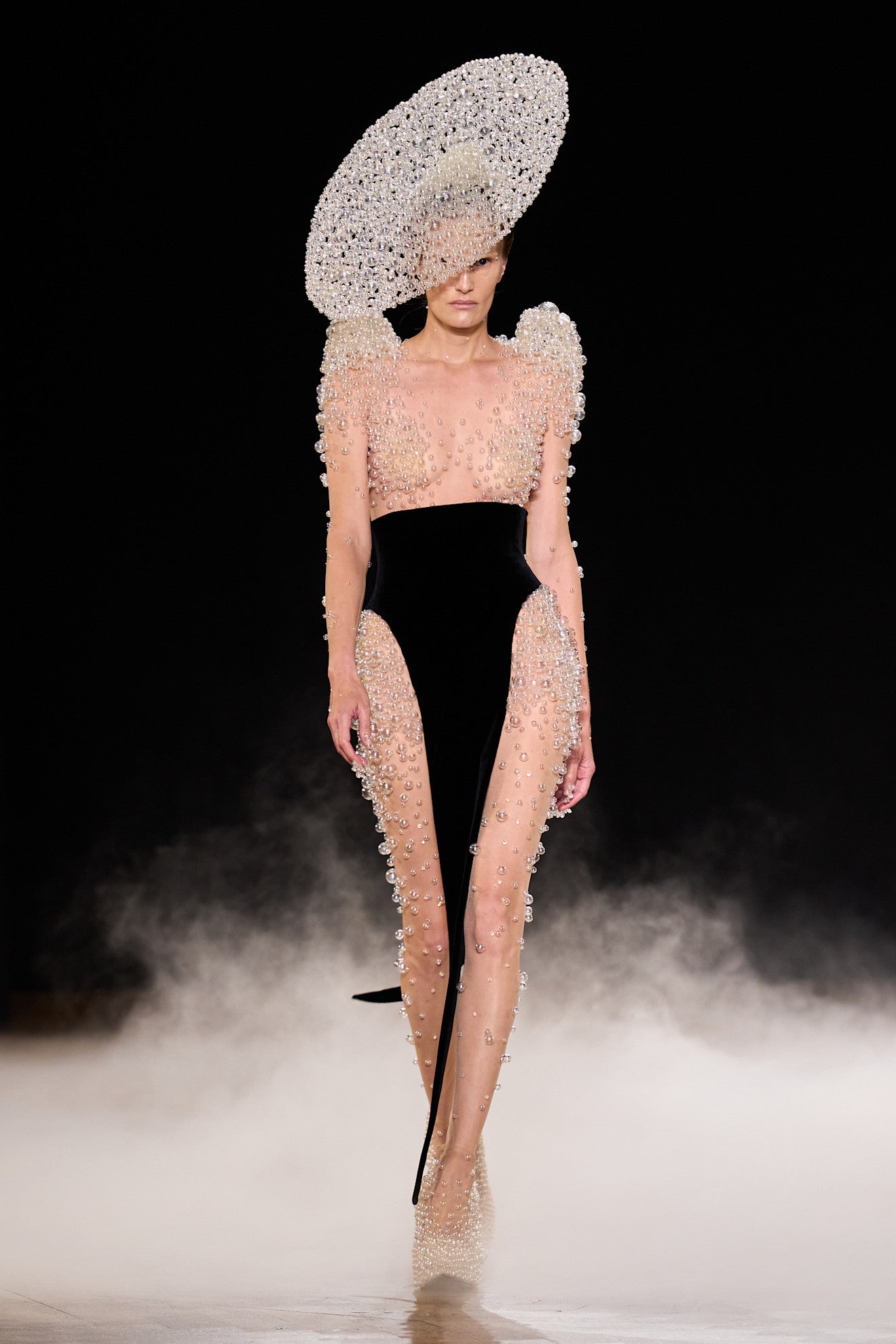
Couture at its most wilfully turbulent from the Dutch creator whose inspiration was the Victorian artist and inventor Margaret Watts Hughes’ experiments with materializing her own voice, long before scientists translated the oscillations of stars into music.
The result was metaphysical. Starting with fractal fashion – flowing chiffons and organzas hand-pleated into sweeping half-wheels and suspended within moon-curved bonings of laser-cut carbon fiber, before climaxing with a one-shoulder tulle dress covered with 10,000 hand-blown glass spheres.
These clothes are mostly to end up in a well-endowed fashion museum rather than in a wardrobe, but when it comes to innovation Iris hit a home run.
Boloria
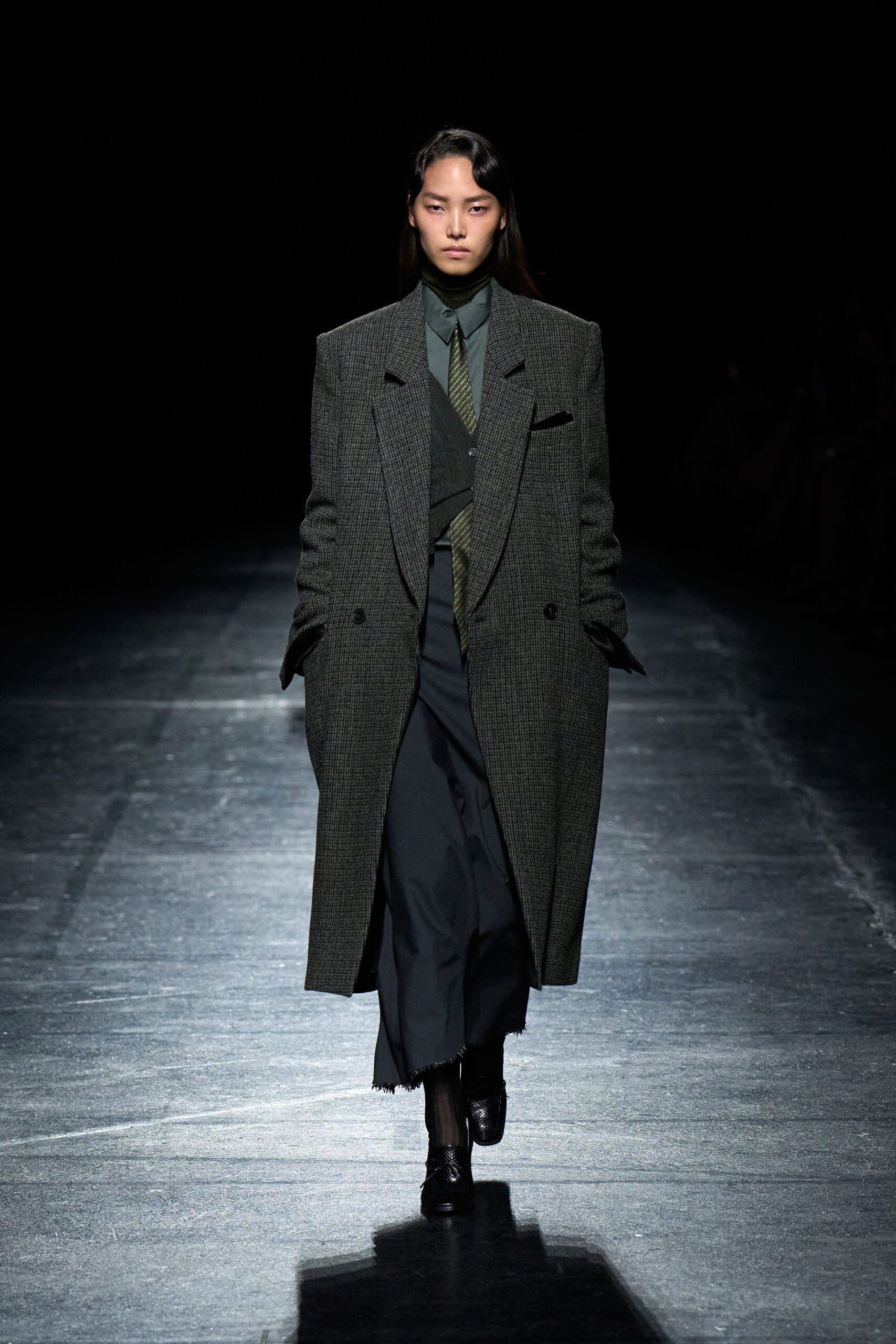
Couture always attracts the odd avant garde ready-to-wear show and this season that role fell to Boloria, an unexpected project backed by the Beers brothers, founders of dance-music festival Tomorrowland, and designed by Belgian Olivier Theyskens.
This turned out to be an exhilarating return by Theyskens – one of the most talented designers of his generation. He reinvented his early Gothic ideas which so seduced Madonna into giant flowing dark goddess gowns made in acres of anthracite technical taffeta. And dreamt up a great series of slimline wool or lambskin redingotes and sexy governess dresses, before finishing this co-ed with a gang of piratical lads in britches and barely-on silk shirts ideal for an after-midnight summer rave.
Elie Saab
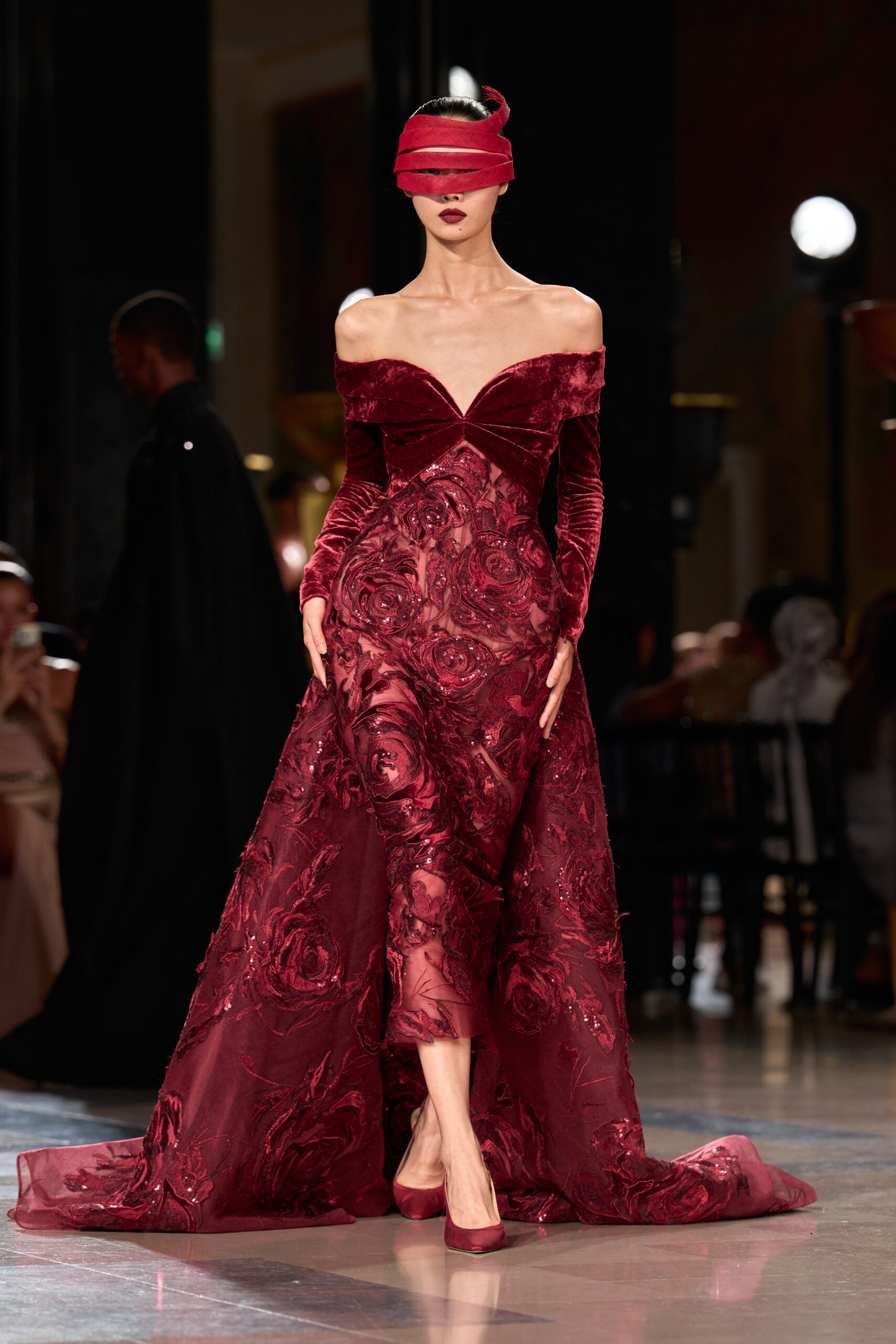
A masked moment and a dash of surrealism at Elie Saab, where a sweeping organza creation evoked the deft clouds of Magritte, and a floor-sweeping gown in silk was overprinted by Dali roses.
Working with consummate skill as a draper, Elie twisted and scrunched lilac metallic silk or Pacific blue shantung into organic dresses that seemed to suggest they bloomed naturally from nature. In a new direction for the Lebanese couturier, ball gowns soared with winged columns, justifying Saab’s title for the collection: The Ball of Untamed Dreams.
Jean-Paul Gaultier
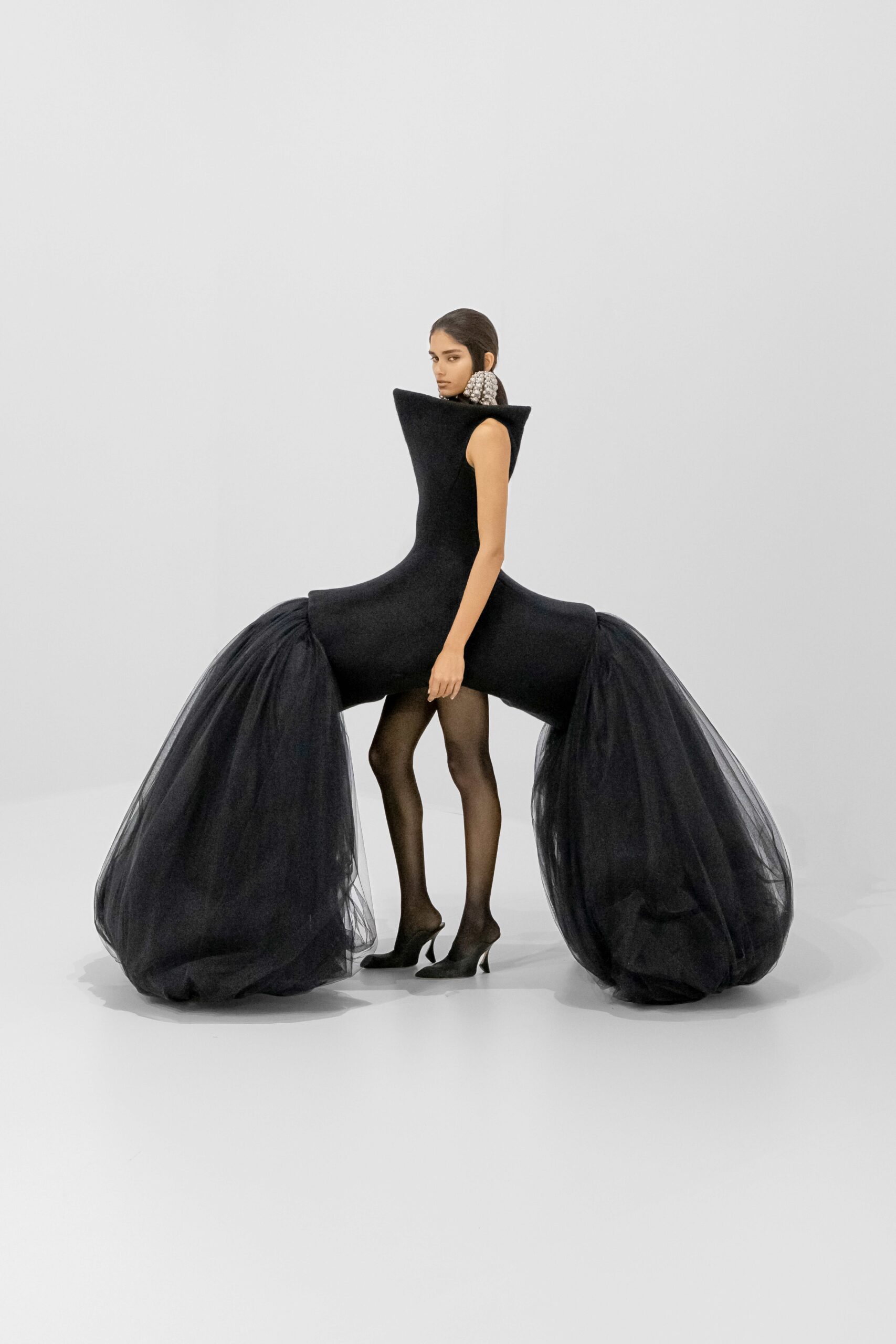
Last but by no means least, Duran Lantink at Jean-Paul Gaultier staged the season’s last vital show, a bravura interpretation of the house’s codes. And structurally the most experimental show of all.
Proposing Jean-Paul’s famed bustiers – in blood-red Meccano leather; or upside-down blouse. Revolutionizing Versailles courtier jackets in faded denim and patchwork biker looks.
His most bizarre trick was switching the tulle trains of ball gowns to the front, as tuxedo jackets and satin blousons sprouted acres of fabric. The collection took on Chapman Brothers levels of shock, with a remarkable pink feathered column where a trio of swan’s necks all disappeared into the torso. Hallucinatory haute couture to the end.