


Tokyo and Kyoto are no secret, and the mountains and onsens of Hakone are well detailed, but the Japanese keep some of the most beautiful parts of the country quiet. Like Hokkaido.
If you’re a ski obsessive, you may have heard of it, but this is also where to go for summertime adventure, incredible design – both traditional and contemporary – wilderness trails, road trips, hot springs, ultimate levels of luxury, and a landscape defined by a volcano that serves up Fuji-like panoramic drama without the tourist congestion.
You can’t catch the bullet train to Hokkaido. Not yet. The extension to the Shinkansen rail network – which will take you from Tokyo to Sapporo in four hours on a duck-billed train that will never depart a second late – has been delayed. March 2031 was the goal. Official sources now suggest 2039, with a proviso that the 2040s are more likely.
Go today and it’s just a 90-minute flight from Tokyo’s very handy Haneda to Sapporo and the surrounding wilderness. The northernmost prefecture of Japan – with 20 percent of the country’s land mass but less than five percent of the population – is changing. By the time the first bullet train arrives, it will have undergone a radical transformation.
When I visited recently, the Aman group had announced plans for a 2030 resort in Niseko, a new investor had taken over the construction of what was originally going to be the Rosewood La Plume, and an InterContinental had just opened in Sapporo – the first international five-star hotel to come to town.
See more: The Ritz-Carlton, Okinawa: A Tropical Paradise on Japan’s Smallest Main Island
Its staid competitors offer okay rooms for less than $100 a night, but the InterContinental offers Tokyo levels of luxury, with a room rate four times that of its neighbors. There’s a ninth-floor reception with textured stoneclad walls, minimalist black water features, and a sleek central fire pit enclosed in black pebbles and glass that feels very Tom Ford.
This would be an impressive opening in any city in the world, with a 14th-floor club lounge serving afternoon tea and free-flowing champagne, and a sublime 65.6-ft, blue tiled swimming pool. The hotel’s French restaurant, AuBlanc, has already become a scene for locals, serving steak frites and pan-seared foie gras with pain d’épices. Gingerbread, I discovered in Sapporo, is a very good friend to duck liver.
Hokkaido has a wild history. As a typical Gen X-er, I aged out of video games before the third iteration of the Sony PlayStation, but younger family members reliably inform me that one of the big releases of last year was Ghost of Yōtei, an adventure saga named after the snow-capped semi-dormant volcano in Hokkaido.
It’s set at the start of the 17th century, the beginning of the Edo era. This is pop culture as a useful cheat sheet. The conflict that serves as a backdrop to the action of the game was real: What was once Ezo, inhabited by the Ainu, was colonized by the Edo shoguns who claimed it as Japanese territory in 1644. Ultimately renamed Hokkaido, it wasn’t officially part of Japan until 1869 and only became a prefecture in 1947.
If you’ve never heard of the Ainu, there’s good reason. These are First Nations people, forcibly assimilated by the Japanese (the government only acknowledged the Ainu as indigenous as recently as 2019). Their language has been silenced, but you can learn about their lives and vernacular by visiting the national museum, Upopoy, in Shiraoi Town next to Lake Poroto. This being modern-day Japan, there are reconstructions of traditional Ainu houses to visit, and performers who dress in traditional Ainu garb and pose for photo opportunities.
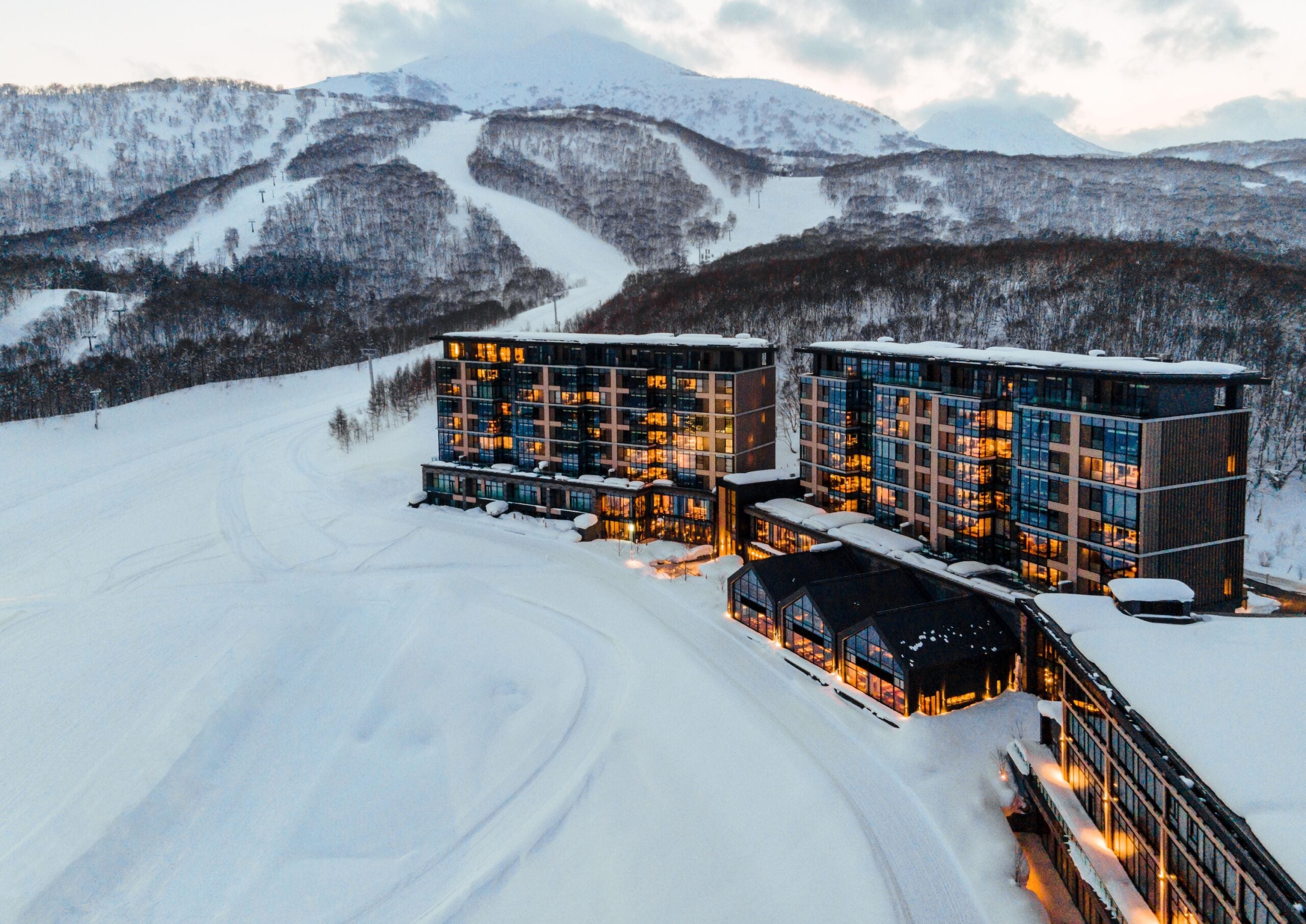
When the rest of the country talks about Hokkaido today it’s generally about the quality of the skiing (excellent) and the food (spectacular). You can also climb and ski on Yōtei — often called ‘Ezo Fuji’ because of its remarkable similarity to its sibling outside Tokyo — but rather you than me. It’s perilous. But it’s still one of the most beautiful mountainscapes in the country and far less photographed than Fuji purely because it’s not a backdrop to so many urban commuter routes.
But there’s a lot of Hokkaido that does get used as branding, if not for international tourism then as an assurance of quality. If venison is on a menu anywhere in Kyoto or Tokyo, its showy provenance usually points up here, and the dairy produce would warrant a DOC.
The little bottles of yogurt in the fridge by the breakfast buffet at the Park Hyatt Niseko Hanazono are sweet nectar. Weirder — in that way that you can’t quite decide if something is delicious or atrocious — are the whipped cream white bread sandwiches sold at every branch of the Lawson convenience store.
There are the predictable signature crafts, from colorful, ornate Kitaichi Glass to chocolate-filled Shiroi Koibito biscuits. Merchandising in Japan undermines the most cynical consumer.
Walking down Sakaimachi Dori, the main tourist thoroughfare in the town of Otaru, I started out dismissing the stalls selling slices of special tortured melon for $20 and the various gewgaw vendors, but the fabulously patterned chopsticks, specialty food stores (“this one is all seaweed!”), and sophisticated kitsch of emporiums devoted to Miffy and Snoopy were irresistible.
Hokkaido is also about contemporary craft and design. You know all about Sapporo beer – it’s been on the tastemaking radar since it appeared in New York and London clubs in the 1980s in its sculptural silver can with the top that pulled entirely off – but Hokkaido is also home to the only ‘Made in Japan’ suitcase brand. Those in the know rate it highly.
When I posted an Instagram story from Sapporo cursing my Rimowa 77 for losing its handle for the third time in three consecutive trips, I received a DM from a fashion editor friend who lives part time in Japan: “Get a Proteca. Made in Hokkaido, reasonably priced, far better quality.” The same friend sent a second message right after: “Watch out for bears up there!”
I had seen a fetching red fox strolling through the snow while in my private onsen at the Zaborin ryokan, and a handsome raccoon dog foraging for supper, but didn’t encounter anything malevolent, unless you count the huge, unnervingly noisy black crows that swoop around the streets of every town.
See more: The Best Restaurants in Tokyo
Ussuri brown bears aren’t uncommon in the mountains up here. There are around 2,000 roaming around in vast forests. You’re more likely to see bears in southern cities, where lack of food in their natural habitat is sending them into towns (making front page news regularly). The Japanese are more concerned about humans and overtourism — at present less of an issue in Hokkaido, partly because of the current transport links.
During the Sakura season visitor numbers can double in Kyoto. But let’s be honest, it’s a little bit hyped – you can see stunning pink cherry blossoms at Kew Gardens in London or at the Brooklyn Botanic Gardens.
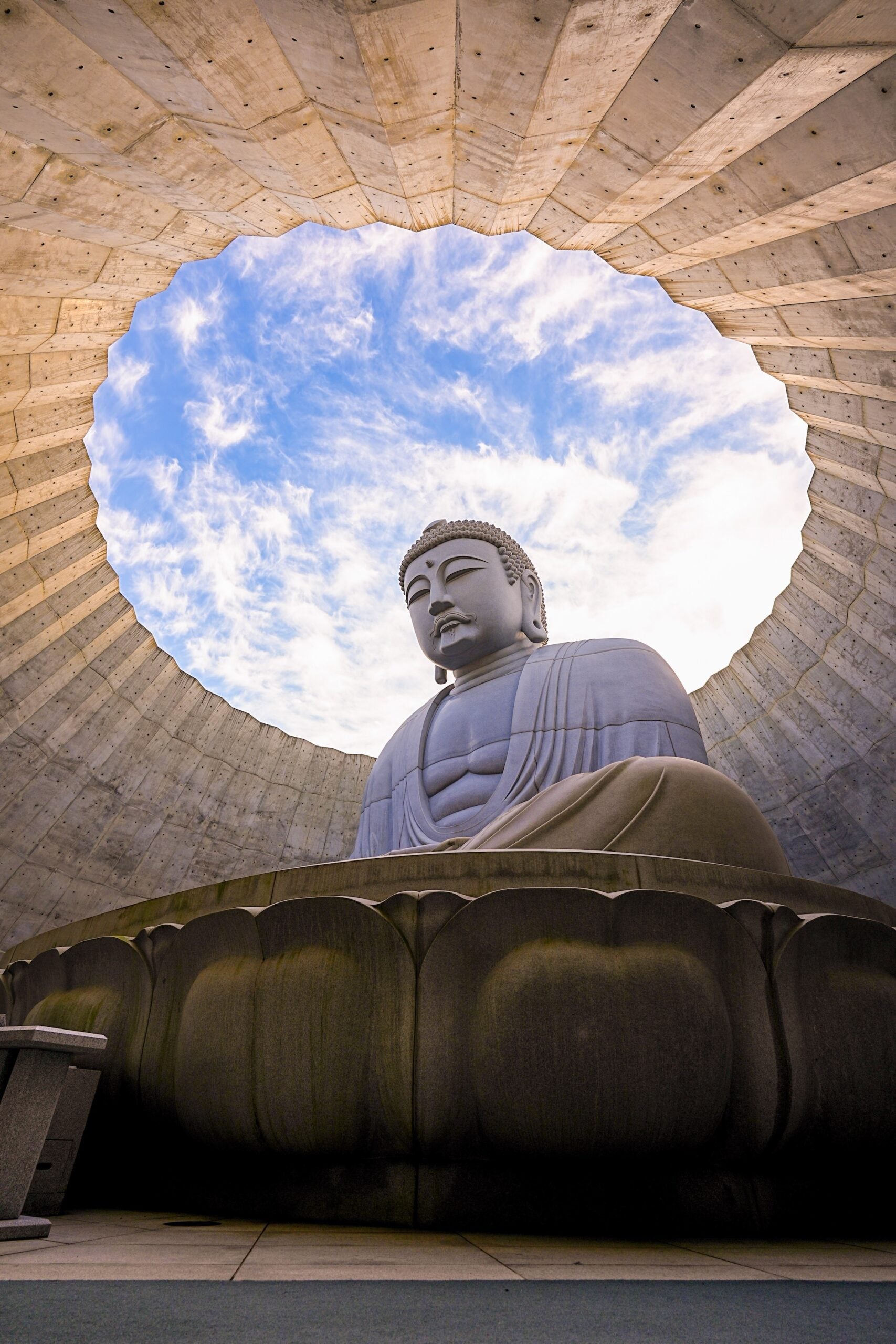
What you can’t see anywhere else is Yōtei, which dominates the landscape around Niseko, lending a painterly aspect to the views out of the windows of the Higashiyama resort. You also can’t see Tadao Ando’s Hill of the Buddha, which opened in 2015 and feels like an architectural adjunct to Ando’s Benesse House Museum on the island of Naoshima.
As you approach the Buddha, sitting in the middle of rising concentric circles in Makomanai Takino Cemetery, a 45-minute drive from Sapporo, only the top of the head is visible poking out of rings of lavender or snow, depending on the month.
The medium is the message: Not everything in life is immediately apparent. You descend into a bunker, walk towards the deity’s crossed legs and its immense scale is only revealed as you get close enough for an unobscured view.
Tadao Ando rose to fame in the 1980s for his austere, sharp, concrete forms that come to life with shadow. He is Japan’s answer to Le Corbusier, refining a style of modernist minimalism that has been much copied. The concrete on the Hill here is pure Ando: Brutalist and dimpled and transforming as the sun moves throughout the day.
Your gaze is drawn to the sky, which is humbling, and the architecture gesture is amazing. Want more? There are replicas of 40 Easter Island Moai statues next to the car park and a recreation of Stonehenge.
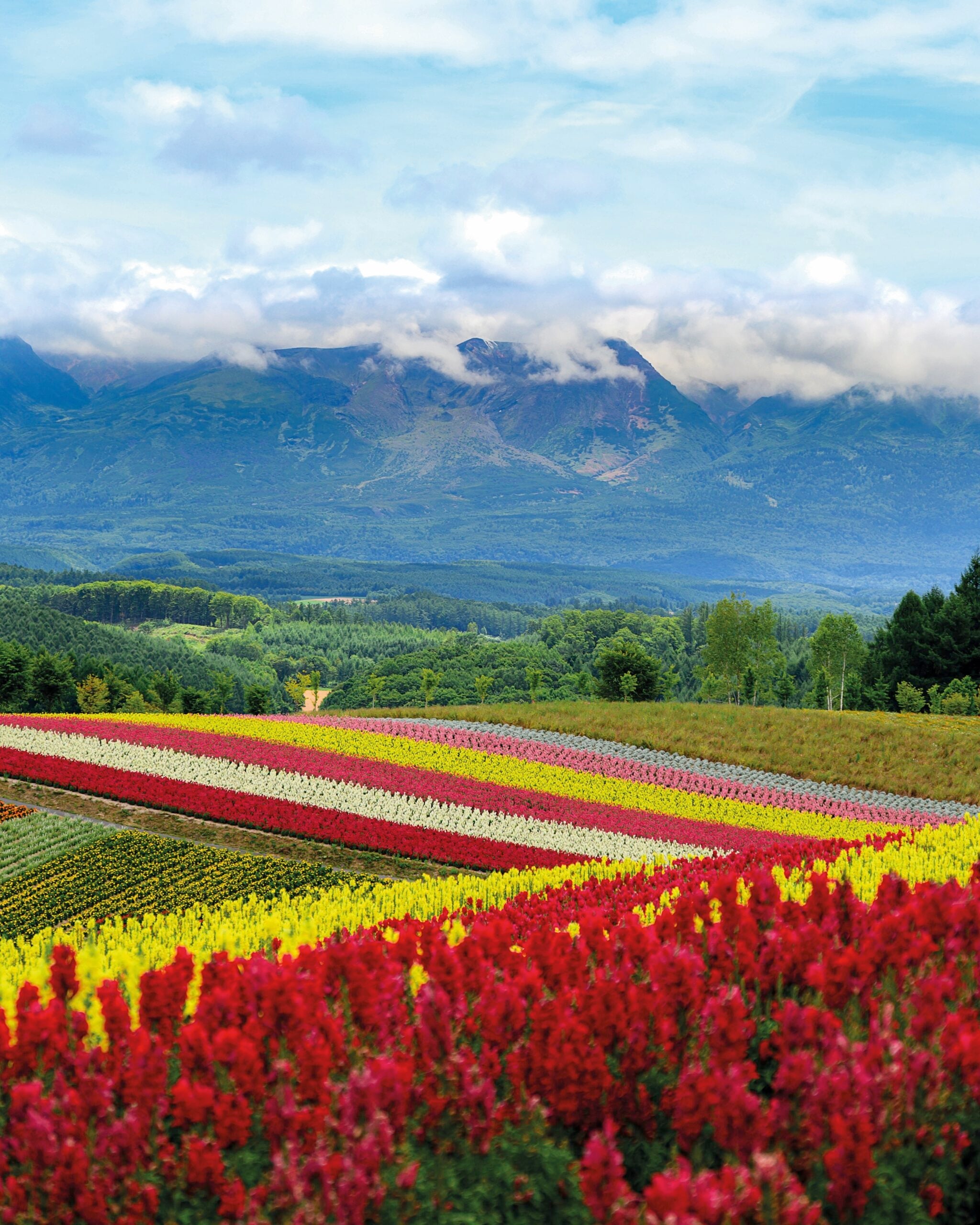
One of Hokkaido’s main draws is nature, and what you do in it depends on whether it’s green or white season. In the former you hike and cycle, in the latter you ski, or just… après.
Onsen culture is year-round. The best are in the small mountain town of Jozankei, which straddles the rapids of the Toyohira River with volcanic steam emanating from pockets of rocks on each bank, and Noboribetsu Onsen, where you wander between the Oni (demon) statues in the hot spring district. Both are an easy drive from Sapporo.
If you have the time and commitment, head to Kotan no Yu on Lake Kussharo, where the open-air baths are at the same water level as the lake, giving the impression that you’re bathing with the white swans who migrate here from the Siberian winter. It’s five hours from Sapporo, so incorporate a stay at Akan Tsuruga Bessou Hinanoza, a ryokan-style resort with tatami flooring and shoji screens, an hour from the lake.
Hotels in Hokkaido were largely basic until about 10 years ago, when the growing ski clientele caught the attention of the big international brands and entrepreneurial independents, including the people behind the aforementioned Zaborin. Created by designer Shouya Grigg and architect Makoto Nakayama in 2015, it has the affectations of an ancient ryokan – with the ritual of donning awkward narrow wooden-soled geta sandals to navigate an internal garden path to a foot bath and wearing a black haori kimono jacket for dinner.
The corridors feel slightly institutional, but the carpentry, chair designs, and detailing on all the internal ironwork is like nothing you’ve seen before, and demonstrate how the centuries old ryokan style can be refashioned today with the same spirit, but moving forward for new generations. It’s a place that deserves its two Michelin Keys, and the restaurant alone should have several stars: From the menu on handmade paper to the sashimi and piped beetroot cream over roasted purple carrot, it’s perfection.
One sensational highlight: a scallop hot pot with Niseko cheese, which lands in a giant metal hexagonal nut sizzling on a metal sculpture that looks like the kind of thing Jean Reno would be served in a Luc Besson sci-fi film from the 1980s.
See more: After Its Rebirth, Is Tokyo’s Legendary Park Hyatt Still Worth a Stay?
All the best places to stay in Hokkaido have a year-round alpine charm. The Ritz-Carlton-run Higashiyama has cowhide lounge carpets, an indoor fire pit, antler chandeliers, and stacks of logs – it wouldn’t be out of place in Verbier. The trails around the hotel offer perfect super-soft adventure, even if you just go for a stroll to Niseko Village, where I ordered an iced matcha latte at Omotesando Koffee from a Melburnian barista who moved here to grind beans to support his snowboarding habit.
The Park Hyatt Niseko opened in 2020. After my recent visit, it’s in my top 20 hotels in the world. The structure incorporates sets of towers in a subtle curve, with vast bedrooms that have private onsens and Le Labo Bergamote 22 body products, Zen gardens reinterpreted as carpets with artfully placed rocks in the hallways, and a cool white sense of glamour throughout.
For superstition’s sake, there is no fourth floor or any room with four in its configuration (the pronunciation of 'four' in Japanese sounds like 'death'). You can ski in and out, work your way through the 11-page whisky menu, or host a 1m Yen Krug-arranged banquet in an igloo structure for a dozen friends. You could come here for a week and never leave. I envy those who bought the residences when they were available.
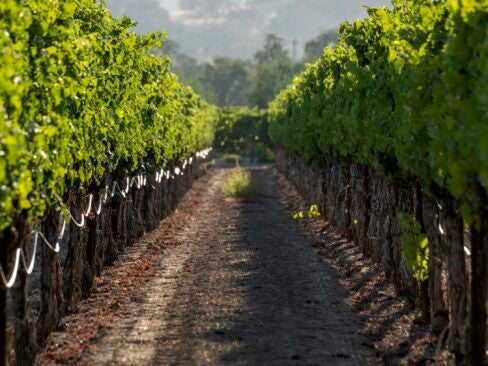
It was at the Park Hyatt that I discovered the wineries of Hokkaido. A 2021 Prestance from Hirakawa Winery could go toe to toe with any good white Burgundy (the winemaker won’t talk about varietals, but it’s absolutely oaked Chardonnay) while sparkling Hatsuyuki won’t match the champagne vintages in your cellar but is perfectly drinkable. “They only make around 5,000 bottles a year,” said Guido Biotti, the hotel’s cellar manager.
For comparison: Nyetimber, which began as something of a novelty British méthode champenoise, sold one million in 2024, while Chandon’s Californian operation produces more than five-and-a-half million a year). “Twenty new wineries opened here in the past three years, and things have totally transformed since the 1970s when Australian wine was imported and relabeled,” Biotti adds.
Wine tourism is in its early days but Niki Hills, close to the coast, is doing good business, with a cellar door, hotel, and restaurant. You’ll also find its bottles on most lists that offer wine as well as sake.
Non-Japanese speakers may find winery visits a little tricky, but there are few situations that Google Translate can’t help negotiate and smooth over. If the wine is good, the food is incredible – seafood especially. Here’s the crudo of your dreams.
One of the most memorable culinary experiences for me was dinner at Rakuichi Soba, where the dozen counter seats book out within seconds of being made available online. I was wondering why I had prepaid $170 for what sounded like simple noodles, but all became clear when I was there.
The couple who built and run the place with their son lay out dish after dish for two hours on the counter, starting with fatty tuna sashimi, moving through botan shrimp, pork shabu-shabu, and then the soba noodles themselves – kneaded from buckwheat in a giant bowl by chef and owner Tatsuru Rai, then chopped using a lethal-looking soba kiri cleaver, cooked, and served with duck.
I took a taxi back to my hotel after a yuzu sorbet and farewells, whizzing through a horizontal blizzard that made the windscreen look like the flight deck of the Millennium Falcon going into light speed with the stars blurring towards and past me. It was thrilling, not to mention dangerous, but rows of glowing red arrows dangling over the road led the way.
Getting where you want to go in Hokkaido might not be the easiest thing you’ll ever do – not yet at least – but it’s a wild ride for all the senses.