

Driving through cotton-candy-pink canyons one morning, past the spindly mountains that sit upright on AlUla’s arid plains, I crossed through a sunbeam that hit me like a laser. It had bounced off Maraya, a remote concert hall in northwest Saudi and the world’s largest mirrored building. These landscapes are astounding; now here it was duplicated, a big-screen mirage on this gargantuan what’s-it-doing-here canvas.
By now the world knows of the seismic steps Saudi Arabia is taking to redefine its economy in Vision 2030, a blueprint for how the country will prosper as it moves away from oil to diversify its economy. So called ‘giga projects’ like The Line, a horizontal city projected to stretch 105 miles, attract attention but can be a distraction; come, and you’ll see there’s much more happening. In the last decade, newly introduced liberties have redefined the way Saudis engage with their country. (Consider the 35-year nationwide ban on cinemas overturned in 2018, and imagine what that means for the nation’s emerging film industry.) Now, diverse communities are embracing the freedom to create distinct local takes on music, art, design, fashion and nightlife.
The pace of change is so rapid, even locals struggle to keep up; some tourists remain largely oblivious. And while alcohol is still banned nationwide, the new Unstable nightclub in Riyadh’s Diplomatic Quarters now hosts late-night techno. Superyachts moored along the Corniche and a program of concerts, exhibitions and fashion launches reveal the regional wealth ready for a good time during Jeddah’s Saudi Arabian Grand Prix.
Plenty of others are coming too. Though ongoing regional tension hangs over the Middle East, and Saudi Arabia's human rights record continues to be under scrutiny, 2024 was a bumper year: a record 29.7 million international tourists visited (in comparison, the US received 72.4 million) — a remarkable figure considering the country just embraced foreign travelers in 2019.
But back to AlUla. From Maraya, I traveled to Old Town and its 12th-century mud-brick houses. In a gallery nearby, a local woman guided me through decades of artist James Turrell's work.
Famous for his Skyspace series of open-topped structures framing the skies, Turrell was also inspired by the dramatic beauty of Saudi’s deserts to create a masterpiece. Under construction nearby, the Wadi AlFann exhibit will integrate a series of monumental installations beneath and above a desert valley, with vast underground chambers and celestial observatories. For Turrell the setting will deliver “a sensorial experience of space, color and perception” and an opportunity to explore “the thingness of light.” It seems an intuitive fit for Saudi right now, where places and perspectives change rapidly and surprisingly.

AlUla
Some might argue that reconstructing an entire landscape is excessive, but Turrell’s Wadi AlFann is one of many astounding masterpieces etched into AlUla. In fact, Saudis have long referred to the region as ‘the world’s largest living museum.’
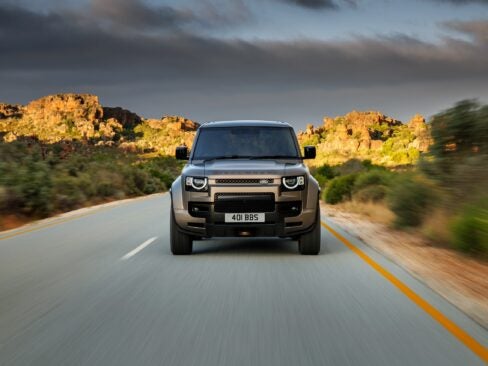
This ancient oasis has drawn tribes and nomads for millennia — Dadanites and Romans among them — and relics from its past reveal themselves in remarkable ways. Early explorers scrawled on the rocks of Jabal Ikmah, and the country’s first Unesco World Heritage Site, Hegra, was a sacred place for the Nabataeans, who deftly carved the sandstone cliffs of this sparse landscape 2,000 years ago to form over 100 distinct burial tombs decorated with protective eagles and floral motifs. See them up close during private guided tours in an open-air vintage Land Rover with Experience AlUla, or enjoy a sunrise trip over the site via Hero Balloon Flights.
The Old Town now features relaxed open-air cafes and cutesy boutiques. The next major cultural gathering will be Desert X AlUla in January and February 2026, when large-scale artworks will be placed across the region. For fine dining, Maraya Social is chef Jason Atherton’s first foray into the country and serves modern sharing dishes like honey-glazed figs with burrata. And on the edge of a mountaintop precipice known as Harrat Viewpoint, the views from the open-air, modern-Greek restaurant Okto are simply spellbinding.
Where to stay
The only hotel within this Unesco World Heritage Site, Chedi Hegra’s 35 rooms and villas are spread across the restored old houses — there’s no other hotel like this
in the country. Guests enjoy privileged access to tracts of Hegra that are otherwise inaccessible, alongside international dining at Prima Classe restaurant, decorated with a restored Locomotive 964 train carriage dating from 1906. The hotel’s Two Bedroom Pool Villa features an expansive terrace and firepit — especially welcome during winter, when nights get surprisingly chilly. From SAR30,188 (approx. $8,050)
Riyadh
King Abdullah Financial District is Riyadh’s new financial epicenter, and its skyscrapers have drawn major global brands — some presumably encouraged by a new law that requires companies to establish their regional headquarters in Saudi if they want to secure lucrative government contracts. Servicing these newcomers are restaurants including Mr Chow and Sushisamba, which are transforming this commercial district into a credible dining destination.
Formed around the remnants of a centuries-old fortified citadel, Diriyah’s restored heritage buildings include original mud-brick palaces, mosques and towers alongside upmarket restaurants spread across Bujairi Terrace. Check out Maiz for fresh interpretations of local dishes like spiced lamb with tahini and chili, or go to Flamingo Room for a laid-back South African-inspired vibe.
Diriyah looks likely to become one of the most upscale urban retreats in the country, with the coming years bringing hotel openings from Aman, Rosewood and Capella. Near the Diplomatic Quarter, leafy Via Riyadh is another of the capital’s chichi new enclaves. Restaurants such as Wolfgang Puck’s Spago and elevated shopping options abound here, with Tom Ford and Elie Saab among the boutiques catering to the city’s fashion-conscious.
Riyadh’s other attractions are sometimes more discreet, at least for visitors disconnected from local tastemakers. An industrial site transformed into a center for the creative industries, Jax District is home to the Saudi Arabia Museum of Contemporary Art. Elsewhere, local womenswear brands such as Honayda and Arwa Al-Banawi’s ARWÁ are curating a colorful fashion scene among the most dynamic in the Middle East. For access to new openings, exhibition previews, private atelier tours and whichever latest festival is exciting everybody, engage your concierge or a local Destination Management Company. Roam, for example, is well-connected to Riyadh’s tastemakers and can bring intriguing insider experiences to life.
Where to stay
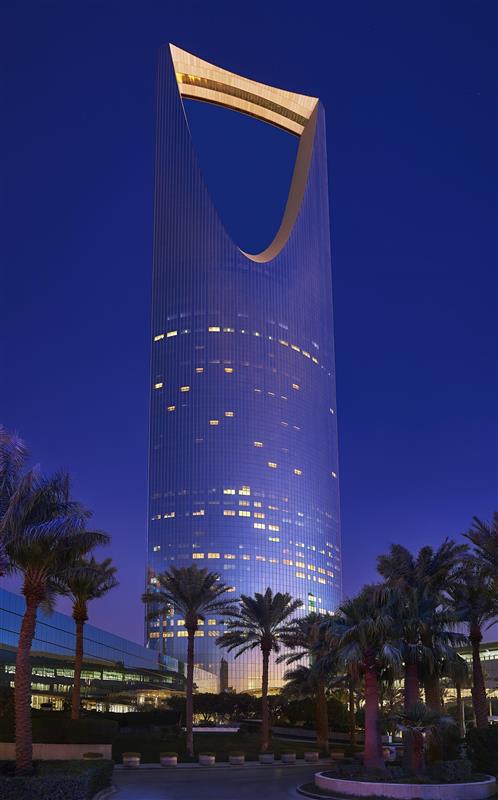
The coming influx of ultra-premium properties should up the competition, but for now Four Seasons Riyadh remains one of the capital’s most reliable hotels. It has a stellar setting, within the bottle-opener-shaped Kingdom Tower, while Daniel Boulud dining venues have added culinary clout. As for accommodations, the Kingdom Suite received a bump when Cristiano Ronaldo made it his home when he first moved to the city to play soccer for Al-Nassr in 2022. From SAR96,600 (approx $25,750)


Jeddah
Expect Jeddah to gain true global recognition come 2028, when Jeddah Tower is set for completion. Following a significant pause in development back in 2018, construction of this 3,300-ft-high skyscraper recently recommenced. But for now, this seaside city remains many Saudis’ favorite domestic vacation spot.
The ‘vibe’ — that intangible thing — is a big part of it. The port city has always been one of the most multicultural, diverse parts of the country. You get a sense of its long-standing prosperity in the old town of Al Balad, where coral-stone buildings are embellished so beautifully with wooden latticed balconies. Jeddah also delivers for foodies — the seafood offering is unrivaled. Head to the buzzy, turquoise-tiled Alaaly for its sweet, spicy Hejazi-style grouper — and a key gathering place for the creative industries. Constantly advocating for local talents, ATHR is gaining recognition as one of the Middle East’s most innovative galleries; and the Red Sea International Film Festival, going since 2021, showcases powerful works emerging locally, regionally and internationally.
Where to stay
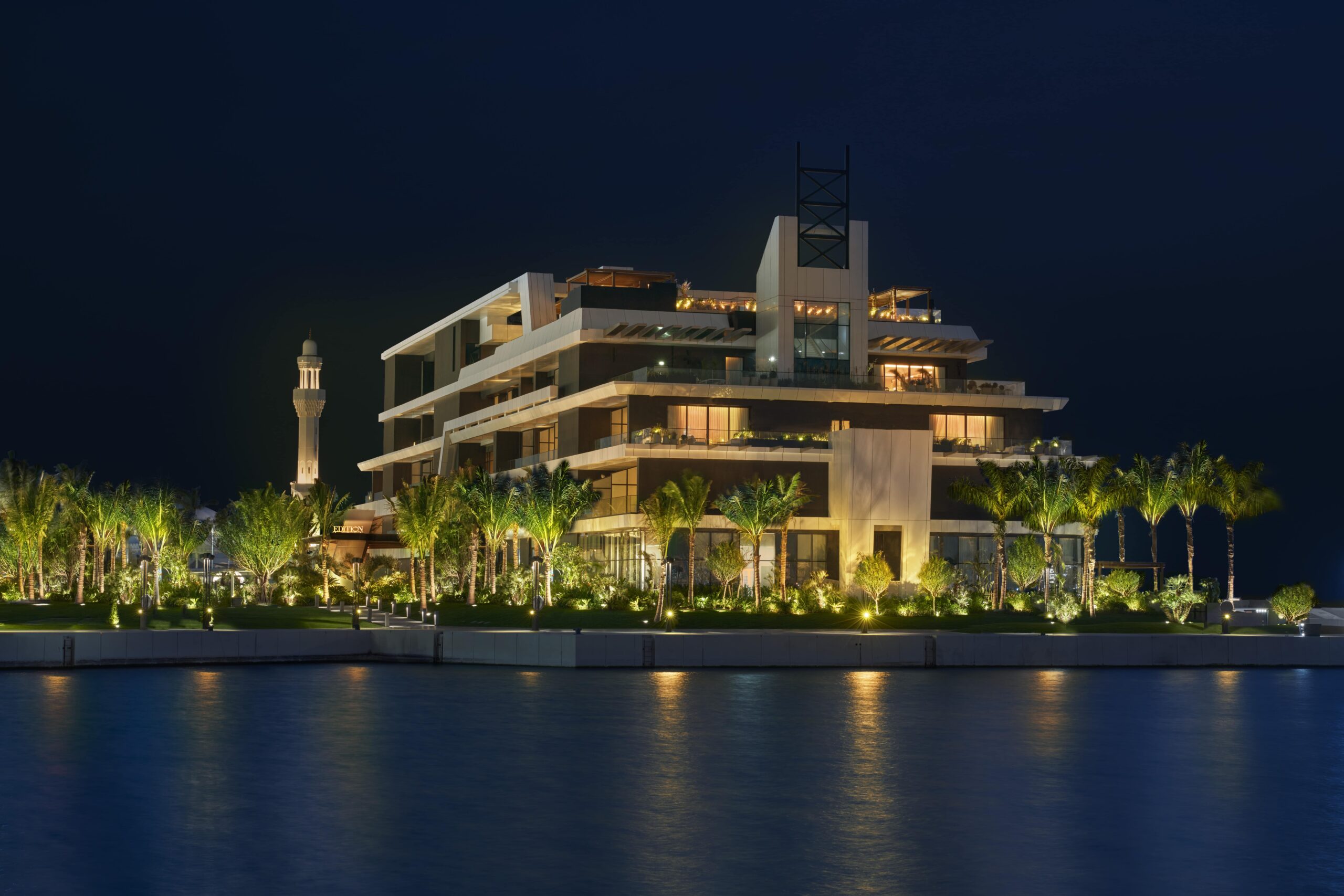
Right by Jeddah Art Promenade, the Yabu Pushelberg-designed Jeddah Edition is one of the city’s chicest hotels. It’s packed to capacity during the grand prix as certain Urban and Corniche Suites overlook the circuit, but there’s nowhere better to stay than its colossal Royal Penthouse Suite. The sunset views from its terrace are sensational, too. From $26,400
From Foster and Partners to Kengo Kuma, some of the world’s best architects were given very healthy budgets and plenty of freedom to create their dream resorts at The Red Sea. The results are compelling.
The Red Sea
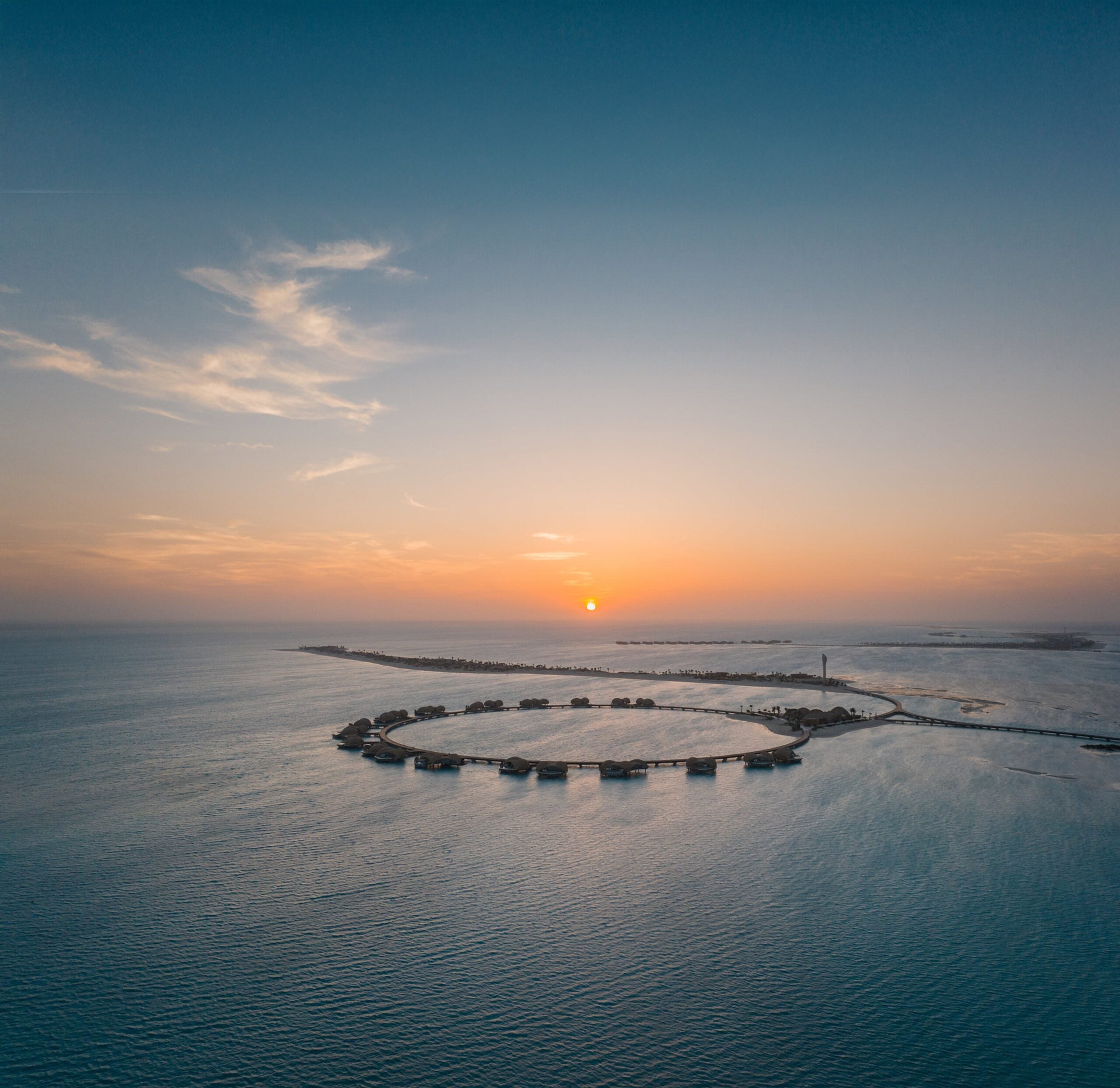
Named, obviously, after the body of water that straddles its coastline, The Red Sea is about the size of Massachusetts. Its hotels are beautiful, but what really sets them apart is their backdrop. Golden islands and tangled mangrove forests sit in luminescent baby-blue waters; inland, jagged mountains sprout from custard-yellow sand dunes. The first-to-market properties, such as Nujuma, a Ritz-Carlton Reserve, are intentionally isolated, spread across private islands and the desert, while a second wave of openings sit within the community island Shura — home to a growing collection of hotels (including Four Seasons, Faena and SLS), restaurants and the Shura Links golf course.
Common across all the resorts is an ecosystem designed to help you switch off: Slick spas, innumerable infinity pools and elaborate epicurean experiences are a given. The destination has also committed to regenerative tourism. That means visitors might spend a morning mangrove planting or simply benefit from world-class stargazing. Strict lighting stipulations minimize glare, lessening disruption to animals’ rhythms while also upping the romance factor.
That approach is attracting naturalists and adventurists aplenty. Integrated into the world’s fourth largest barrier reef, The Red Sea’s corals remain remarkably colorful and healthy. You might see hammerhead sharks, dugongs and hawksbill turtles as you drift beneath the water. Inland, The Red Sea’s adventure facilitator Akun offers sunrise hikes, ziplining and e-biking.
Where to stay
The Red Sea’s distinct composition means two drastically different resorts stand out. Built, almost imperceptibly, into a mountain range, Desert Rock is one of the most dramatically positioned hotels in existence — alone on a rocky outcrop, its three-bedroom Royal Villa (from SAR90,000, approx. $23,990) features a dramatic triangular ceiling with a Concorde-shaped silhouette, an earthy color palette and an elevated swimming pool that overlooks a stark Martian landscape. An ultra-exclusive, private-island property, Shebara dazzles literally: Its villas are gleaming silver capsules. Its four-bed Beach Royal Villa (from SAR120,000, approx. $31,990) is a favorite with families.
The Future of the Region
Amaala
Between the mountains and the sea on Saudi’s western coast, Amaala is another emerging next-level tourism destination. Commencing operation from late 2025, its resorts will focus on all things wellness: Brands such as Equinox and new Chiva-Som offshoot Jayasom will cater to every conceivable well-being, fitness and nutritional need. Among Amaala’s other amenities, Corallium will be one of the world’s foremost marine life institutes.
Neom
This giga project is expected to contain many vacation destinations such as The Line and mountain resort Trojena, set to host the 2029 Asian Winter Games. Hotels from Zannier, Our Habitas and Park Hyatt are all expected.
Qiddiya City
The ‘first city built for play’ will sit in the belly of a canyon on the outskirts of Riyadh. Theme parks galore (including a neon-soaked Six Flags) will be complemented by a performing arts center and sports facilities.
Riyadh revs up
There’s plenty more in store for the capital. Remember the Borg from Star Trek? Picture their ship to get a sense of The Mukaab. This golden cube, with sides that stretch 1,300 ft, will encapsulate a new downtown district with cultural attractions, hotels, restaurants and boutiques. As for events, the city will host Expo 2030 and the 2034 FIFA World Cup.