




Snow crystals crackle like radio static against my hood as I shoulder the deck door and shove out into the punchy Antarctic gale. A handful of other passengers, bundled in expedition parkas and knitted beanies, shelter against the outer wall. The ship, which has been in constant motion for the past two weeks, is eerily still.
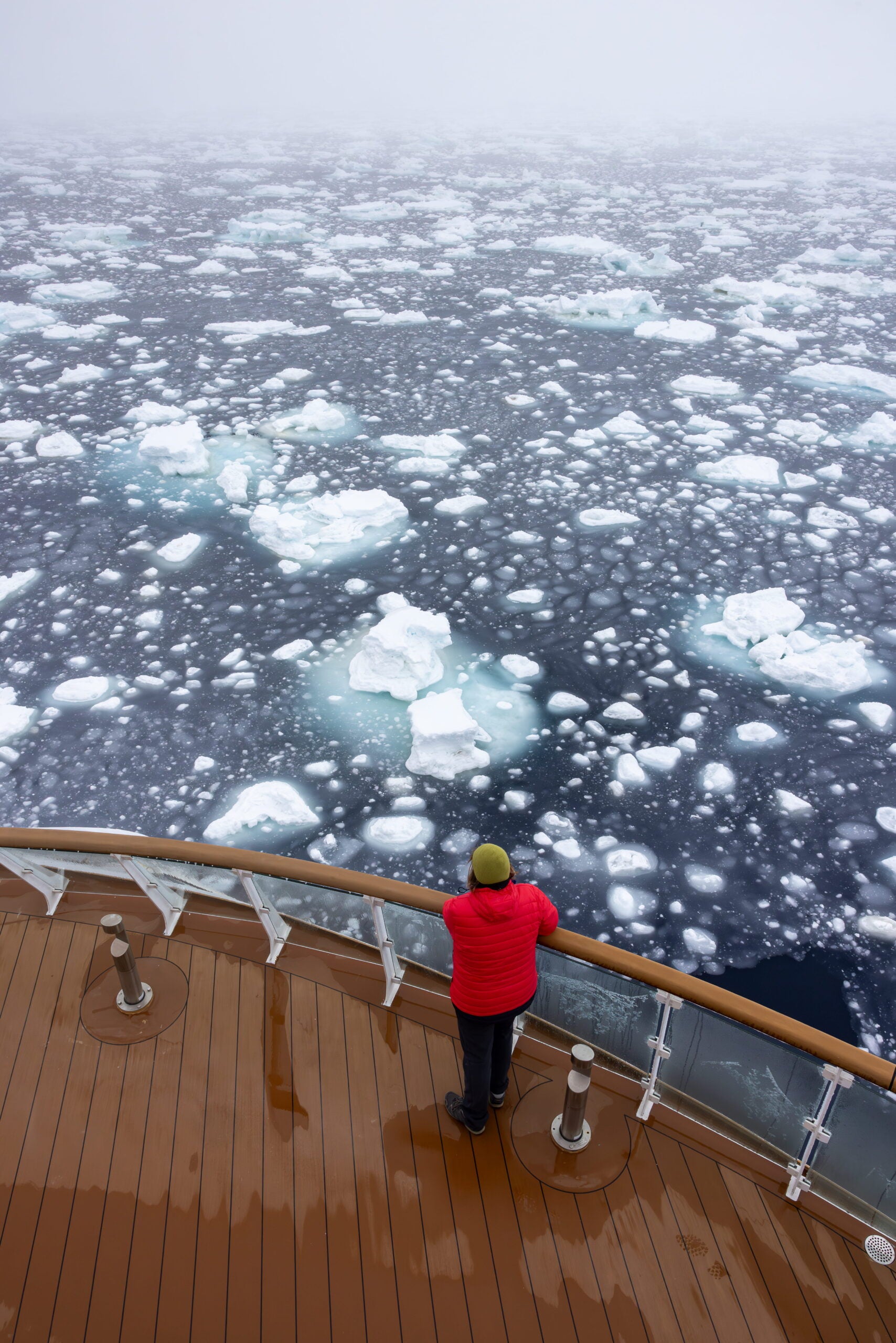
Puzzled by the unscheduled stop, I brace against the railing and look over the bow. Thirty feet below, the ocean has vanished, buried under a vast mosaic of icy tiles stretching to the horizon. They jostle against the sides of the vessel, some larger than a tennis court; the gaps between them packed with frozen rubble. I’m no marine navigation expert, but I’m pretty sure boats need water, and right now, there’s none to be seen.
I’m traveling on the Douglas Mawson, Aurora Expeditions’ newest ship. Armed with a reinforced double hull, four powerful engines, and an expert crew, she’s classified as Polar Class 6 — capable of pushing through moderate sea ice. This is her first trip to Antarctica, and although maiden voyages and icebergs are a famously bad combination, so far, she’s handled the challenges with ease.
See also: The Most Remote Hotels on Earth
Now, just 22 nautical miles from the Antarctic coast, she seems to have met her match. I battle down the outer staircase and heave open the door to the bridge, where the officers are calmly evaluating the situation. They launch a drone to scout a route through, but it returns empty-handed. Antarctica has shut us out.
As we U-turn and head back north, I ask ice captain Maxim Serkalev what happened. “We had winds of 64 knots (75 mph) forecast for the next 72 hours,” he tells me. “They were pushing the ice and compacting it — we were maybe a few hours from getting trapped. Then we could have been waiting for days or even weeks for an icebreaker to rescue us.”
We’d left Hobart, Australia, two weeks before Christmas, following the route of the polar explorer whose name is emblazoned across the bow. In 1911, Douglas Mawson and 31 men set sail on the Aurora (after which the company is named) on an expedition to map the then-unknown Antarctic lands south of Australia. What followed was one of the most harrowing survival stories in polar history. After enduring the winter in huts overlooking Commonwealth Bay, Mawson and two companions set out to explore. But adventure turned to disaster when both his teammates died and their supplies fell into a crevasse, leaving Mawson to stagger alone, starving, for 100 miles across the frozen wilderness.
Now, more than a century later, we’re retracing his voyage — except without the deadly peril. Our goal is Cape Denison, where the expedition huts still stand, a cocoon of snow protecting them from the 100 mph katabatic winds. “It’s a potent cocktail to take the maiden voyage of a ship called Douglas Mawson to Mawson’s Huts,” expedition leader Greg Mortimer tells me. “We have descendants of the Mawson family and representatives from the Mawson’s Huts Foundation on board. There’s a lot of poetry in this journey.”
Mortimer is not just our leader. He’s Aurora’s co-founder and, though he’d humbly reject this, an inspiring explorer in his own right. A softlyspoken mountaineer now in his seventies, this will be his eighth trip to the region — a rare wealth of experience in a part of the world few ever visit.
This is Aurora’s first trip to East Antarctica in nearly two decades. Since then, new management shifted priorities to the more accessible Antarctic Peninsula, where around 95 percent of tourism operates. East Antarctica, meanwhile, is the more remote and unpredictable side, with greater challenges, but potentially greater rewards. “It’s the real Antarctica,” says Mortimer. “Full-on, bolder, bigger. Bigger storms, colder temperatures, vast distances. It doesn’t suffer fools gladly.”
See also: Everything You Need To Know About the First Hotel on the Moon
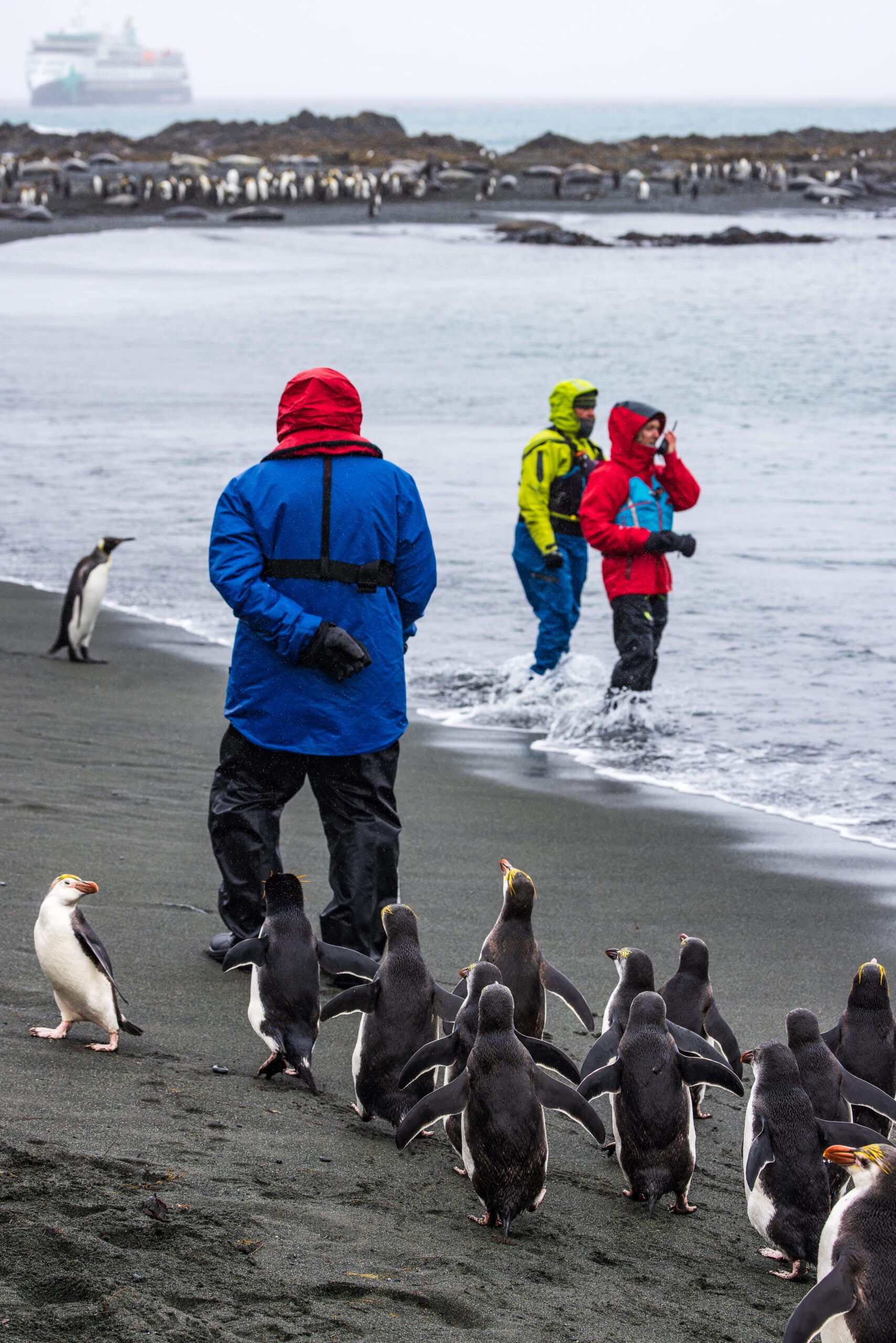
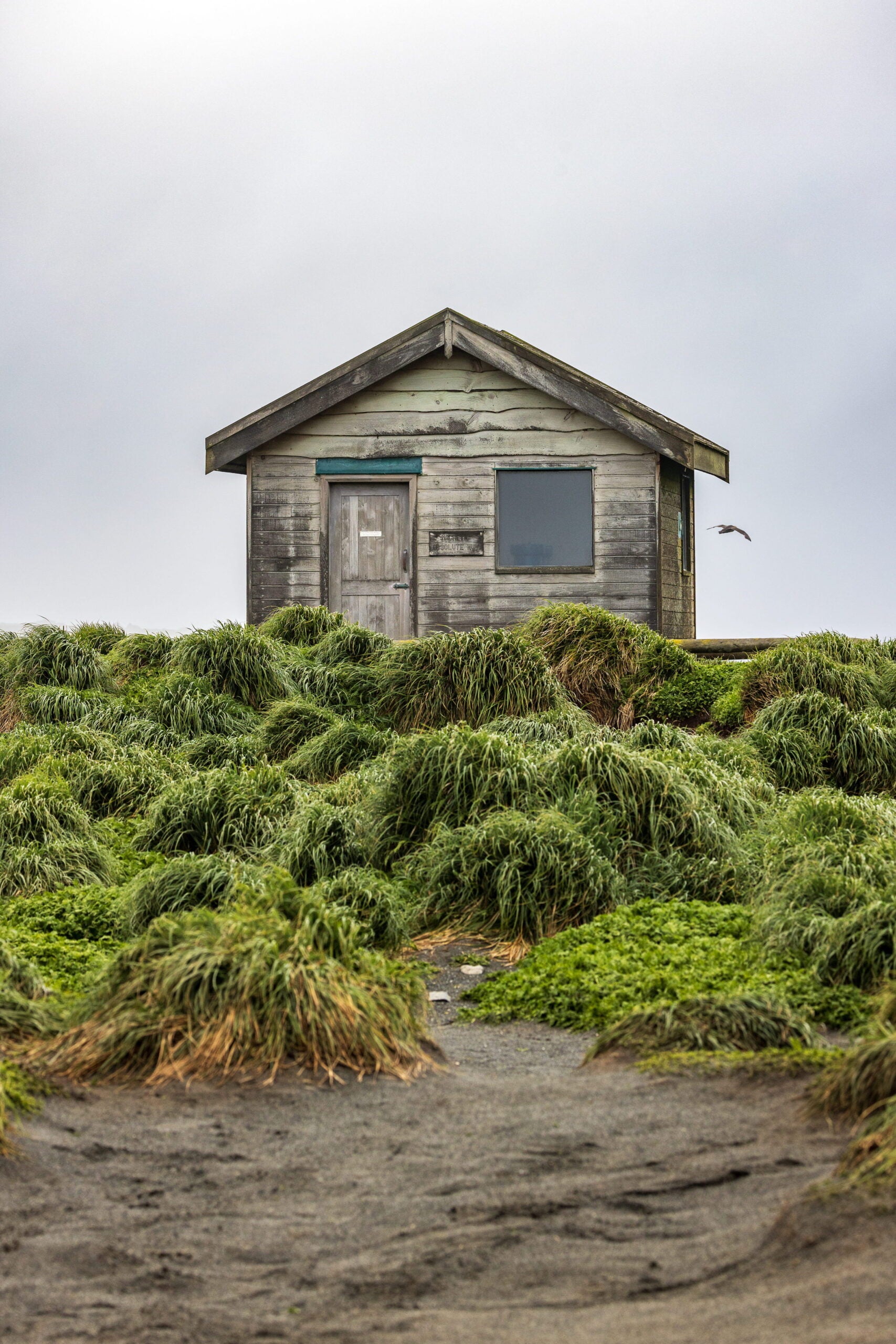
Before we tackle that, though, we stop at Macquarie Island, a narrow, wind-battered sliver of green, three days south-east of Hobart. Now a Unesco World Heritage Site, it’s where Mawson stopped to set up a radio relay station, a lifeline to their Antarctic base. As we wait to disembark, endemic royal penguins swim out to inspect us, and through binoculars I can make out the rusting remains of an industrial ‘penguin digester’ — used in the early 20th century to boil the birds down for oil. Mawson’s appalled encounter with this slaughter turned him into a conservationist and paved the way for the island to be declared a wildlife sanctuary in 1933.
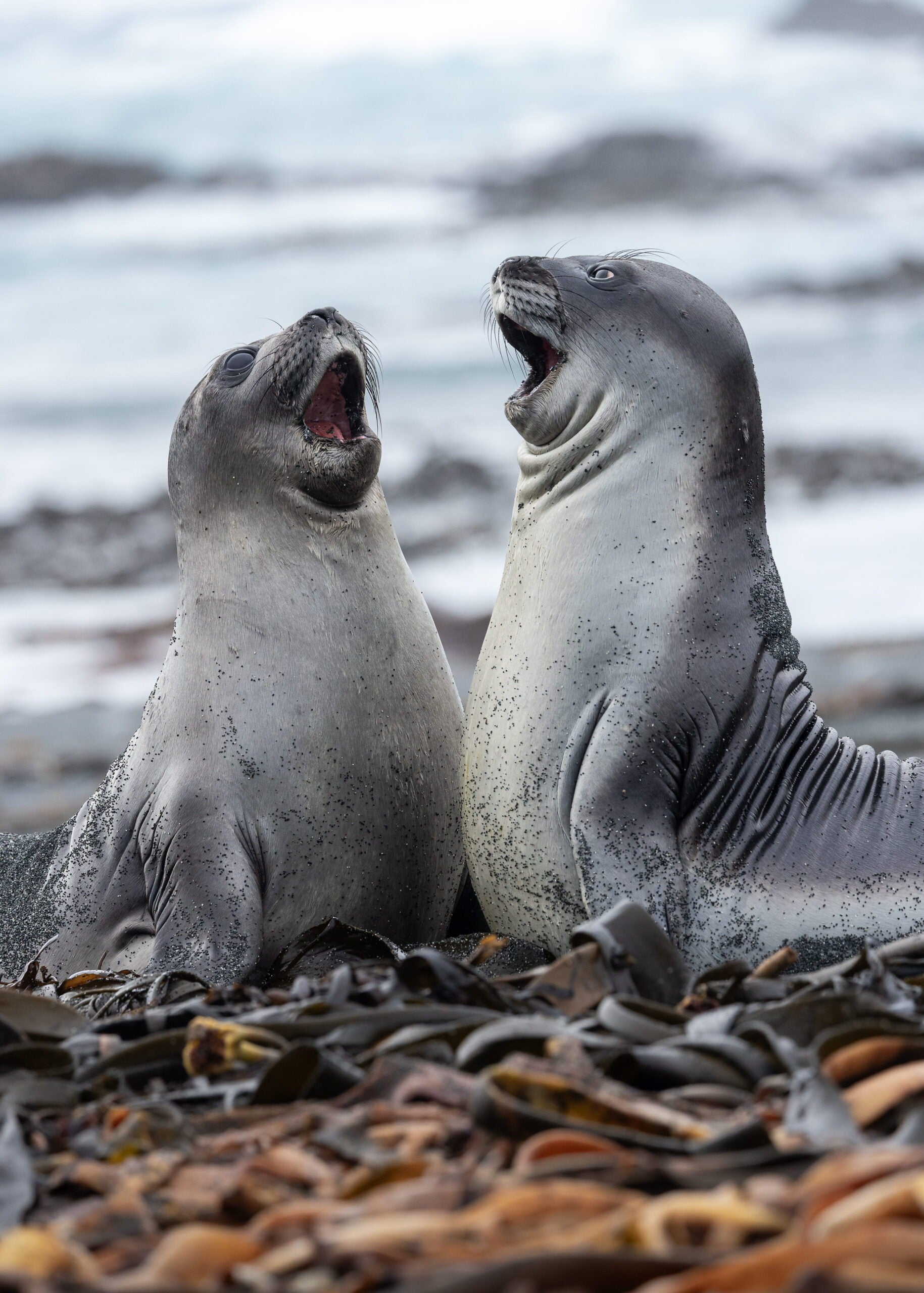
Eventually the wind drops and we pile into Zodiacs and wade through the surf onto a damp beach. A raucous penguin welcome committee marches up, their bright yellow crests vibrant against the gray sand. Further along the shoreline, thousands of kings huddle together against the sideways rain, while in the tussock grass newly weaned elephant seals, recently abandoned by their mothers, look over with huge, soulful eyes.
From Macquarie, we push towards Cape Denison. For many of my fellow passengers, whether connected to Mawson or simply keen adventurers, this is the heart of the voyage. “People chose this trip because it’s a rare opportunity,” explains Lara Colrain, CEO of Mawson’s Huts Foundation, which works to conserve Mawson’s legacy. “More people have summited Everest than have been to the huts. But with the ‘A-Factor,’ it’s never guaranteed.”
The Antarctica Factor soon makes its presence felt. The swell picks up, deck furniture is stowed, and some guests miss meals. But unlike Mawson’s voyage, ours is smoothed by a technological arsenal. The ship’s pointy X-bow cuts through the waves, dampening pitching; stabilizers are deployed to reduce roll; and an experimental system of sensors and satellite data plots a course around the storms.
We settle into a routine. Mortimer wakes us over the PA system with “Good morning, good people!” and an update on the day’s plans. These mostly involve a lot of eating, punctuated by trips to the gym, time on deck watching albatrosses wheeling in our wake, and science and history lectures from the expedition team.
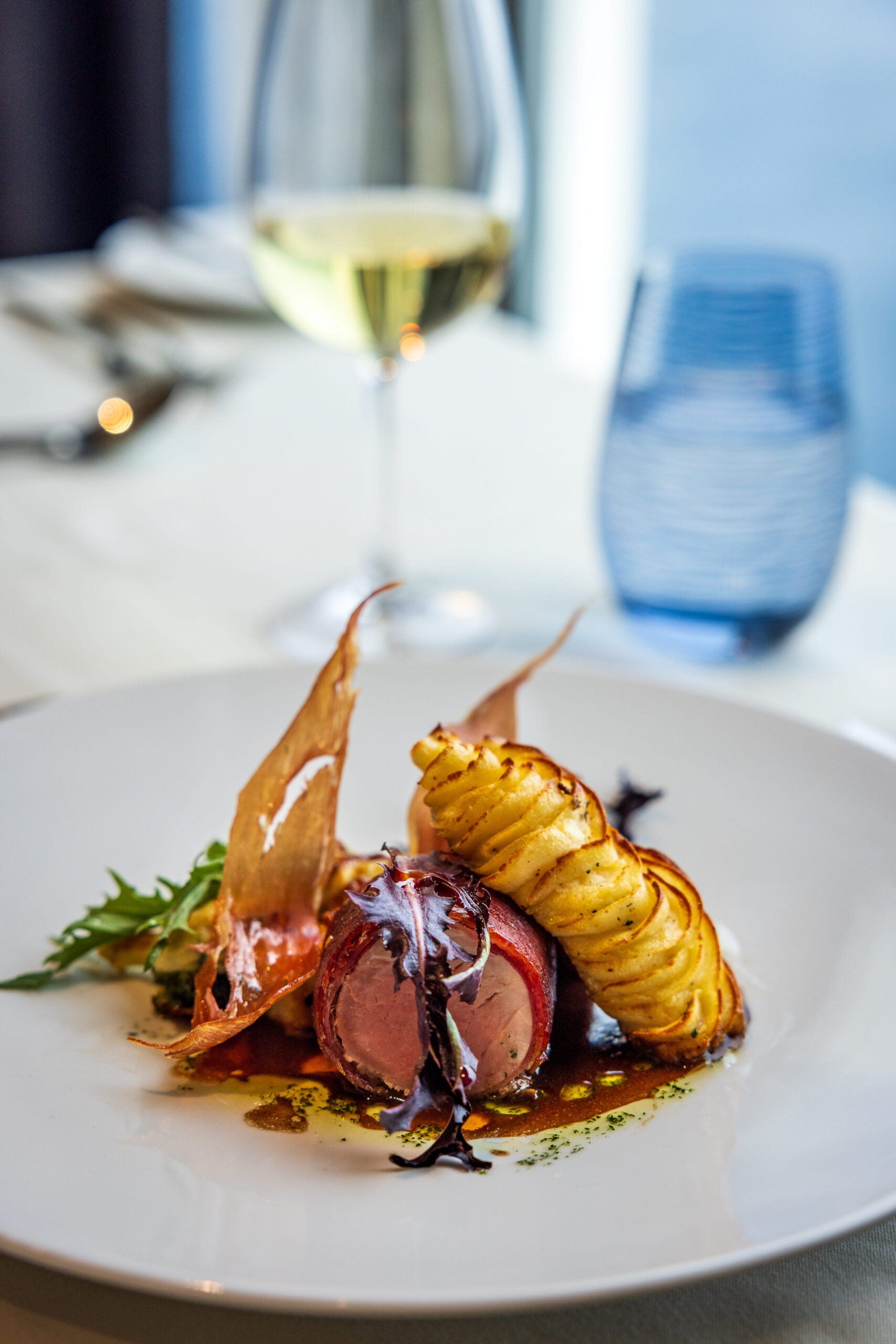
While the ship is exponentially more luxurious than anything Mawson’s men endured, it’s designed for practical comfort, not extravagance. My stateroom is smart but simple: I have everything I need, but there are no indulgent touches. There’s no spa, and while there is an outdoor pool and twin Jacuzzis, these are closed in rough seas (so almost all the time). But as the undulating floor keeps reminding me, this is not a champagne-fueled Mediterranean cruise, it’s an expedition to one of the wildest places on the planet.
See also: Where to Try the Winter Olympics’ Most Unconventional Sports
Although he sold the company in 2008, Mortimer continues to work with Aurora and the polar tourism industry, advocating for a more sustainable future. Aurora is one of only a few cruise companies to be B-Corp certified and carbon neutral, and it supports learning and innovation through ocean regeneration projects, citizen science partnerships, and by hosting scientists on research trips. “It’s often said that Antarctic tourism is about creating ambassadors,” Mortimer says. “I truly believe that in an increasingly virtual world, visiting these extreme environments really does affect people’s attitudes. Our guests are influential people — if they’ve been impacted and then meaningfully do something at home, that’s of great value.”
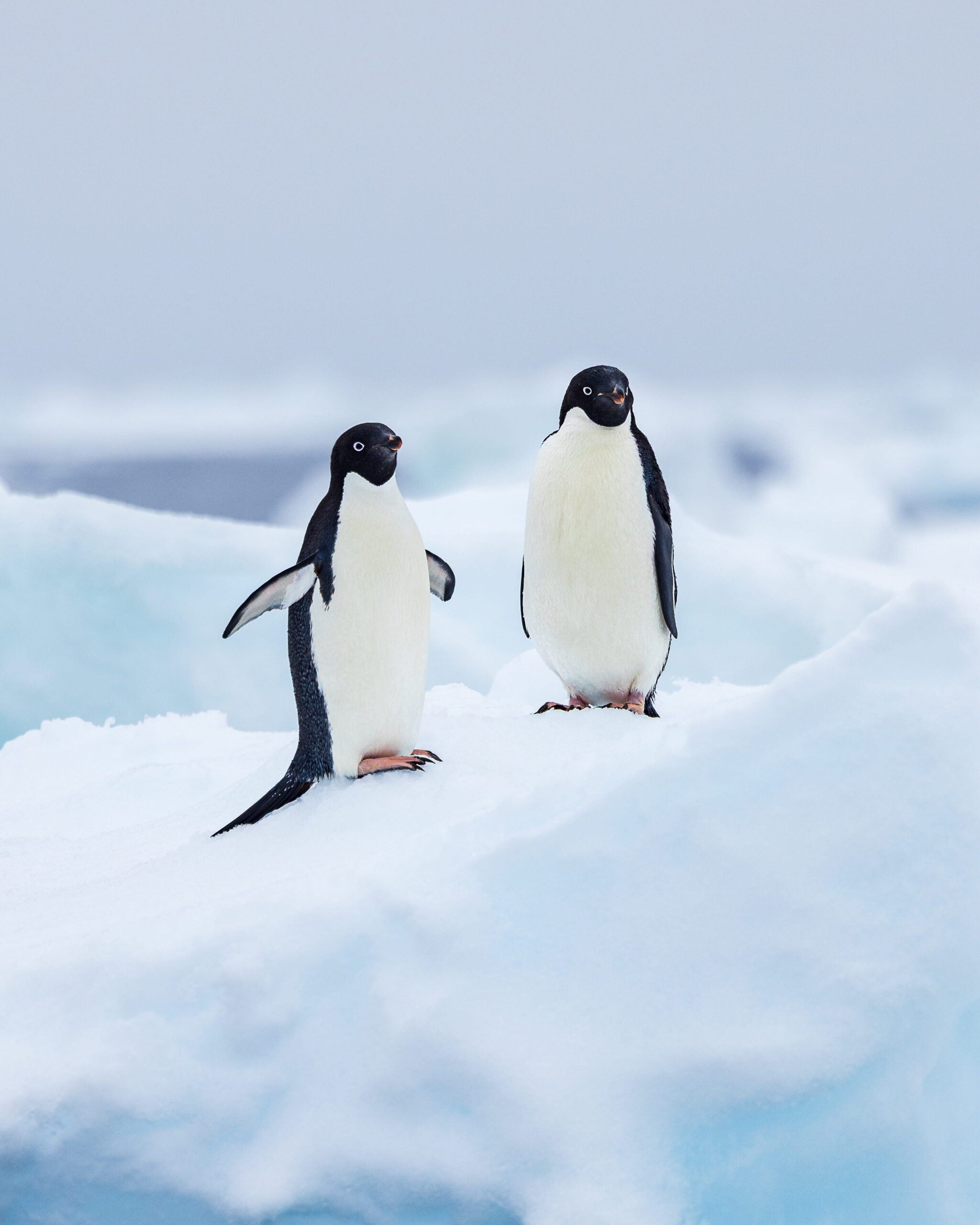
Overnight we cross the Antarctic Convergence, the biological boundary surrounding Antarctica, and the temperature plummets. We meet our first icebergs and stop to launch the Zodiacs, circling a frozen palace the size of a shopping mall, its 100-ft-high walls sculpted with faces like a frozen Mount Rushmore. Two Adélie penguins basking on a floe stare at us in disbelief — with so few ships venturing this way, they’ve probably never seen humans before.
Over the next few briefings, Mortimer introduces us to the ice charts. A rainbow-colored satellite image shows the conditions around the East Antarctic coast: purple indicates dense, impassable ice, while green is navigable. He delivers crushing news: the ice is unusually thick for this time of year, and our route to Cape Denison is blocked by a solid band of purple. There’s no way we can reach Mawson’s Huts. For everyone who’s waited for this once-in-alifetime opportunity, it’s a bitter blow. Yet alongside the disappointment there’s a resigned acceptance. Antarctica is a fickle mistress: beautiful yet cold, she offers much, but guarantees nothing. And while we won’t fulfill our original mission, we may still stand on the seventh continent.
Mortimer points to a promising green patch further west. “We think our best chance of getting through is to head to the Dibble Iceberg Tongue,” he says. “Not much is known about this area, which is pretty bloody exciting.” When even your leader doesn’t know where you’re going, it certainly feels like a real expedition. As a travel writer I’ve had plenty of wild adventures, from climbing Kilimanjaro to circumnavigating Svalbard, but I’ve never been anywhere so remote. Hobart lies 1,400 nautical miles behind us, and apart from a few scientists on Antarctic bases, the nearest humans are the astronauts on the International Space Station.
The Douglas Mawson herself feels like a spaceship, a bubble of safety in this otherworldly wilderness. So when we hit a final wall of ice just 22 miles from shore, no one is surprised. We’ve seen the charts, we’ve watched the sea solidify, and we’ve been updated every step of the way. Still, as we gather in the lecture theatre that evening the mood is heavy — to be denied so close to our goal feels especially frustrating. Even Mortimer, battle-hardened veteran of countless expeditions, is gutted. “It’s a reminder of how puny we are,” he tells me. “That you can get punched in the face by natural forces. I always figure I can find a way, but in this case, no. This one hurt.”
It gives us all a greater appreciation of what Mawson endured 100 years ago, battling against these same ruthless elements but in a wooden ship, with woolen clothes and reindeer-skin sleeping bags, eating pemmican and penguin meat. Meanwhile, warm and well-fed, we snuggle into our beds as the ship inches back the way we’ve come.
The downcast mood doesn’t last long. On Christmas morning we cruise through an ethereal lake of solid clouds floating in an indigo sky, and gather on deck in festive spirits. Some passengers make video calls to family half a world away — the literal opposite of what Mawson endured during his second Antarctic winter, as he desperately tried to radio through news of his survival.
The sea is calm enough to try an expedition ritual: the ‘Polar Plunge.’ A few brave souls gather in swimwear to leap into the sub-zero ocean, while the sensible majority watch from the upper decks. FOMO makes me do it: I strike a pose for the photographer and jump, hitting the ice-sprinkled surface with a shock that freezes my brain and jolts my heart, before I scramble back into the ship’s warm embrace.
See also: I Journeyed Through Namibia’s Ghostly Expanse – and Witnessed Life in the Wild
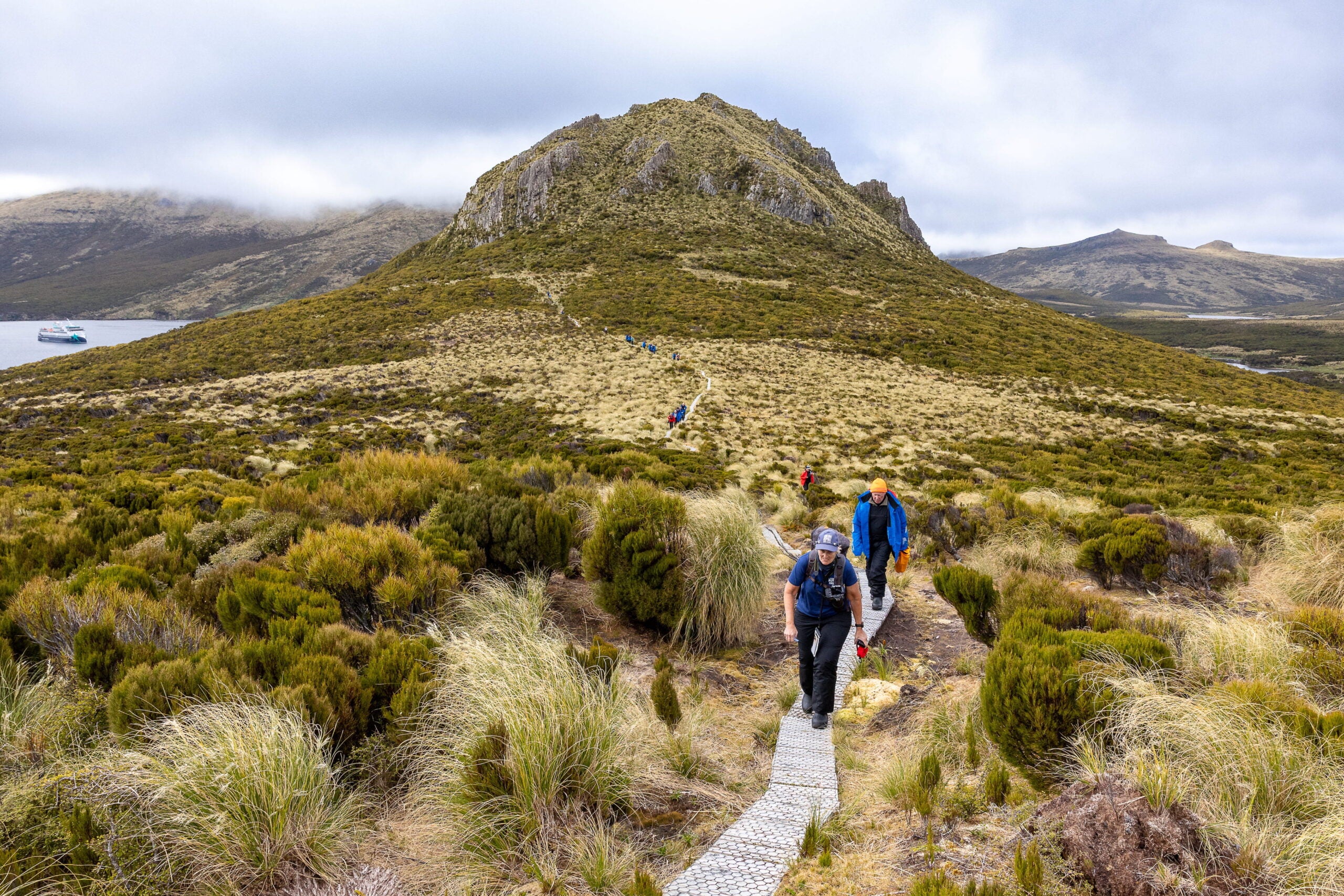
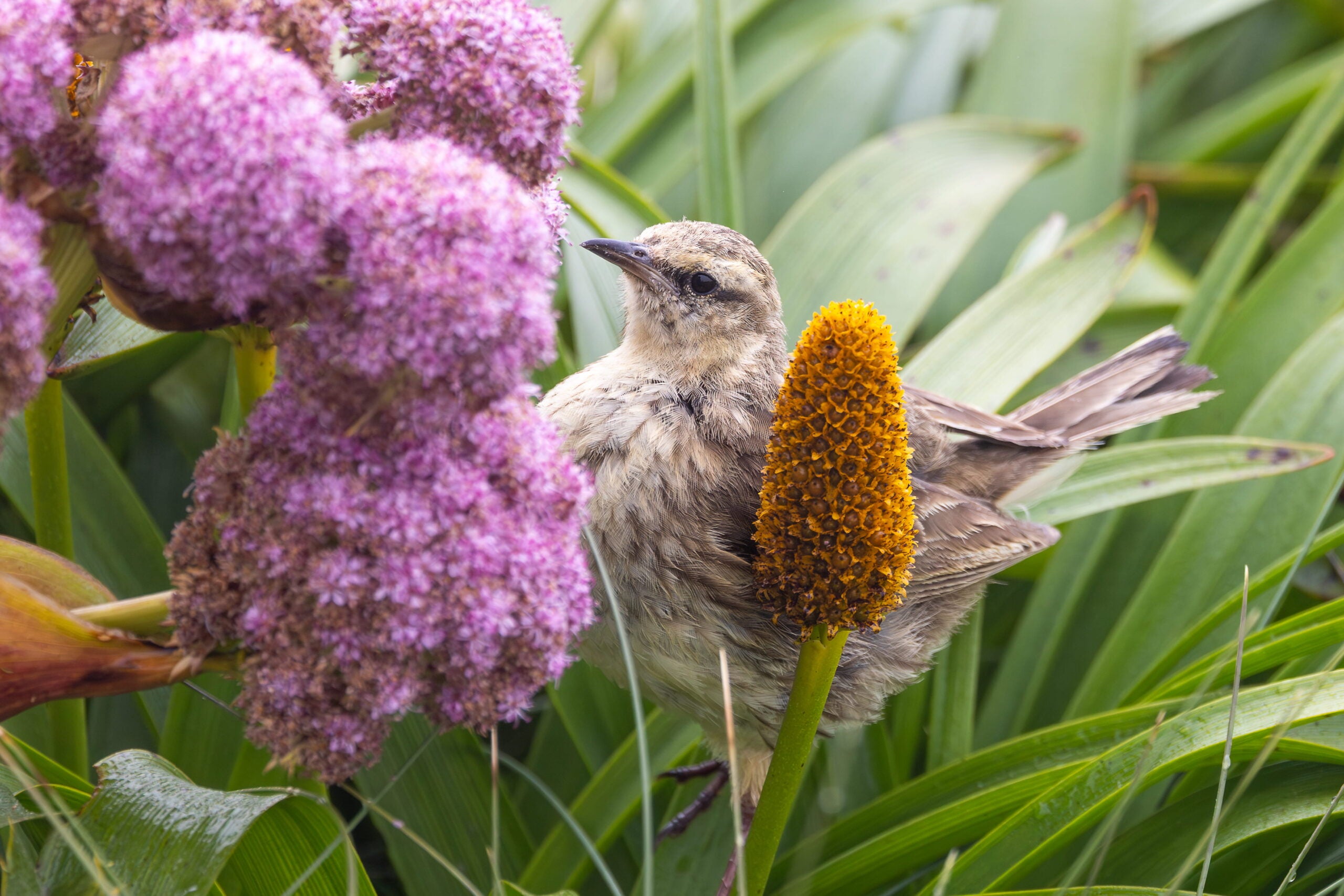
After 17 days of ice and sea, land finally hoves back into view at Campbell Island, a subantarctic nature reserve 410 miles south of New Zealand. The atmosphere is joyful as we marvel at the solid ground beneath our feet and the blooming meadows of endemic megaherbs, their gaudy yellows and purples dazzling after weeks of monochrome. As I ascend the boardwalk, immaculate royal albatrosses glance up from their nests — now recovering after a world-leading eradication program in the early 2000s cleared the island of invasive rats. Today that hard-won revival is carefully guarded with a limited number of visitors allowed ashore each year.
There’s more wild magic at Enderby Island, 180 miles north-west, home to the world’s largest population of endangered yellow-eyed penguins. While they keep their distance, the 450 New Zealand fur seals that occupy the beach aren’t so shy. Petite females guard their newborn pups from marauding skuas, while the beefy, thick-maned males challenge us with hostile suspicion.
We didn’t make it to the continent. But this trip was about so much more than boots on the ground. We crossed the limitless ocean, met a riotous cast of wildlife, and experienced extreme weather and profound silence. I made new connections and came home with 7,000 photos and dozens of stories to share. It’s often said that ‘the journey matters more than the destination,’ but on an Antarctic expedition, where every day brings new experiences and new insights, our leader Mortimer’s sentiment proved true: the journey is the destination.
AE Expeditions’ Antarctica Voyages start from $14,795 per person sharing for the Antarctic Explorer Express. The 24-day/23-night Mawson’s Antarctica voyage will next run in 2027, from $29,966 per person sharing.