




Beyond the stone walls, you can hear the faint chatter of people as they walk along; sometimes, a police siren pierces the air – a reminder that 21st-century life is going on outside. With its tailored offering, a stay at Imaret transports you to another time, immersing you in a bygone way of life.
In the city of Kavala, a 90-minute drive from Thessaloniki, Greece, the sprawling mismatch of buildings that makes up Imaret has a complex history – one that feeds into your experience as a guest. Inside, the building is cavernous with well-worn marble steps and arched walkways. The landmark, perched high on a cliff, can be seen throughout the city, distinctive with its 50 lead-roof domes silhouetted against the sky.
Imaret was built in 1813 by Muhammed Ali Pasha under Ottoman rule, who had been granted the role of viceroy of Egypt (he was later widely credited to be the founder of modern Egypt due to his forward-thinking political and social changes). As a symbol of thanks for his new-found power, he opened Imaret as a theological school for boys, as well as a soup kitchen, offering meals to the city’s poor. It operated like this for nearly a century, until it fell into disuse in 1920.
Growing up in its shadow, owner Anna Missirian had long been fascinated with the apricot-coloured building that sits just within Kavala’s old city walls. “It was such a beautiful monument. I used to think it was like a jewelry box. I knew that it simply had to be saved,” she says, perched on a stool in the hotel cocktail bar.

This ‘saving’ initially took eight years of negotiations with the Egyptian government, which owns the building, to get permission to start renovations. After finally being granted a 50-year lease, Anna set about converting the shadowy cells the boys once lived in, restoring the crumbling courtyards into fragrant rose and orange gardens, and turning the whole space into a 26-room hotel which opened in 2004. Costing €7m (approx. $8.1m), it took eight years of meticulous restoration, with master artisans employed to restore every nook and cranny.
“But it still didn’t feel right,” says Anna. “Imaret is more than a hotel, I needed to capture its soul.” The result is Imaret’s reimagination – which has just opened this fall – as a luxury, bespoke retreat, now with just eight suites. “It sounds counter-intuitive,” says Anna. “But I’ve spent the past three years making Imaret a smaller offering; more intimate. Everything about a stay here is bespoke, tailored to what our guests want. It's a refuge for meaningful experiences.”
Stay
Labyrinthine in feel, stretching over two floors and across 4,000 sq ft, Imaret is made up of a collection of five dining rooms, a variety of salons, a library, shady terraces and a mosaic outdoor pool – the only new addition to the restoration.
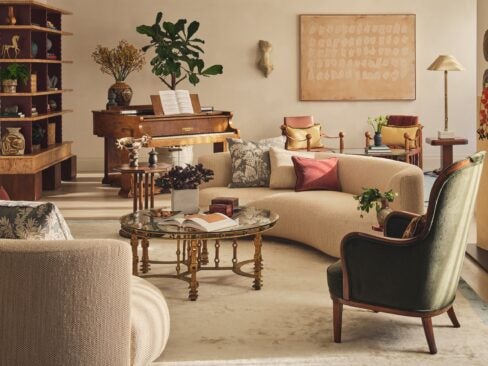
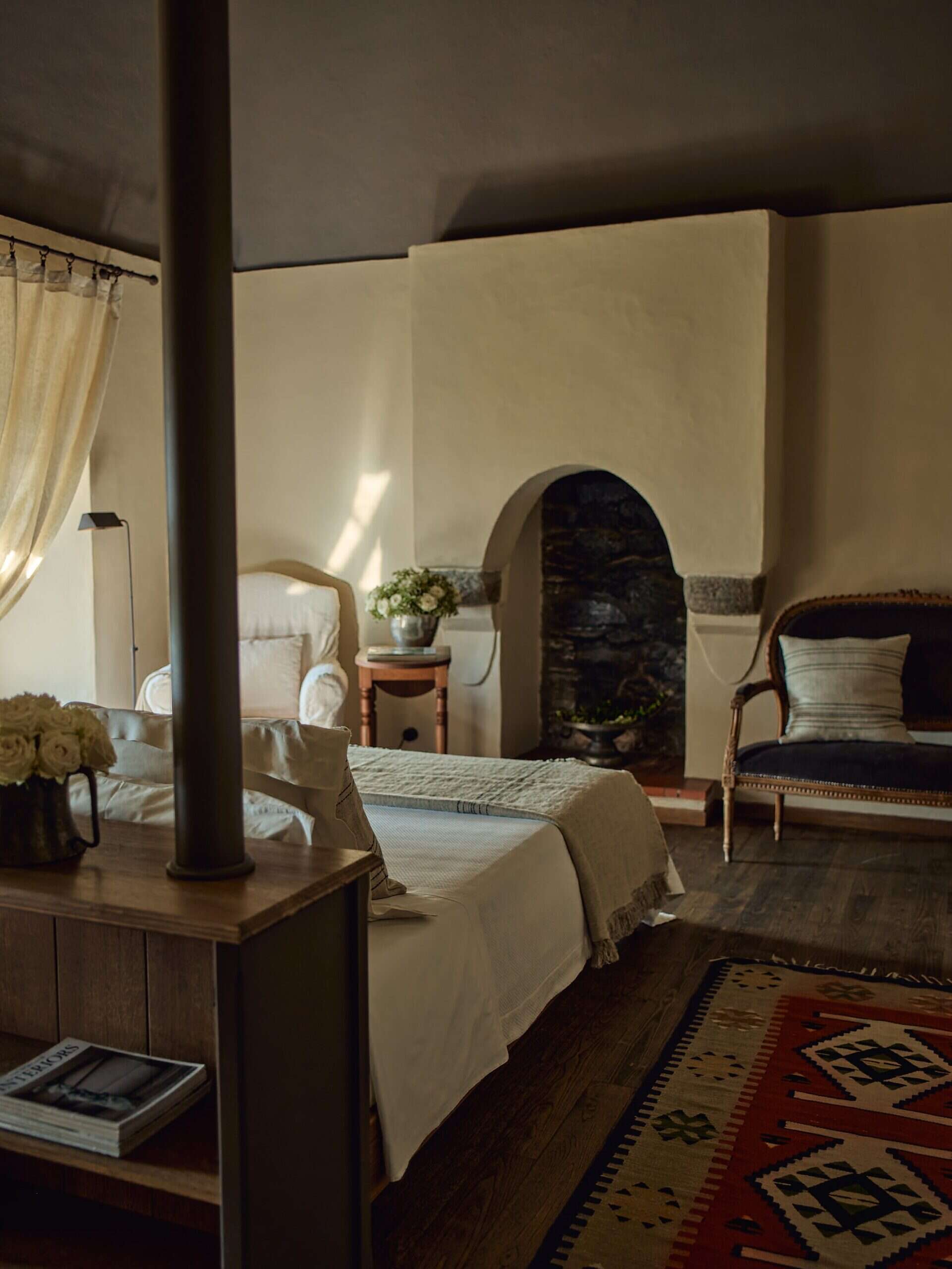
The three main gardens, planted according to Islamic design, have been conceived as outdoor sanctuaries, where day beds are found with blankets and notebooks. Dotted around these are the eight suites – now called Private Quarters. Each has elements of the original architecture, such as high, domed ceilings and imposing stone fireplaces. One of the largest, Watergarden 16, is beautifully atmospheric, made up of a series of three rooms to make a living room, bathroom with standalone tub and bedroom.


Converted by joining the original cells, all the quarters have their own distinct design aesthetic, which changes according to the seasons. Spring’s cream linens and pastel-colored kilim rugs are swapped for rich, jewel colors in winter, when Imaret seems to come into its own.
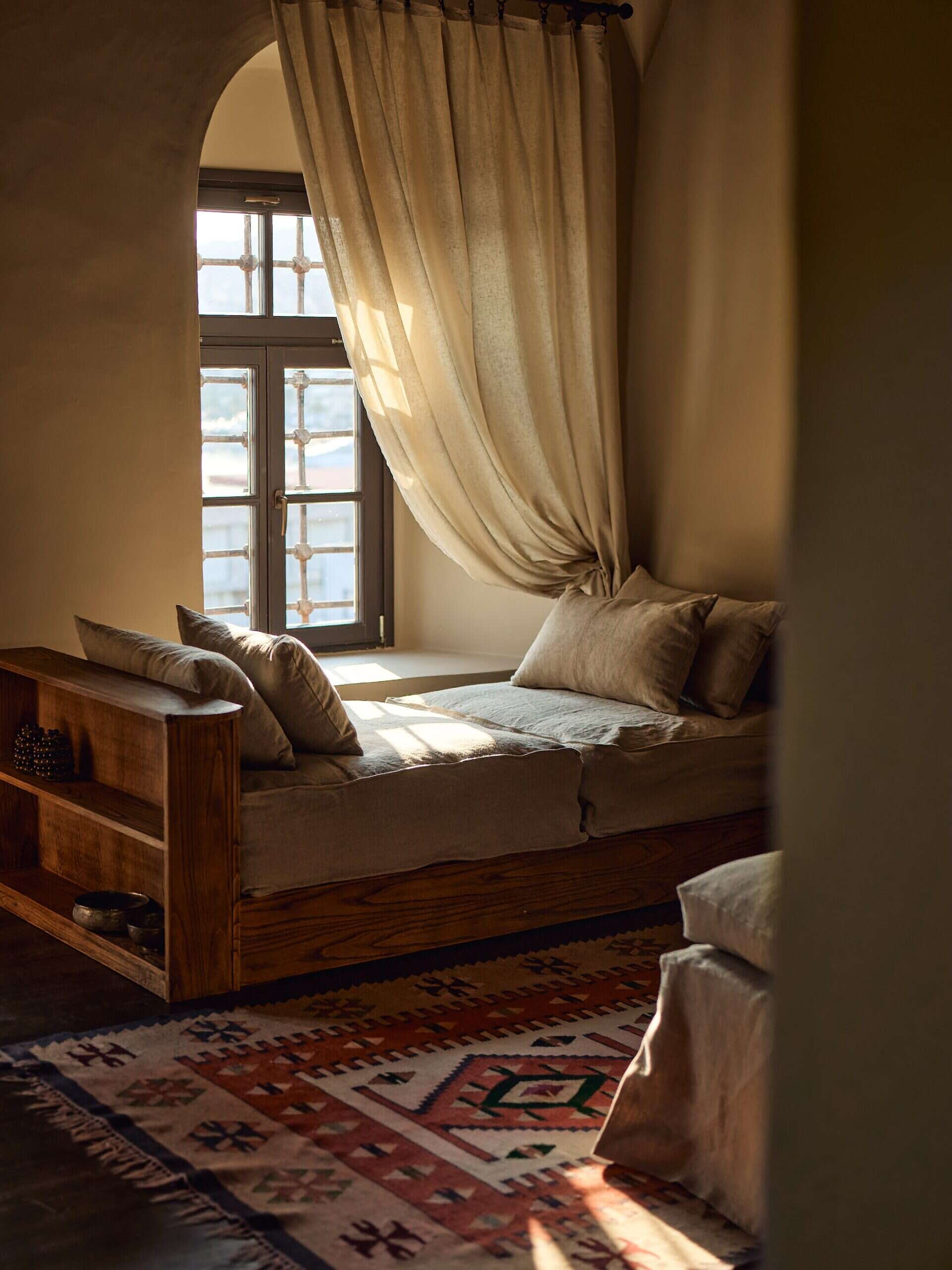
Attention to detail is exceptional: windows are draped in crimson Rubelli velvet fabrics; beds are lined in the finest linens and covered with soft velvet throws. Underfoot are handmade Turkish rugs, and some of the walls are lined with illustrated fabric panels, commissioned from the London-based Iksel brand to depict scenes from Imaret’s history.
By night, Imaret feels particularly magical with trees lit up with string lights, fires roaring in cozy rooms and 150 candles glowing on every surface (taking a member of staff an hour each night to light them).
Dine
There are no menus here. Instead, local chef Stelios Hatziavramidis has devised a ‘rhythm of dining’ concept with dishes produced in collaboration with each guest and served each day in a different dining room or terrace – so you can have a given space to yourself. Passionate about local produce, he sources everything from an 18-mile radius, meeting local fishermen every morning for the catch of the day and growing many ingredients in Imaret’s own vegetable garden.
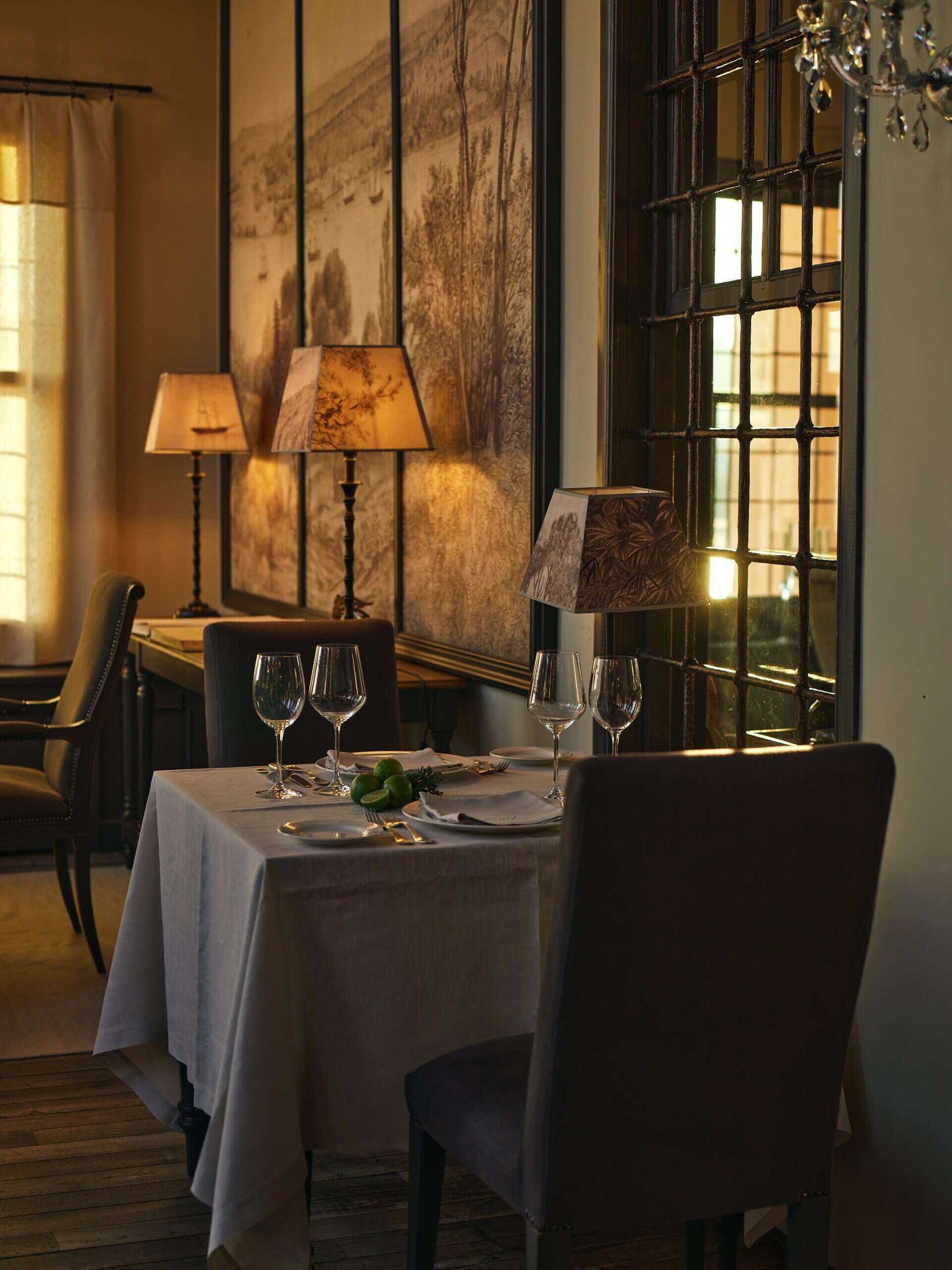
For breakfast, for instance, there are homemade jams with just-baked koulouria bread and eggs how you like them; mid-morning, you might fancy a cappuccino with apple pastry served on a pretty, floral Limoges plate; and lunch could be a dish of lemon and rosemary-spiked chickpeas or a Greek salad with fat olives and crumbling feta.
There’s afternoon tea, and small bites with evening cocktails. While dinner covers a diverse range of influences, from French and Turkish, and taps into historical recipes. Standouts include a chicken and almond soup, which dates back to the 1700s, and modern take on traditional Turkish Manti dumplings. All drinks – from Champagne to carefully selected local wines – are included.
Relax
The wellness offering is extensive and is led by husband-and-wife duo, Sharu and Vanu Marigowda, who come with a wealth of international experience. Guests can tap into as many tailored rituals and therapies as they wish. Each ritual follows the Ayurvedic discipline, from the Abhyanga-inspired full-body massage, with warm coconut and sesame oils, to Watsu healing ceremonies in Imaret’s indoor cistern, which dates to when it was founded but is now converted into a serene, indoor pool.
Not to be missed is the traditional hammam with black and foaming white soap – given in the original marble hammam building – and meditation by candlelight in Imaret’s historic former mosque. As well as a personal trainer on site, there is also breathwork and sound-healing sessions, and mindful trips to nearby beauty sites.
EXPLORE
It feels so cossetting at Imaret, that you probably won’t want to stir too far from the courtyards, where swallows make their nests and which are home to fragrant herb gardens and flower beds. But history buffs might want to tap into one of the cultural excursions that have been curated for guests, whether that is exploring the nearby ancient Greek city of Philippi or kayaking along Nestos River.