
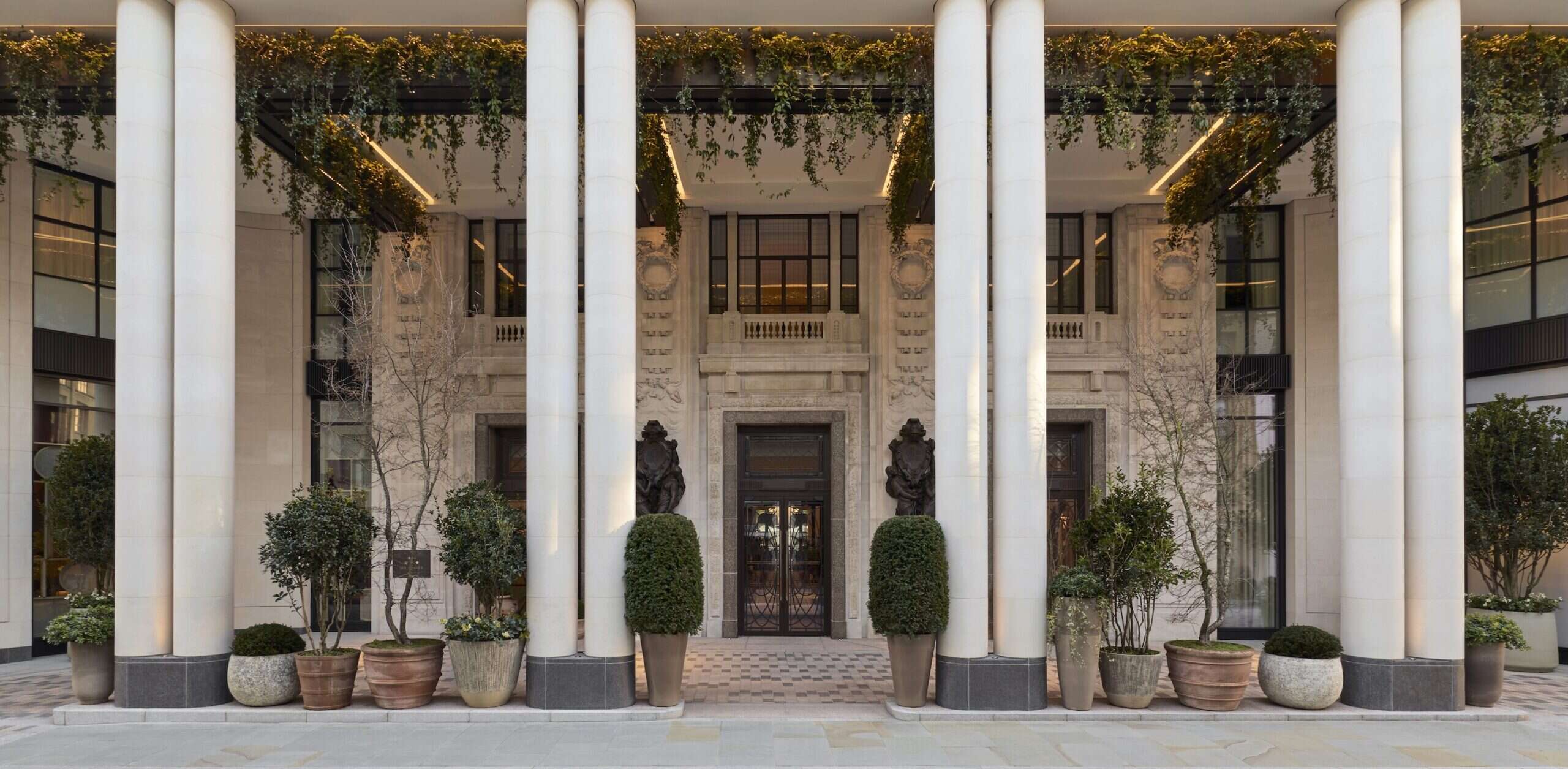
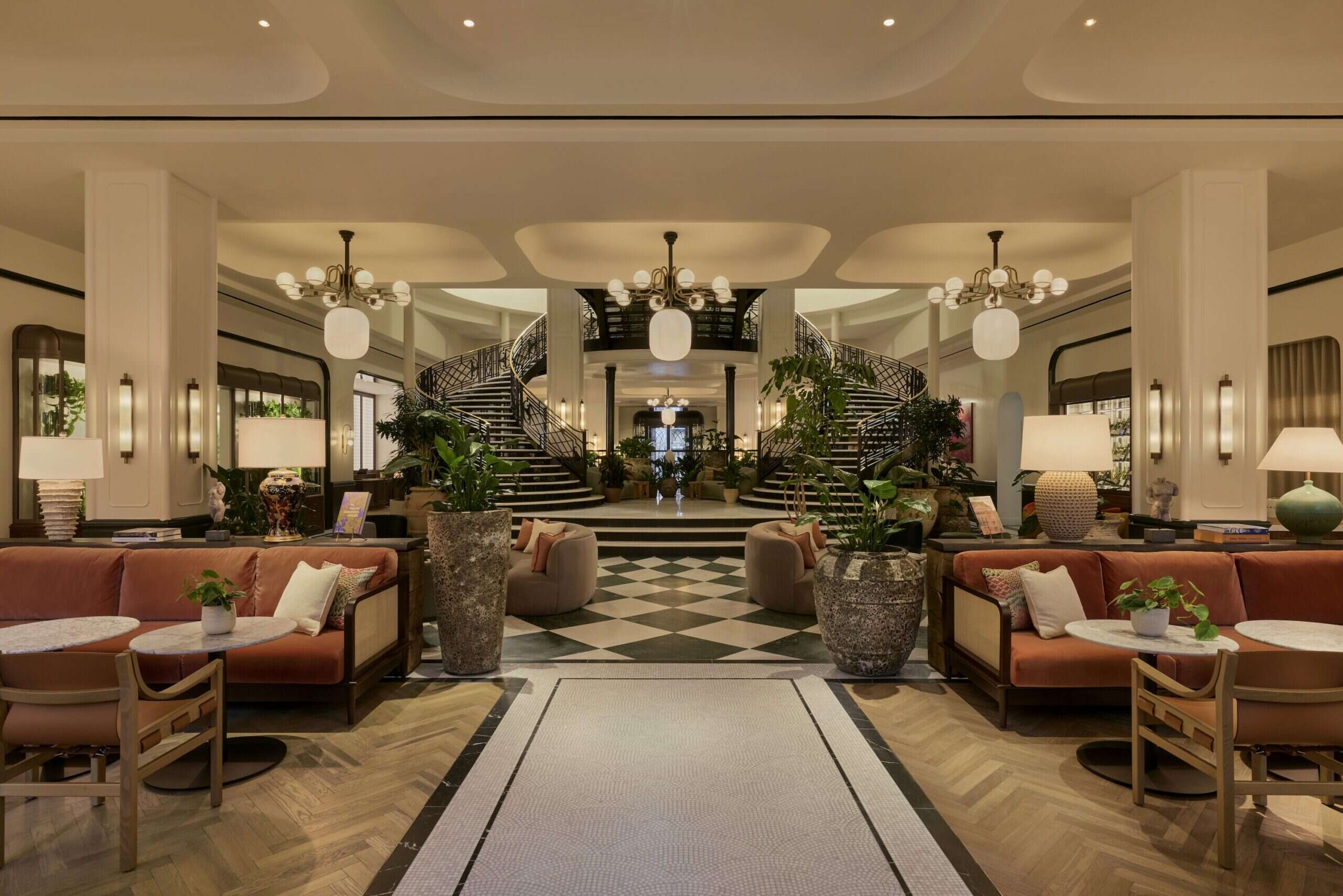
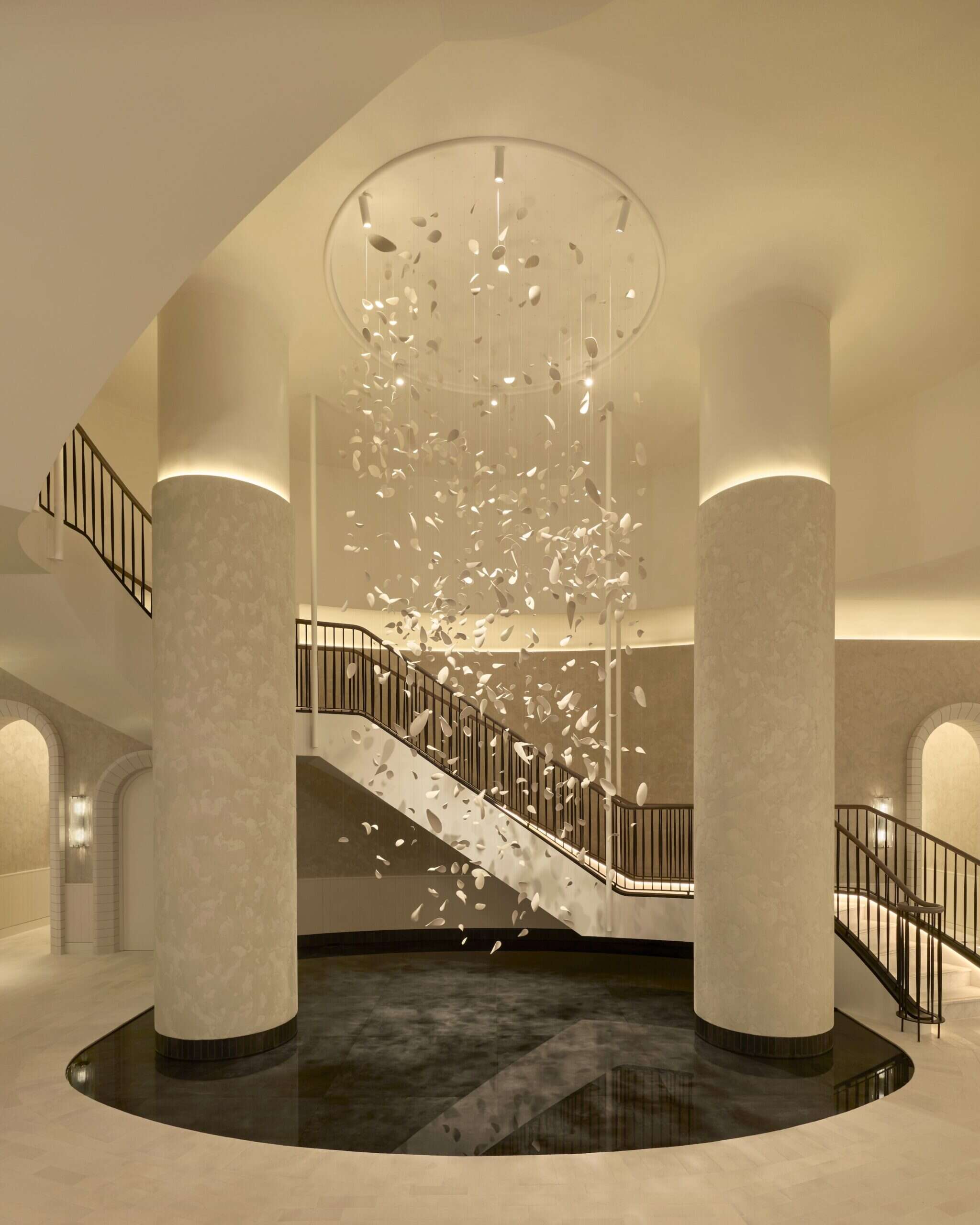
A project in the works since 2018, Six Senses has finally opened in London, taking over the former Whiteleys department store on Queensway. The hotel reportedly cost around $1.3bn to build, with developers excavating five storeys below ground. From the original Whiteleys, only the facade, the dome, and the central staircase remain – the latter lengthened to guide visitors from the ground-floor restaurant up to the bar and the brand’s inaugural members’ club, Six Senses Place.
Those familiar with the hotel operator will know that wellness has always been at its heart. That ethos has been fairly effortless to convey, given that the resorts are typically set in tropical, remote settings: Koh Samui, Fiji, The Maldives.
Replicating that sense of serenity is far harder in central London, and particularly so in Bayswater. But New York-based AvroKo, tasked with overseeing the design, struck the right balance. The firm drew on Art Deco and post-Victorian styles, honouring William Whiteley’s 1851 visit to the Great Exhibition – a trip that later inspired him to create his famously lavish department store. For that Six Senses woo-woo touch, a shaman was also consulted during construction, guiding design choices such as a circular window at the front of the hotel shop, strategically placed to release negative energy. A resident crystal healer, too, was involved.
The healing power of plants also plays a major part, with a strong botanical thread running throughout the hotel. Giant eucalyptus statues line the bridge entrance, their freeze-dried leaves at eye level, while 1,000 plants wind through vintage dark wood display cabinets and glass concession frames in reception. Another 1,000 botanicals are scattered generously throughout.
Stay
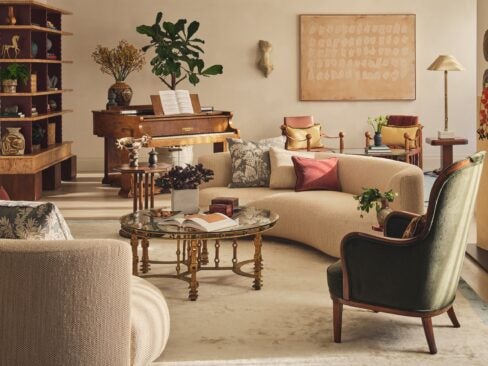
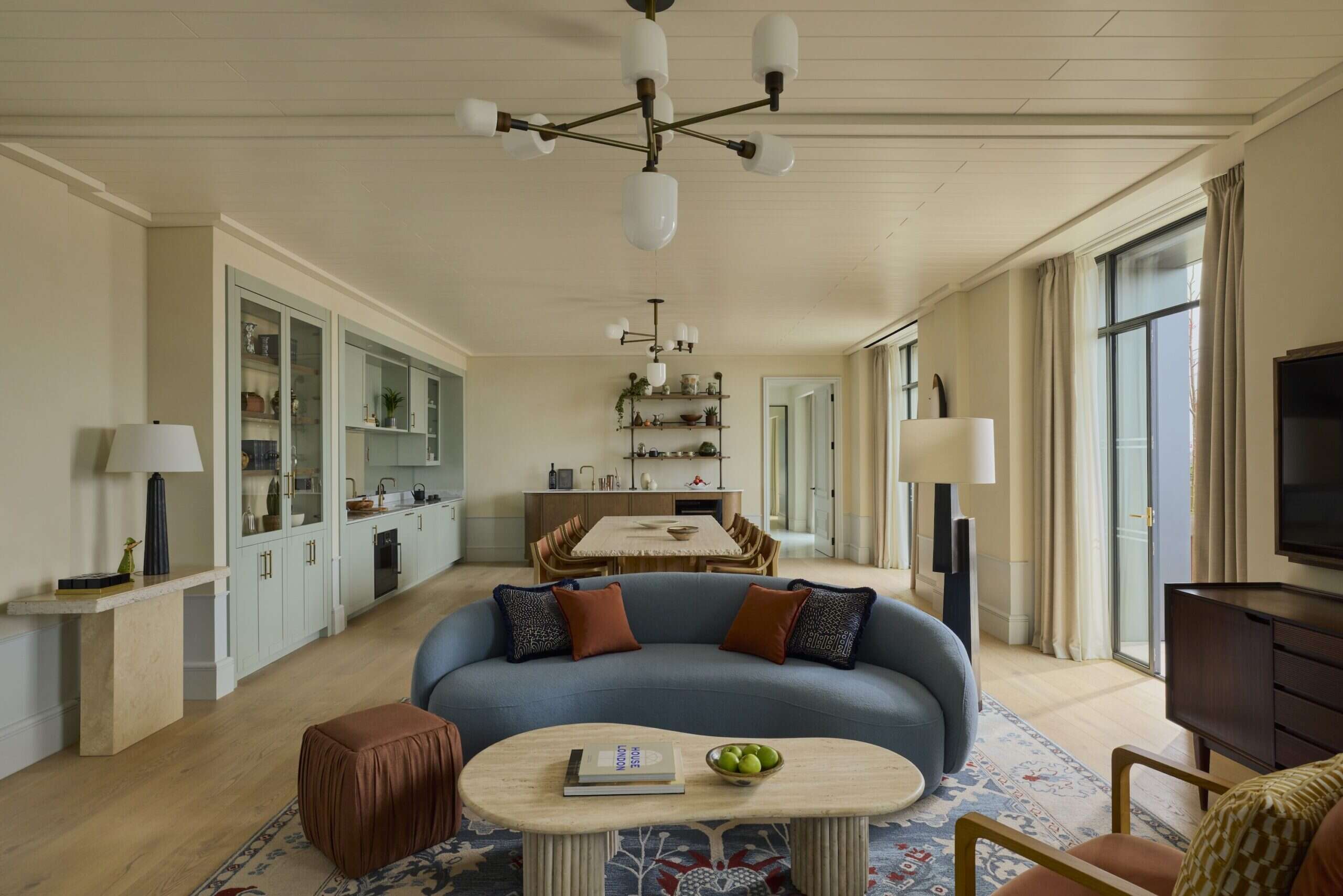
Six Senses London is home to 109 rooms and suites, along with 14 branded residences. The design is spa-like without ever drifting into sleepy, combining inky blues, warm woods, and subtle Art Deco touches – golden handles sculpted in the shape of hands, vintage copper towel rails. Many of the suites feature inward-facing terraces, shielding guests from the grittier surrounding streets while overlooking the quieter residential quarters of the Whiteley development.
The Corner Terrace Suite – the only one of its kind in the hotel – is currently trialing an in-suite, audio-responsive relaxation bed: an ergonomic chair complete with headphones and an eye mask, all connected to an iPad. Select from ‘Relax’, ‘Sleep’, or ‘Energise’, and the chair will gently vibrate in sync with tailored mindfulness soundscapes.
The crown jewel is The Whiteley Suite, a two-bedroom, two-bath penthouse that spans the entire top floor. Its design mirrors the aesthetic of the other suites but is elevated – both literally and atmospherically – by its sky-high position, which brings in light and a sense of openness. A 1,300-sq-foot roof terrace extends the space outdoors, while the option to connect with neighbouring suites allows for the creation of a fully private floor.
Dine
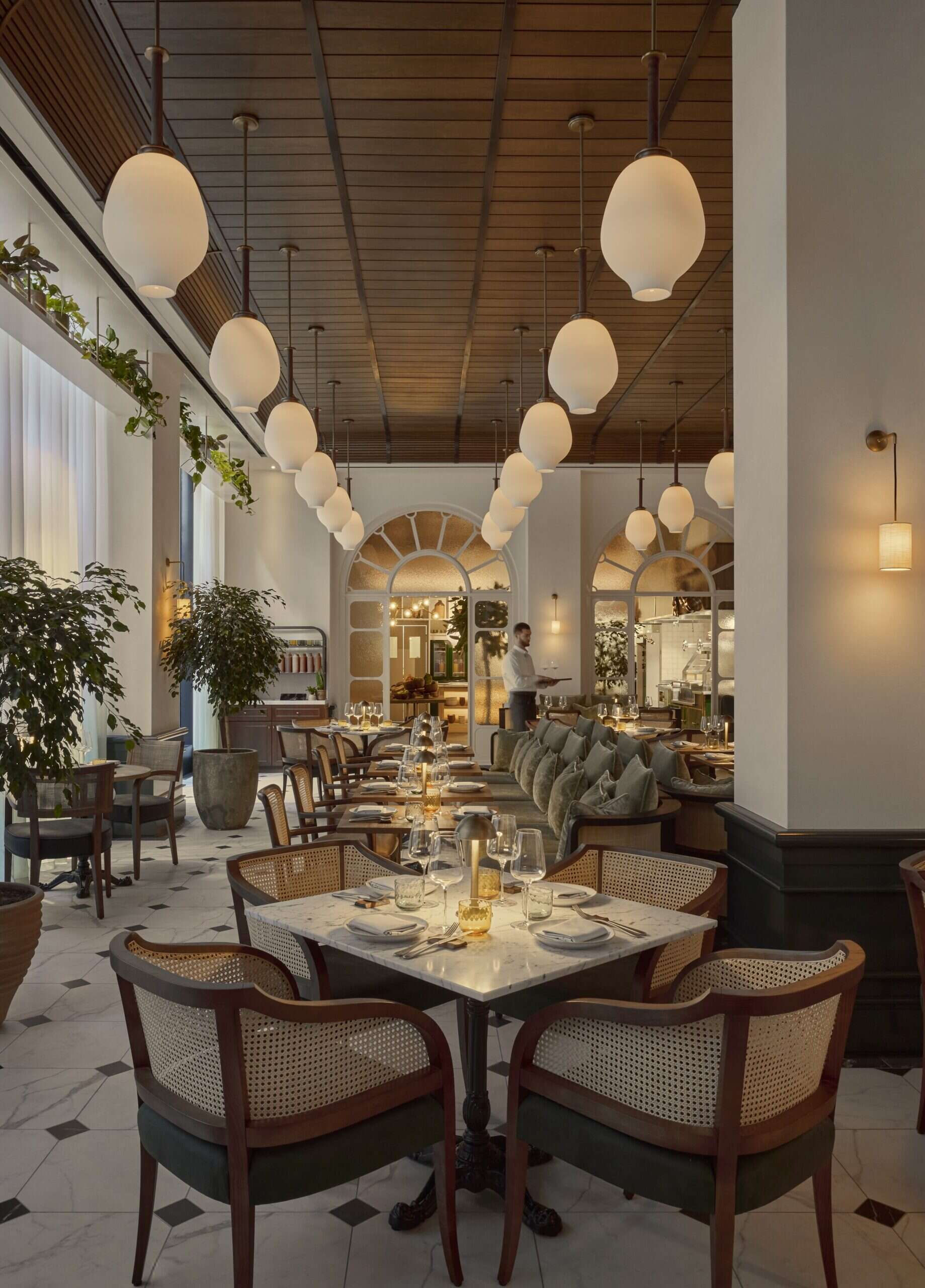
The hotel’s flagship restaurant, Whiteley’s Kitchen, is a day-round destination with a farmhouse-style chef’s table reserved for special bookings. In line with Six Senses guidelines, 80 per cent of produce must come from within 62 miles (100km), so dishes brand themselves British-born, created with international influence.
The buffet breakfast is pared back; pastries, low-gluten options, and a homemade health-shot counter. While the dinner menu lacks a clear directional cuisine, it’s pleasing nonetheless, and the aperitivo cart – complete with carbonated pumps of homemade soda – adds a playful touch. In keeping with the theme of wellness, the hotel has its own fermentation lab, producing the likes of kimchi, pickles, and yogurt, for guests to enjoy.
Up the grand staircase is Place restaurant, reserved for hotel guests and members of Six Senses Place. Dishes lean Mediterranean, alongside beach club-inspired options (Caesar salad and BLTs), with a bar for pre- or post-dinner drinks. Across the hotel, the cocktail menu is split evenly between alcoholic and non-alcoholic options, with each drink offering a paired zero-proof version made with unusual spirits, tinctures, and cordials. For gut-loving non-drinkers, kombucha seems to be permanently on tap.
Relax
One floor below ground sits a spa equipped with advanced facilities geared towards the ever-growing trend of biohacking. For those open to alternative therapies, this is the place to experiment. At one point, I found myself bundled in earmuffs and North Face slippers, shivering inside a cryotherapy chamber, before moving on to ten minutes in a red-light pod. Both treatments are designed to relieve stress and support overall wellbeing.
Prefer treatments rooted in science, or happen to be health-anxious? High-tech wellness screenings are available, as they are in many Six Senses properties around the world.
The real disappointment, however, is the spa’s centrepiece. The swimming pool, heavily featured in pre-opening imagery, began leaking just four weeks before launch. As a result, several key facilities, including the magnesium plunge pool (rumoured to be London’s first), are currently out of action, with no confirmed timeline for reopening.
Nestled next to Place is the Longevity Clinic, which, once it opens, will welcome both guests and the public. In partnership with Hum2n, and founded by Dr Mohammed Enayat, the clinic offers a range of treatments – advanced blood diagnostics, IV nutrient therapy, hormone optimization, all assisted by future-facing biohacking equipment, including a hyperbaric chamber, engineered to simulate altitude conditions and encourage cellular adaptation.
Members of Six Senses Place enjoy the perks of priority booking, along with a curated number of sessions or credits tailored to their plan. Membership is carefully controlled, and costs over £30,000 per year for the top tier (approx. $40,000), with applications subject to a stringent interview process.
Explore
Bayswater’s prime location is both an advantage and a disadvantage. The streets immediately surrounding the hotel remain somewhat run-down, lined with fast-food outlets, yet the Whiteley development is steadily cultivating its own high-end ecosystem. Queensway will look “exactly like Marylebone High Street” within five years, I’m told. New openings are already helping to elevate the area’s profile: Nela, a live-fire restaurant, has debuted in the building, alongside an Everyman Cinema and a Third Space gym. And Notting Hill is just a 15-minute stroll, as is Hyde Park, which will soon unveil a striking new entrance.
As a cynical Londoner, I found myself questioning not the ambition, but the necessity. The Whiteley and Six Senses are helping to create the kind of neighborhood their residents and guests will want on their doorstep, but doing so requires the slow reinvention of an entire corner of the city. Walking past the construction hoardings and boarded-up storefronts, I couldn't help but wonder why, in a city already rich with established luxury enclaves, the answer was to create another one.