
Long before tweed became shorthand for Parisian polish, Gabrielle ‘Coco’ Chanel was borrowing it from the damp hills and riverbanks of Scotland. It was in the Highlands, far from the scrutiny of Paris, that she began to refine the codes of ease and utility that would come to define her iconic style.
In the Highland village of Braemar, The Fife Arms has distilled that lesser-told chapter of the designer’s life into a new suite. Conceived as a discreet, almost hidden retreat, the room reflects her long-standing affinity with Scotland, where its textiles, terrain, and sporting traditions informed some of her most enduring designs.
The 'Secret Room', launched this month and forming the latest addition to the hotel’s 47 rooms, does not announce itself so much as evade detection. Guests are led through the hotel’s richly layered interiors – tartan, taxidermy and over 16,000 pieces of artwork – before arriving at what appears to be an unremarkable bookcase. It is, in fact, a trompe-l’œil door, a device that echoes the concealed thresholds of Chanel’s apartment at 31 Rue Cambon.
Behind the hidden entrance lies a space that traces Chanel’s Highland years, beginning in the 1920s when she traveled north with Hugh Grosvenor, 2nd Duke of Westminster. The Duke – then one of the richest men in Britain – provided Chanel with significant financial backing in the 1920s, a support which helped stabilize her business at a moment when couture houses were still vulnerable to economic swings.
See also: This Old Stable Has Become Scotland’s Chicest Country Escape
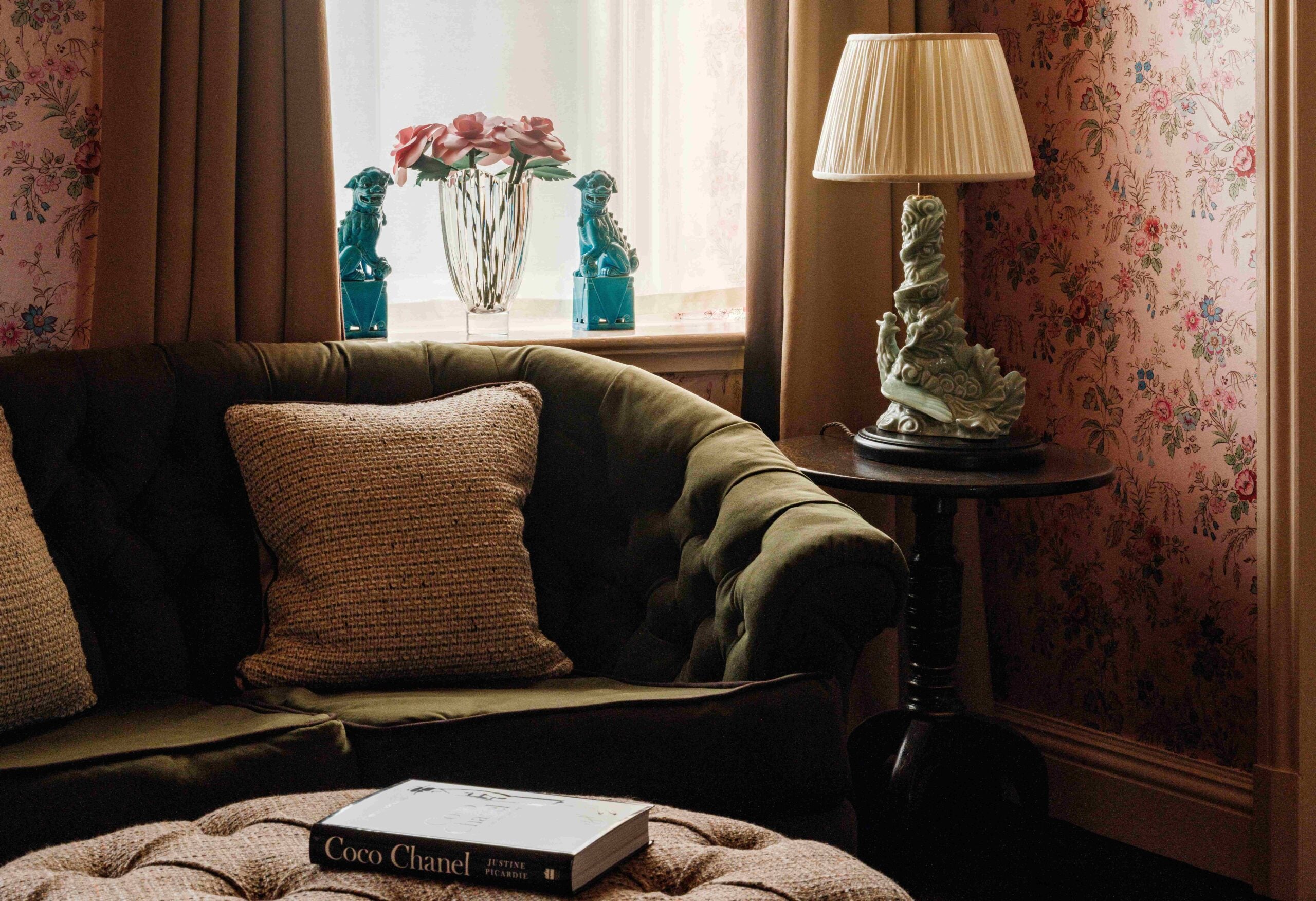
Their relationship immersed Chanel in the rituals of aristocratic country life and sporting culture (I'm told by a ghillie at The Fife Arms that she took a notably serious approach to fly-fishing). But it was the landscape itself that left the deeper impression. The Highlands offered both an escape from the Parisian spotlight and clarity among its muted, tonal world of moss greens, peat browns, slate greys, and heather purple landscapes.
Chanel is said to have discovered a way of dressing in the Highlands that was governed by function: tweed jackets cut for movement, knitwear suited to the elements. This exposure is widely credited with accelerating her move away from the decorative excess of early 20th-century fashion toward something more pared back. She began to reinterpret elements of British country dress – jersey, tweed, ribbed wool – into her collections.
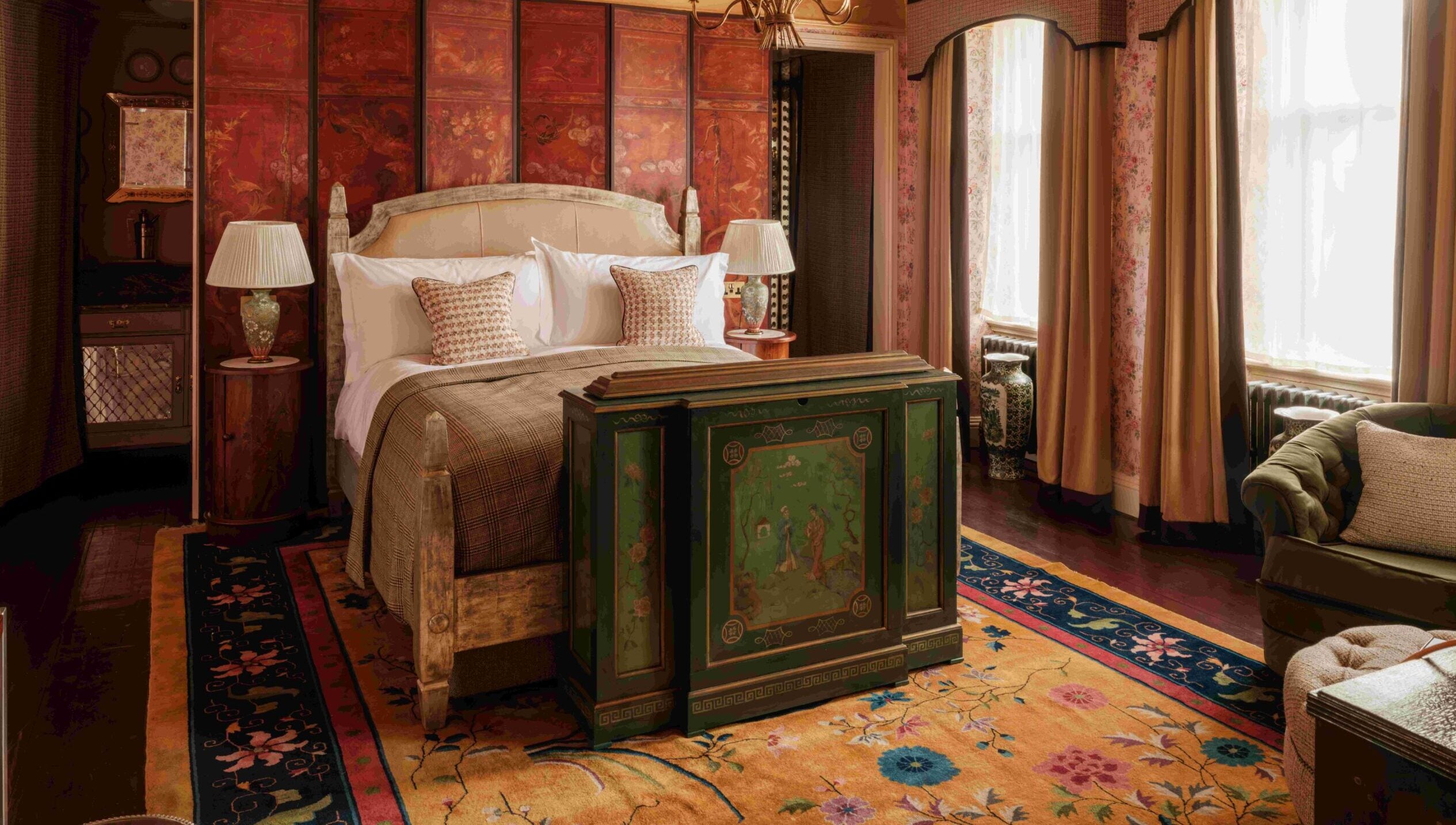
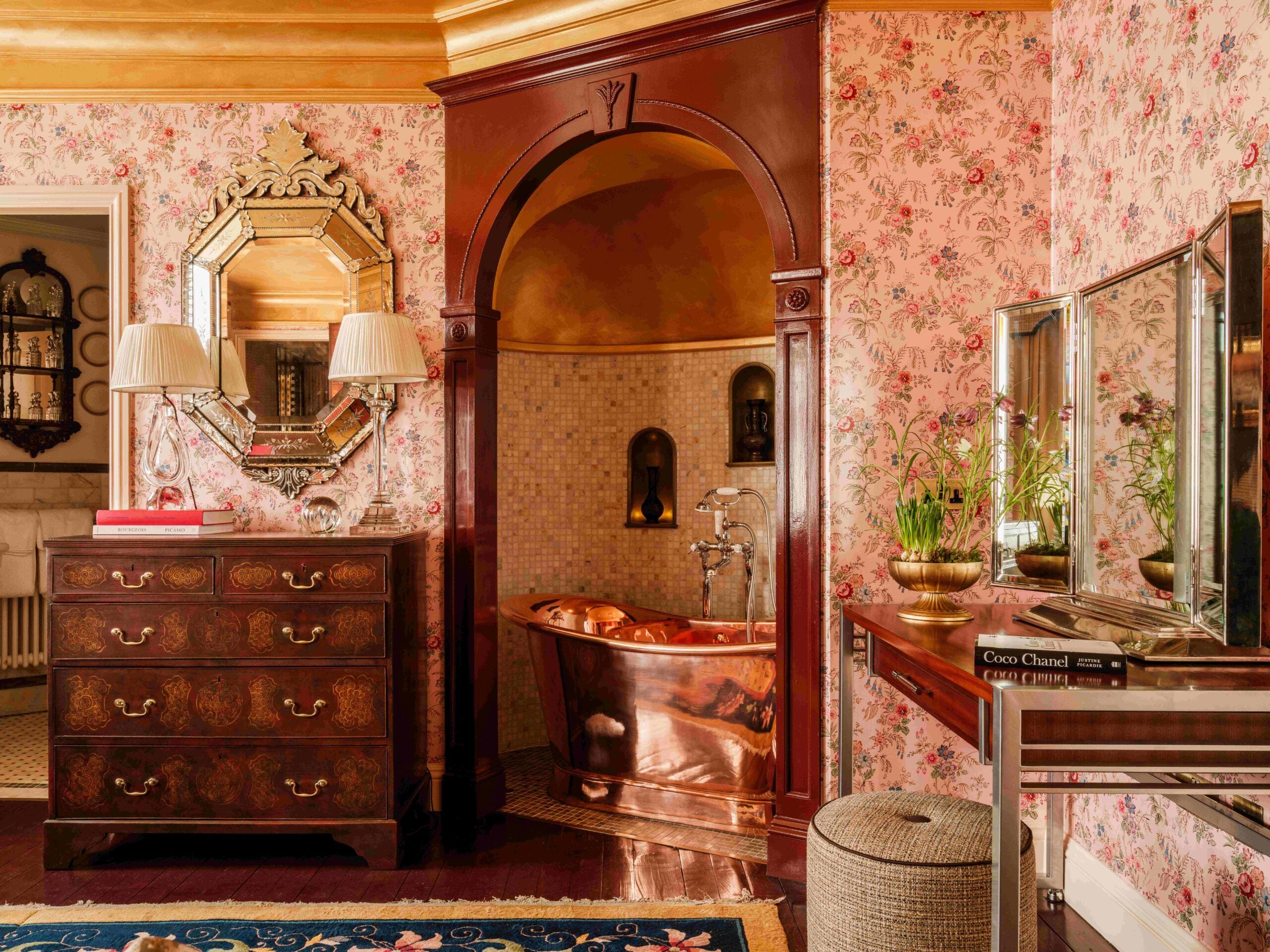
Her collaboration with Linton Tweeds, discovered in 1928 and a mill she continued to work with for decades, proved especially significant. The mill’s fabrics, originally intended for men’s sporting attire, became central to Chanel’s reimagining of the female wardrobe, their texture and structure lending both ease and authority to her designs. Tweeds in deep greens and burgundies from Linton appear across upholstery in the suite, their richness offset by more restrained details drawn from Chanel’s Paris apartment: a sculptural wheatsheaf chandelier, an Art Deco mirror positioned above the dressing table.
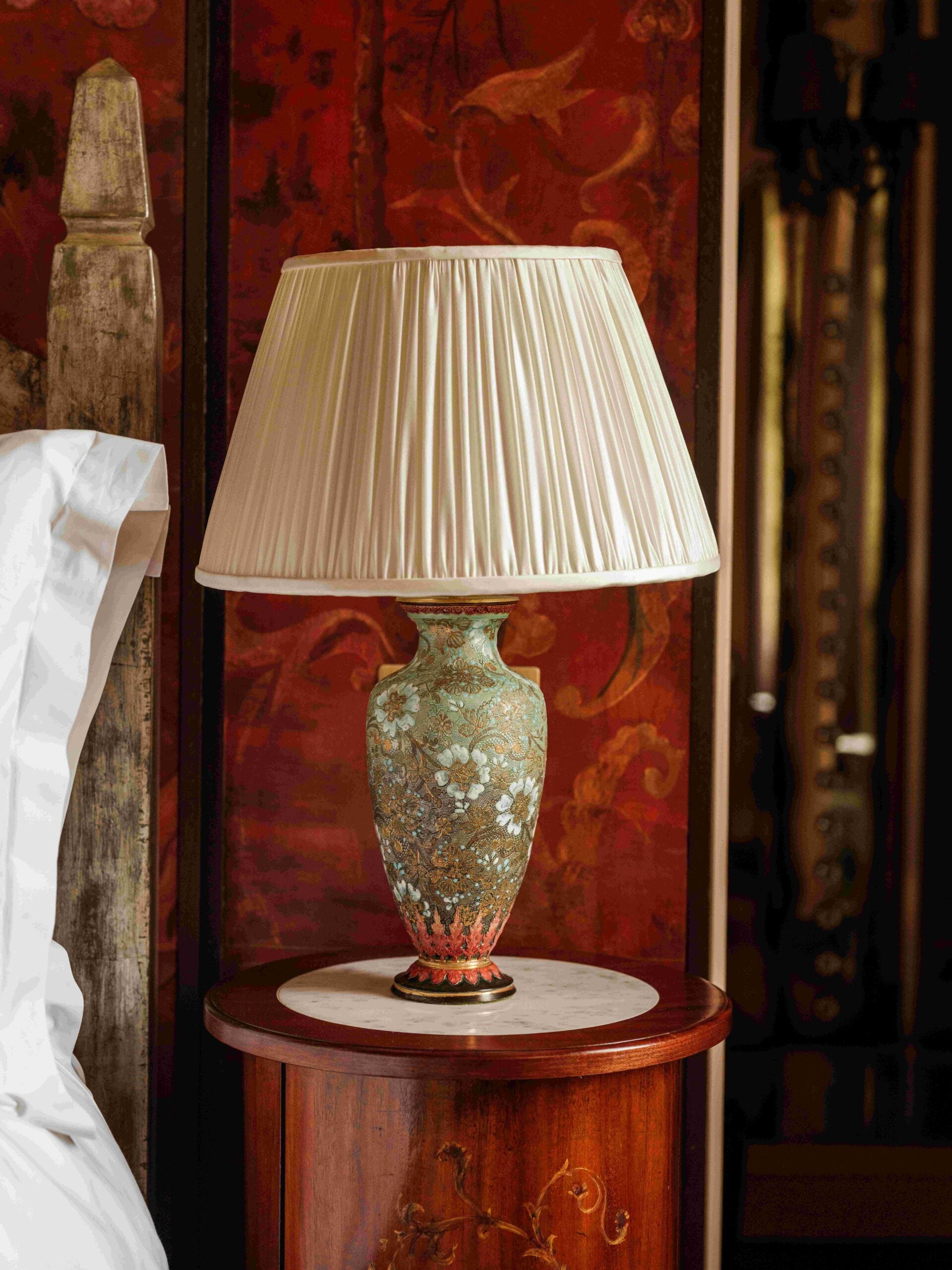
Russell Sage Studio, who brought the room to life, didn’t go for anything obvious or overly literal. Notably, there are no visible doors within the space – a deliberate nod to Chanel’s aversion to them. In her own interiors, she famously preferred screens and hidden passages, both to encourage a sense of fluidity and, as has often been suggested, to prevent guests from making too swift an exit.
The bed's headboard and furniture are painted in a Scottish interpretation of chinoiserie – decorative but not overly fussy – while the wallpaper reprises a design from Rosehall House, the Sutherland residence Chanel decorated during her time with the Duke.
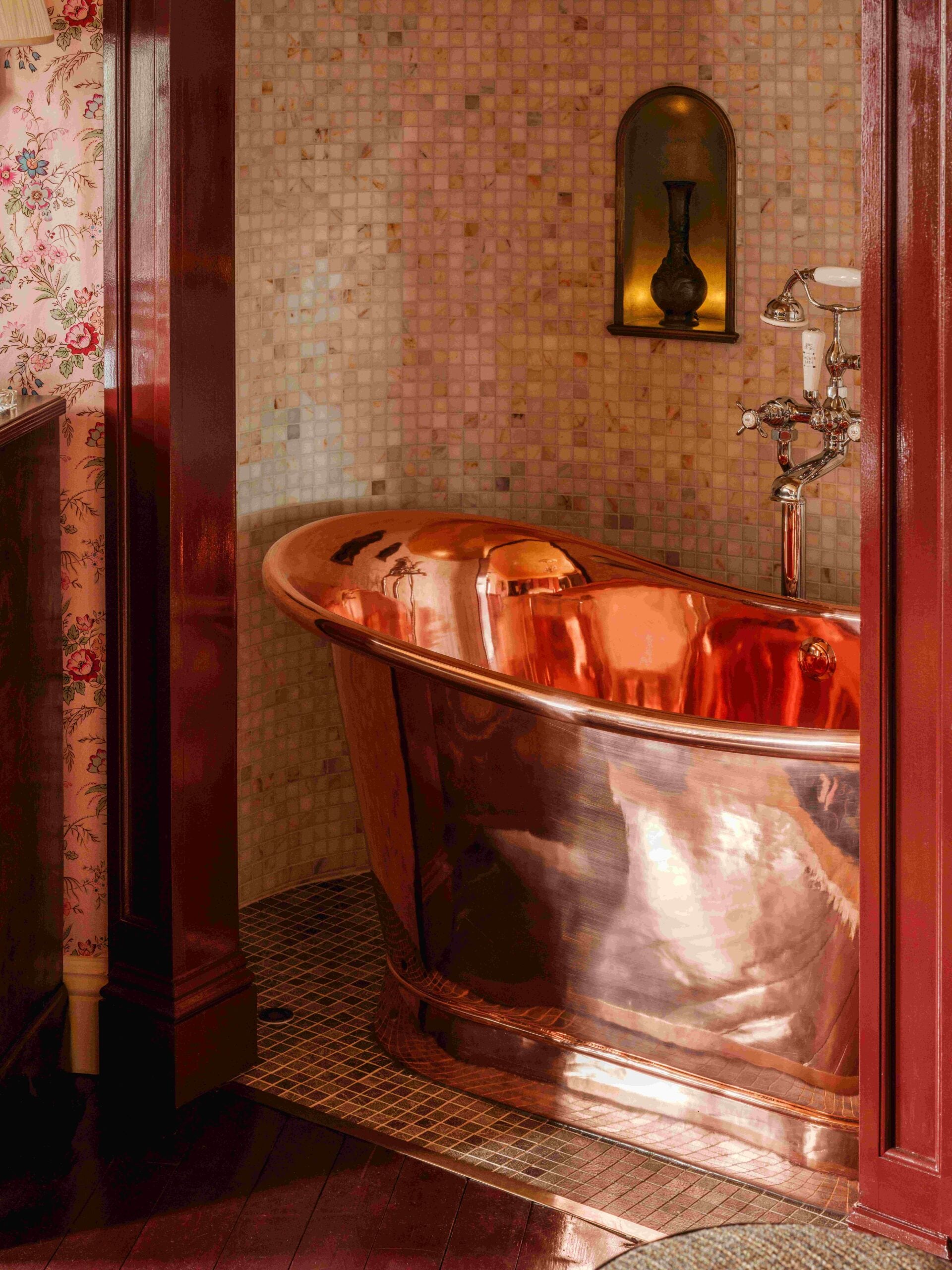
There’s a walk-in wardrobe, naturally, a discreet bar, and – tucked into an arched alcove – a striking freestanding copper bathtub, ideal for unwinding after an active day of country walks or braving a spell of wild swimming.
Even the minibar has been considered with care, stocked with Scottish produce – locally made chocolates and the hotel’s own shortbread among them. Rates for the room start at $1,355, and unsurprisingly, word about it has traveled – it's already close to fully booked through early summer.