

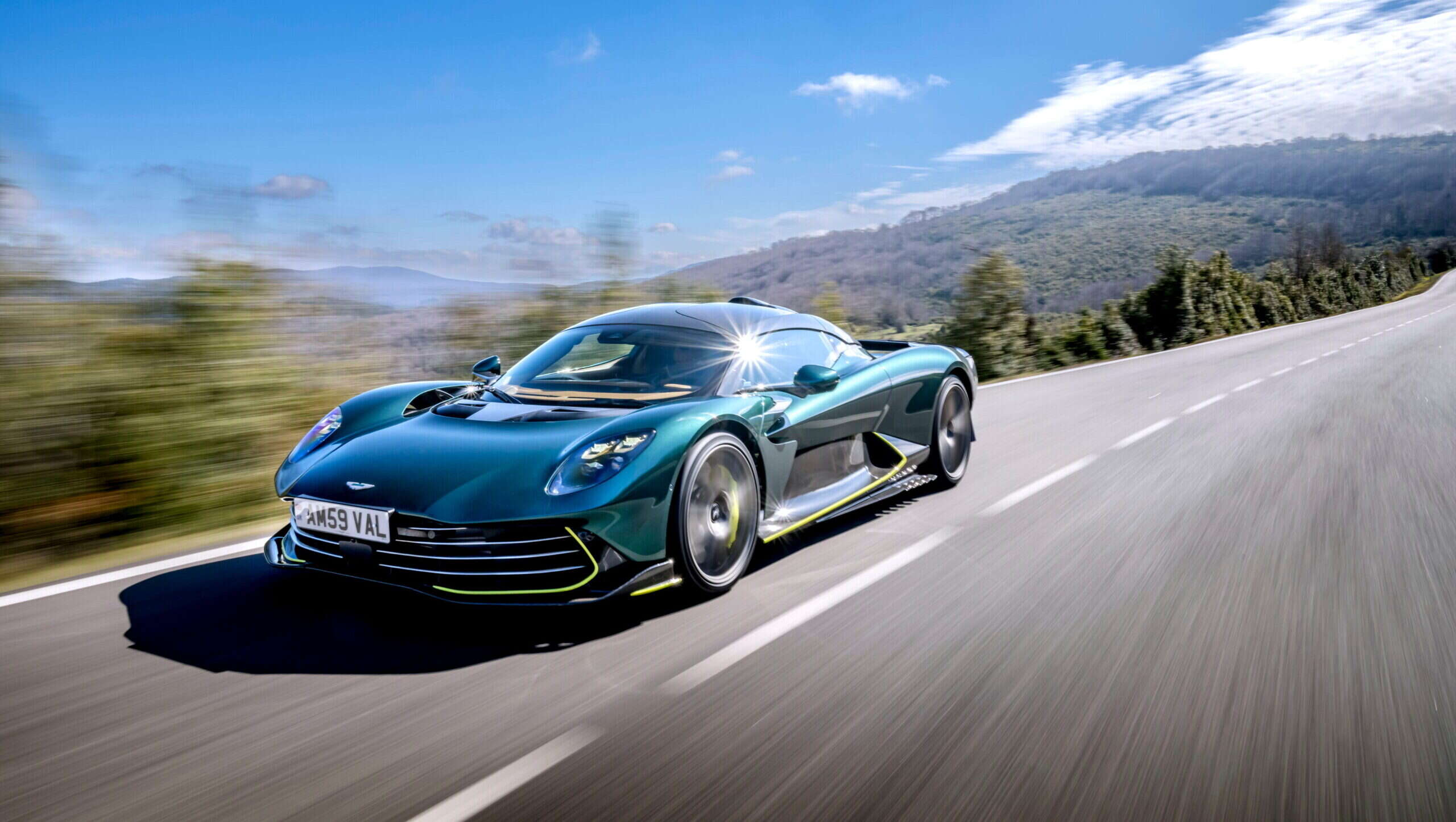
The rain in Spain falls mainly on the plain, right? Well, in my case, the rain was mainly falling on the Circuito de Navarra racetrack, south of San Sebastian, as I was due to take the £850,000 (approx. $1.14m), 1064bhp V8 hybrid Aston Martin Valhalla supercar on a hot lap. Brilliant.
We’ve been patiently wating for the Valhalla since 2019. That was the moment Aston promised a mid-engined, hybrid supercar that was to be “the son of Valkyrie” – the unapologetically extreme, Formula 1-inspired V12 racer for the road that first arrived in 2021.
Now seven years on, we have the finished product, in the form of a spaceship-like two-seater supercar, powered by a 4.0-litre twin-turbo V8, coupled to three electric motors. While the Valhalla might be Aston’s first electrified vehicle and also its first series-produced mid-engined supercar, its more than that – it’s a substantial swipe at its established Italian rivals. Aston executive chairman Lawrence Stroll has long held the ambition of turning the great marque into the ‘British Ferrari’ but the Valhalla is the first car with the credentials to truly take the fight to Maranello.
See also: Porsche’s New 911 Turbo S Hits 0–60 in Under 2 Seconds
The Valhalla straddles the fine line dividing supercars and hyper cars. It will cover off 0-62mph in 2.5 seconds, roll on to a top speed of 217mph, and has active aerodynamics lifted straight from the pages of an F1 technical manual. Then there’s the impossibly sleek styling, the low-slung seating position, and the price: starting from over $1.1m, Aston says most of the 152 Valhallas that have already been delivered went via the ‘Q’ bespoke personalisation department, pushing the price to around $1.33m. So, on paper, at least, it’s a supercar that’s knocking on the door of the hallowed hyper-car club. But how does it fair in practice?
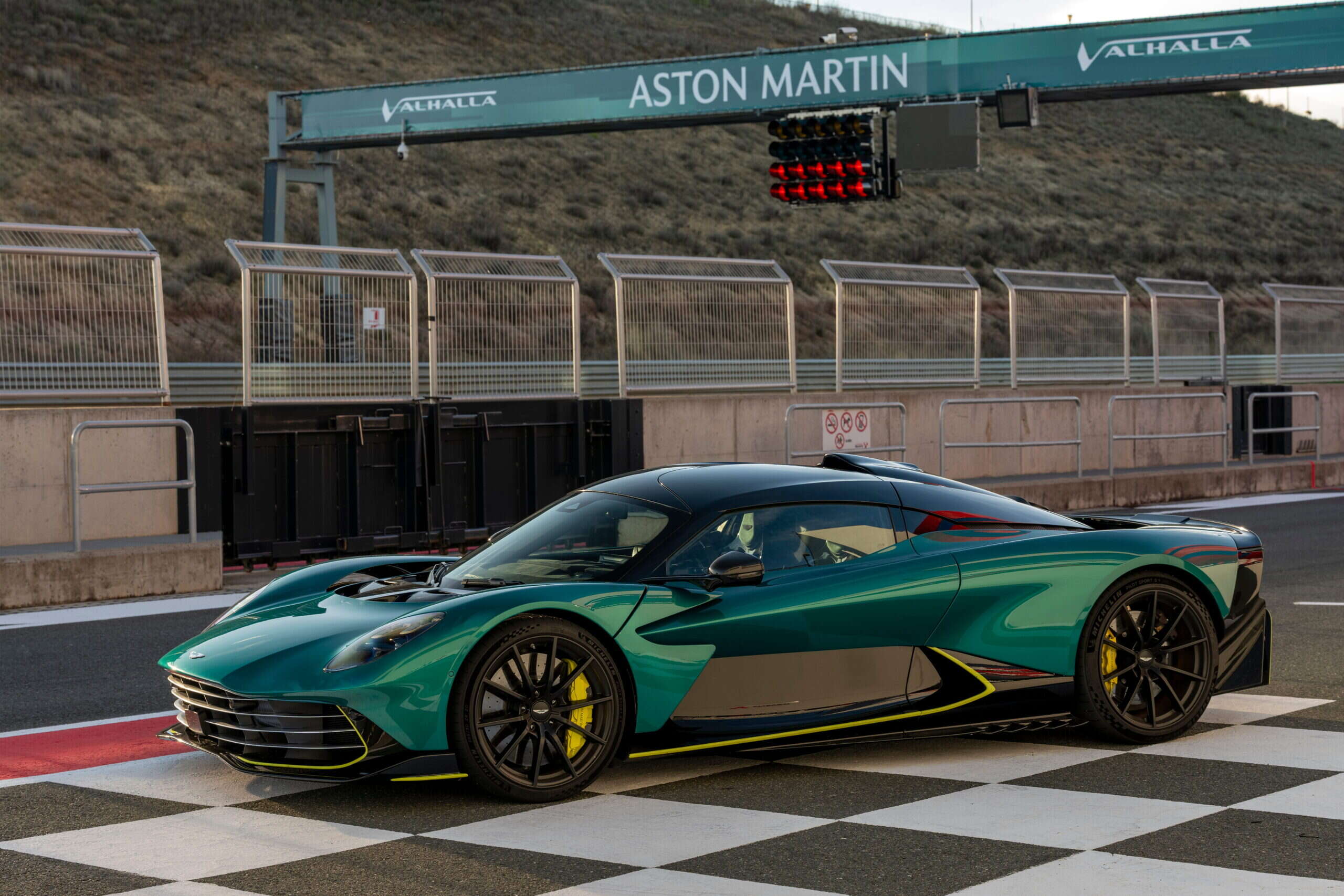
During my not-so-hot lap around the Navarra race circuit, skating through surface water, there’s little chance of laying down the Valhalla’s full 1064bhp or 1,100Nm of torque, yet it handles the hazardous conditions without flinching. It’s a stable and steady ride that’s ruthlessly fast when provoked. Leaving the pit lane in silence under electric power only, the V8 soon kicks in when you plant the throttle and point it towards the first corner.
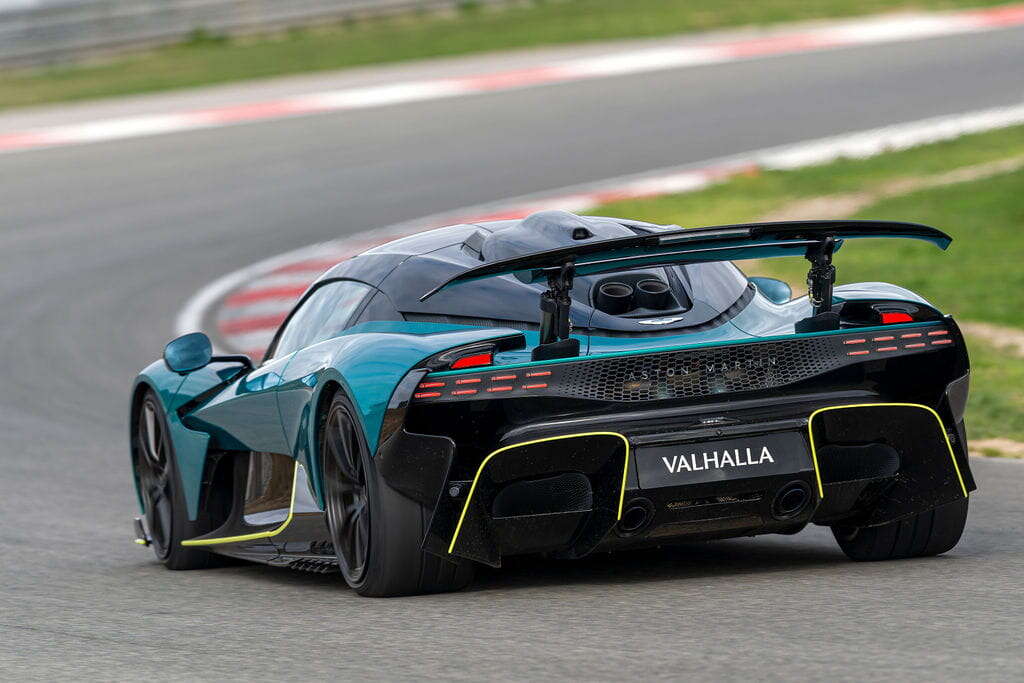
Switching into Race mode – the Valhalla’s most athletic setting – and up pops the sizeable rear wing, rising from the bodywork with a mechanical whir. Active aero systems at the front and rear generate 600kg of downforce at 149mph, keeping the car glued to the track and reassuringly stable down the main straight. Despite the track conditions, it’s a car that inspires confidence and is remarkably easy to drive fast.
I can see the rear wing busily working away in the rear-view camera-powered ‘mirror;’ flattening out to make the car more streamlined under acceleration (much like an F1 car’s DRS system) and rising up under heavy braking to act as an airbrake. In all other driving modes – Pure EV, Sport and Sport+ – the wing remains stowed.
See also: Young Collectors Are Driving Up Prices of Modern Supercars – Here’s Why
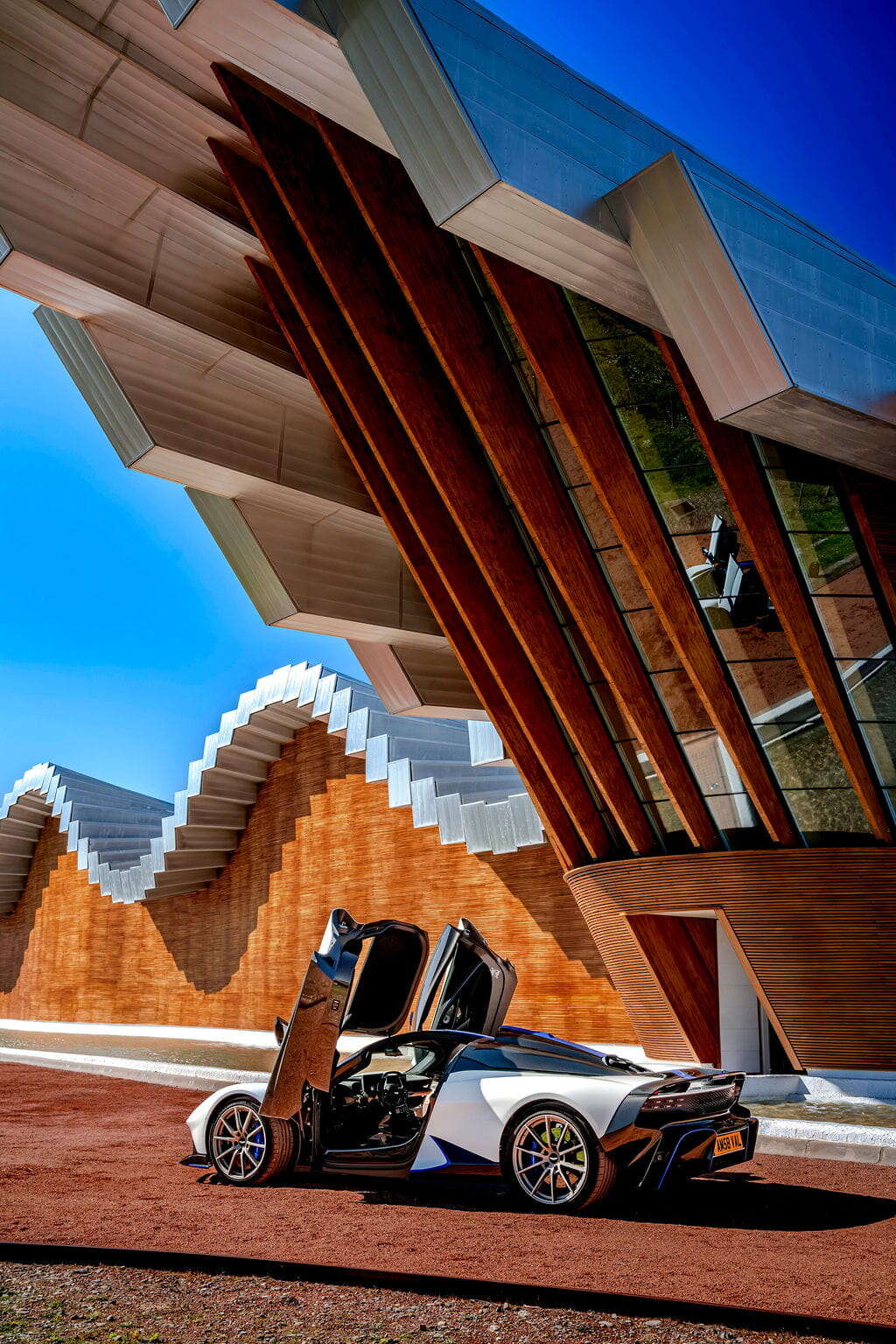
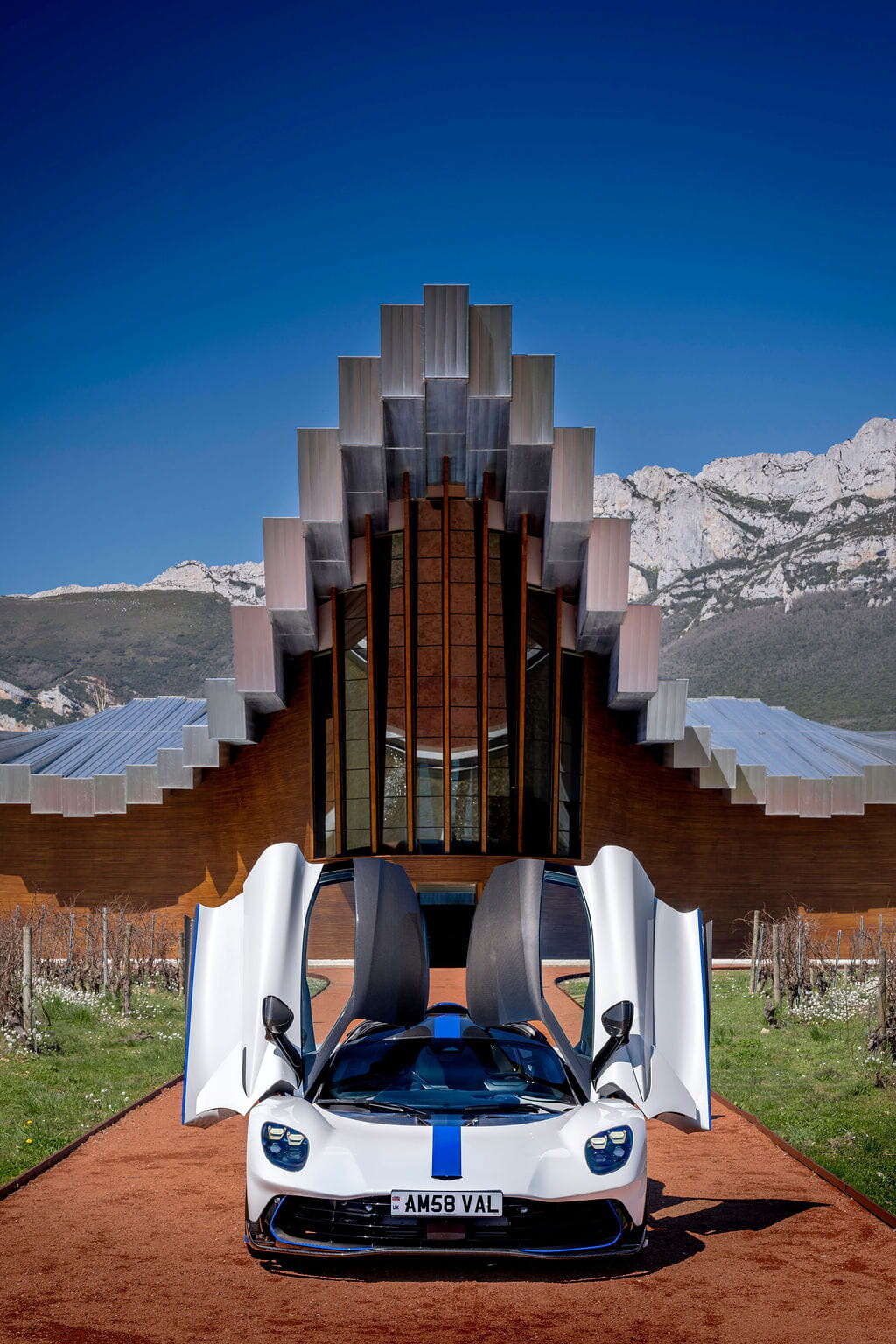
Once off the track and out onto the Basque Country’s backroads, the drier conditions allow for some more spirited driving. The Valhalla handles the undulating, tight and twisting roads with extraordinary ease. As far as supercars go, the Valhalla is a delight to pilot – not twitchy or too delicate, like so many of its peers. The power delivery is fierce, with all the mechanical theatre of the whirs, flutters, and roars going on inches from your ears, yet it’s far from unmanageable, despite the ludicrous power output.
With two of the three electric motors powering the two front wheels, the Valhalla is nimble around tight corners. With four-wheel drive and power in each corner, it’s stable and pulls and pushes itself around bends without a fuss. The third electric motor is buried in the eight-speed transmission, which acts as a stand-in for the two turbos, adding what Aston calls ‘Torque Fill’ until the two turbos are ready to exert their full force. When they do, it’s a full-body experience.
Looking out from the low driving position, it’s even possible to see the tops of the front wheels through an air vent in the front wheel arches, which helps you place it on narrower roads. With your heels raised and a stiff carbon-backed, leather clad seat holding you in place, the cockpit is part Le Mans prototype racer, part luxury grand tourer. Only the lack of luggage space and uninspired black, rectangular screens let it down. The rest is exquisitely appointed, as you’d expect from an Aston. It’s a car that you could comfortably cover off a dash from London to the Cote d’Azure in. Just make sure you send the luggage on separately.
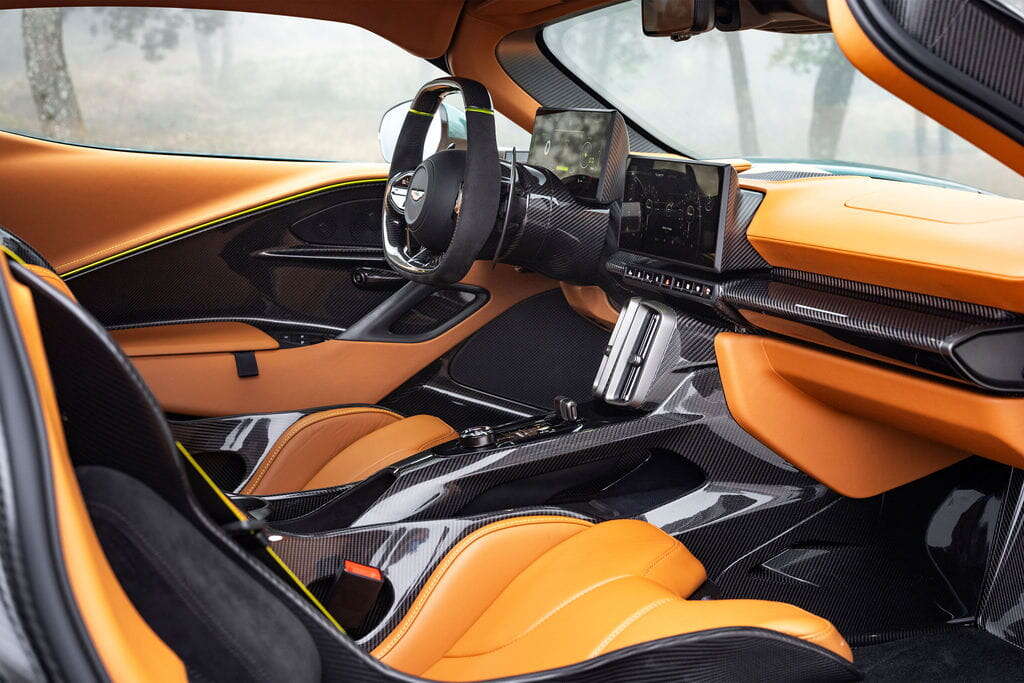
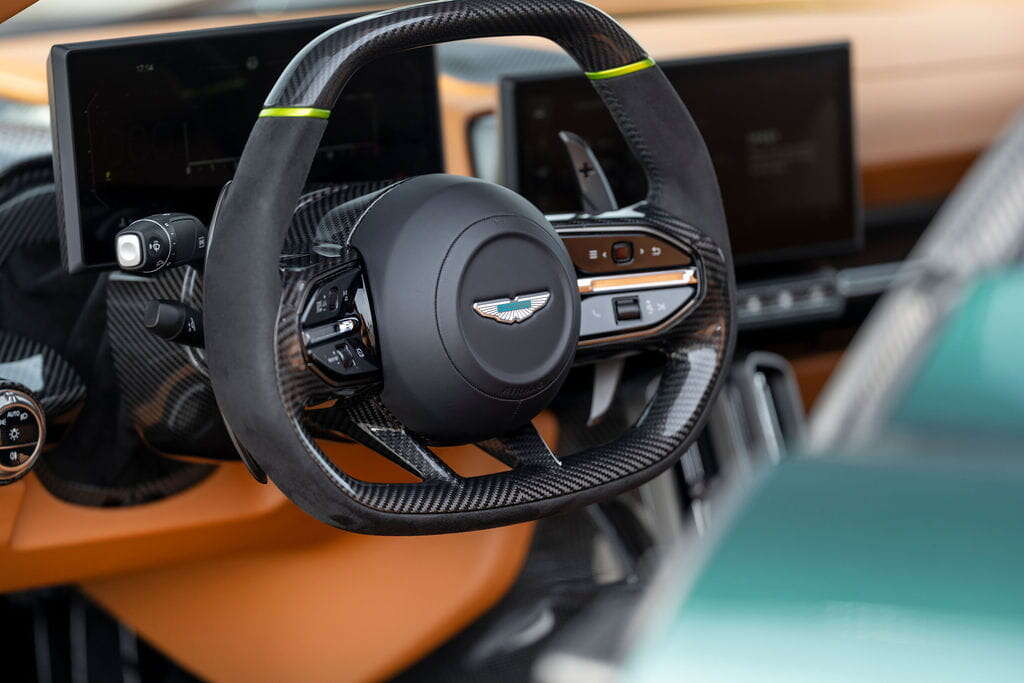
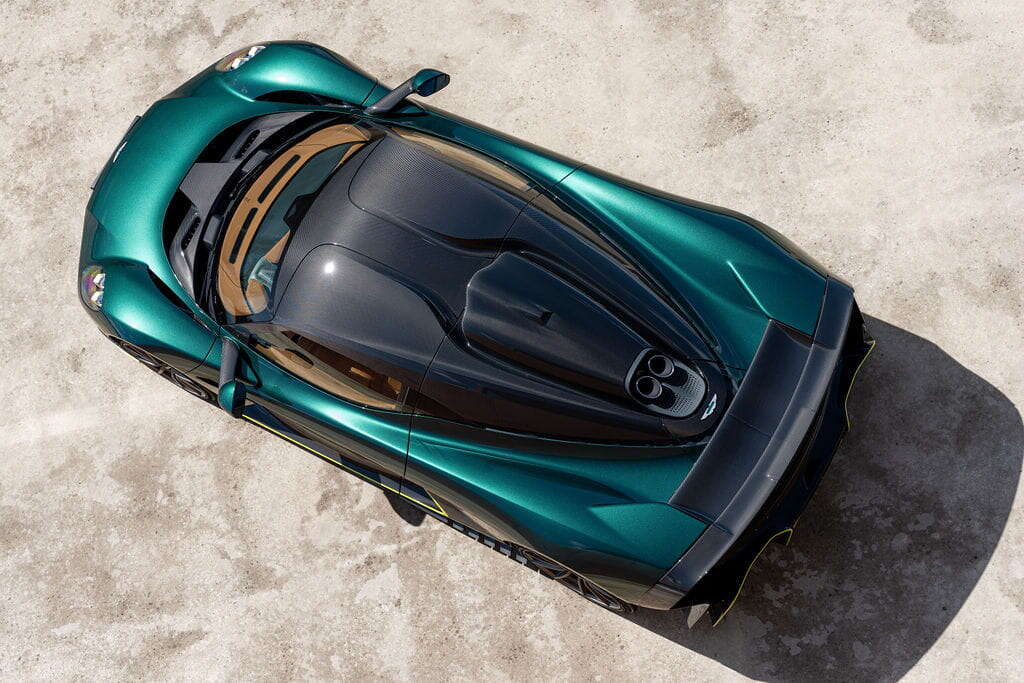
When it comes to styling, as much thought has been given to how the Valhalla looks, as to how it goes. Aston’s CEO is keen to point out that the Valhalla is designed to be both “the most elegant and exciting product in the market,” and through clever engineering, many of the Valhalla’s air scoops and intakes are hidden, meaning the outer surfaces remain beautifully clean.
Popping up from the roof is an F1-inspired roof snorkel, which channels air into the engine bay. Behind that sit two upwards facing exhausts, while the other two are more traditionally placed at the back of the car, incorporated into the rear valance, which houses two large venturi tunnels channelling airflow under the car and generate downforce. The overall aesthetic is both elegant and aggressive – something Aston Martin’s design team is particularly adept at.
You could argue there are too many special, hybrid supercars on offer today. Those considering buying one of the 999 Valhallas will need to look past the likes of the Lamborghini Revuelto and Ferrari 849 Testarossa at half the price, and ignore the Ferrari F80 or forthcoming McLaren W1, both more than twice the price of a Valhalla. Compared to the latter two, the Aston looks like a bargain, all things considered.
But what you’re really buying with a Valhalla is a statement: a sign that the great British marque is more than capable of punching above its weight and wading into battle in the supercar-hyper car twilight zone. The Valhalla is feat of elegant engineering brilliance. A car that’s incredibly capable on track or on road and, more importantly, one that marks a significant shift in the marque’s trajectory. For years, Aston has been upping the ante when it comes to cars that pride themselves on performance and with the Valhalla, we’ve finally reached the peak.