
Porsche’s first, primeval 911 Turbo was notoriously dubbed the ‘widowmaker.’ Over the course of half a century, that charming sociopath of the ’70s has evolved into the civilized, all-wheel-drive concierge of a sprawling 911 lineup. The Turbo is the car you want when you have 500 miles ahead to a ski resort or seaside haven, and you’re determined to arrive not just first, but refreshed, luggage-laden, and in command.
The 2026 911 Turbo S Coupe and Cabriolet, the first built atop a facelifted 911.2 platform, became the most powerful series-production Porsches with 701 horsepower. Their timeless, wide-hipped style integrates Porsche’s ‘T-Hybrid’ tech first introduced in 2024: A 3.6-liter flat six makes 621 horsepower, with an 80 hp bump from an electric motor sandwiched between its engine and brilliant eight-speed PDK automatic gearbox.
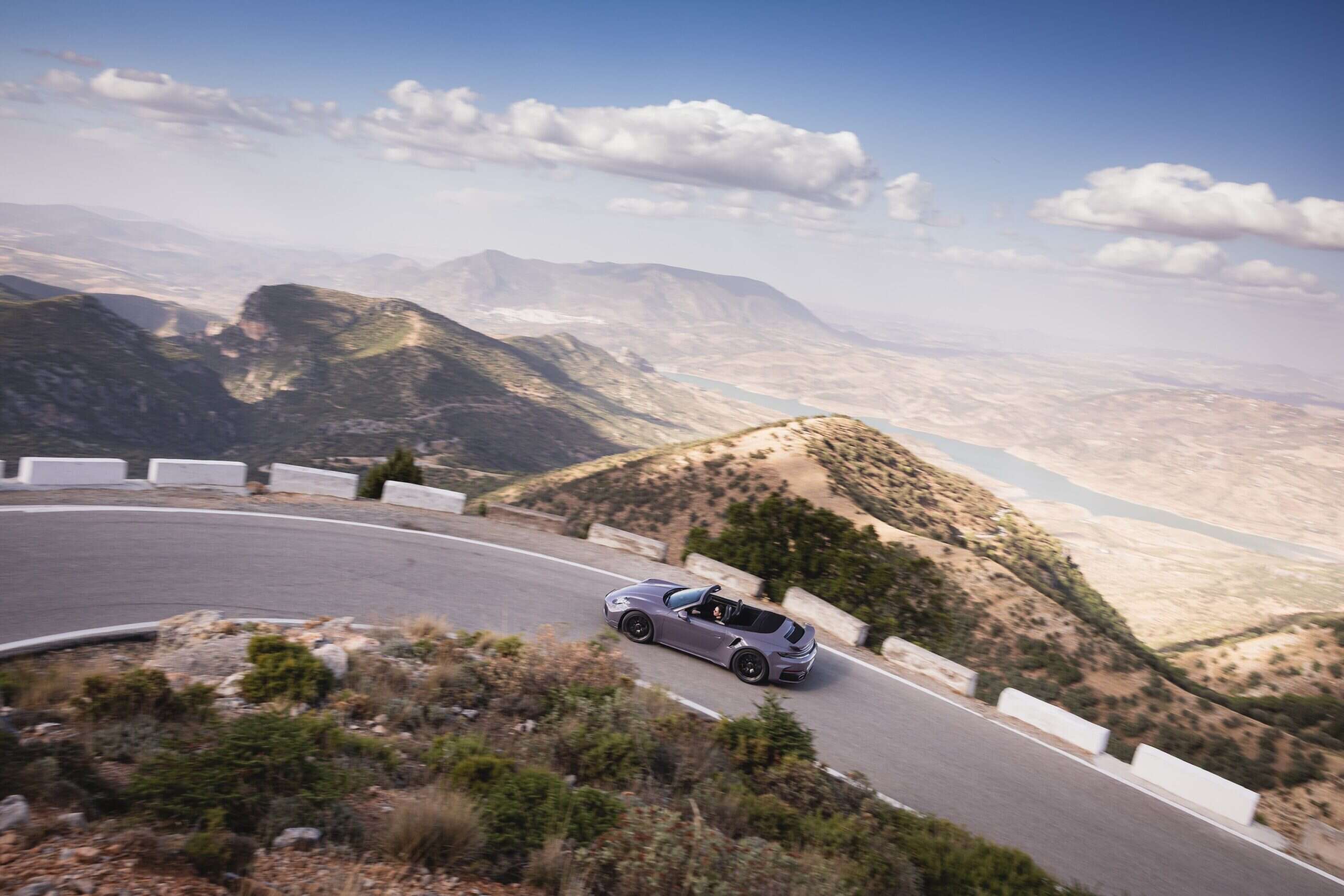
A top-down run through Georgia and Alabama highlighted the pleasurable cognitive dissonance of the Turbo S Cabriolet (at $286,650, or $305,460 as tested). Every throttle squeeze turned the countryside into a metaverse version of the Nürburgring, which a Turbo S covered in 7:03.92, about 14 seconds quicker than its 640 hp predecessor. Yet in mellower moments, I could have driven with one hand, slurped the crema off a cup of espresso, and never spilled a drop.

Like rivals at Ferrari, Lamborghini, and Corvette, Porsche harnesses electricity to do unexpected things. Instead of exhaust-driven turbochargers that must wait for boost – a nod to the original Turbo, whose throttle response ranged from glacial to grenade-like – new ‘eTurbos’ integrate an electric motor to drive their shafts. Turbo lag becomes a memory, with 590 lbs-ft of peak torque from 2,300 to 6,000 rpm. Dual turbos spin up to 145,000 rpm, and recapture energy for a 1.9 kilowatt-hour battery, which sends it to the electric traction motor for extra propulsion.
Porsche notoriously sandbags acceleration figures. But this Turbo should launch from 0-60 mph in just over two seconds flat, faster than most supercars, with the nearly-200-lbs-heavier Cabriolet a tenth behind. Porsche cites an 8.4-second rip from 0-124 mph and a 201 mph top speed.
One demerit is Porsche retiring its classic central analog tachometer, replaced by a fully digital driver’s display. A consolation is a red push-to-pass button on the steering wheel. The addictive switch elicits a countdown timer – call it 20 seconds to Mars – that dials up the engine and onboard systems for maximum thrust and alertness over that period.


Four-wheel-steering makes for snappy turn-in and serene footing at high speeds, aided by the largest rear tires ever fitted to a Turbo, at 325/30-ZR21. Porsche Active Suspension Management broadens its damping range and reacts faster to the changing road surface. Now hooked into a 400-volt hybrid system, Dynamic Chassis Control electrifies front anti-roll bars to manage body motions.
More than any 911, the luxurious Turbo benefits from the top-down treatment. Stowing the Cabrio’s power top adds sensation and several decibels to an otherwise muted experience. A titanium sport exhaust system with oval outlets further amplifies the flat-six chorus.
On a final attack along the Talladega Mountains, the sun dipping and temperatures with it, I wasn’t too proud to don a Grace Kelly convertible scarf. Compared to flashier supercar rivals, the 911 Turbo may look low-key. But it will whip those scarves with the best of them.