


Rolls-Royce has revealed Project Nightingale, an all-new model of rare significance for three distinct reasons. It won’t be publicly unveiled or officially named until next year, and customer cars won’t be built until 2028 – but Elite Traveler was granted early access to a ‘production concept’ version that is almost identical to the finished car.
Why does Project Nightingale matter? First, any new model from Britain’s most venerable and desirable luxury carmaker is major news, especially if it moves the marque into entirely new automotive territory. Second, an open-top, electric, ultra-luxury two-seater marks a bold departure for Rolls-Royce, and there simply is nothing else like this on the market. The four-seat Maserati GranCabrio Folgore may be the world's first all-electric luxury convertible, but it is no rival to the Rolls in terms of desirability, exclusivity, or price.
And third, Project Nightingale inaugurates a new series of ‘Coachbuild Collection’ cars – an initiative that reimagines the relationship between Rolls-Royce and its most enthusiastic clients. Limited to just 100 examples, the entire production run is already sold out, with some buyers committing nearly two years ago when the car existed only as a sketch. Future models in the Coachbuild Collection will follow in three or four years to preserve exclusivity. While each will be distinct, all will share a boldness of design made possible by catering to such a select group of owners. And more importantly, they will share the fundamental principle that commissioning a car is as rewarding as the final result – if not more so, especially when that car is destined for a collection that may already span hundreds of vehicles.
See also: Porsche’s New 911 Turbo S Hits 0–60 in Under 2 Seconds
All the super-luxury marques know this, but Project Nightingale and the Coachbuild Collection concept aim to satisfy that desire among customers for a more immersive way to participate, not just purchase. Currently, you can create an entirely bespoke specification for a standard Rolls-Royce model – and most buyers do. At the other extreme, you can create a one-off or very low-volume ‘Coachbuild Commission’ like the Sweptail, Boat Tail, and Droptail, the latest of which is reported to have cost its Singapore-based patron over $30m.
The Coachbuild Collections will sit between those options, offering established customers cars a blend of design exuberance – and near-rarity – of a one-off, without the same time commitment or cost. Rolls-Royce has not disclosed pricing for Nightingale, but the low single-digit millions would be a reasonable estimate. Unlike a full Coachbuild commission, clients won’t be able to directly shape the car’s overall form. But they will be involved with the design and engineering development of the entire model, rather than simply specifying colors and materials for their own vehicle. Some have been engaged since the earliest sketch phrase two years ago, and when the first engineering prototypes begin running in August, owners will be invited to participate in ride-alongs during hot- and cold-weather testing.
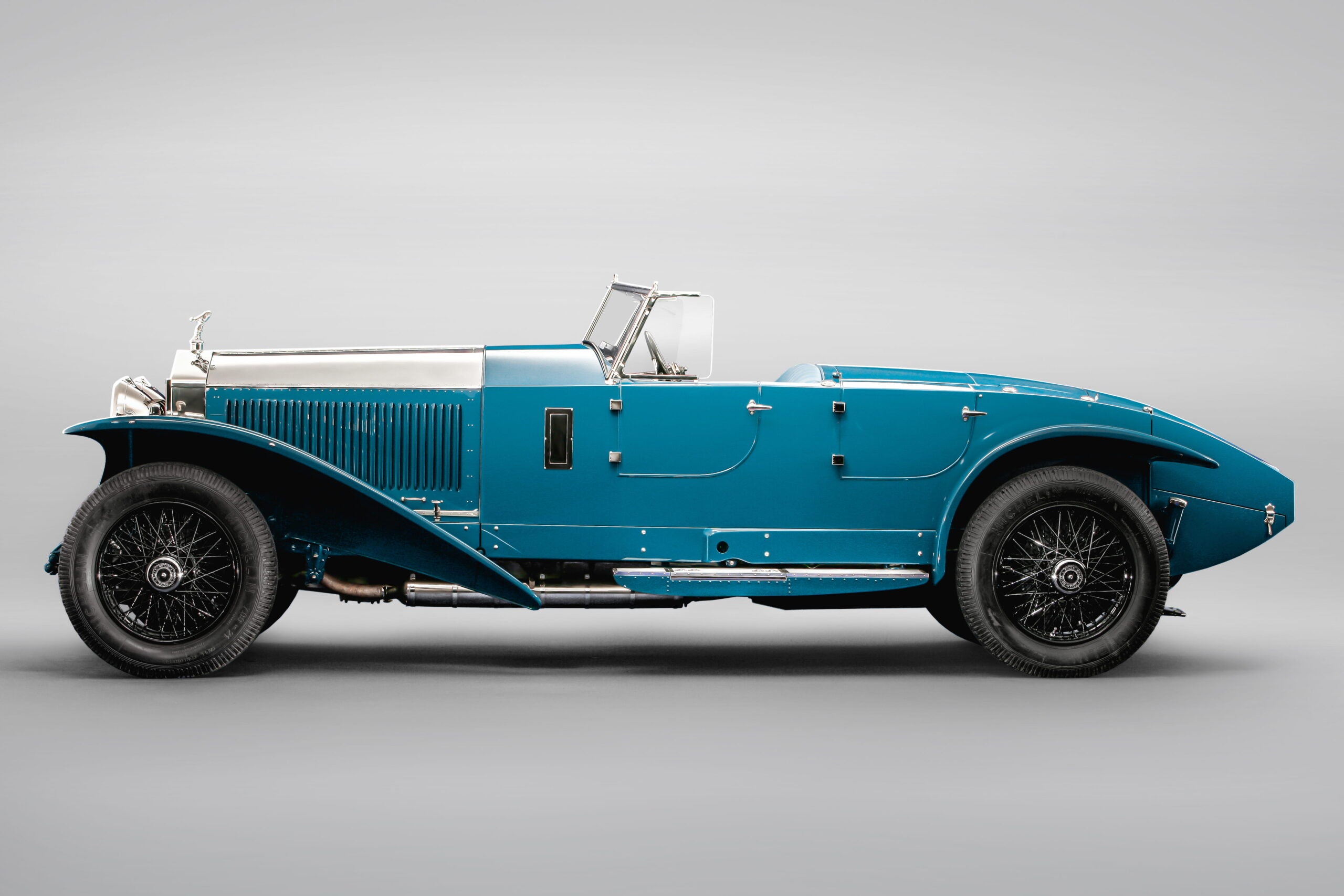
The unique lines of this car are inspired by Sir Henry Royce’s experimental open coupes of the 1920s, defined by their lightweight, low-drag bodies and distinctive “torpedo” tails. Project Nightingale’s single “hull line” drops steadily and gracefully over 19 ft from nose to tail, tapering into a sharp ridge and giving it a profile – especially at the rear – that harks back to the Jazz Age. The designers admit that the Nightingale is “almost entirely bonnet and tail,” and there is something pleasingly, conspicuously self-indulgent about a car this long which only seats two.
See also: Young Collectors Are Driving Up Prices of Modern Supercars – Here’s Why
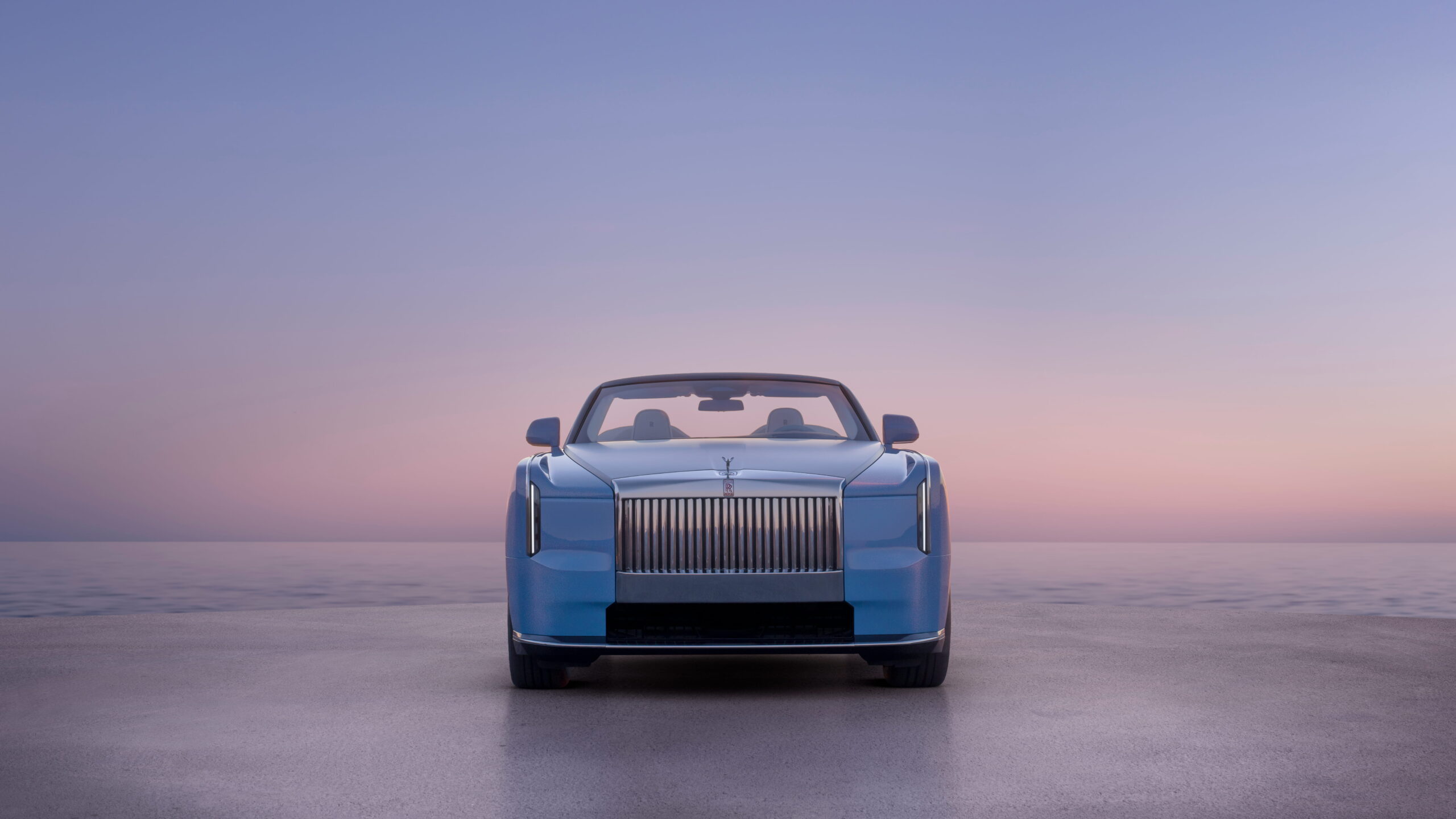
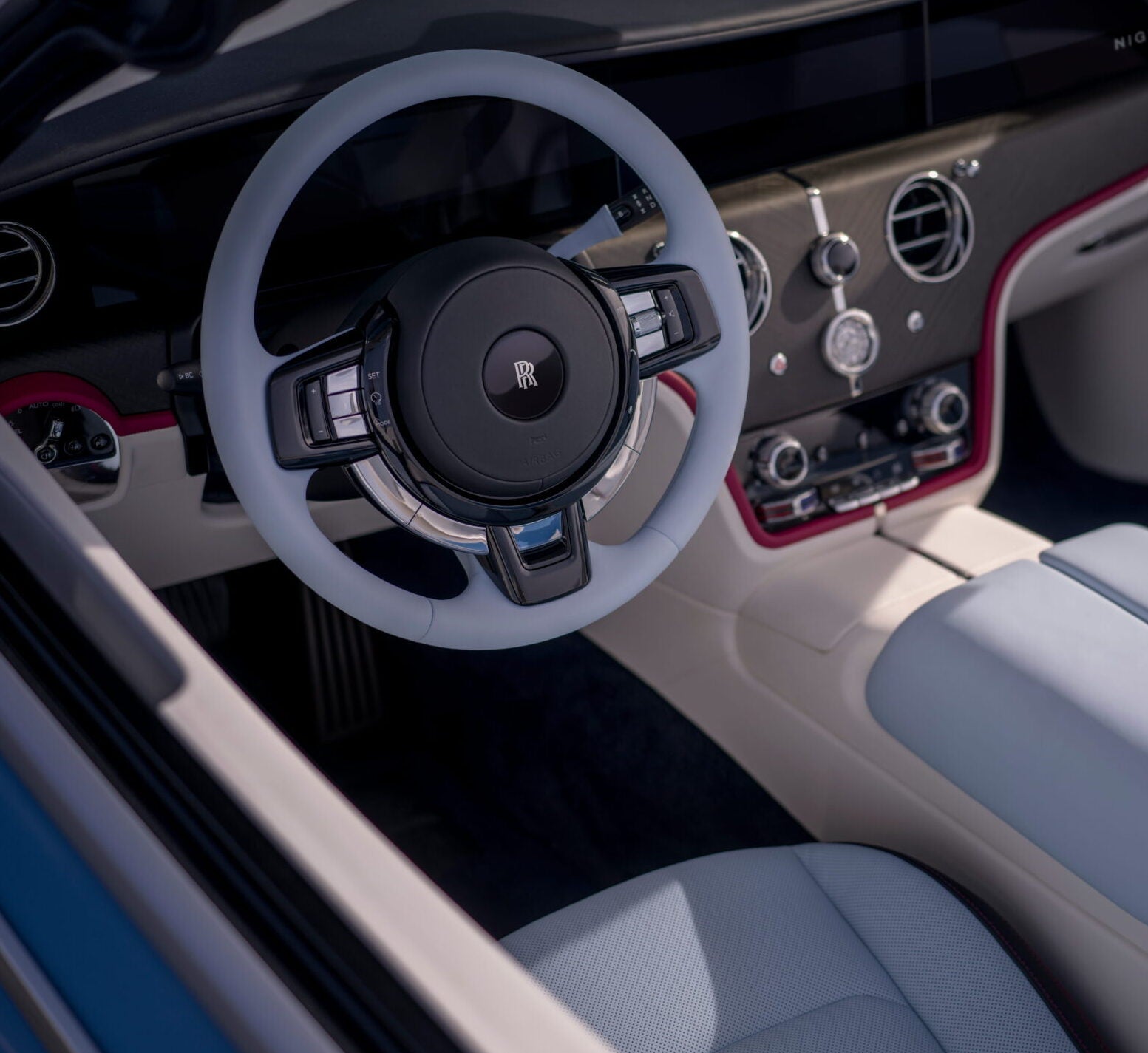
At the front sits the widest-ever execution of the Pantheon grille, while the vast deck behind the occupants’ heads is probably the car’s most striking feature. Having seen it in the metal, pictures don’t do justice to the car’s colossal scale. The wheels appear perfectly proportioned in context, but at 24 inches are the largest ever fitted to a Rolls-Royce, while the twin cowls directly behind the occupants will be chest-high to most pedestrians. Despite its scale, there’s no room under the hood for a frunk, but that expanse of deck does conceal a “piano boot” which hinges sideways and can hold two golf bags, along with a recess for the powered fabric hood.
Project Nightingale shares the brand’s ‘Architecture of Luxury’ platform with the rest of Rolls-Royce’s standard lineup, as well as its EV drivetrain with the Spectre. Nightingale will be slightly heavier than Spectre, but advances in battery technology mean its performance and range will remain “in the same ballpark”, with an estimated EPA range of around 280 miles. The technical specifications won’t be locked down until next year.
The Project Nightingale name is taken from the English translation of Le Rossignol, the villa in the South of France built by Sir Henry Royce to house the company’s designers near his own residence in the village of Le Canadel. That villa, in turn, took its name from Nightingale Road in Derby, where Sir Henry designed and established his factory in 1908. The ability to hear birdsong as you travel – roof down, gliding through the landscape in the brand’s first open-top electric vehicle – helped shaped the project’s identity. For now, that experience will remain exclusive to the 100 lucky clients who have already secured allocation.