


Brough Superior motorcycles always had a jewel-like quality to them. Originally produced before and during the beginning of WWII between 1919 and 1940, it was one of Britain’s finest motoring companies. The goal wasn’t mass production. Triumph in the 1920s had capacity to build over 30,000 bikes and cars. Brough Superior meanwhile built just over 1,200 in the entire decade. Its total output over 21 years of production was 3,025. Its machines were intricate, hand-crafted objects built for a luxurious yet scarily fast ride. Its most famous model, the SS100 was named after the fact it could top 100 mph.
In 1923, journalist HD Teague test rode its predecessor the SS80 for The Motor Cycle magazine, dubbing it the "Rolls Royce of motorcycles." It was a phrase founder George Brough used to sell his ever luxurious, ever faster creations and it worked. Thomas Edward Lawrence, or Lawrence of Arabia, was Brough Superior’s most famous client. He owned seven of them, and in 1935 sadly died crashing one. His eighth was on order.

Production didn’t continue after WWII. The brand lay dormant for the next 75 years until businessman Mark Upham bought the rights to the name and subsequently sold them to Frenchman Thierry Henriette. A motorcycle builder and CEO of Boxer Design, Henriette and his team designed and developed a new SS100, a more contemporary hand-built bike befitting of the name.
This was in 2016, and since then Brough Superior has built further bikes, collaborating with the likes of Aston Martin. Its latest creation, dreamt up in its workshop with Toulouse, was designed in partnership with watch brand Richard Mille. This is the first time Richard Mille has co-designed a vehicle: While the brand’s logo has appeared on various machinery including Ferrari and McLaren Formula one cars in the form of sponsorship, it hasn’t gone to this level before. Named the RMB01, it is a track-only weapon, built for maximum performance and visual impact.


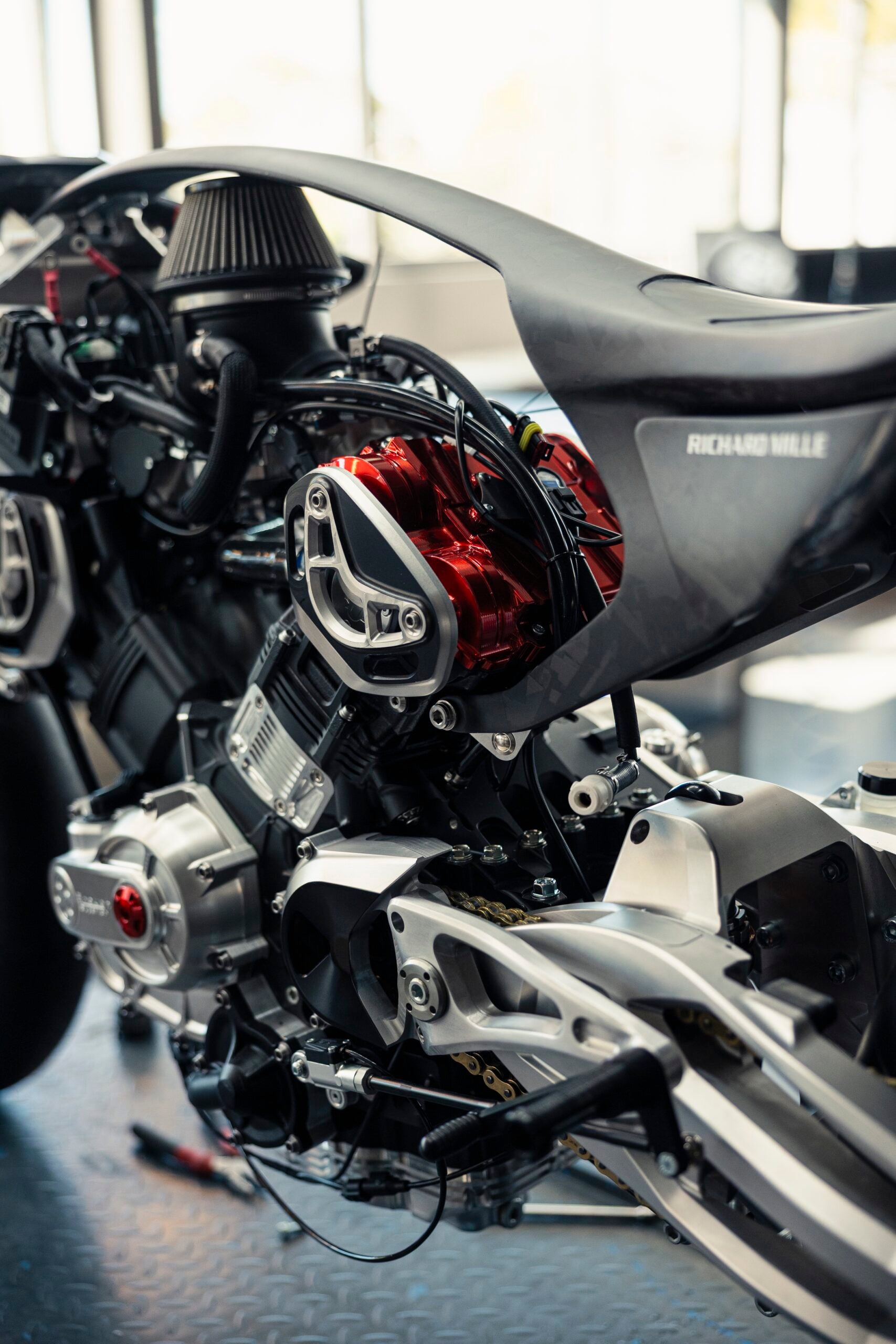
The RMB01 has the same base engine as the new SS100. It’s a wide, 88 degree, water cooled V-twin thumper, designed and built in-house. Machined from solid blocks of aluminium, it is a jewel in its own right, looking as good as it sounds. In standard SS100 form it comes with 102 bhp, which is plenty. I tried it on Toulouse’s back roads and it delivers a throaty roar under acceleration, packing a serious punch when you twist the throttle. Its top speed would easily exceed its namesake 100 mph. In the Richard Mille bike it has been upgraded to produce 130 bhp, and given a bespoke race exhaust system to allow it to breathe unhindered by catalytic converters. It sounds explosive and angry as the bike is put through its paces on the rolling road at the factory in which it is made.
The decision to make it a track-only bike was an easy one. It ensured the bike’s design wouldn’t be compromised, and that both Richard Mille himself and Henriette could explore both brand’s unique design languages. The two worked in close collaboration for eighteen months on the bike’s design, working through twelve different iterations until they arrived at the final one.
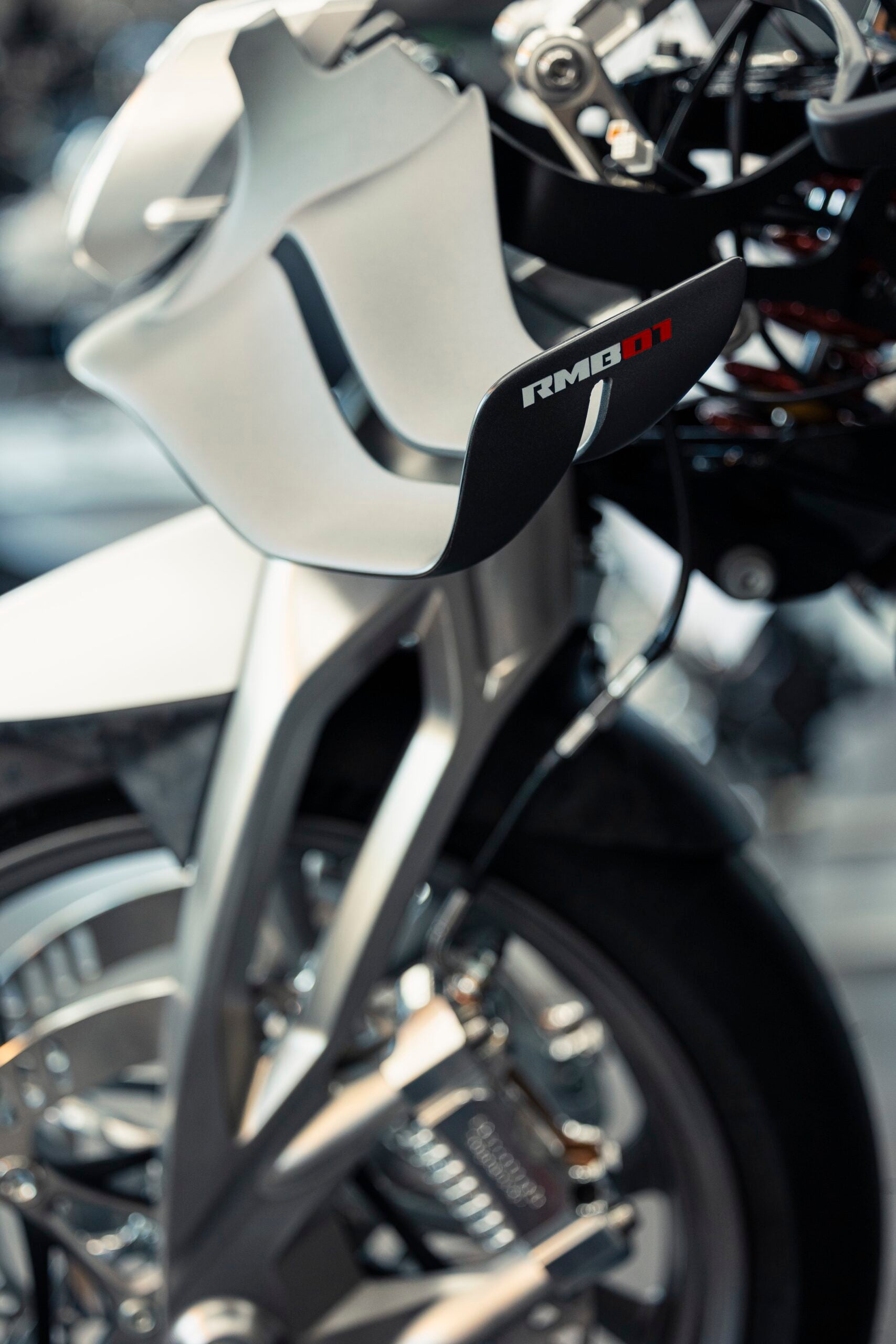
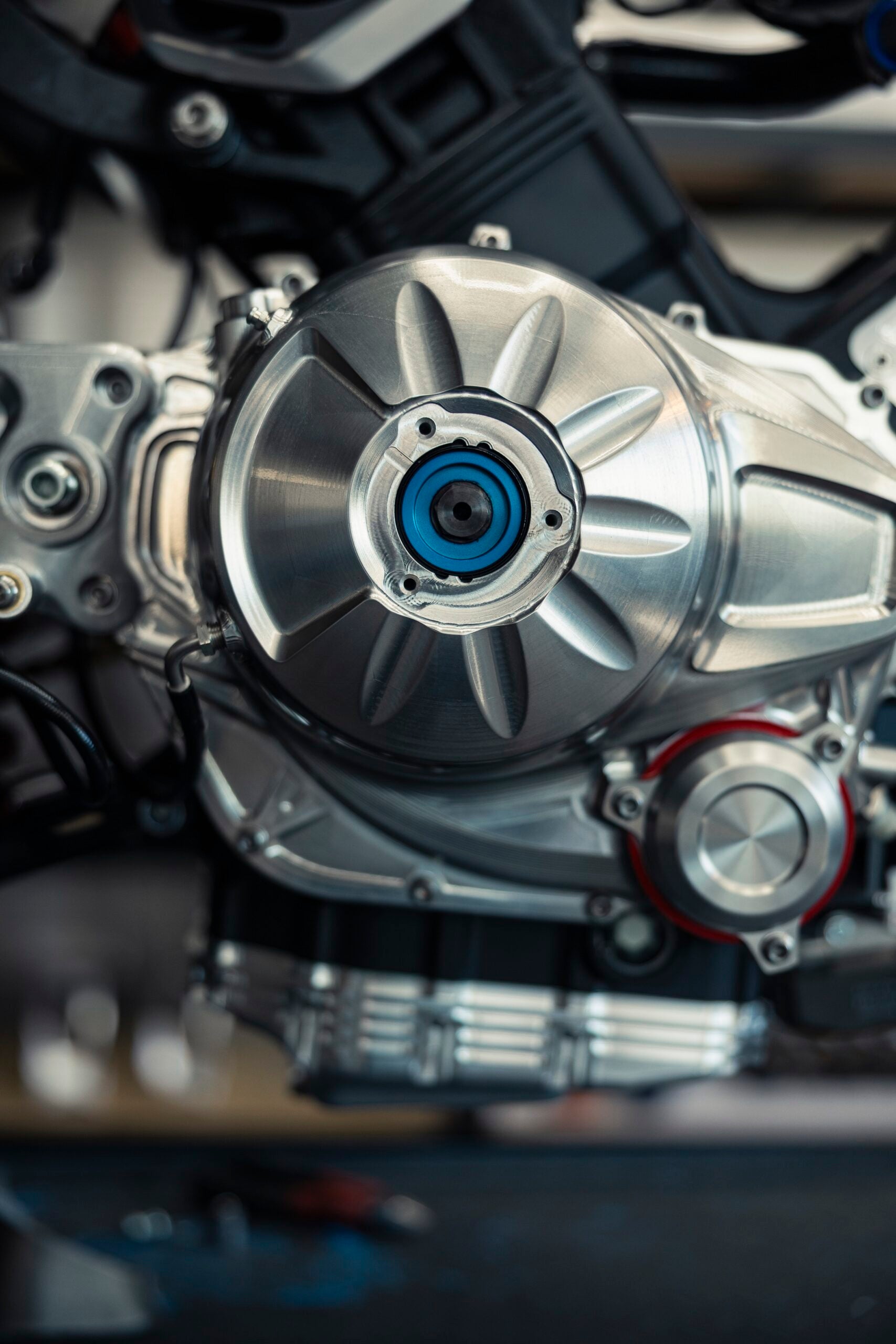
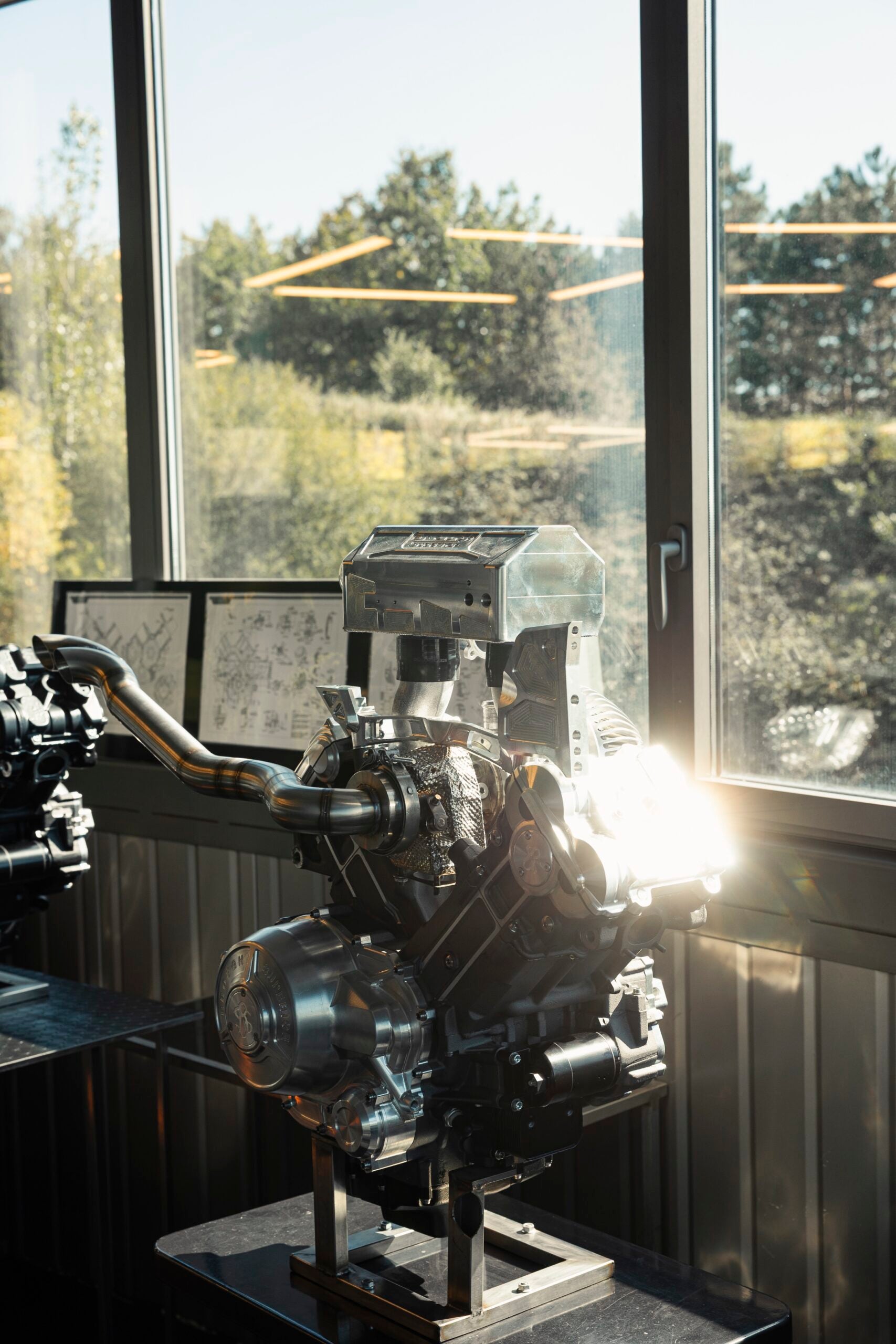
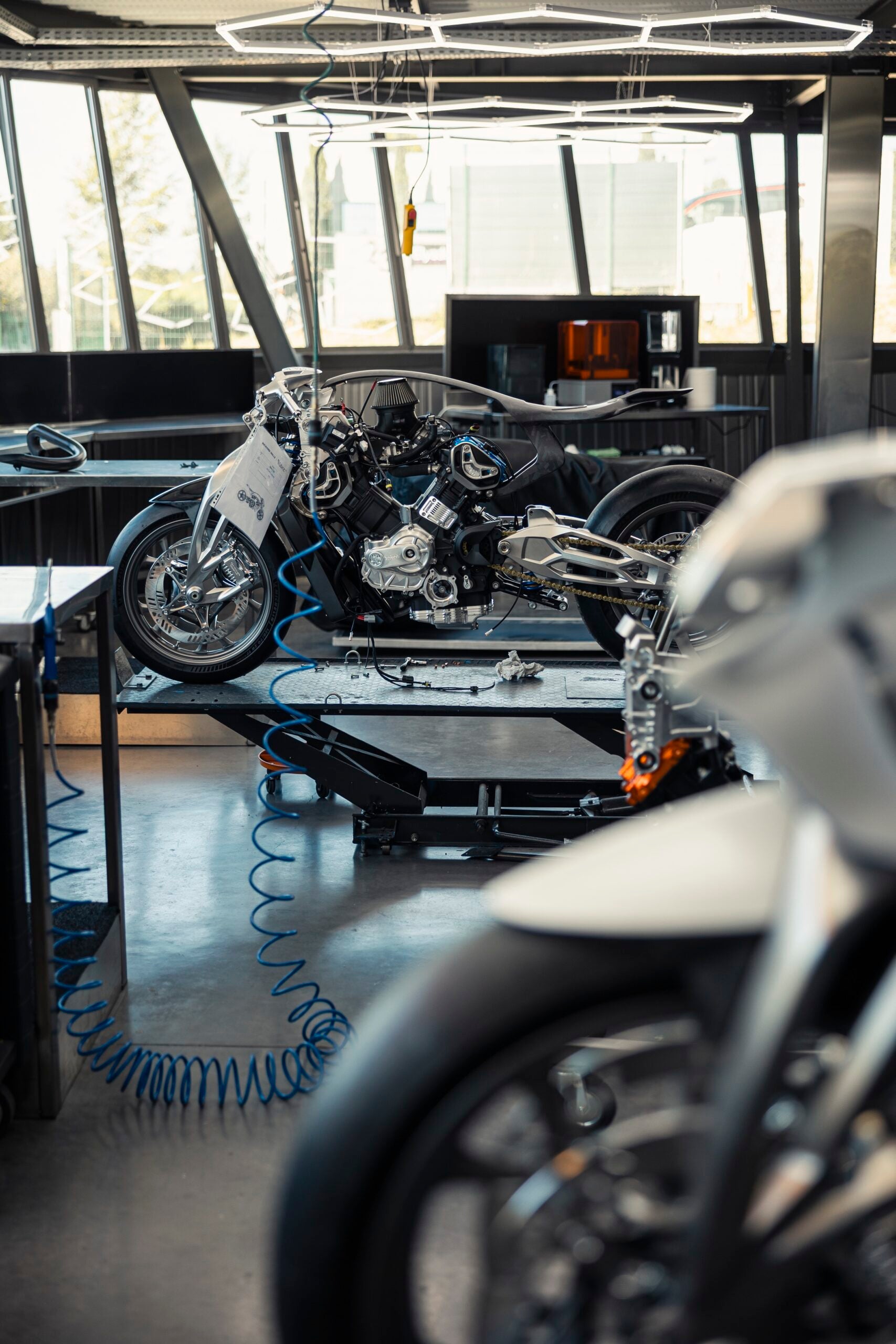
It was Mille’s idea to take inspiration from boardtrackers, a style of simple racing motorbike that was popular in the 1910s in North America. These svelte machines gave the RMB01 its low-slung silhouette, slim tank and minimally padded seat. There was also the wish to 'skeletonise’ the bike, mirroring a look Richard Mille has pioneered with its watches.
This ensures the V-twin engine is entirely visible, while the forged carbon fiber frame holds everything together like the bridges of a RM watch. Materials used in Richard Mille watchmaking have been utilised including aluminium, titanium and, of course, carbon, while the wheels have a unique split design inspired by tourbillon calibres. The coolest feature might be the RMB01’s dials, which are mechanical and skeletonized, naturally.
Only 150 examples of the RMB01 will be made. Costing around £250,000 (approx. $334,600), they are among the most exclusive motorcycles ever produced, echoing the ethos of George Brough back in the early 20th century. This bike, like Brough’s early designs, is a hand-built superbike made for speed and with exceptional attention to detail. While they look drastically different, in that sense, not much has changed a hundred years on.