
Take a walk around any car park either side of the Atlantic, and all you’ll see is monochrome. Cars in the 21st century are overwhelmingly dull when it comes to color, with the vast majority of wheels purchased in gray or black. You might be lucky and spot a dark blue, a white or even a silver car, but there won’t be much variety beyond that. In the UK, over 50 percent of all new cars are configured in gray or black, while in the US nearly 80 percent are black, gray, white or silver.
This is not the case at Lamborghini. The Italian marque has always been known for its vibrant hues, from Giallo Orion, the signature Lambo yellow, to Verde Mantis and Arancio Borealis. While matte black Lamborghinis remain popular for a certain Batmobile appeal, many owners lean into the brand’s bold designs with equally head-turning colors. These are on full display at Lamborghini Arena, a biennial festival that took place at Imola in May. It’s the largest, most extravagant gathering of Lamborghini clients, fans, and admirers, with a series of events taking place over the course of the weekend
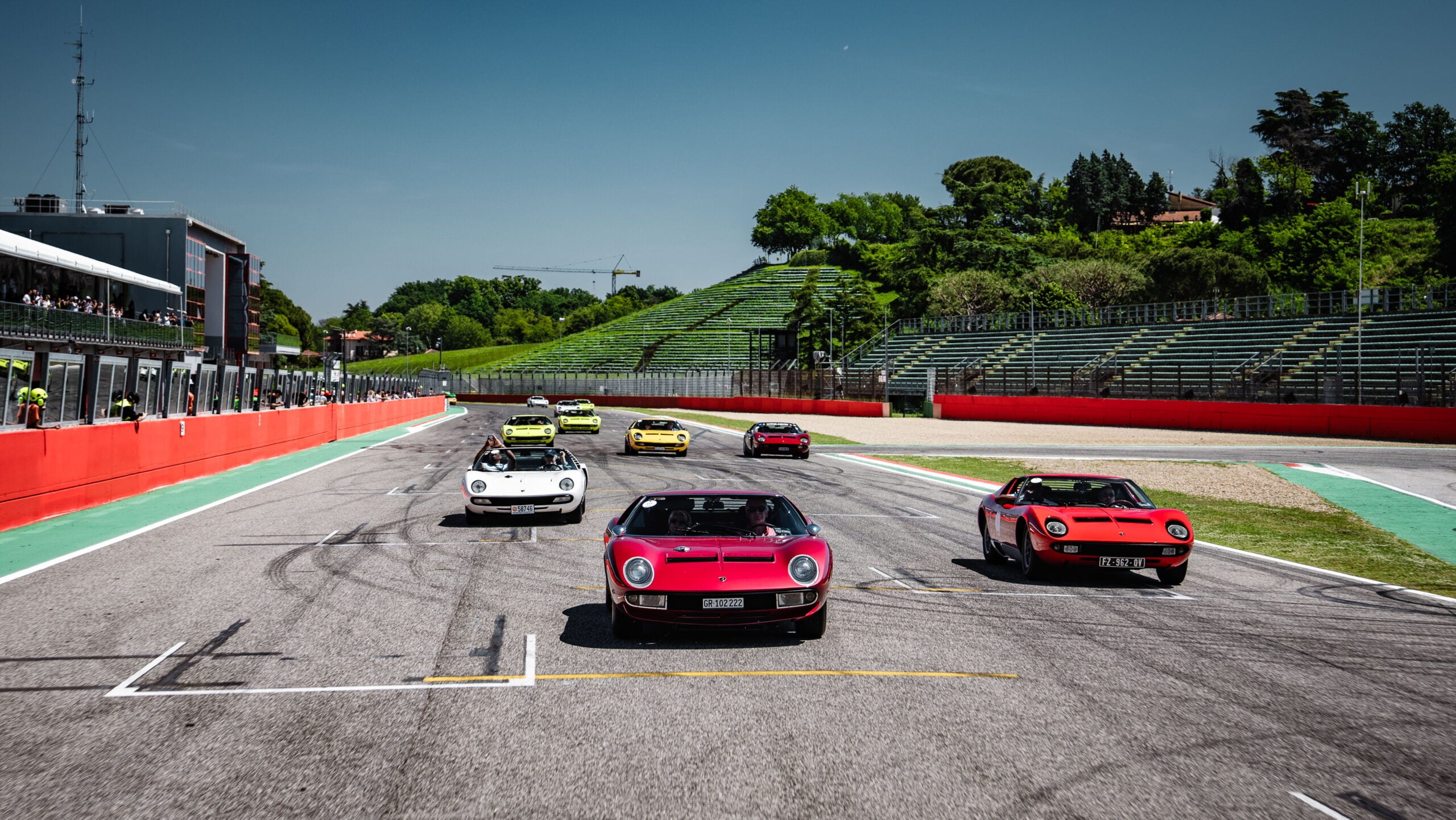
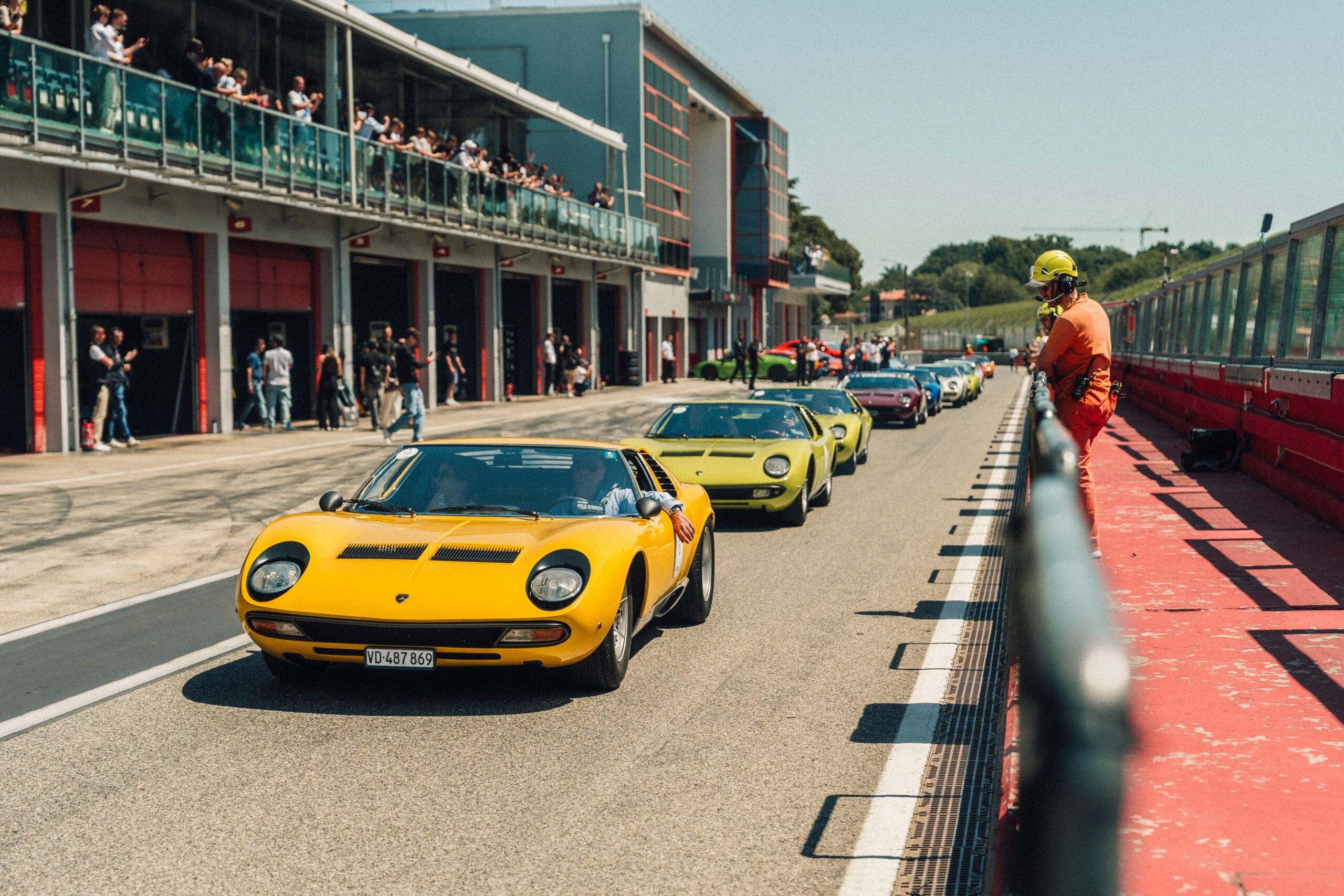
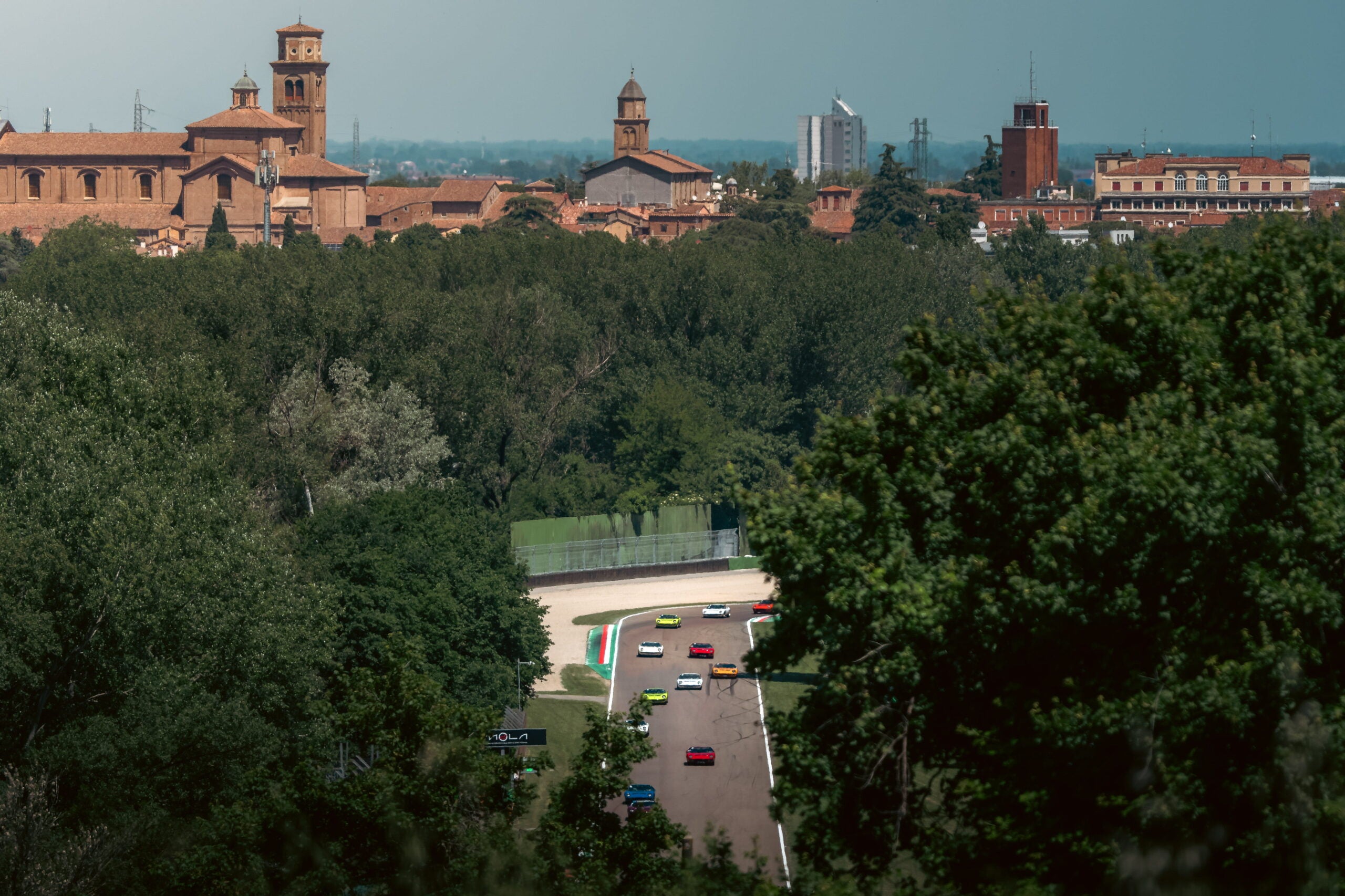
One of which was a parade lap around the Autodromo Enzo e Dino Ferrari, where 450 Lamborghinis took to the track. Everything from champagne gold Diablos and bright blue Jaramas went round alongside yellow Miuras, green Murcielagos, and two-tone chrome Revueltos. It was a parade of individuality as much as it was a celebration of the Italian brand, which celebrates its 60th anniversary of its original supercar, the Miura, this year.
A lot has changed in that time, and today’s lineup of supercars is incredibly high-tech and capable, both on track and on the road. While some brands have gone down an all-electric line-up, Lamborghini has leaned into the combustion engine as a tool for excitement. It has however utilized hybrid technology, giving each of its cars – including Temerario, the new Huracan replacement – electric power alongside a traditional V8 or V12.
See also: This Electric Rolls-Royce Corniche Might Be the Ultimate Luxury Restomod
“Finally, we have updated all of our models since the beginning of this decade, by having all plug-in hybrid cars,” says Lamborghini chairman and CEO Stephan Winkelmann at Arena. “This is a big accomplishment in a very short period of time for a company like ours. The next step is going to be derivatives, and we will have the first presentations of derivatives in the summer of this year.” For now, the current Lamborghini lineup is small but perfectly formed. There’s the flagship Revuelto, a wild and technologically advanced V12 supercar that descends from the Miura, Countach, Diablo, Murcielago, and Aventador. The Urus is the big-selling SUV, which allows the brand to produce its more niche sports cars; and the Temerario, a new 907hp, V8 ‘mid-range’ model that revs all the way up to 10,000rpm, an unheard of figure for a turbocharged car, tapping into the drama the brand has always been associated with.
While incredibly fast and exciting under acceleration, the Temerario hits 0-60mph in 2.7 seconds. Like the Urus and even more so than the Revuelto, the Temerario is remarkably easy to drive around town. Jump in and its driving position inspires confidence, with a clear view out, light steering, and a silent EV mode perfect for commuting through a city. It does of course have another side, with its instant power delivery and quick, high-revving engine delivering brutal power more akin to a racing motorcycle. It really needs a racetrack to explore its full potential, and while Imola was full of Huracan-based Super Trofeo cars over the weekend during qualifying and race sessions, these will be replaced by Temerarios from next season.
See also: How I Learned to Become a Racing Driver in a Single Day
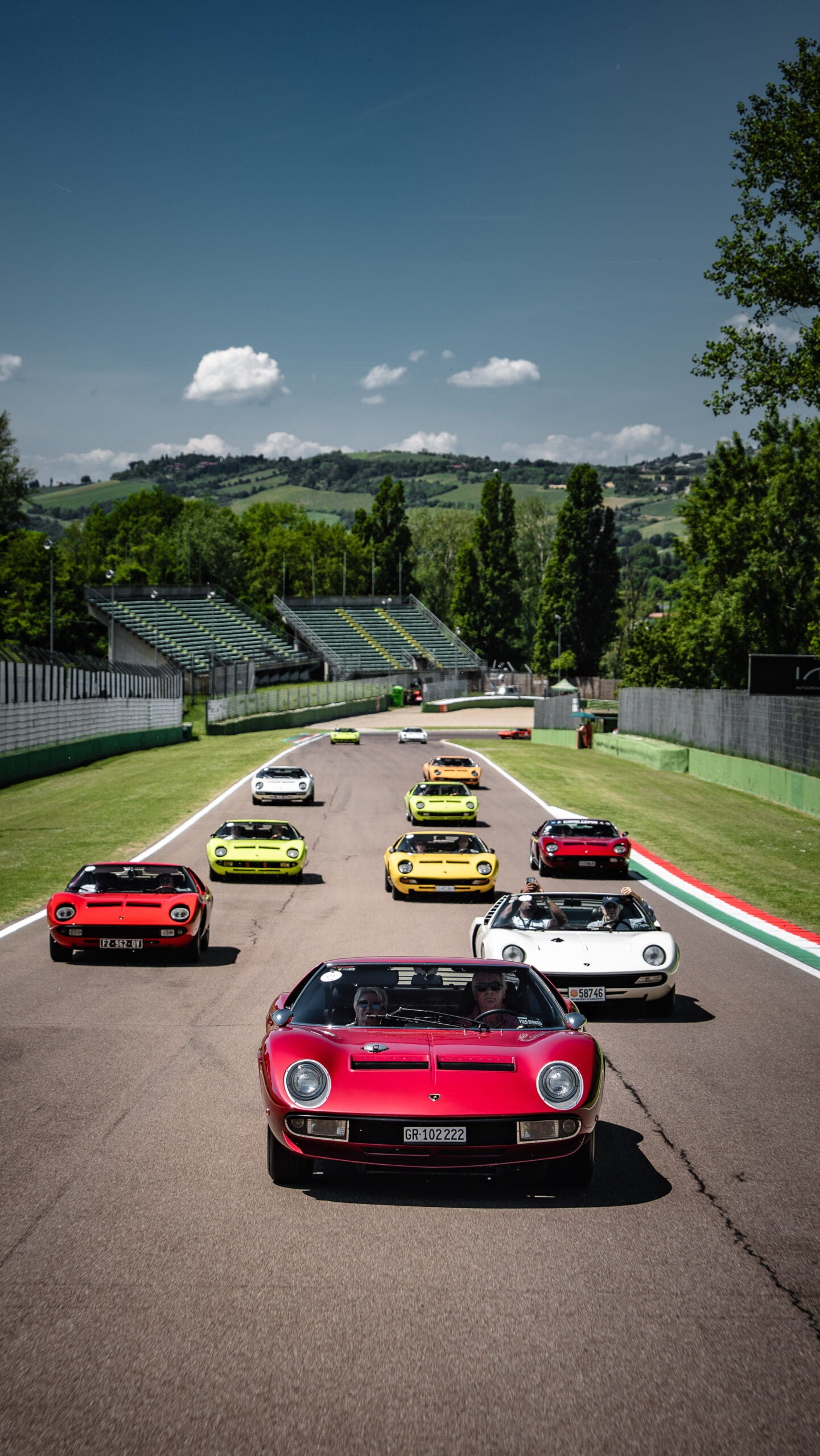
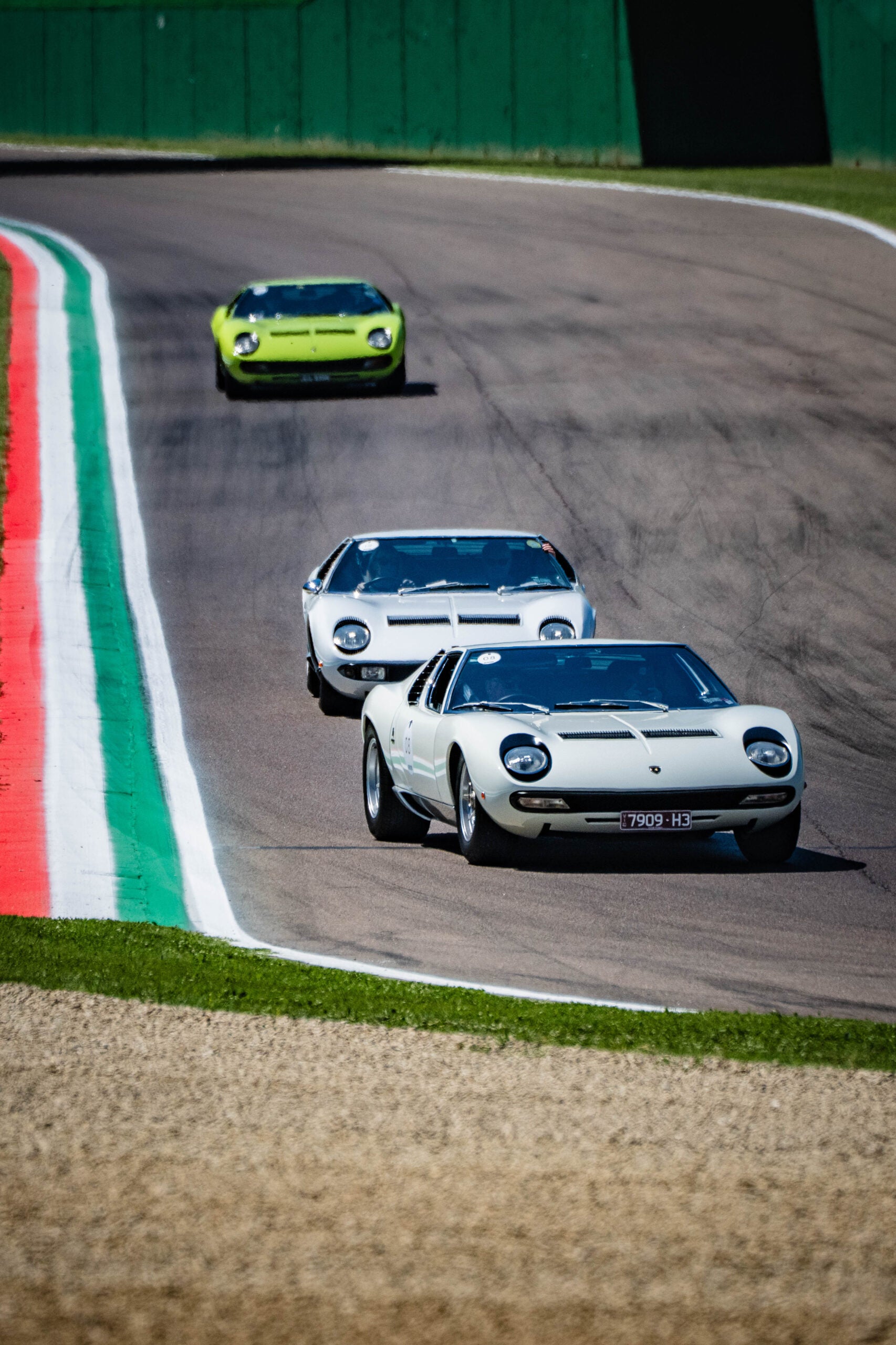
In between the racing and parade laps at Arena, there was a celebration of the Miura for its 60th birthday. Nearly 20 Miura owners drove their cars as part of the 2026 Polo Storico Giro, a tour through 310 miles of Italy that ended up at Imola for Arena. “The Giro offered clients from all over the world the opportunity to drive the first supercar in history with the direct support and organization of the company, while also allowing enthusiasts attending the Lamborghini Arena to witness a unique parade of Miura models,” said Winkelmann. “With the Miura, Lamborghini did not simply create a car, it gave birth to the very idea of the supercar”.
Unlike the Temerario, the Miura is not easy to drive. I get behind the wheel of Lamborghini’s own 1971 Miura SV, in the hills above Imola. It is raining and the car is parked on a slight incline. The handbrake is not working, so the preceding hill start with a Murcielago Roadster behind me makes for an interesting introduction. The driving position takes some getting used to, with a laid-back seat, close, floor-sprung pedals, and the wheel nestled in between your legs like a go-kart. The open-gate gearbox requires force, and the brakes are about as different from a new car as you can imagine.
None of that matters, though, when you’re on the move, and in fact, only adds to the allure of the Miura. It’s a physical, immersive experience that becomes overwhelming when the four Weber carburetors behind your ears open up. The transverse V12 is in plain view directly behind you and completely dominates the experience. Nurse it over 3,000rpm and it bellows around the cabin, enveloping you in a symphony of whines and roars, the likes of which Lamborghini has made its name off. The Miura was the world’s first supercar in 1966. Sixty years later, for both those that are lucky enough to drive one, it remains every bit as special.