


For centuries, the globe was a symbol of intellect and influence, a fixture in libraries, boardrooms, and private studies. It conveyed not only wealth but also a curiosity about the wider world.
Then came mass production, digital mapping, and the slow fade of a once-revered craft. Today, however, a small but determined group of artisans is restoring the globe to its former stature.
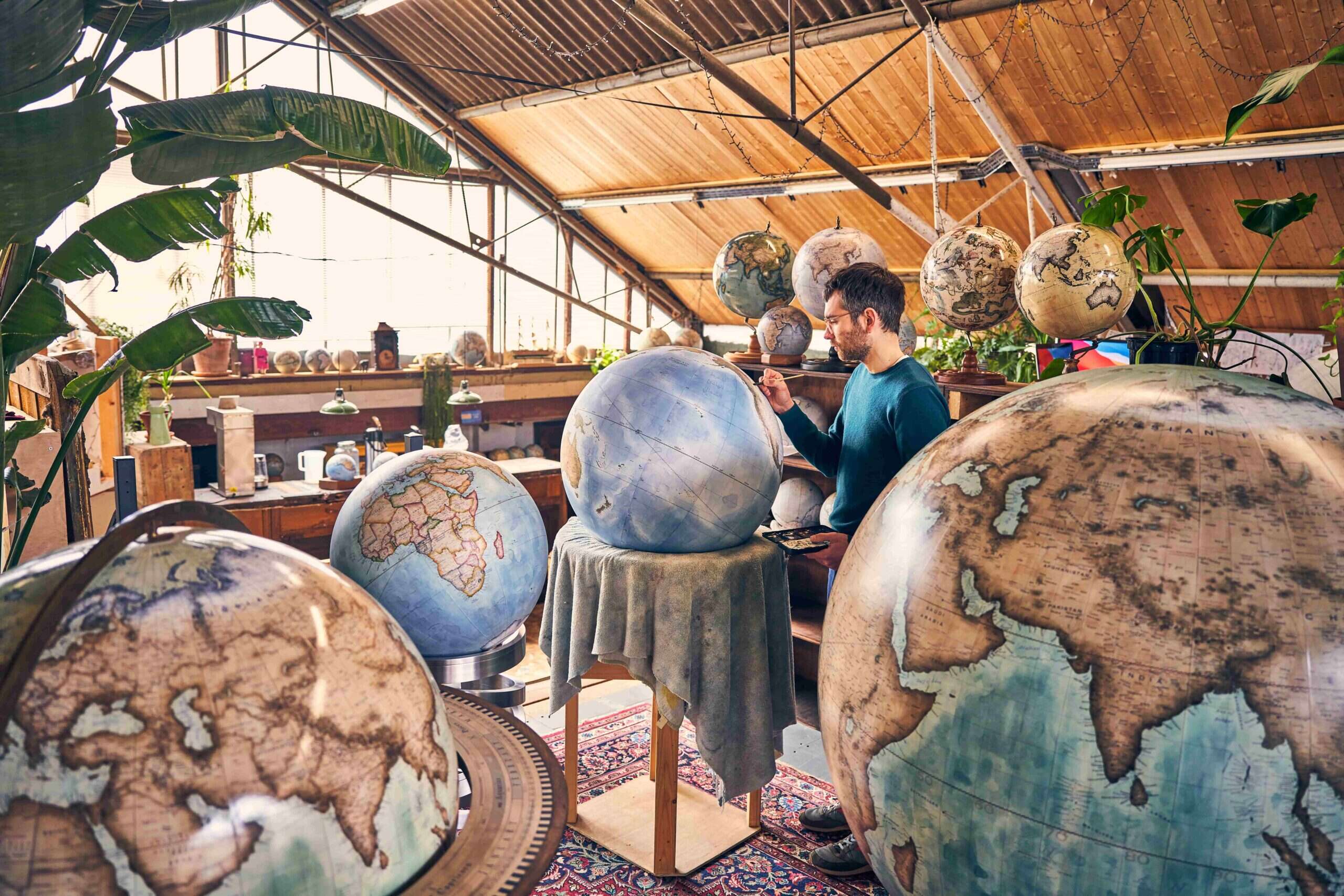
At Bellerby & Co., globemaking is as disciplined craftsmanship. Within their London studio, cartographers, painters, woodworkers, and metalworkers collaborate to create entirely bespoke worlds – each one painstakingly shaped, painted, and assembled by hand. Solid and robust, every piece rests on the studio’s signature ball-bearing base, allowing it to rotate smoothly in all directions. As each globe is entirely bespoke, a team of four in-house cartographers works closely with clients to bring their visions to life.
Families can trace ancestral histories; collectors can document expeditions; others commission globes themed around literature or cinema. “The map can be used in endless ways to tell stories, and our clients work with us one on one to design their globe exactly as they would like it,” says Jade Aura Fenster, customer relations specialist at Bellerby & Co. The emotional resonance can be profound. “I have cried reading my clients’ stories before.” She recounts one commission created as an urn, with ashes placed inside the globe.
See also: Meet the Curator Reviving Britain’s Heritage Homes
“Globemaking is often described as a ‘forgotten’ craft,” says Fenster, citing the decline brought on by disposable consumer culture. “I think the market was saturated with plastic globes through a period where mass consumption of cheap ‘throw-away’ products were being more heavily embraced.”
As factory-made models filled classrooms and gift shops, the artistry behind traditional globe construction faded from view. Yet in the years that followed, a cultural shift has sparked renewed interest. “When we were starting out, I noticed a shift towards people wanting to own fewer things with more meaning behind them,” Fenster explains.
Social media, unexpectedly, became an ally. “Traditional craft and the history of craftsmanship was being celebrated more. We had great success in the early days of Instagram by showing our ‘works in progress’ and sharing our process.” By demystifying the making, the studio reintroduced audiences to its unique methods of production. “A mass-produced globe is made with machines in a factory… each globe is the same, and the map is likely to be outdated by the time it makes it to you,” Fenster notes.
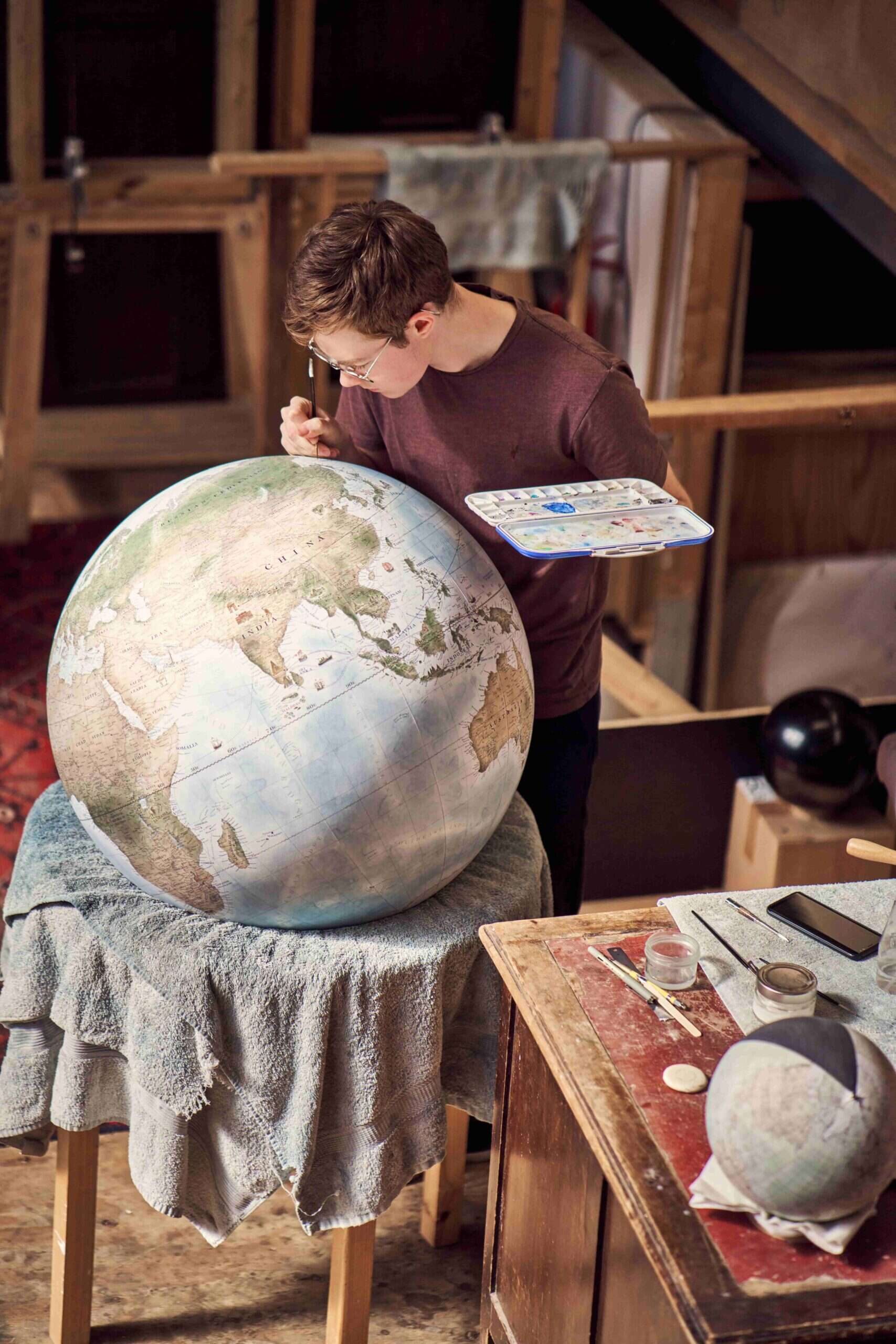
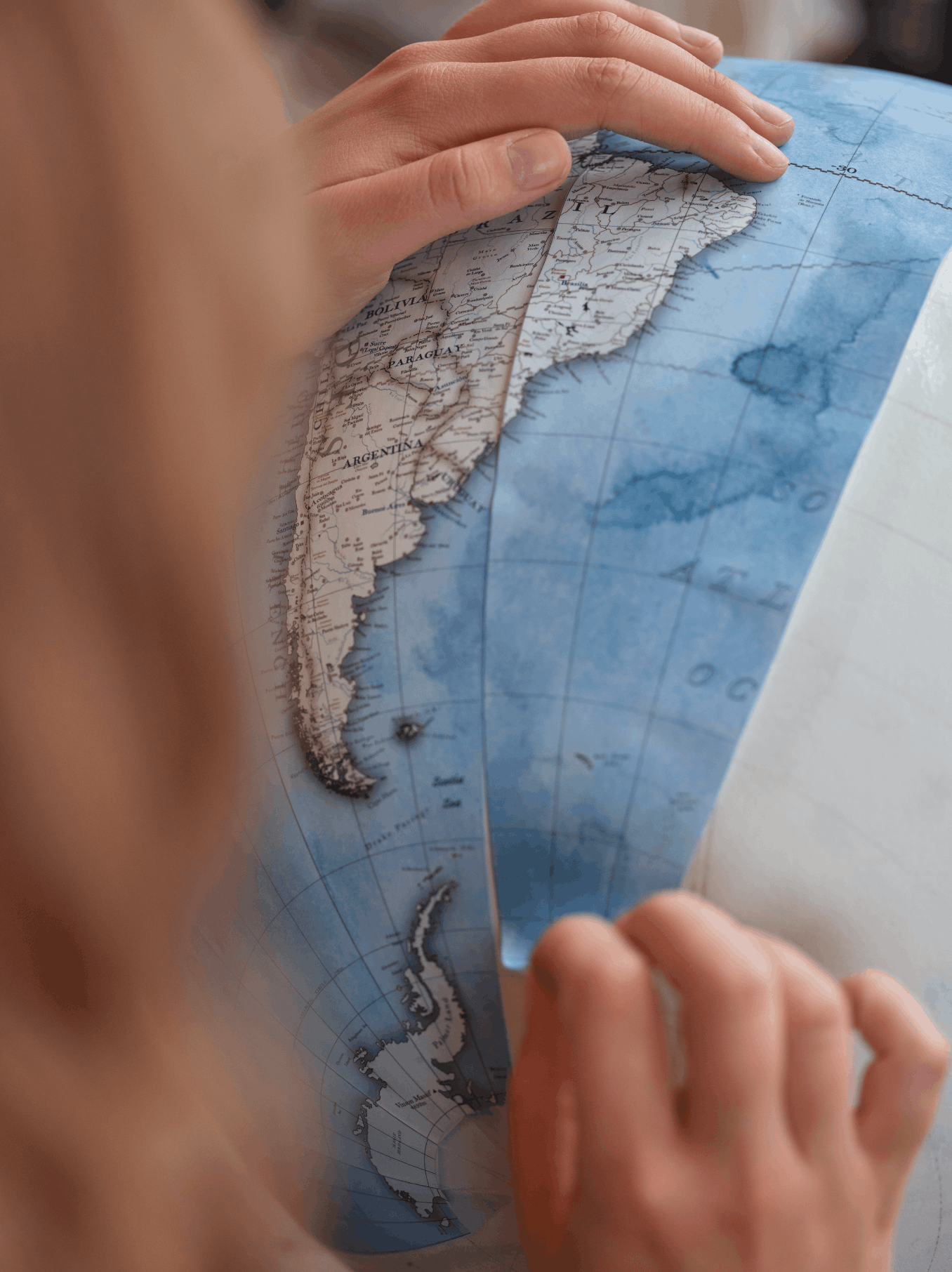
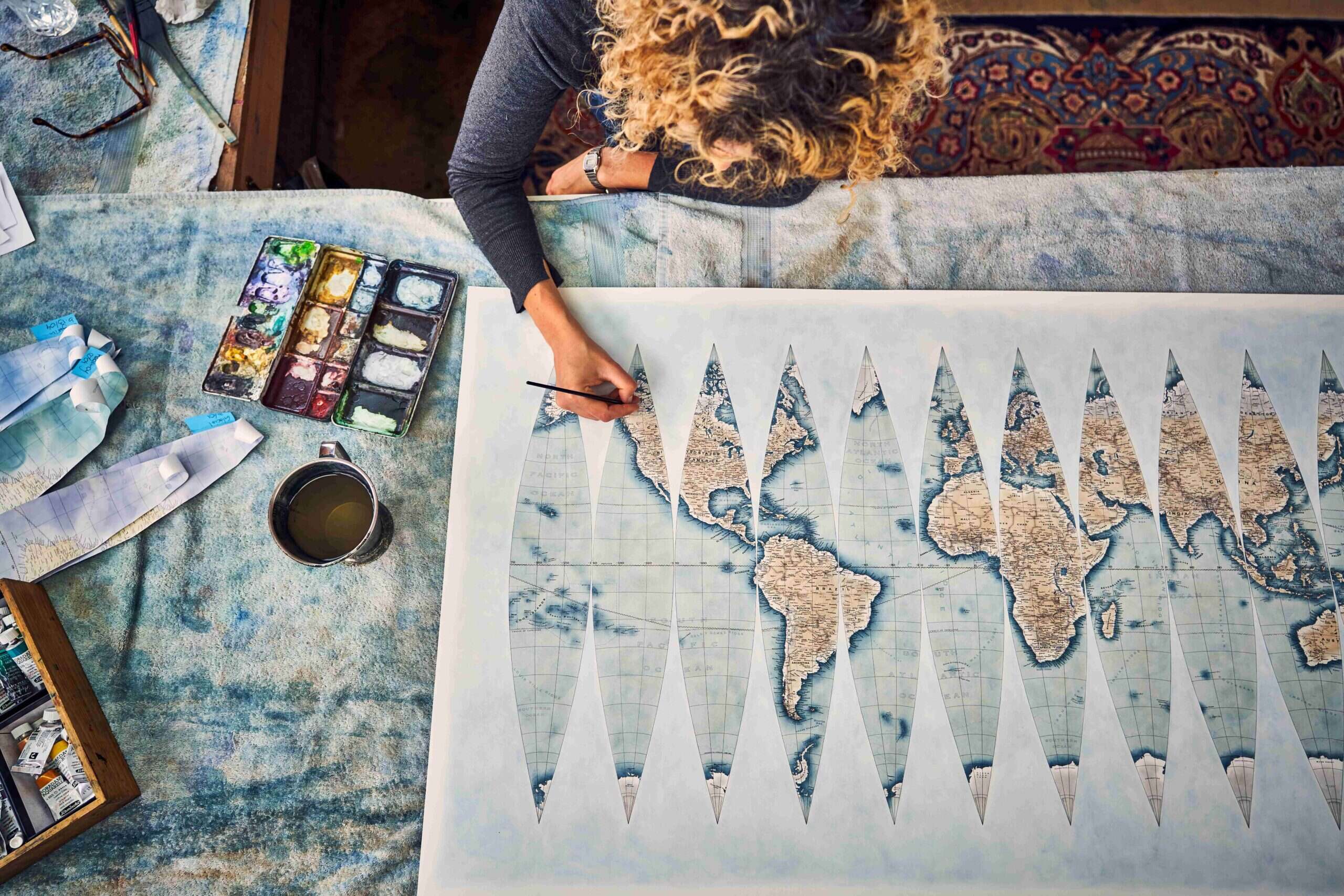
At Bellerby & Co., no two globes are identical. Each sphere passes through at least five specialists. Globemakers cut and apply the paper “gores” – the curved slices of map that form the sphere – with microscopic precision. “Even a fraction of a mm out and the last gore that goes on will overlap with the first,” Fenster says. The paper must be carefully wetted and stretched; too much water and it will ripple, tear or bubble. Apprentices train for at least a year before producing the smallest size globe, while the largest commissions are handled only by senior makers with nearly a decade of experience.
The appeal of a globe today also lies in its resistance to our digitally saturated world, one defined by GPS and instant satellite imagery. “You are not going to use a globe to get from A to B,” Fenster says. “But it is going to inspire you in the first place.”
As screens increasingly mediate experience, collectors are gravitating toward objects that reward touch and contemplation. “Most people do not want to live their whole lives with eyes glued to a computer or phone screen and appreciate well-made, beautiful objects,” she adds.
Prices reflect the level of craftsmanship involved. Smaller handcrafted globes begin at several thousand pounds, while larger and more complex bespoke commissions – particularly those incorporating fully customized cartography and sculptural bases – can reach into the tens of thousands.