


It’s possible that the new CEO of LVMH’s fashion division and CEO of Louis Vuitton is not entirely human. Elite Traveler recently flew to Korea to accompany Pietro Beccari on a madcap 24-hour dash through his latest project, a super-concept ‘retailtainment’ store in Seoul, and we were left floundering in his wake. No sooner was he off the corporate jet than Beccari was inspecting the premises – a blend of VIP rooms, a chic café, a Michelin-starred restaurant and countless pieces of almost priceless art amid the myriad monograms.
One minute he was meeting the Shinsegae department-store executives who own the building. Next, he was soothing the egos of rival chain execs at Hyundai and Lotte, jealous that they didn’t have the immense boutique. He embraced old pals such as Takashi Murakami, the Andy Warhol of Japan, who created a limited-edition set of bags for the store. Then he was schmoozing talent at the rooftop soirée, from Lisa from Blackpink and It Boy rap star Felix Yongbok to a horde of K-pop stars. Next, a quick dash across town to catch up with Dame Pat McGrath, the beauty industry’s greatest makeup artist. This fall, McGrath debuted Vuitton’s latest product diversification, La Beauté Louis Vuitton, celebrating it in Korea with a custom pop-up in Seoul. And throughout the entire frenetic schedule, Beccari never appeared remotely ruffled. Just another day in the office. Not a bead of perspiration in sight.
Beccari, 58, has enjoyed a giddy assent within LVMH since arriving in 2006. He has been CEO of three of the group’s most noted brands, beginning at Fendi, where he led Karl Lagerfeld to debut the first haute fourrure (fur couture) collection in the same theatre where Stravinsky scandalized Paris with The Rite of Spring. And to Fendi, where he reinvented the luxury flagship concept in Rome by adding a hotel with seven Fendi Private Suites a stone’s throw from the Spanish Steps.
From 2018 sales tripled at Dior during his half-decade tenure – and he had the vision, chutzpah, call it what you will, to stage the first catwalk show after the world emerged from Covid. Even as scores of experts were predicting the end of runway, Dior couturier Maria Grazia Chiuri staged a “homecoming” in historic Lecce, with VIPs watching from balconies, witnessing a dazzling set of 30,000 coloured bulbs evoking the luminaire of local folk festivals as Italian composer Paolo Buonvino conducted an 18-strong orchestra from Rome, alongside 21 local musicians and rock performances mixed with folk dancers. And then there was a 90-look collection worn by top models.
In parallel, Beccari convinced his boss, Bernard Arnault, to spend some $100m gutting and rebuilding Dior’s Parisian flagship on avenue Montaigne into the planet’s most luxury boutique bar none. As part of starchitect Peter Marino’s airy refit there were private VIP rooms and interior terraces, and a Dior Café and Le Jardin restaurant by the French chef of the moment Yannick Alléno. Plus the remarkable La Galerie Dior, a narrative display of the history of Christian Dior, with works by Monsieur, and his successors like John Galliano and Yves Saint Laurent, video installations of stars wearing Dior in Oscar-winning movies, and even the original cabine for the models from The New Look.
In an age where fashion exhibitions by the likes of Alexander McQueen and Jean Paul Gaultier were the top drawing shows at the V&A in London or The Met in New York, La Galerie Dior was quite simply the finest story-telling installation of any luxe brand anywhere.

Now, Beccari’s latest campaign is at Vuitton, where he hired Pharrell Williams as menswear creative director. Two years ago, when I asked Beccari what prompted him to hire Pharrell after the tragic death of LV’s menswear designer, Virgil Abloh, he responded: “Why not?”
“After Virgil, I don’t think I could have chosen a traditional designer. I needed someone who was more connected to the arts, who could touch the hearts of people through music and fashion but also collaborations. It’s the first time someone has had the courage to pick a real worldwide star to helm a house. He has 13 Grammys, and two Oscar nominations. Whatever Pharrell touches becomes gold. So, as a creative director, it’s an experiment but not a risky one. To be honest, when I was still at Dior, in my mind the designer Vuitton should hire was already Pharrell.”
Take the restaurant at LV The Place Seoul, a rooftop space called JP at Louis Vuitton — the first in Korea by New York-based chef Junghyun Park of Atomix, which was number one on North America’s 50 Best Restaurants list in 2025. It’s spectacular, with a menu that offers soy-marinated crab or Hanwoo tenderloin, served on custom saffron-toned tableware, and a terrace boasting giant sculptures by Henry Moore, Antony Gormley and Louise Bourgeois.
“It’s so spectacular,” he says. “I think it’s the most beautiful restaurant in the world! Because chef Junghyun Park is coming back from the US with two Michelin stars. We should say, it’s not LV The Place, it’s The Place to be!”
Beccari often operates on gut instinct and is not afraid to acknowledge the contribution of his staff. He freely admits the recommendation to work with Park Jung-hyun came from Dinesh Kandiah, LV’s new Communication Director in Asia, and a pal of the chef in his previous job in New York.
Pietro sees retailtainment as the much-needed correction in luxury thinking, led by this store’s installation Visionary Journeys, which includes heirloom bags, early 19th-century sketches of the first LV monograms; Vuitton runway looks, and trunks owned by the likes of Grand Duke Cyril of Russia and James Gordon Bennett Jr, the greatest newspaper publisher of 19th-century America.
“I think that post-Covid, luxury made [brands] think we could fly and have wings. We all got fat and chunky because we had a lot of sales coming, almost too spontaneously and we missed the input of innovation. Vuitton is not a fashion brand. So, we needed to do something as market leader with a new form of storytelling that would stimulate the next generation to be curious to discover the brand again,” Beccari says.
A lean north Italian who usually wears light aertex cashmere buttoned sweaters under fine wool suits, he is regarded as a shrewd manager of people. He is known to quickly learn the names of huge numbers of staff – not easy at Vuitton, with over 460 stores worldwide, 19,000 employees and annual revenues that just breached €25 billion.


Right beside the Seoul store are three other LVMH boutiques – Celine, Loewe and Loro Piana – indicating Beccari’s next project. On the day we landed, it was announced that Beccari would become CEO of the conglomerate’s Fashion Group, which also includes Givenchy, Kenzo, Pucci, and, in a return to beginnings, Fendi. A huge project, responsible for annual revenues of some $7bn.
“Of course, I know Fendi very well, the others less. So, I go with humility to study and learn about each brand and try to give my input to the great people in place, from designers to CEOs. A new generation, many chosen by Sidney,” says Beccari.
Sidney is LVMH executive Sidney Toledano, 74, his predecessor in the role who is now Arnault’s consigliere. In France, observing LVMH is akin to reading political tea leaves in Washington, or Kremlin watching in Moscow, with each new appointment setting off hours of chatter in Parisian salons. In fact, this is the second time Beccari has succeeded Toledano, as he replaced him as CEO of Dior.
“You know, back when he gave me Dior, Sidney said he felt like a father giving his daughter’s hand to a son-in-law. And that he couldn’t imagine a better son in law. So, there is great esteem between him and me,” he says.
Asked to define great leadership in luxury, Beccari responds: “If you're able to get to one person and to make sure that he’s the best of himself, that’s a great feeling. So a great leader is someone able to make people grow and put them in the best condition to give the best they have.”
But it’s not all human resources. The facility to take and manage risk is now a huge part of the modern fashion CEO’s toolkit. “Without risks, there is no gain. When you play safe, there is no innovation and no courage and that disincentivizes people. I like to have small alchemists working for me, people who whatever their level in the organization have a spirit where they say, ‘I can make my contribution, I can change things in my own little world and this little thing that I do is gonna’ be for the good of everybody.’ The attitude I fight against is someone that takes orders and just executes,” he says with feeling.
Taking calculated risks has made Beccari a very wealthy man. LVMH is noticeably circumspect about top earners' remunerations, but between salary, bonuses and stock options, top performing CEOs at the group’s biggest brands, a position Beccari has held for almost a decade and a half, are thought to earn around €10m annually.
What lessons has Beccari learned from Bernard Arnault – Europe’s richest man and France’s greatest entrepreneur – about managing people and brands?
“A lot, and in a lot of places. But first, he's better than me, or worse than me in never being very satisfied. He believes you must cultivate divine dissatisfaction. So, Mr Arnault comes to work every morning at 8 o'clock and leaves very late. He is always ready to celebrate what we did well but prefers to concentrate on the next challenge of what we can do better,” he says.
That mentality goes throughout the group, where “divine unsatisfaction,” has been a leit motif of LVMH. “It’s the art of unhappiness. But in a positive way, because I must say that in a period of crisis, he is the first one being optimistic. You know, when Mr. Arnault criticizes, or challenges is when things go too well. I learned that lesson very well,” he concedes.
Looking back, Beccari recalls the day before the opening of the superstore Avenue Montagne, Paris’ key shopping thoroughfare, when a small group of people and family joined.
“I said then that I didn't meet the Bernard Arnault calculator or mathematician and crazy finance guy. I met the Erasmus version, when he wrote in Praise of Folly in 1509. I met someone able to shut down his very rational side and to throw himself into adventures, which are bigger than rationality would allow,” he says.
Arnault has okayed a series of Beccari-managed adventures, such as taking over the Palazzo della Civiltà Italiana, a magnificent Mussolini era Rationalist building of Metaphysical arches in Rome that had long lain empty, transforming it into a superb new Fendi HQ. Or last year, opening Louis Vuitton Visionary Journeys in Shanghai in a massive gray metal mock superyacht in monogram print, containing another superstore and LV history installation
“In Shanghai, 23,000 people a week visit the exhibition. This is huge! Here in Seoul, we started with 1,700 on the first day. Pretty good!” he exclaims. Culture is good coin, as Dior showed with its Galerie, where museum visitors went straight from the museum into the adjoining store to buy a piece of the fashion legend.
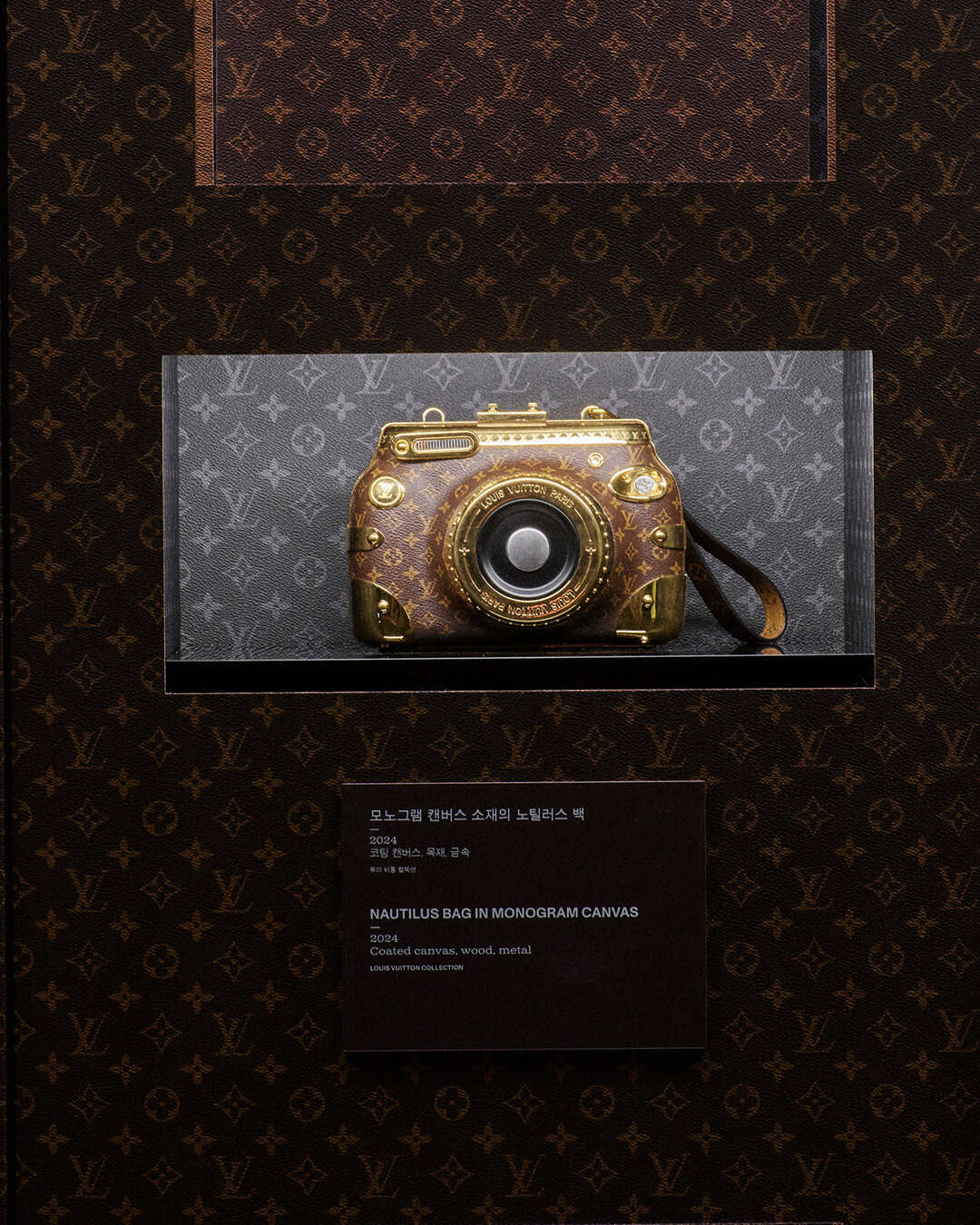
The Monogram room in Louis Vuitton Visionary Journeys Seoul offers a comprehensive overview of the iconic canvas, beginning with an entrance that traces its origins since 1896.
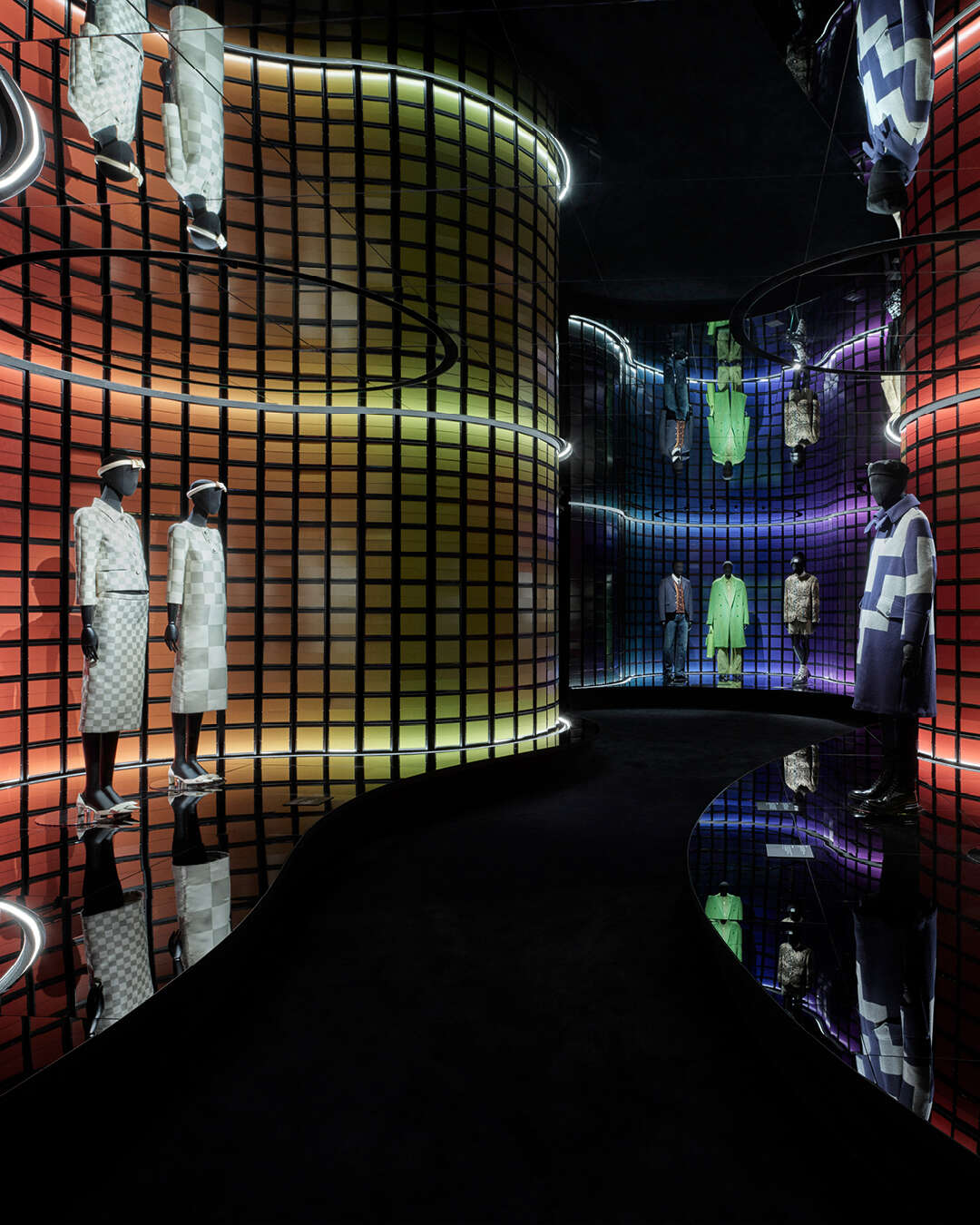
The Fashion room employs a split-flap display to explore the evolution of Louis Vuitton's collections and fashion shows.
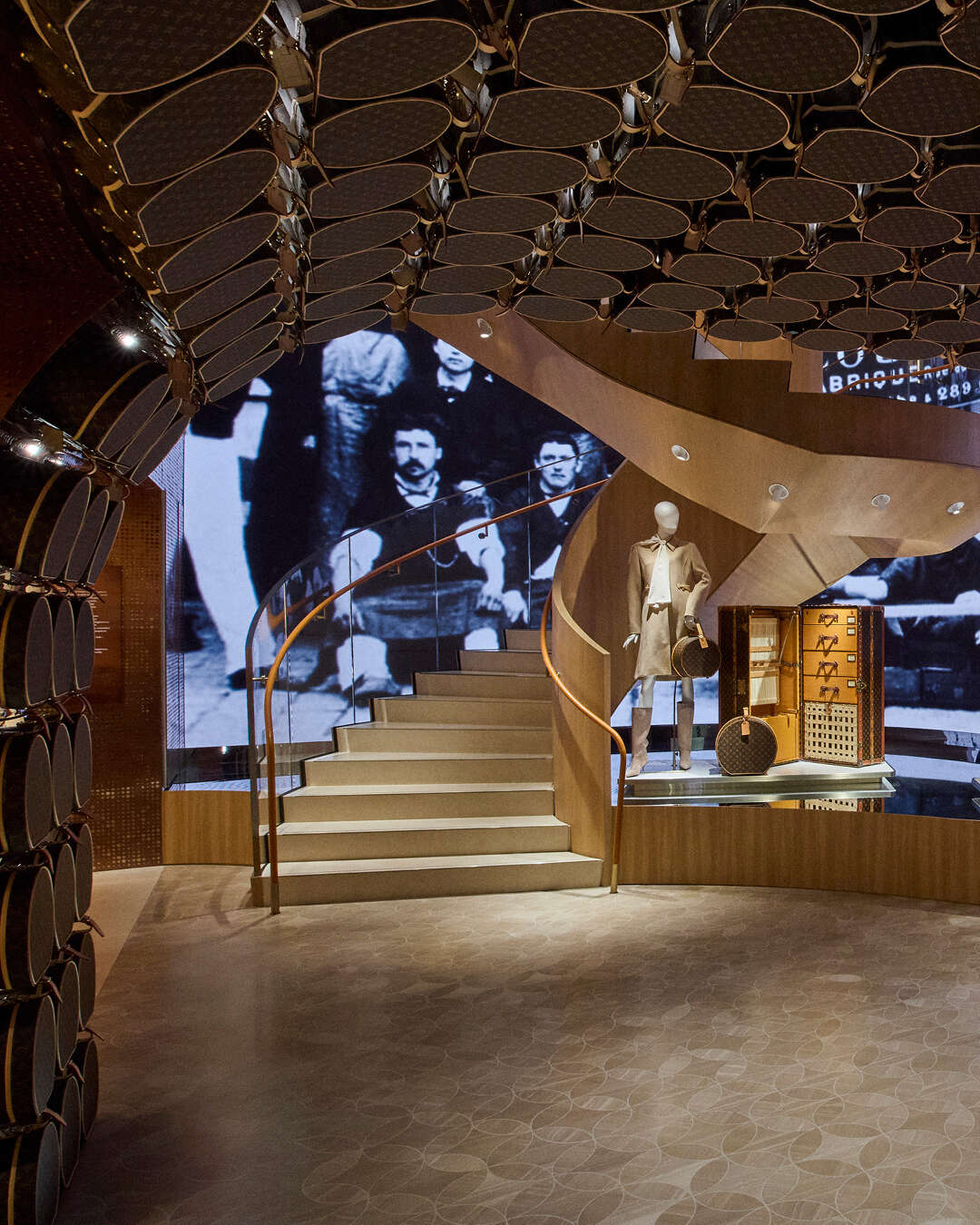
The experience begins in the Trunkscape room, where visitors enter a tunnel lined with the Boîte Chapeau (hat box), setting the stage for Louis Vuitton's pioneering art of travel.
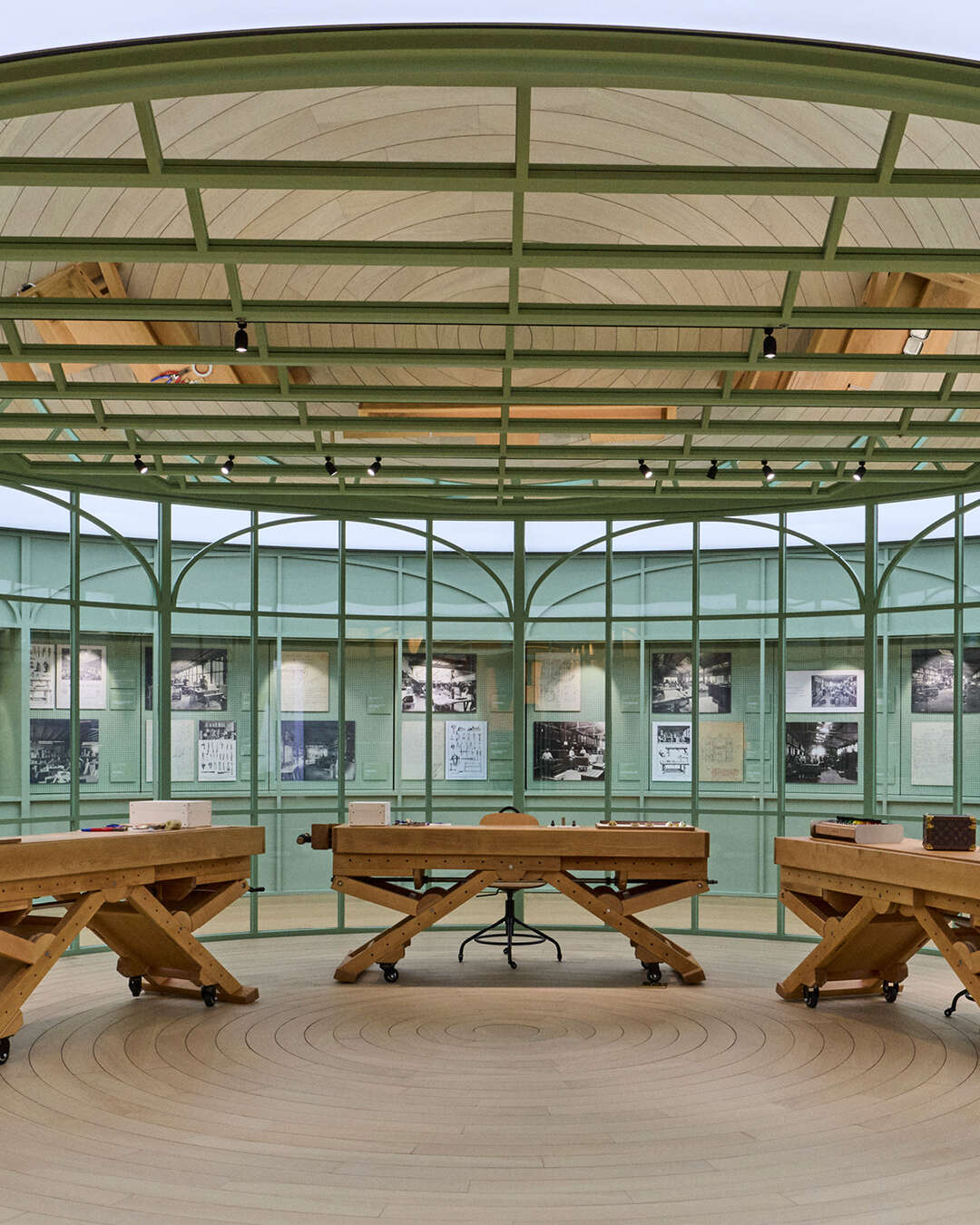
The Workshop room immerses visitors in the creative heart of Louis Vuitton: the world of the artisan.
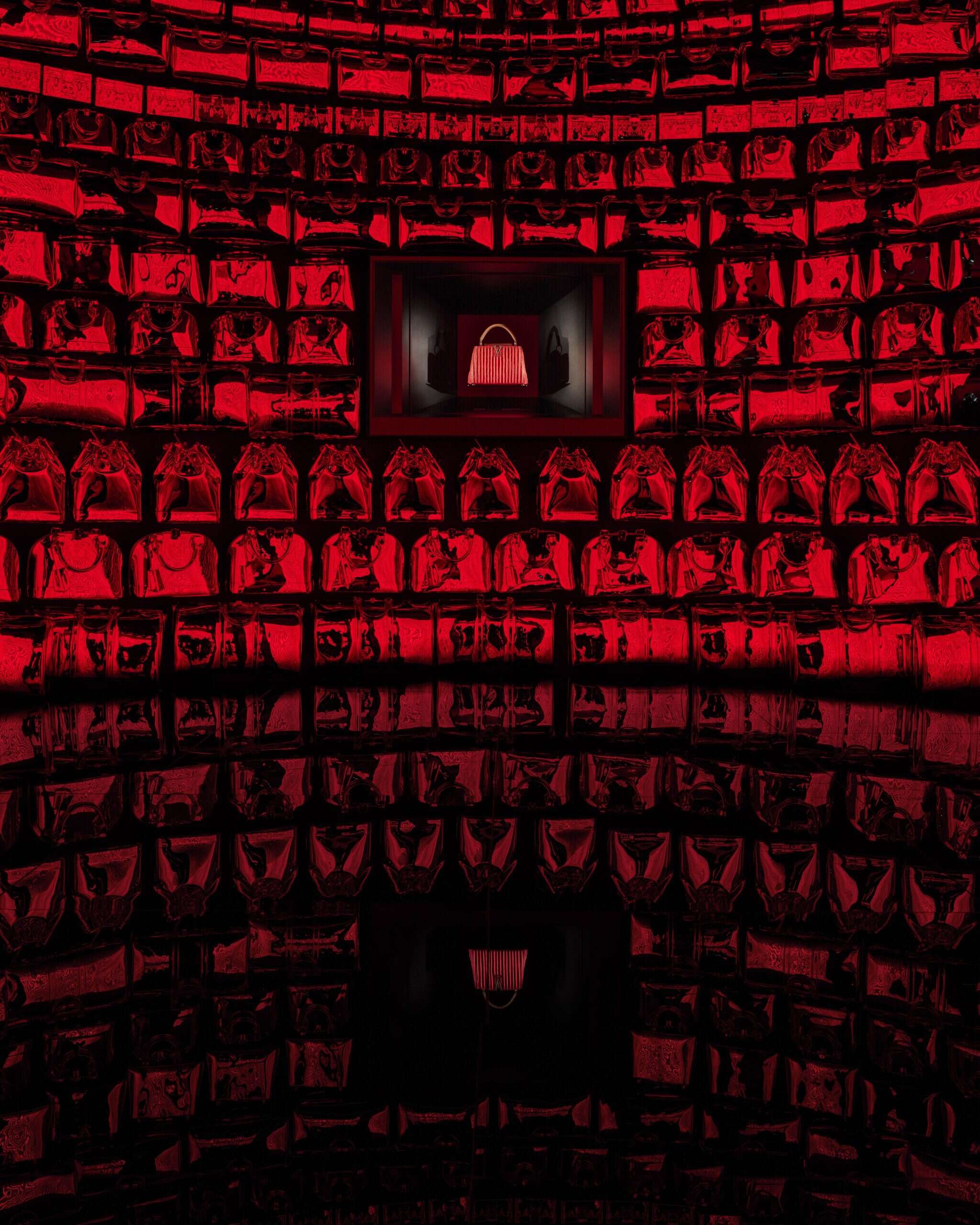
Inside the Collaboration room, Louis Vuitton bags rotate on a carousel with images projected onto a screen for a fully immersive experience.
Paris’ other favourite parlour game is speculating about who will eventually take over LVMH, an empire vast enough that it includes one quarter of France’s champagne, Hennesy cognac; Belmond hotels like the Copacabana in Rio and the Splendido in Portofino; department stores La Samaritaine and Le Bon Marché, and fine wines like Cheval Blanc and Chateau d’Yquem – with a market cap of over €300 bn.
Beccari has worked with all five candidates: eldest daughter Delphine and Arnault’s four sons from two marriages – Antoine, Alexandre, Frédéric and Jean.
“The Arnaults are all different and I have a beautiful relationship with each one of them. Since they were kids, their father always educated them to go visit the stores, be familiar with many brands. They are the future owners of the company, and that passage into command is guaranteed. They feel a sense of responsibility, but also a sense of ambition for the group, one their father shares with them,” he says.
Becarri’s next major manoeuvre is on the Champs Elysees, where one whole city block is enveloped in an LV silver trunk, hiding what many believe will be the first full Vuitton hotel. All the CEO will say is “expect more major scale of retailtainment,” shooting to open in 2027. And then there’s LA, where LV tore down a corner building on Rodeo Boulevard and hired the late Frank Gehry and Peter Marino to jointly develop another super concept store.
Beccari’s commercial drive did raise eyebrows at the Olympics, when medals were handed out on LV monogram trays. But to Pietro, that’s just culture too. “We would like to be recognized as a cultural brand. We are influenced by culture, but also influence culture, as our brand is notorious all over the world. The young generation are educated to love sport, to practice sport, from football to Formula 1, with very young people and many female participants. So, sport is part of the cultural movement we like to represent,” he says. In the Seoul store, almost every sport got the LV makeover or monogram – from skateboards to football tables, via ping-pong sets, golf bags, and portable roulette tables.
Beccari was born in Parma, famed for its driven citizens like composer Arturo Toscanini, or director Bernardo Bertolucci. He played professional football for Parma FC, before hanging up his boots and going to business school. Like a surprisingly large number of LVMH executives Pietro joined after a stint at a consumer products company – in his case Henkel in Germany. He speaks English, French, German and Italian fluently. He is married to Elisabetta, and they have three 20-something daughters.
At Vuitton HQ they like to say Victory Travels in Louis Vuitton. The house is the title sponsor of Formula One, in a decade-long deal inked early this year, and Beccari has rocked up at races in Melbourne, Monte Carlo and Miami.
“We invite our best clients into our private grandstand and then let them see a wheel change. In my view, a Vuitton atelier looks like the box of the Formula One. There’s a very religious, meticulous care for detail. There is also the fact that Formula One is like a circus travelling the world. That’s very Vuitton, to me,” he concludes, as he prepares for whatever is next on his schedule.