
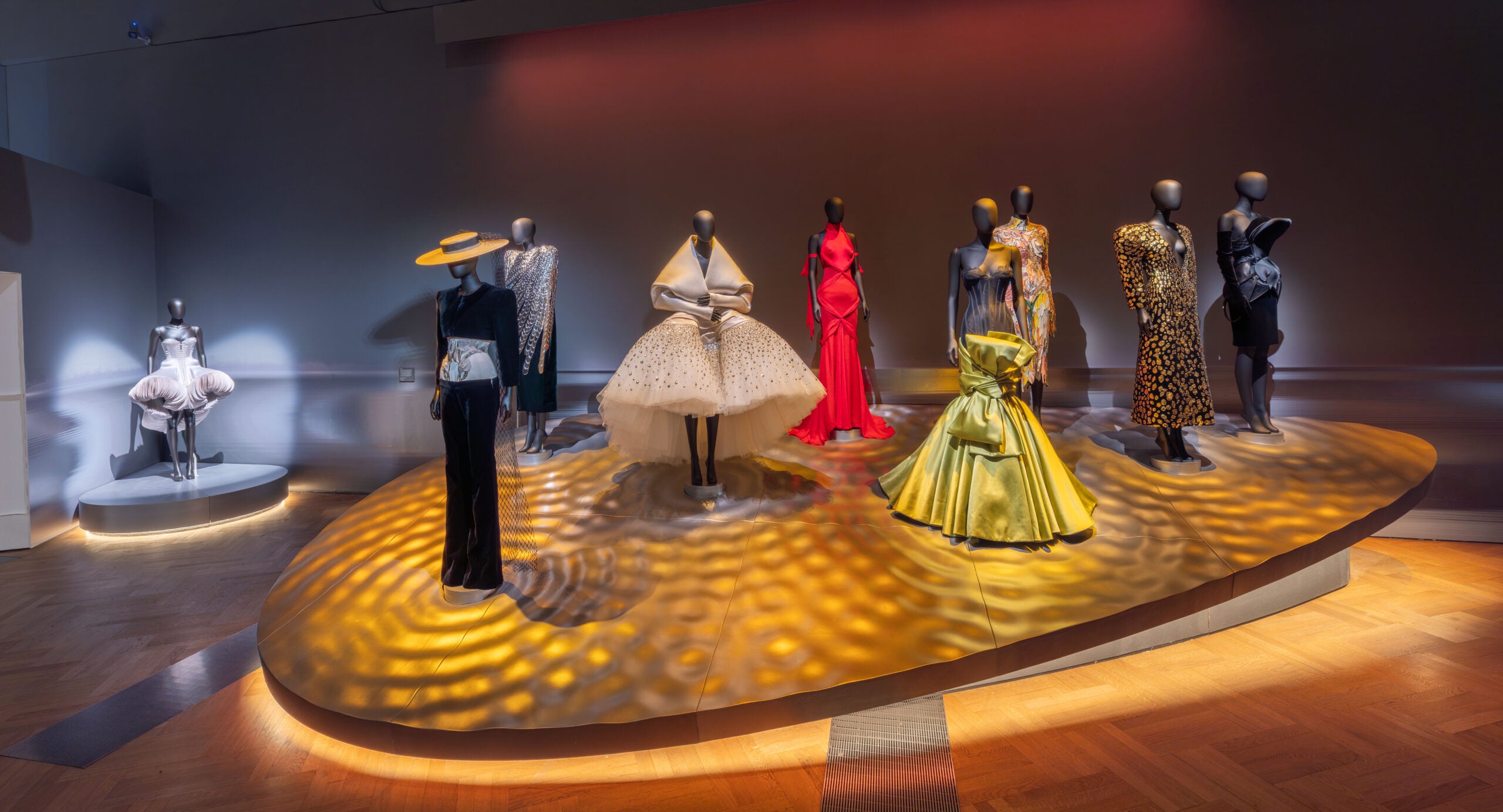
Across institutions such as the Victoria and Albert Museum and The Metropolitan Museum of Art Costume Institute, fashion has undergone a quiet but consequential reclassification over the past decade or so, now being granted the same curatorial seriousness as painting or sculpture. Once dismissed as ephemera – seasonal, disposable, beholden to commerce – it now sits beneath museum lighting, framed by curatorial argument and institutional authority.
The Met Gala 2026 makes this shift impossible to ignore. This year’s theme, Art and Fashion, nods to the idea that fashion is no longer borrowing from art; it is staking a claim within it. But this marks a tension at the heart of the industry. Fashion thrives on acceleration: collections arrive and vanish within months, trends sometimes within weeks. Museums operate in defiance of that tempo. To enter an exhibition is to exit the churn.
See also: What To Expect From Schiaparelli’s First UK Exhibition
The red carpet has become the most visible site of this transformation. Vintage once implied thrift or nostalgia; now it signals taste and status. Archival dressing, previously the preserve of insiders with access to private collections, has been democratized – or at least popularized – into a form of cultural citation.
Take Zendaya, for example. Her stylist Law Roach has built entire Met Gala narratives out of archival fashion: a nod to Joan of Arc one year, a Cinderella transformation another. Rihanna, too, has turned the Met Gala into her personal museum wing – whether it was the unforgettable Guo Pei yellow cape in 2015 or her papal-inspired Maison Margiela look in 2018.
Even more subtle references play the same game. Tilda Swinton has long treated red carpets like conceptual installations. Jared Leto has, at various points, treated them like interactive theatre (sometimes involving his own decapitated head). And Lana Del Rey, at the 2018 ‘Heavenly Bodies’ Gala, leaned fully into sacred iconography.
Others have tested the limits of this museological turn. Kim Kardashian’s decision to wear Marilyn Monroe’s “Happy Birthday, Mr President” dress in 2022 did more than provoke debate; it exposed the friction between preservation and performance. If an object is deemed culturally significant, should it be worn at all?

This question sits at the heart of fashion’s institutionalization. Museums are, by definition, selective. They confer value by choosing what endures. But the Met Gala’s 2026 theme complicates that logic. It takes objects that might otherwise be stabilized behind glass and returns them, however briefly, to circulation. A garment may begin its life on a runway, pass into an archive, and then reappear on the red carpet – each iteration altering its meaning.
So while museums confer importance, the Met Gala borrows it, remixes it, and sends it back into the world at high resolution. It decides in real time what is worth remembering – and, just as importantly, what is not.