
You’d better like orange. Sofitel London St James’s new Suite 70 is, as its name hints, a whole-hearted homage to 1970s design, style, and exuberance. And it is A LOT. A lot of orange, for a start, which covers the floor, the bathroom, and much else besides. This is an emersion into what has snootily been referred to in some quarters as 'the decade taste forgot', yet the ‘70s has been having a revival of late and a curated edit of period classics shows there is plenty to celebrate. Seeing it all collected like this, though, will be polarizing. For some, however, it could just be the most fun hotel room in London.
Sofitel, part of the Accor Group, has been exporting French pizzazz since 1964. It now has more than 120 hotels around the world, including a handful in historic properties under its Sofitel Legend label. The Sofitel London St James originally opened off Pall Mall in 2002 and had a significant refurb in 2019. But now, six signature suites have just been ‘reimagined’ by celebrated French ‘interiors architect’ Pierre-Yves Rochon and his team (responsible for Four Seasons George V in Paris, the Danieli in Venice, and many others over the last four decades), including two that have taken the Seventies as direct inspiration. The Opera Suite uses that decade as a moodboard to present a sophisticated interpretation of that style, while Suite 70 throws sophistication out the window in favor of full-on flavor. Elite Traveler was the first to stay in the latter.
See also: The Peninsula Suite is London’s Biggest – But Does Size Really Matter?
Stay
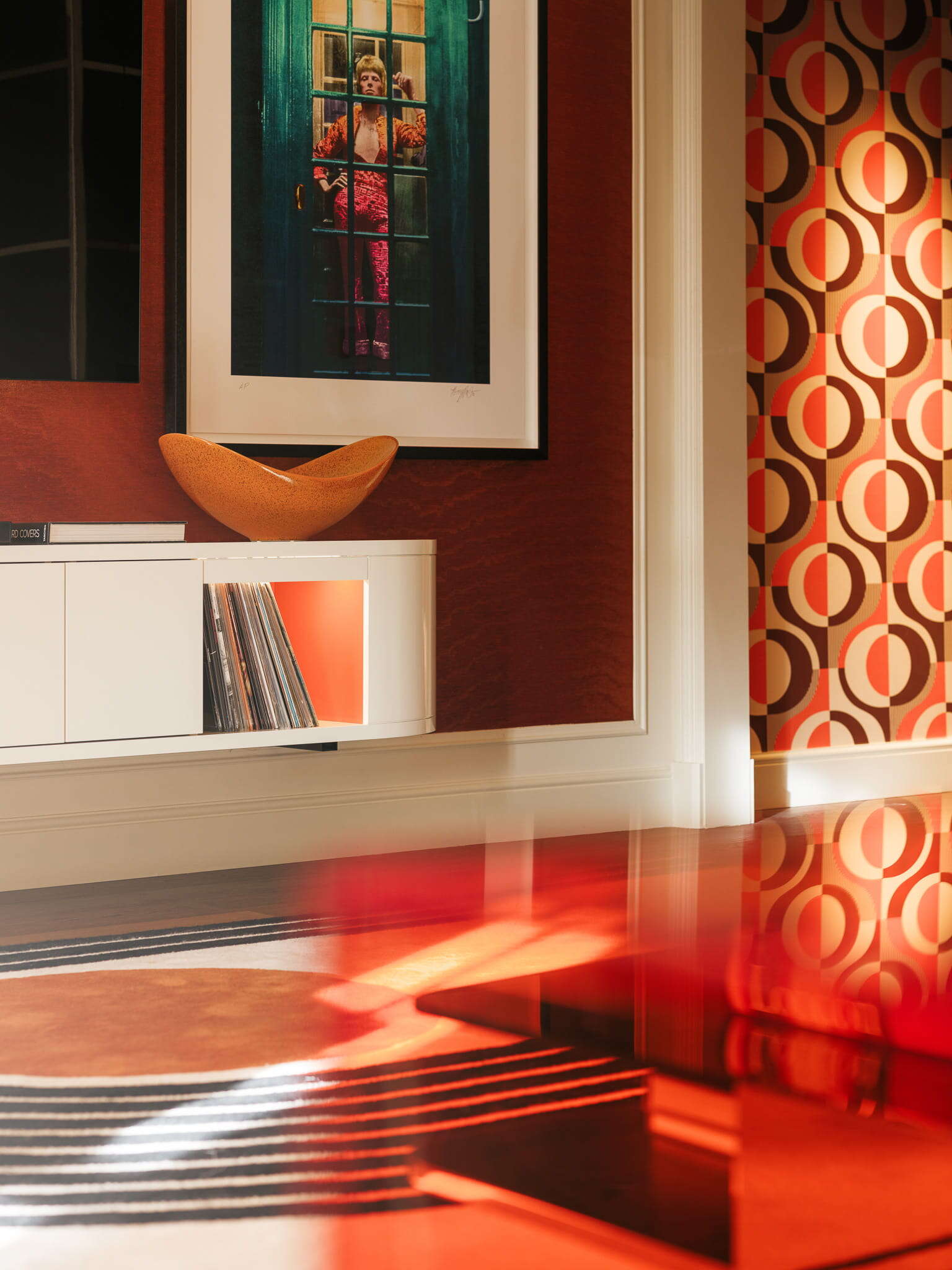
Outside Suite 70 is a sideboard with two Louis Poulsen table lamps upon it. Originally created by Poul Henningsen in the 1920s, they serve as both signposting ('This is a chic and sophisticated hotel that knows all about stylish design') and misdirection, because as soon as you step into the suite’s entrance hall, all thoughts of minimal-chic aesthetics vanish. The wallpaper is psychedelic, the black-and-white photography is of Bridget Bardot, you can glimpse the color-soaking to come as you step into the sitting room – and you can’t help but smile. Let the fun begin.
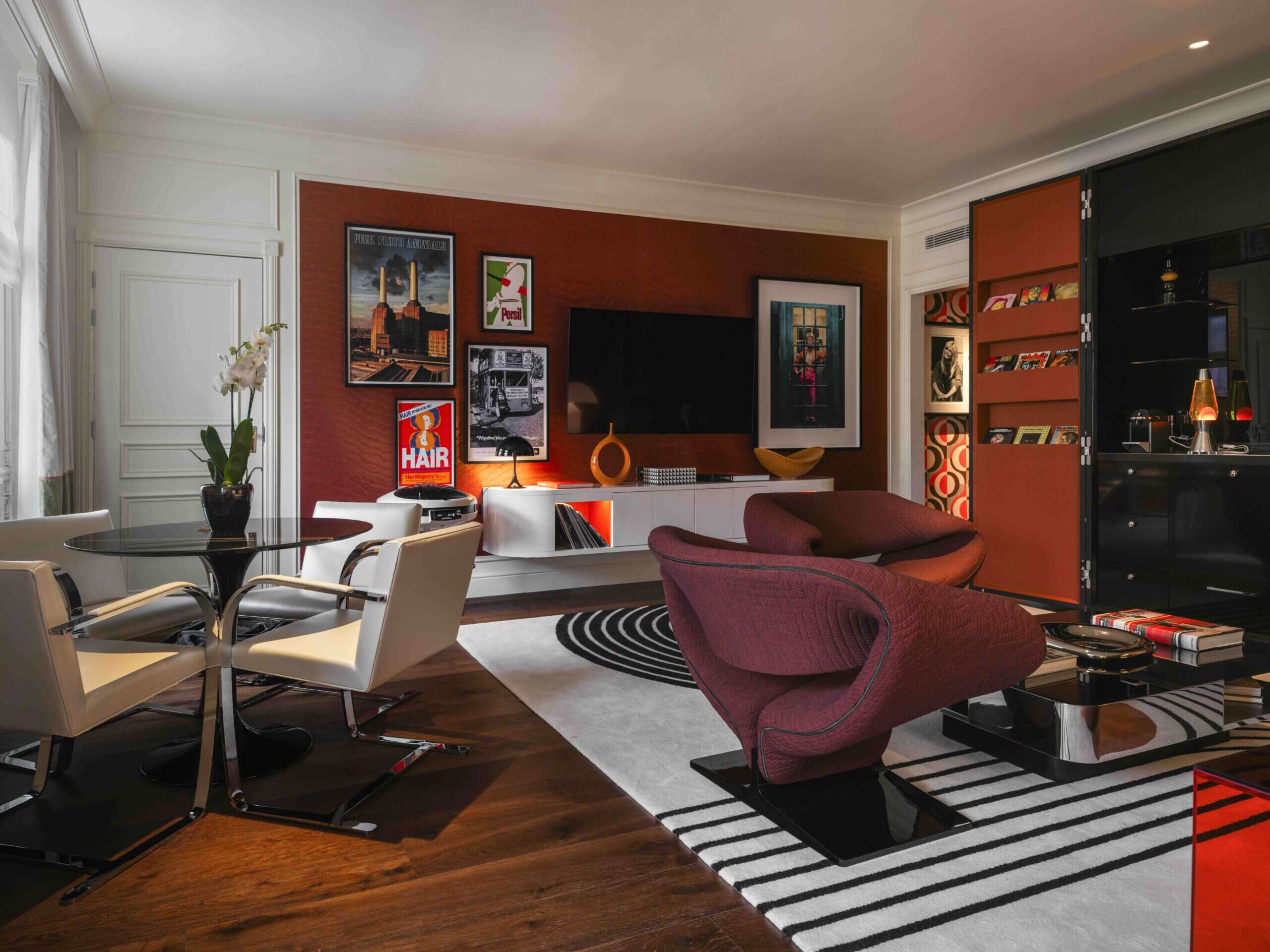
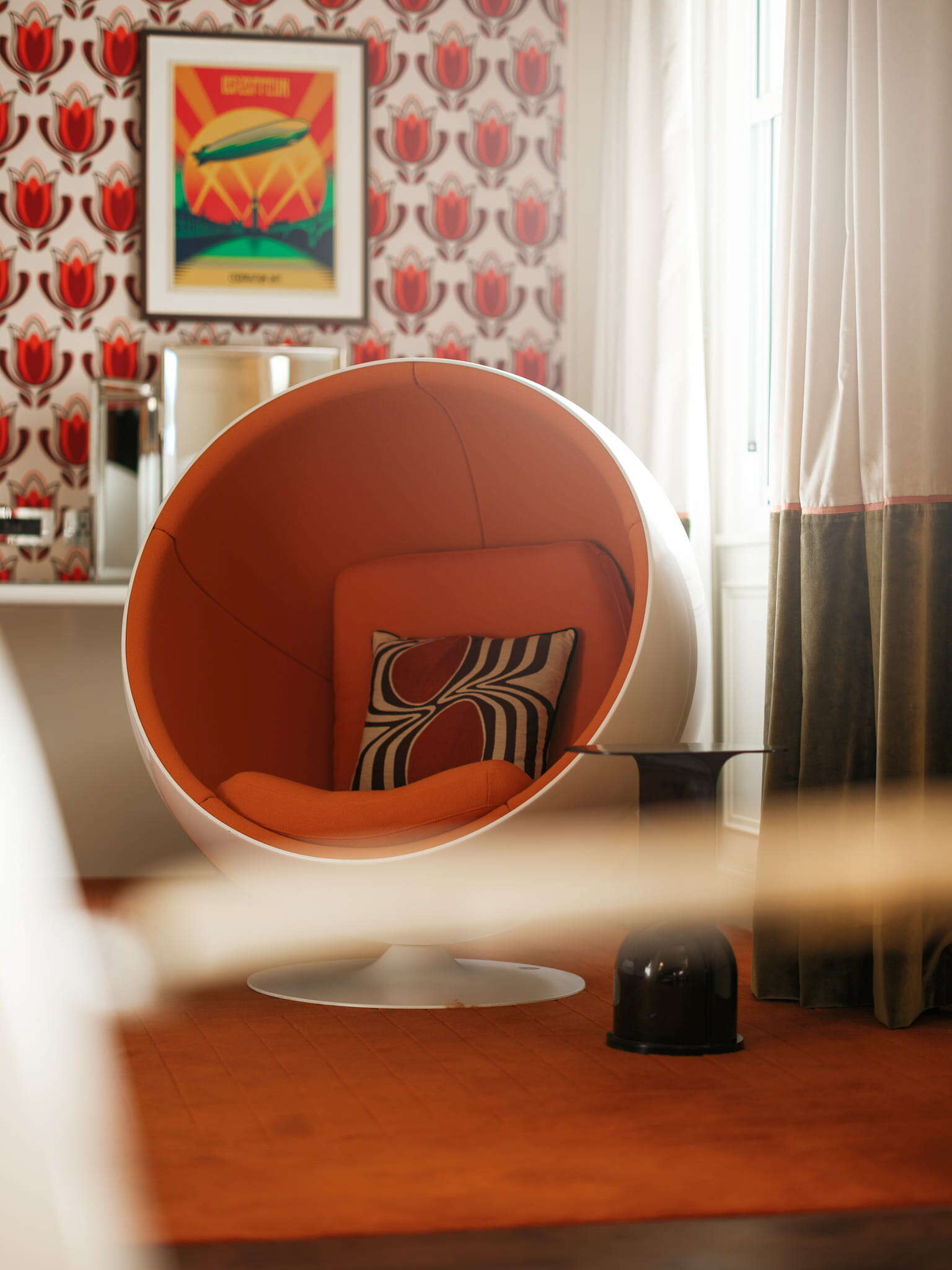
There’s a lot to love here. Two Pierre Paulin ribbon chairs are positioned to admire what Sofitel calls the experience bar, a huge trunk-like cabinet that opens out to reveal shelves of vinyl singles, a lava lamp, alongside snacks and your period-styled kettle and coffee maker. One wall is a full-length mirror, another is a gallery to photos of David Bowie, framed adverts of the age as well as a poster for the musical Hair. Elsewhere is all rock ‘n’ roll: there’s a cool ‘70s record player inside an acrylic dome and stacks of albums from Aerosmith, Tom Petty, Fleetwood Mac, AC/DC, and many others for you to spin. Coffee-table books include histories of London, guitars, and Iron Maiden. On the wall is an orange-accented Led Zeppelin poster.
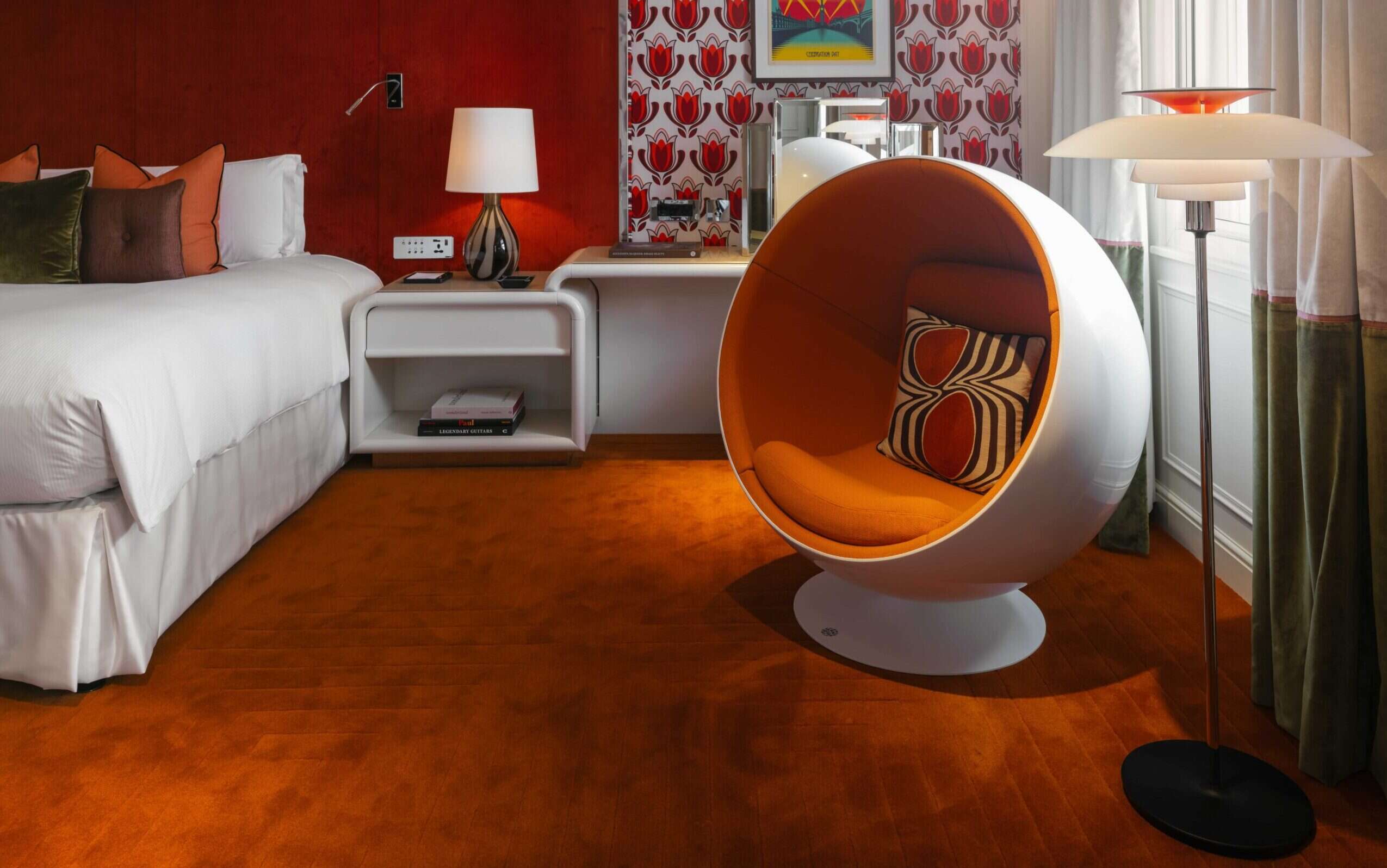
In the bedroom it’s the same – but more so. A deep orange carpet bounces you to a supremely comfortable bed or you can curl up in the orange cocoon provided by the Ball Chair by Finnish designer Eero Aarnio.
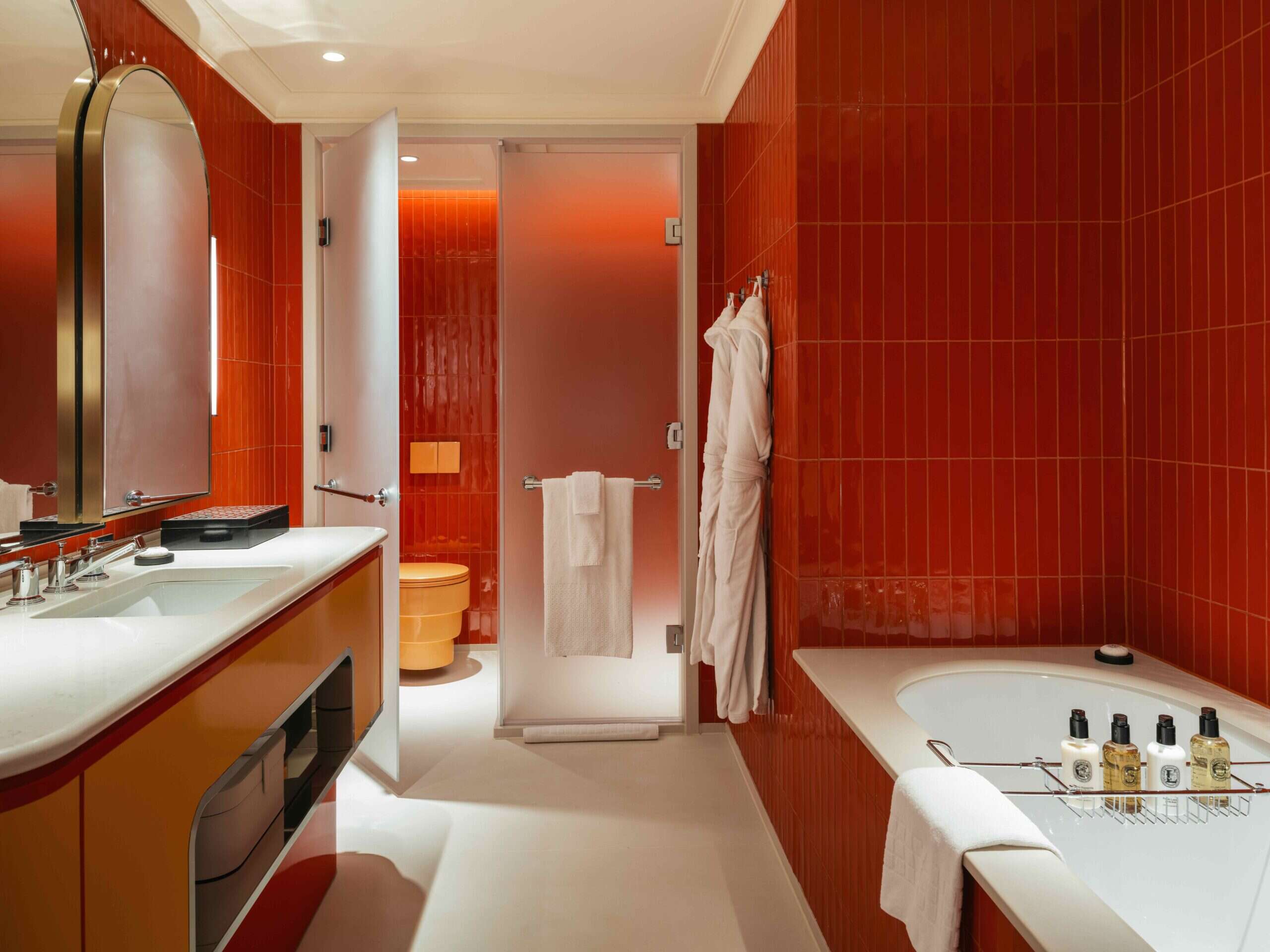
Even better is the bathroom, an assault of orange tiles and bespoke ‘70s-inspired vanity by Devon & Devon. It provokes an almost childlike sense of fun – a bold and brassy response to so many greige hotel rooms we’ve all stayed in.
But – and it’s a big but – there are things that just don’t work, either figuratively or literally. First, the aesthetic language. In all the press materials, there is much talk about Suite 70 being “conceived as a direct tribute to the creative and cultural energy of the decade. It fully embraces a strong decorative vocabulary shaped by the era…” But those iconic Pierre Paulin chairs went into production in 1966 and won the American Interior Design International Award in 1969. The Ball Chair was designed in 1963. Iron Maiden’s debut album was released in 1980. The Led Zep poster is from the band’s reunion concerts in London in 2007. Picky? Maybe, but if you’re going big on a suite designed and named after the ‘70s wouldn’t you want everything in it to be… from the ‘70s?
Other gripes are easier to remedy. I tried to get that record player – what I think is an Apollo turntable by Electrohome – to work for 10 minutes before conceding defeat and calling down to the front desk. Minutes later the concierge came in and took almost as long before eventually getting a tune out of it. It’s an old, counter-intuitive piece of kit, but all you need are a few instructions printed on a card somewhere (which I'm told, have since been provided). There are a few other niggles, but perhaps that’s to miss the point. If you’re in London for a celebration, to see a show, or you have a love of ‘70s (or, ahem, late-sixties) design, you’ve come to the right place. Suite 70 is unabashed fun.
Dine
There’s a Michelin-star restaurant, Wild Honey, downstairs off the lobby, but don’t go in there until you’ve done time next door, in the St James Bar. Pull up a stool, ask for Juan or Dennis and let them entertain you – they’re good at it. The cocktail list is exceptional and the pair of them can go as deep as you like into how and why they came up with the various creations, involving cooking peppers in vermouth at 60 degrees for two hours for the pickle martini, or how they dreamt up a custard cocktail (don’t knock it ‘til you’ve tried it).
Now you can eat. Wild Honey sits on velvet banquettes in a Grade II listed former banking hall and offers a British-centric-with-a-French twist menu. The room is large and well populated with light fixtures; if half were dimmed, I’m sure diners would be grateful as it’s as bright as the dentist in there. The warm bread served with hummus and seaweed jam was adventurous. Dorset crab with blood-orange salad was fresh and zingy, although the brown meat chawanmushi, a Japanese savory egg custard, was somewhat incongruous. Wye Valley asparagus with coconut and tarragon, served with flowers, was very pretty. Monkfish preserved with lemon and honey for mains was excellent, though a vegetarian pairing of spring cabbage lacquered with roast peanut butter was a little less successful. But desserts were universally excellent: the signature custard (with that custard cocktail) and the honey ice cream served with a dollop of honey sliced from the honeycomb tableside were both delicious. The staff throughout were excellent.
Explore
Much is on the doorstep, from the shops and restaurants of St James’s and Jermyn Street to Fortnum & Mason, the Royal Academy of Arts and Mayfair to the north, Buckingham Palace and Green Park to the west, Covent Garden to the east and The Thames, and the London Eye to the south, all within walking distance. If you can’t find something to do in this part of London, you’re not really trying.