
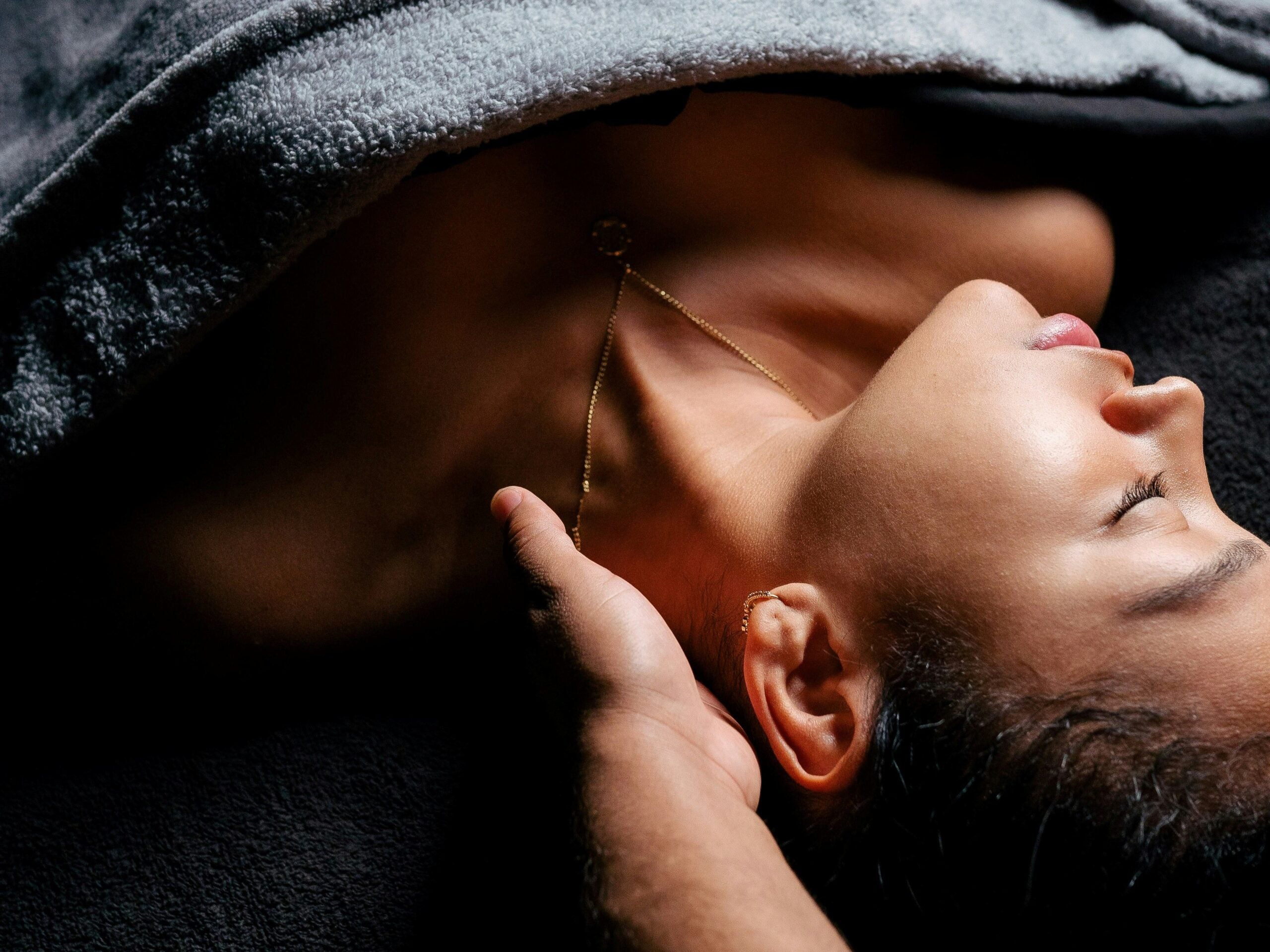
When new clients come for an appointment with aesthetician and facialist Sophie Carbonari, 36, she anticipates that they will arrive at her Paris studio slightly confused. Their scenic journey through the Jardin du Palais-Royal and past Daniel Buren’s artwork Les Colonnes de Buren will end at design gallery Theoreme Editions, and Carbonari greets them amid the artwork and objects.
“Sometimes they’ll question why you enter through a furniture shop, and I say: ‘It’s not IKEA you’re walking through,’” she explains. “I like the word ‘strange’ [to describe it], because there is no reception. You walk through the gallery, and then you come upstairs to my place.”
Carbonari’s discreet location is ideal for her A-list clientele, which includes Naomi Campbell, Tracee Ellis Ross, and Natalie Portman, and she organizes her calendar so that no two clients will cross paths when coming in or out of the studio. Being spontaneous comes with the job: Clients regularly fly her out for last-minute treatments before events such the Met Gala or Venice Film Festival. Over the last two decades, Carbonari has become renowned for her hands-on technique with the fascia – a layer of connective tissue around muscles – resulting in a glowing, sculpted visage, as well as some added therapeutic benefits.

“The fascia is a somatic tissue; it’s connected to our stress levels and emotions. How that is represented in the face makes me guess the state of my clients when I touch them,” she says, adapting her practice to help release the tension they may have.
“I’m not a healer, so I won’t say: ‘You have this and that and this is what you should do.’ But I work on what’s blocking their face and unlock it. It clarifies their mind, then they can work through it. It puts them into meditation mode.”
See also: Why Is Hollywood Reportedly Hooked on Peptide Injections?
Just as her facials aren’t typical of the genre, likewise Carbonari’s studio isn’t your standard wellness space. She acquired it three years ago from boutique founder Joyce Ma – hugely influential on Hong Kong’s fashion scene, she brought designer labels such as Dries Van Noten and Yohji Yamamoto to the city – who optimized the room for feng shui. For that reason, you’ll find one of Ma’s left-behind crystals in the corner of the studio, untouched to maintain good energy.

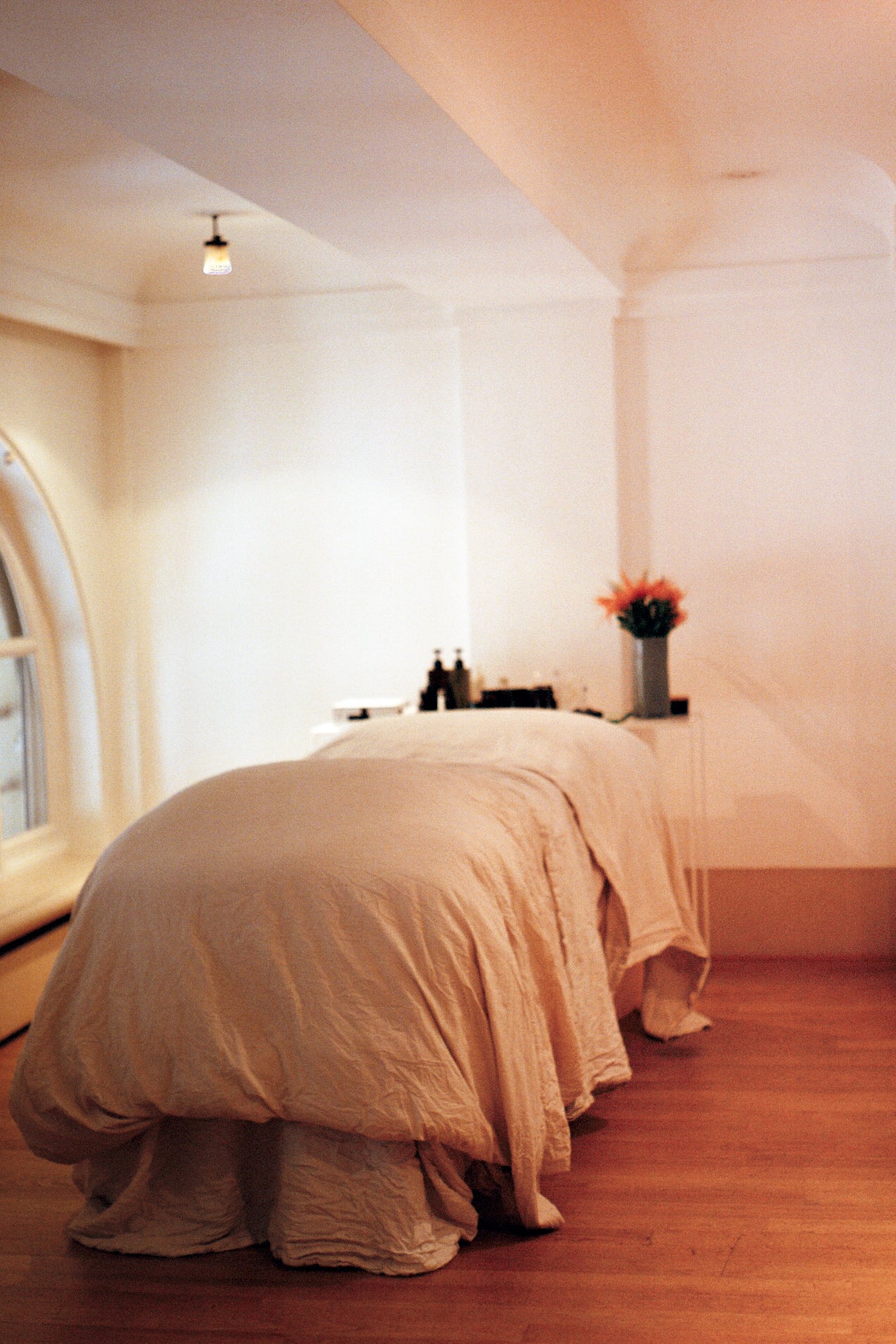
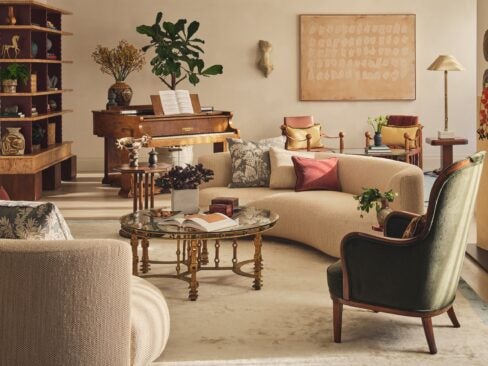
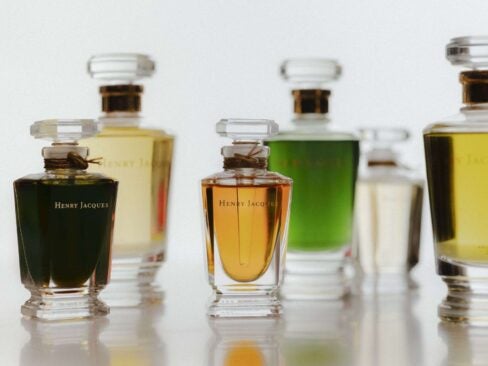
Interiors-wise, Carbonari has kept it minimal, with wood accents liberally applied. The waiting room features two cream bouclé chairs from her downstairs neighbor. Next door, you’ll find a beauty bed covered in earth hue linens with Diptyque Figuier candles nearby. A vanity room adjoins, with perfumes for clients to spritz before they leave. But what entices them to linger is the view. Arched windows allow for abundant light to pour in, revealing a panorama of the surrounding palatial grounds. In spring, you can see roses and magnolias blooming. In the fall, the ground is auburn with fallen leaves.
“What I love about it is that you can see people but they don’t see you,” she says. “You could spend hours sitting on the windowsill watching; it’s really poetic.”