



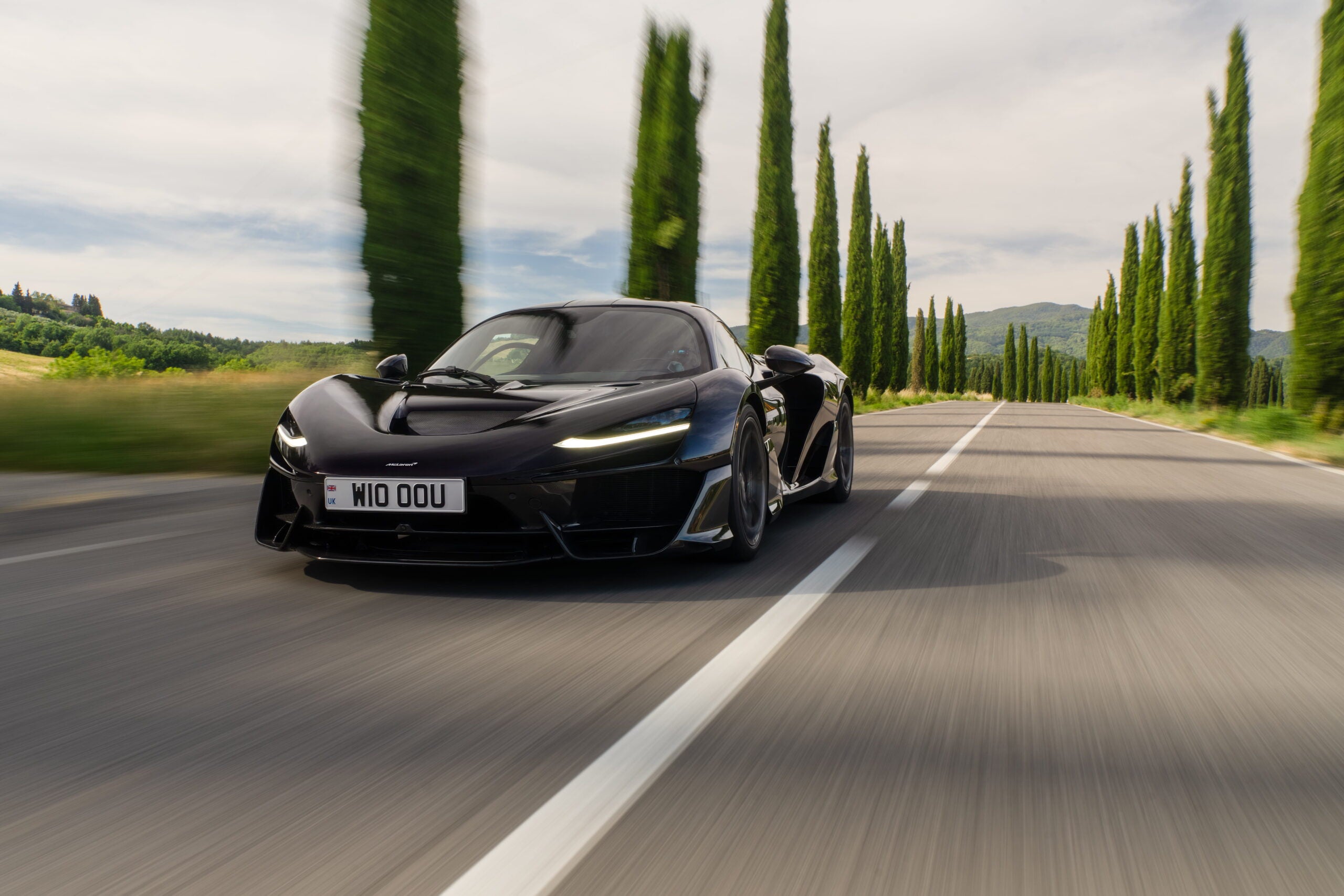
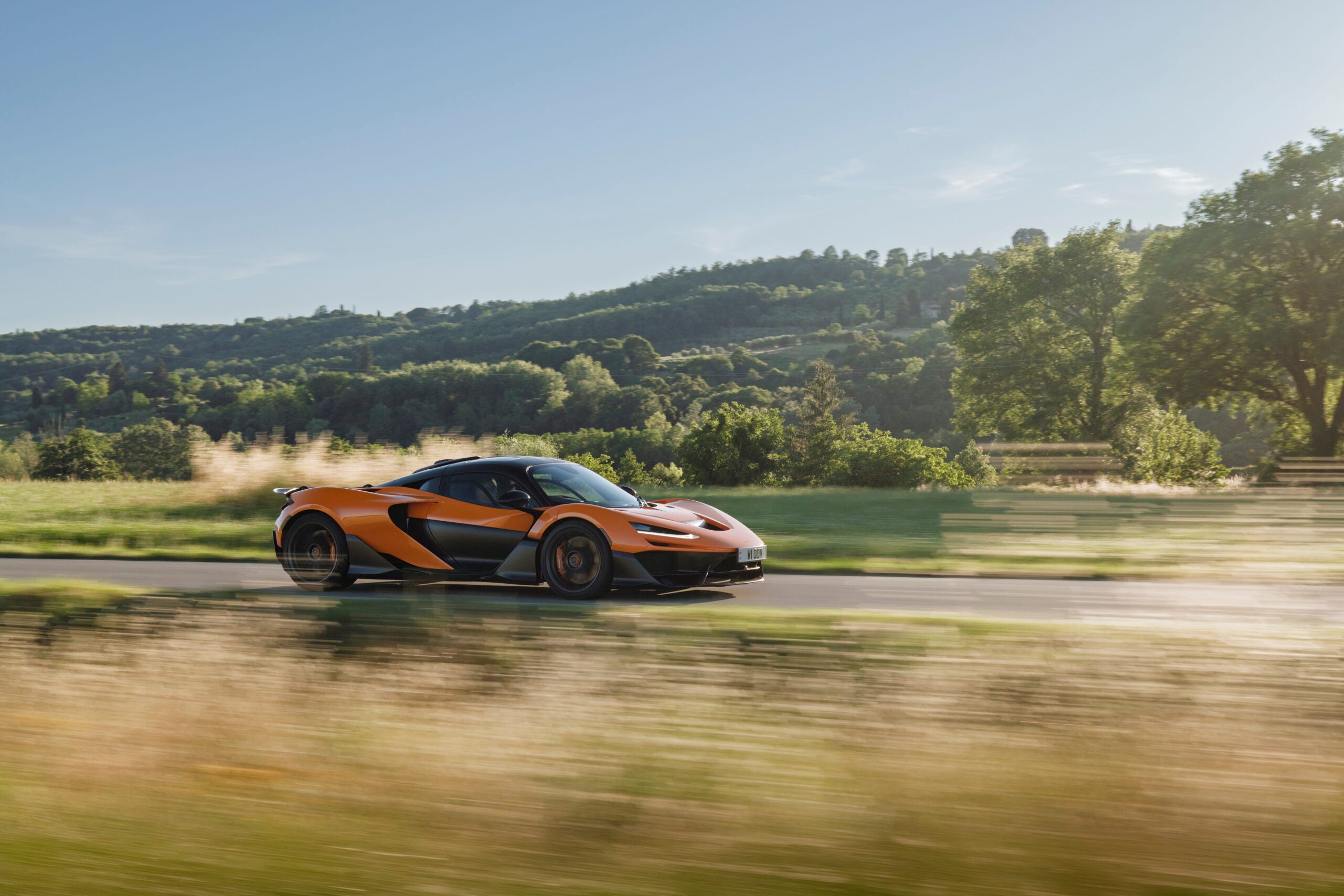
Pure pace and power are easy to find in today’s car market. In an age where an electric four-door family car can generate over 1000 bhp it’s increasingly difficult for supercars to make their mark. To do that, they need to be special. Really special. Which is a quality the McLaren W1 certainly isn’t lacking.
The £2m-plus (approx. $2.65m) supercar is the latest instalment in the British-based marque’s ‘one car’ trilogy. A 1,258bhp, rear-wheel drive V8 hybrid monster descended from supercar royalty; the grandchild of the 1992 F1 and the son of the 2013 P1. We could just leave it there. As resumés go, it’s not a bad one. But there’s a ribbon of racetrack waiting before me and it would be a shame to pass up the opportunity.
That race track happens to be the Ferrari-owned Mugello track in Tuscany, which is a curious choice of location to launch a McLaren. But the W1 is aiming squarely at the Ferrari F80, a fellow member of the 1000 bhp plus supercar club, so consider it a direct challenge to Maranello, on its home turf.
See also: Audi Unveils $700,000 Nuvolari Hybrid Supercar in Monaco, Its Fastest Ever Model
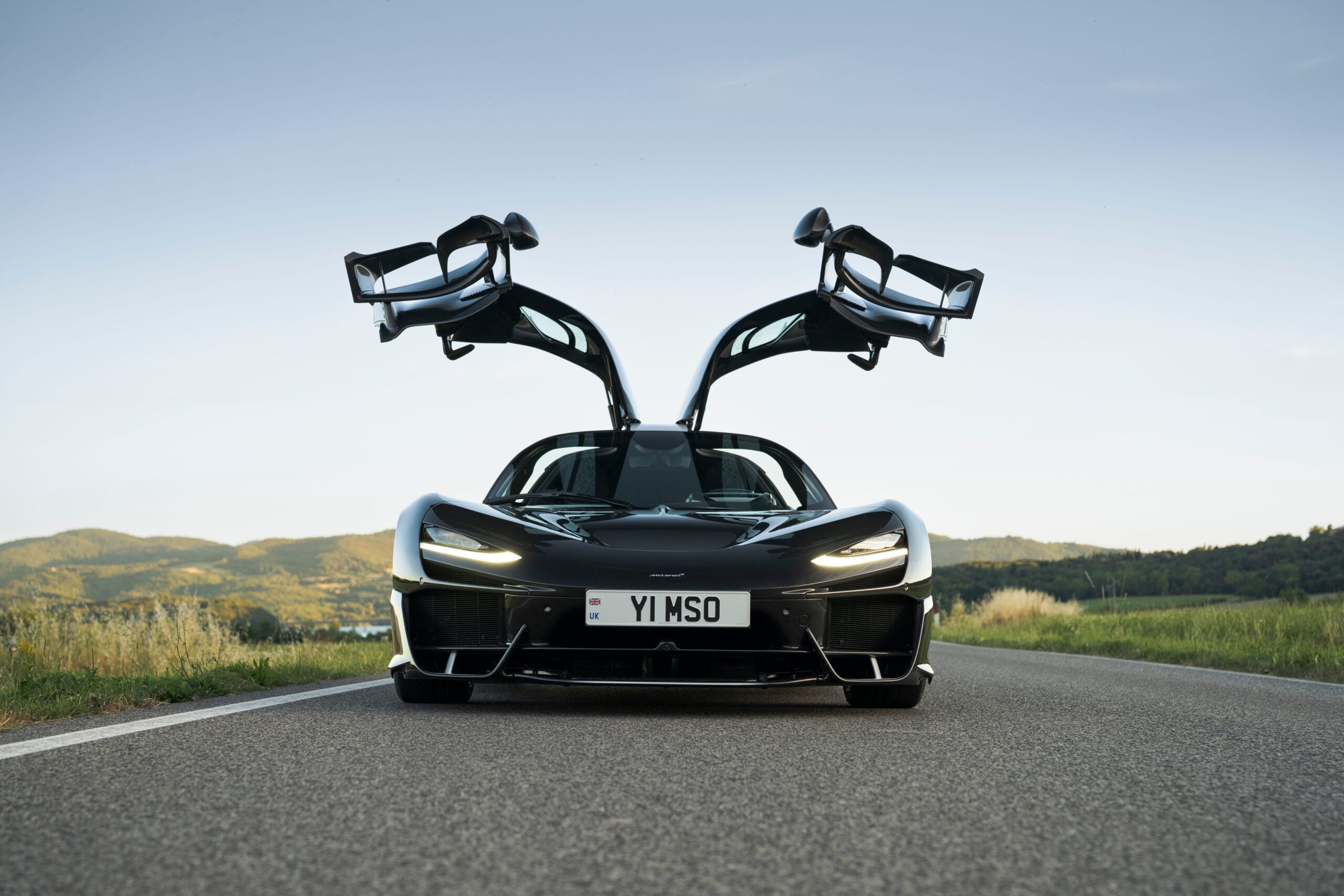
On first impressions, parked up in the pitlane next to an F1 and a P1, it’s clear to see references to its elders in the W1’s design language. A sizeable wing dominates the rear, which is capable of extending rearwards 300mm in Race Mode, something McLaren calls the Active Long Tail — a nod to the legendary 1997 McLaren GTR Longtail. The exterior aesthetic is technical, functional, and fierce. This is a car shaped to cut through the air and stick to the ground in the pure pursuit of speed. A car built by a name that’s secured no less than 13 drivers’ and 10 constructors’ Formula 1 championship titles.
Which makes the W1’s ability to crawl through towns and traffic all the more surprising. The expectation attached to a rear-wheel drive supercar with more than 1200 bhp is that it will be a handful to handle and struggle to fulfil everyday driving duties. But the W1 can cover off rough road surfaces, speed bumps, and stop-start traffic without much fuss. The ride is remarkable. It’s F1-inspired, 3D printed suspension does an admirable job off the racetrack, absorbing the lumps and bumps on everyday roads. While no supercar will win awards for practicality, there’s enough room in the W1’s cabin for a couple of bags or a small carry-on case on a shelf behind the seats.
McLaren has paid close attention to the cabin comfort, too. The marque is keen for all 399 W1 buyers to use the car, rather than keep it locked in a collection. “These are drivers' cars. I want people to love driving these cars and want to use them," McLaren Automotive’s CEO Nick Collins tells me.
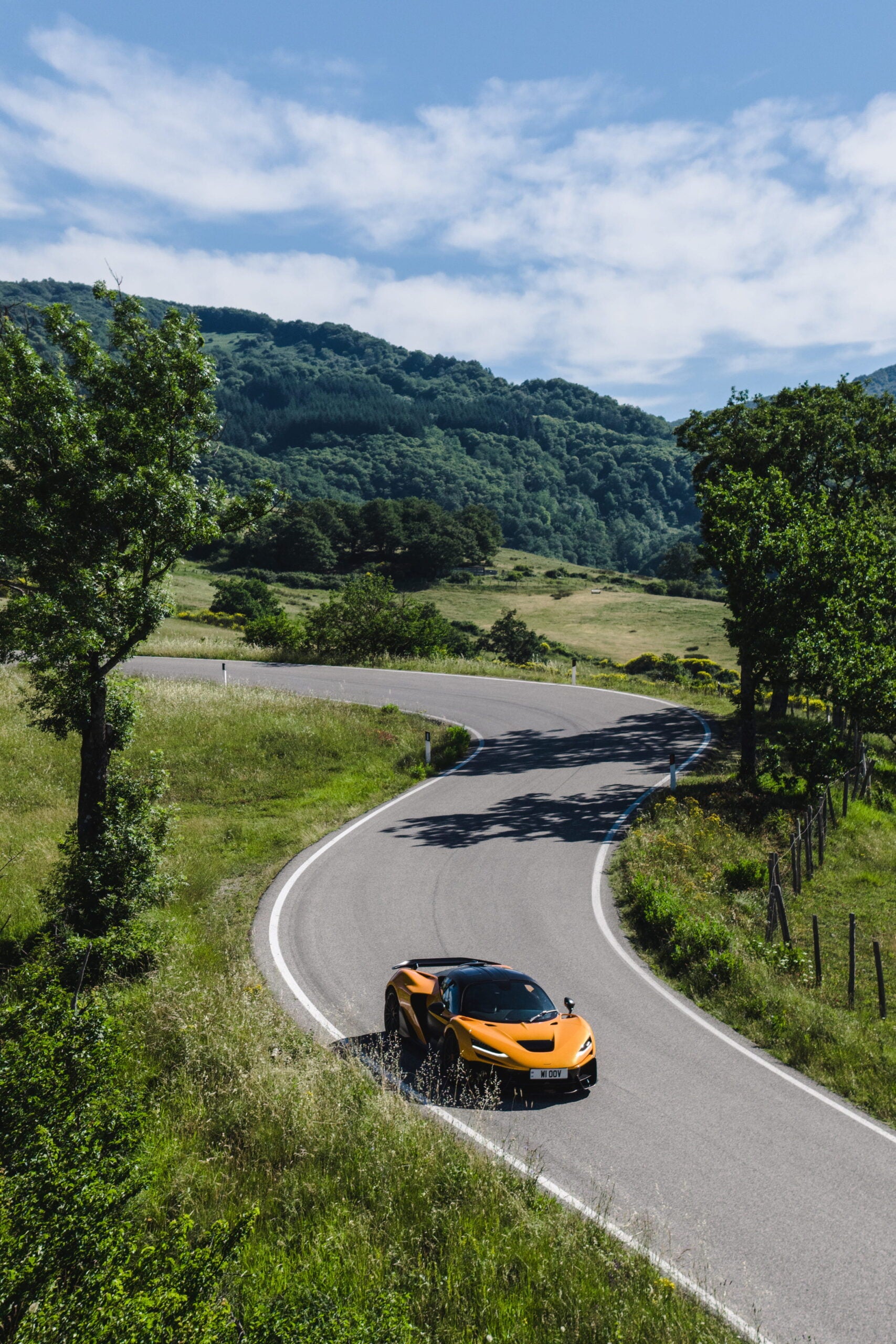
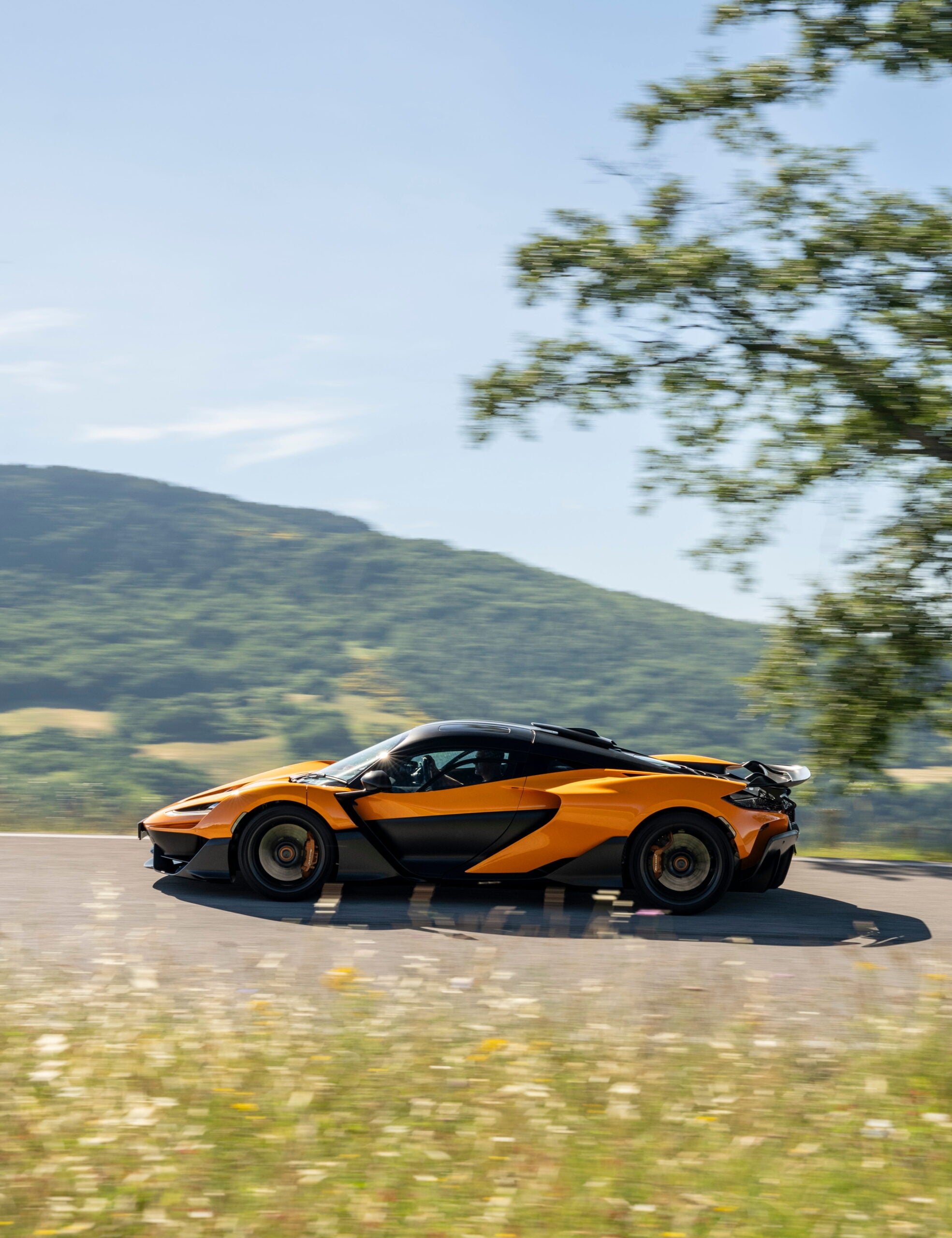
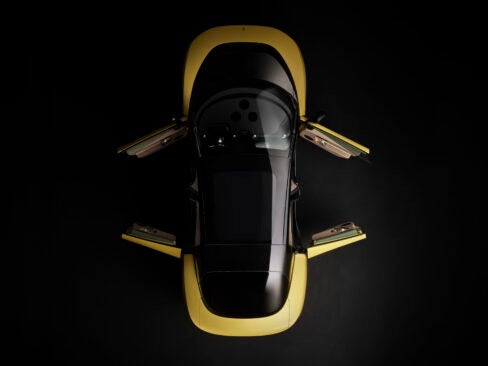
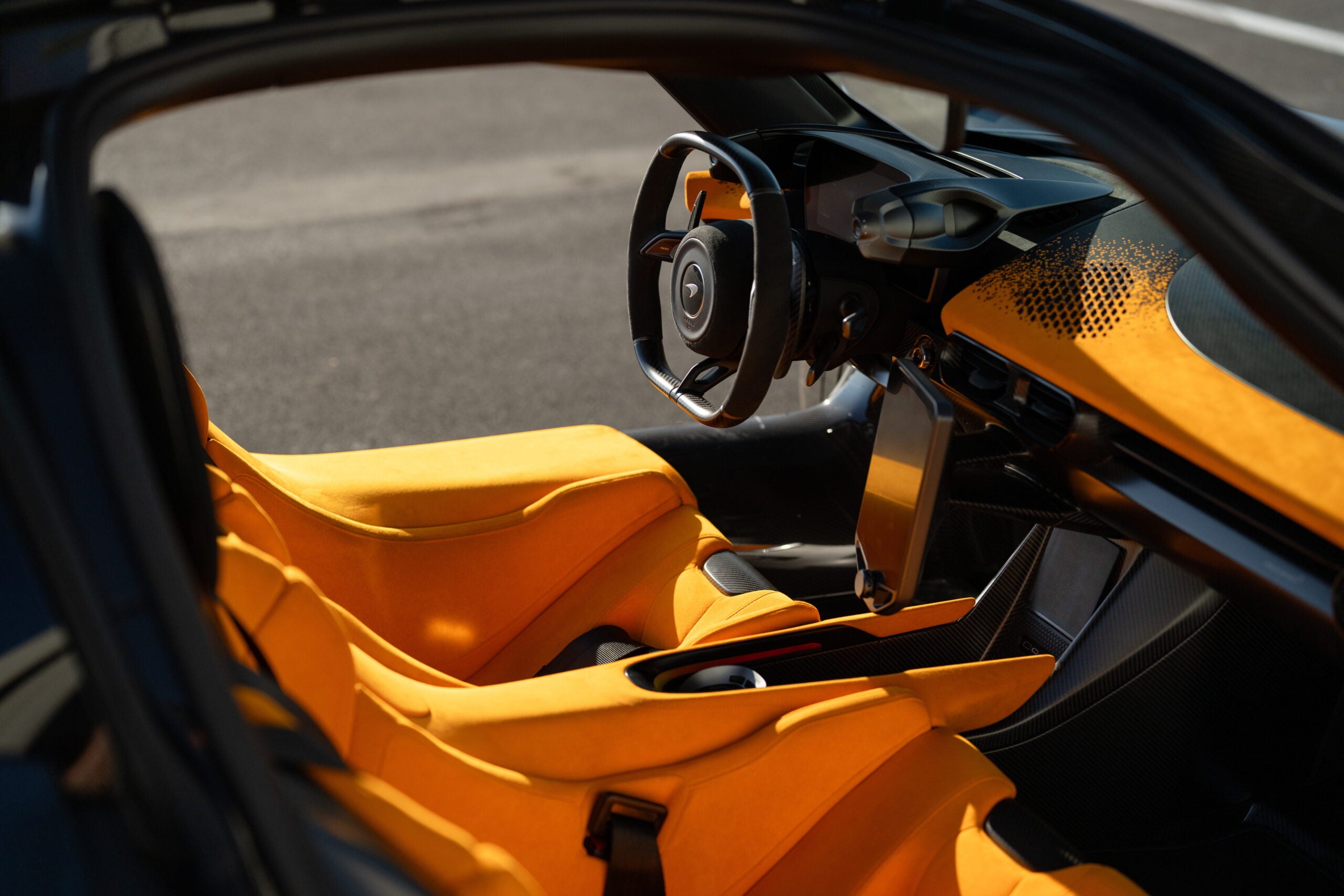
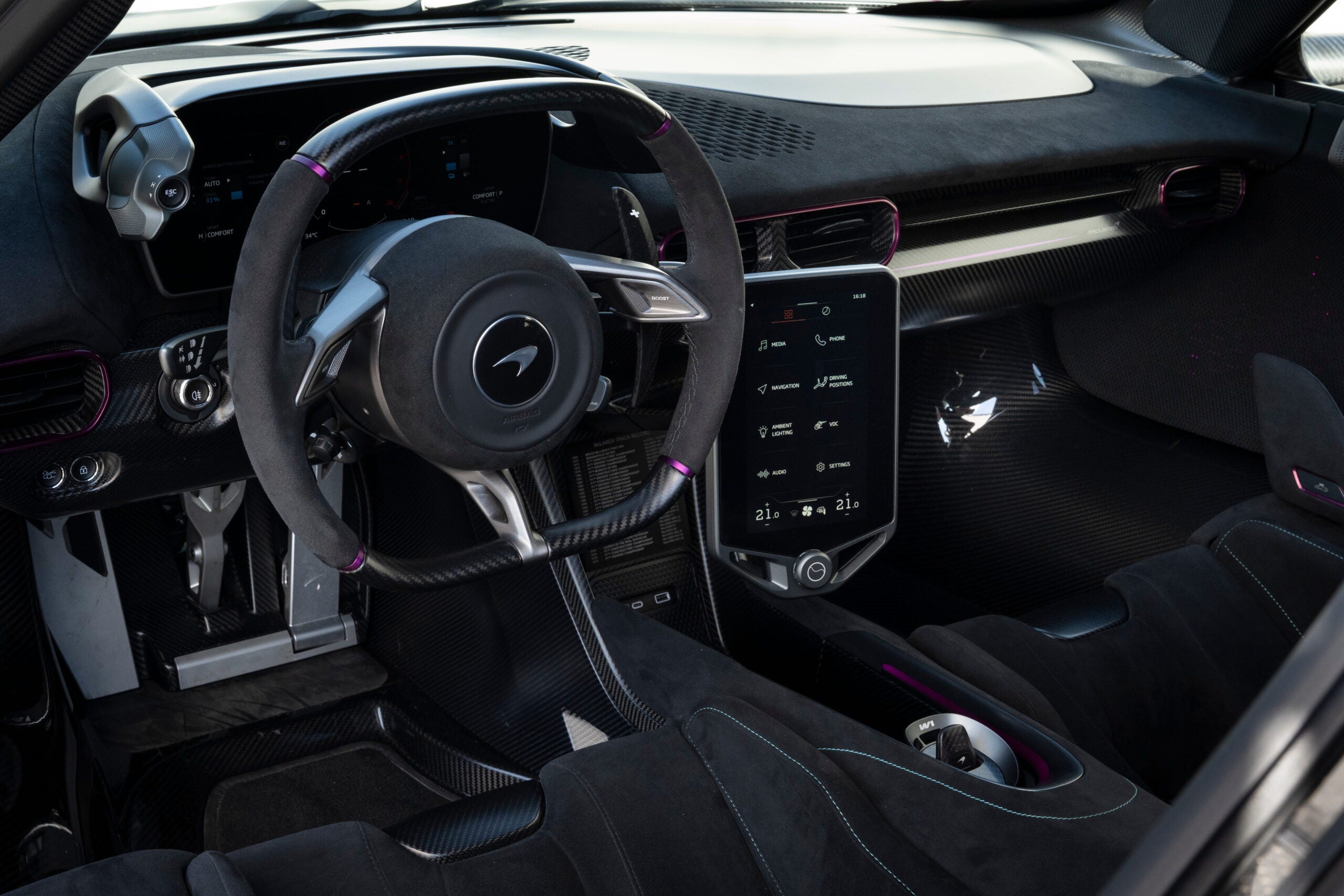
Inside, new InnoKnit woven fabric flows from the concave doors and over the seats that are sunk directly into the carbon fiber monocoque. You feel like you are part of the car, strapped into the core of it rather than perched on top of it. Windows in the top of the roof-hinged anhedral doors let light flow in, while the theater of opening the gullwing-style doors adds to the spectacle.
And that is all before pressing the large, red ignition switch, mounted on the roof like an aircraft. Positioned next to that is the Race Mode button, which sees the car transform lower and longer, ready for maximum attack. The Race Mode setting is geo locked to prevent owners from using it anywhere other than the racetrack. With the W1 burbling away, there’s no escaping the snarling 4.0-liter twin-turbo V8 producing 916bhp mounted inches behind your spine.
Coupled with the combustion engine is a potent 342bhp electric motor drawing from a 1.384kWh battery. The combination on track is nothing short of explosive. From standstill, 62mph is reached in 2.7 seconds, after which the McLaren will climb to an electronically limited top speed of 217mph. The W1 is frightfully fast; vibrations in the spine, crescendo in the cockpit, and scenery firing past kind of fast. Touching 180mph down the main straight, it’s impossible to think the W1 has more to give but press and hold the red button on the steering wheel labelled ‘Boost’ and the electric motor dumps more power to the rear wheels, pushing the W1 towards 200mph.
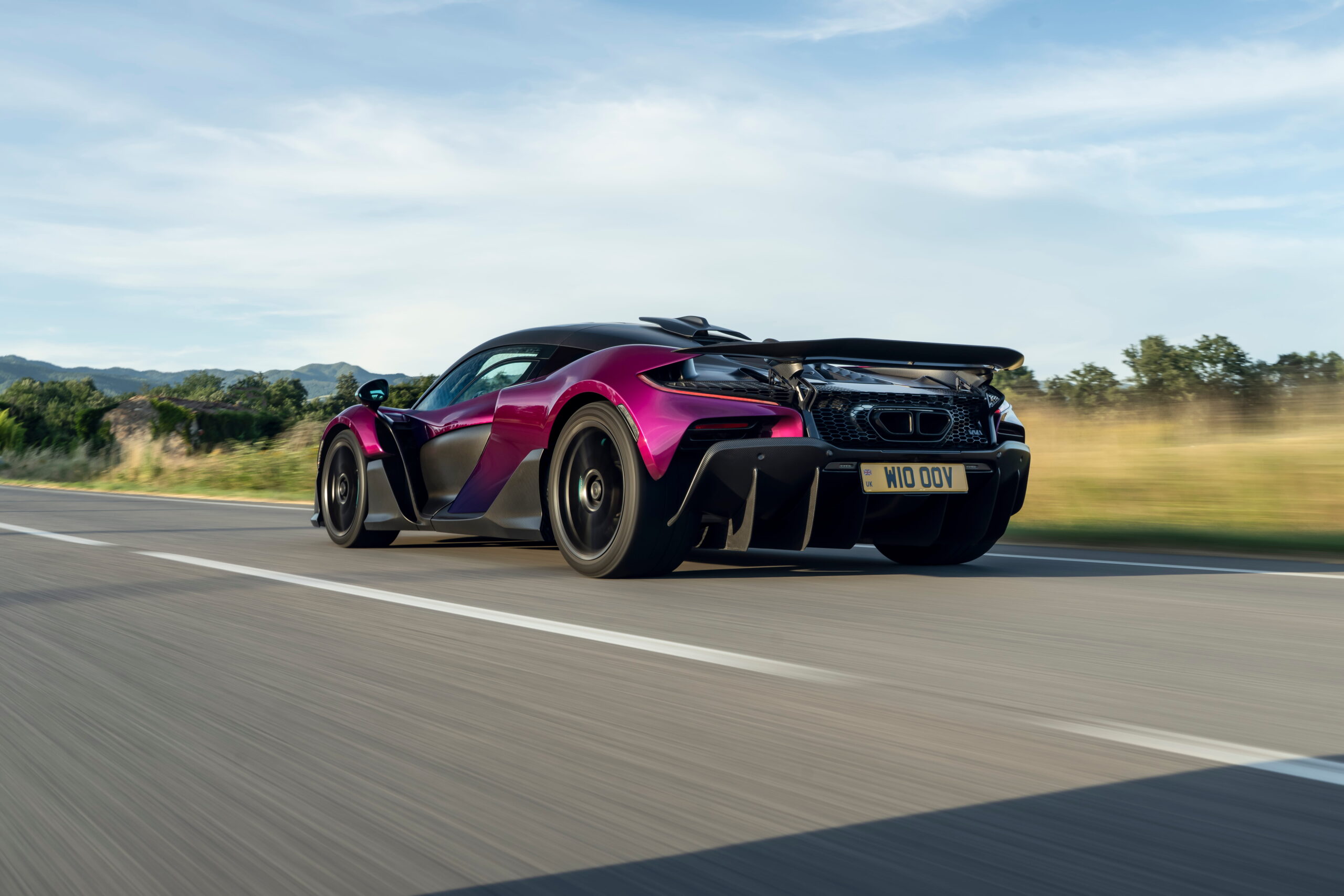
Yet the car remains composed. It is so ruthlessly effective at ripping around a track, not just because of its pure power but because of how it deploys it. Downforce, balance and light weight are the W1’s secret weapons. With a dry weight of 3,084 lb, a power-to-weight ratio of nearly 900 hp per metric ton and a structure capable of generating up to 2,205 lb of downforce — 772 lb at the front, 1,433 lb at the rear. It sticks to the track, while the hydraulic steering transmits everything you need to know through your hands, the low-slung seats, sunk into the core of the car allowing you to feel its movement through every fiber.
Parked up back in the paddock with the smell of melted rubber and red-hot metal, and it’s clear the W1 is many things. It is brutally fast, a feat of aerodynamic engineering with more in common with a Formula 1 car than anything on the road and the rightful heir to the hallowed ‘1’ badge. But what makes it spectacular is its breadth of ability. Today, a supercar needs to justify its existence in a world where performance has been democratized. They need to excite, entertain, be drivable day-to-day and, most importantly, push the boundaries of what’s possible. The W1 does all of that. As a definition of what a supercar should be, it might just be the most complete answer yet.