
For centuries, the rules of gastronomy have felt firmly established: wine belonged to fine dining, cocktails belonged to dimly lit bars. Sommeliers spoke reverently about minerality and structure while bartenders slid over bowls of olives and hoped nobody was hungry. One pairing was considered an art form. The other came speared with a cocktail stick.
But that distinction is beginning to dissolve. Increasingly, chefs and mixologists are recognizing that cocktails – with their acidity, smoke, spice, bitterness, and botanical complexity – can be more expressive partners for food than wine is.
And in many cities, the best eating experiences now happen perched on a velvet stool with a drink in hand. That certainly felt true for me in Cagliari, Sardinia, where, inside the rooftop bar at Palazzo Tirso Sardegna, the line between fine dining and cocktail culture suddenly felt very thin indeed.
See also: Why London Restaurants are Embracing a New York State of Dining
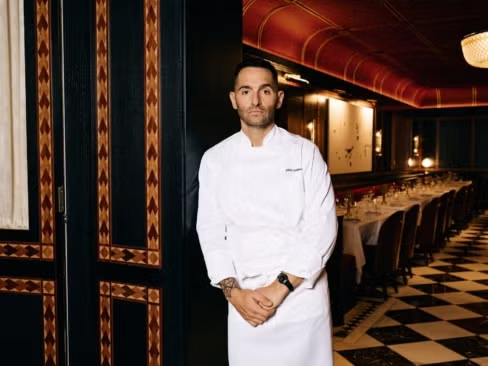
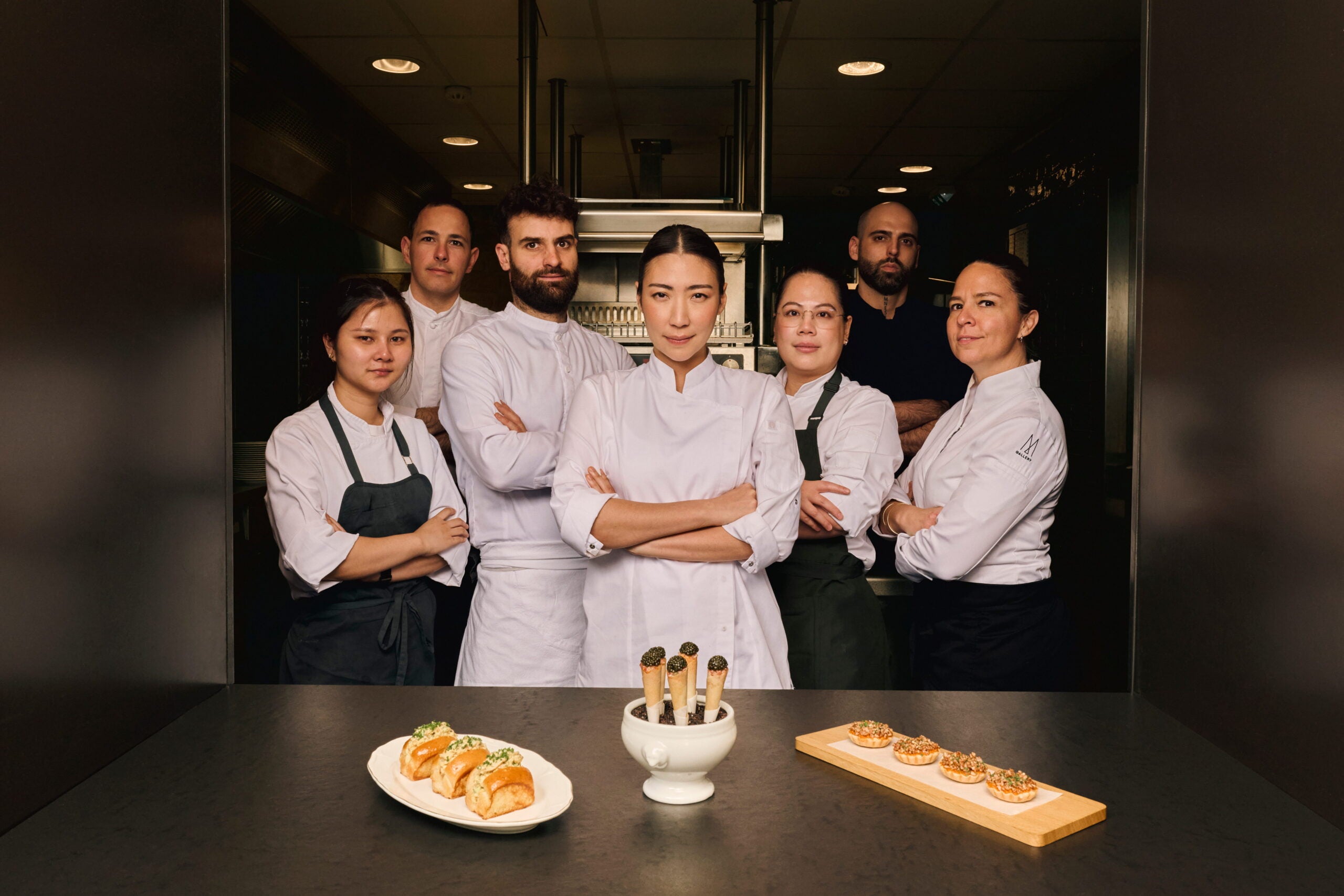
I was there to interview Pichaya ‘Pam’ Soontornyanakij (more famously known as Chef Pam)– the Bangkok-based founder of Michelin-starred Restaurant Potong and one of the most influential voices in contemporary Asian fine dining – about her new line of elevated bar snacks created for MGallery Collection. “I think back maybe five years ago, [bar snacks were] very underestimated,” she tells me. “People don’t just put nuts and chips out anymore. They put something more meaningful and that represents who they are as an establishment.”
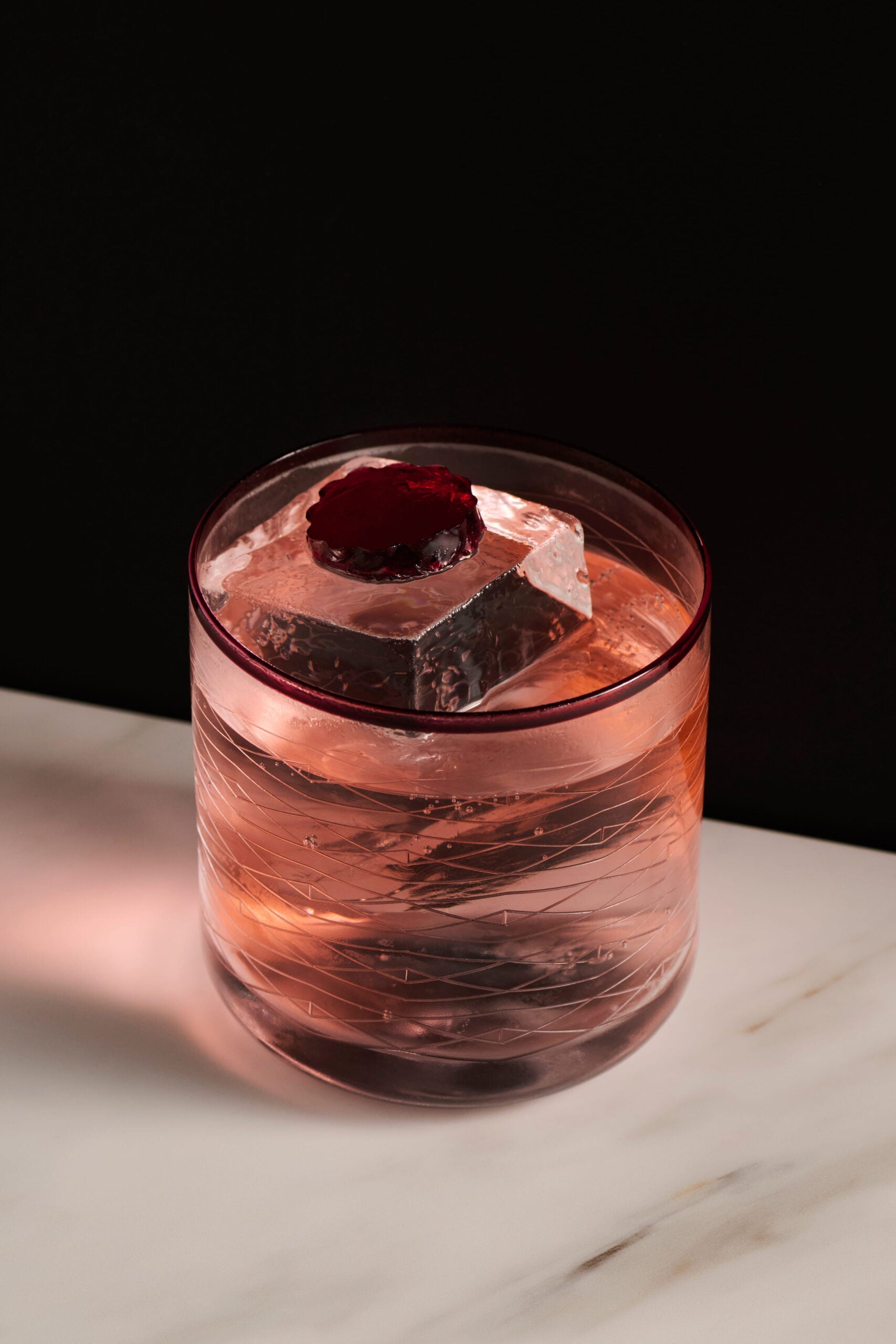
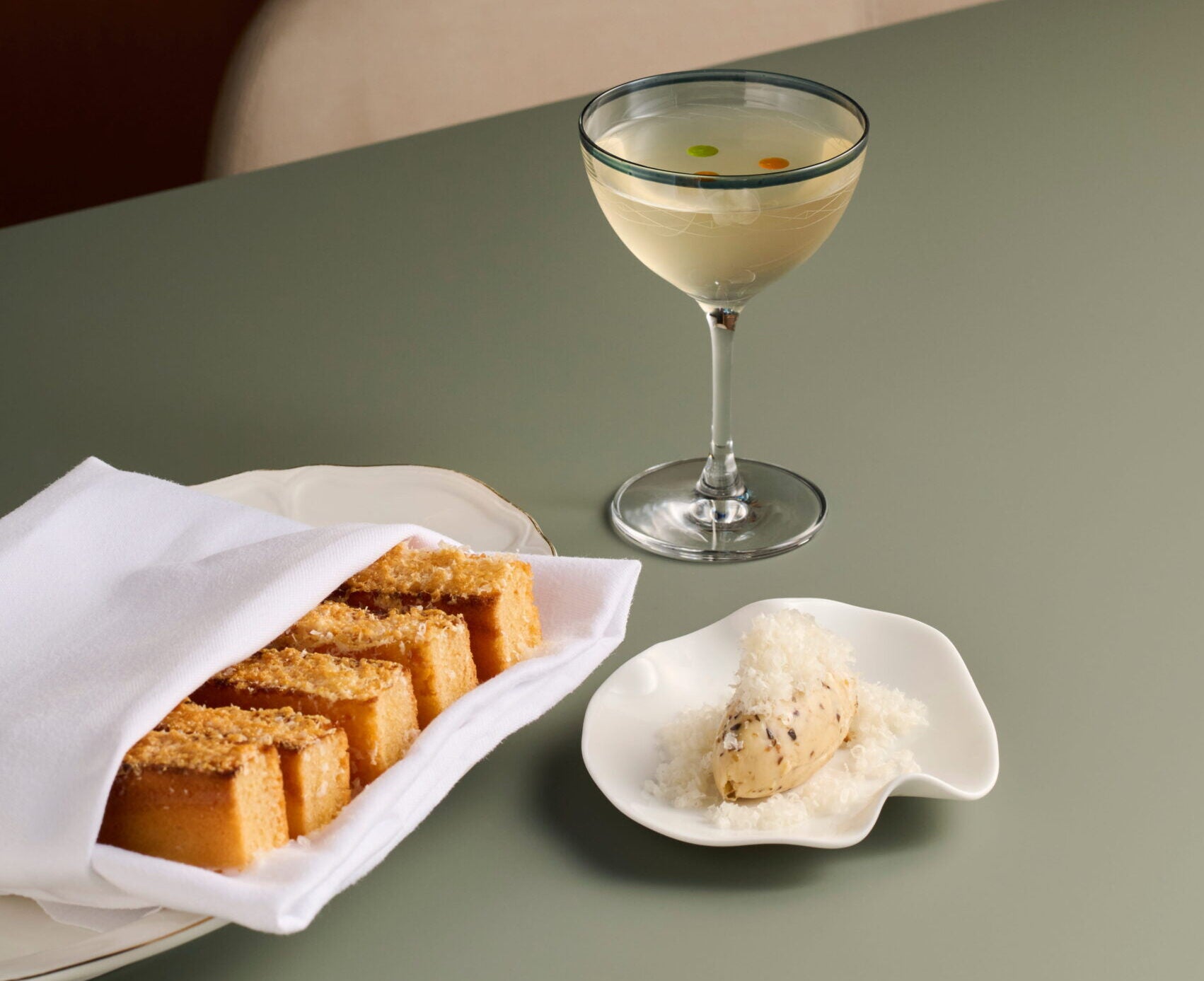
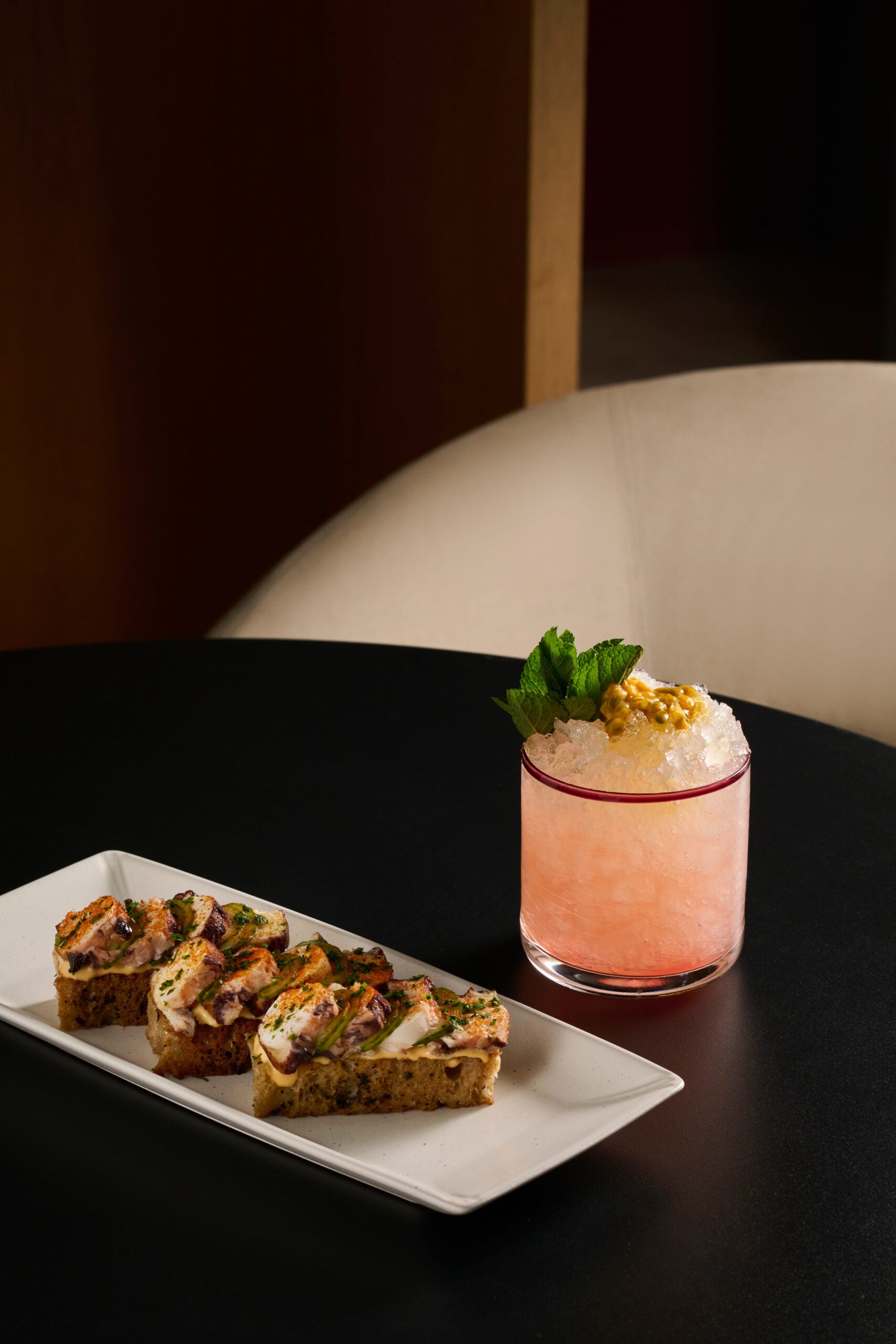
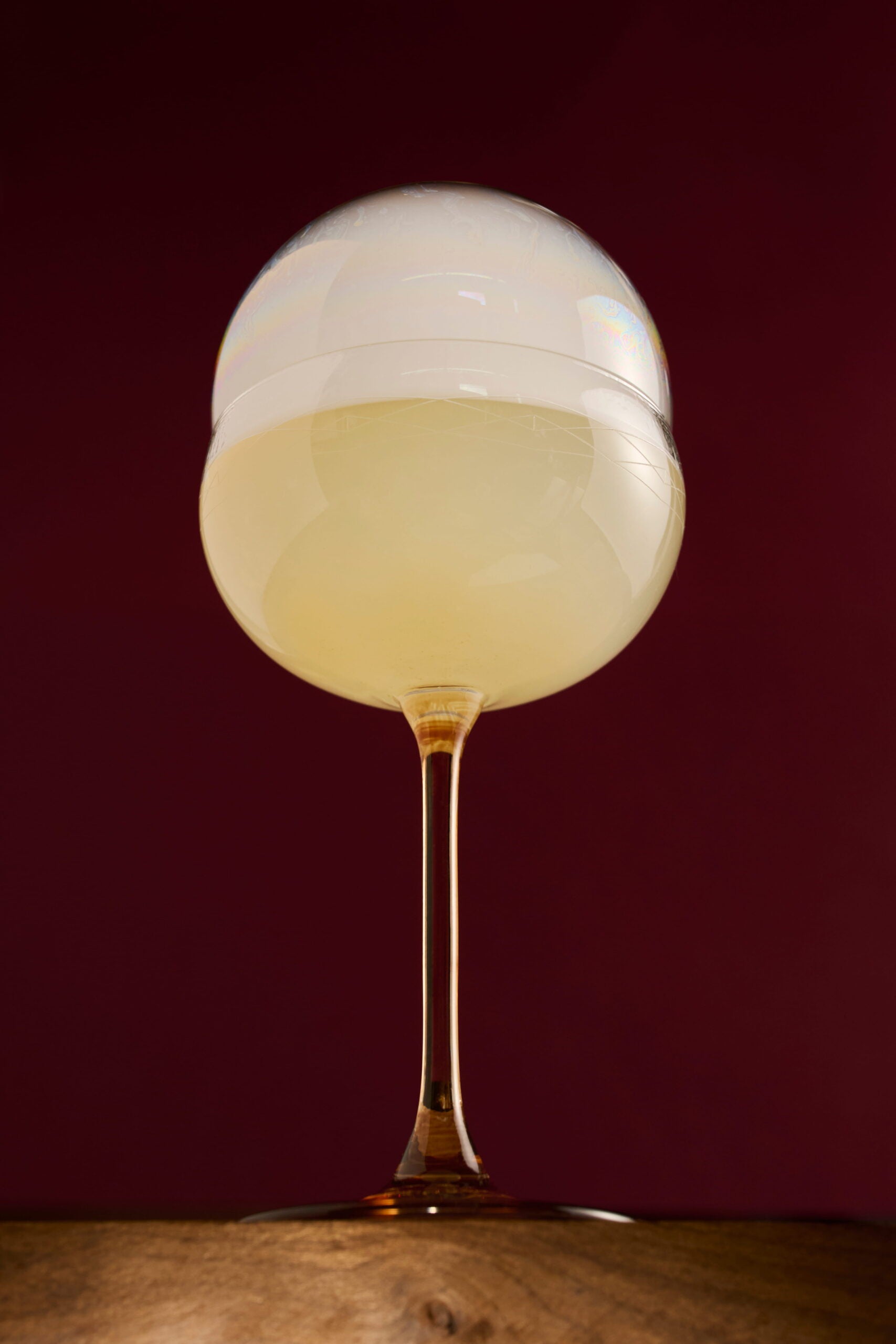
Spanning 16 MGallery properties from Paris to Seoul, Melbourne to the Middle East, the collaboration aims to celebrate World Cocktail Month, with each bar snack being paired alongside a complementary cocktail. Each of the 16 properties will serve the same five signature bar bites, thought up by Chef Pam, alongside two regionally inspired creations tailored to local tastes and ingredients. “I traveled the world,” she says. “Paris twice, Korea, Australia, Hong Kong… to meet the MGallery chefs and share my flavors.”
In Korea and Japan, guests will find crispy rice topped with tuna on the menu; in Hong Kong, a luxurious mantou-style burger filled with glazed lamb. Elsewhere, there is fried squid paired with squid ink, caviar-crowned tartare, delicate crab creations, and beef tartare, which Chef Pam dubs as “beautiful, with a kick.”
See also: Michelin Star Recipes You Can Make at Home
For her, the challenge of moving from a fine dining menu to snacks was rooted in creating food suited to the unique psychology of the bar environment. “It has to be something simple, but also surprising,” she says. “Sometimes it can surprise you in the way it looks when it’s served, or the taste being bold.”
The collaboration, with its regional links, also reflects a broader shift happening across global fine dining, one moving away from inherited European conventions and towards expressions of heritage and place.

“Right now, fine dining around the world is going towards localizing the cuisine,” Chef Pam explains. “Before, fine dining was usually French cuisine or maybe Italian or Japanese. It’s very generic.”
Now, she says, chefs are becoming increasingly interested in hyper-local traditions and regional specificity: “new chefs are pushing towards their heritage cuisine. It can be as small as a village cuisine or a region.”