


It’s not clear exactly when Mayfair became Mayfair – the final square on London’s Monopoly board; that slightly lazy shorthand for golden supercars and caviar ‘bumps’ in clubstaurants. Perhaps it’s a bit like that old line about going broke – slowly, and then all at once. Not that there’s anything broke about this place. Deemed on almost every metric to be the wealthiest and most expensive area of London, Mayfair is known for its gilded hotels (the newly opened Chancery Rosewood was the most costly hotel opening in London history) and its high-end members clubs – like 5 Hertford Street (very much an entire country house plonked into the center of town) or the unimprovably named Bacchanalia, which frolics and froths at the top of Berkeley Square.
But now, amid far splashier openings, a new set of establishments wishes to restore a certain village feel to the neighborhood – a place not simply for international arrivals and expense account steaks, but one where you might have a set table at a favorite diner three times a week, say; or a stool at a counter-style bar waiting for you each evening, with a waiter who knows precisely how many olives you take in your martini.
Despite all the present grandeur, this subtle movement is curiously in tune with Mayfair’s past. The area is named, slightly unsurprisingly, for the May Fair – an annual gathering of merchants, showmen, and general carousers that took place each May on a swampy piece of land later known as Shepherd’s Market. (Certain merchants remain.) The fair was a lively, bustling village of a thing – broiling with rope-dancers, bare-knuckle boxers, and bookmakers – whose sense of jolly community has echoed subtly down the centuries.
Until perhaps the tail end of the 20th century, in fact, Mayfair had the distinct feel of a village within the city. Unlike the bohemian Soho to its east and the snoozy, Embassy-dotted Belgravia to its west, one could go about one’s entire day in Mayfair without ever particularly having to leave the neighborhood. Your tailor on Savile Row. Your shirtmaker on Jermyn Street. Your lunch at Bentley's or Wiltons or Bellamy's. Your tea at Claridge's. Your drinks at your club. Your gambling at your casino. Your dancing at Annabel’s. Your convalescence at the flat in Albany. And your brisk walk, to shake it all off, in Green Park the next morning. And repeat.

This is the Mayfair to which Martin Kuczmarski quietly hopes we can return. For two years now, the founder of The Dover – the slinky, Manhattan-inspired restaurant on Dover Street – has observed the river of people walking past his smoke-glass windows each day. “There are hundreds of people I have now met who work in the shops, hotels, florists, tailors, and clubs nearby,” he says.
“I know these people. They are elegant, very nice, very kind people with good taste. They are not hedge funders, though. So when they finish work, where can they go for dinner or a drink? Where can they go to have a good glass of red wine and a burger?” The answer, as of now, is Dover Street Counter: a new, counter-style offering, three doors down from The Dover, which pivots the Studio-54-era energy of its big brother into something from mid-century Los Angeles.
Kuczmarski, the former group COO of Soho House, used to spend a lot of time in LA, and always loved the Fountain Coffee Room beneath the Beverley Hills Hotel – a long, arcing counter that served bloody marys and club sandwiches to hungover movie stars or chauffeurs coming off a nightshift. At his new site, across “probably the longest counter in London – 16 meters” bartenders will serve approachable “feel-good” classics from a similar era: a cheeseburger at 14 lbs, a tuna melt, a French dip sandwich, “and a spaghetti all’assassina, which is a very humble pasta dish from Apulia.”
“I came from a very basic upbringing, and so I wanted to do something that was really approachable,” Martin says, “But that made you feel good, too – and was stylish and elegant and fun.” Having eaten there in its opening week, I can confirm that the atmosphere certainly veers towards the friendly and the gregarious – with the sort of easy service style that is so hard to get right.


An Italian hospitality certainly persists on North Audley Street, where the old Marlborough Head pub – once mostly a post-work-pints boozer for hedge-funders and lost tourists – has been re-christened simply The Marlborough. Its food offering is far more revelatory, however – an import of Crisp Pizza, the unexpected breakout star that began life at the Chancellor’s Arms on an unlovely stretch of Fulham riverside. Crisp is known as a pioneer of what is now called ‘London-style’ pizza, in opposition to the local variants of Naples, Rome, Detroit, New York, and possibly Chicago, if we must.
It is (whisper it) the goldilocks of pizza – not too bready and pillowy like Detroit; not too cheese-soupy like Chicago; not too flat and crisp like Rome; not too slip-sloppy like Naples. And the toppings here, as at the Fulham spot, are moorish and satisfying – like the very good nduja and San Marzano pie, with yogurty-fresh mozzarella. The whole thing is bolstered by the presence of Oisín Rogers, long Mayfair’s village landlord from his days at The Guinea Grill – meaning the area now has both a neighbourhood pub and a neighbourhood pizza style to its name, perhaps. Other early 2026 openings are equally encouraging: like a distinctly clubby and friendly bar, on Cork Street, from impresario (and Chuc’s inventor) Charles Finch; and a new everyday bakery, helmed by ex-Tartine baker Richard Hart, beneath Claridge’s.
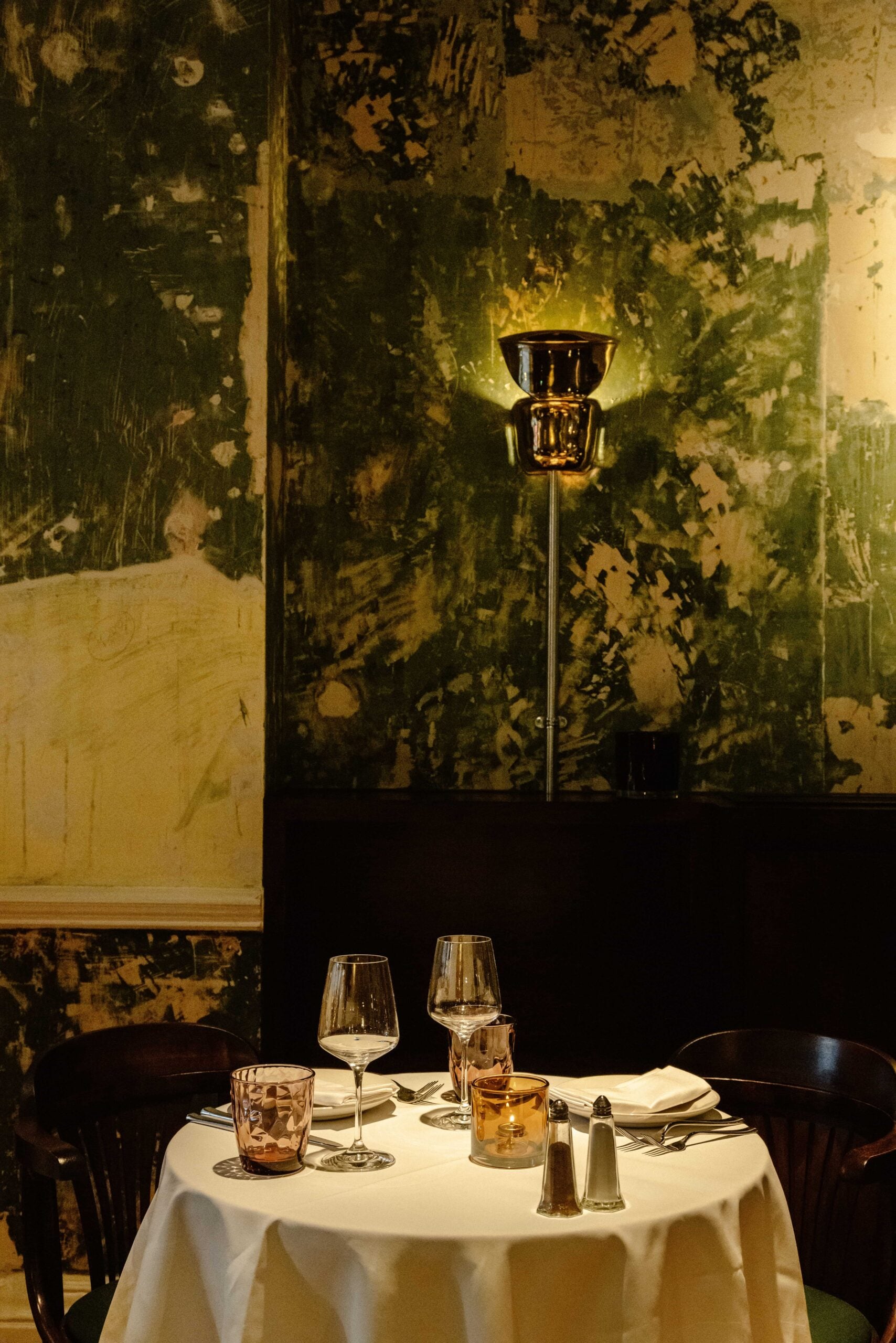
The new Automat in Mayfair quietly reopened at the end of 2025.
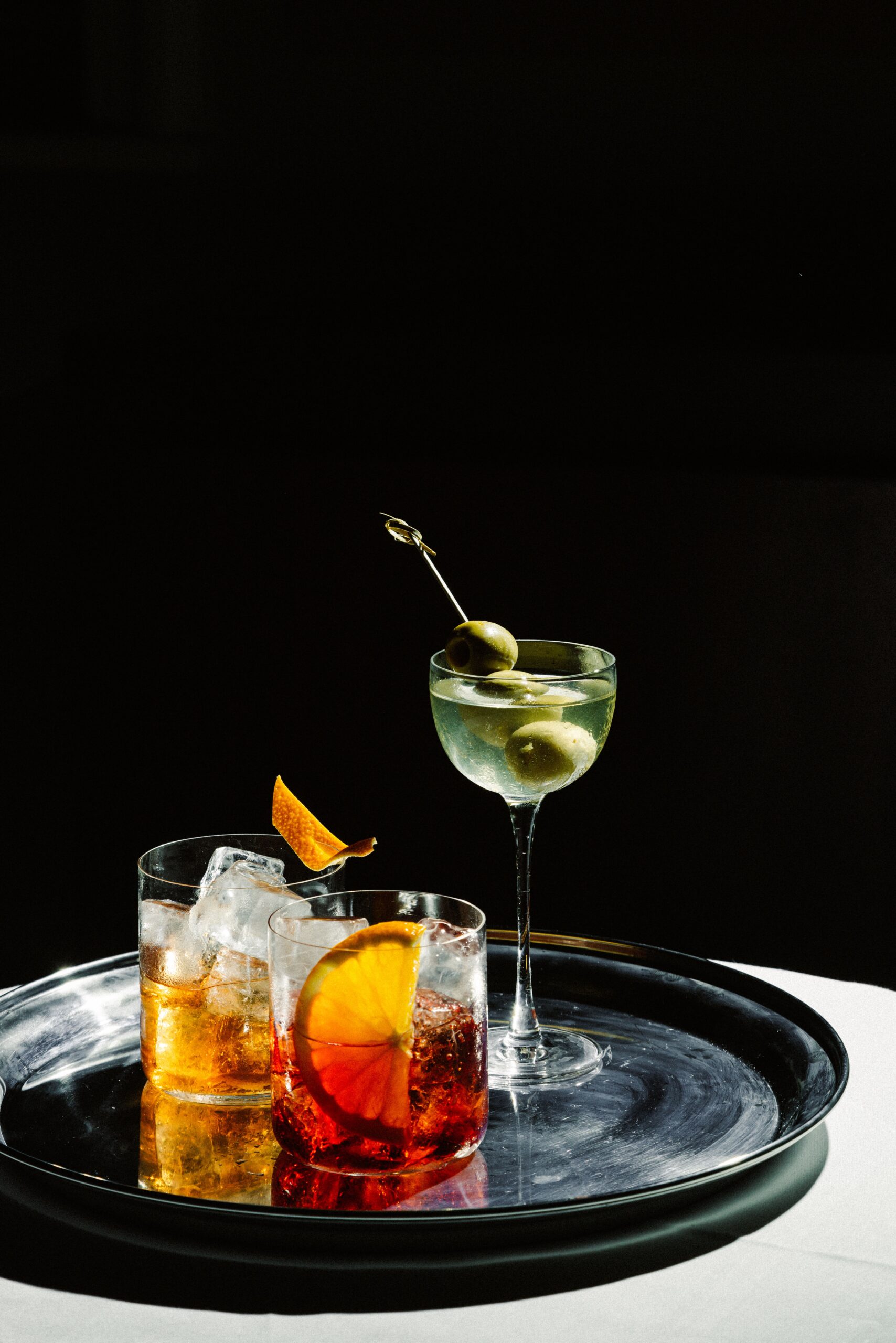
The restaurant is hidden away behind Tanner Krolle, a leather-goods maker in Mayfair.
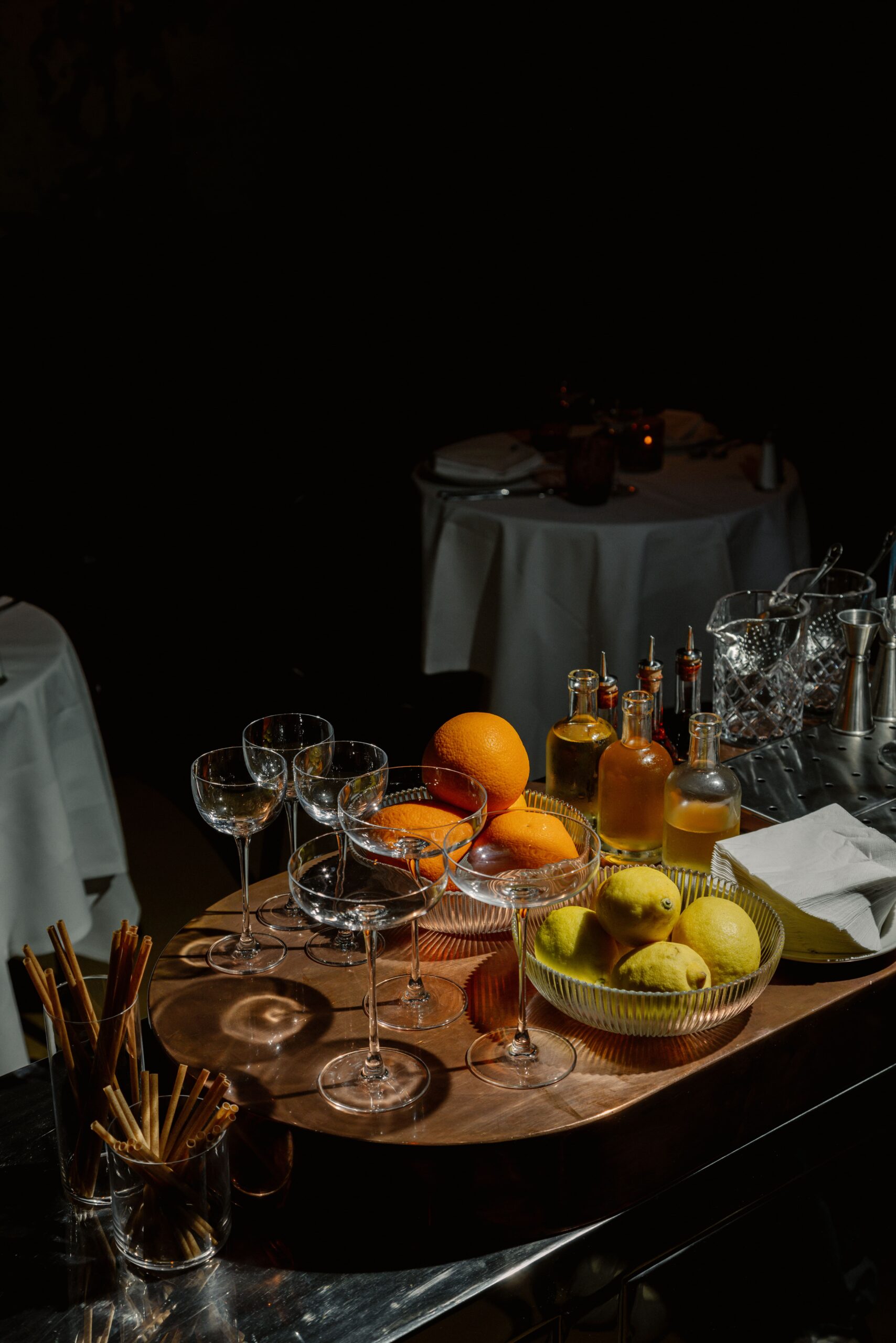
Automat is purposefully hard to find – but worth the effort.
On nearby Mount Street, meanwhile – flanked to one side by the Caligula-grade frontage of Bacchanalia and to the other by the phone-zombie queues outside Goyard – sits Automat: a newly opened Anglo-American spot which is part speakeasy, part clubby diner, part bachelor-uncle’s living-room. It shares a name (though no ownership) with an early noughties iteration which sat until 2012 on Mayfair’s Dover Street: an all-day American brasserie with a late licence and a slouchy mood that did eggs however you liked them and a decent dirty martini in the evenings. (Curiously enough, it occupied the precise spot where Kuczmarski’s The Dover now sits.)
Both establishments share roots in the democratic American ‘automats’ of the early twentieth century – essentially giant proto-vending machines that served warm apple pie and cold malted milks. And its current iteration is suitably low key. There is no signage out front, and guests must sneak across the shop floor of venerable leathermaker Tanner Krolle to get to the restaurant. Here, beneath grass-green lime-plaster walls, a good-looking, conspiratorial crowd hops from smart chicken nuggets to a very good cheeseburger to a homely pecan pie. Like Kuczmarski, Automat’s owners sensed that a certain something had been lost from Mayfair in recent years, particularly compared to its counterpart bars and restaurants across the pond. The founders say their inspiration stems from Manhattan spots like Minetta Tavern in Greenwich Village and Cafe Cluny in the West Village – restaurants and enclaves whose very names suggest a distinctly approachable, local-first flavor.
“We would wish that Automat becomes a neighbourhood ‘go-to,'” says co-founder Damian Mould, “with a menu of approachable classics in a ‘non-Mayfair,’ pared-down atmosphere. In New York, people have their places that they visit multiple times a week. They know what to expect and have built up an unspoken bond and feel it's their place.” That’s the dream for this new Mayfair.