

Almost everywhere I travel these days, the fashion industry looks anything but fashionable.
US consumers are closing their monogrammed wallets because Donald Trump’s 15 percent tariffs on EU imports are pushing up the price of European brands.
In Milan, the talk is of ethical challenges. LVMH-owned Loro Piana, whose carefully curated image is a mix of heritage and craftsmanship, has been placed under judicial oversight for one year after Italian authorities accused the firm of failing to stop subcontractors from exploiting migrant workers. Armani and Dior have also been called out for labor lapses.

In Beijing, the upscale SKP mall is so quiet, walking in is like intruding on a private grief. Chinese high-end consumers, for years the drivers of the runaway luxury goods train, have left the station. Everything seems to be going wrong all at once for fashion — and the surprising thing is that the biggest brands largely have themselves to blame.
Many labels took advantage of post-pandemic ‘revenge spending’ by jacking up prices. The cost of luxury goods has increased by an average of 65 percent since 2019, according to Paris-based analysts Luxurynsight. In a rush to hit ambitious financial targets, labels have changed designers and styles with dizzying speed. None more so than Gucci, where the exuberant Alessandro Michele was replaced by the sober Sabato De Sarno, who was then replaced by the Gothic Demna Gvasalia.
Gucci sales plunged 25 percent in the second quarter on a comparable basis, Kering, the brand’s holding company, revealed in July. At Burberry, edgy Riccardo Tisci made way for playful Daniel Lee.

How do we feel about this? Many of us are confused and irritated. Management consultancy Bain estimates that 50 million consumers have turned their backs on the global $420bn personal luxury-goods industry over the past two years — and the number of customers in this sector could shrink by a further five percent this year.
We need to “find a better balance between the needs of fashion and the needs of people,” Brunello Cucinelli told me recently. “It’s a big moment. The Greeks call it the ‘pain of the soul.’ We need to heal this pain. It’s the right moment for fashion to change, to move towards new times, a new world.”
There are some signs of hope, with a few brands responding to concerns around rising costs. Burberry CEO Joshua Schulman has reduced its average bag price by nine percent by introducing accessible new lines. Victoria Beckham has gone down the same route in a bid to put her label into the black for the first time later this year.

At LVMH, meanwhile, there is a broader return to consistency, focus and discipline. Jonathan Anderson’s first collection for Dior has been hailed as a well-calibrated update of a classic French brand. At the time of writing, LVMH’s share price was moving upward after a year in the doldrums.
Related Story

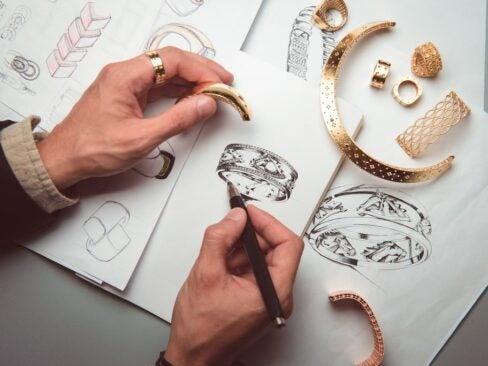
Richemont sales are also up, largely due to a strong performance in classic jewellery. Protecting those whose work is fundamental to the essence and quality of a brand is crucial. Brunello Cucinelli, for one, pays its ‘petites mains’ an average of about $2,400 a month, around 20 percent above the industry norm. The hit to the brand’s profitability? Just one percent a year.
“Fashion is about trust between a brand and a customer,” Cucinelli says. “Trust is something that can’t be bought. It’s a relationship, a personal connection that must be nurtured.” In a world where everything seemingly has a price, that’s a philosophy worth its weight in gold.