
Sharing a bathroom with someone in your group doesn’t exactly scream luxury. An apartment with just one bedroom and a single double bed? Same story. So why would you visit Aurora Radar Station?
Because, as owner and founder Janne Honkanen puts it, this is a different kind of luxury.
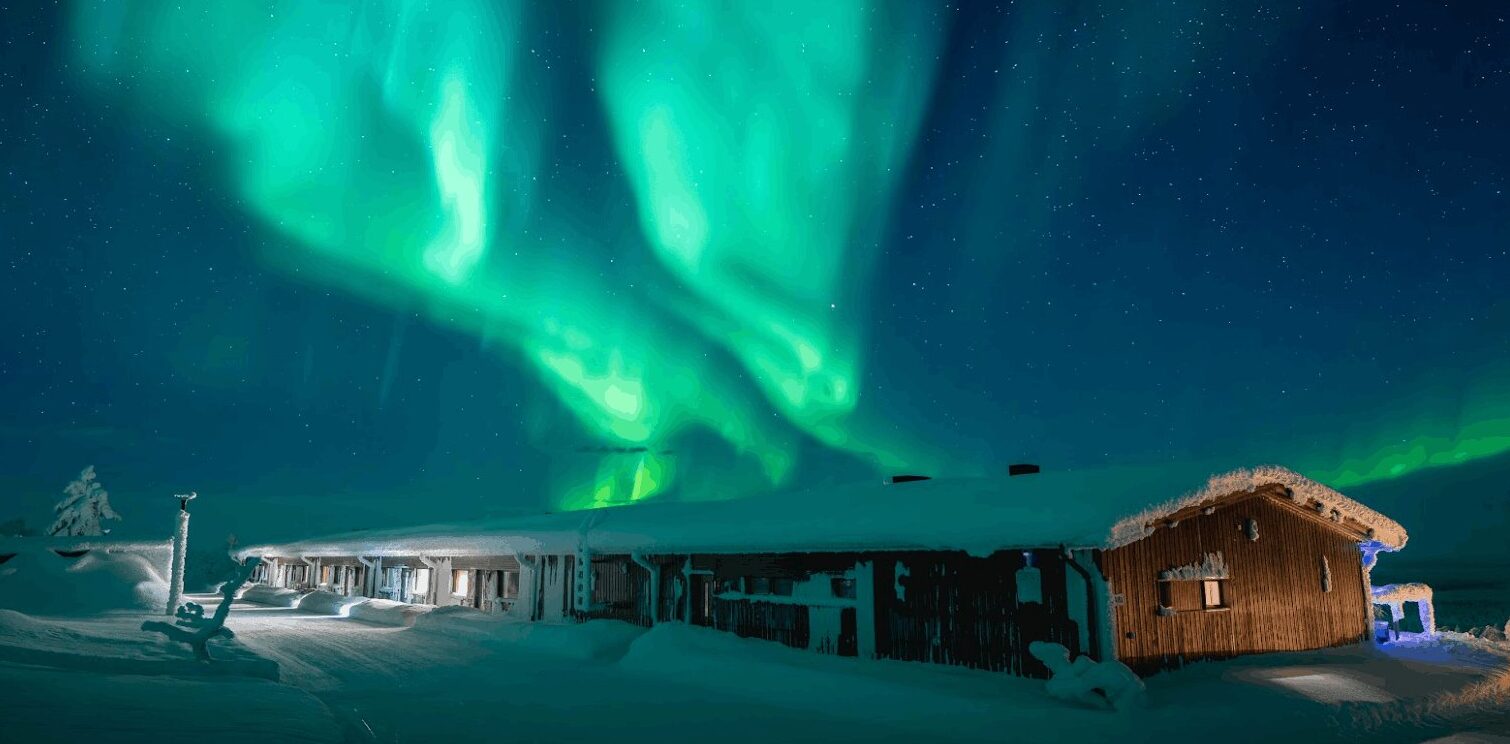
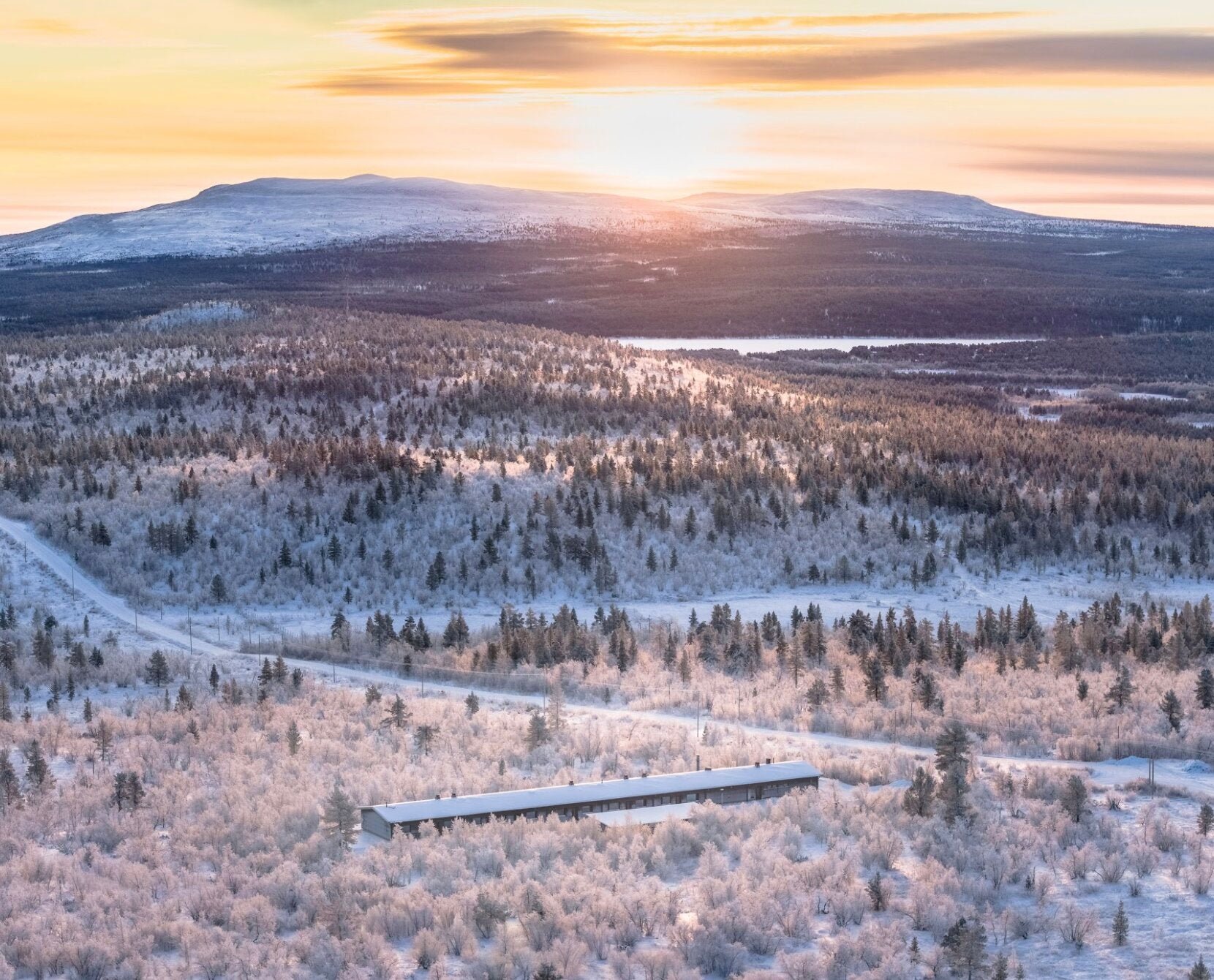
Aurora Radar Station sits near the borders of Sweden and Norway, high on the Paljasselkä fell in Enontekiö. The location places it deep within the heart of Sámi culture, and the building itself has an unusual past. Once a Finnish Defence Forces radar station, it was used during the Second World War and remained highly classified until the mid-1960s.
Driving through the vast, untouched landscape, the sense of remoteness becomes impossible to ignore. Even before reaching the station’s gargantuan grounds, there are barely any buildings or signs of life. The station feels like it exists in its own snow-covered bubble.
There are five apartments in total. Four are available for guests, while the fifth is reserved for staff and dining. The station is typically booked on an exclusive-use basis, although it’s sometimes possible to reserve a single apartment — decided on a case-by-case basis.
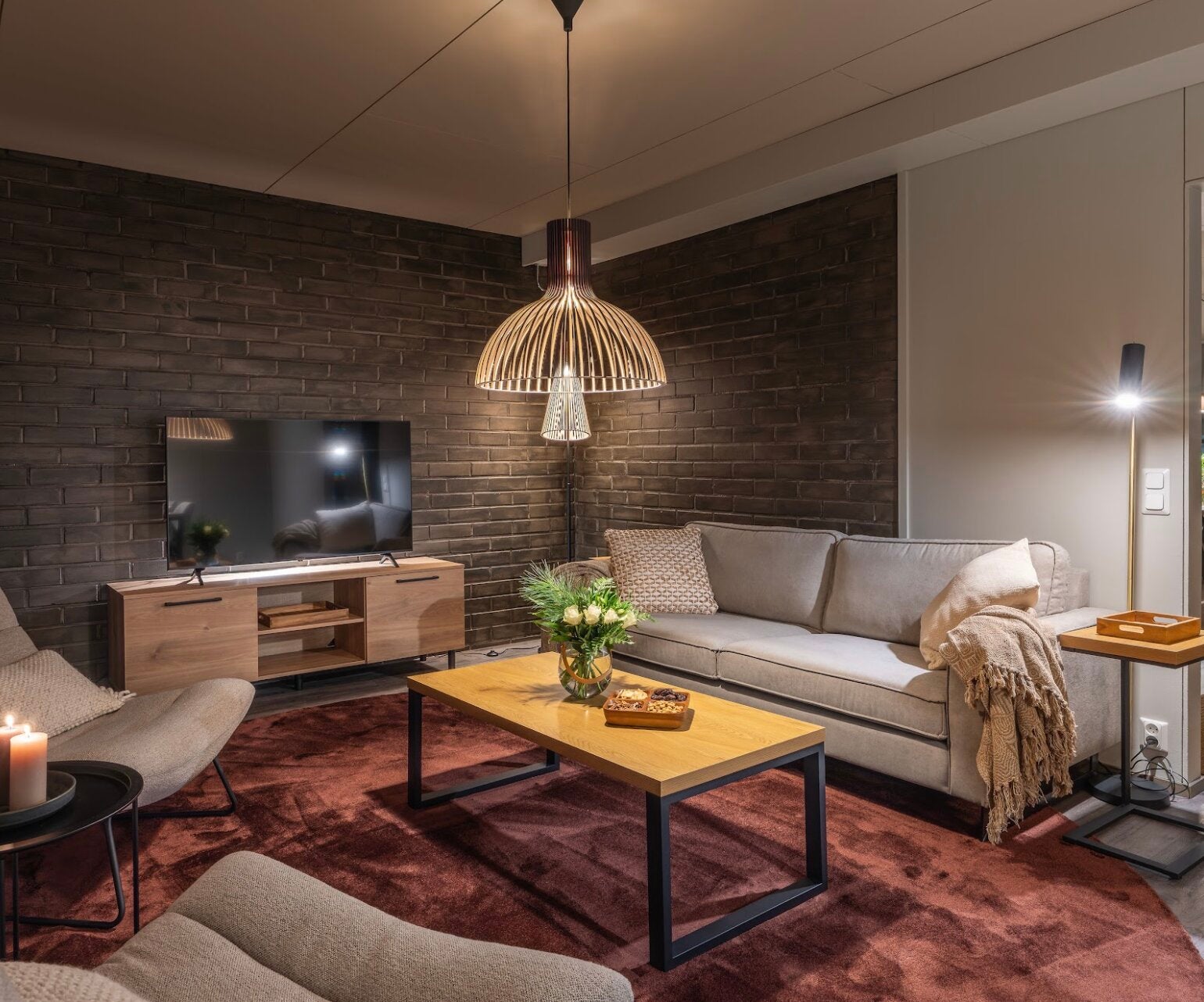
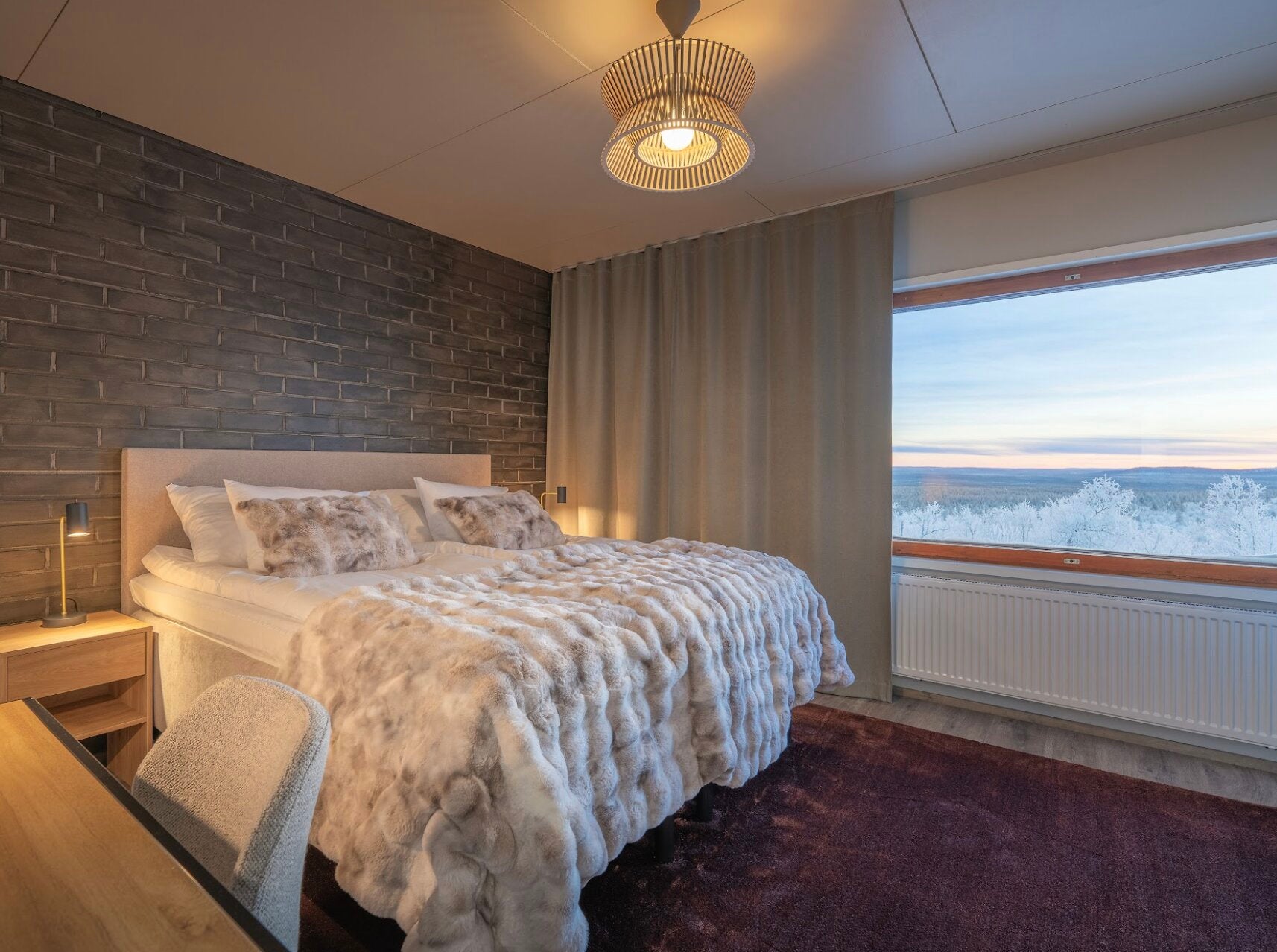
Altogether there are ten bedrooms, sleeping up to 26 guests. Each apartment has two bathrooms, a living and dining area, and a small but well-equipped kitchen. The interiors are cosy and homely, but without the full buffet of trimmings you’d expect from a five-star hotel. Rather than detract from the experience, though, that simplicity is part of the appeal. It feels rawer, more authentic.
The station’s history hasn’t been polished away, and the remote landscape seems to seep into all corners of the buildings. The bomb shelter is still here, and the perimeter is still lined with barbed wire. Most of the original buildings remain — some with leftover furniture still in place (including a very vintage-looking gym set-up).
Beneath one of the buildings is a basement. Descending the metal spiral staircase, I wasn’t expecting much. But the underground space turned out to be enormous, half-converted into a sort of man cave: a sofa at one end, a dartboard at the other. Along the far wall, inexplicably, there is a line of reindeer antlers. I later discovered they’re on a pulley system, built for lassoing. Spoiler: I did not land a single throw on the moving antlers.
A short walk away is the wellness area with a sauna, lounge and fireplace. My group and I spent hours there in our robes, drinking champagne and eating roasted reindeer. The sauna itself is traditional – wood-fired, with a simple lever to release steam. Outside, there’s a jacuzzi overlooking the landscape.
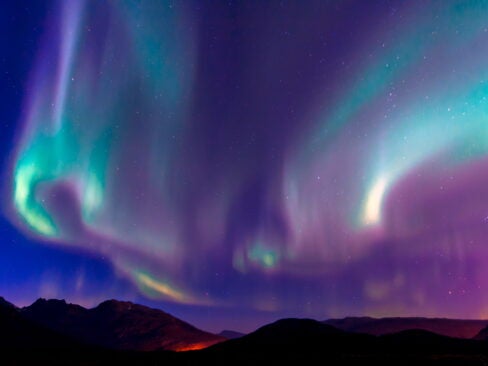
One evening, after warming up (read: sweating) in the sauna, I stepped outside to cool off. The Northern Lights were directly above the station. This part of Lapland is prime viewing territory — it was the second time I’d seen them in 24 hours.
The night before, my group and I had bundled into our outdoor gear to watch the sky. Specialist clothing is provided for all guests — boots, insulated trousers, and heavy overcoats — and it’s very much needed. During my visit, temperatures dropped to -86°F.
We drove to a higher vantage point and lay down inside a half-igloo to shelter from the wind. Light pollution is almost non-existent here, and the stars felt startlingly close, scattered sharply across the sky. Above us, the Northern Lights loomed and slowly reshaped themselves. I lay there watching until my hands went numb.
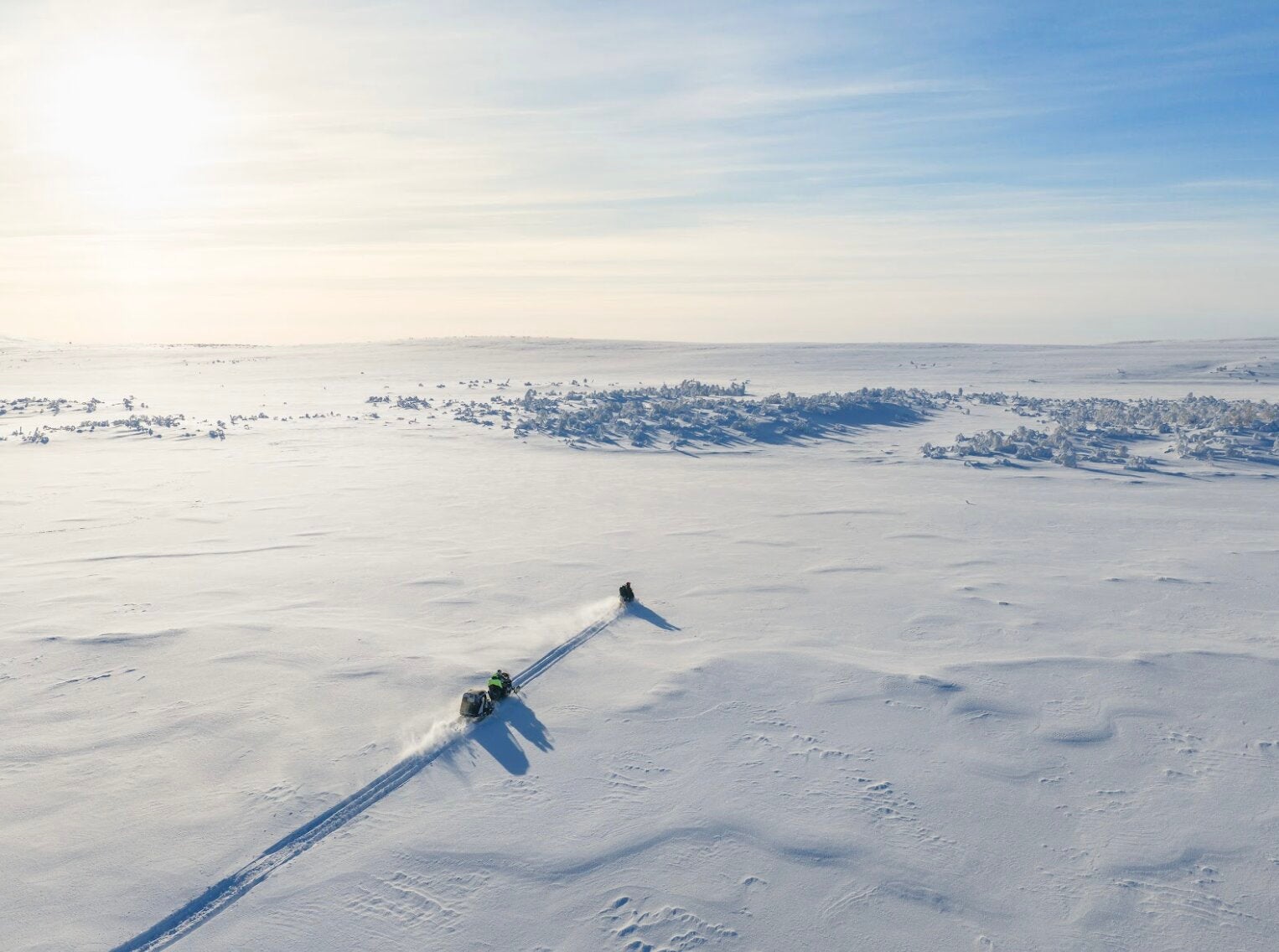
Beyond the lights, there’s plenty to do: snowshoeing, ice fishing, and cross-border travel into Norway or Sweden. But you can’t quite beat snowmobiling through a forest and racing out into the Arctic Tundra at 80km/hour (approx. 50mph).
I saw nothing but snow and trees for the hour-ish ride into the Tundra. As we stopped at a wide-open expanse, Honkanen (dressed head-to-toe in seal fur), popped a bottle of champagne to toast; it promptly turned into a slushie in the biting Arctic cold.
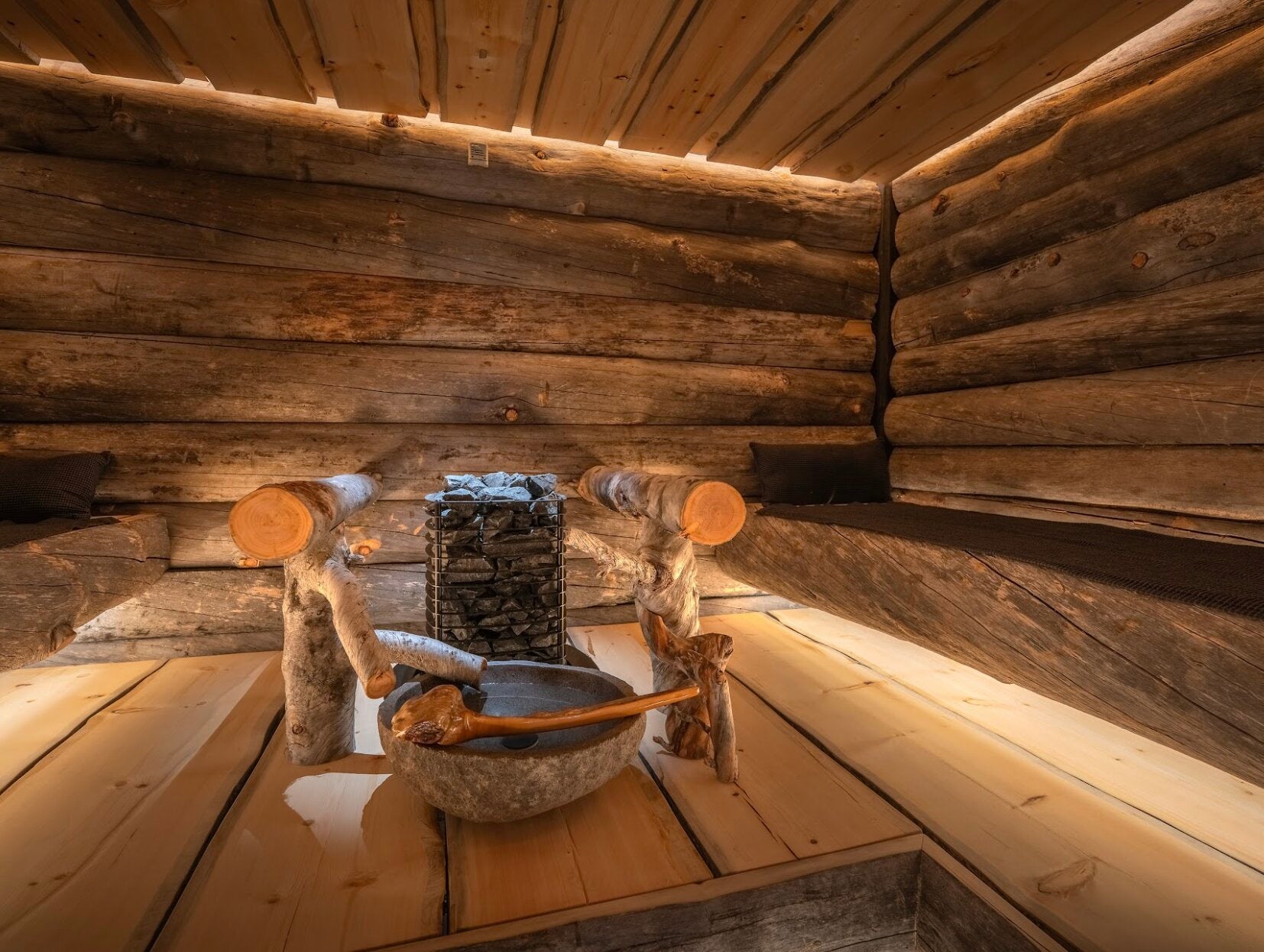
The Station has a wellness area with a spacious sauna, lounge, and fireplace.
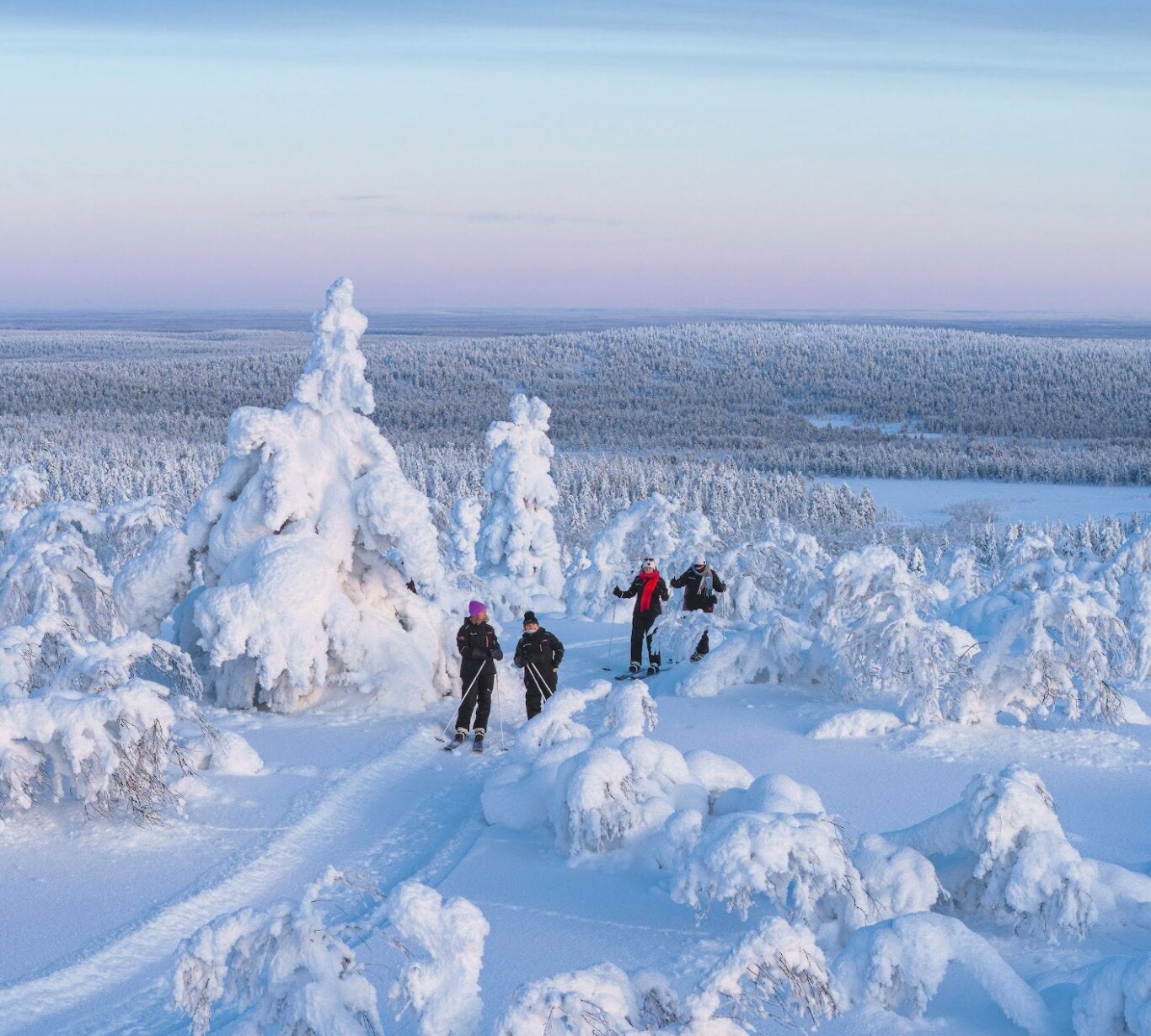
There's plenty of activities, including cross-border travel and snowshoeing.
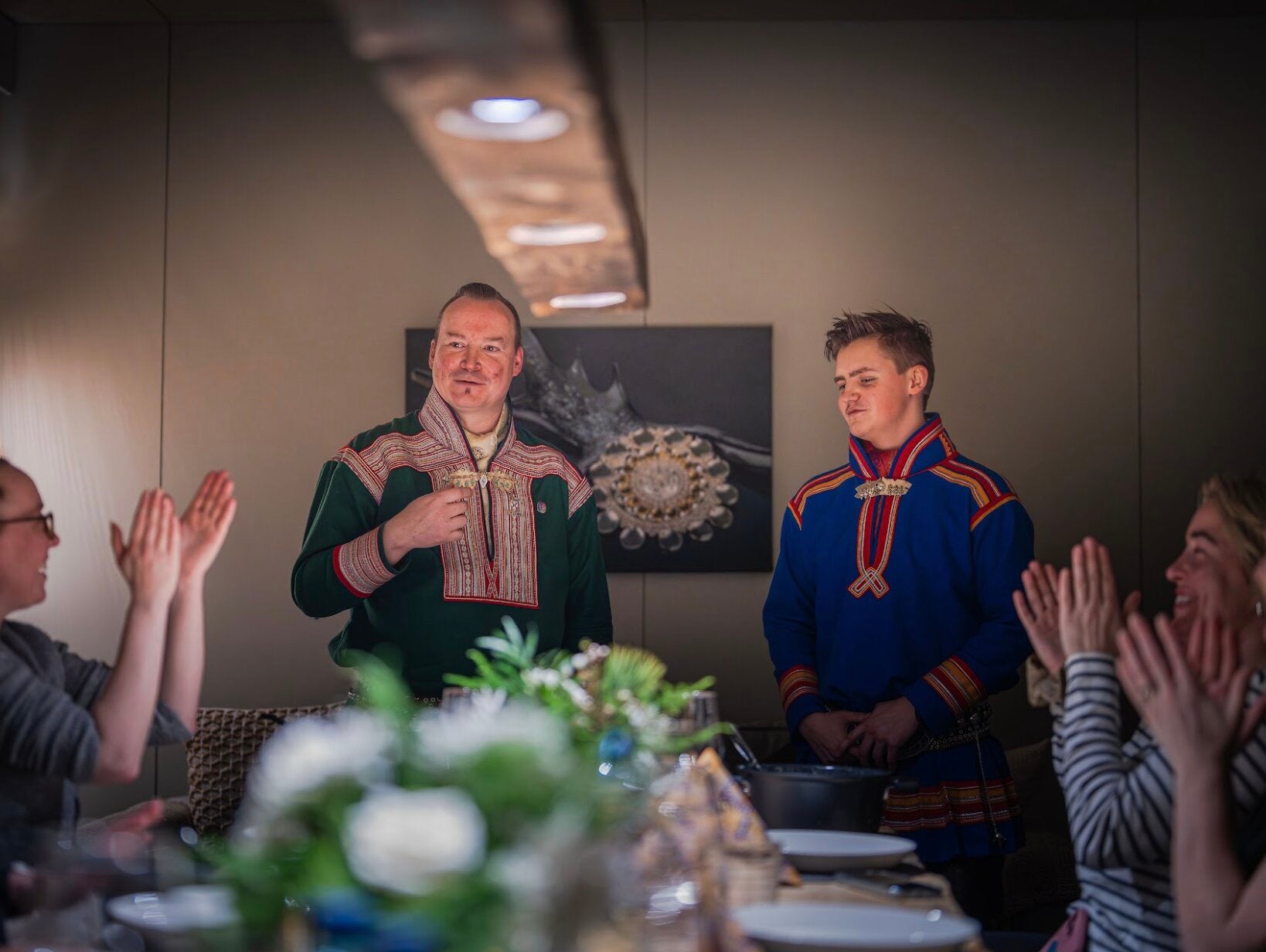
Sámi reindeer farmers, dressed in gákti — the traditional clothing worn while herding — joined us for dinner.
Back at the station, dining follows the authentic theme. It’s simple, natural, and hearty — think roast reindeer; karjalanpiirakka (rye crusts filled with rice porridge and topped with egg butter); leipäjuusto (a squeaky cheese served warm in a milky sauce); and lots of lingonberries.
Over dinner, we’re joined by two Sámi reindeer farmers, dressed in gákti — the traditional clothing worn while herding, in bright colors with intricate embroidery and silver jewelry. Dinner stretches on as the farmers patiently field our many, many questions. When asked how many reindeer they own, one looks coy and replies, “I would like to own more.” We later learn: never ask a Sámi herder that question.
Hearing about this 2,000-year-old tradition from people born into it is fascinating. One of the farmers sings a yoik, a traditional Sámi form of song. Yoiks have no lyrics but are deeply personal and often spiritual, meant to reflect a person, place, or feeling without literally depicting it. We’re told the story of a woman who lost her husband — through her yoik, she felt as if he were still with her.
I’m reminded of Honkanen’s words about this being a different kind of luxury. It’s about access – to living traditions and to landscapes few will ever see. Aurora Radar Station is not a butler-service, Michelin-star stay – and that’s entirely the point.